



Technical Guide Foam Sheet EVA Oscillating Blade Contour Cutter
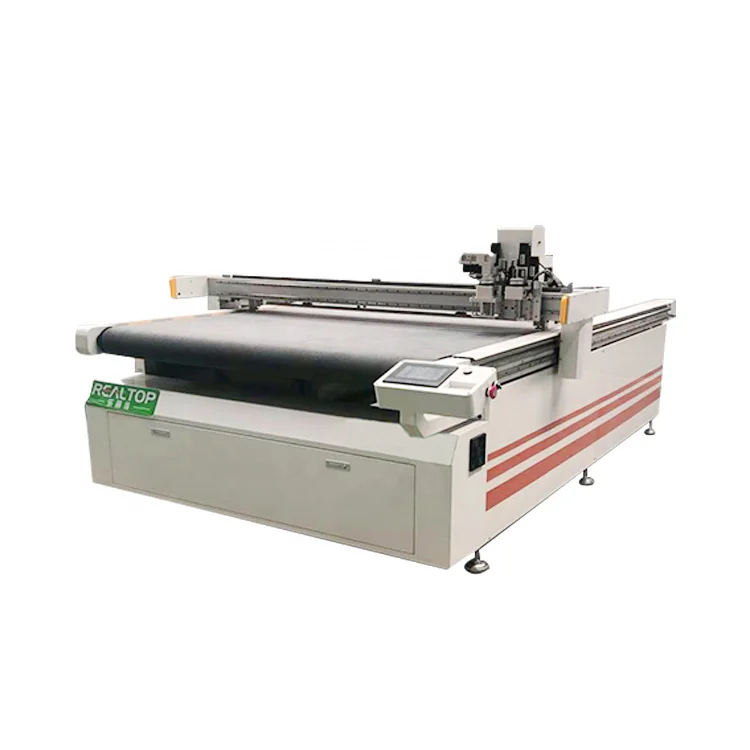
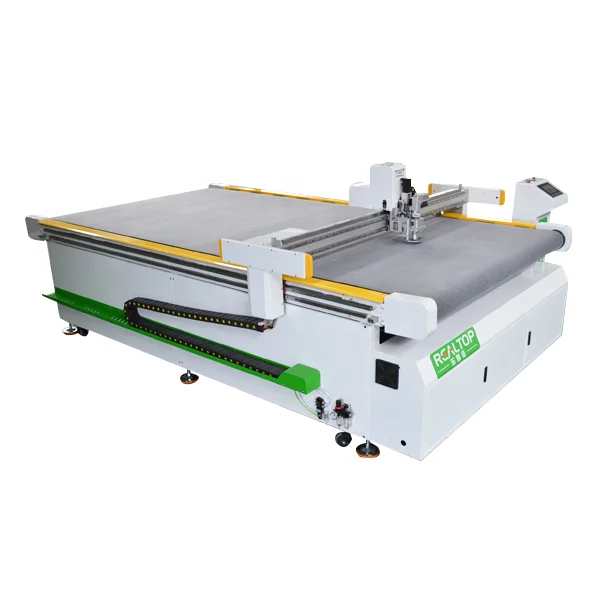
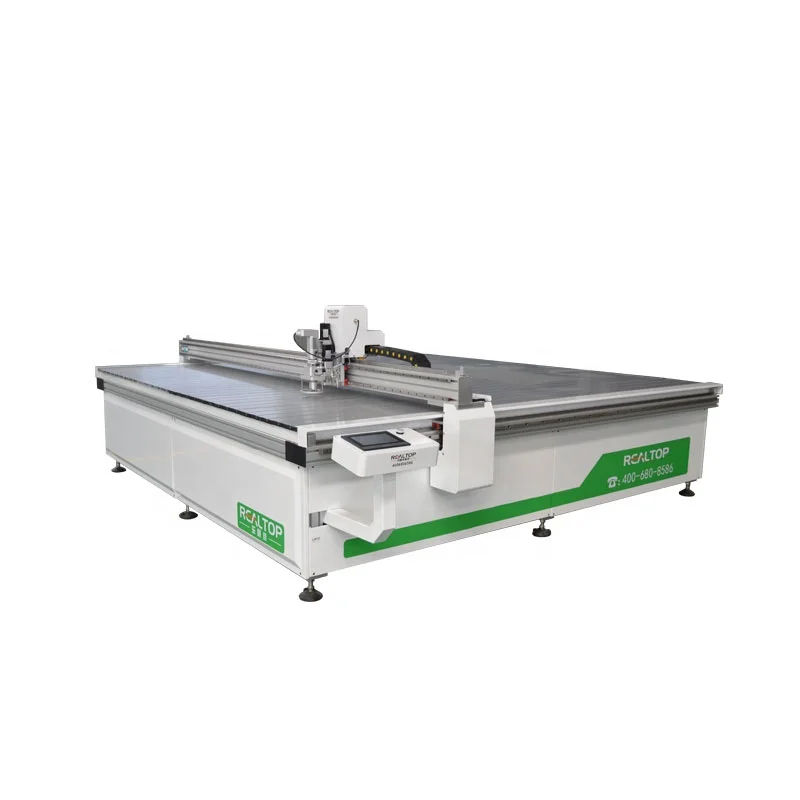
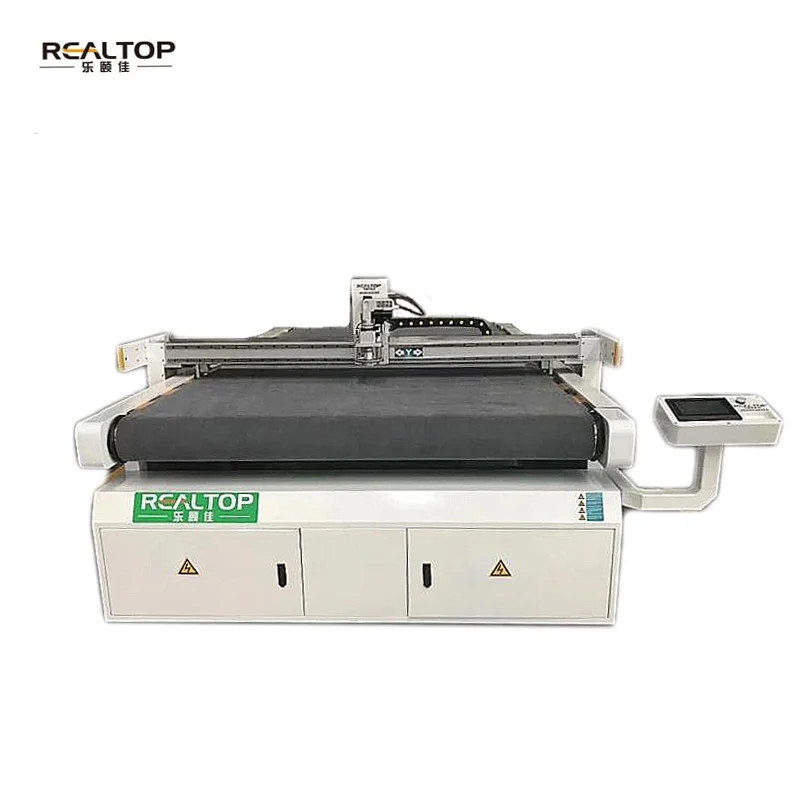
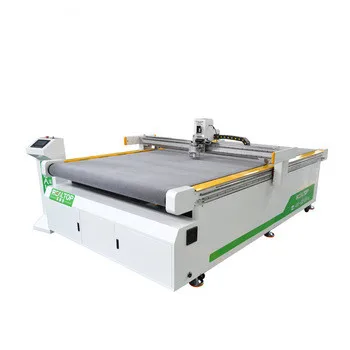
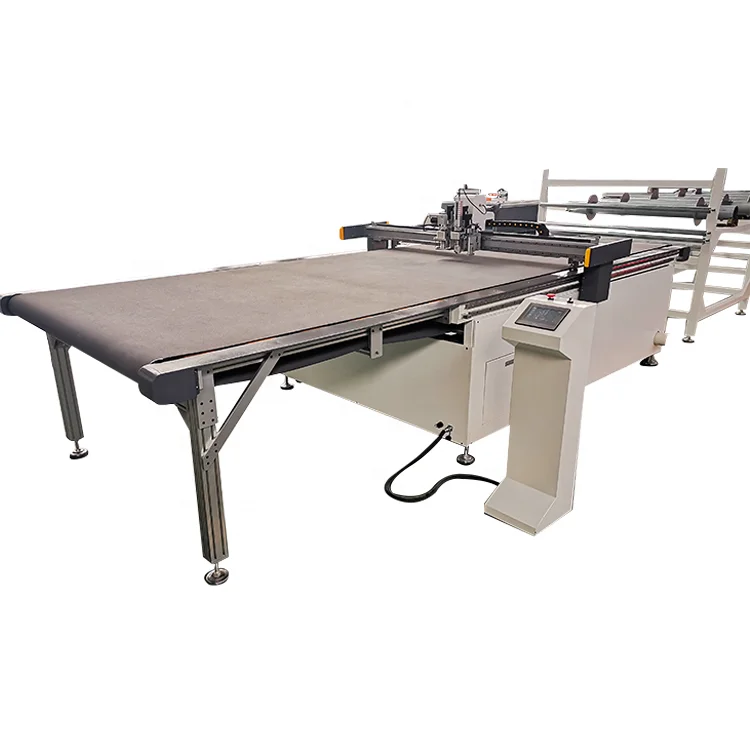
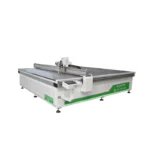
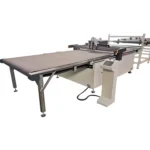
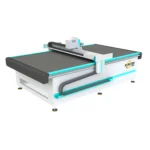
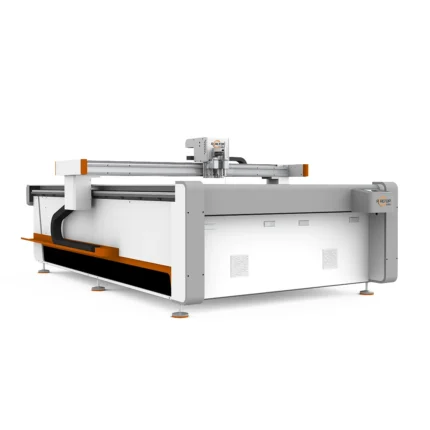
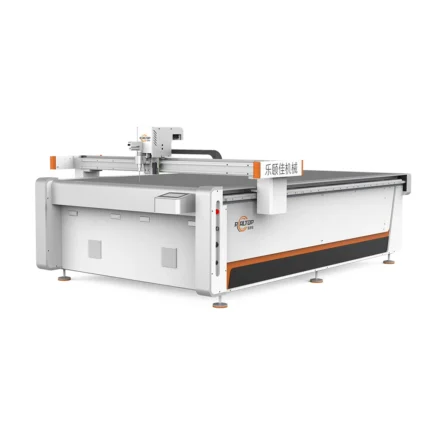
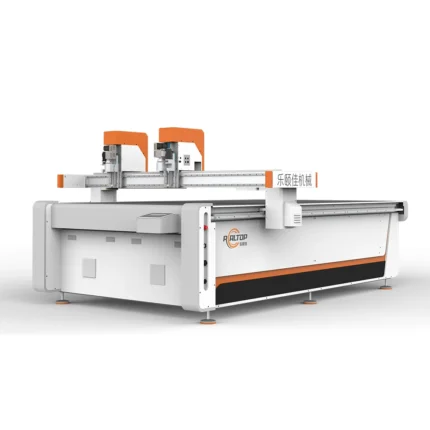
RT-D2516/RT-S2516 CNC Oscillating Knife Cutting Machine, 1600×2500mm, 9kW, 7.5kW Vacuum — configured for foam, EVA and composite sheet processing.
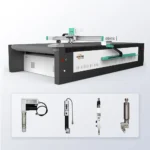
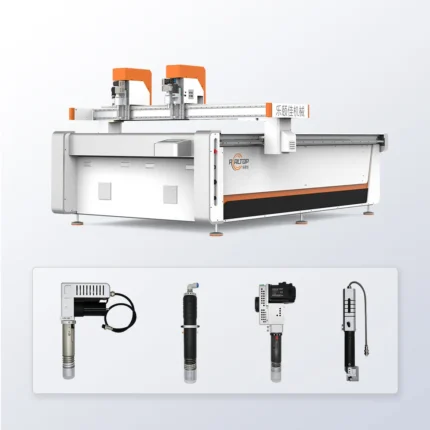
- Swiss oscillating knife head handles full cut, half cut and cursor location on thick composites
- Yaskawa servo with Hiwin linear guide ensures ≤0.1mm repeatability across the working area
- Auto-feeding conveyor and zoned vacuum table keep small parts flat during cutting
Laser versus knife selection guidance provided per material, with sample cutting on your own composite sheet before order commitment.
Configurable Laser and Knife Process Matching — built by a factory producing both CO2 laser and CNC oscillating knife cutting tables, allowing the composite material to dictate the method rather than forcing one technology across every application.
Technical Specifications
| Parameter | Value |
|---|---|
| Product Type | CNC Oscillating Knife Cutting Machine |
| Model | RT-D2516 / RT-S2516 |
| Working Area | 1600 × 2500 mm |
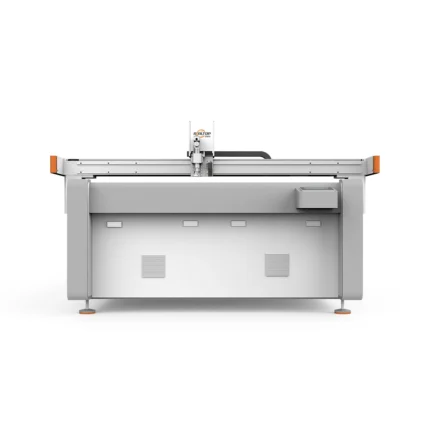
| Overall Dimensions | 3450 × 2300 × 1250 mm |
| Rated Power | 9 kW |
| Vacuum Pump | 7.5 kW |
| Table Type | Flat working table with vacuum and auto-feeding conveyor |
| Tool Head | Multifunctional head with Swiss imported oscillating knife (vibration full cutting, half cutting, cursor location) |
| Translational Velocity | 800–1200 mm/s |
| Repeatability | ≤ 0.1 mm |
| Transmission System | Japanese Yaskawa digital servo motor, Taiwan Hiwin linear guide, synchronous belt, ball screw |
| Control / Instruction Format | HP-GL compatible |
| Voltage | 380V ± 10% |
| Safety Device | Infrared sensors |
| Assembly State | Fully assembled with Germany imported conveyor belt, vacuum table, auto-feeding system |
Application Suitability
| Application | Material or Output |
|---|---|
| Foam and EVA packaging insert fabrication | EVA, XPE, PU, and sponge composite sheets requiring clean edges without crushing |
| Composite panel pre-form cutting | Fiberglass, carbon fiber, and sandwich panels before lay-up processes |
| Gasket and sealing material production | PTFE, ETFE, silicone, rubber, and non-woven fabrics |
| Automotive interior trimming | Leather, synthetic fabric, and soft glass for dashboard and door panel components |
Why the Voltage Question Should Come Before the Price
Confirming the 380V ± 10% supply and local frequency prevents the most common installation failure on export CNC knife cutters.
When a machine arrives at a facility with incompatible power infrastructure, the servo drives and vacuum pump may trip immediately or run hot until components degrade. Buyers often negotiate the CO2 laser cutting and engraving machine manufacturer selection or cutter configuration for weeks, yet leave voltage and plug type as an afterthought [NEED_CITE: voltage and frequency standards by export market]. The 7.5 kW vacuum pump alone requires a dedicated circuit sized for continuous draw, and the Yaskawa servo system expects stable frequency to maintain the ≤ 0.1 mm repeatability spec. We ask for the facility electrical single-line diagram before finalizing the build sheet.
Process Selection Between Knife and Laser
The decision to cut composites with an oscillating knife rather than a CO2 laser depends on the thermal sensitivity and fiber structure of the material. Carbon fiber and fiberglass pre-pregs tend to delaminate or seal at the edge when exposed to laser heat, making the mechanical shear of the Swiss oscillating knife the appropriate choice for preserving the laminate integrity. The CO2 laser cutting and engraving machine manufacturer approach works well for acrylic and textile edge sealing, but composite panels destined for structural lay-up require a clean mechanical cut that does not alter the resin chemistry at the kerf.
Vacuum Zoning for Thin and Low-Mass Sheets
The 1600 × 2500 mm flat table is divided into vacuum zones that can be isolated or combined depending on the sheet footprint and part geometry. Small gasket blanks or narrow EVA strips tend to lift when the full table vacuum is applied unevenly, causing the oscillating blade to catch and produce ragged edges [NEED_CITE: vacuum hold-down principles for flexible sheet materials]. The auto-feeding conveyor, built with a Germany imported belt, advances the next sheet while the previous one is still being unloaded, maintaining continuous production flow without manual repositioning of the workpiece.
Translating Specs into Cutting Performance
The 800–1200 mm/s translational velocity governs non-cutting travel moves between contours, not the actual cutting speed through the material — a distinction that matters when calculating cycle time for nested composite parts. Repeatability of ≤ 0.1 mm is achieved through the Yaskawa servo and Hiwin linear guide combination, which directly affects how well mating gasket halves or interlocking foam inserts align during assembly. The HP-GL compatible instruction format allows the control system to accept nesting output from most industry-standard CAD/CAM software, eliminating a manual file conversion step that often introduces contour errors. The 9 kW rated power covers the spindle oscillation drive, conveyor motor, and control electronics, while the 7.5 kW vacuum pump operates on a separate circuit to avoid voltage sag during pump startup [NEED_CITE: electrical circuit separation for vacuum-assisted CNC tables].
The Hidden Cost of Specifying a Machine by Working Area Alone
A buyer once selected a table based purely on the 1600 × 2500 mm envelope, then discovered the 7.5 kW vacuum pump could not hold down the small foam gasket parts their nesting software produced. The parts lifted during the final contour pass, and the oscillating knife tore through the material rather than shearing it cleanly [NEED_CITE: common causes of edge quality failure in CNC knife cutting]. The fix required retrofitting additional vacuum zones and reprogramming the zone activation sequence, a delay that pushed their first production shipment by several weeks. Matching the vacuum zoning map to the expected part size distribution prevents this class of failure before the machine leaves the factory.
Why Source This Machine Here
The factory builds both oscillating knife and CO2 laser cutting and engraving machines under one roof, so a buyer processing composites can evaluate both methods on the same material sample before committing to a configuration. The Swiss imported oscillating knife module is stocked alongside drag knife, creasing wheel, and milling tool heads, allowing the tool head selection to follow the material rather than the catalog. Every RT-D2516 / RT-S2516 unit undergoes a factory test on the buyer’s actual composite or foam sheet, with the cutting parameters recorded and shipped as part of the documentation package. Voltage, plug type, and control language are confirmed against the destination facility’s electrical and operational requirements before assembly begins. The Yaskawa servo and Hiwin linear guide components are sourced through established supply channels with traceable batch records.
Documentation & Verification
- Factory test record cutting the buyer’s specific foam or composite sheet before dispatch
- Electrical schematic confirming 380V ± 10% wiring, plug type, and dedicated vacuum pump circuit
- Tool head and vacuum zone configuration list matched to the buyer’s material thickness and part size
- HP-GL software licence and file format compatibility note for the buyer’s existing nesting workflow
- Spare parts list identifying consumable blades, belt segments, and vacuum seal replacements
Installation, Commissioning & Support
- 3450 × 2300 × 1250 mm footprint requires level concrete floor with anchor points for the vacuum table frame
- Dedicated 380V ± 10% circuit for the 9 kW machine load plus separate circuit for the 7.5 kW vacuum pump
- Machine ships fully assembled with conveyor; only external power and vacuum hose connections required on site
- First-run parameter tuning on the buyer’s composite material to establish oscillation frequency and feed rate
- Operator training covers tool head changeover, vacuum zone activation, and HP-GL file import procedures
- Consumable blade replacement interval and Hiwin linear guide lubrication schedule provided in maintenance manual
What to Provide With Your Inquiry
To match the RT-D2516 / RT-S2516 to your composite cutting application, share the material type, sheet thickness, and maximum sheet dimensions you will process. Include the target daily volume and whether your nesting workflow outputs HP-GL or requires conversion from another format. Specify the local voltage and frequency at your facility so the electrical system and vacuum pump motor can be configured before assembly.
Frequently Asked Questions
Q: Should I cut my composite material with an oscillating knife or a CO2 laser?
A: Fiber-reinforced composites such as carbon fiber and fiberglass typically require the mechanical shear of an oscillating knife to avoid thermal delamination at the cut edge. Thermoplastic composites and foam-core panels may be suitable for laser cutting if edge sealing is desired. We cut samples of your actual material with both methods so you can compare the edge quality and kerf characteristics before selecting a machine.
Q: What does the cutting thickness specification mean for foam and EVA?
A: The published figure requires confirmation against your specific material density and durometer. Denser EVA and cross-linked PE foam demand slower feed rates and higher oscillation amplitude than soft PU sponge. We run a sample cutting report on your actual sheet to establish the achievable thickness and edge quality before the machine configuration is finalized.
Q: How does the vacuum table handle small gasket or foam insert parts?
A: The flat table is divided into selectable vacuum zones. For small parts that tend to lift during the final contour pass, isolated zones concentrate hold-down force on the active cutting area. The zone activation map is programmed based on your expected part size distribution and documented in the configuration list before shipment.
Q: Can the control system accept my existing nesting software output?
A: The instruction format is HP-GL compatible, which covers most industry-standard nesting and CAD/CAM platforms. Before order confirmation, we verify compatibility by importing a sample file from your workflow and running a dry cut to confirm contour accuracy and tool path interpretation.


Related products
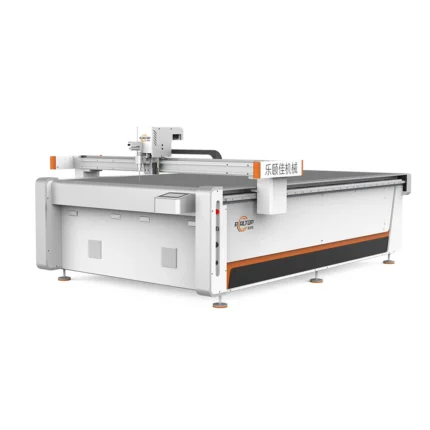
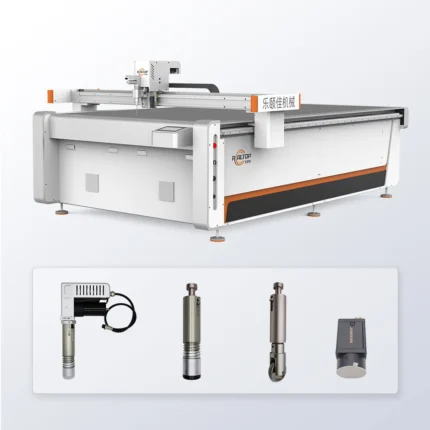
2026 EVA CNC Cutting Machine for PVC/EVA Foam Board
Product Introduction
Professional EVA CNC Cutting Machine designed for precise cutting of PVC and EVA foam boards, ideal for industrial manufacturing needs in 2026. Ensures high efficiency and accuracy for foam processing applications.Product Parameters
| Material Compatibility | PVC/EVA Foam Board |
| Type | CNC Cutting Machine |
| Application | Foam Processing |
| Year | 2026 |
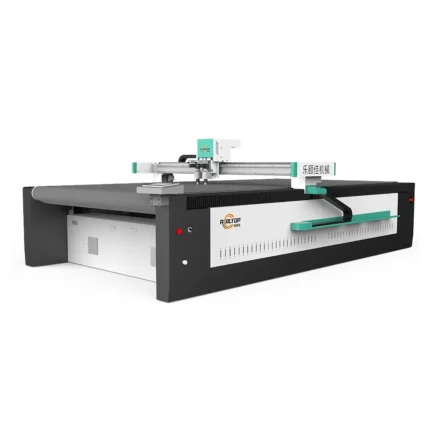
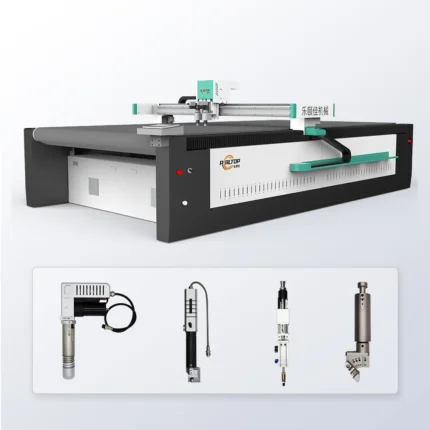

Acoustic Panels CNC Knife Cutting Machine 2026
Product Introduction
Designed for precision cutting of acoustic panels, this 2026 CNC knife cutting machine offers efficient and accurate processing, ideal for acoustic panel manufacturers seeking high-quality results.Product Parameters
| Model | Acoustic Panels CNC Knife Cutting Machine 2026 |
| Application | Acoustic Panels Cutting |
| Type | CNC Knife Cutting Machine |
| Year | 2026 |

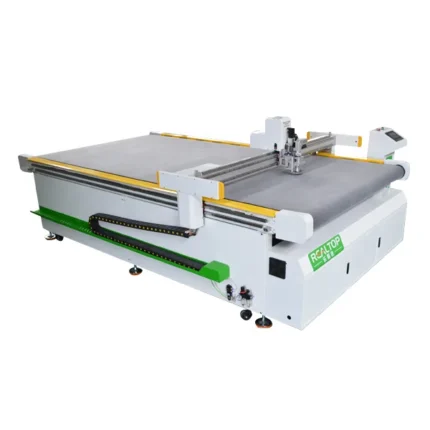
Foam Sheet Cutter EVA Oscillating Blade Contour Cutter 2026
Product Introduction
Designed for precise cutting of foam sheets and EVA materials, this 2026 oscillating blade contour cutter offers efficient and accurate contour cutting performance, ideal for industrial manufacturing and crafting applications.Key Specifications
| Product Type | Foam Sheet Cutter |
| Blade Type | Oscillating Blade |
| Function | Contour Cutting |
| Material Compatibility | EVA, Foam Sheets |
| Model Year | 2026 |
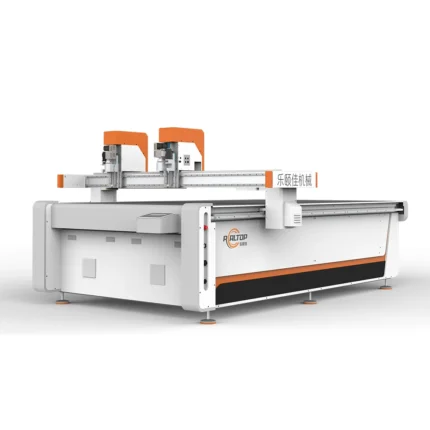
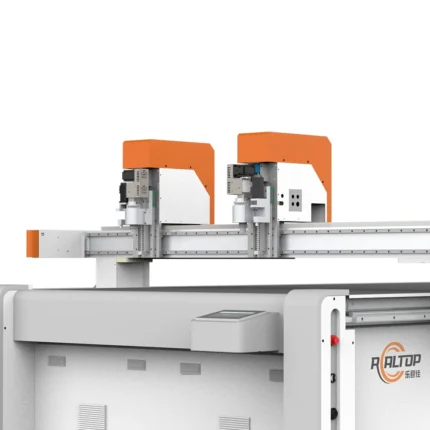
Jinan Realtop CNC Foam Cutting Machine 2026
Product Introduction
Jinan Realtop CNC Foam Cutting Machine 2026, a high-precision solution from China's leading welding & cutting equipment manufacturer, ideal for efficient foam cutting applications with reliable performance and advanced CNC technology.Key Specifications
| Model | 2026 |
| Type | CNC Foam Cutting Machine |
| Manufacturer | Jinan Realtop |
| Origin | China |
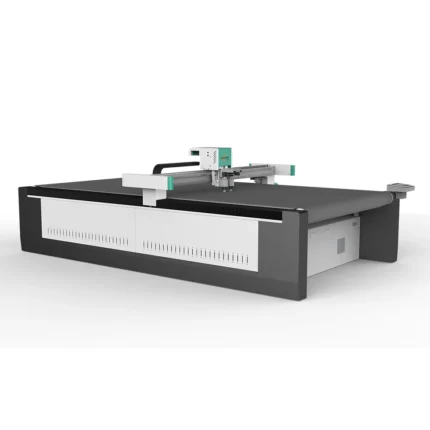
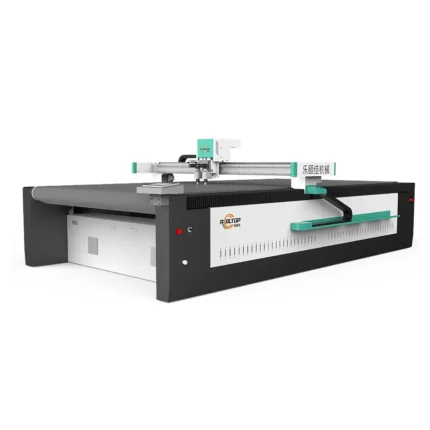
Realtop 2026 CNC Digital Knife Cutting Machine
Product Introduction
Realtop CNC Digital Knife Cutting Machine 2026, a precision cutting solution for various materials, ideal for industrial manufacturing with advanced CNC technology.
Key Specifications
| Model | Realtop CNC Digital Knife Cutting Machine 2026 |
| Type | CNC Digital Knife Cutting |
| Application | Industrial Material Cutting |
| Manufacturer | Chinese Welding & Cutting Equipment Factory |
Realtop 2026 XPE Foam Cutter High-Precision Roller
Product Introduction
High-precision Realtop XPE Foam Cutting Machine 2026 with roller cutting system, ideal for efficient foam processing with accuracy. Perfect for manufacturing and industrial foam cutting applications.Key Specifications
| Model | Realtop XPE 2026 |
| Type | Roller Foam Cutter |
| Precision | High-Precision |
| Application | Foam Cutting |
商品评价
There are no reviews yet.