



2516 Composites CNC Vibrating Knife Cutting Machine – Industrial
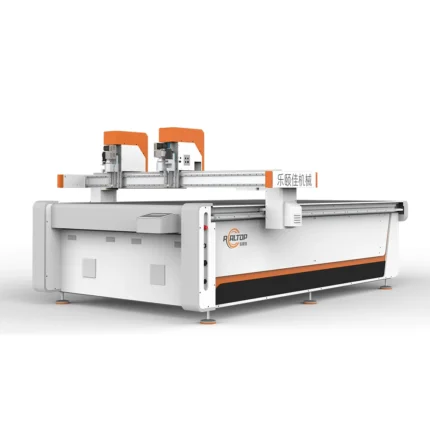
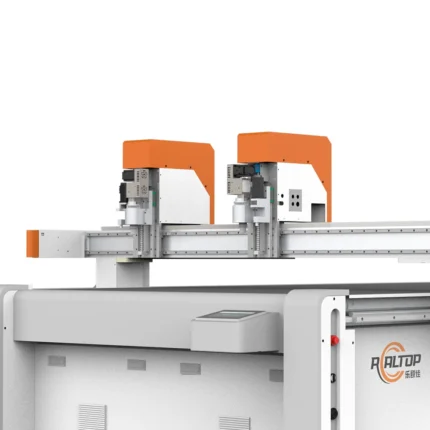
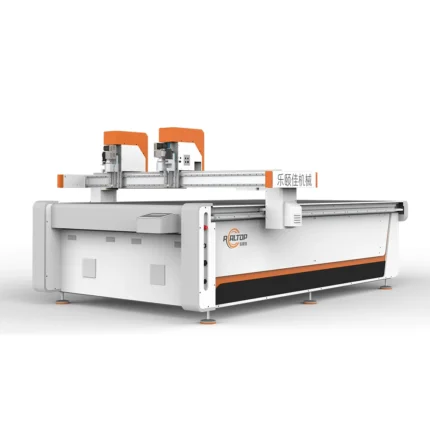
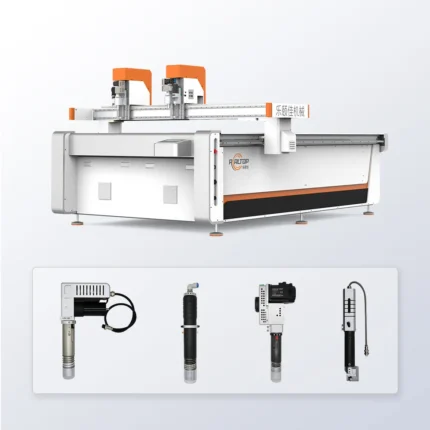
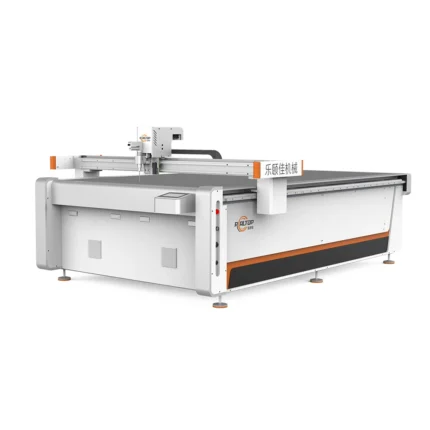
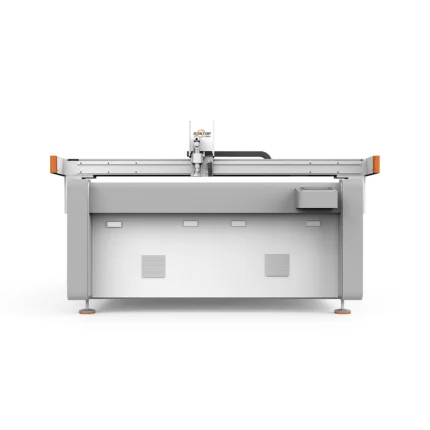
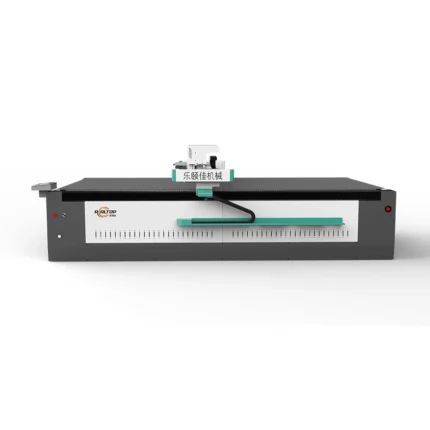
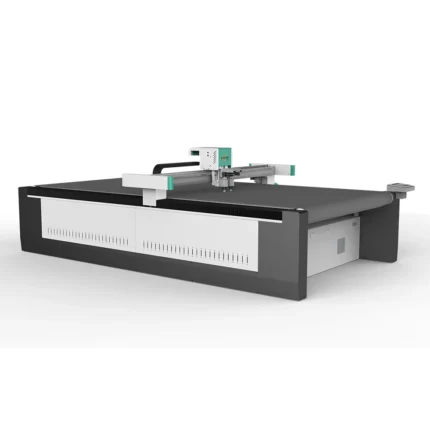
1625 CNC Oscillating Knife Cutting Machine, 1600×2500mm, ±0.1mm — configured for composite fabrication where thermal damage must be avoided. Cold-cutting eliminates charred edges on carbon fiber prepreg, aramid honeycomb and fiberglass while maintaining aerospace-grade tolerance. Tool heads interchange between oscillating knife, pneumatic knife and V-groove knife to match resin system hardness.
- Multi-voltage support (110V/220V/380V) with language-customizable PLC panel
- Aluminum bellows vacuum table secures large-format flexible materials
- Sample cutting on your composite material before order confirmation, with factory test record covering accuracy and vacuum holding performance
Cold-Knife Precision — oscillating knife cuts carbon fiber prepreg and aramid honeycomb without thermal damage, maintaining ±0.1mm accuracy across the full 1600×2500mm bed.
Technical Specifications
| Parameter | Value |
|---|---|
| Product Type | CNC Oscillating Knife Cutting Machine |
| Model | 1625 |
| Working Area | 1600 × 2500 mm |
| Cutting Speed | 0–2000 mm/s |
| Cutting Thickness | ≤ 30 mm |
| Cutting Accuracy | ±0.1 mm |
| Tool Options | Oscillating knife, driven rotary knife, creasing wheel, kiss cutting tool, pneumatic knife, milling tool, V-groove knife |
| Vacuum Table | Aluminum bellows vacuum table |
| Vacuum Pump | 9 kW |
| Voltage | Configurable: 110V / 220V / 380V |
| Servo Motors | Panasonic, Delta, or Dorna options |
| Control System | PLC control panel |
| Profile Formats | PLT, DXF, AI, PDF |
| Safety Devices | Infrared sensor and emergency stop |
| Machine Dimensions | 3300 × 2100 × 1350 mm |
| Language Options | English, Russian, Italian, Chinese (customizable) |
| Certification | CE |
Application Suitability
| Application | Material or Output |
|---|---|
| Aerospace composite layup | Carbon fiber prepreg, aramid honeycomb, Nomex core |
| Automotive interior and EV components | Carbon fiber covers, FRP panels, battery insulation pads |
| Wind turbine blade fabrication | Fiberglass cloth, vacuum infusion mesh, PET/PVC foam core |
| Rail transportation interiors | Acoustic felt, lightweight composite trim panels |
| Sporting goods manufacturing | Carbon fiber sheets, Kevlar fabric, high-performance foam |
Why Thermal Damage Matters More Than Cutting Speed
Oscillating knife cold-cutting preserves resin integrity where laser heat causes delamination and toxic fume generation.
Composite prepregs cost significantly more than standard textiles, and a charred edge means scrapped material. When processors first move from manual cutting to automation, many default to laser systems because of familiarity with acrylic or wood work. On carbon fiber and aramid honeycomb, however, the thermal energy from a laser beam burns the resin matrix, leaves discolored edges, and releases hazardous airborne particles [NEED_CITE: occupational exposure limits for carbon fiber particulate and resin fumes]. The Composites CNC Cutting Machine specifications on this 1625 unit address that problem directly: an oscillating knife severs fibers mechanically at up to 2000 mm/s without generating heat, so the cut edge remains clean and the resin system stays chemically intact. I have walked through workshops where operators wore double respirators just to run a laser on prepreg — the same job on this knife table needs standard dust extraction.
How the Tool Head Configuration Handles Different Composite Hardnesses
Not all composites behave the same under a blade. Soft fiberglass cloth and semi-cured prepreg respond well to a standard oscillating knife, while fully cured carbon fiber boards and dense aramid honeycomb require a driven rotary knife or pneumatic knife to push through without fraying. The 1625 supports seven interchangeable tool heads, letting a single machine cover the full range of composite fabrication. Switching between an oscillating knife for Nomex honeycomb and a V-groove knife for foam core materials takes minutes on the shop floor, which matters when a fabricator runs multiple composite programs in one shift.
Vacuum Holding Force on Large-Format Flexible Materials
Composite fabrics and infusion mesh tend to shift during high-speed cutting, especially on large-format beds. The aluminum bellows vacuum table on this unit pairs with a 9 kW pump to hold flexible materials flat across the entire 1600 × 2500 mm working area. For aerospace wing skin templates or wind blade fiberglass plies, that holding force prevents material lift that would otherwise cause dimensional drift beyond the ±0.1 mm accuracy specification. The vacuum zoning must match the part geometry — small composite brackets need concentrated suction in a limited zone, while full-sheet nesting relies on broad-area hold [NEED_CITE: vacuum table zoning requirements for nested composite parts].
Reading the Specs Against Real Production Conditions
The ±0.1 mm cutting accuracy specification matters most in aerospace and motorsport applications where composite panels must mate with precision-machined metal hardware. Servo motor selection — Panasonic, Delta, or Dorna — affects how consistently the machine holds that tolerance during long production runs, since servo response characteristics influence cornering behavior on complex contours. The PLC control panel processes PLT, DXF, AI, and PDF files, which covers most nesting software outputs used in composite fabrication. Multi-voltage compatibility (110V, 220V, 380V) means the electrical system can be configured for the destination market before the machine leaves the factory, avoiding costly on-site rewiring. Cutting thickness up to 30 mm accommodates stacked prepreg plies and thick foam core materials used in wind turbine blade construction.
What Happens When the Tool Head Does Not Match the Material
Specifying a machine by working area alone, then discovering the standard oscillating knife cannot penetrate cured carbon fiber board, is a common procurement failure. The blade stalls, the edge frays, and operators reduce cutting speed to compensate — negating the throughput advantage of automation. On aramid honeycomb, a wrong tool choice crushes the cell structure instead of shearing it cleanly, leaving compressed edges that fail downstream bonding inspection [NEED_CITE: composite edge quality standards for aerospace secondary bonding]. These problems surface only after the machine arrives and production starts, which is why tool head configuration must be confirmed against the buyer’s specific material stack before the purchase order is signed.
Why Procurement Teams Choose This Platform
The in-house design team covers both knife and laser cutting technology, so the cutting method is matched to the composite material rather than forced into one process. Tool head and table configuration are specified per material type and production volume, not left as a generic default. Software file compatibility — PLT, DXF, AI, PDF — is confirmed against the buyer’s existing nesting workflow before the order is placed. Voltage, plug type, and control panel language are locked in during the specification review, so the machine arrives ready for local electrical standards. Sample cutting on the buyer’s own composite material runs before commitment, producing a documented report on edge quality and dimensional accuracy.
Documentation & Verification
- Machine specification sheet listing all configured tool heads and vacuum table zoning layout
- Electrical schematic with confirmed voltage, frequency, and plug type for destination market
- Sample cutting report on buyer’s composite material showing edge quality and measured accuracy
- Factory test record documenting cutting performance and vacuum holding on specified materials
- Tool head and table configuration list matched to buyer’s material hardness and thickness range
- Operation and maintenance manual in confirmed language with spare parts list included
Installation, Commissioning & Support
- Foundation must support 3300 × 2100 × 1350 mm footprint with level concrete and anchor provisions
- Dedicated electrical circuit matching confirmed voltage (110V/220V/380V) with proper breaker rating for the 9 kW vacuum pump
- Machine ships in sectional packing requiring on-site assembly of bed frame and gantry
- First-run commissioning includes servo tuning, vacuum zone calibration, and test cuts on buyer’s composite material
- Operator training covers tool head changeover, nesting file import, and PLC panel navigation in confirmed language
- Spare blade inventory and wear-part schedule provided for oscillating knife and driven rotary knife consumables
What We Need to Quote Accurately
Share your composite material type, resin system, ply thickness, and maximum sheet dimensions so we can recommend the correct tool head and vacuum zone layout. Confirm your facility voltage, frequency, and preferred control panel language to finalize the electrical specification. If you run an existing nesting software, send a sample output file so we verify format compatibility before production begins.
Frequently Asked Questions
Q: How is cutting accuracy verified on composite materials with different resin systems?
A: We run sample cuts on your specific prepreg or dry fabric, then measure edge dimensions against the DXF file using calibrated tools. The sample cutting report documents deviation from the ±0.1 mm specification across multiple cut paths, including corners and tight radii where servo response affects contour fidelity.
Q: Which tool head works for my composite material hardness and thickness?
A: Soft prepreg and fiberglass cloth typically use the standard oscillating knife, while cured carbon fiber board and dense honeycomb require a driven rotary or pneumatic knife. We match the tool head to your material during the sample cutting stage and document the configuration in your machine specification sheet.
Q: How does voltage customization work for different export markets?
A: The electrical system supports 110V, 220V, and 380V configurations. We confirm your local voltage, frequency, and plug type during the specification review, then provide an electrical schematic matching those parameters. The PLC panel language is set to your preference before dispatch.
Q: Can I send my composite material for pre-order sample cutting?
A: Yes. Send a representative sheet of your composite material with the resin system and thickness you plan to produce. We run it on the 1625 with the recommended tool head, measure accuracy and edge quality, and deliver a documented sample cutting report before you commit to the order.
Q: Does the vacuum table hold small composite parts during high-speed cutting?
A: The aluminum bellows table supports zone-based vacuum distribution. For small nested parts, we configure concentrated suction zones that maintain hold-down force on individual pieces. We verify vacuum performance on your nesting layout during the factory test and record the results before shipment.


Related products
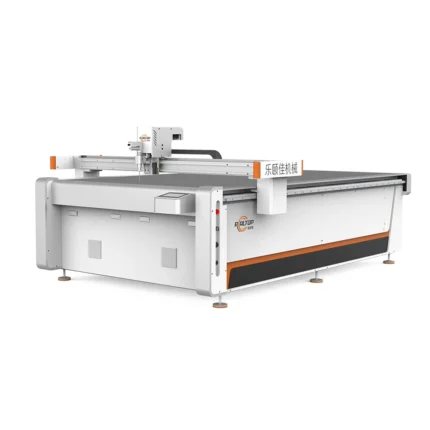
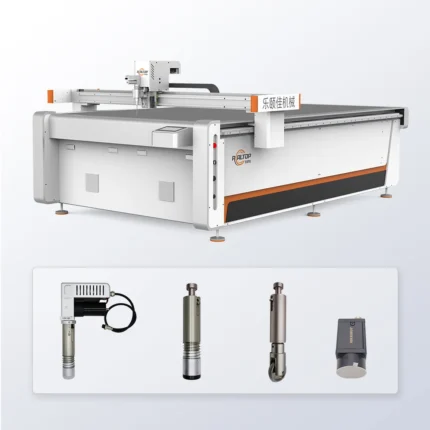
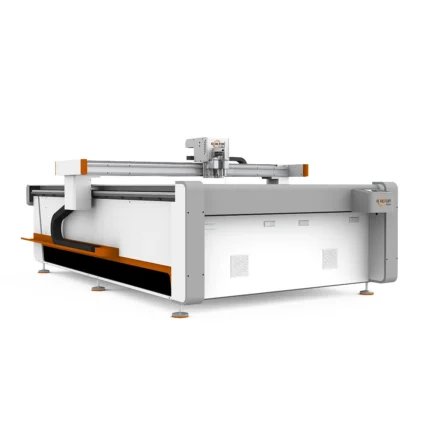

Jinan Realtop CNC Foam Cutting Machine 2026
Product Introduction
Jinan Realtop CNC Foam Cutting Machine 2026, a high-precision solution from China's leading welding & cutting equipment manufacturer, ideal for efficient foam cutting applications with reliable performance and advanced CNC technology.Key Specifications
| Model | 2026 |
| Type | CNC Foam Cutting Machine |
| Manufacturer | Jinan Realtop |
| Origin | China |
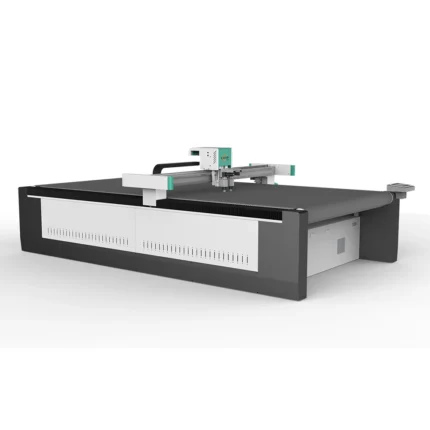
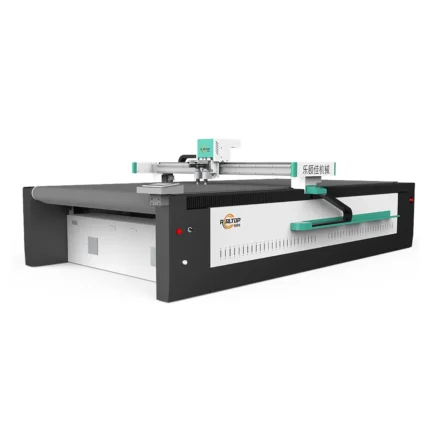
Realtop 2026 CNC Digital Knife Cutting Machine
Product Introduction
Realtop CNC Digital Knife Cutting Machine 2026, a precision cutting solution for various materials, ideal for industrial manufacturing with advanced CNC technology.
Key Specifications
| Model | Realtop CNC Digital Knife Cutting Machine 2026 |
| Type | CNC Digital Knife Cutting |
| Application | Industrial Material Cutting |
| Manufacturer | Chinese Welding & Cutting Equipment Factory |
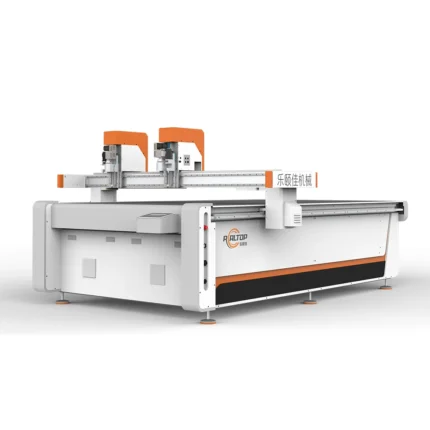
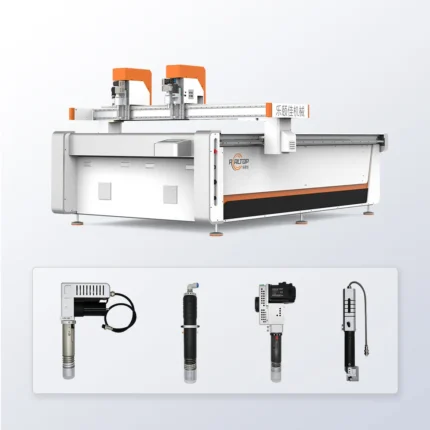
Realtop 2026 XPE Foam Cutter High-Precision Roller
Product Introduction
High-precision Realtop XPE Foam Cutting Machine 2026 with roller cutting system, ideal for efficient foam processing with accuracy. Perfect for manufacturing and industrial foam cutting applications.Key Specifications
| Model | Realtop XPE 2026 |
| Type | Roller Foam Cutter |
| Precision | High-Precision |
| Application | Foam Cutting |
商品评价
There are no reviews yet.