

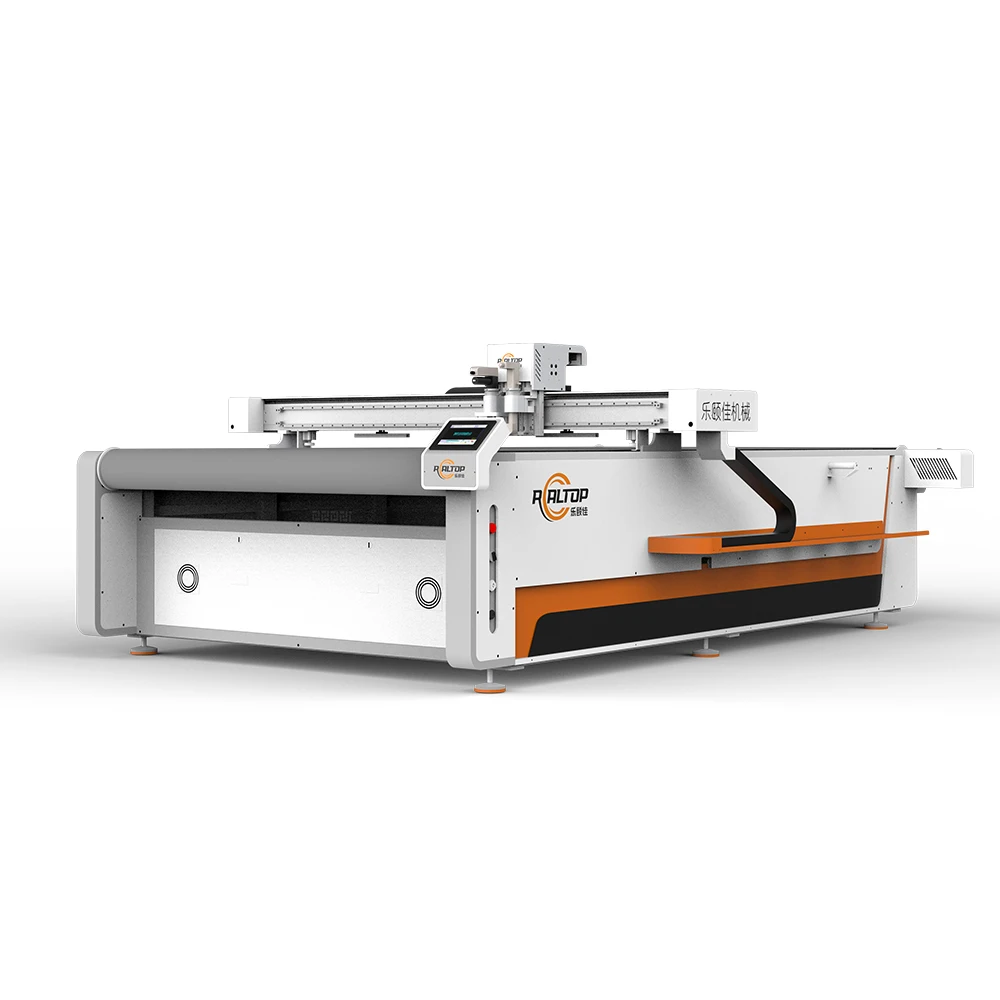

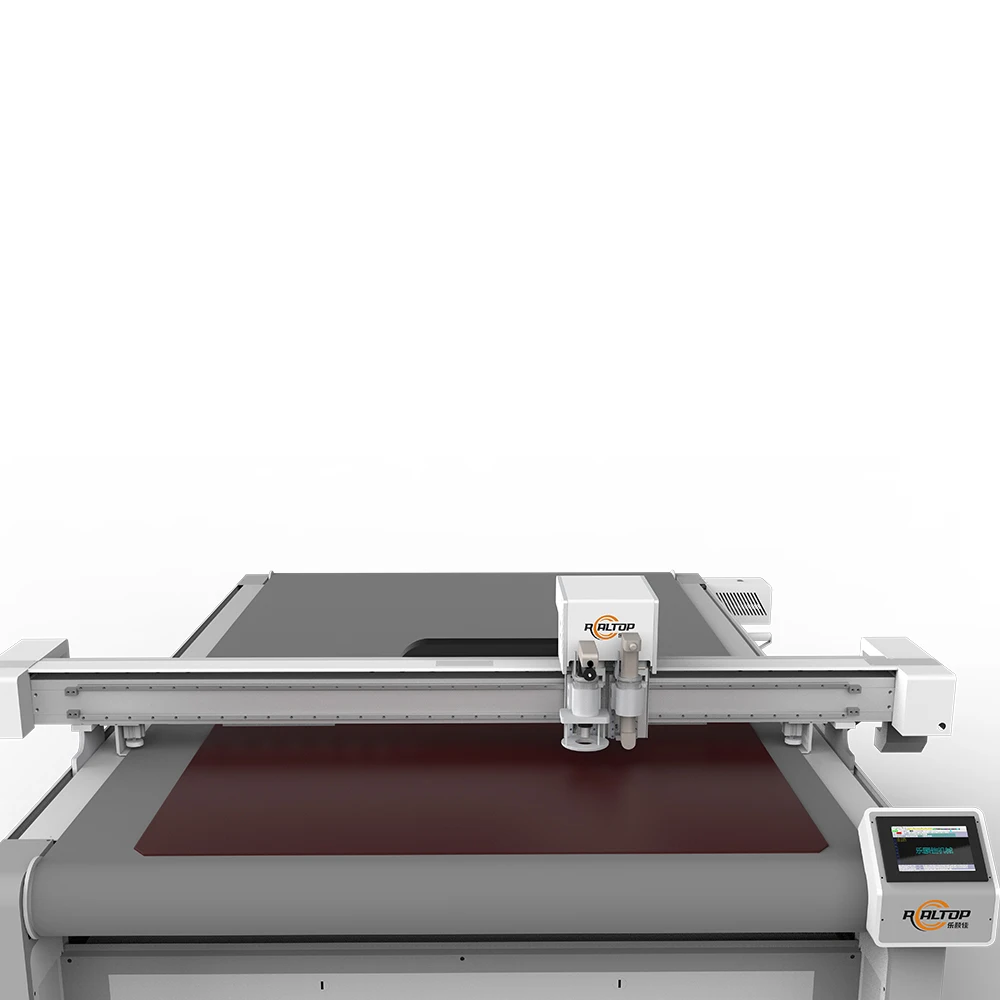
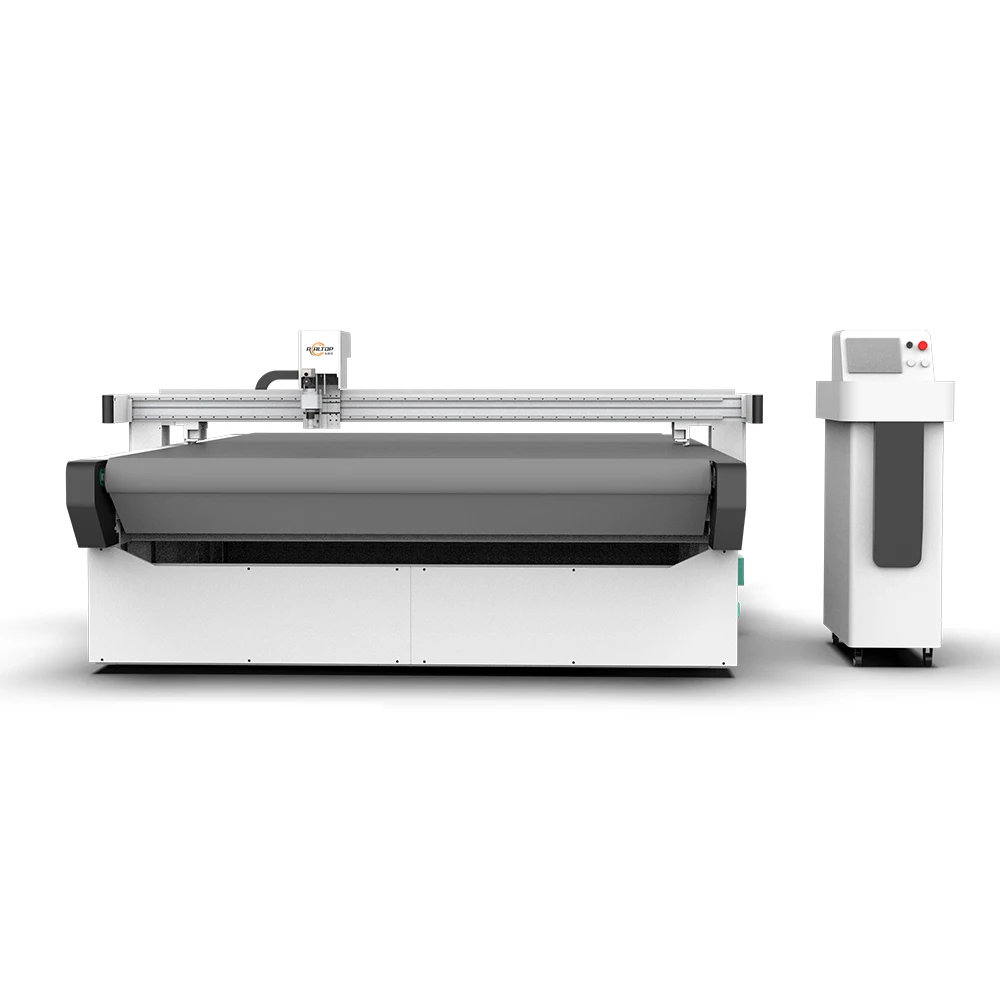
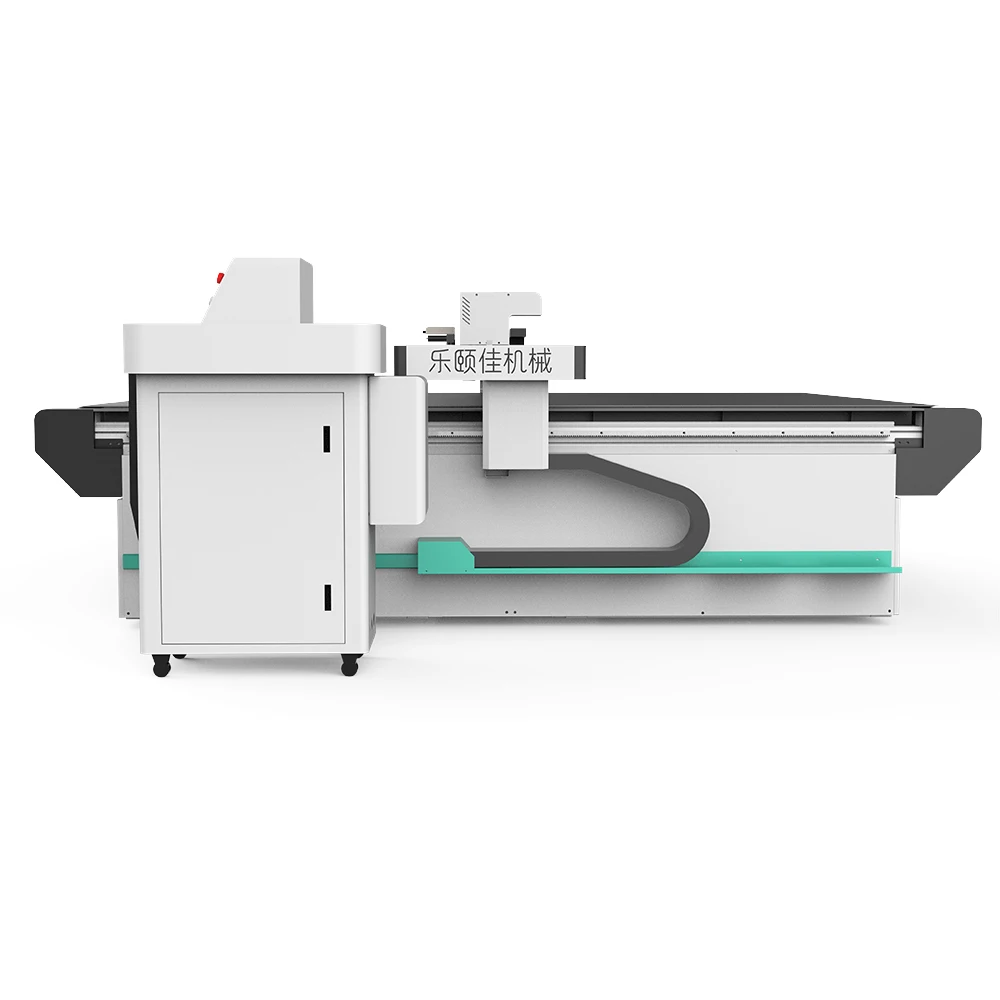




Automatic Digital Flatbed Oscillating Knife Cutter for Fabric – OEM Available
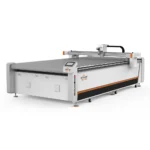
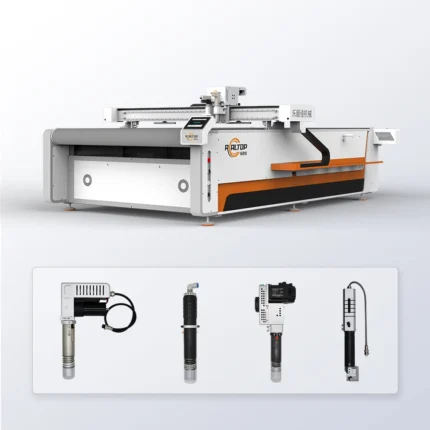
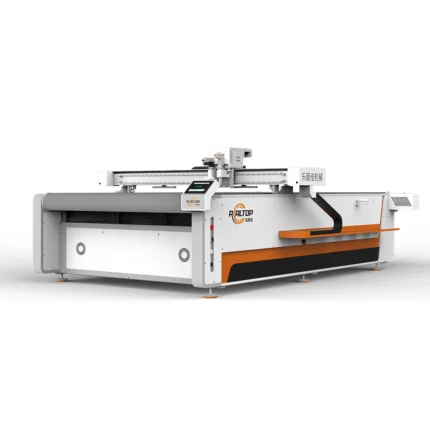
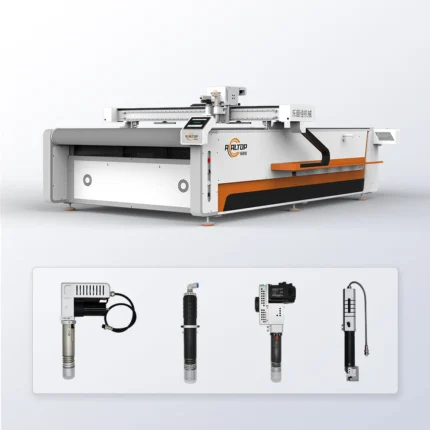
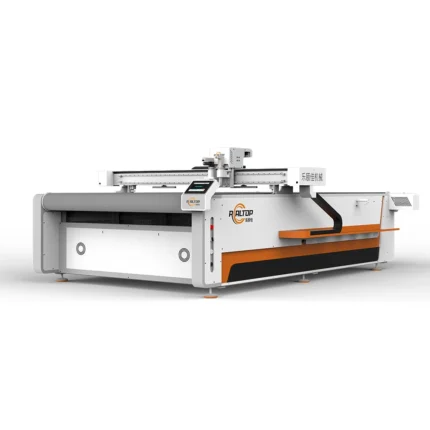
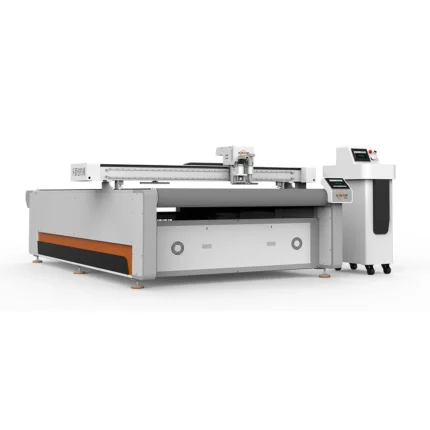
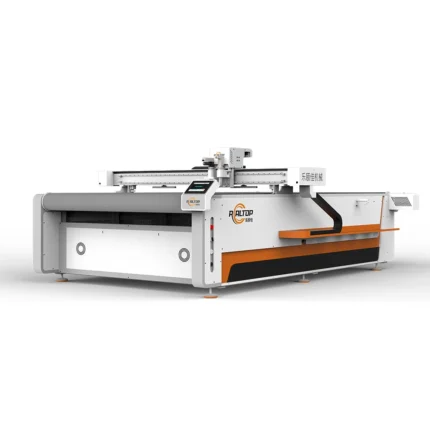
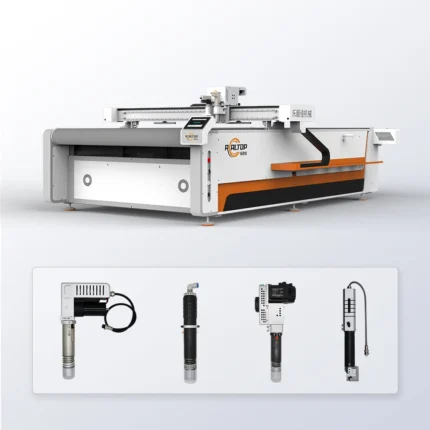
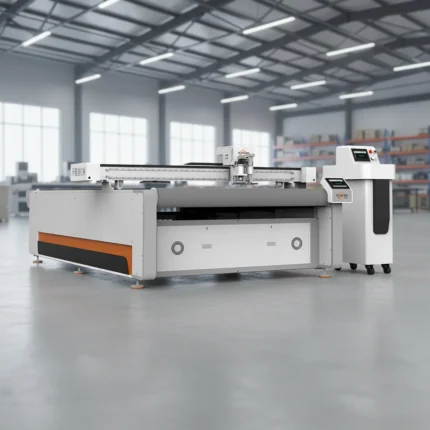
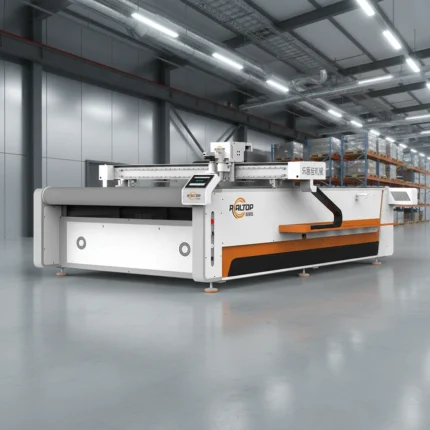
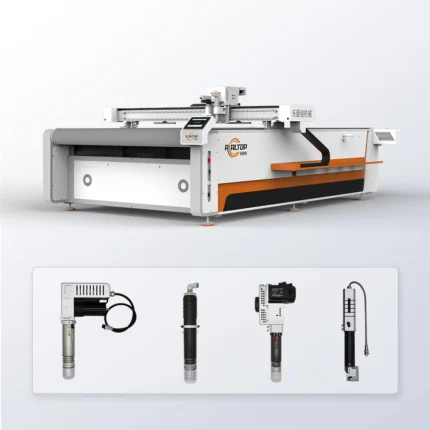
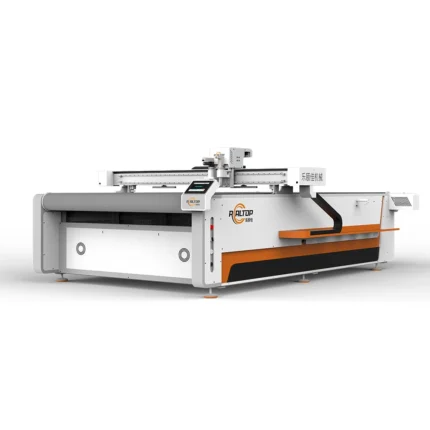
CNC Flatbed Oscillating Knife Cutting Machine, 1600×2500 mm working area, ±0.1 mm accuracy, PLC control — engineered for cold cutting of fabric, leather and composite materials without scorching or toxic fumes. Interchangeable tool heads including oscillating knife, driven rotary knife and creasing wheel let you match the cutting method precisely to material type and thickness. Aluminum bellows vacuum table with 9 kW pump ensures stable hold-down during high-speed multi-layer cutting runs.
- Intelligent nesting with defect avoidance optimizes fabric yield
- Software imports PLT, DXF, AI and PDF formats directly
- 110V / 220V / 380V voltage options with multi-language control interface
Sample cutting on your own material is available before commitment, with a full test report covering edge quality and cycle time.
Multi-Method Cutting Match — In-house engineering covers both knife and laser platforms, enabling buyers to select the cutting method by material behavior rather than forcing one technology across every fabric type.
Technical Specifications
| Parameter | Value |
|---|---|
| Product Type | CNC Flatbed Oscillating Knife Cutting Machine |
| Working Area | 1600 × 2500 mm |
| Tool Head Options | Oscillating knife, Driven rotary knife, Creasing wheel, Kiss cutting tool, Pneumatic knife, Milling tool, V groove knife |
| Cutting Speed | 0–2000 mm/s (basis to be confirmed by material type and thickness) |
| Cutting Thickness | Up to 30 mm (basis to be confirmed by material density) |
| Cutting Accuracy | ±0.1 mm |
| Multi-layer Capability | Up to 30–50 mm thickness (basis to be confirmed by fabric type and layer count) |
| Vacuum Pump Power | 9 kW |
| Vacuum Table | Aluminum bellows vacuum table with full-surface adsorption |
| Control System | PLC control panel |
| Servo Motor Options | Panasonic, Delta, Dorna |
| Voltage Options | 110V / 220V / 380V |
| Software File Formats | PLT, DXF, AI, PDF |
| Nesting System | Intelligent nesting with defect avoidance |
| Safety Devices | Infrared sensor device, Emergency stop device |
| Machine Dimensions (L×W×H) | 3300 × 2100 × 1350 mm |
| Language Options | English, Russian, Italian, Chinese (custom languages available) |
| Certification | CE declaration available |
Application Suitability
| Application | Material or Output |
|---|---|
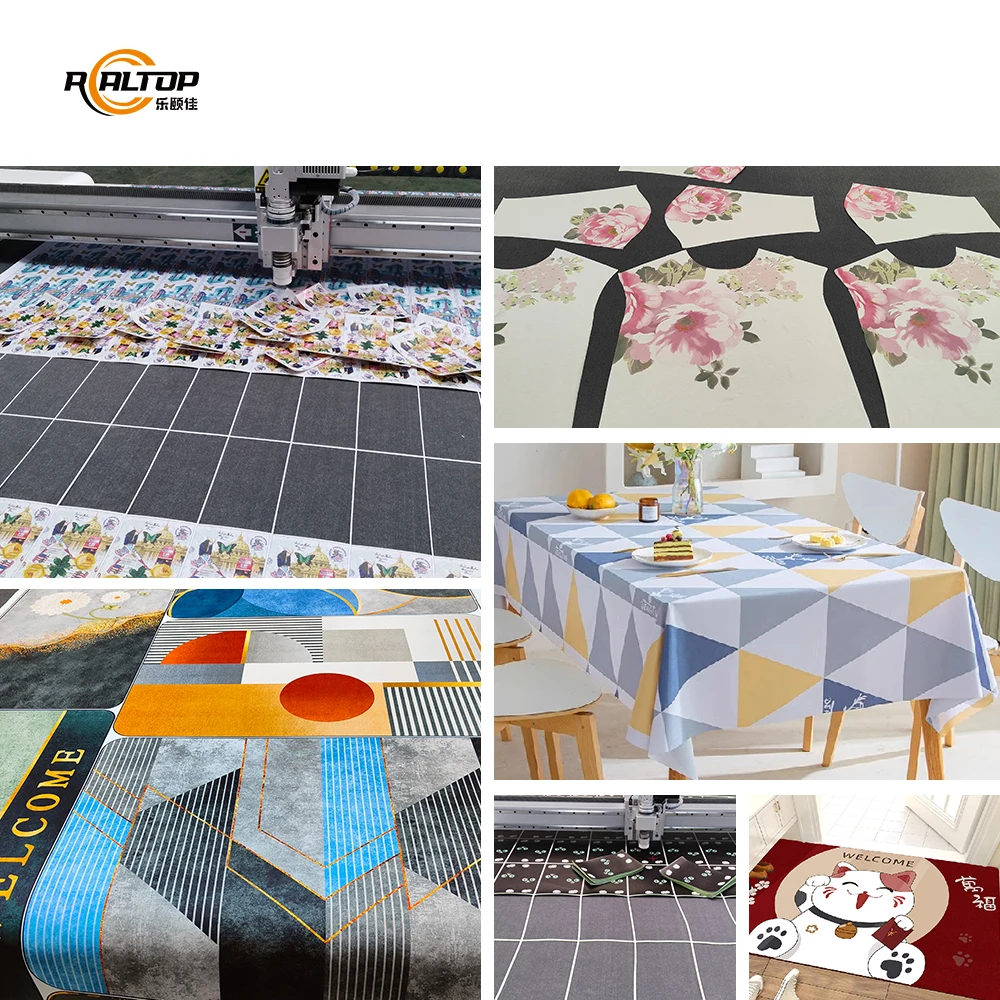
| Apparel manufacturing | Suits, knitwear, lace, complex pattern-matching fabrics |
| Automotive interiors | Seat fabrics, carpets, PVC mats requiring burr-free edges |
| Home textiles | Sofa fabrics, curtains, rugs in multi-layer layups |
| Composite material processing | Carbon fiber prepreg, aramid, specialty fabrics without delamination |
| Flexible material fabrication | Knits, wovens, plush, leather, foam, PVC, EVA, PTFE, rubber |
Why "Cold Knife vs. Laser" Decides Your Fabric Edge Quality
Synthetic fabrics cut by laser develop dark scorch marks, melted edges, and toxic fume residue — an oscillating knife eliminates thermal damage entirely.
When I first started doing on-site commissioning in Latin America, a sportswear client ran standard polyester samples on a laser unit and got clean edges. But their actual production run used a hot-melt adhesive-coated composite fabric. The laser melted the adhesive layer, fusing plies together and curling every edge. An entire container of material was scrapped before we switched to cold knife cutting. A CO2 laser cutting and engraving machine manufacturer will always advocate laser — but for coated textiles, thermal cutting creates defects that no amount of parameter tuning can fix. [NEED_CITE:]
Cold Knife Mechanics for Coated and Composite Textiles
The oscillating knife head vibrates at high frequency to slice through fabric layers without generating heat, which prevents edge sealing, melting, or adhesive bleed on coated materials. For sportswear laminates, automotive seat covers, and technical textiles with polymer coatings, this mechanical cutting action preserves the original material properties at the cut line. The CO2 laser cutting and engraving machine manufacturer alternative would seal synthetic edges — useful for some applications, but destructive when adhesive layers or foam cores are involved.
Vacuum Hold-Down and Multi-Layer Stability
The aluminum bellows vacuum table paired with a 9 kW pump creates full-surface adsorption across the 1600 × 2500 mm work area. This matters when cutting multiple fabric plies simultaneously — even slight material lift at high speed produces misaligned edges across the entire layup. For small pattern pieces like collar inserts or gussets, consistent vacuum pressure prevents shifting that would otherwise require re-cutting. [NEED_CITE:]
Matching Tool Head to Fabric Type
Each tool head option addresses a different material challenge. The oscillating knife handles standard wovens and knits up to the rated thickness. The driven rotary knife suits continuous curves on heavier textiles. The pneumatic knife provides additional downward force for dense foam or rubber gaskets. The kiss cutting tool scores adhesive-backed vinyl without penetrating the carrier sheet. Selecting the wrong head for your fabric — for instance, using a standard oscillating blade on closed-cell foam — produces ragged edges and crushed material rather than clean cuts. The PLC control panel stores tool-specific parameters so operators can switch between materials without manual recalibration each time.
Accuracy, Nesting, and File Workflow Integration
The ±0.1 mm cutting accuracy supports pattern-matching requirements in high-end apparel where grain alignment across multiple pieces must remain consistent. Intelligent nesting with automatic defect avoidance identifies fabric flaws during layout and routes cut paths around them, reducing waste on expensive materials. The system imports PLT, DXF, AI, and PDF files directly, which means existing CAD patterns transfer without format conversion. For facilities running multiple product lines, this file compatibility removes a bottleneck that frequently delays production startup on new equipment.
The Hidden Cost of Skipping Material-Specific Testing
When buyers specify a machine based on working area alone and skip material testing, the consequences emerge during production. A vacuum zone layout that works for large curtain panels may fail to hold small automotive gasket pieces, causing lift and edge deviation at cutting speed. A tool head that handles single-ply cotton cleanly may crush multi-layer foam composites. These problems surface only when real production material meets real production speed — and by then, the machine is already installed on the factory floor. [NEED_CITE:]
Why Sourcing From a Dual-Technology Manufacturer Matters
This platform exists within a manufacturing operation that builds both knife and laser cutting equipment, so the recommendation to use cold knife rather than laser is based on material science rather than product availability. Tool head and table configurations are specified per buyer material and production volume, not pulled from a standard catalog. Software compatibility is confirmed against the buyer’s existing CAD workflow before order placement. Voltage, plug type, and control language are validated for the destination facility — available options include 110V, 220V, and 380V configurations with English, Russian, Italian, Chinese, or custom language interfaces. Sample cutting on the buyer’s own material is conducted before commitment, producing a documented report on edge quality, cutting depth, and cycle time.
Documentation & Verification
- Machine specification sheet with tool head and table configuration matched to your material
- Electrical schematic with confirmed voltage and frequency for your facility
- Sample cutting report on your actual fabric with edge quality and cycle time data
- Software license with file format compatibility note for your CAD system
- Factory test record documenting performance on your specified material before dispatch
- Operation and maintenance manual in your selected control language
Installation, Commissioning & Support
- Foundation must support 3300 × 2100 × 1350 mm footprint with level floor tolerance for vacuum table seal integrity
- Dedicated power circuit matching confirmed voltage option with appropriate breaker rating for 9 kW vacuum pump
- Machine ships partially assembled; vacuum table and gantry require on-site alignment and calibration
- First-run parameter tuning conducted on buyer material to establish baseline cutting speed and tool pressure
- Operator training covers tool head changeover, nesting software, and PLC control panel navigation
- Spare parts list provided with recommended consumables for selected tool head configuration
What We Need to Recommend the Right Configuration
To specify the correct tool head, vacuum zoning, and servo configuration for your application, we need your material type with thickness and density data, your typical sheet size and daily volume, your facility voltage and frequency standard, and your preferred control language. If your production involves multiple material types, provide samples of each so we can test and document the appropriate parameters before building your configuration.
Frequently Asked Questions
Q: How do you verify cutting capacity for my specific fabric?
A: We run sample cuts on your actual material before order confirmation. The test documents edge quality, achievable cutting depth, and cycle time under realistic conditions. For multi-layer work, we test your exact layup thickness and fabric composition. This report becomes part of your order documentation so there are no surprises during production startup.
Q: Which tool head should I choose for my material?
A: Tool head selection depends on your material type, thickness, and edge quality requirements. Oscillating knife suits standard wovens and knits. Driven rotary knife handles heavy textiles with continuous curves. Pneumatic knife provides force for dense foam or rubber. We recommend based on sample testing results rather than general guidelines.
Q: Can the software work with my existing design files and facility voltage?
A: The system imports PLT, DXF, AI, and PDF formats directly. We confirm file compatibility with your current CAD workflow during the inquiry stage. Voltage is configurable across 110V, 220V, and 380V options, and we verify your facility standard before shipment along with plug type and control language preference.
Q: What does installation and operator training include?
A: Our team handles on-site assembly of the vacuum table and gantry, aligns the system, and runs first-article cuts on your material. Training covers tool head changeover procedures, nesting software operation, PLC parameter adjustment, and routine maintenance schedules. We also provide a spare parts list with consumables specific to your configured tool heads.


Related products
Automatic Multi-Layer Vibrating Knife Cutter 2026
Product Introduction
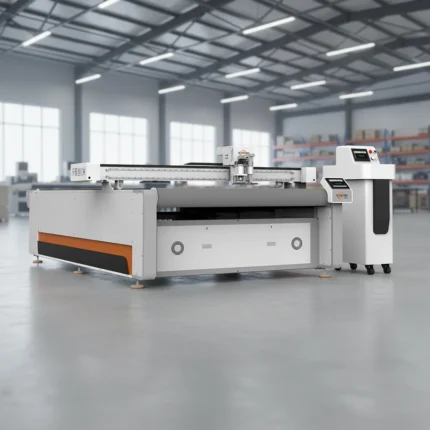
Automatic Multi-Layer Vibrating Knife Cutter 2026, ideal for precise cutting of various materials with multi-layer processing capability, enhancing production efficiency.
Key Specifications
| Type | Automatic Vibrating Knife Cutter |
| Layer Capacity | Multi-Layer |
| Model | 2026 |
| Function | Precision Cutting |
High Speed Fabric Cutting Machine 2026 Round Oscillating Knife
Product Overview
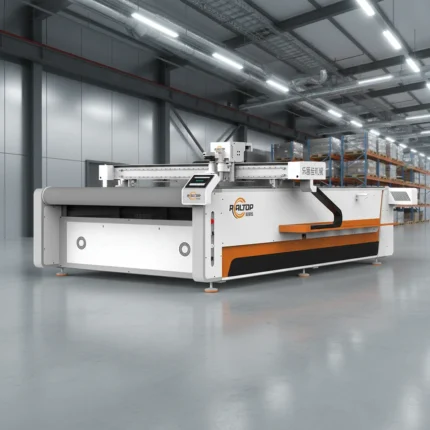
High Speed Fabric Cutting Machine 2026 with round and oscillating knife for efficient fabric cutting. Ideal for textile manufacturing and related industries.Key Specifications
| Cutting Type | Round & Oscillating Knife |
| Model Year | 2026 |
| Application | Fabric Cutting |
| Feature | High Speed Performance |
Jinan Realtop CNC Fabric Slitting Cutter 2026: Advanced Flexible Material Cutter
Product Introduction
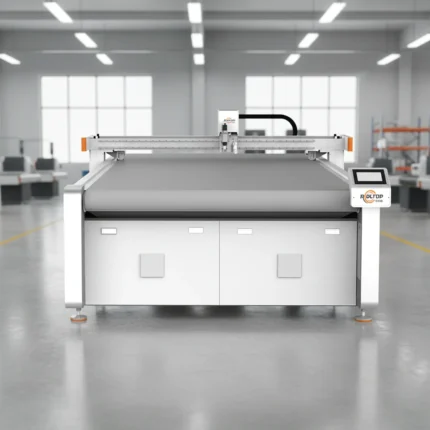
Jinan Realtop CNC Fabric Slitting Cutter 2026 is a high-performance cutting equipment designed for precise fabric processing, ideal for industrial manufacturing needs with reliable CNC technology.Specifications
| Model | 2026 |
| Type | CNC Fabric Slitting Cutter |
| Manufacturer | Jinan Realtop |
| Application | Fabric Processing |
| Control System | CNC |
Realtop CNC Fabric Cutting Machine 2026 CE Certified
Product Introduction
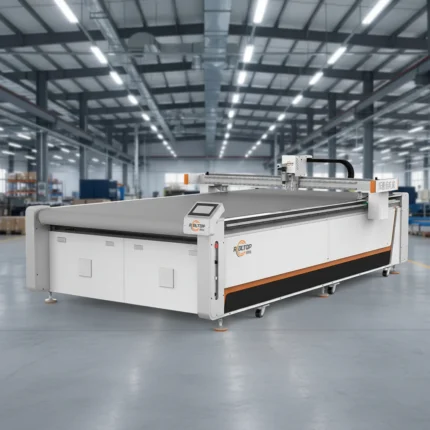
Realtop CNC Fabric Cutting Machine 2026, CE Certified, ideal for precision fabric cutting with advanced CNC technology. Engineered for efficiency and reliability in textile manufacturing processes.Key Specifications
| Model | Realtop CNC Fabric Cutting Machine 2026 |
| Certification | CE Certified |
商品评价
There are no reviews yet.