



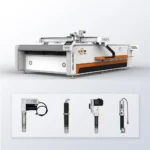
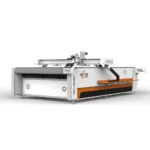


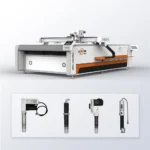
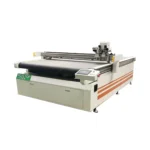
CNC Auto Feed Cutting Table for Fabric & Leather – OEM Available
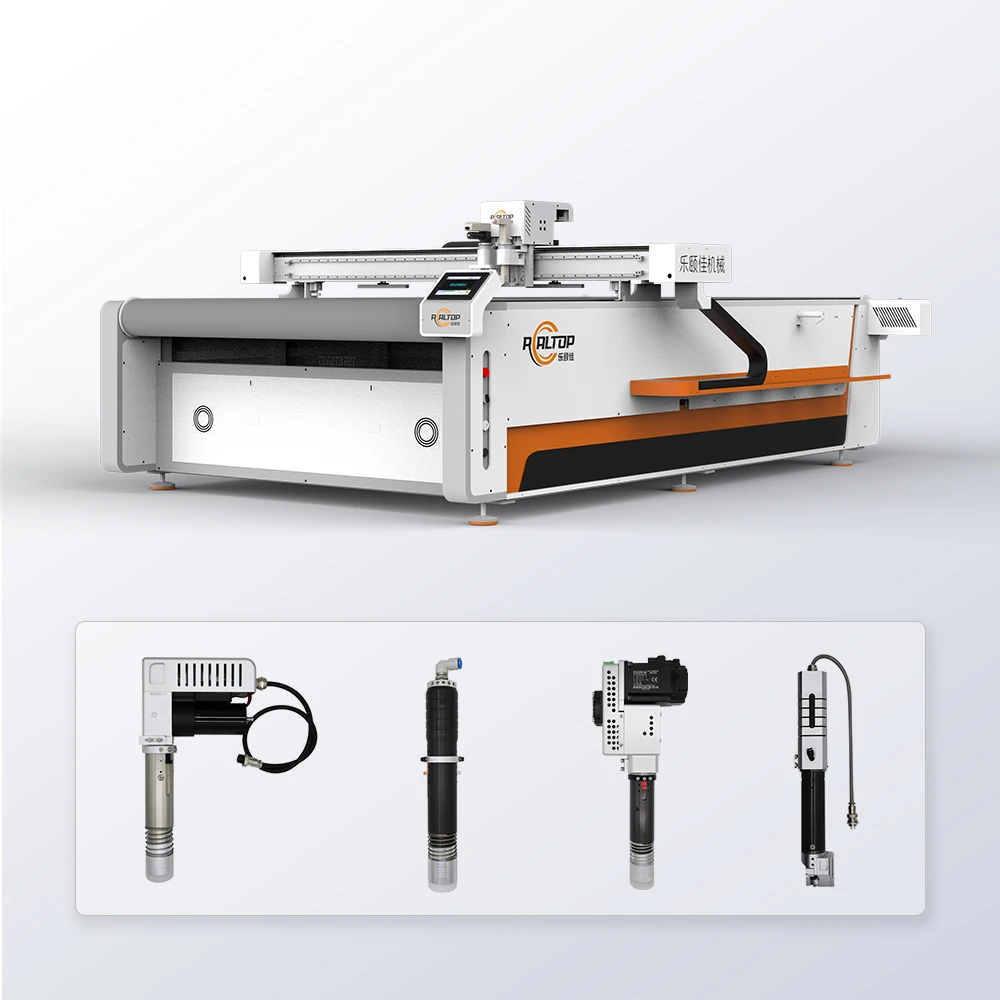
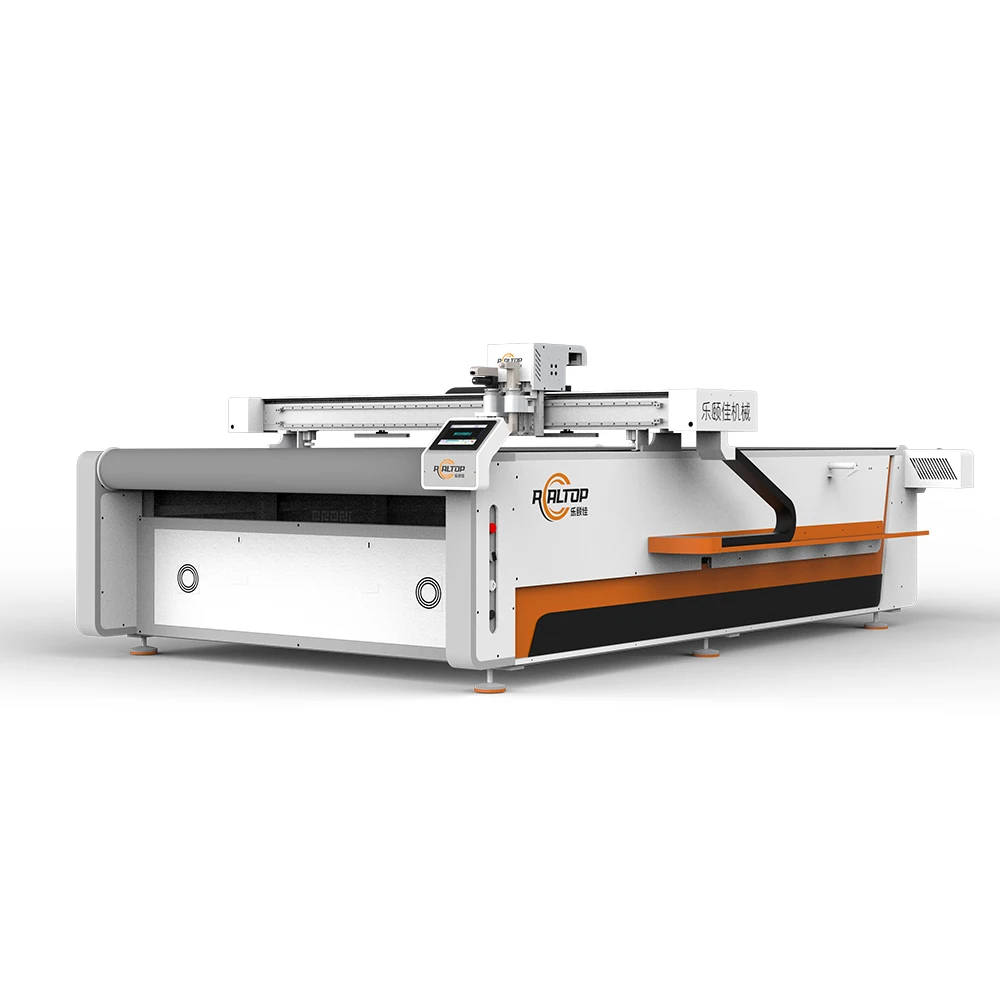
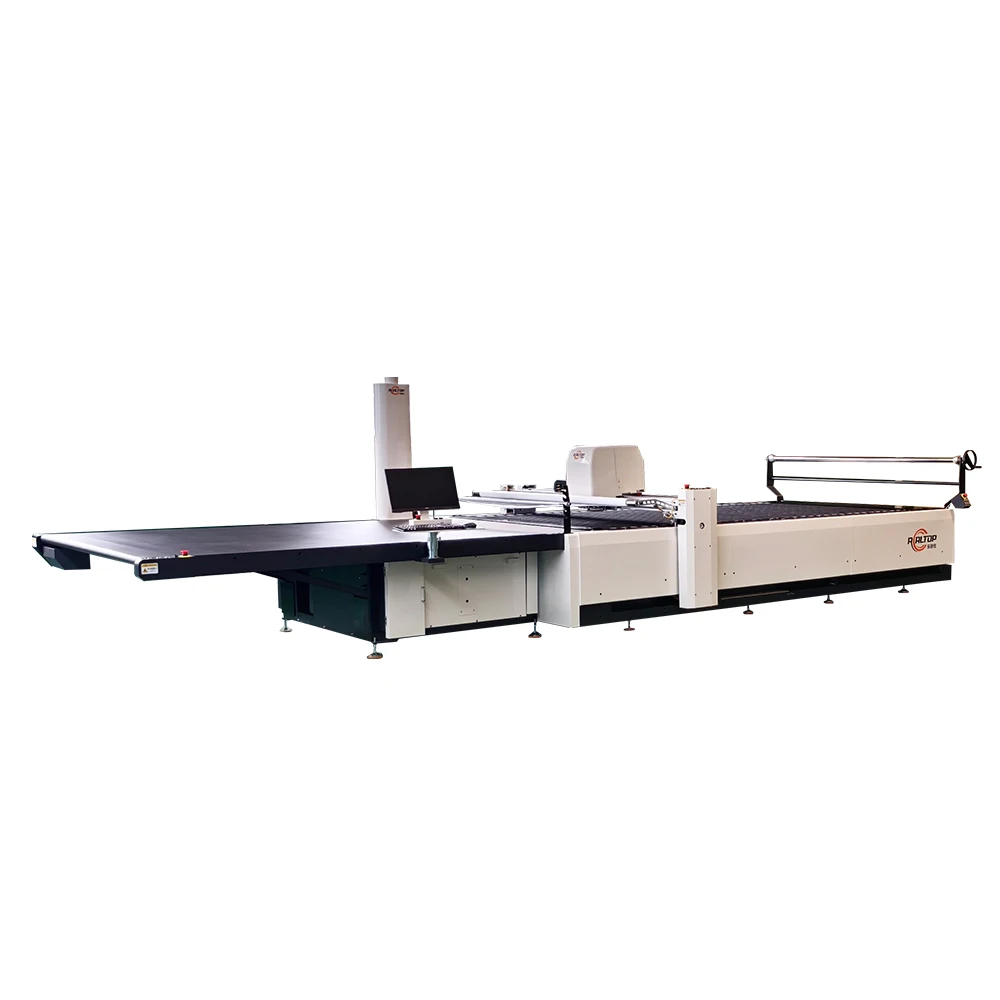
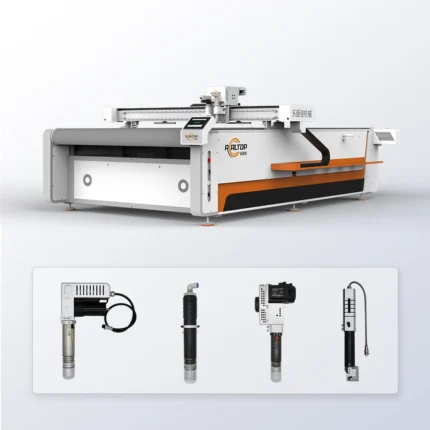
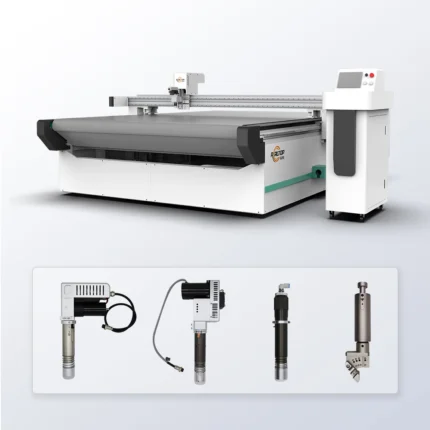
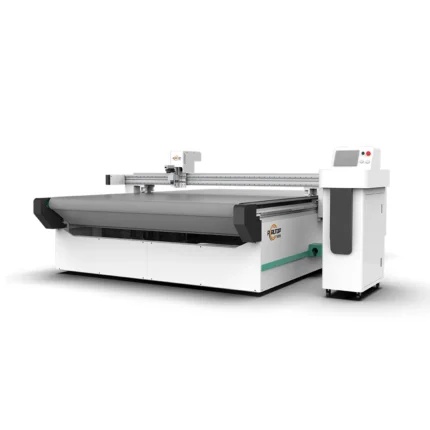
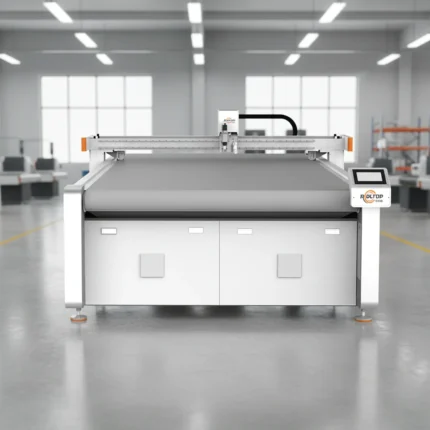
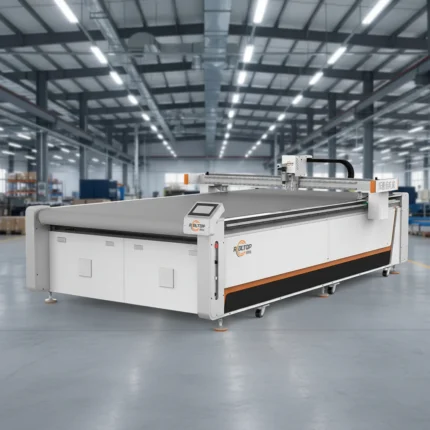
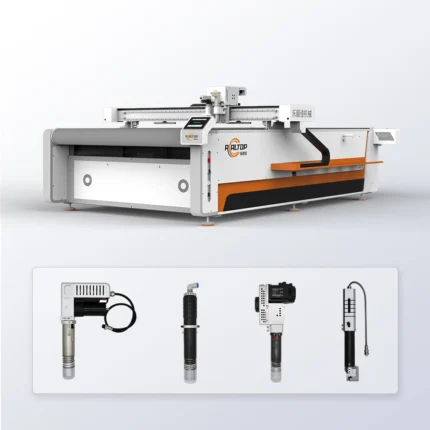
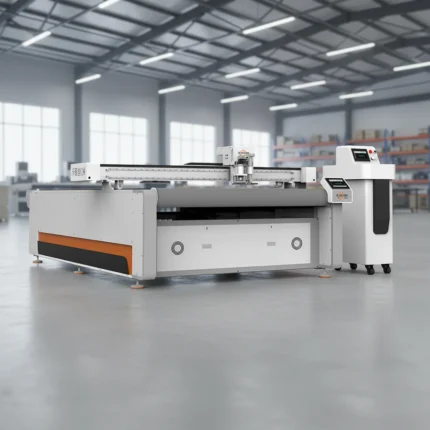
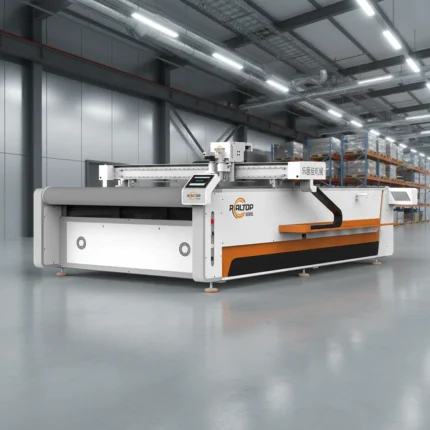
1625 CNC Auto Feed Cutting Table, 1600×2500mm cutting area, up to 30mm thickness, oscillating and rotary knife heads — designed for fabric, leather, foam and composite material processing. Tool heads are selected per material type and thickness, with aluminum bellows vacuum table and 9KW pump providing full-surface hold-down to prevent lift on small parts. CCD contour recognition supports printed mark tracking at production speed. Sample cutting on your actual material is completed before commitment, with tool head configuration and file format compatibility confirmed in advance.
Cutting method matched to material — our in-house design covers both knife and laser technologies, so we configure the tool head and table based on your actual fabric weight and composition rather than forcing a single cutting approach.
Technical Specifications
| Parameter | Value |
|---|---|
| Product Type | CNC Auto Feed Cutting Table |
| Model | 1625 |
| Cutting Area | 1600 × 2500 mm |
| Tool Head Options | Oscillating knife, Driven rotary knife, Creasing wheel, Kiss cutting tool, Pneumatic knife, Milling tool, V-groove knife |
| Cutting Thickness | Up to 30 mm |
| Cutting Accuracy | ±0.1 mm |
| Cutting Speed Range | 0–2000 mm/s |
| Vacuum Pump | 9 kW |
| Vacuum Table | Aluminum bellows vacuum table |
| Servo Motor Options | Panasonic, Delta, Dorna |
| Control System | PLC control panel with optional display languages |
| Voltage Options | 110V, 220V, 380V |
| File Format Support | PLT, DXF, AI, PDF |
| Safety Devices | Infrared sensor device, emergency stop |
| Machine Dimensions | 3300 × 2100 × 1350 mm |
| Language Options | English, Russian, Italian, Chinese, others on request |
Application Suitability
| Application | Material or Output |
|---|---|
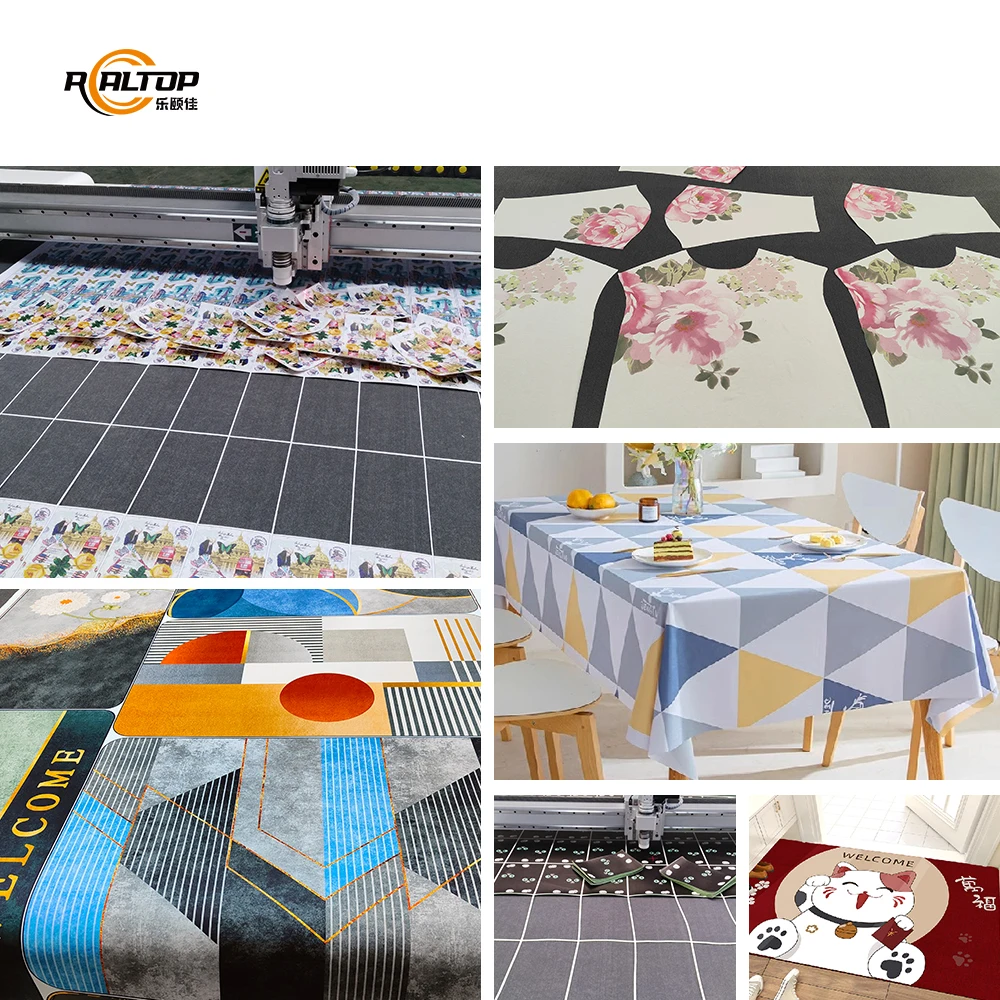
| Apparel manufacturing | Suits, knitwear, lace, multi-layer woven and stretch fabrics |
| Automotive interiors | Seat fabrics, floor carpets, PVC mats |
| Home textiles | Sofa upholstery fabrics, curtains, area rugs |
| Composite processing | Carbon fiber prepreg, aramid sheets, specialty layered materials |
Why the Wrong Tool Head Costs More Than the Machine Itself
Choosing a cutting method based on brochure specs alone leaves most textile buyers exposed to ragged edges and rejected panels. The tool head must be matched to the exact fabric weight, weave and layer count before the order is placed.
I once watched a garment factory run a standard oscillating knife through a four-layer stack of stretch Lycra blend. The edges frayed, the top layer shifted, and the cutting speed dropped to half the published rate [NEED_CITE: cutting tool selection criteria for multi-layer textile stacks]. That line did not produce saleable pieces until we swapped in a driven rotary knife and adjusted the vacuum zoning. A CO2 laser cutting and engraving machine manufacturer might quote an impressive speed figure, but if the tooling is wrong for your material, the number means nothing on the shop floor.
Process Selection for Textile and Composite Cutting
The Model 1625 platform supports interchangeable tool heads, so the cutting process can shift from oscillating knife for dense woven layers to driven rotary knife for stretch knits and lace. This flexibility matters when a single production line handles multiple fabric families. Each head mounts to the same gantry, and the changeover is handled at the PLC panel without mechanical rework.
Vacuum Hold-Down and Zoning Strategy
The aluminum bellows vacuum table pairs with a dedicated 9 kW pump to pull air through the surface and clamp material flat. On smaller pattern pieces, inadequate zoning allows edges to lift during the cut pass, producing dimension errors that only show up after nesting is complete [NEED_CITE: vacuum hold-down principles for CNC flatbed cutting tables]. The table can be configured with zone control so suction concentrates under the active cutting area, keeping even small garment panels stable at full traverse speed.
Reading the Specs That Actually Matter
The ±0.1 mm cutting accuracy figure sets the tolerance envelope for pattern pieces that go straight to sewing without rework. The 0–2000 mm/s speed range defines the envelope, but actual throughput depends on layer count, fabric density and the geometry of the nested layout — a dense suit jacket layout with tight curves will run slower than a simple rectangular home textile panel. The 9 kW vacuum pump rating tells you the suction reserve available; thicker multi-layer stacks consume more airflow, so this headroom keeps smaller parts from drifting. Servo motor selection across Panasonic, Delta and Dorna lets buyers align with the service network available in their region, which matters when a drive fault needs local support within a shift.
The Cost of Skipping Material Testing
I have seen buyers commit to a configuration based on a sample cut on standard cotton, only to discover their production fabric is a coated technical textile that demands a different knife geometry and lower cutting speed. The first two weeks on the shop floor then become an unplanned parameter study, with output falling well below the line’s capacity [NEED_CITE: material testing protocol for CNC fabric cutting equipment]. Every hour spent troubleshooting is an hour of lost production that could have been resolved with a test cut on the actual roll before shipment.
Why This Machine Is Built for Your Cutting Floor
The design team engineers both knife and laser systems in-house, which means the cutting method is selected based on your material rather than constrained by a single technology. Tool head and table configurations are specified against your sample fabric and daily volume, not pulled from a standard catalog page. Every Model 1625 unit goes through a factory test using the buyer’s own material, and the cutting report ships with the documentation package. File format compatibility for DXF, PLT, AI and PDF is confirmed against your existing nesting software before the order is finalized. Voltage, plug type and control panel language are locked in before production begins, so the machine arrives ready to power up [NEED_CITE: export machinery electrical configuration standards].
Documentation & Verification
- Machine specification sheet listing configured tool heads and vacuum table zoning
- Electrical schematic with confirmed voltage, plug type and circuit requirements
- Sample cutting report produced on your actual fabric before shipment
- Tool head and table configuration list matched to your material and volume
- Software licence and file format compatibility note for DXF, PLT, AI, PDF workflows
- Factory test record documenting cutting accuracy and edge quality on your material
Installation, Commissioning & Support
- Floor space planning based on 3300 × 2100 mm machine footprint and material feed clearance
- Dedicated power circuit confirmed for selected voltage at 110V, 220V or 380V with 9 kW vacuum load
- Assembly and leveling of aluminum bellows vacuum table on site with pump commissioning
- PLC control panel configured in selected language before first production run
- Operator training covering tool head changeover, nesting import and vacuum zone adjustment
- Spare parts list provided with recommended consumables for oscillating and rotary knife blades
Preparing Your Inquiry
Send us the fabric type, weight per square meter, layer count and maximum sheet width you plan to cut. Include your daily volume target and the nesting software you currently run so we can confirm file format compatibility. If your workshop operates on a specific voltage and frequency, note that along with the preferred control panel language. We will then run a sample cut on your actual material and return a cutting report with the recommended tool head configuration.
Frequently Asked Questions
Q: How do I decide between oscillating knife, driven rotary knife and laser for my fabric?
A: Oscillating knife suits dense woven multi-layer stacks. Driven rotary knife handles stretch knits and lace where a vibrating blade would distort the weave. Laser is used for synthetic fabrics that benefit from sealed edges. We test your actual material on each option and provide a cutting report showing edge quality and achievable speed before you choose.
Q: What voltage and control language will be configured for my factory?
A: The Model 1625 supports 110V, 220V and 380V configurations. We confirm voltage, plug type and frequency against your local supply before production. The PLC panel language is set to English, Russian, Italian, Chinese or another agreed language and verified at the factory test.
Q: Can you cut my actual production fabric and share the results before I order?
A: Yes. We require a sample roll of your production material and run it through the configured tool head on the Model 1625. You receive a cutting report documenting edge quality, dimensional accuracy and the recommended speed setting for your layer count and fabric weight.
Q: Will the software accept my existing DXF and PLT nesting files?
A: The control software imports PLT, DXF, AI and PDF formats. Before the order is confirmed, we test your actual production files on the system and document any nesting or layer assignment adjustments needed so your workflow continues without interruption.
Q: How is the vacuum table set up to hold small pattern pieces flat?
A: The aluminum bellows vacuum table can be configured with zone control so suction concentrates beneath the active cutting area. This prevents small garment panels and intricate lace pieces from lifting at the edges during high-speed cutting, maintaining the ±0.1 mm accuracy across the full 1600 × 2500 mm work area.


Related products
2026 Auto CNC Cloth Cutting Machine High-Precision Fabric Leather Plotter
Product Introduction
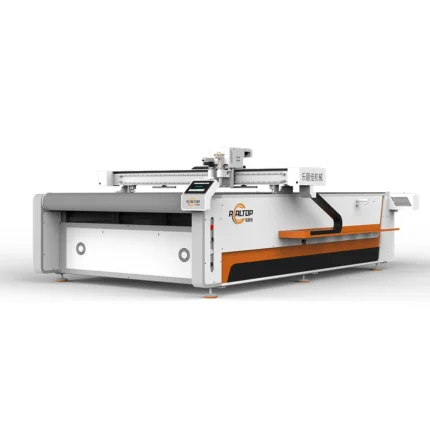
2026 Auto CNC Cloth Cutting Machine, a high-precision fabric & leather plotter designed for efficient cutting. Ideal for textile and leather industries with advanced CNC technology.
Key Specifications
| Model | Auto CNC Cloth Cutting Machine 2026 |
| Application | Fabric & Leather |
| Precision | High-Precision Cutting |
| Type | CNC Plotter |
2026 Flatbed Oscillating Knife Cutter 1600x3500mm Auto-Feeding Textile
Product Overview
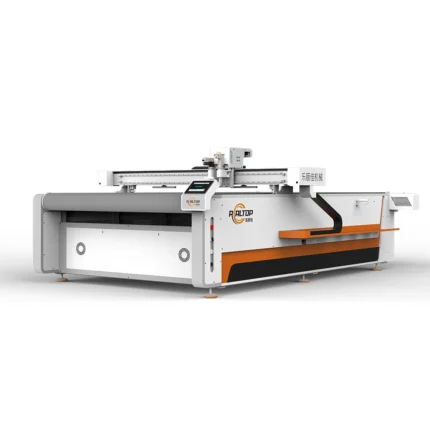
Flatbed Oscillating Knife Cutting Machine 2026 is a high-precision textile fabric cutter with auto-feeding function, ideal for efficient and accurate cutting tasks in textile manufacturing. It combines advanced oscillating knife technology with a large working area to meet industrial production needs.Key Specifications
| Model | 2026 |
| Working Area | 1600x3500mm |
| Feeding System | Auto-Feeding |
| Cutting Type | Oscillating Knife |
| Application | Textile Fabric |
Automatic Multi-Layer Vibrating Knife Cutter 2026
Product Introduction
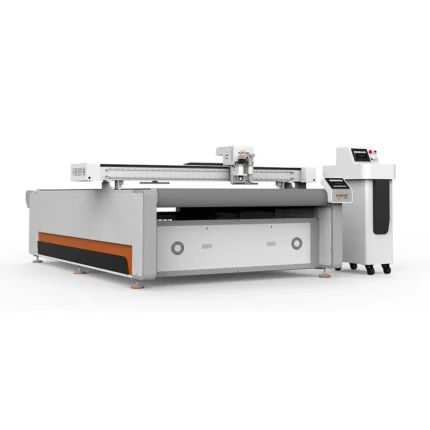
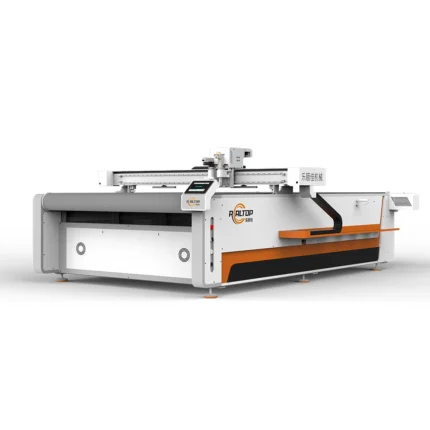
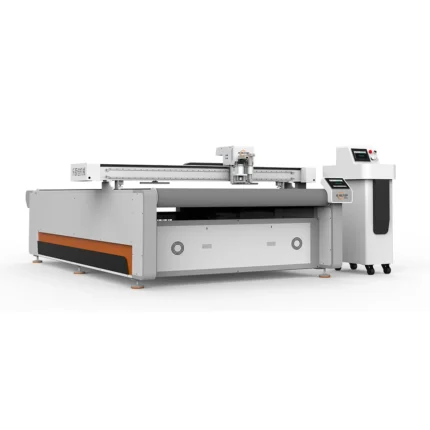
Automatic Multi-Layer Vibrating Knife Cutter 2026, ideal for precise cutting of various materials with multi-layer processing capability, enhancing production efficiency.
Key Specifications
| Type | Automatic Vibrating Knife Cutter |
| Layer Capacity | Multi-Layer |
| Model | 2026 |
| Function | Precision Cutting |
CNC Oscillating Knife Cutting Machine 2026 3000¡Á1600mm High-Speed
Product Parameters
| Model | CNC Oscillating Knife Cutting Machine 2026 |
| Working Area | 3000mm¡Á1600mm |
| Cutting Type | Oscillating Knife |
| Application | Fabric Cutting |
| Feature | High-Speed |
Introduction
High-performance CNC oscillating knife cutting machine with 3000mm¡Á1600mm working area, ideal for high-speed fabric cutting. Precision and efficiency for professional textile processing needs.

Jinan Realtop PVC Cutting Machine 2026 CE Certified
Product Introduction
Jinan Realtop PVC Cutting Machine 2026 is a CE-certified cutting solution, ideal for precise PVC material processing. Designed for efficiency and reliability in industrial applications.Product Parameters
| Model | 2026 |
| Certification | CE Certified |
| Application | PVC Cutting |
| Manufacturer | Jinan Realtop |
商品评价
There are no reviews yet.