





CNC Cutter Oscillating Kiss Knife for Packaging – Technical Guide
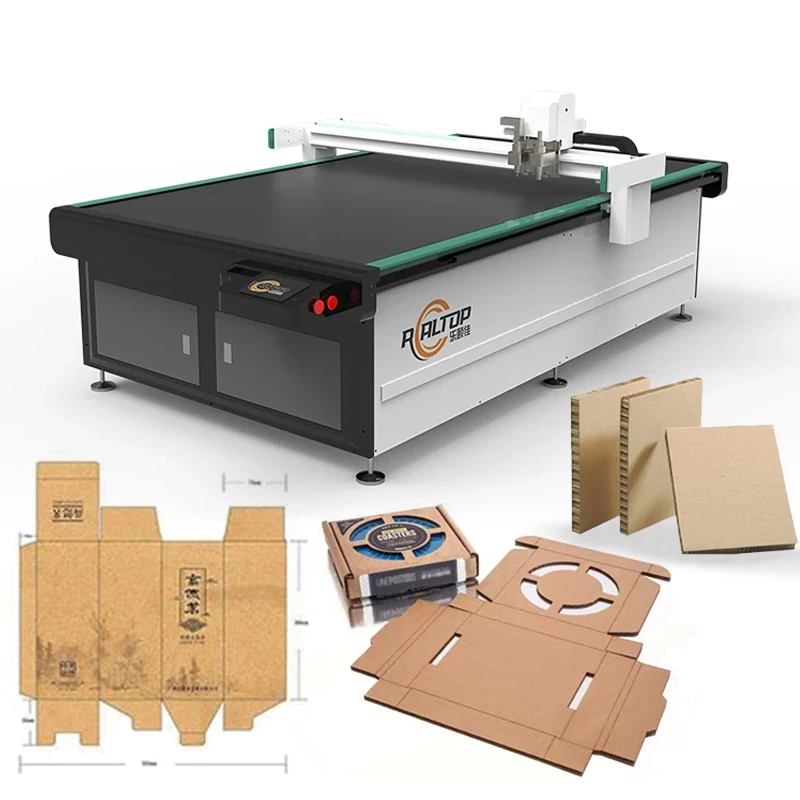
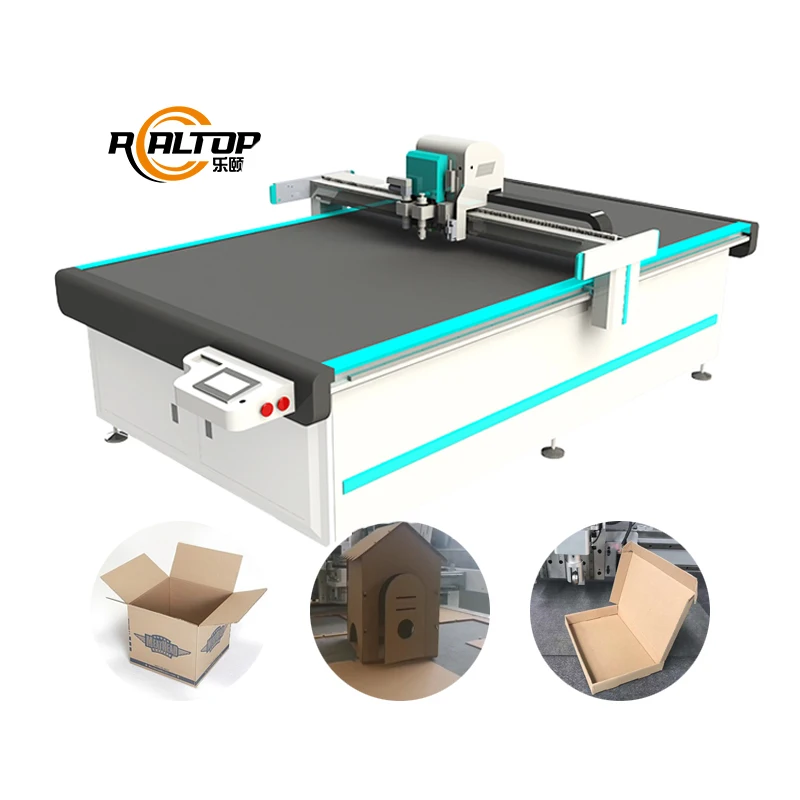
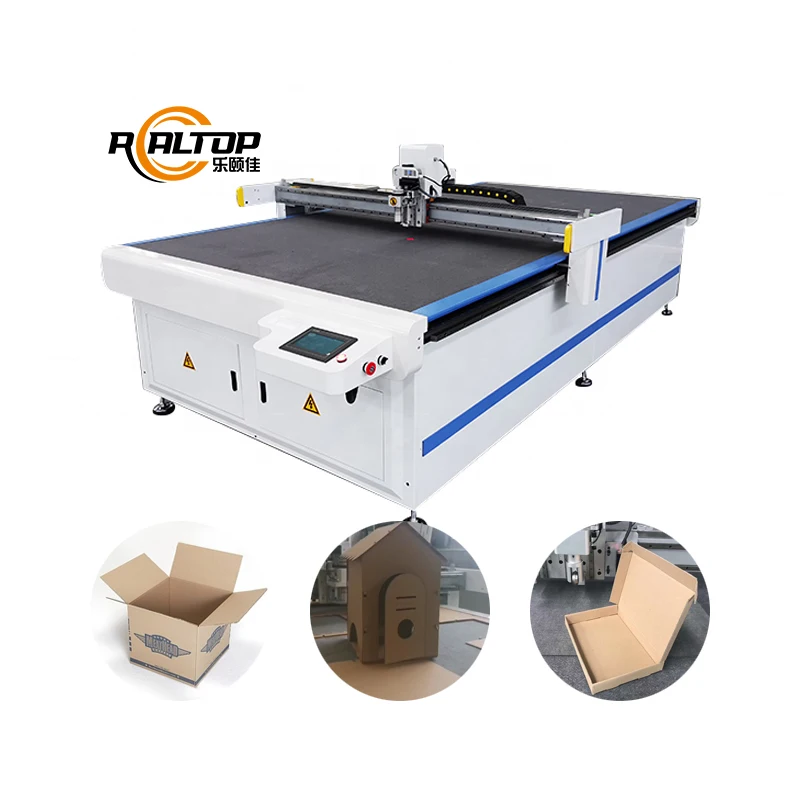
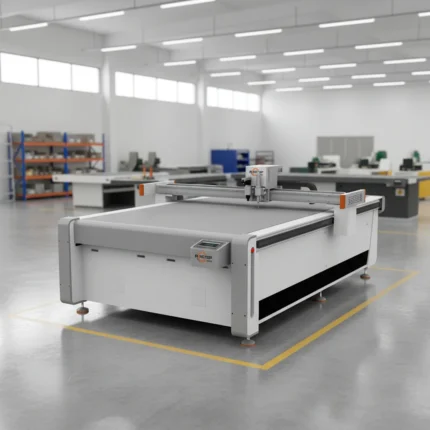
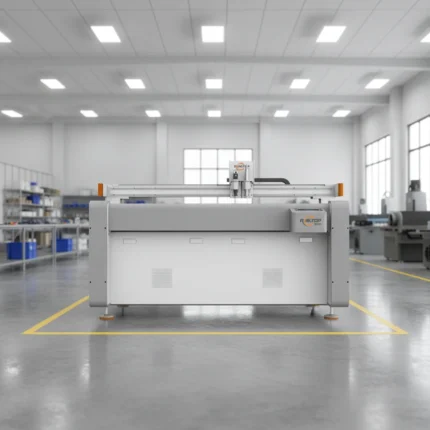
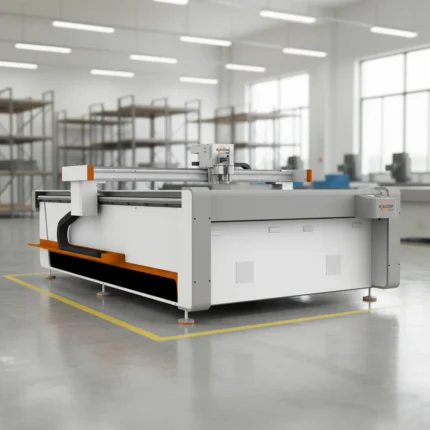
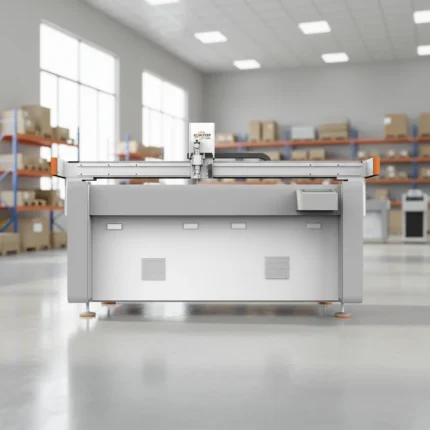
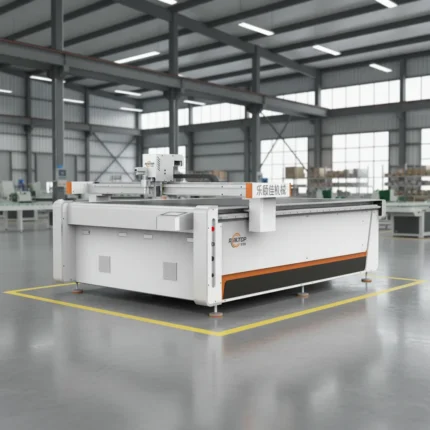
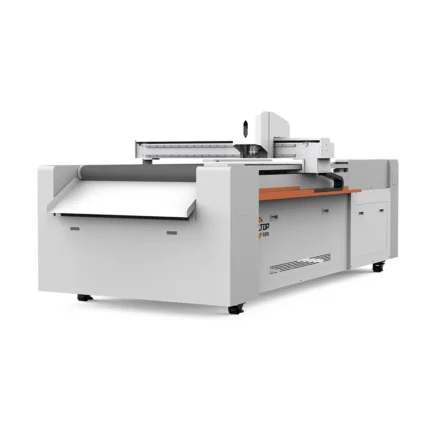
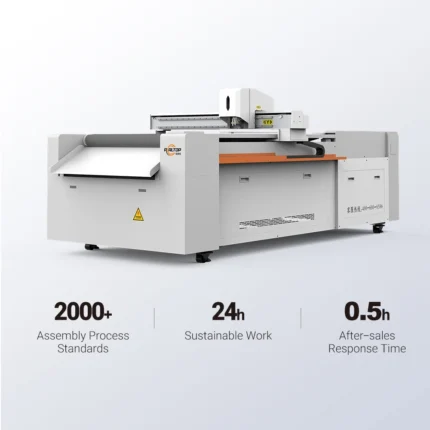
CNC Oscillating Knife Cutting Machine for Packaging, 2500×1600mm Working Area, 9kW — engineered for cardboard, stickers and packaging sample production. Multi-tool head setup includes oscillating knife, creasing wheel and kiss-cut blade, handling cutting and folding line work in one cycle. Aluminum honeycomb vacuum table with zoned hold-down keeps thin films and small sticker parts flat during high-speed contour cuts. Send your own material for a sample cut report before commitment, confirming edge quality and creasing depth on your actual stock.
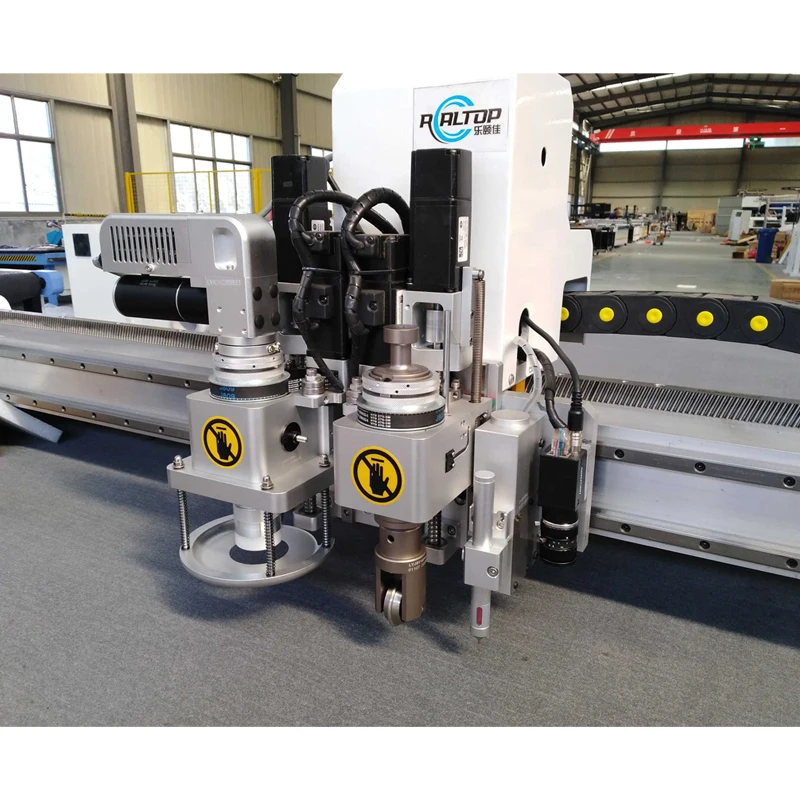
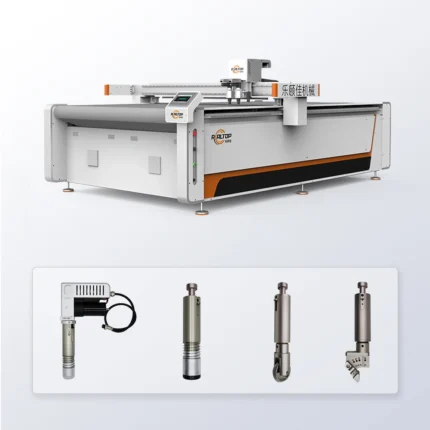
Tool Head Matched to Material — We configure oscillating knife, creasing wheel, kiss-cut and punch tools per stock type before the machine ships, eliminating ragged edges and crushed corrugated cores on arrival.
Technical Specifications
| Parameter | Value |
|---|---|
| Product Type | CNC Oscillating Knife Cutting Machine for Packaging & Cardboard |
| Working Area Options | 2500×1300 mm / 1600×2500 mm |
| Machine Dimensions | 3550×1910×1400 mm / 3450×2300×1250 mm |
| Tool Head Configuration | Oscillating knife, Creasing tool, Kiss-Cut Knife, Round punch |
| Fixing Method | Vacuum system with zoned adsorption |
| Rated Power | 9 kW |
| Vacuum Pump | 7.5 kW |
| Repeated Positioning Accuracy | <0.05 mm |
| Guide Rail | Taiwan Hiwin linear rail |
| Servo Drive | Dongling servo (Delta servo motor optional) |
| Safety Device | Infrared sensors, emergency stop |
| Profile Formats | DXF, OLT, PDF, AI |
| Transmission | Ethernet port |
| Voltage | 380 V (frequency to be confirmed per market) |
| Control Language | English, Russian, Italian, Chinese; custom languages available |
| Blade Supply | 10 pieces of oscillating blades included |
| Delivery Time | <30 working days |
Application Suitability
| Application | Material or Output |
|---|---|
| Packaging carton and cardboard sample making | Corrugated board, grey board, white card stock up to 18 mm thickness (basis to be confirmed per material grade) |
| Sticker and label contour cutting | Self-adhesive vinyl, PP paper, coated label stock |
| Short-run gift box production | Art paper, laminated board, specialty packaging papers |
| Express paper box packaging | Single and double-wall corrugated, kraft paper board |
| Leather accessory cutting | Genuine leather, synthetic leather, PU sheet for packaging inserts |
Why the Wrong Knife Head Wrecks Your Packaging Run
A CNC oscillating knife cutting machine for packaging only delivers clean edges when the tool head is selected against your actual stock, not the catalogue sample. Specifying a cutting table by working area alone is how packaging shops end up with crushed flutes and delaminated grey board.
I spent two days on-site with a carton sample maker who had purchased a flatbed cutter specified purely on bed size. Their standard white card ran perfectly during the factory test, but the moment they loaded their production-grade laminated grey board, the oscillating frequency was too low and the kiss-cut tool dragged through the face paper. Every prototype came off the table with torn corners and ragged crease lines. The downtime while we swapped the tool head, re-tuned the vacuum zoning for their smallest box blank, and re-cut the nesting templates cost them an entire production week [NEED_CITE: tooling mismatch costs in short-run packaging operations]. The machine was capable; the specification process was not.
Knife, Crease and Punch in One Cycle
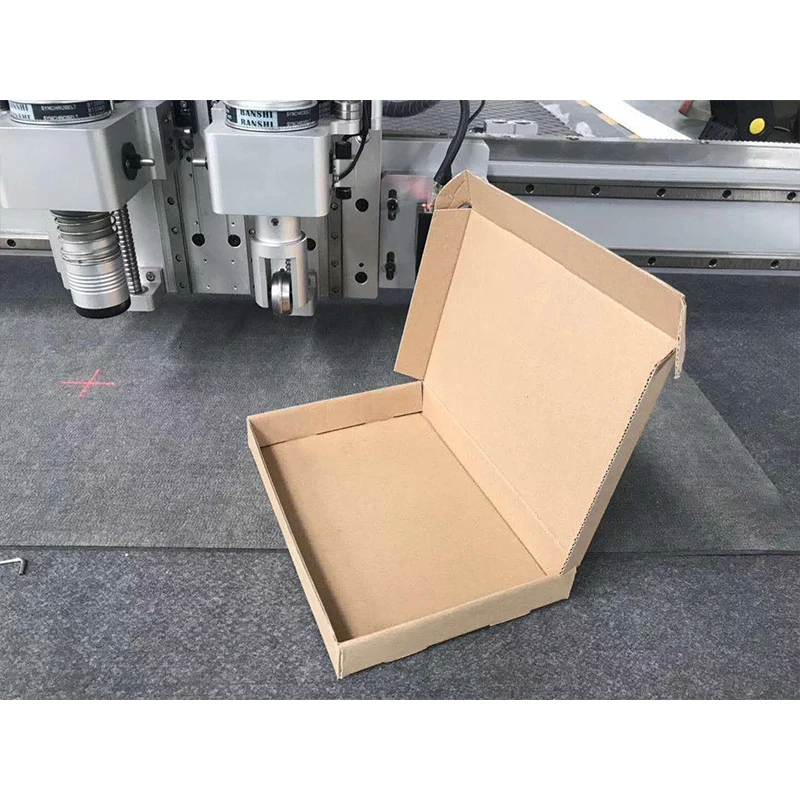
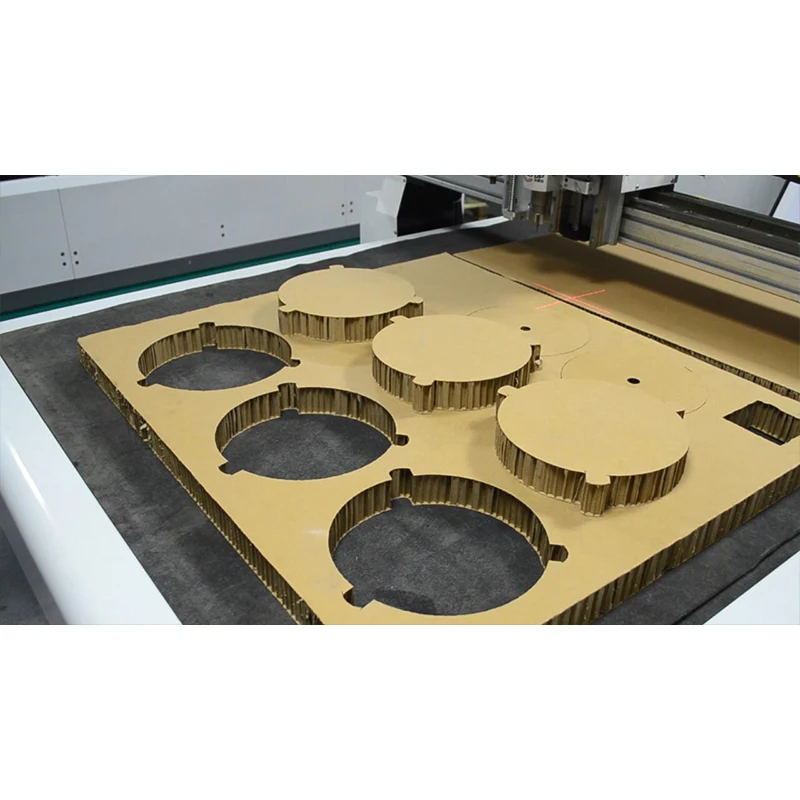
The defining advantage of this CNC oscillating knife cutting machine for packaging is the multi-tool head carriage. A single pass handles the contour cut, the fold-line crease and the ventilation punch without manual tool changes. For a carton sample shop running dozens of different box structures per day, that single-cycle capability removes the operator intervention that slows prototyping throughput.
Matching Oscillation Frequency to Board Density
Not all cardboard cuts the same way. A high-frequency oscillating knife slices cleanly through single-wall corrugated without compressing the flute, while a slower stroke with higher downforce handles dense grey board used for rigid boxes. The tool head configuration is confirmed against the buyer’s actual stock before order, with a sample cutting report documenting edge quality, crease depth and kiss-cut accuracy on the specific material. This prevents the situation where a machine arrives and immediately requires on-site re-engineering [NEED_CITE: oscillation frequency selection for corrugated and solid board].
Reading the Specs That Matter for Packaging Work
The <0.05 mm repeated positioning accuracy is driven by Taiwan Hiwin linear rails and rack-and-pinion transmission, which is the combination that maintains registration across long nesting layouts where dozens of box blanks are cut from a single sheet. For sticker and label contour work, that repeatability ensures the kiss-cut depth stays consistent from the first label to the last on a full bed of PP paper.
The 7.5 kW vacuum pump serves a zoned adsorption platform. Zoning matters because packaging shops frequently cut small parts — hinge patches, locking tabs, insert dividers — that a full-bed vacuum cannot hold flat. With independent zones, only the active cutting area draws suction, keeping thin films and light card stock from lifting into the knife path.
The software accepts DXF, OLT, PDF and AI profiles directly, which means most packaging designers can send files from their existing CAD environment without conversion. The Ethernet transmission replaces USB workflows that introduce version errors on busy shop floors. Voltage is quoted at 380 V as standard, but frequency and plug type must be confirmed against the buyer’s facility before the machine enters production [NEED_CITE: industrial voltage and frequency standards by export market].
The Cost of Skipping the Sample Cut
When a buyer commits to a flatbed cutter without requesting a sample cut on their own production stock, the risks compound after delivery. A vacuum table that holds A1-size sheets perfectly may leave small sticker labels lifting at the corners if the zoning is too coarse. A creasing wheel set to standard grey board will crack the surface of a laminated art paper if the pressure is not dialed to that specific coating. These are not machine failures; they are specification gaps that surface only under real production conditions [NEED_CITE: packaging sample cutting verification protocols].
Why Source This Machine From Realtop
In-house design covers both knife and laser cutting technologies under one roof, so the cutting method is matched to the material rather than forced into a single process. For packaging, that means the oscillating knife table is specified for board and sticker work while laser systems handle acrylic and wood display pieces — each technology doing what it does well.
Tool head and table configuration are locked in per material and production volume before the order is placed, documented in a written configuration list. Software compatibility with the buyer’s existing file format and nesting workflow is confirmed before the machine ships. Voltage, plug type and control language are finalized to match the destination facility. The buyer can send their own stock for a sample cutting test before any financial commitment, receiving a report that covers edge quality, crease accuracy and cycle observation on their specific material.
Documentation & Verification
- Machine specification sheet listing confirmed tool heads and vacuum zone count
- Electrical schematic with voltage and frequency matched to destination market
- Sample cutting report produced on the buyer’s own cardboard and sticker stock
- Factory test record documenting repeatability and crease depth before dispatch
- Software licence note with confirmed DXF, OLT, PDF and AI format compatibility
- Spare parts list covering oscillating blades, creasing wheels and felt pads
Installation, Commissioning & Support
- Floor space planning based on the 3550×1910 mm or 3450×2300 mm machine footprint plus operator clearance
- Dedicated 380 V circuit with rated 9 kW supply and confirmed plug type before wiring
- Machine arrives with carriage and vacuum table pre-assembled; gantry bolted on site
- First-run commissioning includes vacuum zone mapping and tool head calibration on buyer stock
- Operator training covers crease pressure tuning, nesting import and blade change procedure
- Ten oscillating blades supplied at delivery; replacement blade and felt sourcing documented
What to Share With Your Inquiry
To specify the right CNC oscillating knife cutting machine for packaging, send the material type, thickness range, maximum sheet size and the daily volume of box blanks or sticker sheets you intend to run. Confirm your facility voltage, frequency and the control language your operators need. If you have an existing CAD workflow or nesting software, share a sample file so format compatibility can be verified before quotation.
Frequently Asked Questions
Q: How is cutting thickness verified on my specific cardboard or sticker material?
A: We run a sample cut on your own stock before you commit to the order. The report documents edge quality, crease depth on your board grade, kiss-cut accuracy on your label film and any tool head adjustments made. The claimed ≤18 mm capacity is a starting point; your specific material density and coating determine the actual working range.
Q: What voltage and plug configurations are available for my market?
A: The standard quoted voltage is 380 V, but frequency and plug type vary by country and must be confirmed before production begins. We provide a full electrical schematic showing the supply requirements so your electrician can prepare the dedicated circuit before the machine arrives at your facility.
Q: Which tool head fits my packaging application?
A: It depends on the material and the cut type. Oscillating knife handles full-depth cuts through corrugated and grey board. The creasing wheel scores fold lines without cracking coated surfaces. Kiss-cut tools slice through sticker face stock without damaging the backing. Round punches create ventilation holes or hanging slots. We configure the carriage based on your actual product range.
Q: Can I send my material for a sample cut before placing the order?
A: Yes. Ship your production cardboard, sticker stock or laminated board to the factory and we run it on the configured machine. You receive a cutting report with edge photos, measured crease depth and cycle observation. This step catches material-specific issues that standard test sheets cannot reveal.
Q: What file formats does the software accept, and does it integrate with my nesting workflow?
A: The control software reads DXF, OLT, PDF and AI profiles directly. If you use a specific nesting application for carton layout optimization, share a sample file during the inquiry stage so we can confirm import compatibility and adjust the workflow before the machine enters production.


Related products

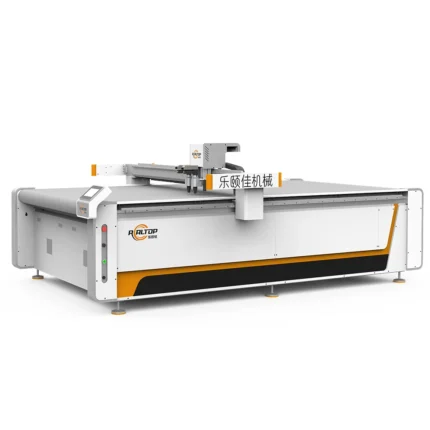

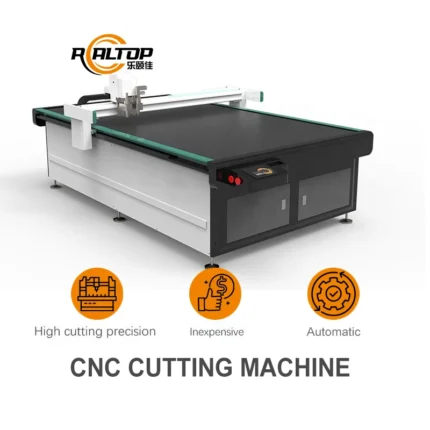
Realtop 2026 CNC Oscillating V-Cut Machine
Product Introduction
Realtop CNC Oscillating V-Cut Machine 2026 is a precision equipment designed for efficient V-cutting operations, ideal for various material processing needs with advanced CNC technology.
Key Specifications
| Model | Realtop CNC Oscillating V-Cut Machine 2026 |
| Type | CNC Oscillating V-Cut Machine |
| Application | Precision V-cutting operations |
| Feature | Advanced CNC technology |

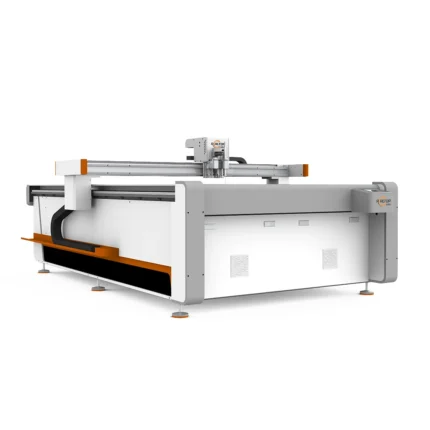
Realtop CNC Carton Box Cutter 2026 CCD Camera Honeycomb Cutting
Product Introduction
Realtop CNC Carton Box Cutter 2026 is a professional cutting solution featuring CCD Camera and Honeycomb Cutting technology, ideal for precise carton box processing with efficient performance.Product Parameters
| Model | Realtop CNC Carton Box Cutter 2026 |
| Vision System | CCD Camera |
| Cutting Technology | Honeycomb Cutting |
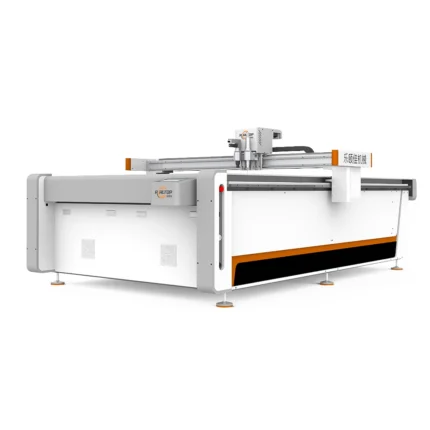

商品评价
There are no reviews yet.