

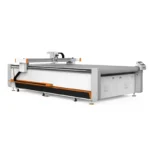

CNC Fabric Cutter 2026 Electric Blade Cutter for Textile – Manufacturer
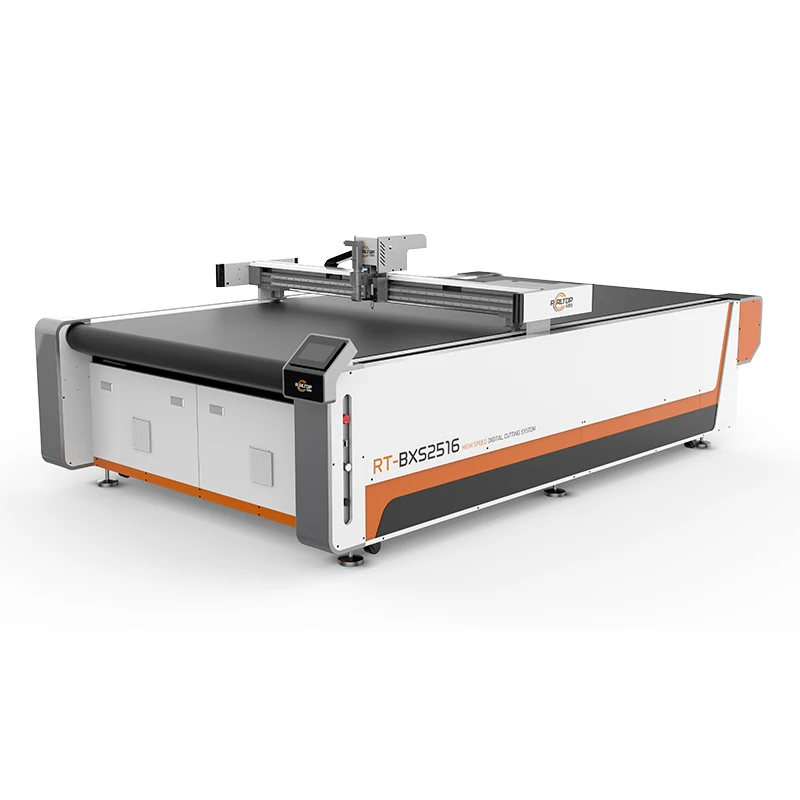
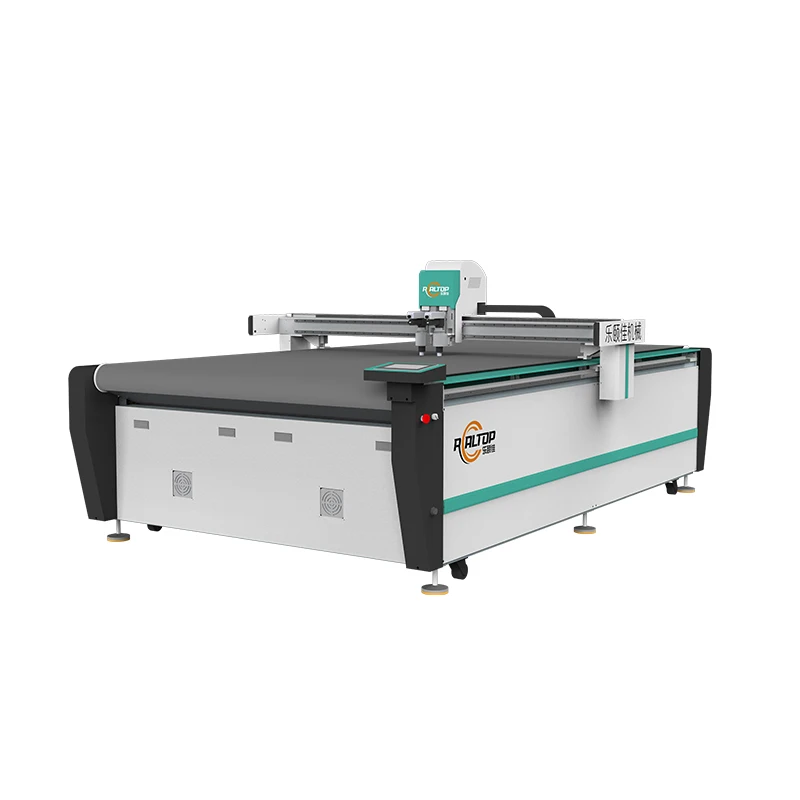
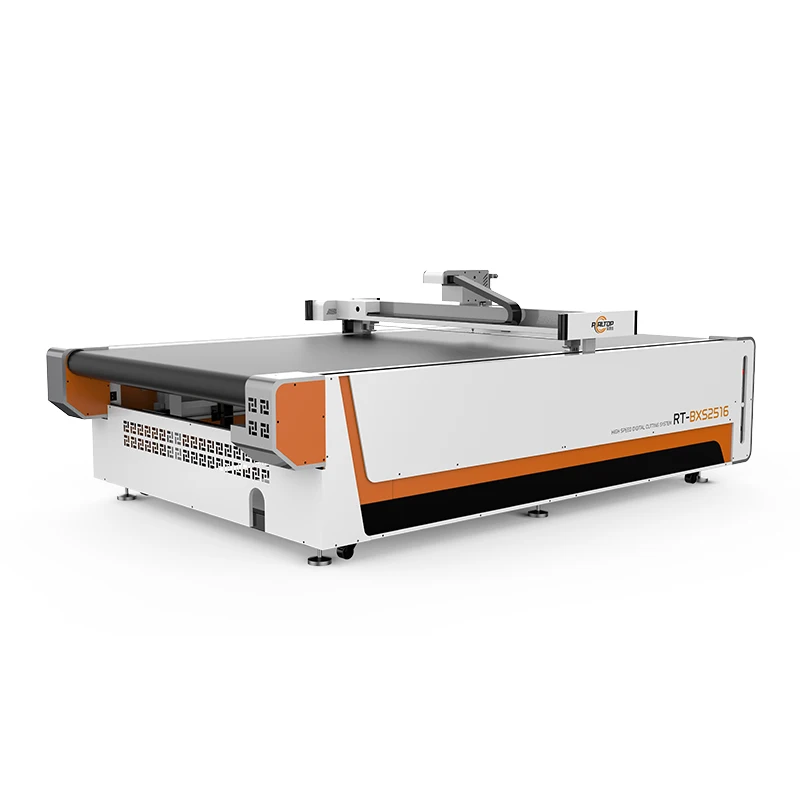
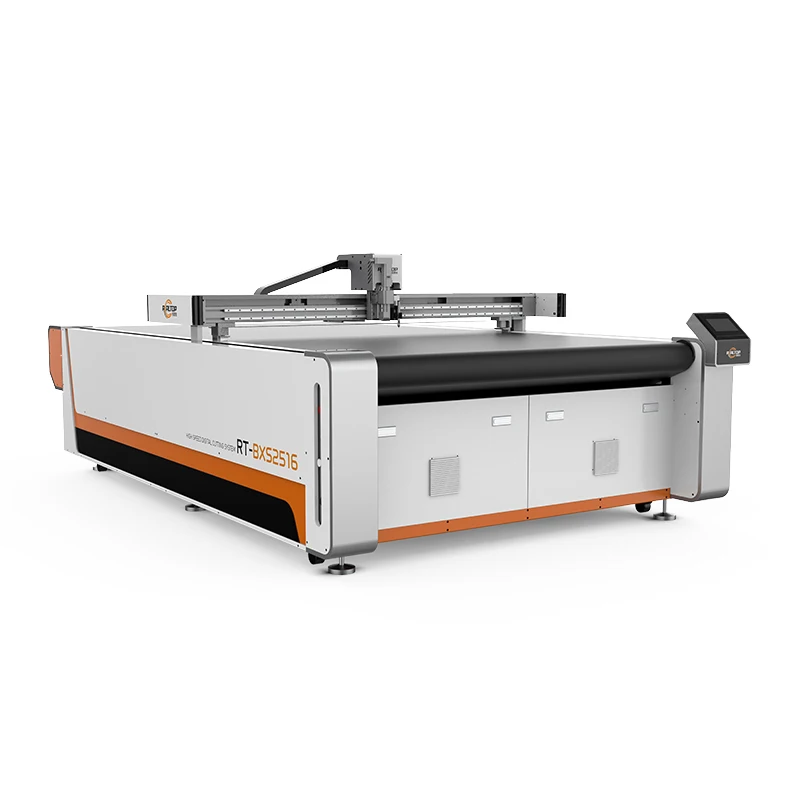
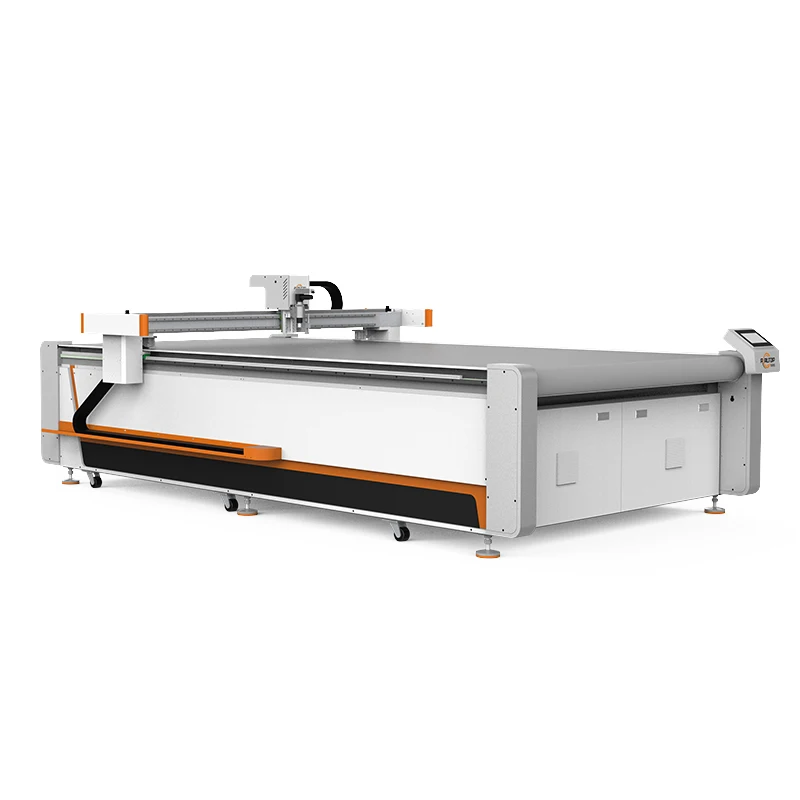
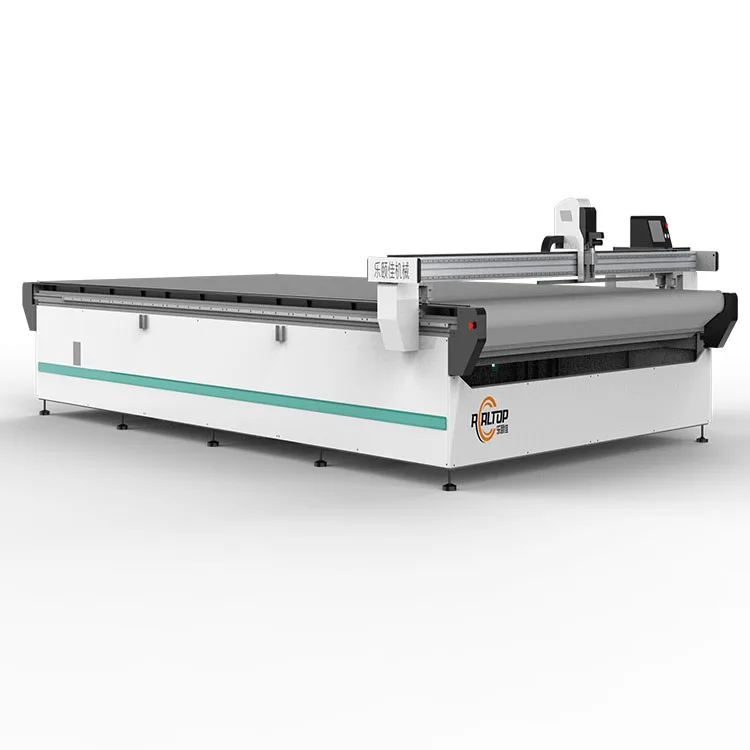
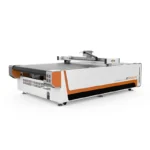
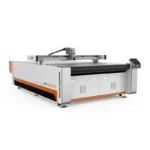
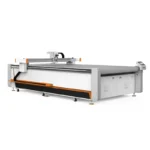
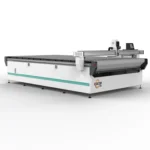
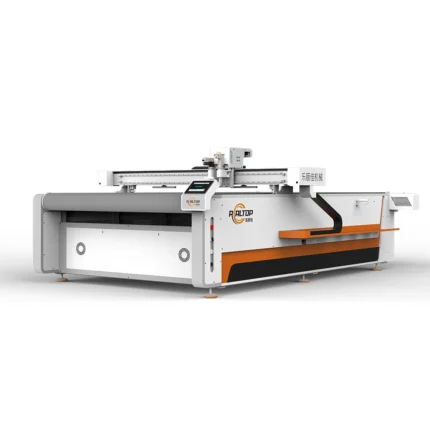
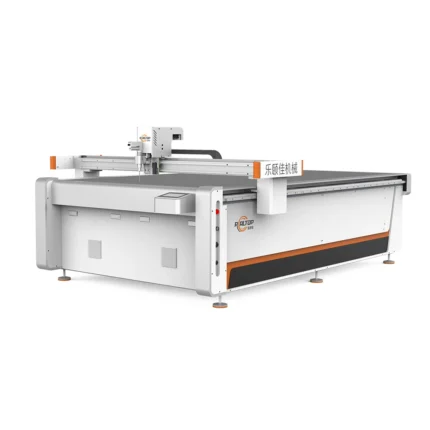
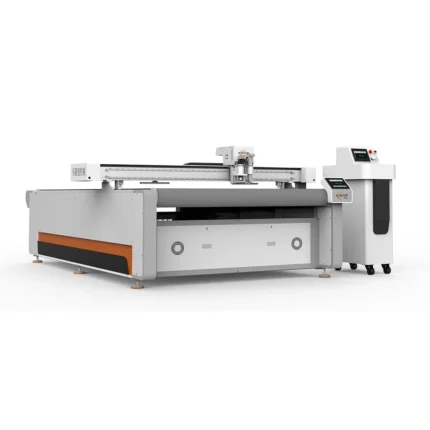
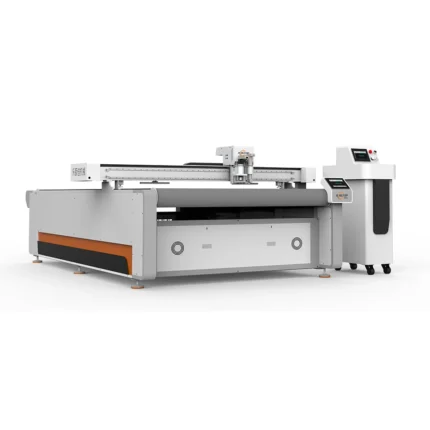
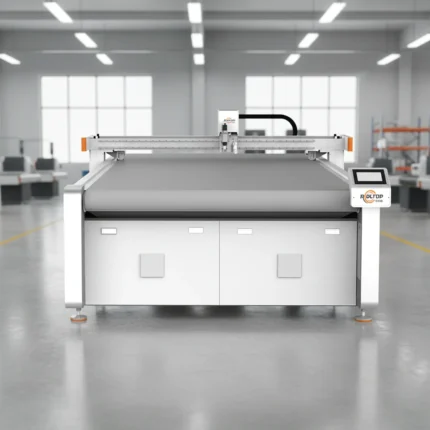
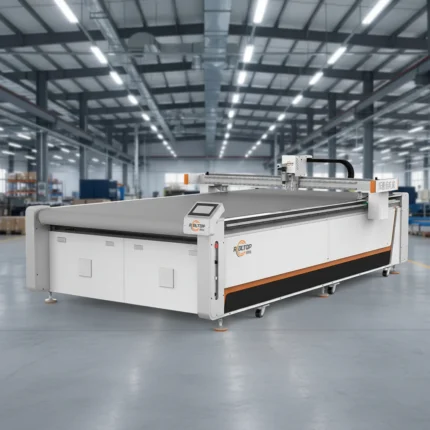
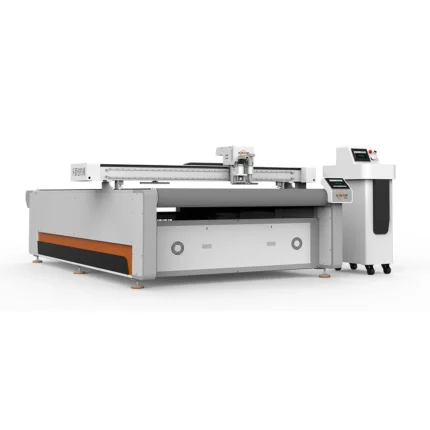
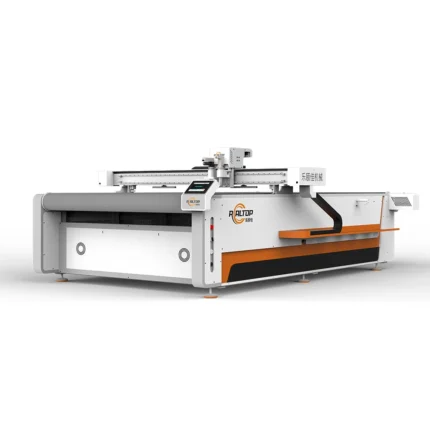
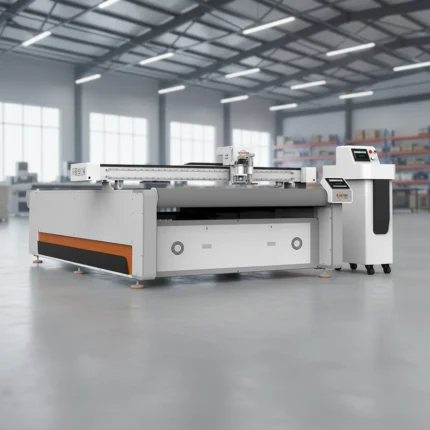
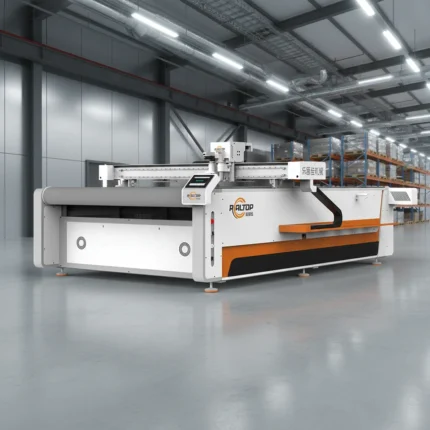
RT-D2516/RT-S2516 CNC Oscillating Knife Cutting Machine, 1600×2500mm Working Area, 9kW Rated Power — engineered for fabric, textile and composite processors who need clean, burr-free edges without the burnt marks or discoloration that CO2 lasers leave on light-colored materials.
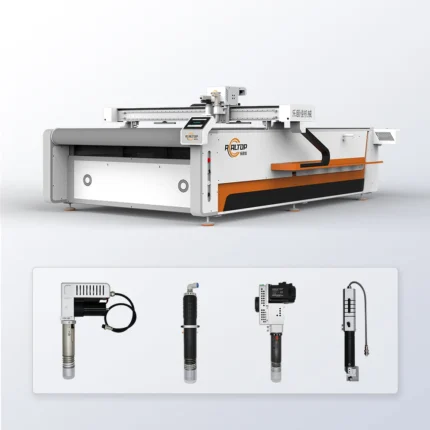
- Multi-tool head configuration handles cutting, marking and creasing in one setup
- Magnesium-aluminum alloy vacuum table with zoned suction holds flexible fabrics flat
- CCD camera positioning tracks printed marks for contour cutting
Sample cutting on your own material before commitment verifies edge quality, cutting speed and layer capacity for your specific production mix.
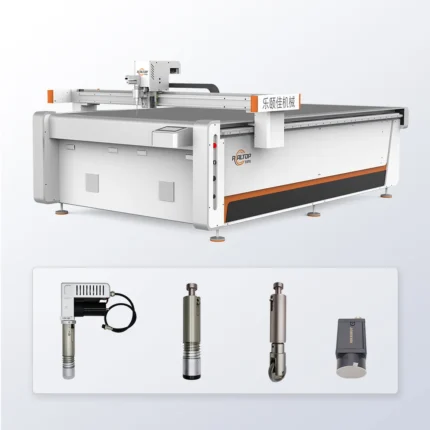
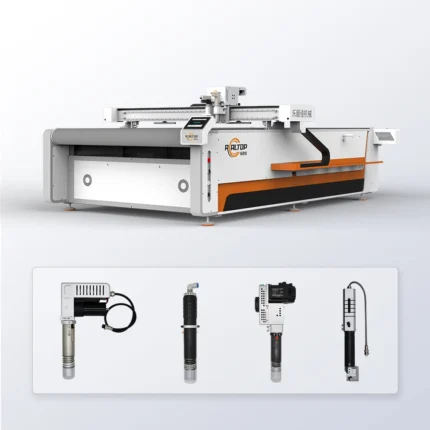
Tool head and table configuration specified per material and production volume — the RT-D2516/RT-S2516 platform pairs oscillating knife, drag knife, creasing wheel, punch and circular knife heads with a magnesium-aluminum vacuum table zoned for flexible textiles, letting fabric processors match the physical cutting action to the exact material stack rather than forcing a thermal process.
Technical Specifications
| Parameter | Value |
|---|---|
| Model | RT-D2516/RT-S2516 |
| Product Type | CNC Oscillating Knife Cutting Machine |
| Working Area | 1600×2500 mm |
| Overall Dimensions (L×W×H) | 3450×2300×1250 mm |
| Rated Power | 9 kW |
| Voltage | 380V ±10% |
| Transmission System | Digital servo motor, linear guide, synchronous belt, ball screw |
| Servo Motor Brand Options | Delta or Panasonic (optional) |
| Positioning Repeatability | ≤0.1 mm |
| Translational Velocity | 800–2000 mm/s |
| Cutting Speed | 200–800 mm/s (varies by material — basis not stated in source) |
| Cutting Thickness | ≤100 mm (varies by material density and layers — basis not stated in source) |
| Tool Head Options | Oscillating knife, pneumatic knife, high-power vibrating knife, circular knife, V-cutting knife, drag knife, creasing wheel, dotted line knife, punching, brush |
| Fixed Model Options | Flat working table, auto feeding table |
| Vacuum Pump | 7.5 kW |
| Vacuum Table | Magnesium-aluminum alloy with PVDF fluorocarbon coating, anodic oxidation, hard oxidation |
| Control Interface | Touch screen control panel, multi-language supported |
| Software File Formats | PLT, DXF, AI (auto typesetting/nesting software) |
| Safety Devices | Infrared induction blocking, anti-collision sensors on both sides of beam, emergency stop |
| Language Options | English, Russian, Italian, Chinese (additional languages customizable) |
| CCD/Visual Positioning Options | Small CCD camera mark point positioning, panoramic camera recognition positioning, projection positioning |
| Assembly State | Fully assembled (basis not stated in source) |
Application Suitability
| Application | Material or Output |
|---|---|
| Garment and footwear cutting | Cotton, polyester, lining fabric, shoe upper material, multi-layer textile stacks |
| Automotive interior trimming | Carpet, floor mat textile, composite sound-deadening layers |
| Soft furnishing and upholstery | Non-woven fabric, sponge, PU foam, EVA padding |
| Luggage and bag production | Leather, synthetic leather, composite panels |
| Sealing and gasket fabrication | Rubber, PTFE, ETFE, fiberglass, composite gasket sheet |
| Packaging and sample making | Cardboard, corrugated board, plastic box material, sticker film |
What Happens When Laser Burns the Edge You Need Clean
A physical blade removes the thermal problem at the source.
I spent years watching fabric shops in the Pearl River Delta wrestle with CO2 laser machines on light-colored textiles. One garment factory ran samples on pure cotton, got clean edges, signed the order — then shifted to their actual production blend and spent five days recalibrating because the synthetic fibers melted and yellowed. A CNC fabric cutting machine manufacturer who understands this gap will always ask for your real production material before quoting a thermal process. When edge integrity on synthetics, foam or composites is non-negotiable, an oscillating knife system eliminates the burn, discoloration and smoke that thermal cutting introduces [NEED_CITE: thermal degradation thresholds for common synthetic textiles].
Choosing Between Thermal and Mechanical Cutting for Textiles
Laser cutting seals synthetic edges automatically, which is valuable when fraying is the primary concern. But that same heat creates melted edges, yellowing and air contamination on light-colored or blended fabrics. The RT-D2516/RT-S2516 oscillating knife approach produces straight, burr-free cuts with no thermal effect on the material, making it suitable for CNC fabric cutting machine manufacturer buyers who process mixed fiber compositions where visual edge quality drives the specification.
When Multi-Layer Stacking Becomes the Deciding Factor
Cutting multiple plies of fabric simultaneously is where mechanical systems pull ahead. A laser beam’s effective cutting depth depends on continuous power and material absorption characteristics — thicker stacks mean slower passes and increasing edge inconsistency from top ply to bottom ply. An oscillating knife with the high-power vibrating knife head on this platform cuts through layered textile, sponge and composite stacks up to the machine’s thickness capacity, maintaining edge consistency throughout the depth of the cut [NEED_CITE: multi-layer fabric cutting considerations in industrial garment production].
Reading the Specification Sheet Beyond Working Area
The 1600×2500 mm working area defines sheet capacity, but production reality depends on what sits beneath that number. Positioning repeatability at ≤0.1 mm means registration marks stay aligned across long cuts — essential when nesting multiple pattern pieces on printed fabric. The 7.5 kW vacuum pump paired with the magnesium-aluminum alloy table holds lightweight and flexible materials flat; zoned suction prevents small pattern pieces from lifting mid-cut. Translational velocity of 800–2000 mm/s and cutting speed of 200–800 mm/s define throughput envelope, though actual speed depends on material type, thickness and layer count. The servo motor options (Delta or Panasonic) and linear guide transmission determine how accurately the head follows complex contours at those speeds.
The Hidden Cost of Wrong Tool Head Selection
Specifying a machine by working area alone and treating tool heads as an afterthought leads to production problems that surface weeks after installation. A drag knife on dense foam produces crushed edges; an oscillating knife on thin film can cause material drag; insufficient vacuum zoning on small garment pieces lets them shift during the final cut pass. Each tool head in the RT-D2516/RT-S2516 range — oscillating knife, pneumatic knife, circular knife, V-cutting knife, creasing wheel, punching — addresses a specific material behavior, and the wrong match generates waste, rework and downtime [NEED_CITE: tool head selection criteria for oscillating knife cutting systems].
Why Processors Source This Configuration Here
Realtop designs and produces both knife and laser cutting systems in-house, so the recommendation between thermal and mechanical cutting is based on material fit rather than limited product range. Every CNC fabric cutting machine manufacturer configuration is matched to the buyer’s specific material type, thickness and daily volume before the order is finalized. Sample cutting on the buyer’s own fabric or composite material is completed before commitment, producing an edge quality report rather than a generic brochure claim. Software file format compatibility — PLT, DXF, AI — is verified against the buyer’s existing nesting workflow. Voltage, plug type and control language are confirmed and documented before shipment, not discovered at uncrating.
Documentation & Verification
- Machine specification sheet matching the agreed tool head and table configuration
- Electrical schematic with confirmed voltage and plug type for the destination market
- Sample cutting report produced on the buyer’s own fabric or composite material
- Tool head and vacuum table configuration list per material type and thickness
- Software licence and file format compatibility note against buyer’s CAD workflow
- Factory test record documenting repeatability and positioning before dispatch
Installation, Commissioning & Support
- Requires level floor capable of supporting 3450×2300×1250 mm overall footprint with clearance for material loading
- Dedicated 380V ±10% circuit rated for 9 kW machine power plus 7.5 kW vacuum pump load
- Machine ships fully assembled (confirm shipping condition with logistics team before dispatch)
- First-run parameter setting includes vacuum zone mapping, tool head offset calibration and servo tuning
- Operator training covers touch screen panel navigation, nesting software import and tool head changeover
- Spare parts list includes oscillating knife blades, vacuum table seals and CCD camera consumables
What to Prepare Before Requesting a Quote
Share your material type, fiber composition, sheet dimensions, single-ply or multi-layer thickness and target daily piece count. Specify your local voltage standard, frequency and control language preference. If your workflow relies on a specific CAD or nesting software, provide sample files so format compatibility can be confirmed before quotation rather than after delivery.
Frequently Asked Questions
Q: Laser vs. knife cutting — which process fits my fabric and material mix?
A: Laser seals synthetic edges but introduces heat that can discolor or melt blended fibers and foam. Knife cutting leaves no thermal trace, producing clean edges on light-colored and multi-layer textiles. The decision depends on whether edge sealing or edge cleanliness is the priority for your specific material composition and end-use requirement.
Q: How do I verify cutting thickness capacity for my material and layer count?
A: Published thickness values assume specific material density and compressibility. Request sample cutting on your actual fabric stack at your production layer count. The sample report documents achievable cutting speed and edge quality at your specific thickness, giving you a realistic basis for planning rather than a generic maximum figure.
Q: Can the CCD camera track my printed registration marks at production speed?
A: The platform offers small CCD mark point positioning and panoramic camera recognition. Tracking reliability depends on mark contrast, print quality and translational speed. Verify with sample cutting on your printed material at target speed, and confirm the recognition system handles your specific mark size and spacing.
Q: Is vacuum suction sufficient for small fabric pieces that tend to lift?
A: The 7.5 kW vacuum pump and magnesium-aluminum alloy table provide strong baseline holding force. For small pattern pieces, vacuum zoning concentrates suction on the active cutting area. Confirm during sample cutting that your smallest pieces remain flat through the final cut pass at your target cutting speed.
Q: How are voltage, control language and software compatibility confirmed before shipment?
A: These are documented in the specification sheet before production begins. Your local voltage and frequency are confirmed against the 380V ±10% system. Control panel language is set to your preference. Your CAD file formats are tested against the nesting software, and compatibility is recorded in the documentation package shipped with the machine.


Related products
2026 Auto CNC Cloth Cutting Machine High-Precision Fabric Leather Plotter
Product Introduction
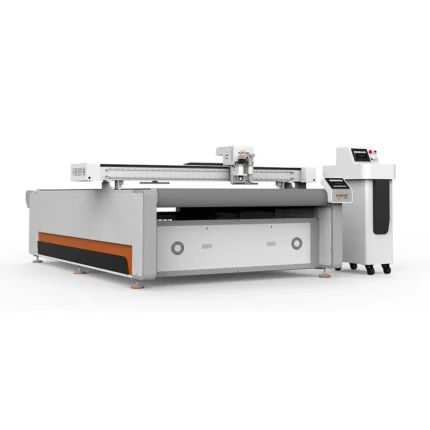
2026 Auto CNC Cloth Cutting Machine, a high-precision fabric & leather plotter designed for efficient cutting. Ideal for textile and leather industries with advanced CNC technology.
Key Specifications
| Model | Auto CNC Cloth Cutting Machine 2026 |
| Application | Fabric & Leather |
| Precision | High-Precision Cutting |
| Type | CNC Plotter |
2026 Auto Fabric Cutter Round Knife High Efficiency
Product Introduction
High Efficiency 2026 Auto Fabric Cutter with Round Knife is a professional cutting equipment designed for fabric processing. It features advanced automation and high cutting efficiency, suitable for various fabric materials in industrial production.Product Parameters
| Model | 2026 |
| Type | Auto Fabric Cutter |
| Blade Type | Round Knife |
| Feature | High Efficiency |
2026 Automatic PVC Tarpaulin Cutter Machine
Product Introduction
High-performance Automatic PVC Tarpaulin Cutter Machine 2026, ideal for precise and efficient cutting of PVC tarpaulin materials, designed for industrial manufacturing needs with reliable operation and user-friendly control.Product Parameters
| Model | 2026 |
| Type | Automatic PVC Tarpaulin Cutter |
| Application | PVC Tarpaulin Cutting |
| Feature | Precise & Efficient Cutting |
Automatic Multi-Layer Vibrating Knife Cutter 2026
Product Introduction
Automatic Multi-Layer Vibrating Knife Cutter 2026, ideal for precise cutting of various materials with multi-layer processing capability, enhancing production efficiency.
Key Specifications
| Type | Automatic Vibrating Knife Cutter |
| Layer Capacity | Multi-Layer |
| Model | 2026 |
| Function | Precision Cutting |
商品评价
There are no reviews yet.