

CNC Fabric Cutting Machine | Manufacturer
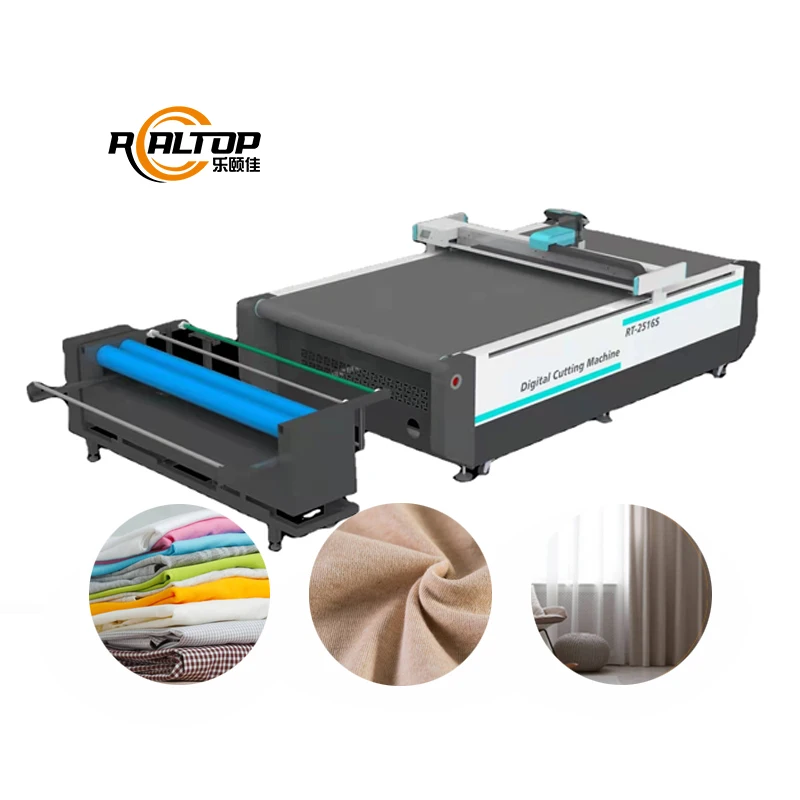
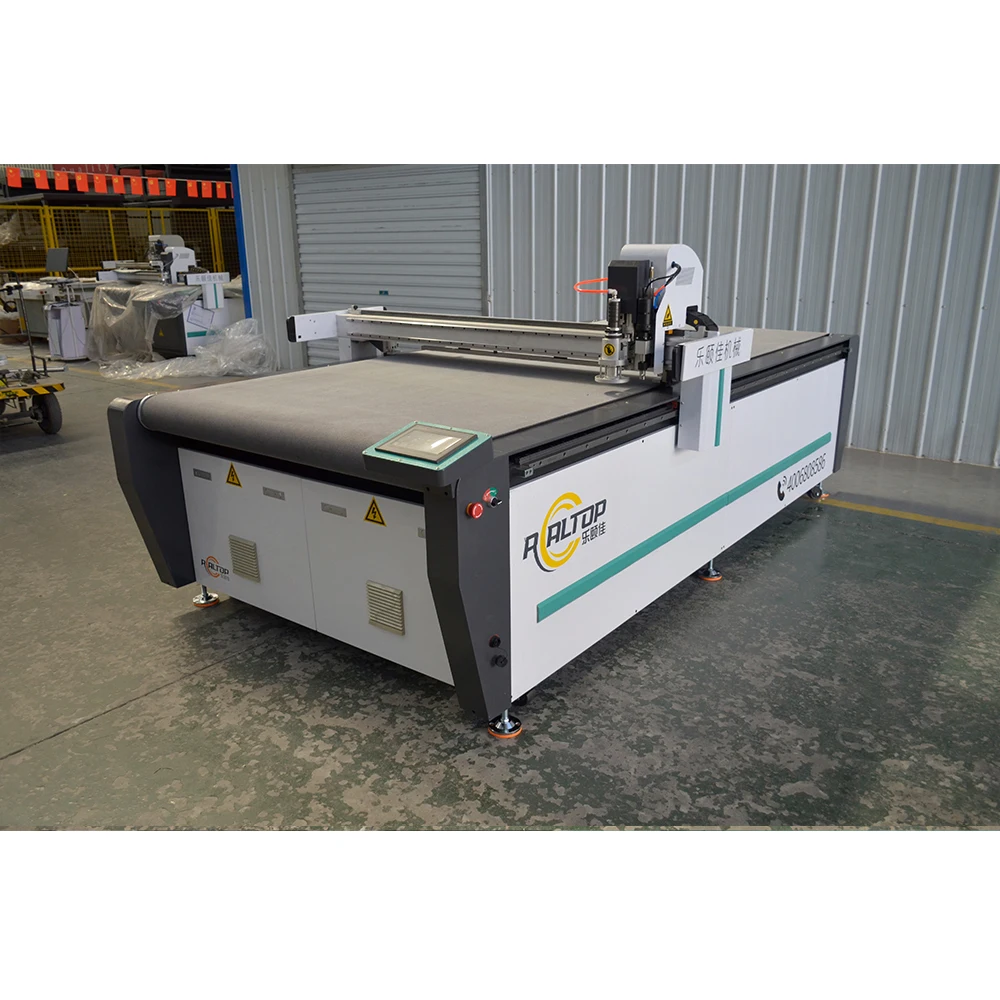
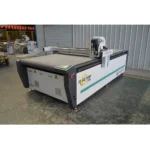
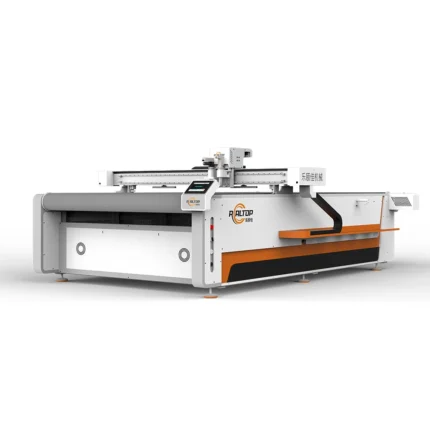
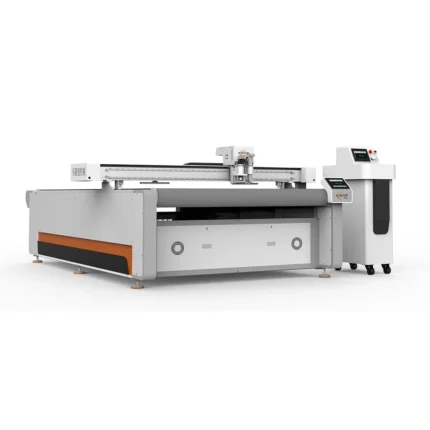
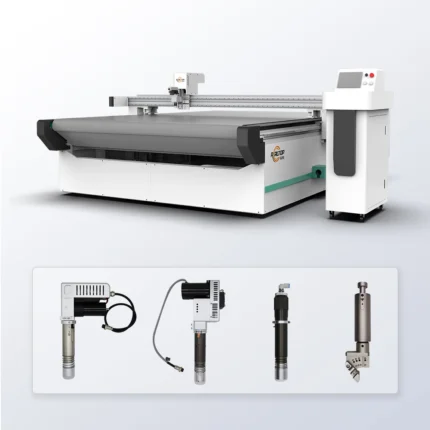
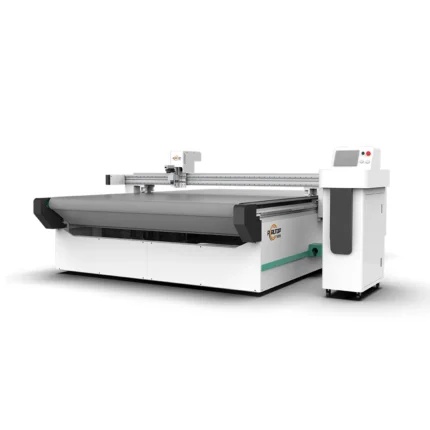
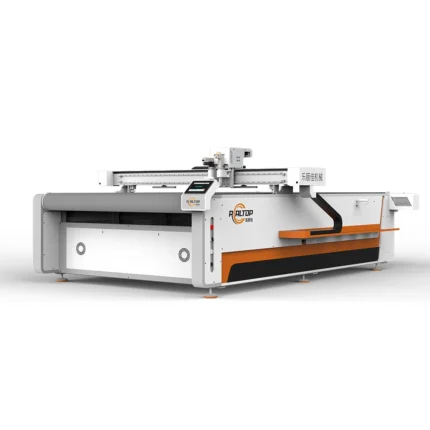
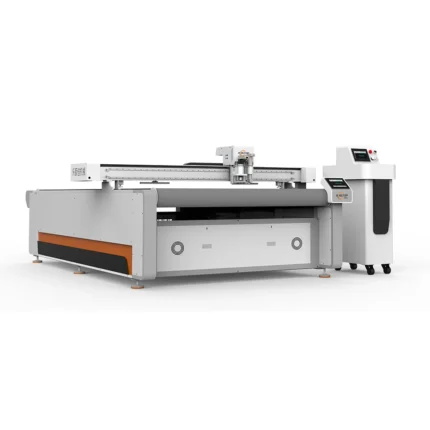
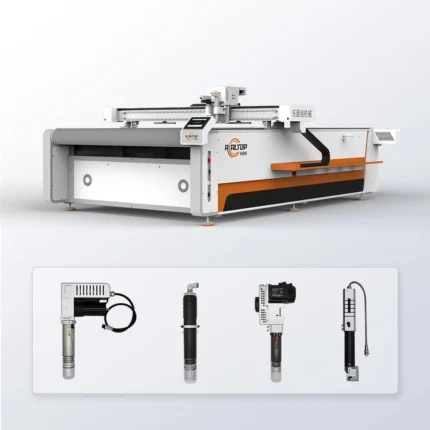
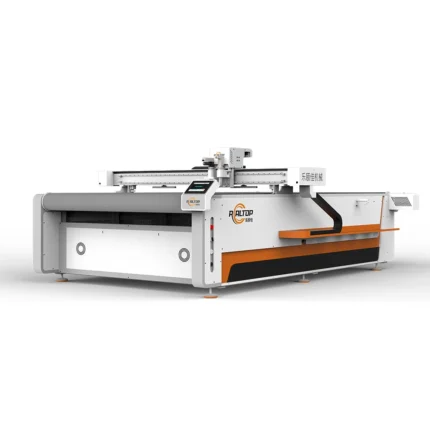
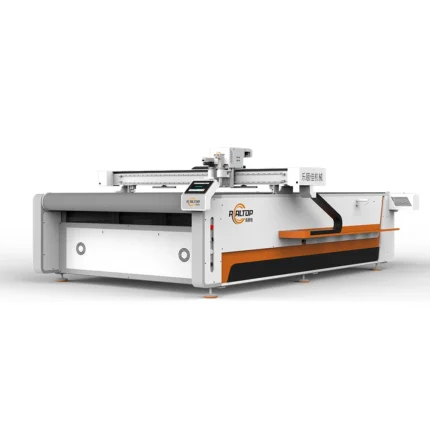
RT-D2516/RT-S2516 CNC Fabric Cutting Machine, 1600×2500mm Working Area, Swiss Imported Oscillating Knife, ≤50mm Cutting Thickness — engineered for textile and garment producers evaluating cutting precision across diverse flexible materials.
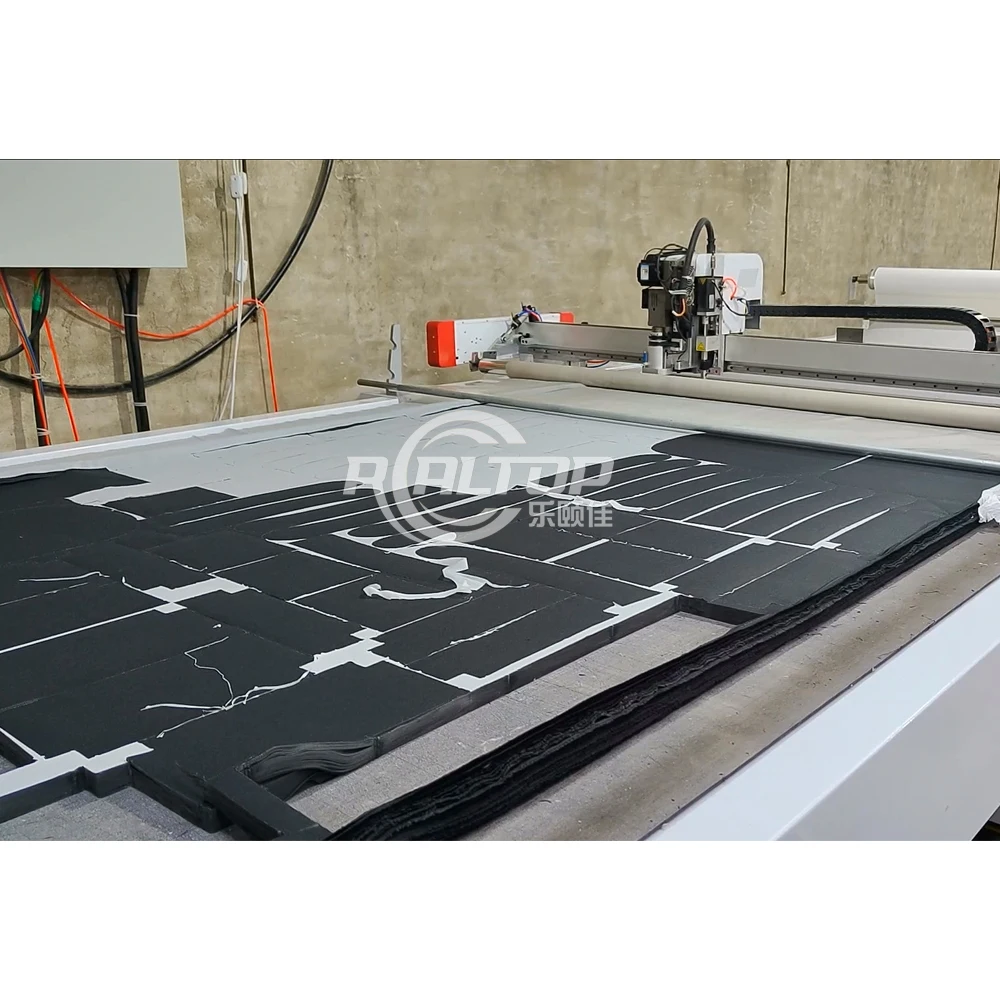
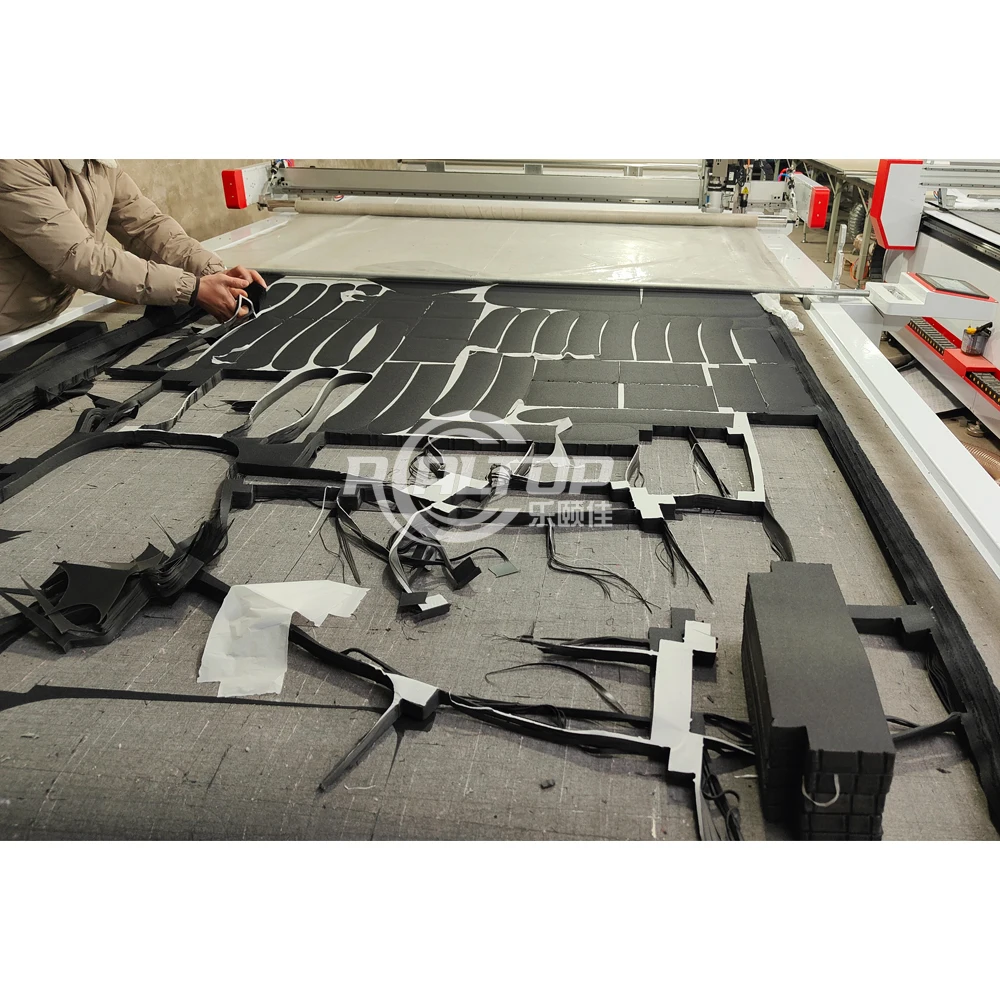
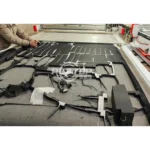
- Swiss imported oscillating knife delivers clean full-cut and half-cut on fabrics from silk to thick leather
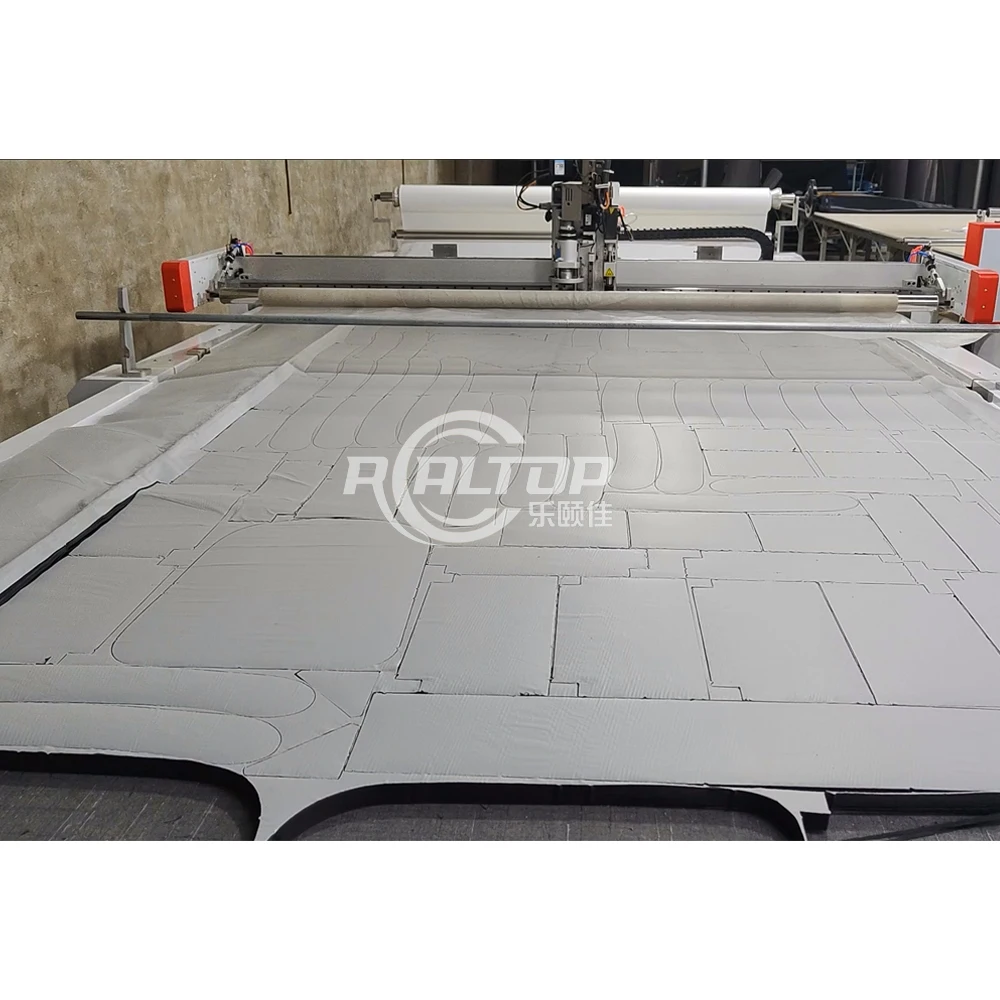
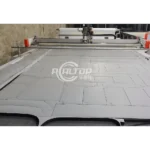
- Aviation aluminum vacuum countertop with internal wind structure ensures consistent material hold
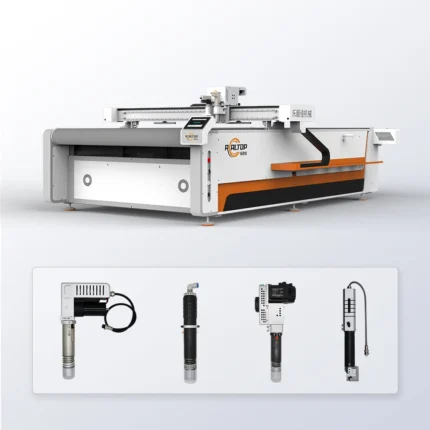
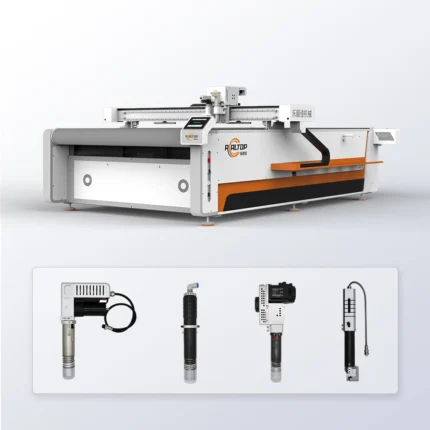
- Modular tool holder accepts round knife, marking pen and auto feeder for workflow flexibility
- Repeated accuracy ≤0.1mm via digital servo motors and pinion-rack transmission
Sample cutting on your own material is available before commitment, with tool head and table zoning specified per fabric type and production volume.
In-house design and production — covering both knife and laser technologies, this CNC fabric cutting machine lets you match the cutting method to the material rather than force one method into every job.
Technical Specifications
| Parameter | Value |
|---|---|
| Model | RT-D2516/RT-S2516 |
| Product Type | CNC Fabric Cutting Machine |
| Working Area | 1600 × 2500 mm |
| Machine Size | 3450 × 2300 × 1250 mm |
| Rated Power | 9 kW |
| Voltage | 380V ± 10% |
| Cutting Thickness | ≤ 50 mm (varies by material type and density; basis to be confirmed per buyer sample) |
| Repeated Accuracy | ≤ 0.1 mm |
| Translational Velocity | 800–1200 mm/s |
| Transmission System | Digital servo motor, linear guide, pinion and rack, synchronous belt, ball screw |
| Servo Motor | Panasonic servo motor |
| Work Table | Flat aviation aluminum countertop with high-density felt, vacuum table |
| Tool Holder | New modular design — compatible with Swiss imported oscillating knife, round knife, marking pen, auto feeder |
| Vacuum Pump | 7.5 kW |
| Safety Device | Infrared sensors |
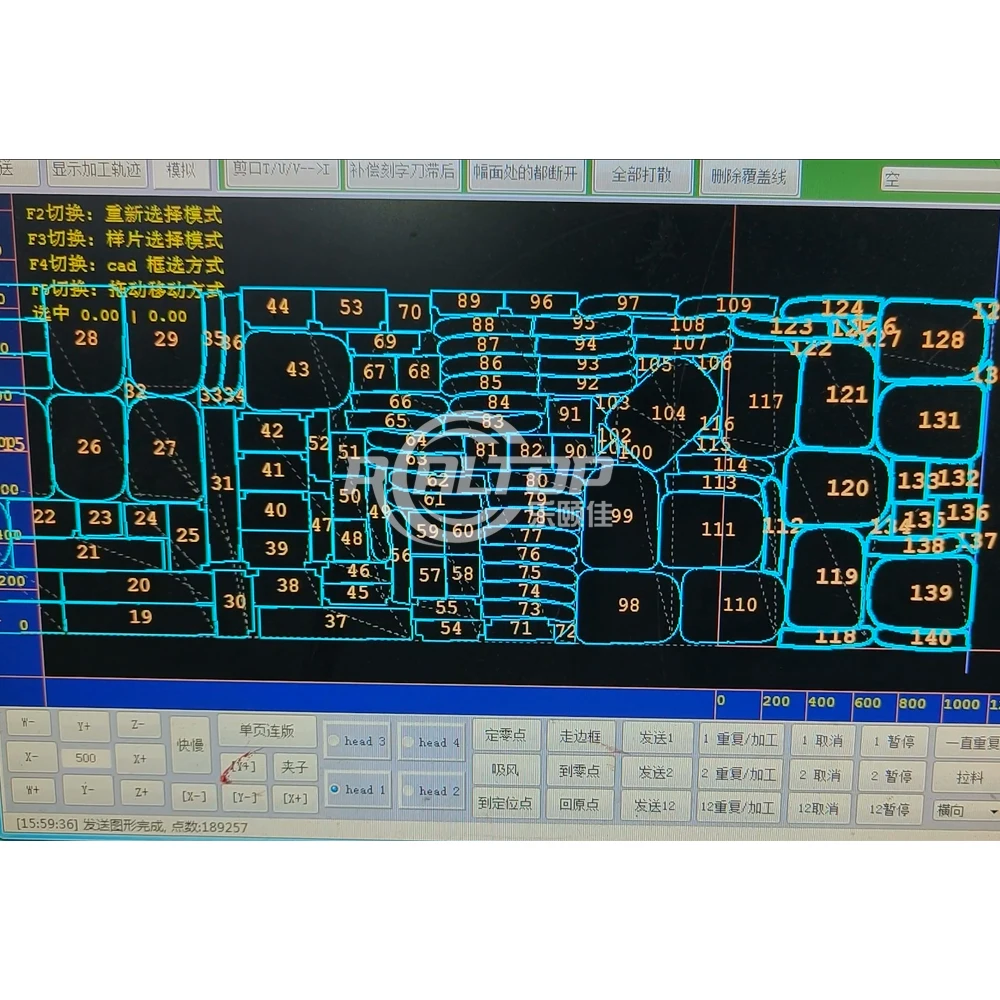
| Instruction System | HP-GL compatible format |
| Certifications | CE |
Application Suitability
| Application | Material or Output |
|---|---|
| Garment and apparel cutting | Single and multiple layers of woven fabric, knit, denim, silk, and lining materials |
| Footwear upper and insole production | Leather, synthetic leather, sponge composite leather, PVC |
| Automotive interior trim | Leather upholstery, sponge composite panels, flexible trim composites |
| Soft furnishing and textile fabrication | PVC, silicon, rubber, soft glass, flexible composite sheets |
| Fashion sample and pattern cutting | Delicate silks through thick leathers on a single table |
Why the Cutting Depth Claim Needs a Material Conversation
A CNC Fabric Cutting Machine specified by working area alone often fails the day thicker or layered stock hits the table. The real question is what your actual production material does at the knife edge — not what a brochure states for ideal conditions. I have watched operators in Latin American workshops load multi-layer composite leather onto a machine rated for 50 mm, only to find the bottom layer dragged and distorted because the vacuum hold-down was not zoned for that sheet size. The thickness capacity shifts depending on density, fiber direction, and how many layers you stack [NEED_CITE: cutting depth validation protocols for layered flexible materials]. Buyers who skip the sample cutting step often discover this gap mid-production run.
Laser Process and Fabric Edge Quality
On the rttcuter.com platform, where laser cutting and engraving process expertise defines the buyer conversation, it is worth addressing why a fabric operation might cross between laser and knife methods. A CO2 laser seals synthetic fiber edges as it cuts, preventing fraying on polyester and nylon blends that an oscillating knife leaves raw. For garment manufacturers working delicate silks or thin technical textiles, laser edge sealing can remove a downstream finishing step entirely. The decision between laser and knife hinges on fiber composition, edge finish requirements, and whether the production run involves contour-following on printed fabric where a CCD camera tracks registration marks [NEED_CITE: laser versus knife cutting selection criteria for textile materials].
Matching Power Rating to Real Cutting Depth
Laser power quoted at peak rather than continuous output produces a familiar disappointment: the stated wattage promises a cutting depth that the beam cannot sustain across a full sheet. When evaluating any cutting system for fabric and flexible materials, continuous power rating determines actual throughput on layered stock. A 150 W CO2 tube cuts single-ply cotton cleanly but stalls on 8 mm sponge composite leather that an oscillating knife handles in one pass. Production managers evaluating a CNC Fabric Cutting Machine should request a cutting test on their own roll stock at production speed, not a slowed demonstration pass [NEED_CITE: continuous versus peak laser power ratings in material processing].
Reading the Specifications for Production Reality
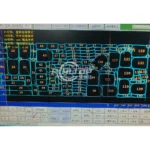
The 1600 × 2500 mm working area accommodates standard fabric roll widths without repositioning, reducing handling time on long garment lays. The Panasonic servo motor paired with pinion and rack transmission delivers the ≤ 0.1 mm repeated accuracy needed for pattern nesting where every millimeter of yield matters across hundreds of plies. The 7.5 kW vacuum pump and aviation aluminum countertop provide hold-down force, but zoning configuration determines whether small cut parts stay flat or lift at the knife exit point — a detail that must be confirmed against your smallest pattern piece before the machine ships. The modular tool holder accepts round knife, marking pen, and auto feeder attachments, meaning the same table can shift from sample cutting to marking to continuous roll feeding without a second capital purchase. HP-GL format compatibility ensures most existing pattern CAD files import without conversion middleware.
The Cost of Skipping Configuration Verification
When a buyer selects a machine based on working area and price without confirming tool head and vacuum zoning, the consequences surface in the first week of production. Ragged edges on knit fabric force operators to slow translational velocity below the rated 800–1200 mm/s range, eroding the throughput they purchased the machine to achieve. Small pattern pieces lift off an unzoned vacuum table mid-cut, ruining nested layouts and wasting material. A tool head chosen for leather struggles with delicate silk, tearing fibers instead of shearing them cleanly [NEED_CITE: tool head selection errors and material waste in textile cutting operations]. These failures are not machine defects — they are specification mismatches that a sample cutting report on the buyer’s own material would have caught before shipment.
Why Source This Machine Here
The design team and core factory handle both knife and laser cutting technologies under one roof, so a buyer comparing methods for mixed-material production gets an honest recommendation rather than a forced fit. Tool head and table configuration are specified per material type and daily volume, not sold as a fixed package. CCD camera positioning is available for printed contour work when the application requires it. Software compatibility — including HP-GL file import and nesting workflow — is confirmed before the order goes to production. Voltage, plug type, control language, and documentation are all customized to the destination market before shipment, eliminating the on-site surprises that delay commissioning [NEED_CITE: voltage and control language customization requirements by export market].
Documentation & Verification
- Machine specification sheet listing all confirmed tool heads and table configuration
- Electrical schematic with voltage and frequency matched to buyer’s facility supply
- Sample cutting report performed on buyer’s own fabric or composite material
- Factory test record documenting repeated accuracy and translational velocity under load
- HP-GL software licence and file format compatibility confirmation note
- Spare parts list matched to the specific modular tool holder configuration shipped
Installation, Commissioning & Support
- The 9 kW rated power requires a dedicated 380V ± 10% circuit with appropriate breaker sizing at buyer’s facility
- Machine dimensions of 3450 × 2300 × 1250 mm need clear floor space plus operator access on three sides
- The 7.5 kW vacuum pump must be ducted or vented according to workshop noise and dust extraction requirements
- First commissioning includes vacuum zoning setup calibrated to the buyer’s smallest pattern piece dimensions
- Operator training covers modular tool holder changeover between oscillating knife, round knife, and marking pen
- Routine maintenance schedule for linear guides, pinion and rack, and high-density felt table surface replacement
What to Include in Your Inquiry
Send the specific fabric type, fiber composition, and layer count you plan to cut daily, along with the thickest single material in your production mix. Confirm your facility voltage, frequency, and the control interface language your operators need. If you work with printed fabric requiring contour recognition or use a specific nesting software, include a sample file so compatibility is verified before quotation.
Frequently Asked Questions
Q: How do I choose between laser and oscillating knife for my fabric type?
A: Laser cuts and seals synthetic fiber edges simultaneously, which works well for polyester and nylon where fraying is a concern. Oscillating knife handles thick layered natural fibers, leather, and composite materials that would char or melt under a laser beam. The choice depends on your specific fiber composition, edge finish requirements, and whether downstream sealing is already part of your workflow.
Q: What voltage and control language options are available before shipment?
A: The standard configuration runs on 380V ± 10%, but voltage and plug type are confirmed and adjusted to match the buyer’s local electrical supply before production begins. Control interface language is also specified at order stage so operators receive the machine in their working language, avoiding commissioning delays caused by mislabeled menus and error messages.
Q: How does the modular tool holder support future product changes?
A: The modular tool holder accepts oscillating knife, round knife, marking pen, and auto feeder attachments on the same machine frame. If your product line expands from garment fabric to leather goods or requires marking for downstream sewing operations, you add a tool head rather than replacing the entire cutting table. This keeps capital investment aligned with actual production evolution.
Q: What sample validation is performed before I commit to an order?
A: A sample cutting report is produced using the buyer’s own material, documenting cut quality, edge condition, and achievable speed at the requested layer count. This report confirms whether the specified tool head and vacuum configuration handle your actual production stock — not a generic demonstration fabric — before the purchase order is finalized.
Q: How is vacuum zoning configured to prevent small parts from lifting?
A: The aviation aluminum countertop with 7.5 kW vacuum pump can be zoned to concentrate suction on smaller work areas. Zoning layout is determined by the buyer’s smallest pattern piece dimensions, ensuring hold-down force remains sufficient even when cutting intricate shapes near the table edge. This configuration is confirmed during the specification stage before manufacturing.


Related products
2026 Automatic PVC Tarpaulin Cutter Machine
Product Introduction
High-performance Automatic PVC Tarpaulin Cutter Machine 2026, ideal for precise and efficient cutting of PVC tarpaulin materials, designed for industrial manufacturing needs with reliable operation and user-friendly control.Product Parameters
| Model | 2026 |
| Type | Automatic PVC Tarpaulin Cutter |
| Application | PVC Tarpaulin Cutting |
| Feature | Precise & Efficient Cutting |
2026 Flatbed Oscillating Knife Cutter 1600x3500mm Auto-Feeding Textile
Product Overview
Flatbed Oscillating Knife Cutting Machine 2026 is a high-precision textile fabric cutter with auto-feeding function, ideal for efficient and accurate cutting tasks in textile manufacturing. It combines advanced oscillating knife technology with a large working area to meet industrial production needs.Key Specifications
| Model | 2026 |
| Working Area | 1600x3500mm |
| Feeding System | Auto-Feeding |
| Cutting Type | Oscillating Knife |
| Application | Textile Fabric |
CNC Vibration Knife System 2026 for Polyester Nylon Non-Woven Prepreg
Product Introduction
CNC Vibration Knife System 2026 is ideal for cutting polyester, nylon, non-woven fabrics, and prepreg materials with precision and efficiency, suitable for industrial manufacturing needs.Product Parameters
| Model | 2026 |
| Cutting Technology | CNC Vibration Knife |
| Materials | Polyester, Nylon, Non-Woven, Prepreg |

Electric Fabric Rotary Cutter 2026 12V Auto-Cut Industrial
Product Introduction
Industrial-grade Electric Fabric Rotary Cutter designed for precise cutting of scan-printed cloth. Features 12V auto-cut functionality for efficient, automated operation, ideal for professional textile processing.Product Parameters
| Power Supply | 12V |
| Function | Auto-Cut |
| Application | Scan-Printed Cloth |
| Type | Industrial Electric Rotary Cutter |
High Speed Fabric Cutting Machine 2026 Round Oscillating Knife
Product Overview
High Speed Fabric Cutting Machine 2026 with round and oscillating knife for efficient fabric cutting. Ideal for textile manufacturing and related industries.Key Specifications
| Cutting Type | Round & Oscillating Knife |
| Model Year | 2026 |
| Application | Fabric Cutting |
| Feature | High Speed Performance |

Jinan Realtop PVC Cutting Machine 2026 CE Certified
Product Introduction
Jinan Realtop PVC Cutting Machine 2026 is a CE-certified cutting solution, ideal for precise PVC material processing. Designed for efficiency and reliability in industrial applications.Product Parameters
| Model | 2026 |
| Certification | CE Certified |
| Application | PVC Cutting |
| Manufacturer | Jinan Realtop |
商品评价
There are no reviews yet.