

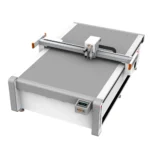
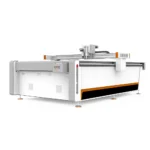

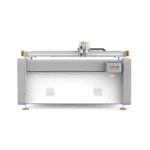
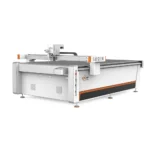
CNC Oscillating Knife Cutting Machine 1625 for Packaging – OEM Available
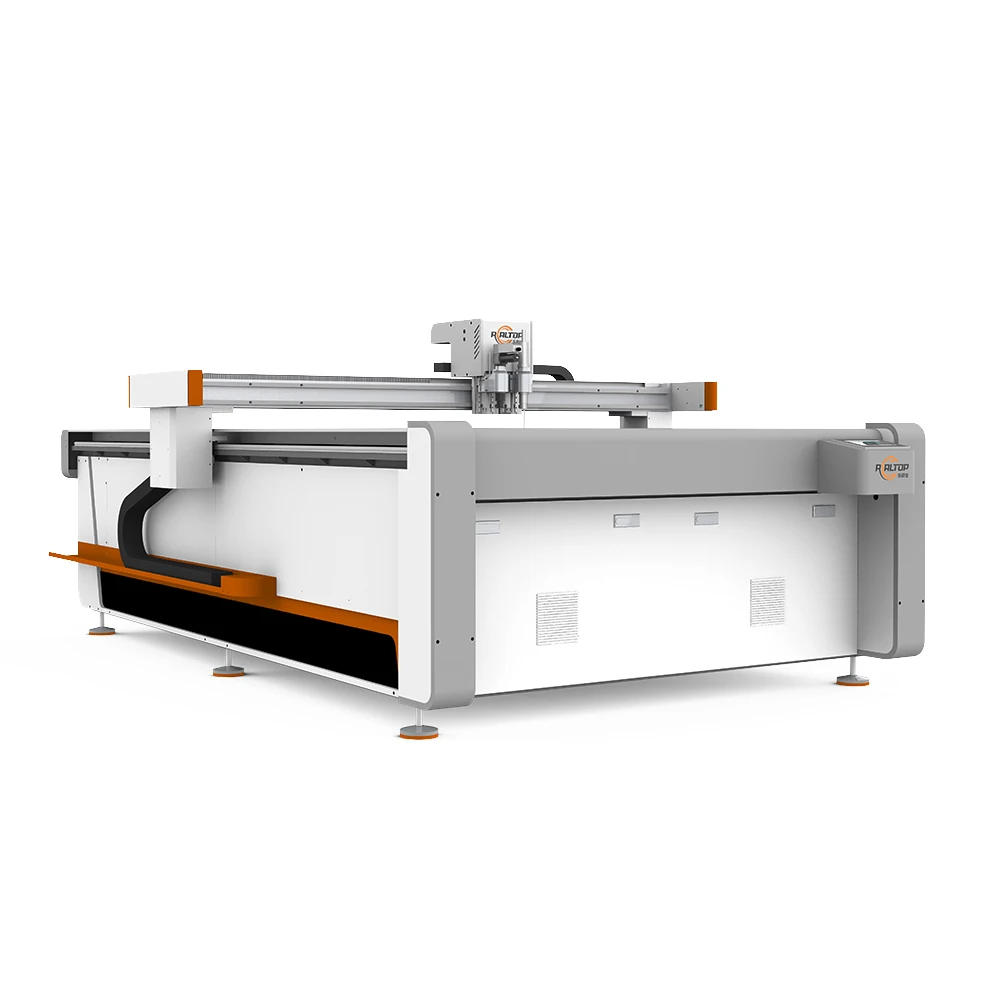
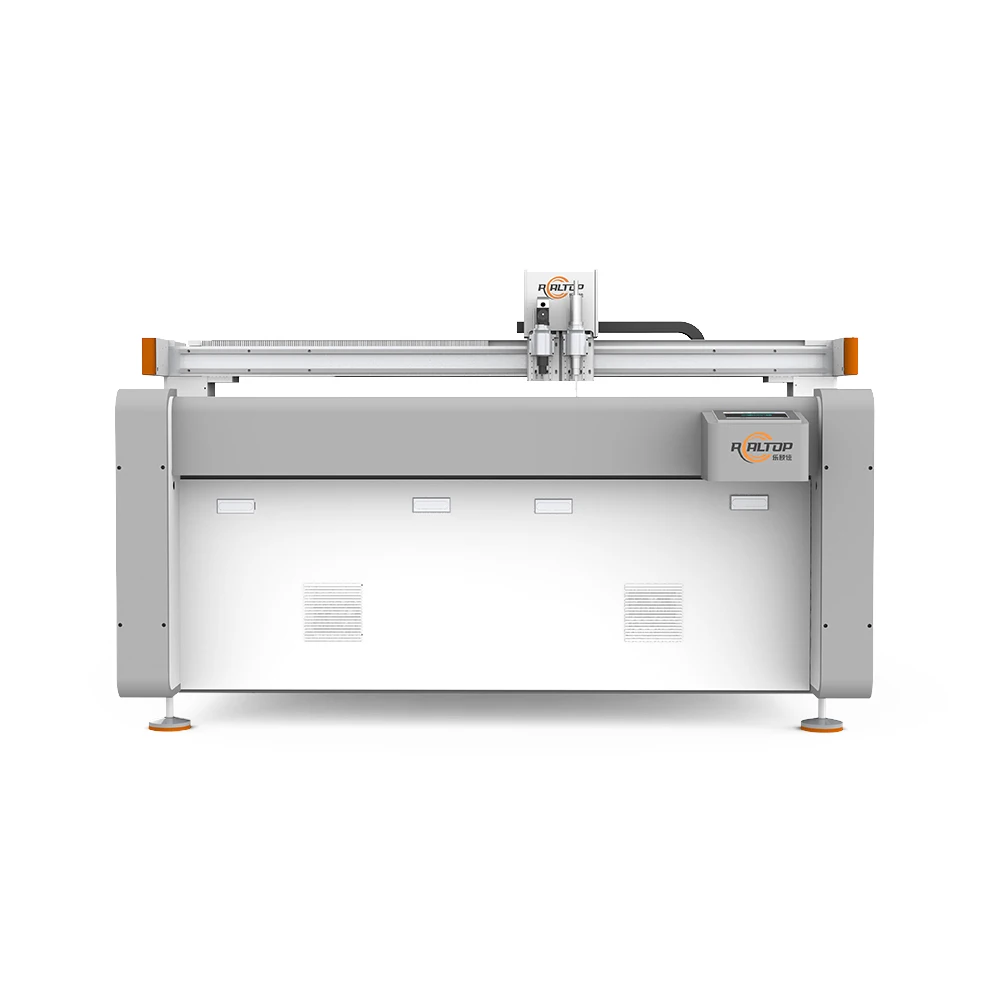
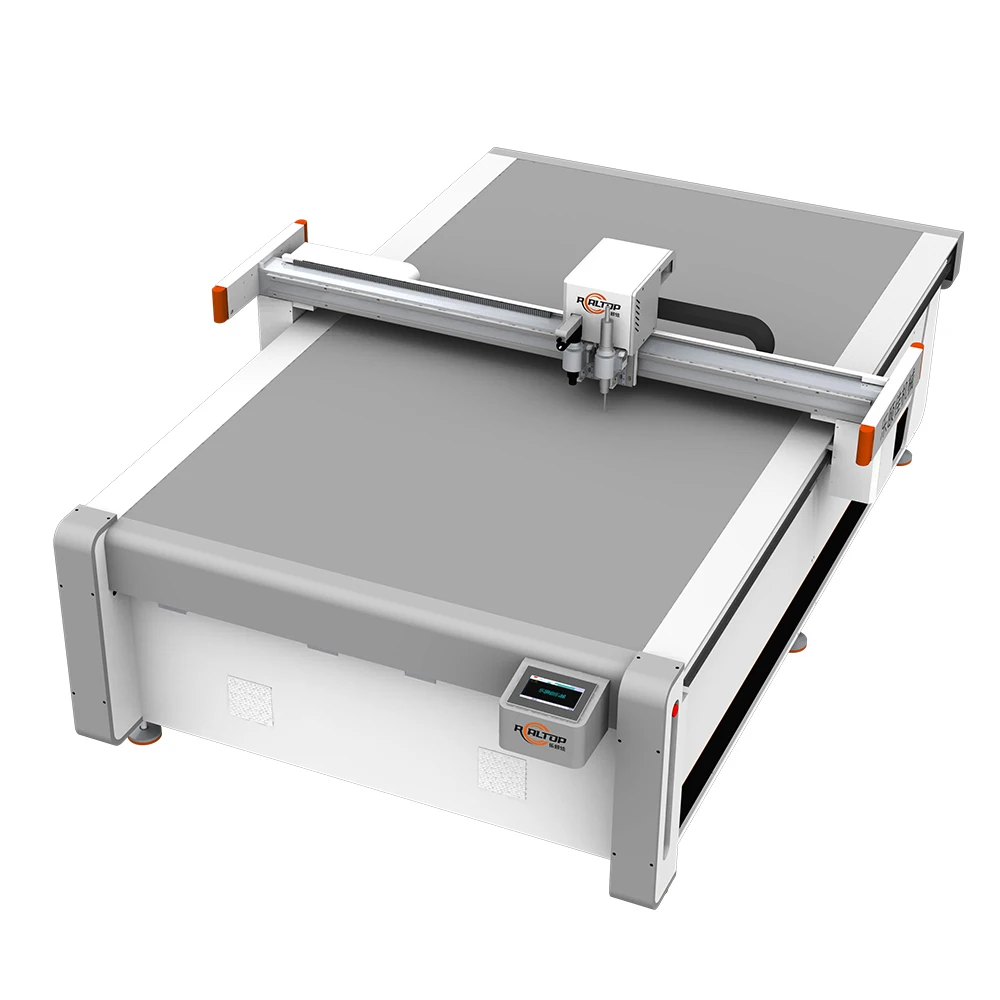
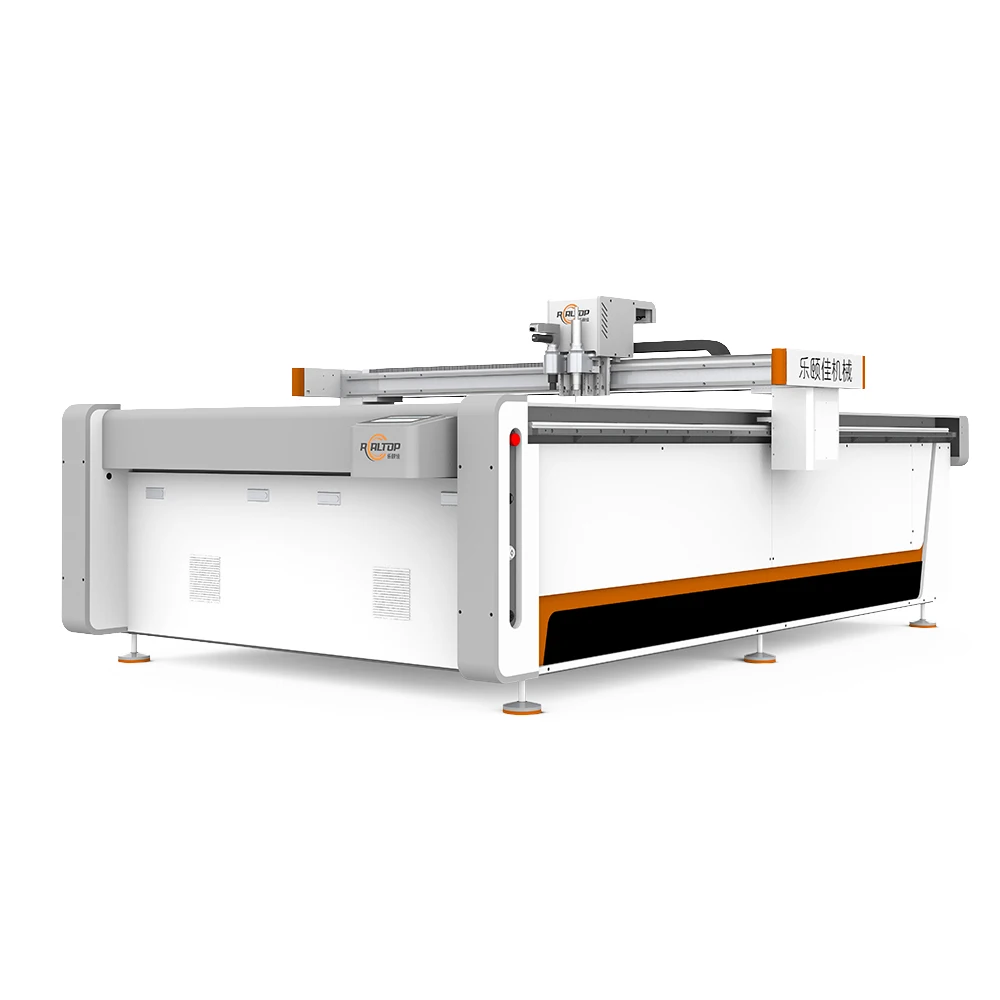
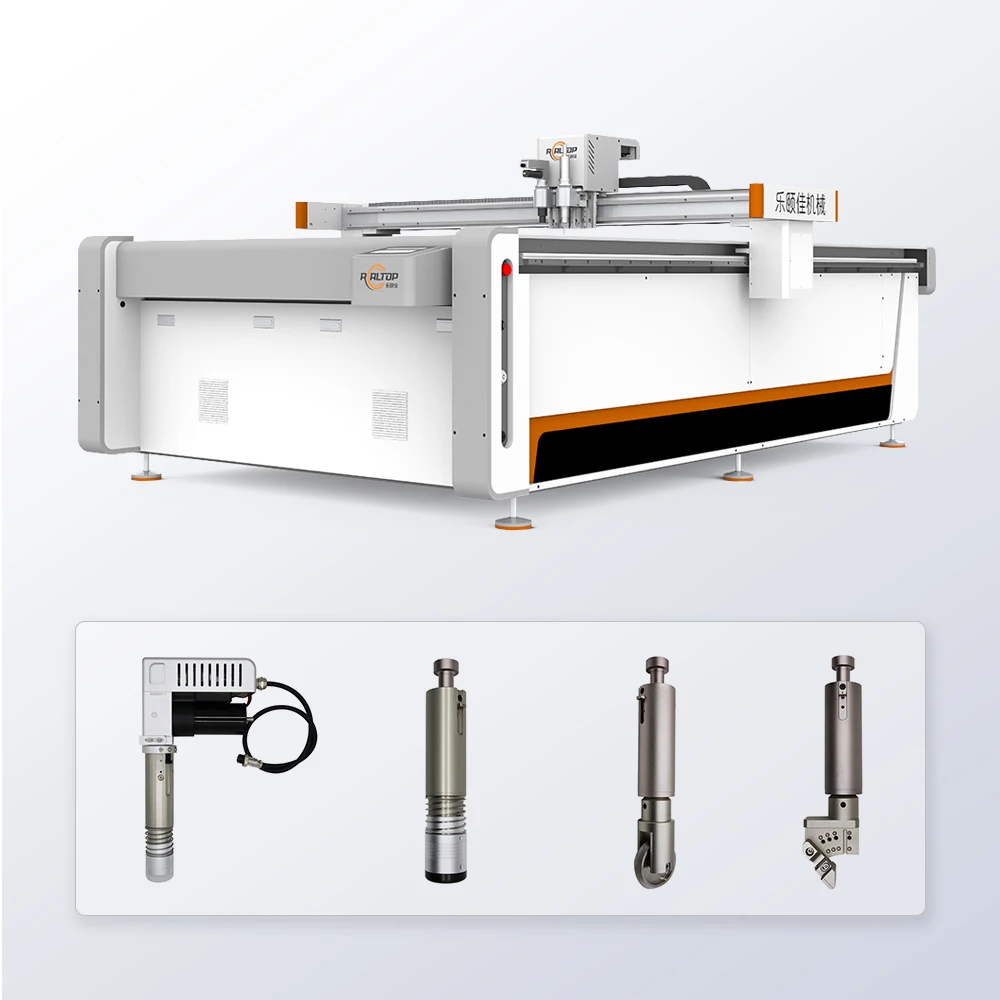
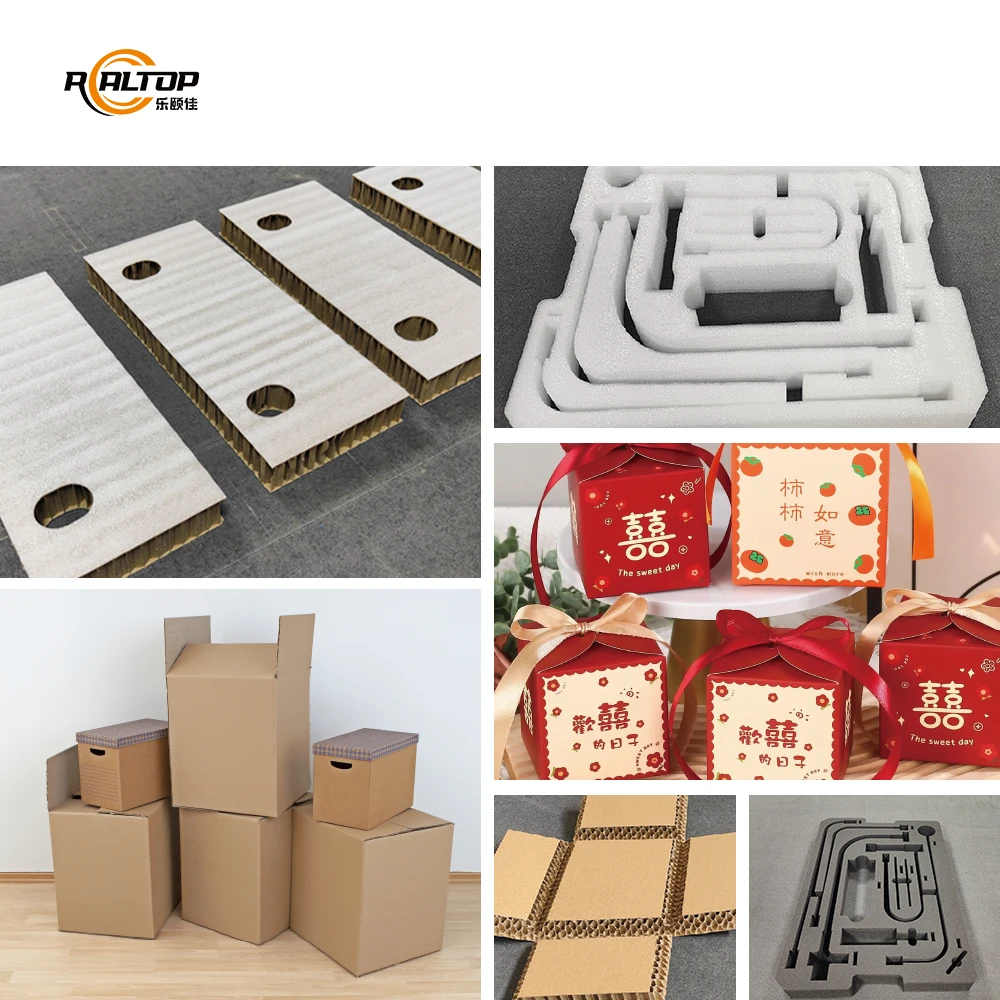
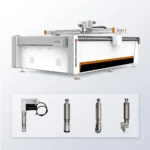
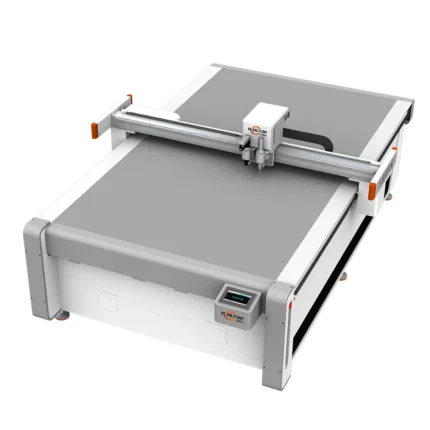
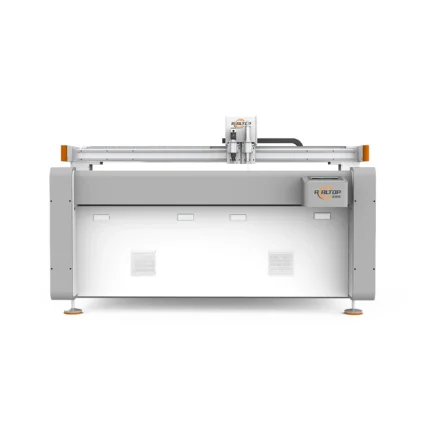
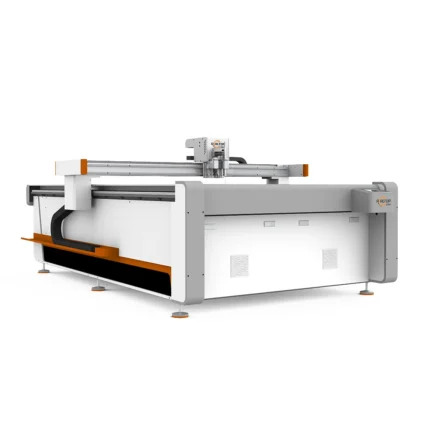
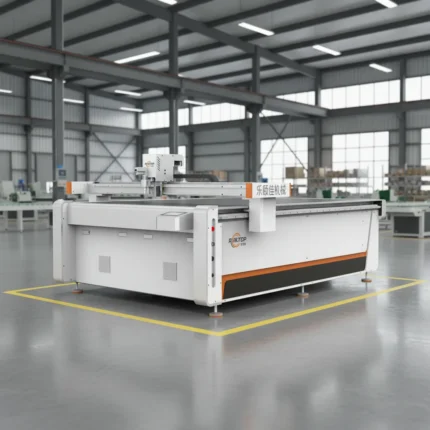
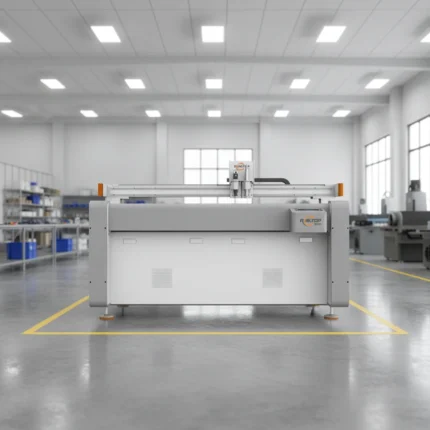
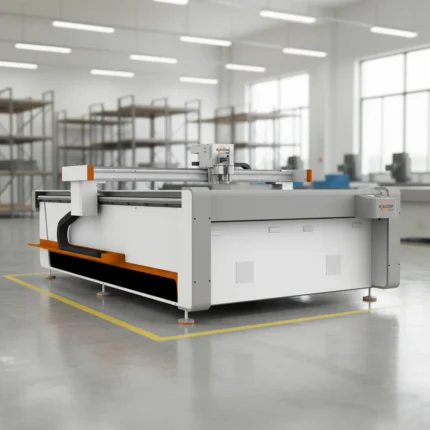
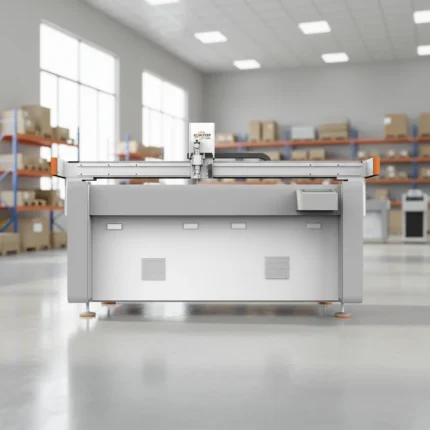
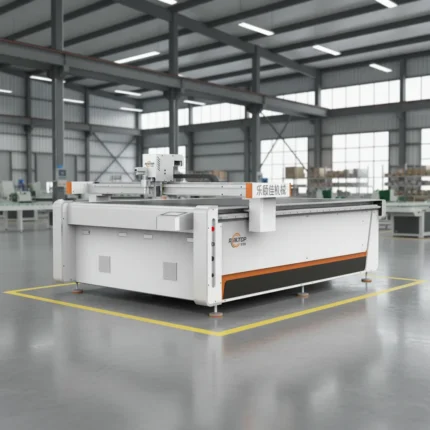
RT-D2516/RT-S2516 CNC Oscillating Knife Cutting Machine, 1600×2500 mm working area, 9 kW rated power, supports cardboard, corrugated board, foam and composite packaging materials with oscillating knife, creasing wheel and V-cutting tool heads.
- Magnesium-aluminum vacuum table with PVDF coating and 7.5 kW pump; CCD mark point or panoramic camera positioning optional for printed contour cutting.
- Digital servo drive with ≤0.1 mm repeatability; HP-GL compatible control accepts PLT, DXF and AI files for packaging sample nesting workflows.
Sample cutting on buyer’s own material is provided before commitment, with tool head and vacuum zoning configuration specified per material type and production volume.
Multi-Method Cutting Platform — In-house engineering covers both oscillating knife and laser processes, allowing the RT-D2516 / RT-S2516 to match tool physics to material behavior rather than forcing a single cutting method across incompatible substrates.
Technical Specifications
| Parameter | Value |
|---|---|
| Product Type | CNC Oscillating Knife Cutting Machine |
| Model | RT-D2516 / RT-S2516 |
| Working Area | 1600×2500 mm |
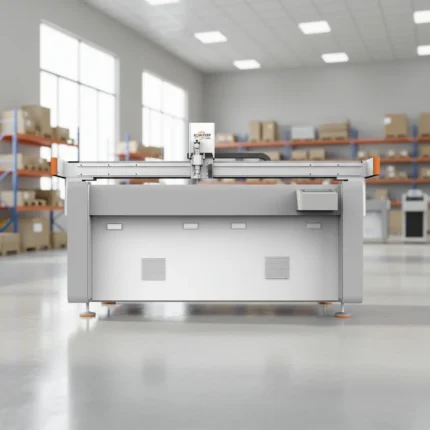
| Overall Dimensions (L×W×H) | 3450×2300×1250 mm |
| Rated Power | 9 kW |
| Voltage | 380V ±10% (50/60 Hz to be confirmed) |
| Table Type | Flat working table or auto-feeding conveyor (optional) |
| Translational Velocity | 800–2000 mm/s |
| Cutting Speed | 200–800 mm/s (basis to be confirmed with material type and thickness) |
| Cutting Thickness | ≤100 mm (varies with material density and tool head selection) |
| Repeatability | ≤0.1 mm |
| Transmission System | Digital servo motor (Delta or Panasonic), linear guide, synchronous belt, ball screw |
| Guide Rail | Taiwan Hiwin |
| Vacuum Pump | 7.5 kW, aviation aluminum housing with internal silencer sponge |
| Vacuum Table | Magnesium-aluminum alloy, PVDF fluorocarbon powder spraying, anodic and hard oxidation |
| Safety Devices | Infrared induction blocking, anti-collision sensors, emergency stop with in-situ resume |
| Vision / Positioning Options | Small CCD mark point positioning, panoramic camera recognition, or projection positioning |
| Control Panel | Touch screen, multi-language support (English, Russian, Italian, Chinese; customizable) |
| Frame Construction | Thick-walled seamless steel, high-temperature tempering, CNC machining center finish |
| Control / Instruction Format | HP-GL compatible |
| File Format Support | PLT, DXF, AI |
| Warranty | 1 year |
Application Suitability
| Application | Material or Output |
|---|---|
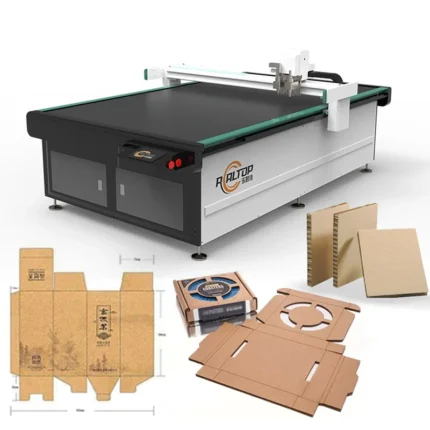
| Packaging sample making and short-run carton production | Cardboard, honeycomb cardboard, corrugated board, plastic box stock using oscillating knife, creasing wheel, and V-cutting knife for slotting |
| Automotive interior trim and sealing gaskets | Leather, synthetic textile, composite sponge leather, rubber, PTFE and ETFE gasket sheets |
| Soft furnishings and floor coverings | Woven fabric, non-woven textile, carpet, PU, EVA, XPE foam composites |
| Signage and display graphics | PVC foam board, sticker film, vinyl, corrugated plastic |
| Composite and technical textiles | Fiberglass mat, carbon fiber prepreg, aramid fabric |
Why a 1600×2500 mm Bed Does Not Guarantee a Clean Cut on Your Material
Specifying a CNC oscillating knife cutting machine by working area alone ignores the variables that actually determine edge quality: tool head geometry, oscillating frequency, vacuum hold-down zoning, and material-specific feed rates. A 1625-format table may handle corrugated board effortlessly yet compress high-density EVA foam or produce ragged edges on layered technical textiles when the wrong knife profile is applied.
The cutting method and tool configuration must be matched to the material stack before the machine is built.
I have watched buyers at European trade shows commit to large-format digital cutters based on bed size and then discover during installation that their specific gasket material or multi-layer fabric lay-up requires a different oscillating frequency or a pneumatic knife head that was never quoted [NEED_CITE: material-specific tool head selection for digital cutting]. The result is a machine that physically fits the factory floor but cannot hold tolerance on the production substrate. Confirming the cutting head matrix against the actual material bill — not just the sample shown in the showroom — prevents this mismatch.
Matching Tool Physics to Substrate Behavior
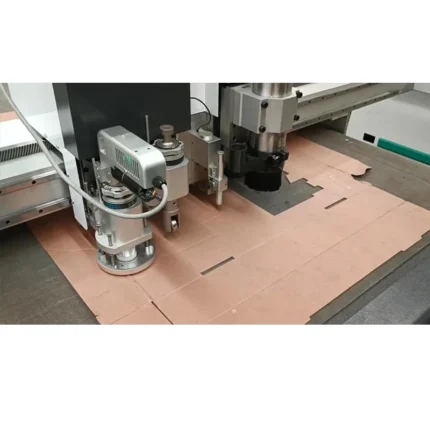
The RT-D2516 / RT-S2516 supports a broad tool head range including Swiss-imported oscillating knife, high-power vibrating knife, pneumatic knife, circular knife, drag knife, creasing wheel, V-cutting knife, dotted-line knife, punching tool, and pen or brush marker. Each tool head engages the material differently: an oscillating knife slices through fibrous composites with minimal fraying, while a creasing wheel compresses corrugated fluting without severing it. Selecting the correct combination — often two or three heads on a single carriage — determines whether the laser cutting and engraving machine manufacturer you source from can actually solve your production problem or simply ships a generic platform.
Vision Positioning for Printed Contour Work
Packaging sample making and signage production frequently require the cutter to follow pre-printed registration marks rather than a fixed coordinate path. This machine offers three vision tiers: a small CCD camera for discrete mark point positioning, a panoramic camera for full-sheet contour recognition, and projection positioning for manual alignment assistance. The correct tier depends on whether the artwork includes high-contrast fiducial marks and whether the production speed allows the camera to acquire marks between cuts. Specifying the vision system after delivery is not practical; the mounting bracket, cable routing, and software module must be integrated during assembly [NEED_CITE: CCD positioning accuracy requirements for printed contour cutting].
Reading the Specification Sheet Against Real Production Loads
The 9 kW rated power drives a 7.5 kW vacuum pump and the servo transmission simultaneously, which matters when the table is under full vacuum load cutting small, lightweight parts that tend to lift. The magnesium-aluminum vacuum table with PVDF fluorocarbon coating resists abrasion from repeated material loading, but its real value lies in zone segmentation — the ability to activate only the vacuum zones beneath the workpiece rather than pulling air across the entire 1600×2500 mm surface. Repeatability of ≤0.1 mm holds across the working area only when the frame’s thick-walled seamless steel construction and high-temperature tempering eliminate residual stress; without that stress-relief step, the gantry drifts as ambient temperature changes through the shift. The Taiwan Hiwin linear guides and Delta or Panasonic servo motors maintain positional accuracy, but they cannot compensate for a vacuum table that allows a 20 mm gasket to shift mid-cut.
The Cost of Skipping the Configuration Conversation
When the tool head and vacuum zoning are not specified per material, the consequences appear within the first production week. Small die-cut stickers lift off the table and jam the knife. Multi-layer foam compresses under the oscillating blade and springs back to an uneven height, producing partial cuts that require manual rework. Creasing wheels that are too blunt for double-wall corrugated crush the outer liner instead of scoring it, and the carton fails the fold test [NEED_CITE: vacuum hold-down failures in digital flatbed cutting]. None of these failures show up in the machine specification sheet; they show up on the production floor, where the operator is already behind schedule.
Why Source from This Manufacturing Setup
The same factory that builds this oscillating knife platform also engineers CO2 and fiber laser cutting systems, so the decision between knife and laser is made on material suitability rather than factory capability. The design team specifies tool heads and table configurations per the buyer’s material sample list, not from a fixed catalog page. Software file format compatibility — PLT, DXF, AI — is verified against the buyer’s existing nesting workflow before the order is confirmed, not after the machine arrives. Voltage and control panel language are locked in during the quotation stage with a written confirmation sheet. Sample cutting on the buyer’s own material is completed and documented before production begins.
Documentation & Verification
- Machine specification sheet listing every tool head and vacuum zone configuration for your material range
- Electrical schematic with confirmed voltage and plug type for the destination country
- Sample cutting report on your actual substrate with measured edge quality, speed, and thickness
- Software license and file format compatibility note covering PLT, DXF, and AI import workflows
- Factory test record showing repeatability measurement across the full 1600×2500 mm working area
- Packing photographs documenting crate condition and component placement before container loading
Installation, Commissioning & Support
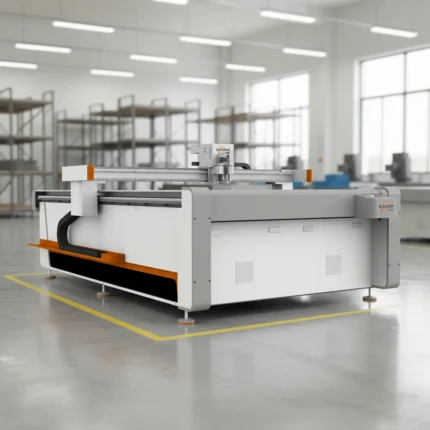
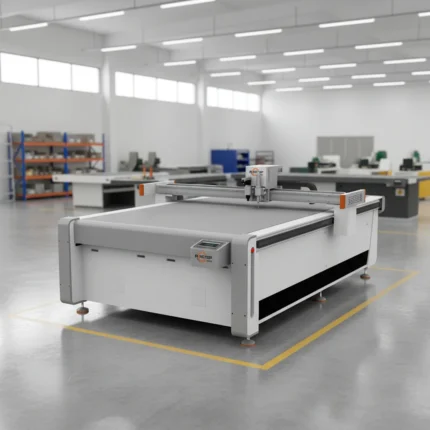
- Floor space planning accounting for 3450×2300×1250 mm overall dimensions plus operator clearance on three sides
- Dedicated 380V ±10% circuit with confirmed 50/60 Hz frequency and matching plug configuration
- Machine delivered with gantry and table separated; reassembly and leveling performed by commissioning engineer
- First-run parameter tuning on your material stack, including vacuum zone mapping and tool head offset calibration
- Touch screen control training in confirmed language covering nesting software, HP-GL file import, and emergency stop recovery
- Spare parts list covering oscillating knife blades, creasing wheels, and vacuum pump filter elements for the first operating year
Preparing Your Inquiry
Share the material types you intend to cut — including thickness, density, and whether they arrive in rolls or sheets — along with your typical daily cutting volume and the nesting software you currently use. Specify the voltage and frequency standard at your facility, the preferred control panel language, and whether your artwork requires CCD contour recognition or projection positioning. If you have a shortlist of sample parts, send the files and material swatches so a sample cutting report can be prepared before the quotation is finalized.
Frequently Asked Questions
Q: How do I know whether my material needs an oscillating knife or a laser cutting process?
A: Fibrous and composite materials like fabric, foam, and gasket sheets generally cut cleaner with an oscillating knife, which severs fibers without melting them. Acrylic, wood, and engraved signage typically suit a laser process. Because both platforms are designed and built in the same factory, your material sample can be tested on both methods and compared before you commit to either machine type.
Q: Can the voltage and control language be adapted to my local electrical standard?
A: The standard configuration is 380V ±10%, but the transformer and control panel can be specified for other voltages and frequencies at the quotation stage. The plug type and control panel language — including English, Russian, Italian, Chinese, or a custom language — are confirmed in writing before production begins so there is no mismatch on arrival.
Q: What is the process for testing my material before I place an order?
A: You send a representative sample of the material along with a cutting file. The engineering team runs the sample on the RT-D2516 / RT-S2516 using the tool head and vacuum configuration recommended for your substrate. A sample cutting report documenting edge quality, cutting speed, and thickness result is returned with the quotation.
Q: How is the CCD vision system selected for printed packaging work?
A: If your packaging artwork includes discrete printed registration marks, the small CCD camera handles mark-by-mark positioning. For full-sheet contour recognition where the camera must read the entire printed outline, the panoramic camera option is specified. The choice is confirmed during the inquiry stage based on your artwork files and production speed requirements.


Related products
2026 Digital Flatbed Cutting Plotter Auto Corrugated Box Die Cutter
Product Introduction
Digital Flatbed Cutting Plotter 2026, ideal for auto corrugated box die cutting, offering precision and efficiency for professional packaging production.Specifications
| Type | Digital Flatbed Cutting Plotter |
| Model | 2026 |
| Application | Auto Corrugated Box Die Cutting |
| Function | Precision Cutting & Plotting |
Automatic Die-less Cardboard Vibrating Knife Cutter 2026
Product Introduction
Automatic Die-less Cardboard Vibrating Knife Cutter 2026, a precision cutting solution for cardboard materials, featuring advanced die-less technology for efficient and flexible cutting operations. Ideal for various cardboard processing needs in manufacturing and packaging industries.Key Specifications
| Model | 2026 |
| Type | Automatic Die-less Cutter |
| Cutting Tool | Vibrating Knife |
| Material | Cardboard |
Automation CNC Pizza Box Machine 2026 Rotary Die Cutting
Product Parameters
| Type | Automation CNC Pizza Box Machine |
| Model Year | 2026 |
| Cutting Technology | Rotary Die Cutting |
| Operation | Automated CNC Control |
Introduction
This 2026 Automation CNC Pizza Box Machine features advanced rotary die cutting technology, ensuring precise and efficient pizza box production. With automated CNC control, it offers high productivity and accuracy for professional manufacturing needs.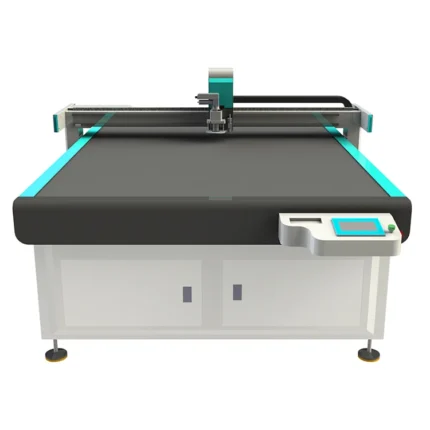
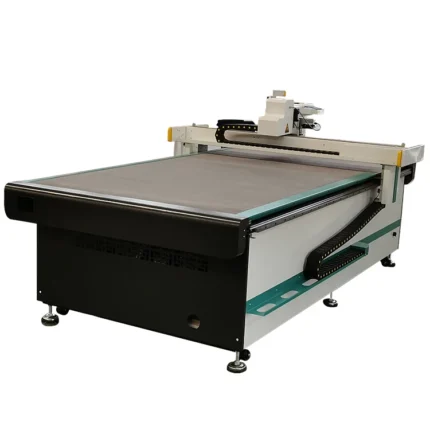
CNC Oscillating Knife Cutting Machine 2026 for Corrugated Cardboard & Honeycomb
Product Introduction
2026 CNC Oscillating Knife Cutting Machine, ideal for corrugated cardboard and honeycomb materials, offering precise and efficient cutting solutions for your production needs.Specifications
| Model | 2026 |
| Type | CNC Oscillating Knife Cutting Machine |
| Applicable Materials | Corrugated Cardboard, Honeycomb |
| Cutting Method | Oscillating Knife |
商品评价
There are no reviews yet.