

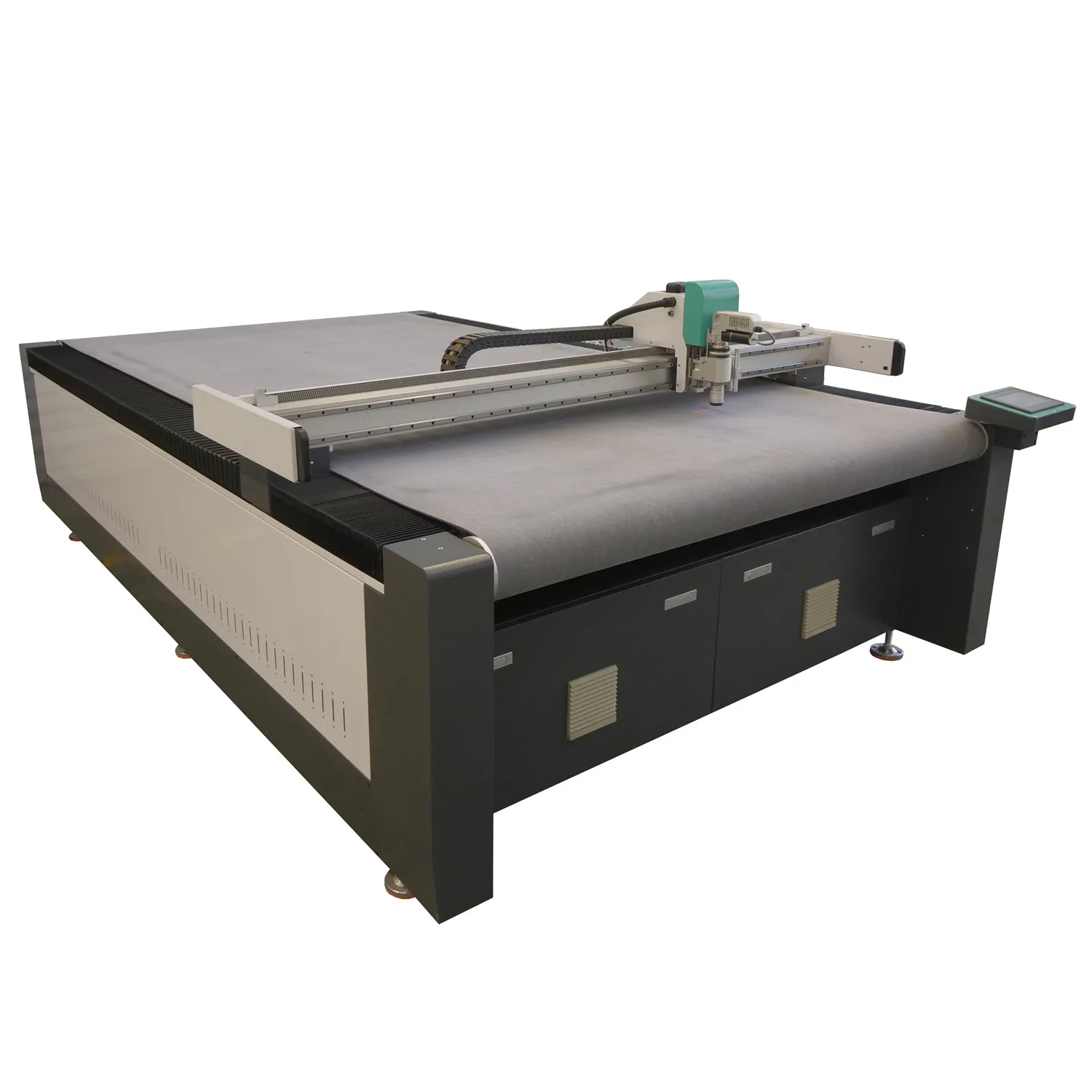
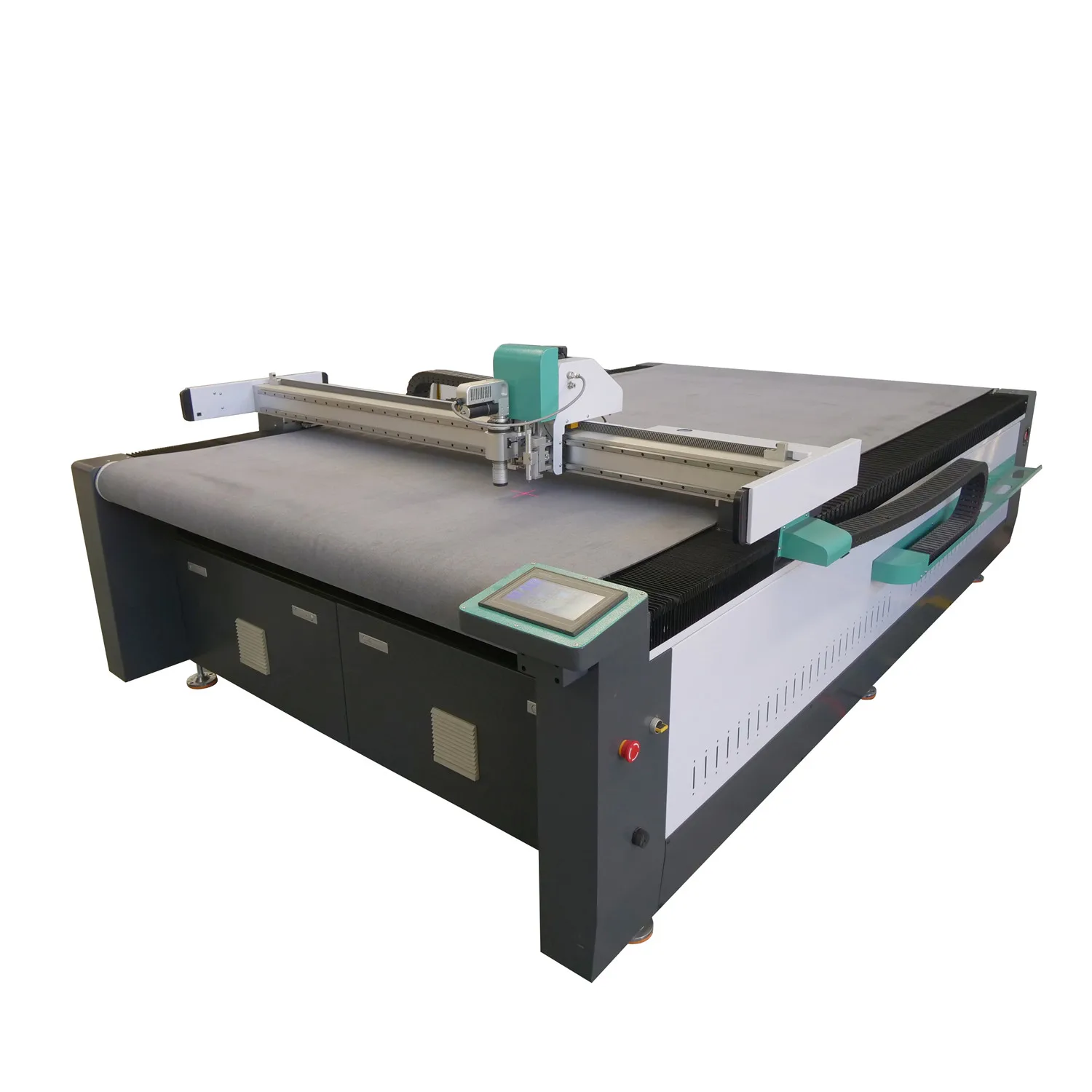
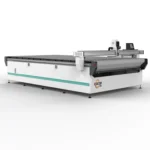
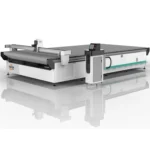
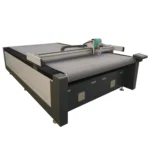
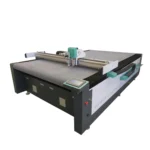
Fabric CNC Oscillating Knife Cutting Machine – Manufacturer
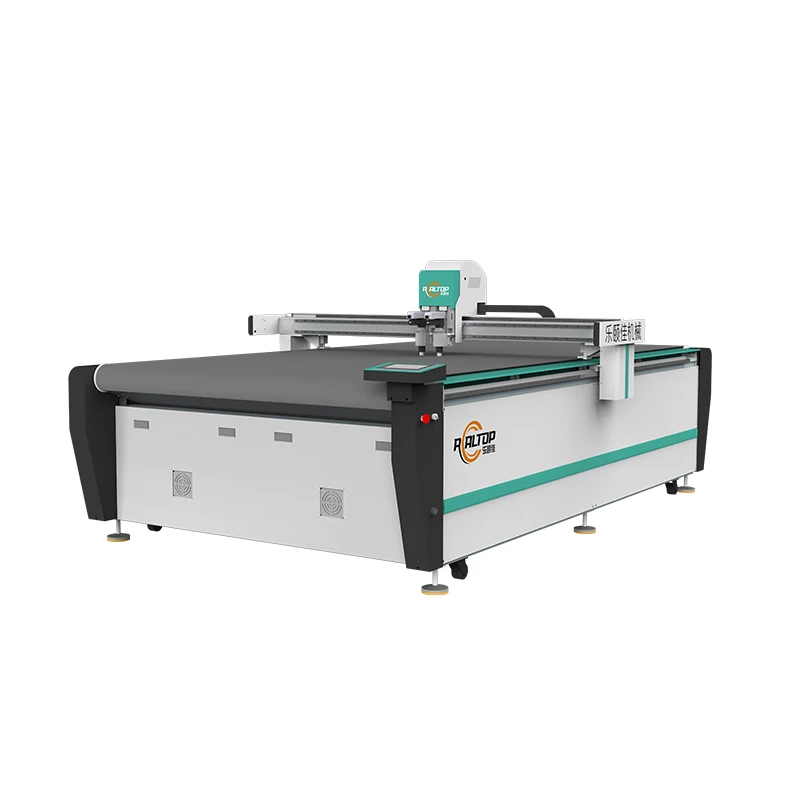
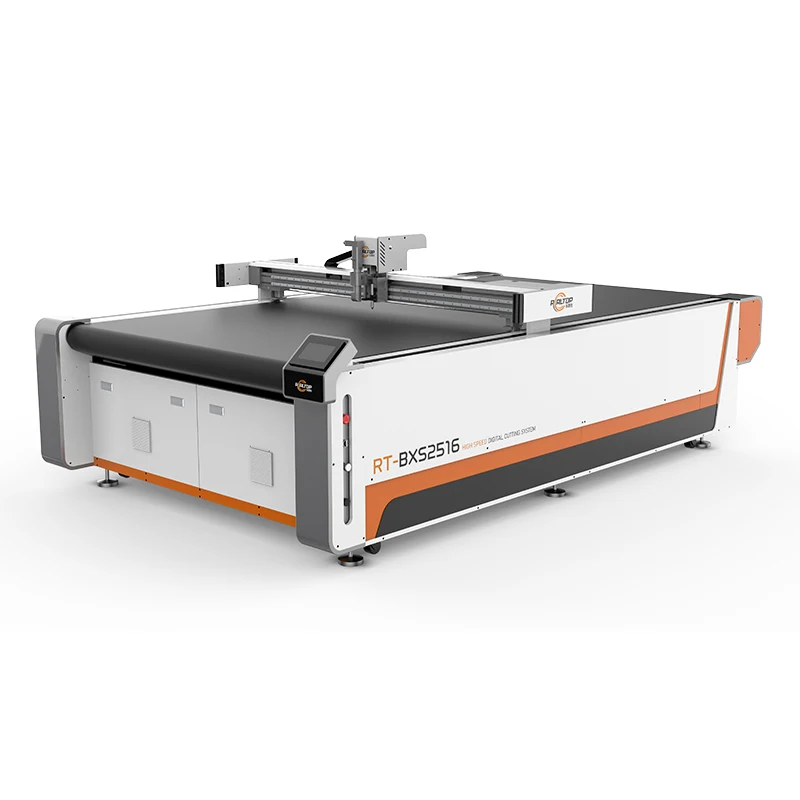
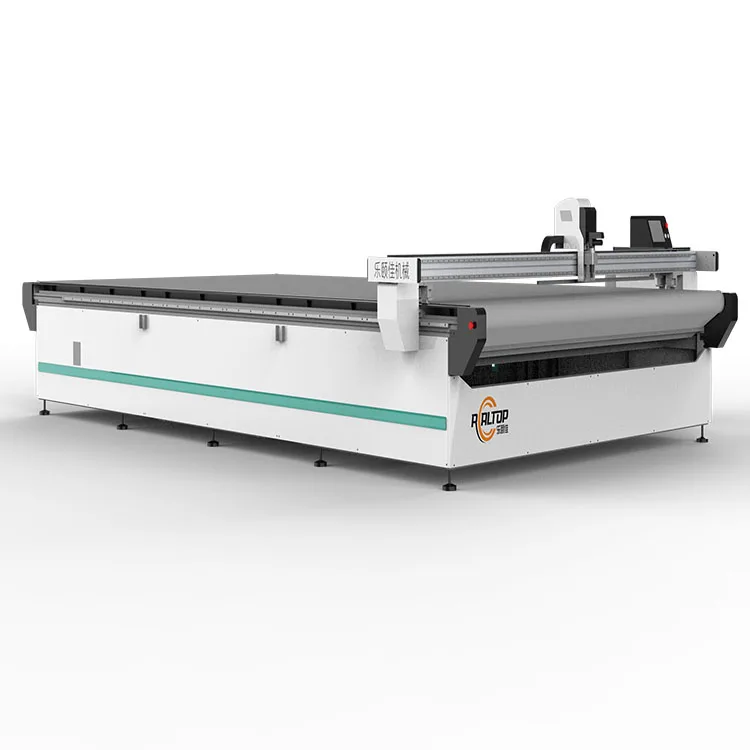
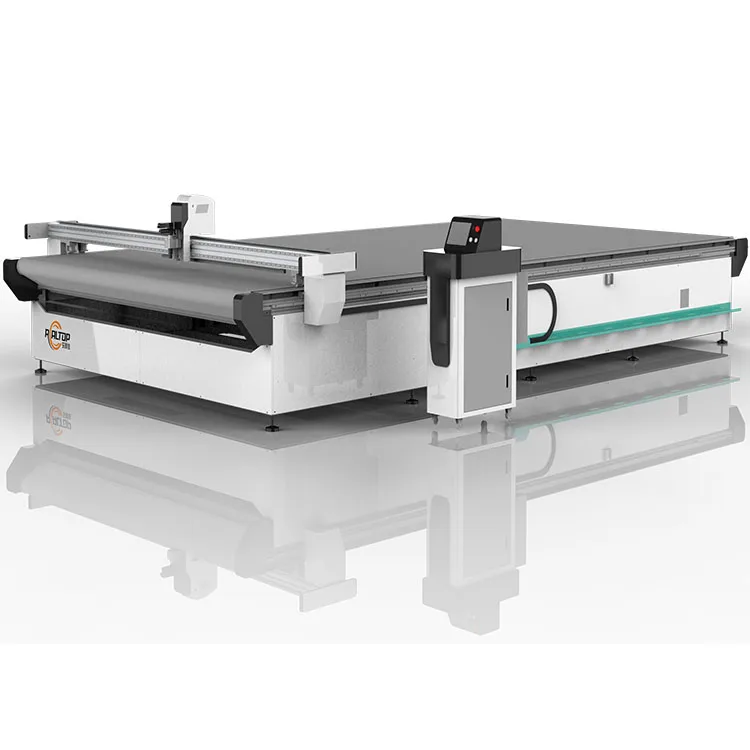
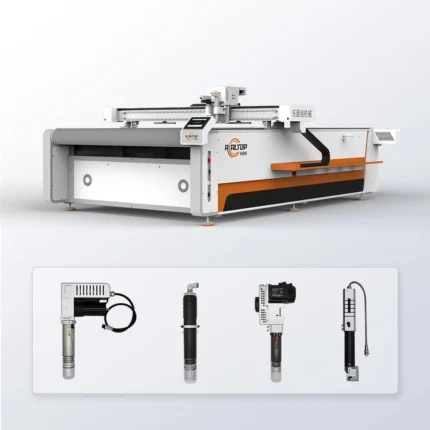
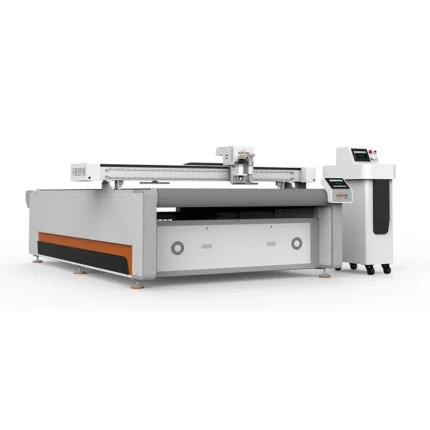
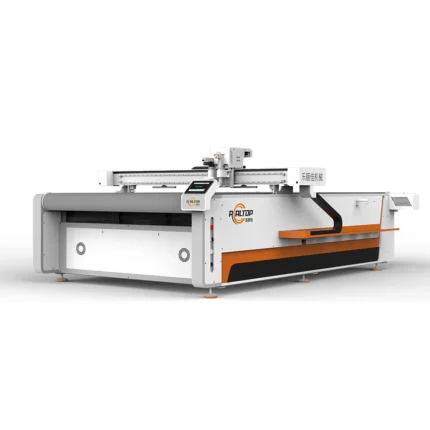
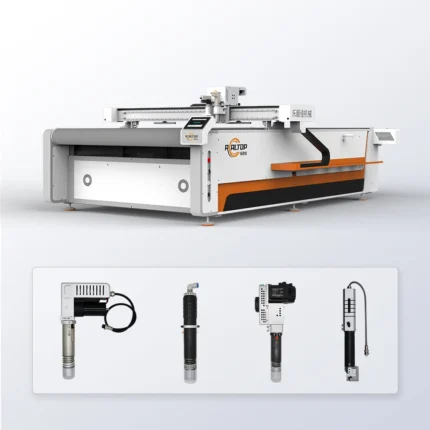
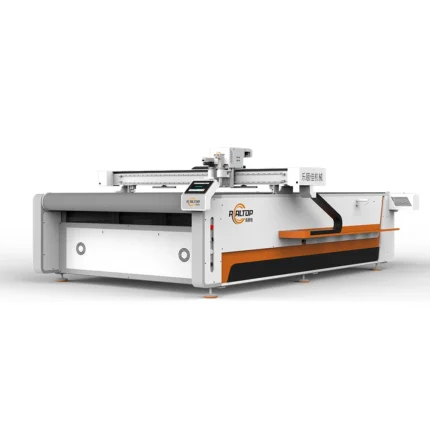
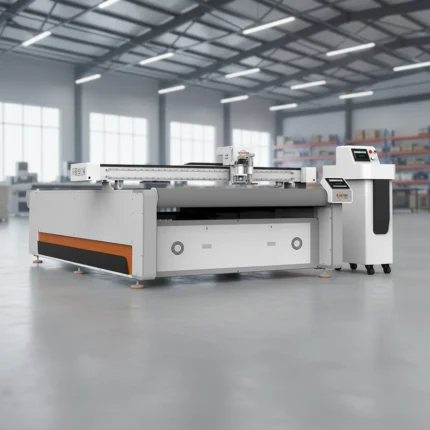
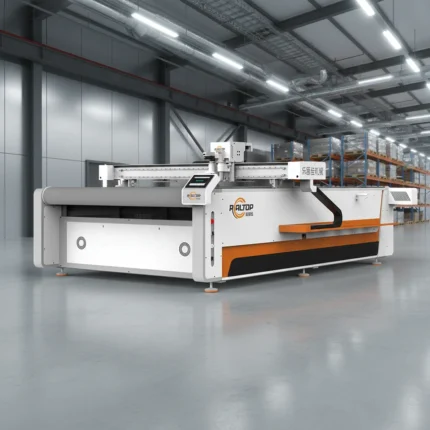
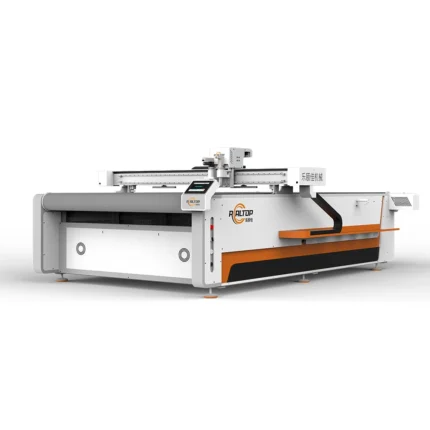
RT-D2516/RT-S2516 CNC Oscillating Knife Cutting Machine, 1600×2500mm working area, 9kw rated power, ≤0.1mm repeatability — configured for fabric, leather and composite cutting where laser causes fused edges or fumes.
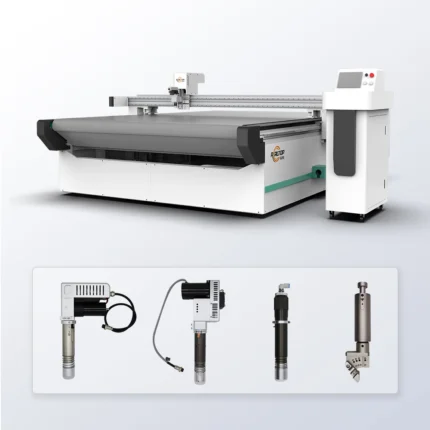
- Swiss imported oscillating knife head with full-cut, half-cut and cursor location
- Aluminum air-box vacuum platform with CCD visual positioning option
- Supports PLT, DXF, AI file formats with auto typesetting software
Laser-process buyers evaluating knife cutting can match tool head and vacuum zoning to material thickness and production volume rather than force one method across every job.
Sample cutting on buyer’s own material confirms edge quality, cutting depth and speed before commitment.
Swiss Blade Precision — oscillating knife head with full-cut, half-cut and cursor location delivers unfused edges on multi-layer fabric stacks where laser would melt or discolour.
Technical Specifications
| Parameter | Value |
|---|---|
| Product Type | CNC Oscillating Knife Cutting Machine |
| Model | RT-D2516/RT-S2516 |
| Working Area | 1600 × 2500 mm |
| Machine Dimensions | 3450 × 2300 × 1250 mm |
| Rated Power | 9 kW |
| Vacuum Pump | 7.5 kW |
| Table Type | Flat working table / Auto feeding table (selectable) |
| Multifunctional Head | Swiss imported knife — vibration full cutting, half cutting, cursor location |
| Translational Velocity | 800 – 2000 mm/s |
| Cutting Speed | 200 – 800 mm/s (varies with material type and thickness) |
| Cutting Thickness | ≤100 mm (basis not stated in source — confirm block format / material / thickness) |
| Repeated Accuracy | ≤0.1 mm |
| Transmission System | Digital servo motor, linear guide, synchronous belt, ball screw |
| Servo Motor | Delta (optional Panasonic / Japan-made) |
| Guide Rail | Taiwan Hiwin |
| Conveyor Belt | Germany imported |
| Platform | Aluminum air box (integrated or split configuration) |
| Safety Device | Infrared sensors, anti-collision, emergency stop |
| Voltage | 380 V ± 10 % |
| Control Panel | Touch screen, multi-language (EN / RU / IT / ZH, customizable) |
| Software | Auto typesetting — PLT, DXF, AI file formats |
| Visual Positioning | Small CCD camera mark point / panoramic camera / projection (optional) |
| Tool Head Options | Oscillating knife, pneumatic knife, high-power vibrating knife, circular knife, V-cutting knife, drag knife, creasing wheel, dotted-line knife, punching, brush |
| Instruction Format | HP-GL compatible |
| Standard | CE |
Application Suitability
| Application | Material or Output |
|---|---|
| Garment and footwear cutting | Single and multi-layer fabric, textile, shoe material, luggage leather |
| Automotive interior trimming | Sponge composite leather, PU, EVA, XPE laminated textiles |
| Soft home furnishing | Sofa upholstery fabrics, carpet, curtain panels |
| Signage and textile printing | Pre-printed fabric rolls requiring CCD contour recognition |
| Sealing and gasket production | PTFE, ETFE, fiberglass, non-woven gasket sheets |
| Packaging sample making | Corrugated board, foam inserts, carton prototypes |
Why Laser Buyers Switch to Oscillating Knife on Fabric Stacks
When a CO2 laser is rated at peak wattage rather than continuous output, real cutting depth on a thick multi-layer fabric lay-up can fall noticeably short of the quoted figure, leaving fused edges or incomplete cuts through the bottom plies. A physical oscillating blade removes that uncertainty entirely because cutting force, not optical power, drives penetration.
Laser-process buyers evaluating a CNC oscillating knife cutting machine for laser vs knife comparison often discover that synthetic fibres such as polyester or nylon melt at the cut line, producing a hard, glazed edge that frays after washing. On sponge composites and PU laminates the thermal halo discolours adjacent material, forcing secondary trimming that was never in the production plan [NEED_CITE: thermal effects on synthetic textiles during laser cutting].
Edge Quality Where Thermal Methods Fail
On multi-layer garment lays the Swiss imported oscillating knife delivers a clean mechanical shear through cotton, denim and blended wovens without melting the fibre cross-section. Full-cut and half-cut modes let the same head kiss-cut vinyl heat-transfer layers in one pass and penetrate a six-ply denim stack in the next, keeping edge fidelity within the ≤0.1 mm repeatability envelope.
Contour Accuracy on Printed Textiles
When registration marks shift slightly during fabric feeding, the optional CCD or panoramic camera recalculates the cut path in real time. This keeps printed logos and sublimated graphics inside tolerance even on stretch knits that relax after unrolling, a scenario where a fixed-path laser file would drift off-register by the third panel.
Vacuum Hold-Down Across a 1600 × 2500 mm Bed
The aluminum air-box platform, available in integrated or split zoning, maintains even suction across the entire work surface. Split zoning isolates adsorption to the active cutting region so small pattern pieces such as collar inserts or shoe uppers stay flat instead of lifting at the trailing edge [NEED_CITE: vacuum zoning effects on small-part retention in flatbed cutting].
Matching Tool Head to Material Thickness
A pneumatic knife handles dense rubber gaskets that would stall an oscillating blade, while a circular knife slices continuous rolls of non-woven filter media at translational speeds up to 2000 mm/s. Specifying the wrong head for a given material thickness is the most common cause of ragged edges on CNC knife tables, so tool selection is confirmed against a sample cutting report before the order is locked.
The Hidden Cost of Skipping a Sample Cut
Buyers who specify a cutting table solely on working area often discover that the chosen tool head cannot handle their actual material stack. Ragged edges on foam composites or crushed fibres on technical textiles force re-cutting, adding scrap and machine time that erode the daily output target [NEED_CITE: material-specific tooling mismatch in digital cutting operations]. A sample cutting report on your own roll stock — noting edge quality, achievable speed and blade wear — prevents this mismatch before the machine ships.
Why Fabric Processors Source This Table Here
In-house design covers both knife and laser cutting, so the cutting method is matched to your material rather than forced into one technology. Tool head and vacuum table zoning are specified per your material thickness and daily volume, not pulled from a standard catalogue. CCD camera positioning and software file compatibility (PLT, DXF, AI) are confirmed on your artwork before the order is finalised. Voltage, plug type and control language — from 380 V ± 10 % base to a custom touch-screen language — are locked in writing before production begins. Every table ships with a factory test record run on your material, not a generic demo sheet.
Documentation & Verification
- Machine specification sheet listing every selected tool head and vacuum zone layout
- Electrical schematic confirming 380 V ± 10 % wiring and breaker sizing
- Sample cutting report on your fabric or composite roll stock before dispatch
- Software licence and PLT / DXF / AI file format compatibility note
- CE declaration covering the complete configured machine
- Packing photographs showing crate bracing and moisture barrier
Installation, Commissioning & Support
- Floor must sustain 3450 × 2300 mm footprint plus material-roll clearance on the feed side
- Dedicated 380 V ± 10 % circuit rated for the 9 kW spindle plus 7.5 kW vacuum pump
- Machine ships in modular sections; reassembly and belt tensioning handled on site
- First-run calibration of servo repeatability to ≤0.1 mm across the full 1600 × 2500 mm bed
- Operator training covers touch-screen language setup and HP-GL file import workflow
- Spare oscillating knife blades and drag-knife holders included in the initial parts kit
What to Share Before Requesting a Quote
Send a swatch or roll sample of the primary material — including backing layers if laminated — together with the maximum stack height you plan to cut. Confirm your facility voltage and frequency, the control-panel language your operators need, and whether your existing nesting software exports PLT, DXF or AI files. If your workflow relies on printed registration marks, include a sample print so the CCD contour function can be validated before configuration is finalised.
Frequently Asked Questions
Q: Knife or laser — which method is correct for my synthetic fabric?
A: Laser seals edges on polyester but leaves a hard, glazed bead that can crack after washing. Oscillating knife produces a soft, unfused edge that behaves like a conventionally cut garment. We run both methods on your roll sample so you can compare edge hand, cutting speed and any thermal discolouration before choosing.
Q: How do you verify cutting thickness for my specific material stack?
A: We request a sample of your actual lay-up — including any foam or adhesive interlayers — and run a controlled cut recording blade penetration, edge quality and achievable speed. The resulting sample report documents the thickness basis so the published ≤100 mm figure is confirmed against your material, not a generic test block.
Q: Can the CCD camera follow my printed marks at full production speed?
A: The panoramic camera option captures the entire 1600 × 2500 mm bed in one frame and recalculates cut paths when fabric stretches or shifts. We validate tracking on your printed sample at the cutting speed your daily volume requires, then document mark-detection success rate in the pre-shipment test record.
Q: Which tool head should I choose for my material mix?
A: Oscillating knife handles woven and knitted textiles up to moderate thickness; pneumatic knife suits dense rubber and gasket stock; circular knife excels on continuous non-woven rolls. Your sample cutting report specifies the recommended head for each material in your production schedule, and additional heads can be added later as your product range grows.
Q: How are voltage, language and software format confirmed before shipment?
A: After order confirmation we issue a written specification lock documenting your site voltage (380 V ± 10 % base), required plug type, touch-screen language and file format compatibility (PLT, DXF, AI). No component is sourced until you sign off on this lock sheet, preventing field rewiring or software mismatches on arrival.


Related products
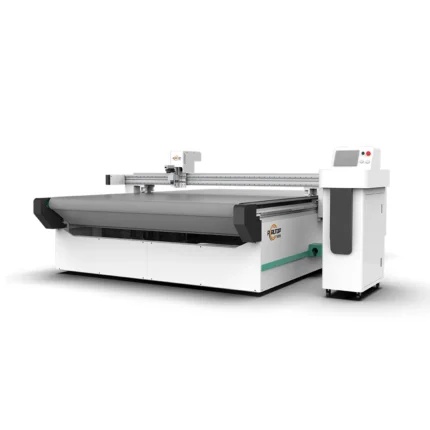
2026 Flatbed Oscillating Knife Cutter 1600x3500mm Auto-Feeding Textile
Product Overview
Flatbed Oscillating Knife Cutting Machine 2026 is a high-precision textile fabric cutter with auto-feeding function, ideal for efficient and accurate cutting tasks in textile manufacturing. It combines advanced oscillating knife technology with a large working area to meet industrial production needs.Key Specifications
| Model | 2026 |
| Working Area | 1600x3500mm |
| Feeding System | Auto-Feeding |
| Cutting Type | Oscillating Knife |
| Application | Textile Fabric |
CNC Vibration Knife System 2026 for Polyester Nylon Non-Woven Prepreg
Product Introduction
CNC Vibration Knife System 2026 is ideal for cutting polyester, nylon, non-woven fabrics, and prepreg materials with precision and efficiency, suitable for industrial manufacturing needs.Product Parameters
| Model | 2026 |
| Cutting Technology | CNC Vibration Knife |
| Materials | Polyester, Nylon, Non-Woven, Prepreg |

Electric Fabric Rotary Cutter 2026 12V Auto-Cut Industrial
Product Introduction
Industrial-grade Electric Fabric Rotary Cutter designed for precise cutting of scan-printed cloth. Features 12V auto-cut functionality for efficient, automated operation, ideal for professional textile processing.Product Parameters
| Power Supply | 12V |
| Function | Auto-Cut |
| Application | Scan-Printed Cloth |
| Type | Industrial Electric Rotary Cutter |
High Speed Fabric Cutting Machine 2026 Round Oscillating Knife
Product Overview
High Speed Fabric Cutting Machine 2026 with round and oscillating knife for efficient fabric cutting. Ideal for textile manufacturing and related industries.Key Specifications
| Cutting Type | Round & Oscillating Knife |
| Model Year | 2026 |
| Application | Fabric Cutting |
| Feature | High Speed Performance |
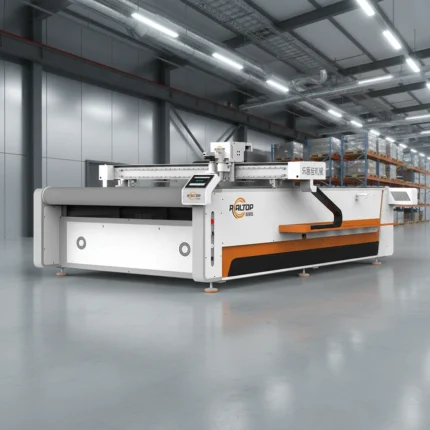
Jinan Realtop CNC Fabric Slitting Cutter 2026: Advanced Flexible Material Cutter
Product Introduction
Jinan Realtop CNC Fabric Slitting Cutter 2026 is a high-performance cutting equipment designed for precise fabric processing, ideal for industrial manufacturing needs with reliable CNC technology.Specifications
| Model | 2026 |
| Type | CNC Fabric Slitting Cutter |
| Manufacturer | Jinan Realtop |
| Application | Fabric Processing |
| Control System | CNC |
Realtop CNC Fabric Cutting Machine 2026 CE Certified
Product Introduction
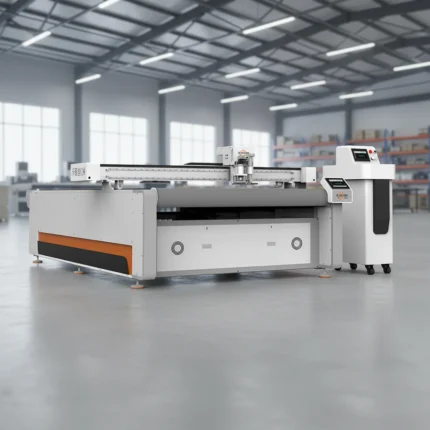
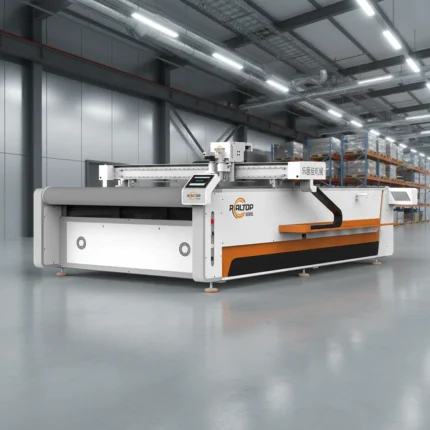
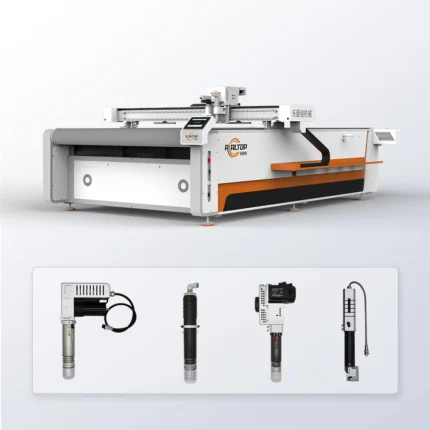
Realtop CNC Fabric Cutting Machine 2026, CE Certified, ideal for precision fabric cutting with advanced CNC technology. Engineered for efficiency and reliability in textile manufacturing processes.Key Specifications
| Model | Realtop CNC Fabric Cutting Machine 2026 |
| Certification | CE Certified |
商品评价
There are no reviews yet.