

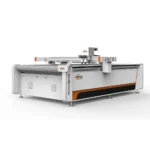

Flatbed Digital Cutting Machine 1625 | Laser Process Manufacturer
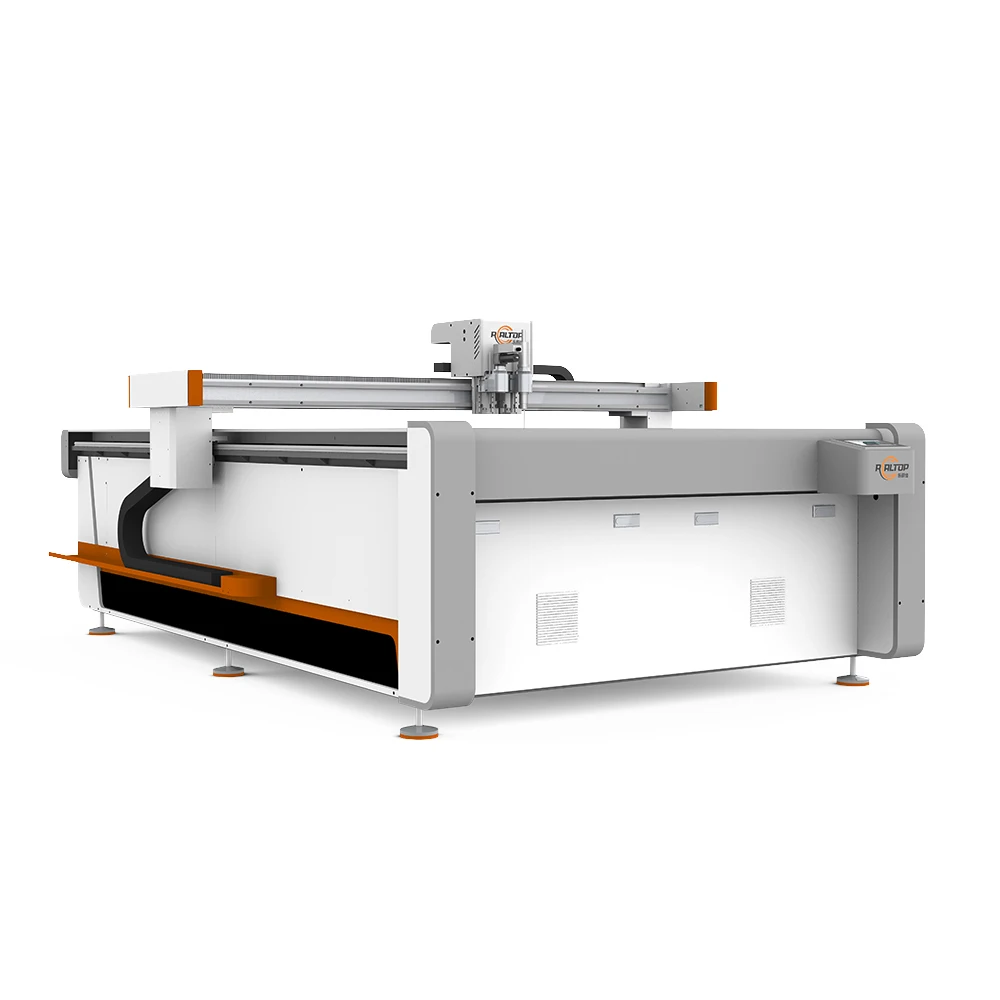
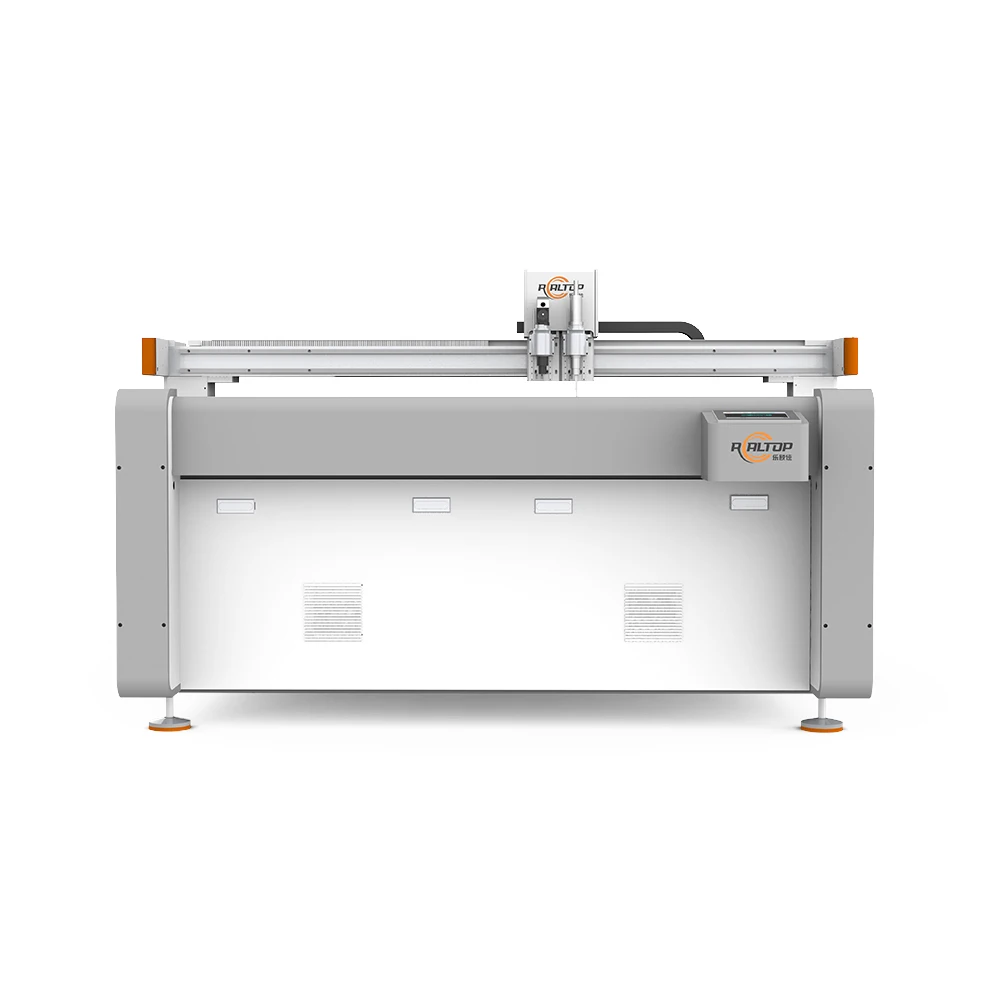
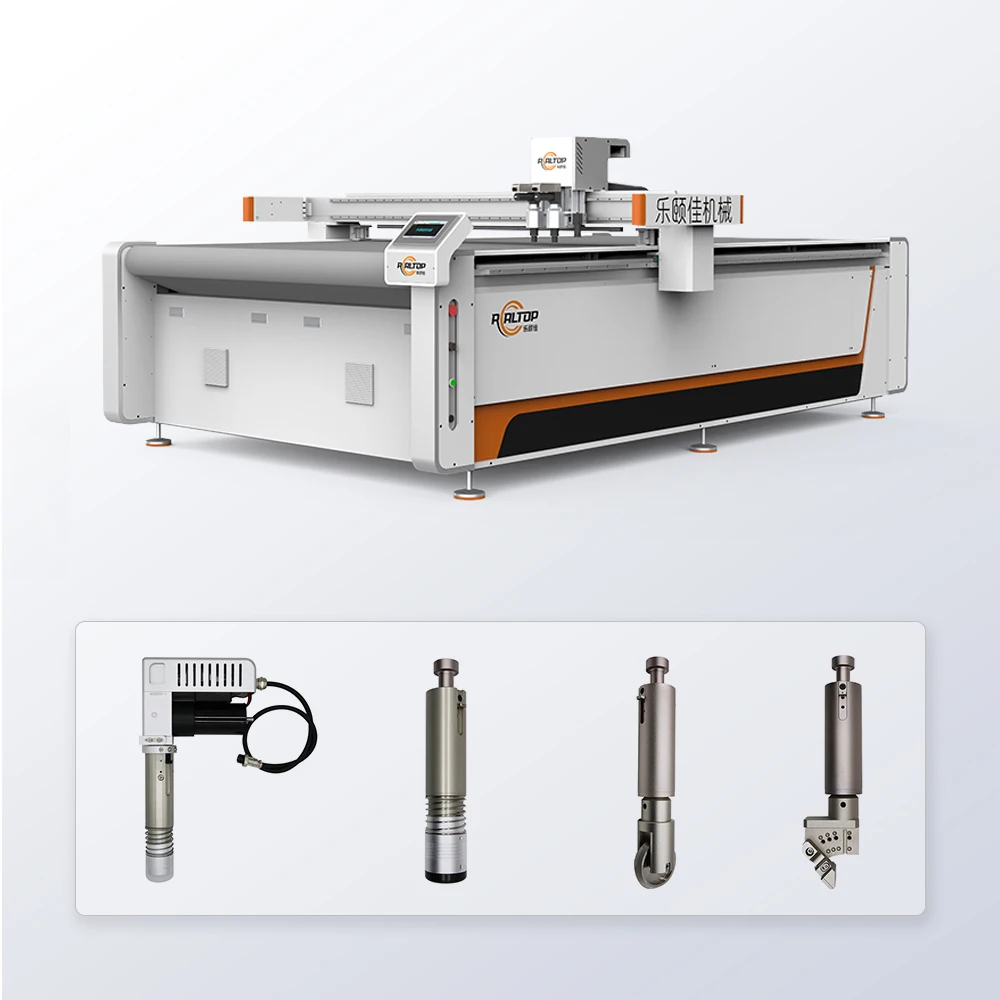
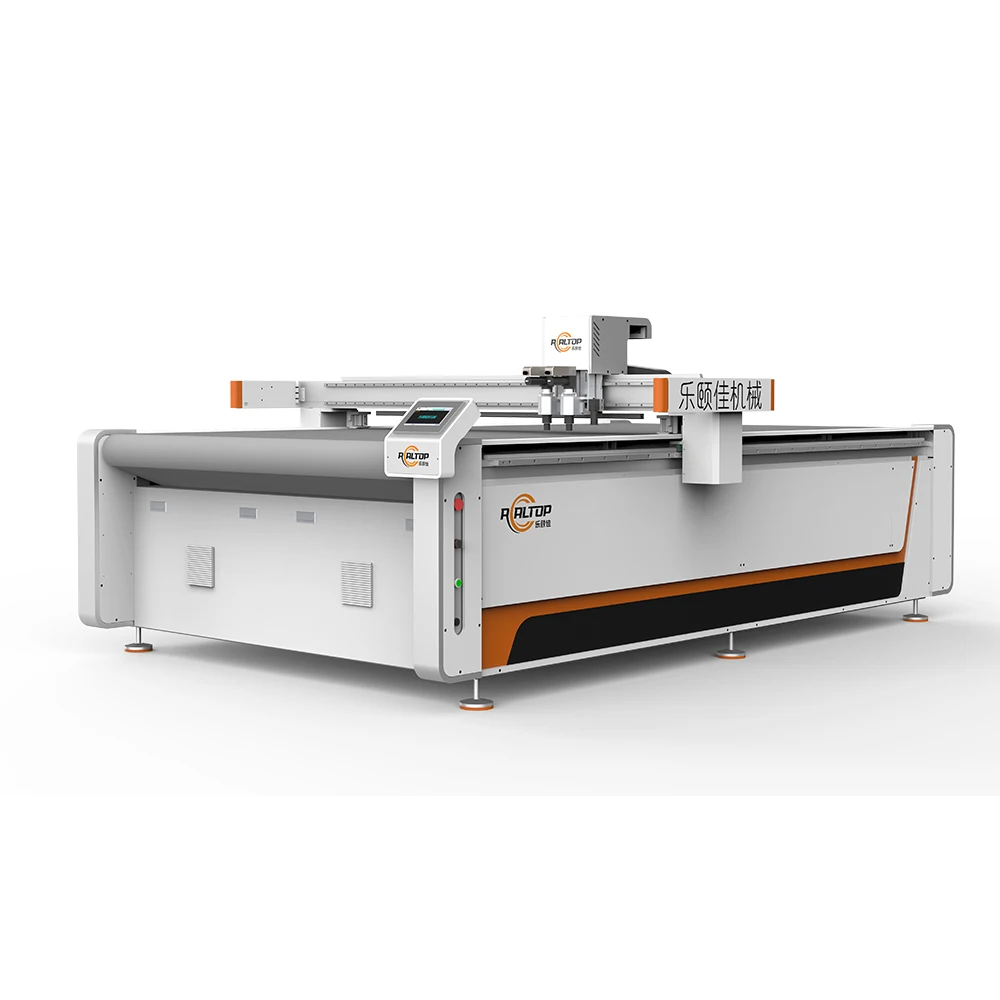
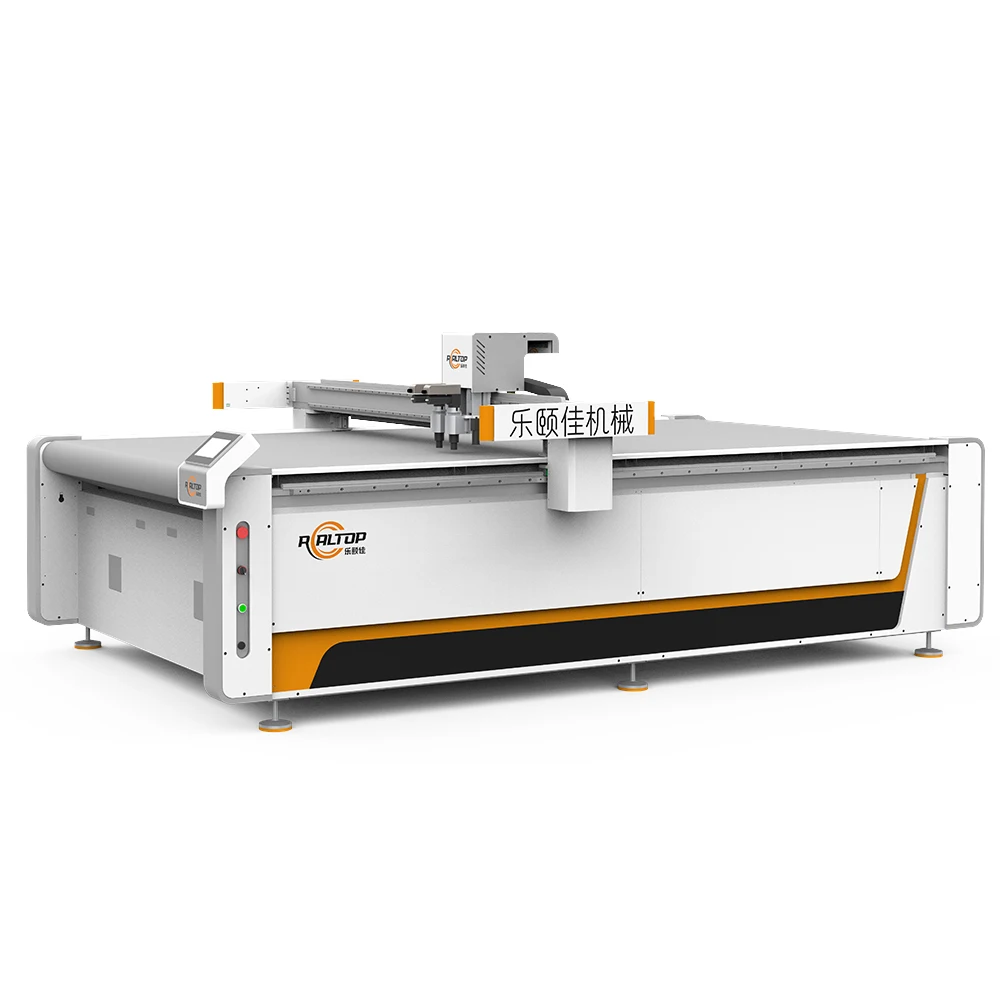
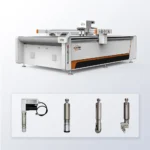
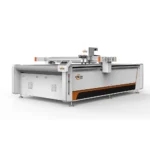
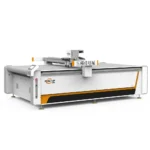
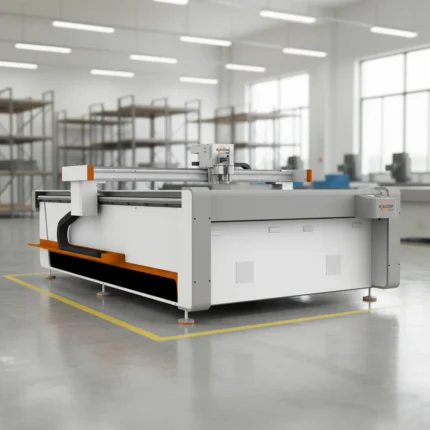
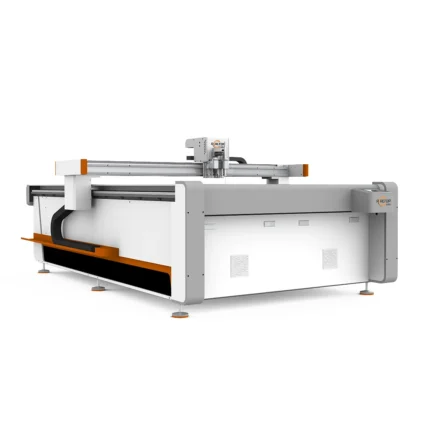
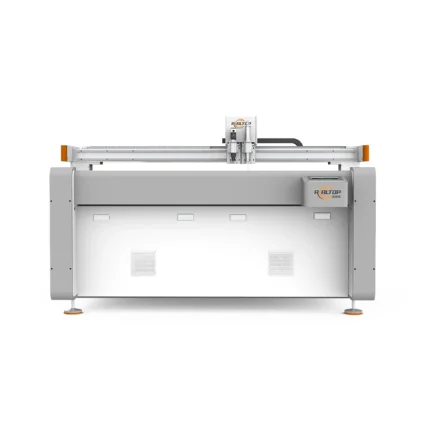
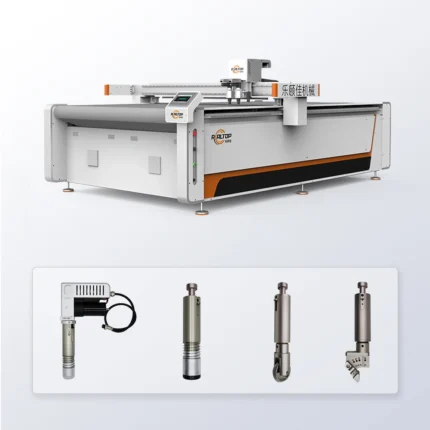
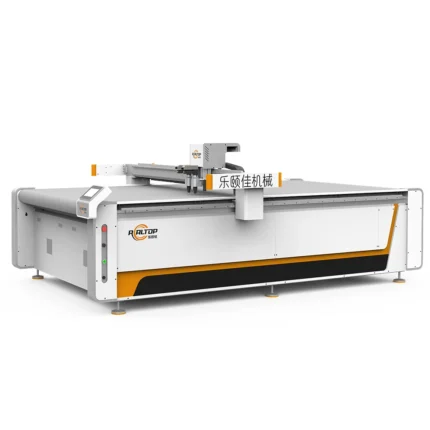
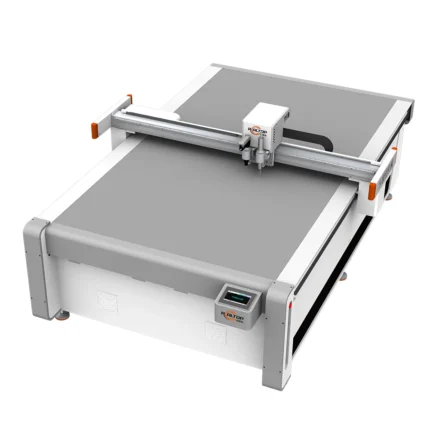
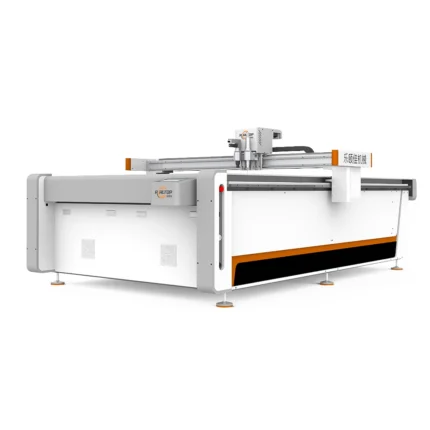
Flatbed Digital Cutting Machine 1625 (STD), CNC Oscillating Knife, 1600×2500 mm Working Area — configured with oscillating knife, creasing wheel, milling and V-groove tool heads for cold cutting, alongside CO2/fiber laser options for thermal processing and edge sealing on synthetics.
- ±0.1 mm cutting accuracy across full bed with 9 kW vacuum hold-down
- PLC control supporting PLT, DXF, AI, PDF workflows in multiple interface languages
Sample cutting on your own material with both knife and laser methods is completed before order commitment, so process selection matches real edge quality and depth rather than quoted peak power.
Customized Laser & Knife Cutting Configuration — In-house design team builds both CO2/fiber laser and oscillating knife heads under one roof, so the 1625 (STD) cutting method is matched to your substrate rather than forced into a single technology.
Technical Specifications
| Parameter | Value |
|---|---|
| Model | 1625 (STD) |
| Product Type | CNC Oscillating Knife Cutting Machine |
| Working Area | 1600×2500 mm |
| Tool Head Options | Oscillating knife, Driven rotary knife, Creasing wheel, Kiss cutting tool, Pneumatic knife, Milling tool, V groove knife |
| Laser Options | CO2 and fiber laser heads available for thermal cutting and engraving |
| Cutting Speed | 0-1500 mm/s |
| Cutting Thickness | ≤ 40mm (basis not stated in source — confirm material / density) |
| Cutting Accuracy | ±0.1 mm |
| Vacuum Table | Aluminum bellows vacuum table |
| Vacuum Pump Power | 9 kW |
| Servo Drive Options | Panasonic, Delta, Dorna (source value — verify against manufacturer catalog) |
| Control System | PLC control panel with optional display languages |
| Supported File Formats | PLT, DXF, AI, PDF |
| Voltage Options | 110V, 220V, 380V |
| Machine Dimensions (L×W×H) | 3300×2100×1350 mm |
| Safety Device | Infrared sensor device and emergency stop device |
| Certifications | CE (inferred from Certifications section image placeholder — verify certificate details) |
Application Suitability
| Application | Material or Output |
|---|---|
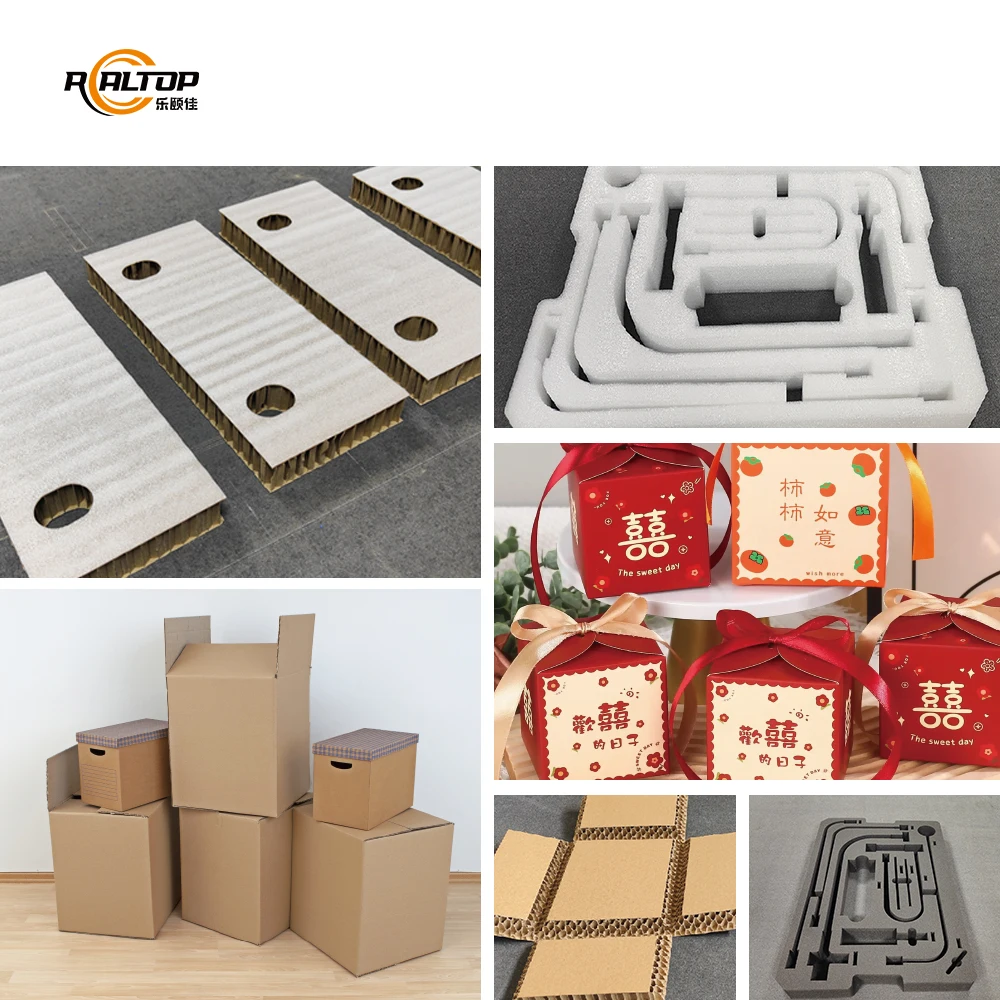
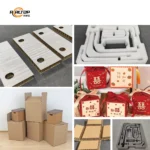
| Packaging sample making | Carton, corrugated board, foam board, cardboard prototypes with creasing and kiss cutting |
| Acrylic signage and displays | Cast and extruded acrylic, PVC foam board with CO2 laser edge sealing |
| Textile and composite fabrication | Aramid fiber, sound insulation foam, carbon fiber prepreg with oscillating knife |
| Automotive interior trimming | Seat cover leather, carpet, floor mats, door panel vinyl with rotary knife |
| Furniture and home decor | Sofa leather, fabric covers, cushion foam with drag and oscillating knife |
| Sheet metal identification | Thin gauge steel and aluminum tag engraving with fiber laser option |
Why "Peak Power" Quotes Ruin Your Acrylic Cut
A CNC oscillating knife cutting machine laser process specification quoted at peak wattage rather than continuous output will consistently fail to reach the advertised cutting depth on acrylic, wood, and textile substrates.
Continuous wattage determines real cutting capacity, not the peak number on the quotation.
I have watched buyers receive a laser head rated for a certain peak output, only to discover the continuous rating sits considerably lower, leaving uncut fibers on textile edges or incomplete penetration on 8mm acrylic [NEED_CITE: continuous versus peak laser power ratings in industrial cutting]. When the cutting depth falls short, operators slow the feed rate to compensate, which in turn burns the kerf on wood and yellow the edge on clear acrylic. The issue rarely surfaces during the factory test because standard test pieces are cut at conservative speeds; it appears weeks later when production runs demand higher throughput.
Thermal Versus Cold Cutting on the Same Bed
The 1625 (STD) accommodates both laser and knife tool heads on a single flatbed, allowing a packaging sample shop to crease corrugated board with a wheel, cut the outline with an oscillating knife, and then engrave a logo or part number with a CO2 laser in the same cycle. This interchangeability eliminates the need for a secondary engraving station and keeps registration tight across cut and mark features. Material that melts under thermal processing — aramid fiber, certain insulation foams — runs on the knife head, while synthetics that benefit from a sealed edge, such as polyester textile, move to the laser.
Edge Sealing and Kerf Behavior Across Substrates
When a CO2 laser cuts cast acrylic, the beam melts the kerf walls into a flame-polished finish that requires no secondary buffing, a result an oscillating knife cannot replicate on the same material [NEED_CITE: CO2 laser edge quality on cast versus extruded acrylic]. Conversely, cutting carbon fiber prepreg with a laser would delaminate the resin matrix; the oscillating knife shears the fibers cleanly without thermal damage. The aluminum bellows vacuum table holds thin sheet stock flat across the 1600×2500 mm area, preventing the lift that causes focal distance errors during laser passes and ragged entry points on knife cuts.
Reading the Specs That Actually Matter
The ±0.1 mm cutting accuracy across the full bed depends on servo drive responsiveness and mechanical rigidity; the availability of Panasonic, Delta, or Dorna servos lets buyers match motion performance to their tolerance budget. A 9 kW vacuum pump generates sufficient hold-down force for nested small parts that would otherwise drift under a weaker system, a common failure point on corrugated sample cutting where scrap tabs are narrow. The PLC control panel supports multiple interface languages, reducing operator error in multilingual workshops, while the file format list — PLT, DXF, AI, PDF — covers the exports from mainstream CAD and packaging design suites without requiring intermediate conversion software.
The Cost of Skipping the Material Sample
Choosing a tool head based on a brochure description rather than a physical sample cut on the buyer’s own material regularly produces ragged edges on foam, crushed corrugated flutes, or melted synthetic fibers that fail downstream quality inspection [NEED_CITE: tool head selection errors in digital flatbed cutting]. A creasing wheel set to the wrong pressure cracks the liner on double-wall board, while a laser power setting too high for the textile weight burns through the backing paper and fuses the fabric to the table felt. These defects surface only when the actual production material — with its specific density, coating, and moisture content — meets the tool.
What the Factory Brings to This Machine
Realtop Machinery (Jinan) Co., Ltd designs and produces both knife and laser cutting systems in-house, which means the 1625 (STD) tool head selection is based on material testing rather than catalog limitation. The factory runs sample cuts on the buyer’s actual substrate before the order is finalized, documenting cutting speed, edge quality, and tool wear in a written report. Voltage, plug type, and control language are confirmed against the destination market’s standards before assembly begins, avoiding the rewiring costs that arise when a 380V machine arrives in a 220V workshop. Software licenses and file format compatibility notes ship with the machine so the buyer’s existing nesting workflow transfers without re-licensing.
Documentation & Verification
- Factory test record showing cut quality on your specific packaging board density and thickness
- Electrical schematic confirming voltage, plug type, and breaker rating for your destination market
- Tool head and laser configuration list matched to your material sample results
- Software license certificate and file format compatibility note for your existing CAD workflow
- CE declaration documents covering the full machine assembly including laser safety classification
Installation, Commissioning & Support
- Floor space allocation for the 3300×2100×1350 mm frame plus material loading clearance on two sides
- Dedicated circuit matching the confirmed voltage option and the 9 kW vacuum pump draw
- Leveling and anchoring of the aluminum bellows vacuum table to maintain ±0.1 mm accuracy
- First-run parameter tuning on your actual material for both knife and laser heads
- Operator training on PLC control panel functions in the confirmed display language
- Spare parts list covering oscillating knife blades, laser lenses, and vacuum table felt
Preparing Your Inquiry
To move from general pricing to a firm configuration, share the specific substrate types, thicknesses, and sheet dimensions you run daily, along with the edge quality standard your end customer requires. Specify the local voltage and frequency at the installation site, the preferred control language, and whether your existing design software exports to PLT, DXF, AI, or PDF. If your material is a coated or composite stock outside standard ranges, send a sample sheet so the factory can run both knife and laser tests before the quotation is finalized.
Frequently Asked Questions
Q: How does continuous laser power differ from peak power, and which one determines cutting depth on acrylic?
A: Peak power is the maximum instantaneous output the laser tube can produce in short bursts, while continuous power is the sustained output available during a full cutting pass. Cutting depth on acrylic, wood, and textile depends on continuous power because the beam must penetrate the full material thickness at production speed. A quotation listing only peak wattage overstates real capacity.
Q: When should I choose CO2 laser cutting over an oscillating knife for packaging and foam materials?
A: CO2 laser suits substrates that benefit from a sealed edge, such as polyester textile and thin acrylic, where the heat prevents fraying. Oscillating knife is necessary for materials that melt, delaminate, or release toxic fumes under thermal processing, including aramid fiber, PVC-containing foam, and carbon fiber prepreg. The choice depends on material response, not machine cost.
Q: How are voltage, plug type, and control language confirmed before the machine ships?
A: The buyer provides the destination market’s voltage, frequency, and plug standard during the inquiry stage. The factory records these values on the electrical schematic and builds the control cabinet to match. The PLC display language is loaded and tested during the factory acceptance run so the operator interface is readable on arrival.
Q: What edge finish does CO2 laser produce on acrylic compared to oscillating knife cutting?
A: CO2 laser melts the acrylic kerf walls, producing a flame-polished, transparent edge that typically requires no secondary finishing. An oscillating knife cuts acrylic mechanically, leaving a matte, tool-marked edge that may need sanding or flame polishing for display-grade clarity. The selection depends on whether the finished edge is visible to the end user.
Q: Can my existing packaging design software files run directly on this machine’s control system?
A: The control system accepts PLT, DXF, AI, and PDF exports, which covers most mainstream packaging CAD and vector design platforms. Before the order is confirmed, the factory verifies compatibility with your specific software version and nesting workflow, documenting the result in a file format compatibility note that ships with the machine.


Related products
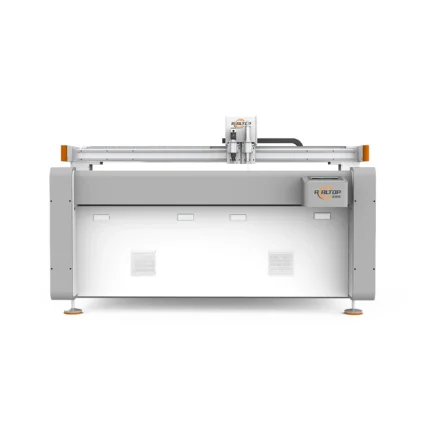
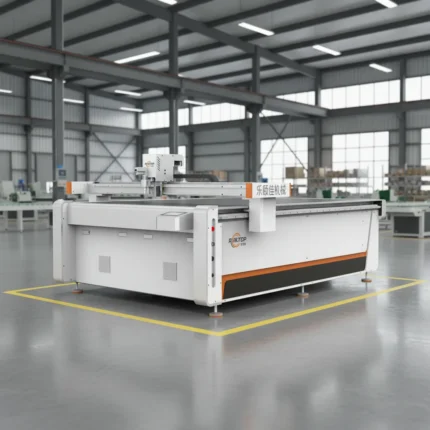
Automatic Die-less Cardboard Vibrating Knife Cutter 2026
Product Introduction
Automatic Die-less Cardboard Vibrating Knife Cutter 2026, a precision cutting solution for cardboard materials, featuring advanced die-less technology for efficient and flexible cutting operations. Ideal for various cardboard processing needs in manufacturing and packaging industries.Key Specifications
| Model | 2026 |
| Type | Automatic Die-less Cutter |
| Cutting Tool | Vibrating Knife |
| Material | Cardboard |
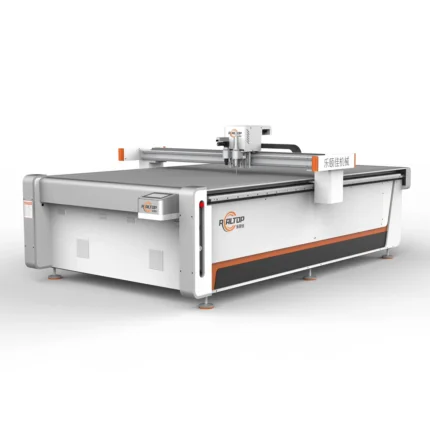
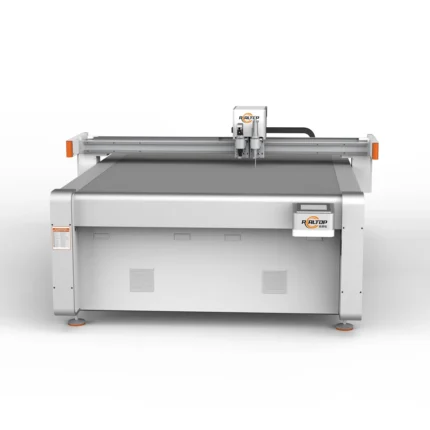
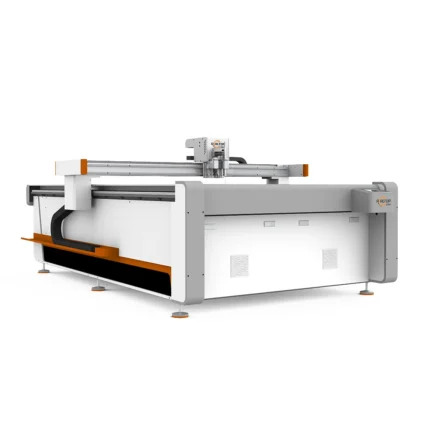
Automatic Digital Cardstock Cutter 2026 CNC Cutter
Product Introduction
Automatic Digital Cardstock Cutter 2026 is a CNC cutting machine ideal for white cardboard and kraft paper. It offers precise and efficient cutting performance, suitable for various paper processing needs in manufacturing and craft applications.Key Specifications
| Type | CNC Digital Cutting Machine |
| Material Compatibility | White Cardboard, Kraft Paper |
| Operation | Automatic |
| Application | Paper Cutting & Processing |
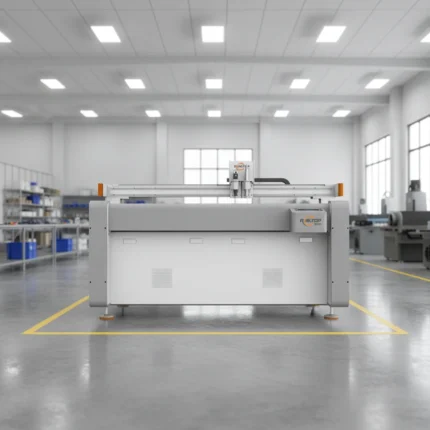
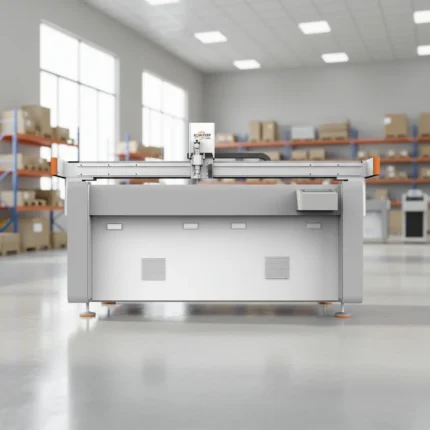
Digital Box Cutter 2026 Oscillating Knife Cardboard Cutter
Product Parameters
| Model | Digital Box Cutter 2026 |
| Cutting Type | Oscillating Knife |
| Material | Corrugated Cardboard |
Introduction
Professional oscillating knife cutting machine for corrugated cardboard. Ideal for precise, efficient cutting in packaging production. Reliable performance from China's leading welding & cutting equipment manufacturer.


商品评价
There are no reviews yet.