




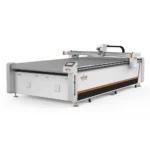


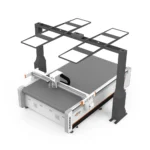
Industrial Leather CNC Cutting Machine 1625 – Factory Supply
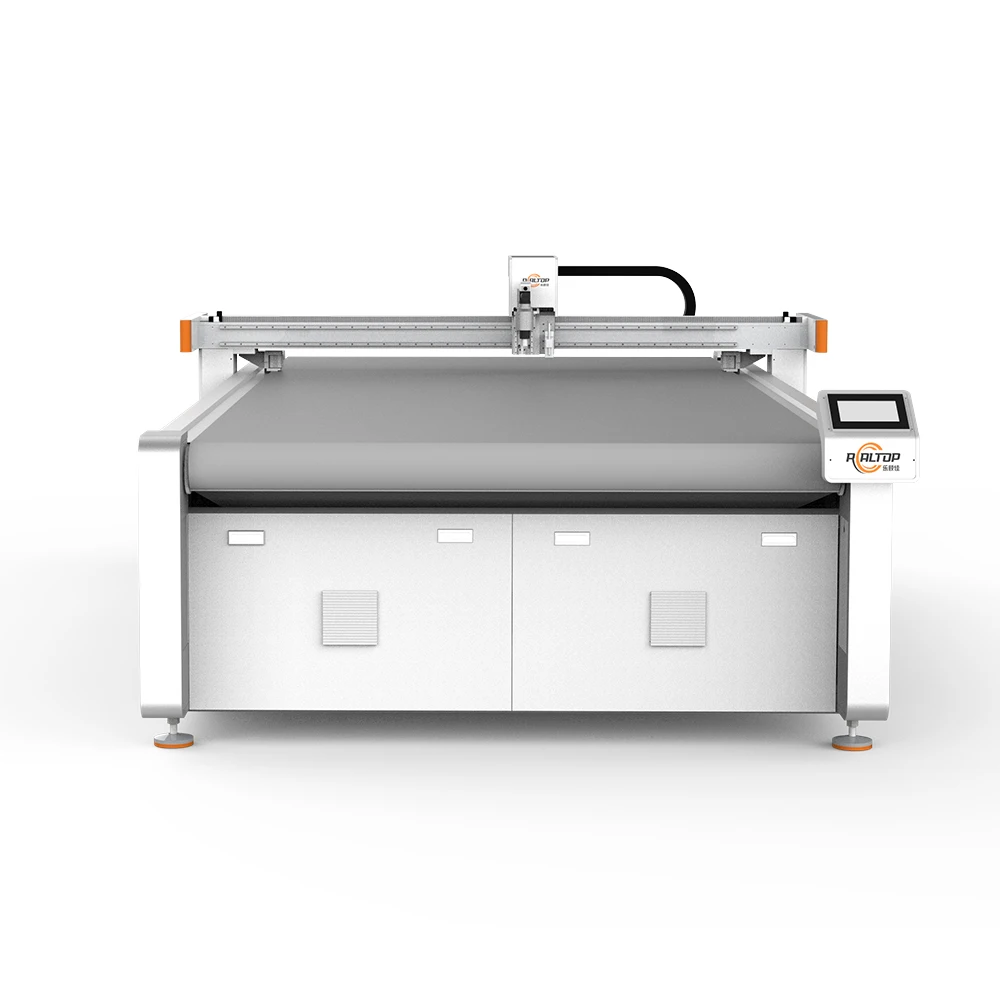
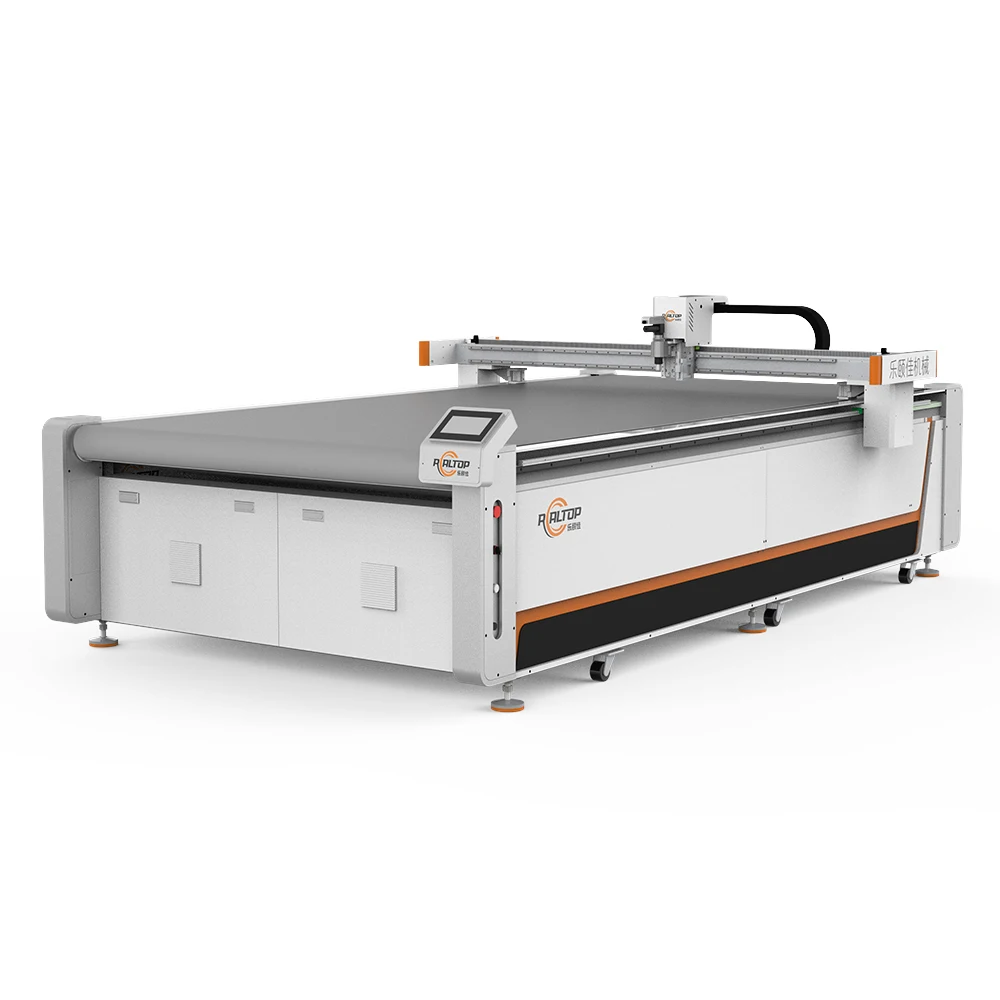
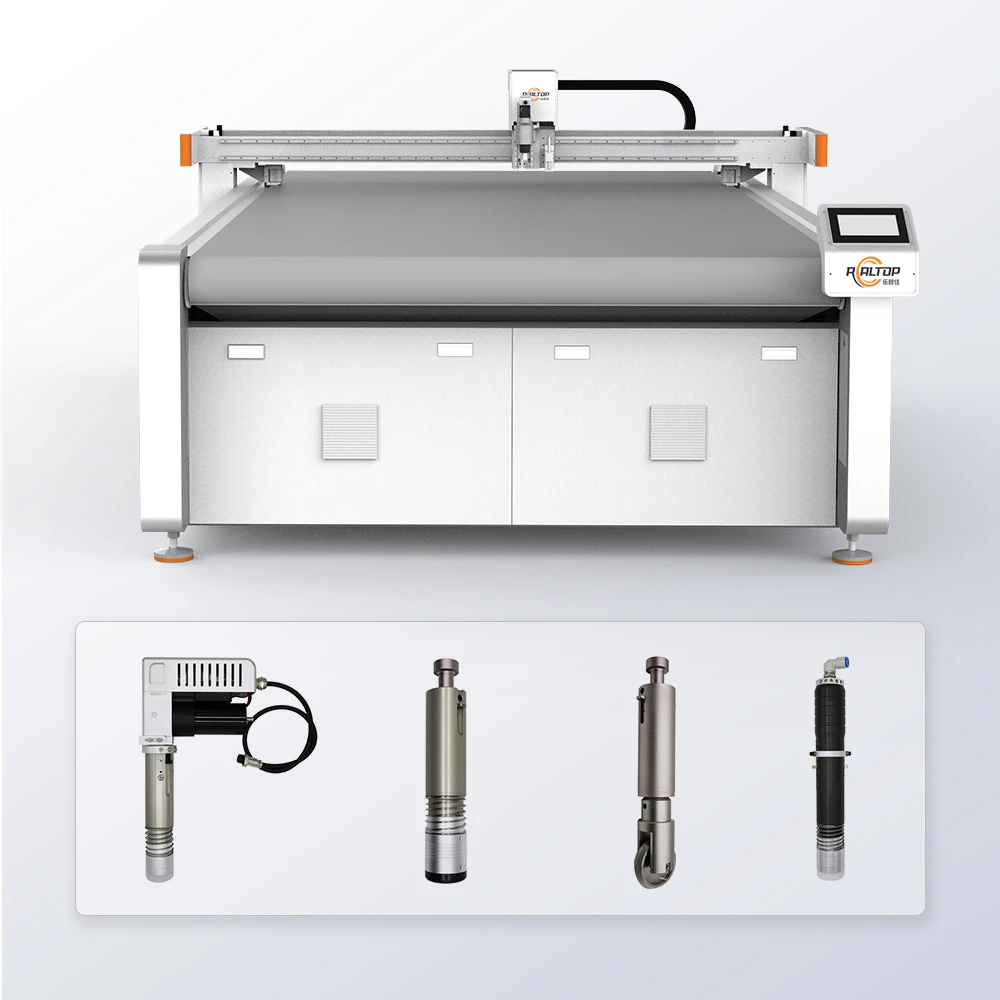
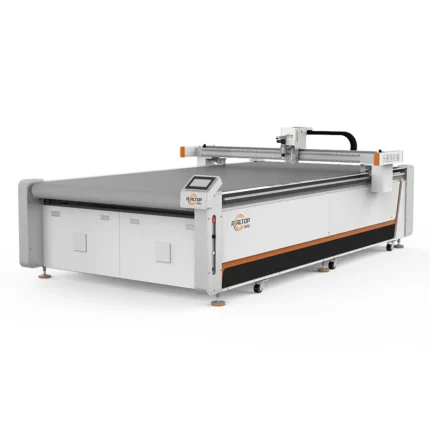
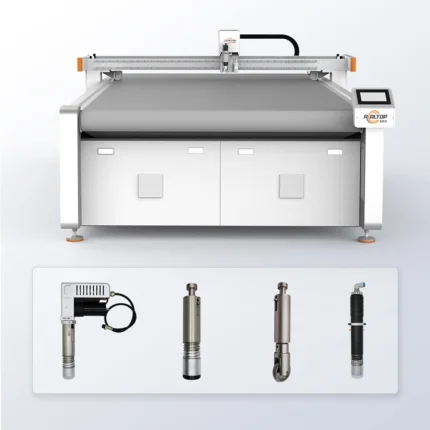
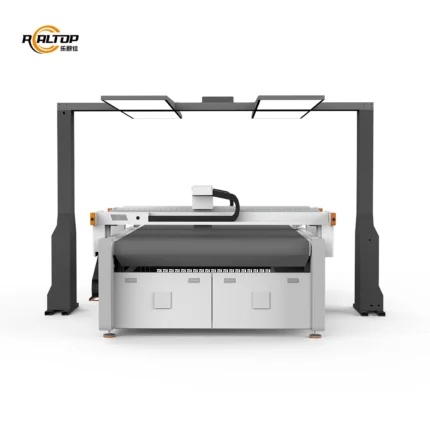
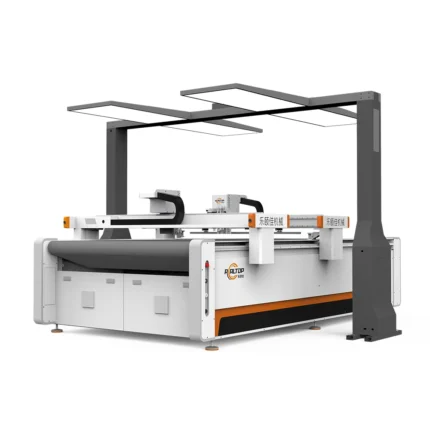
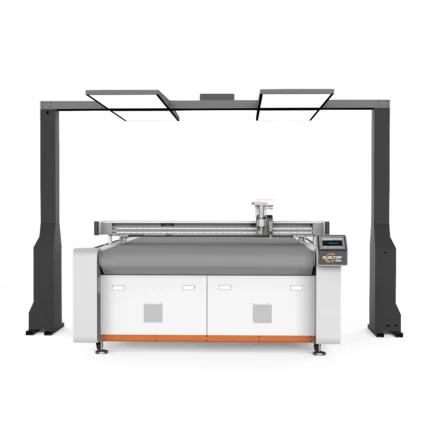
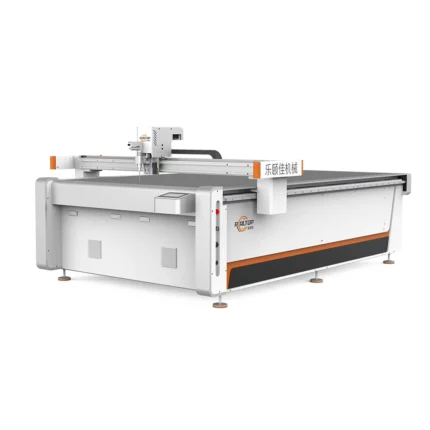
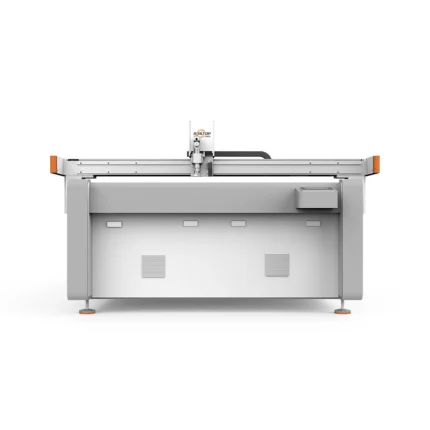
1625 CNC Oscillating Knife Cutting Machine, 1600×2500mm Working Area, ±0.1mm Accuracy — engineered for leather and textile processing, this flatbed cutting table delivers clean, burn-free edges on genuine leather, foam, and composite materials. Configured with interchangeable tool heads including oscillating knife, driven rotary knife, and creasing wheel for process-specific performance. CCD camera contour recognition ensures precise positioning on printed materials at production speed.
- Aluminum bellows vacuum table provides consistent hold-down across the full cutting area
- PLC control panel with multi-language interface supports DXF, PLT, AI, and PDF file imports
- Voltage, plug type, and control language confirmed before shipment to match your facility requirements
Sample cutting on your own material validates edge quality and cycle time before commitment.
In-house tooling and process design — matching oscillating knife parameters to actual leather density rather than quoting generic cutting depth.
Technical Specifications
| Parameter | Value |
|---|---|
| Product Type | CNC Oscillating Knife Cutting Machine |
| Model | 1625 |
| Working Area | 1600×2500 mm |
| Cutting Speed | 0–2000 mm/s |
| Cutting Thickness | ≤ 30 mm (basis not stated in source — confirm block format / material / thickness) |
| Cutting Accuracy | ±0.1 mm |
| Tool Head Options | Oscillating knife, Driven rotary knife, Creasing wheel, Kiss cutting tool, Pneumatic knife, Milling tool, V groove knife |
| Vacuum Table | Aluminum bellows vacuum table |
| Vacuum Pump Power | 9 kW |
| Control System | PLC control panel |
| Servo Drive Options | Panasonic, Delta, Dorna |
| Software File Formats | PLT, DXF, AI, PDF |
| Safety Device | Infrared sensor device and emergency stop device |
| Machine Dimensions (L×W×H) | 3300×2100×1350 mm |
| CCD Camera | Available for contour recognition and positioning |
| Voltage Options | 110V / 220V / 380V |
| Language Options | English, Russian, Italian, Chinese; special languages customizable |
Application Suitability
| Application | Material or Output |
|---|---|
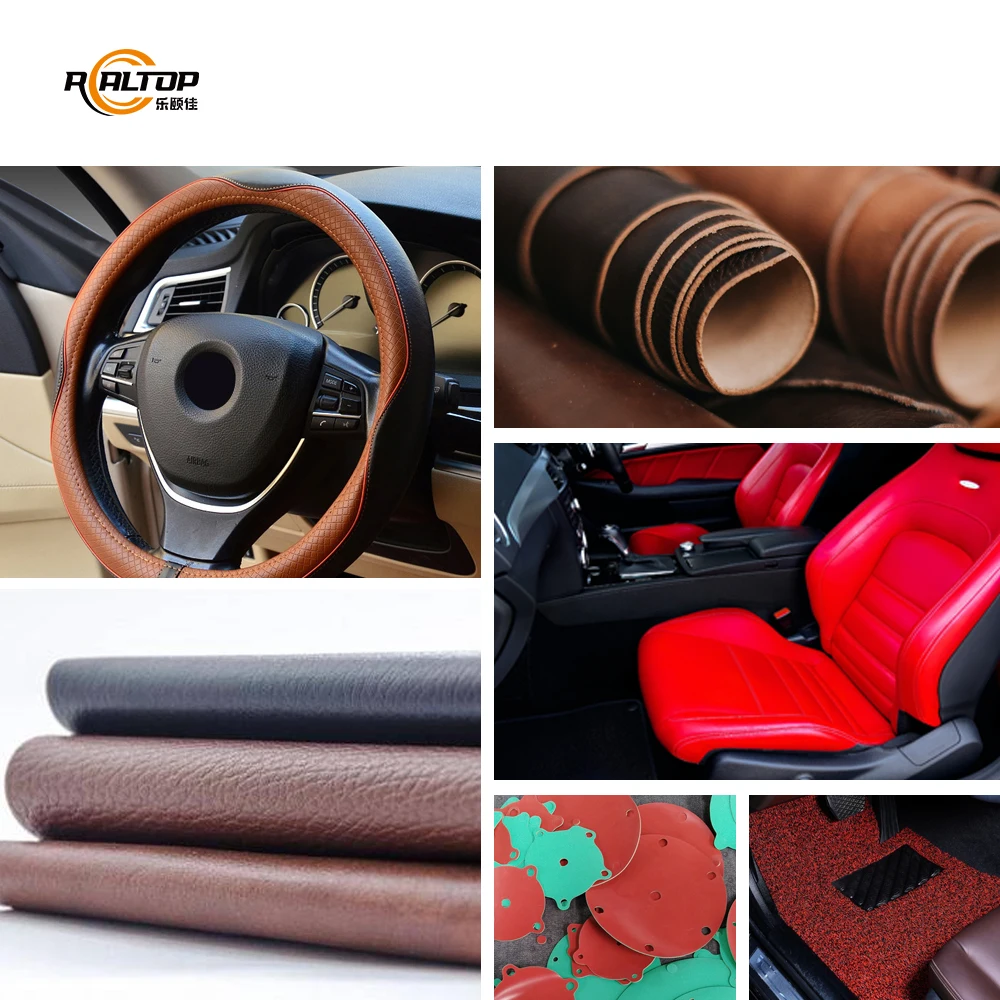
| Footwear and leather goods | Shoe uppers, genuine and synthetic leather hides, suede |
| Automotive seat and interior trim | Automotive seat covers, door panel inserts, headliner fabric |
| Upholstery and soft furnishings | Sofa fabrics, curtain textiles, home composite materials |
| Signage and vehicle graphics | Adhesive stickers, vehicle wraps, PVC sheets |
| Packaging prototyping | Foam boards, gift boxes, carton samples with creasing |
Why the Wrong Tool Head Ruins the Leather Before You Notice
Choosing a blade profile based on material name alone is how forty rolls of fiberglass-reinforced leather get destroyed in a single week. The tool head must be matched to the exact hide composition, backing layer, and finish before the machine is configured.
A pneumatic knife works for thick split leather but tears through delicate top-grain. An oscillating knife at the wrong frequency crushes foam-backed automotive leather, leaving visible deformation along the cut path. I have seen buyers specify a machine by working area and assume the tooling would sort itself out on arrival — it does not. The cutting edge interacts with the material at thousands of strokes per minute, and any mismatch shows up as frayed edges, delamination, or crushed grain within the first hide [NEED_CITE: oscillating knife frequency and leather backing compatibility].
Process Selection for Leather and Composite Hides
The CO2 laser cutting and engraving machine manufacturer catalog often includes both knife and laser platforms, and knowing which process fits your material prevents costly rework. Laser cuts seal synthetic edges but burn genuine leather, leaving a charred smell and discolored grain that rejects at the stitching station. Oscillating knife preserves the natural surface and handles layered composites without thermal distortion.
Vacuum Hold-Down Across the Full Hide
Leather hides are irregular in shape and thickness, and a poorly zoned vacuum table allows thin sections to lift during the cut. The aluminum bellows vacuum table on this 1625 platform maintains consistent suction across the 1600×2500 mm surface, holding small pattern pieces flat without mechanical clamps that would mark the material. The 9 kW vacuum pump generates sufficient negative pressure for dense automotive leather as well as lighter garment hides, reducing the need to tab parts together for stability [NEED_CITE: vacuum zoning requirements for irregular natural materials].
Reading the Spec Sheet Beyond Working Area
The ±0.1 mm cutting accuracy is achievable only when the servo system, blade oscillation frequency, and vacuum hold-down are all tuned to the material being processed. A Panasonic or Delta servo drive provides the positional control needed for tight nesting of shoe upper patterns, where millimeter waste accumulates across hundreds of hides per shift. The PLC control panel stores material-specific parameters so operators do not re-enter settings manually for repeat jobs. CCD camera contour recognition becomes relevant when cutting pre-printed leather or patterned textile where the cut path must follow a registered mark rather than a fixed coordinate origin.
The Cost of Skipping a Material Trial
Shipping a machine configured for generic PU leather to a factory that runs fiberglass-reinforced automotive hide guarantees problems within the first production run. The blade dulls prematurely, the oscillation frequency delaminates the backing, and the vacuum table cannot hold the stiffer material flat. All of this happens before the warranty conversation begins. A sample cutting report on the buyer’s actual stock confirms edge quality, cycle time, and tooling life before the machine leaves the factory [NEED_CITE: material trial protocol before equipment dispatch].
Why Sourcing Directly From the Builder Matters
The in-house design team covers both knife and laser cutting technologies, so the cutting method is matched to the material rather than forced into whatever the dealer stocks. Tool head and table configuration is specified per material type and daily production volume, not selected from a default menu. Software compatibility is confirmed against your existing nesting workflow before the order is finalized. Voltage, plug type, and control language are locked in during the specification stage, not discovered at the crate. Sample cutting on your own leather or composite is completed and documented before any commitment is made.
Documentation & Verification
- Machine specification sheet listing confirmed tool head and servo configuration
- Electrical schematic matching your facility voltage and frequency
- Sample cutting report on your leather stock with edge and cycle data
- CCD contour recognition test record if printed material is specified
- Software license and file format compatibility note for DXF, PLT, AI, PDF
Installation, Commissioning & Support
- Foundation must support the 3300×2100 mm footprint with level tolerance for vacuum seal integrity
- Dedicated circuit required per confirmed voltage — 110V, 220V, or 380V with matched frequency
- Machine ships as a single assembly; rigging plan needed for the 1625 frame dimensions
- First-run parameter tuning on your leather stock to set oscillation frequency and vacuum zones
- Operator training covers PLC interface navigation in your confirmed language setting
- Consumable blade inventory and reorder lead time reviewed at commissioning
What to Include With Your Inquiry
Send the specific leather or composite material type, thickness range, and typical hide dimensions so the tool head is selected against real stock rather than a category name. State your daily cutting volume and the nesting software you currently use so file compatibility and throughput are addressed in the proposal. Confirm the local voltage and frequency, along with the control language your operators need.
Frequently Asked Questions
Q: How do I know whether knife cutting or laser is correct for my leather?
A: Genuine leather and suede generally require knife cutting to avoid burn marks and discoloration along the cut edge. Synthetic leather and certain coated textiles may suit laser processing if edge sealing is desired. The decision depends on your material composition, finish, and downstream quality requirements — sample cuts on both platforms clarify which process your stock demands.
Q: Is the stated maximum cutting thickness based on a specific leather density?
A: The listed cutting thickness is a general range. Actual depth capability depends on the material density, backing type, and blade configuration. A sample cutting test on your specific leather or composite confirms whether the 1625 platform handles your stock cleanly at the thickness you need.
Q: Can the CCD camera track printed marks at full production speed?
A: The CCD system is designed for contour recognition on printed and patterned materials, but tracking reliability depends on mark contrast, size, and surface reflectivity. A camera test on your actual printed leather verifies recognition accuracy before the configuration is finalized.
Q: What voltage and language options are confirmed before shipment?
A: Voltage is configurable across 110V, 220V, and 380V options, and the control panel supports English, Russian, Italian, and Chinese with additional languages available on request. These are locked during the specification stage so the machine arrives ready to connect and operate.


Related products
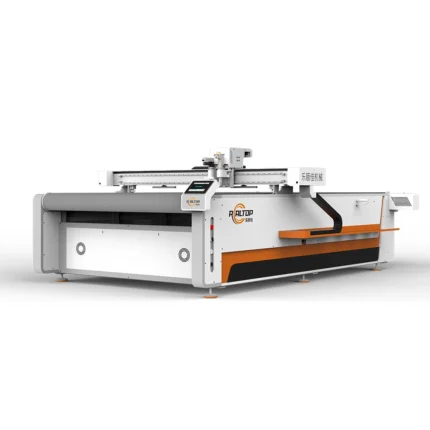
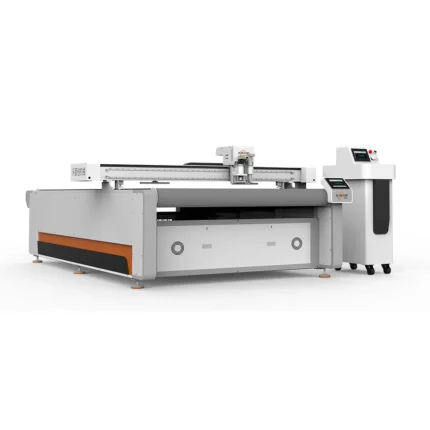
CNC Vibration Knife System 2026 Leather Cutting Machine
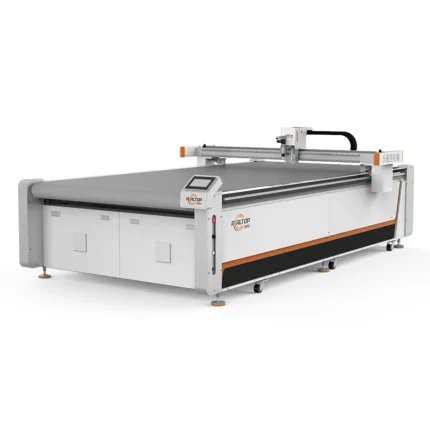
1625(Standard) CNC Oscillating Knife Cutting Machine, 1600×2500mm, CCD Camera, ≤30mm — configured for leather contour cutting with integrated camera positioning for printed graphics and genuine grain pattern recognition.
- Interchangeable tool heads (oscillating knife, driven rotary, pneumatic, V-groove, creasing wheel) matched to your specific material
- Aluminum bellows vacuum table with 9 kW pump and full-surface adsorption
- PLC control with multi-language support and PLT/DXF/AI/PDF file compatibility
Sample cutting on your own leather stock available before order commitment to verify edge quality and cutting depth.

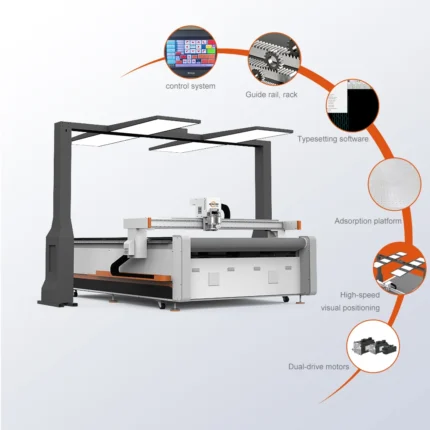
Oscillating Knife Leather Cutter CNC 2026
Product Introduction
Oscillating Knife Leather Cutter CNC 2026 is a precision cutting solution for leather materials, designed for efficient and accurate fabrication in manufacturing settings. Ideal for leather processing with advanced CNC technology.Product Parameters
| Model | Oscillating Knife Leather Cutter CNC 2026 |
| Cutting Type | Oscillating Knife |
| Application | Leather Materials |
| Control System | CNC |
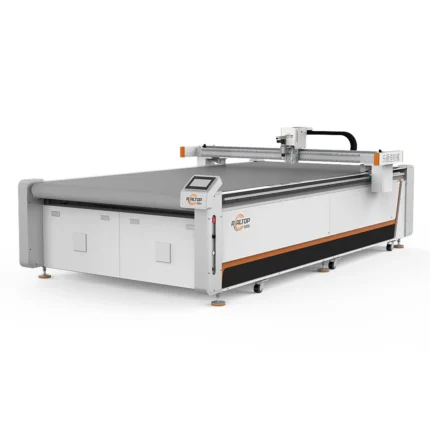
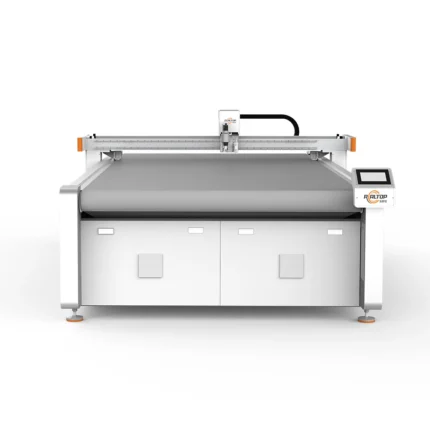
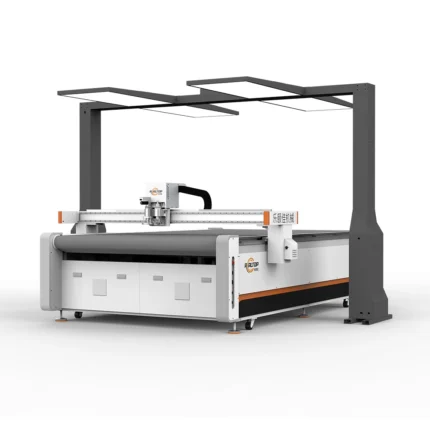
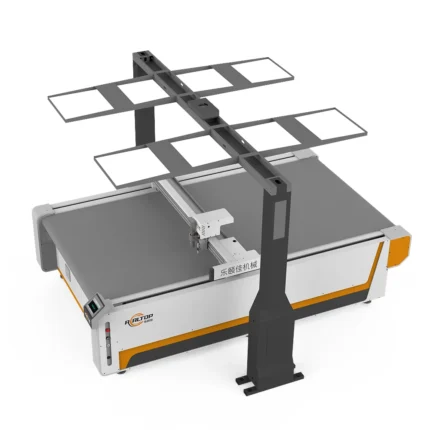
Realtop 2026 Digital Leather Cutting Machine
Product Introduction
Realtop Digital Leather Cutting Machine 2026 is a professional equipment designed for precise leather cutting, ideal for manufacturing applications. It integrates advanced digital technology to ensure efficient and accurate cutting performance, suitable for various leather processing needs.
Product Parameters
| Model | Realtop 2026 |
| Type | Digital Leather Cutting Machine |
| Application | Leather Processing |
| Core Feature | Precision Cutting Technology |
商品评价
There are no reviews yet.