






Packaging CNC Cutting Machine for Sneaker Box – Manufacturer
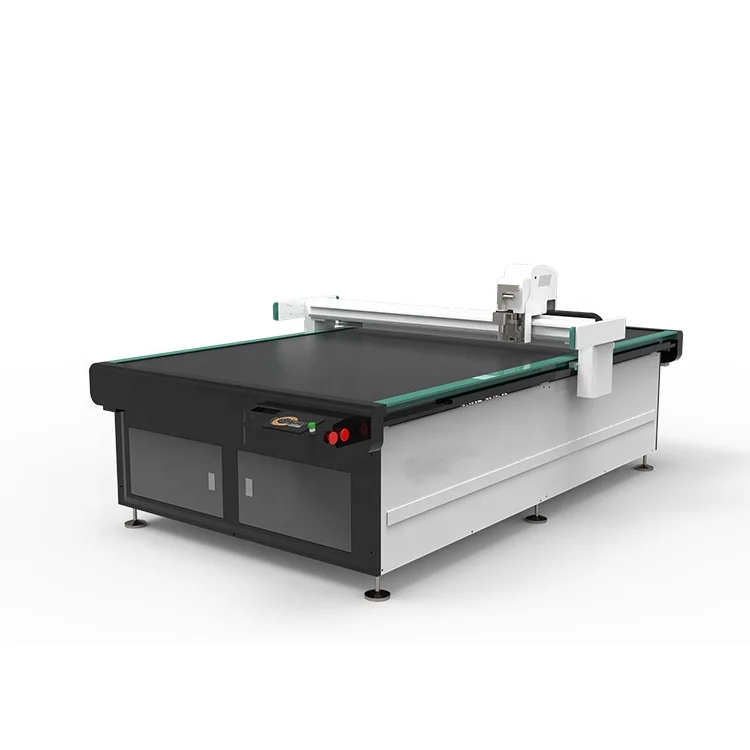
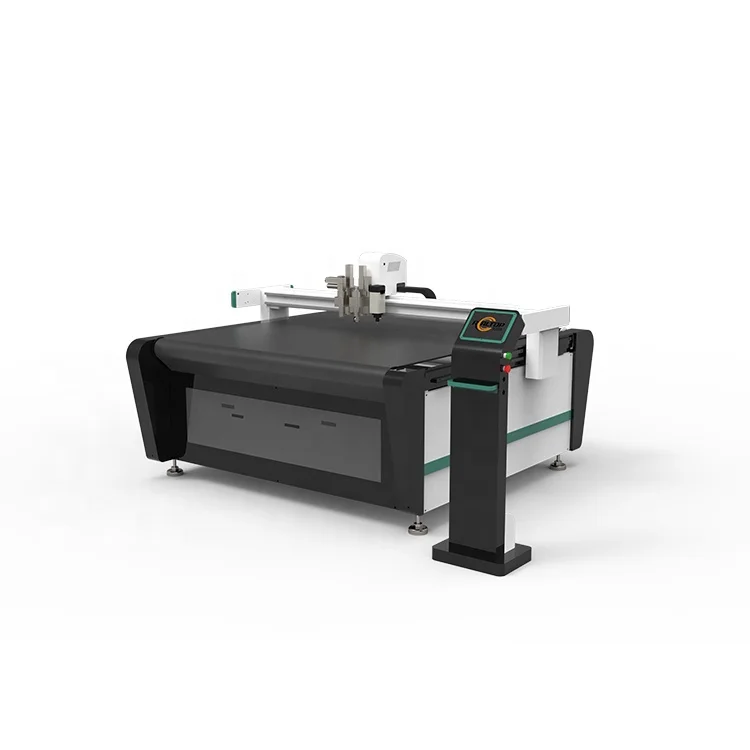
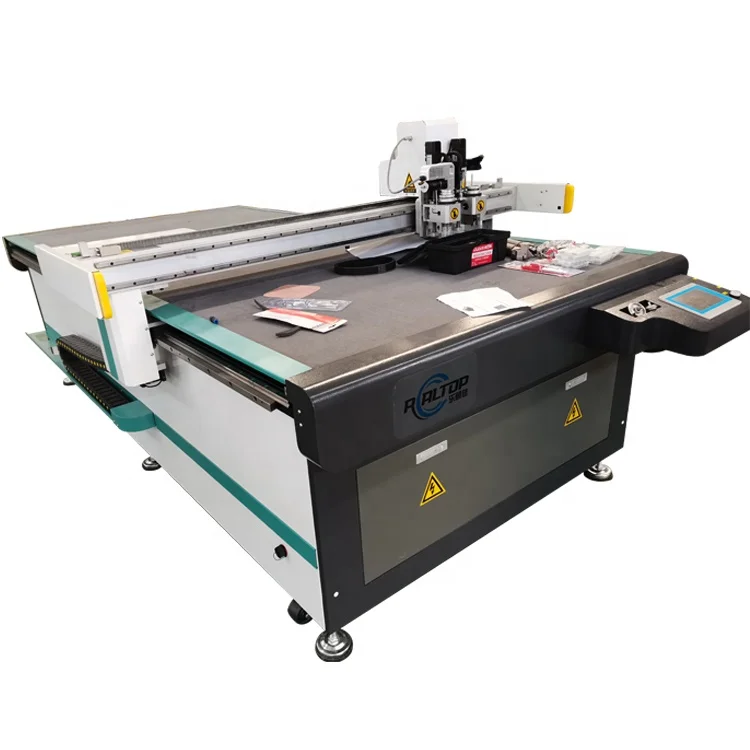
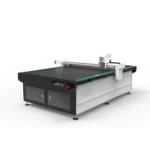
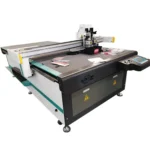
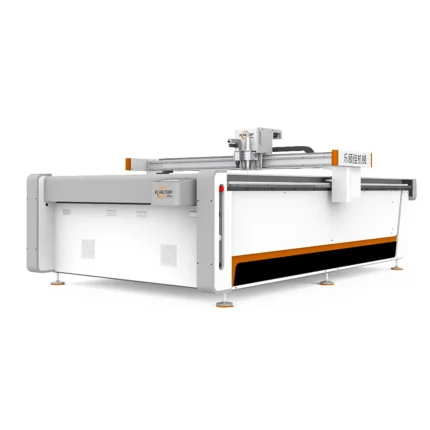
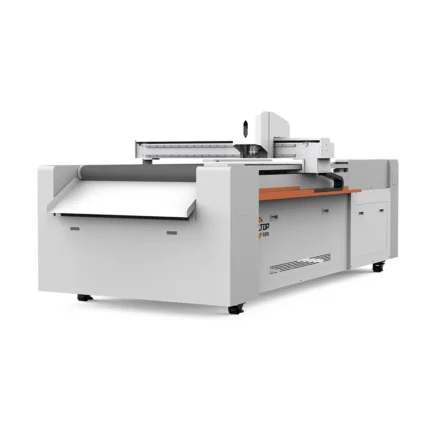
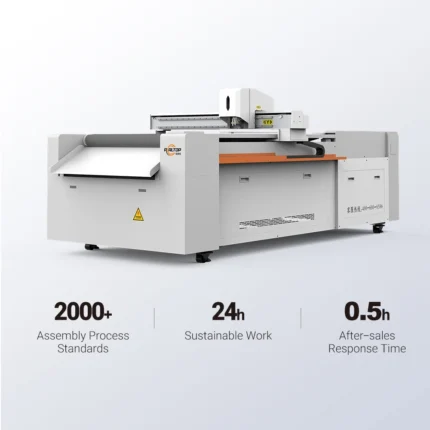
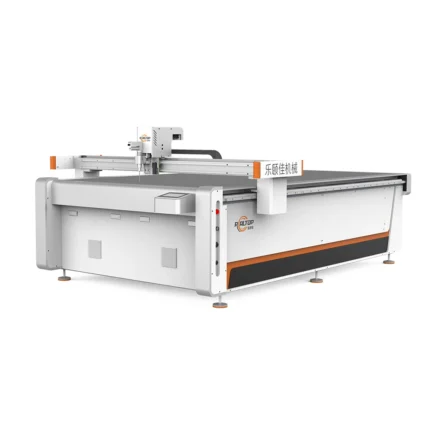
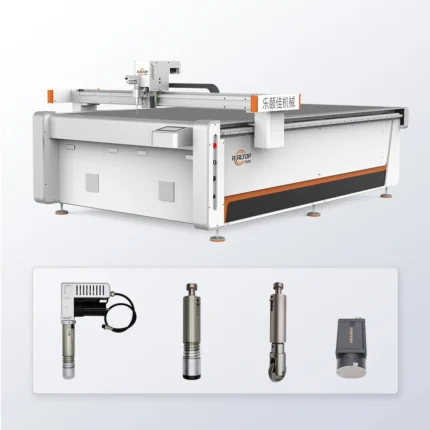
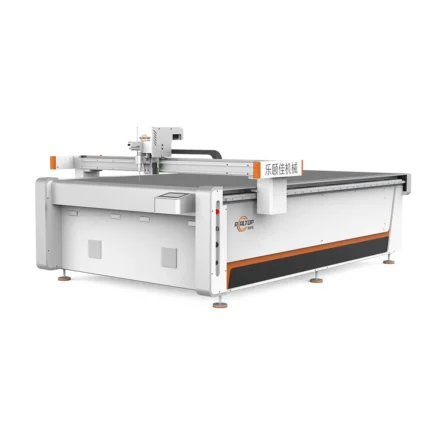
RT-D2516 / RT-S2516 CNC Digital Flatbed Cutting Table, 1600×2500mm, 9kW, Yaskawa Servo — configured for cardboard, leather, PVC, and composite materials with Swiss-imported knife and vibration full/half-cutting.
- Designed for laser and knife cutting process evaluation — CO₂ and fiber power ratings, real cutting depth, edge sealing on synthetics, and CCD contour positioning for packaging and flexible material production.
- 7.5kW vacuum pump, German-imported conveyor, and HP-GL compatible control ensure secure hold-down and nesting workflow integration.
Tool head and table layout specified per material before order, with sample cutting report on buyer’s own substrate and voltage confirmation for target market.
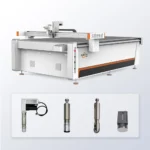
Multi-Method Cutting Integration — the RT-D2516/RT-S2516 combines oscillating knife, drag knife, creasing, and pneumatic tools on a single flatbed, letting packaging and flexible material shops assign the right cutting action to each substrate rather than defaulting to one compromised method.
Technical Specifications
| Parameter | Value |
|---|---|
| Model | RT-D2516 / RT-S2516 |
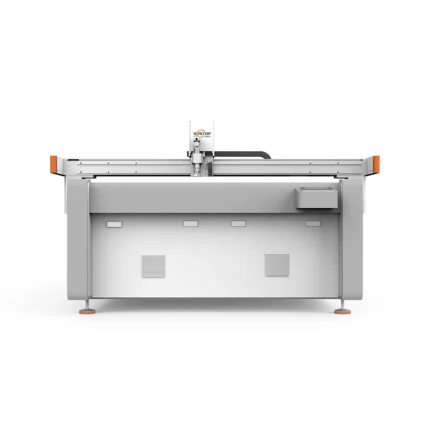
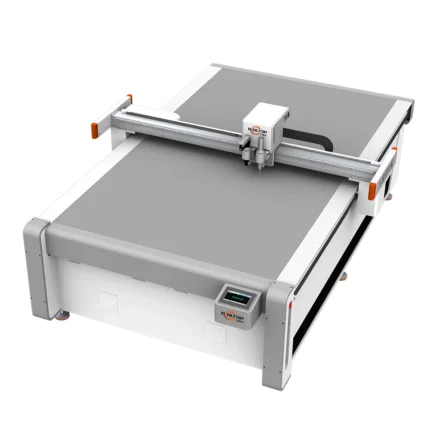
| Product Type | CNC Digital Flatbed Cutting Table |
| Working Area | 1600 × 2500 mm |
| Machine Size | 3450 × 2300 × 1250 mm |
| Rated Power | 9 kW |
| Table Type | Flat working table with German-imported conveyor belt and 7.5 kW vacuum pump |
| Tool Head | Swiss-imported knife; vibration full-cutting, vibration half-cutting, cursor location |
| Pneumatic Cutting Tool | Capable of cutting up to 70 mm thickness |
| Translational Velocity | 800–1200 mm/s |
| Cutting Speed | 200–800 mm/s (basis not stated in source — confirm material type / thickness) |
| Repeated Accuracy | ≤ 0.1 mm |
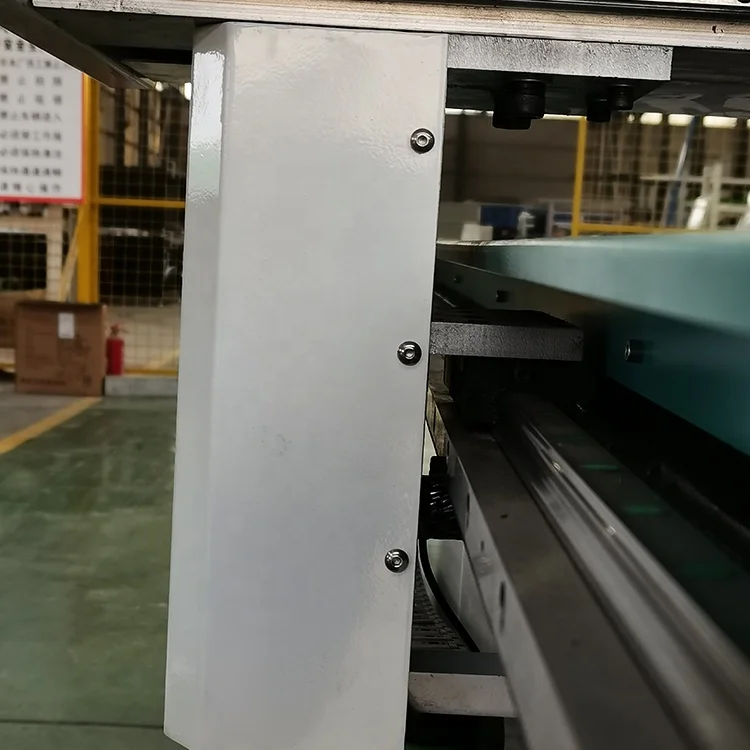
| Transmission System | Japanese Yaskawa digital servo motor, Taiwan Hiwin linear guide, synchronous belt, ball screw |
| Instruction System | HP-GL compatible format |
| Voltage | 380V ± 10% |
| Safety Device | Infrared sensors |
| Standards | CE, ISO |
Application Suitability
| Application | Material or Output |
|---|---|
| Sneaker box, candle box, and gift box sample making | Cardboard and grey board with creasing and full-cut |
| Sticker and label contour cutting | Vinyl, adhesive-backed film, and printed paper stock |
| Leather and flexible fabric cutting | Hides, sponge composite leather, garment textiles |
| Gasket and seal fabrication | PVC, soft glass, silicone, rubber up to 70 mm |
| Packaging short-run production | Corrugated inserts, folding carton prototypes |
Why "Working Area Alone" Is the Most Expensive Spec You Can Ignore
A flatbed specified only by footprint routinely fails when material thickness or density exceeds the tool head’s capacity.
I have watched packaging sample shops invest in a large-format table, only to discover the knife cannot push through dense grey board at production speed. The pneumatic cutting tool on the RT-D2516/RT-S2516 addresses up to 70 mm thickness, which matters when sneaker box prototypes run triple-wall corrugated or when gasket shops move from thin rubber to dense silicone. A CNC digital cutting table for laser engraving and cutting that ignores thickness handling leaves buyers discovering the limitation after delivery [NEED_CITE: CNC cutting tool head selection by material density].
Knife System Behavior on Flexible and Composite Substrates
The Swiss-imported knife assembly delivers vibration full-cutting and half-cutting modes, which changes how the blade interacts with sponge composite leather and multi-layer fabric. Full-cut drives through the stack in a single pass while half-cutting scores the top layer without penetrating the backing — a requirement for kiss-cut sticker production. Cursor location functionality ties into the workflow when operators need to align cuts against pre-printed registration marks or physical reference points on the material bed.
Vacuum Hold-Down Across Part Size Ranges
A 7.5 kW vacuum pump paired with the German-imported conveyor belt table creates enough suction to restrain both full-sheet cardboard and small gasket profiles that would otherwise lift during high-speed traverses. On lightweight flexible films, insufficient hold-down causes material drift that compounds across a nested sheet, throwing tolerances past acceptable limits. The conveyor belt adds continuous feed capability for roll-based materials like vinyl and soft glass, reducing manual repositioning between cuts.
Drive Train Tolerance and Contour Consistency
The repeated accuracy specification of ≤ 0.1 mm is maintained by the combination of Yaskawa digital servo motors and Hiwin linear guides, which governs how tightly the machine tracks curved contours in leather hide nesting or intricate gasket profiles. At translational velocities reaching 1200 mm/s, the synchronous belt and ball screw transmission must resist positional lag — any deviation at direction changes produces visible scalloping on cut edges. This matters for packaging sample makers whose clients judge prototype quality partly by edge finish [NEED_CITE: linear guide preload and contour accuracy in CNC flatbeds].
Speed Ranges and What the Data Sheet Omits
The published cutting speed of 200–800 mm/s carries no material or thickness qualifier in the source documentation. In practice, 800 mm/s is achievable on thin vinyl or single-layer fabric, while dense rubber gasket material at 50 mm thickness forces a substantially slower pass to maintain edge perpendicularity. Buyers should request a cutting speed table mapped to their specific material stack before committing to a configuration.
The Hidden Cost of a Mis-Matched Tool Head
Specifying an oscillating knife for a material that requires a drag knife produces ragged edges on thin vinyl and crushed foam cores on composite panels. I have seen gasket shops run silicone sheet with a standard oscillating blade, generating burrs that required secondary trimming on every part. Pneumatic cutting tools handle thick, dense substrates cleanly but chatter on thin films. Getting the tool head wrong means the machine physically cuts, but output quality fails inspection and operators spend more time on rework than production [NEED_CITE: tool head material compatibility in digital flatbed cutting].
Why Buyers Source This Configuration From Jinan
The in-house design team covers both knife and laser cutting processes, so a buyer evaluating a CNC digital cutting table for laser engraving and cutting can compare methods against their material rather than being locked into one technology. Tool head and table configurations are specified per material type and production volume before the order is finalized. Sample cutting runs on the buyer’s own stock material confirm edge quality, speed, and hold-down behavior before commitment. Voltage, plug type, and control language are verified against the destination market’s electrical standards. The HP-GL instruction system integrates with common CAD and nesting workflows, which reduces file conversion friction for shops already running digital cutting pipelines.
Documentation & Verification
- Machine specification sheet listing confirmed tool head and table configuration
- Electrical schematic with voltage and frequency validated for destination market
- Sample cutting report generated on buyer-supplied material with parameters logged
- Factory test record documenting positional accuracy and cutting speed across material types
- Software licence and HP-GL file format compatibility note with nesting workflow confirmation
- Spare parts list covering knife blades, vacuum pump consumables, and belt sections
Installation, Commissioning & Support
- Floor space allocation based on 3450 × 2300 × 1250 mm machine envelope plus operator clearance
- Dedicated 380V ± 10% circuit with rated capacity exceeding 9 kW continuous draw
- Conveyor belt tensioning and vacuum pump commissioning performed on-site after positioning
- First-article cutting run using production material to validate tool head and speed parameters
- Operator training covering HP-GL file import, tool change procedure, and vacuum zoning setup
- Scheduled replacement intervals for Swiss-imported knife blades and synchronous belt inspection
Before You Request a Quote
Provide the specific material types and thicknesses you plan to cut, along with typical sheet sizes and daily volume expectations. Confirm your facility’s voltage and frequency, preferred control language, and whether your existing nesting software outputs HP-GL or requires format translation. If you have edge quality standards or sample approval criteria, share those upfront so the test cut matches your production requirements.
Frequently Asked Questions
Q: How is cutting capacity verified per material type and thickness, and what is the basis for the stated speed range?
A: Cutting capacity is verified through sample runs on the buyer’s own material, documenting tool head selection, pass count, and edge quality. The 200–800 mm/s speed range in the specification sheet lacks a material qualifier, so a speed-to-material matrix is generated during testing to establish realistic throughput for each substrate in your production mix.
Q: Which tool head is recommended for my material — oscillating knife, drag knife, creasing wheel, or pneumatic knife?
A: Tool head selection depends on material density, thickness, and edge quality requirements. Oscillating knives handle flexible composites and fabrics, drag knives suit thin vinyl and stickers, creasing wheels score cardboard without through-cutting, and pneumatic knives manage dense substrates up to 70 mm. A test cut on your actual material confirms the correct configuration.
Q: Is the HP-GL instruction system compatible with my existing CAD files and nesting software?
A: The HP-GL compatible format integrates with most industry-standard CAD and nesting platforms. Before shipment, a file format compatibility note is prepared and tested with your sample files to confirm import accuracy, nesting behavior, and cut path execution match your current workflow.
Q: How are voltage, plug type, and control language confirmed before shipment?
A: An electrical schematic and voltage confirmation document is prepared for your destination market’s standards, covering 380V ± 10% or alternative configurations. Plug type and control interface language are specified during the order confirmation stage and verified during the factory test before packing.
Q: What does the sample cutting process cover, and how do I submit my material for a test run?
A: The sample cutting process evaluates edge quality, cutting speed, hold-down effectiveness, and tool head suitability on your supplied material. A detailed report is generated covering all parameters used. Material submission instructions and minimum sample dimensions are provided once an inquiry reaches the testing stage.


Related products
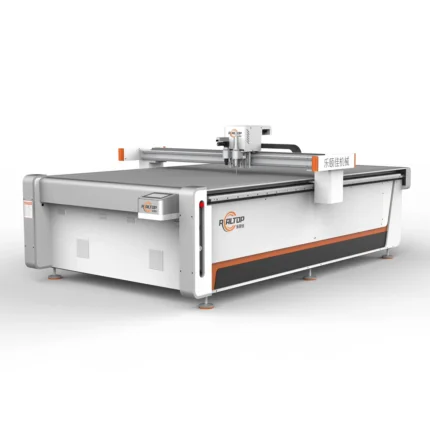
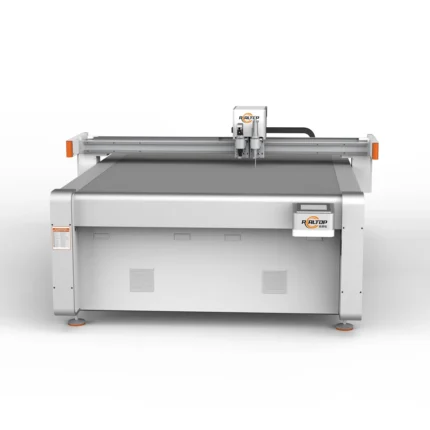
Automatic Digital Cardstock Cutter 2026 CNC Cutter
Product Introduction
Automatic Digital Cardstock Cutter 2026 is a CNC cutting machine ideal for white cardboard and kraft paper. It offers precise and efficient cutting performance, suitable for various paper processing needs in manufacturing and craft applications.Key Specifications
| Type | CNC Digital Cutting Machine |
| Material Compatibility | White Cardboard, Kraft Paper |
| Operation | Automatic |
| Application | Paper Cutting & Processing |
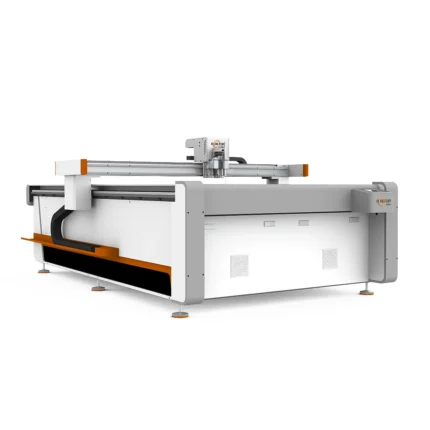
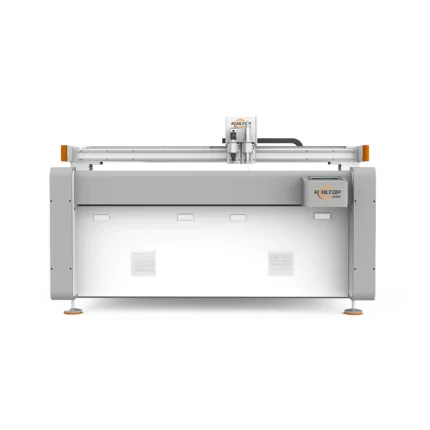
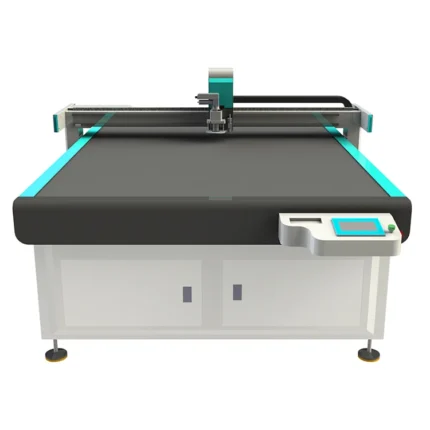
CNC Flatbed Cutter 2026 Digital Corrugated Box Making Machine
Product Introduction
High-precision CNC flatbed cutter designed for efficient cardboard box production. Ideal for 2026 digital corrugated box manufacturing, offering precise cutting and reliable performance for professional packaging solutions.
Key Specifications
| Type | CNC Flatbed Cutter |
| Application | Cardboard Box Production |
| Technology | 2026 Digital System |
| Material | Corrugated Board |
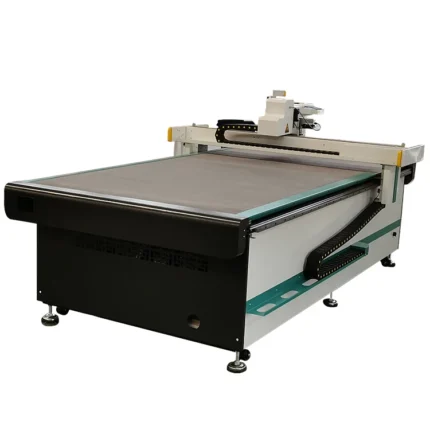
CNC Oscillating Knife Cutting Machine 2026 for Corrugated Cardboard & Honeycomb
Product Introduction
2026 CNC Oscillating Knife Cutting Machine, ideal for corrugated cardboard and honeycomb materials, offering precise and efficient cutting solutions for your production needs.Specifications
| Model | 2026 |
| Type | CNC Oscillating Knife Cutting Machine |
| Applicable Materials | Corrugated Cardboard, Honeycomb |
| Cutting Method | Oscillating Knife |
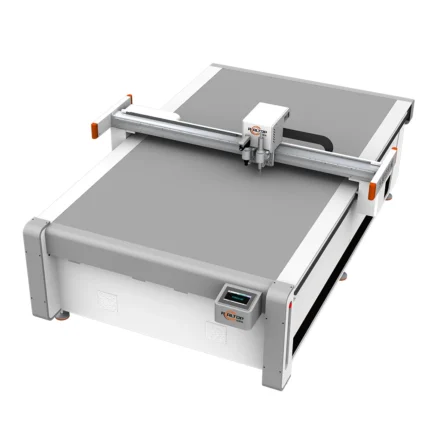
CNC Vibrating Knife Cutter 2026 Custom Cartons Packaging
Product Introduction
CNC Vibrating Knife Cutter 2026 is ideal for custom cartons & packaging, offering precise cutting solutions for various materials. Engineered by a leading Chinese welding & cutting equipment manufacturer, it ensures efficiency and accuracy for packaging production needs.Key Specifications
| Model | 2026 |
| Type | CNC Vibrating Knife Cutter |
| Application | Custom Cartons & Packaging |
| Manufacturer | Chinese Leading Factory |
Realtop 2026 Digital Box Cutter High-Speed Corrugated Board
Product Introduction
Realtop Digital Box Cutting Machine 2026 is a high-speed solution for corrugated board cutting, designed for efficient and precise box production in manufacturing settings.Key Specifications
| Model | 2026 |
| Type | Digital Box Cutting Machine |
| Application | Corrugated Board |
| Feature | High-Speed Cutting |

REALTOP 2026 Digital Industrial Cardboard Box Cutter
Product Introduction
REALTOP Digital Industrial Cardboard Box Cutter Machine 2026 is a professional industrial-grade cutting equipment designed for efficient cardboard box processing, ideal for manufacturing and packaging applications.
Product Parameters
| Model | 2026 |
| Type | Digital Industrial Cardboard Box Cutter |
| Application | Cardboard Box Processing |
| Feature | Industrial-grade, Efficient Cutting |
商品评价
There are no reviews yet.