

Blog
How to cut cardboard easily?

How to cut cardboard easily?
I talk to packaging manufacturers every week, and many ask the same question: "What's the easiest way to cut cardboard?" But after ten minutes of conversation, I realize they're not really asking about ease—they're asking whether their current manual cutting process is holding them back, or whether investing in die-cutting or CNC equipment makes financial sense.
The easiest cardboard cutting method depends on three variables: your batch size, shape complexity, and quality tolerance. Manual cutting works for prototypes, die-cutting suits high-volume repetitive shapes, and CNC handles mid-volume complex designs—but most businesses actually need a hybrid approach instead of betting everything on one method.
If you're reading this article, you've probably already tried cutting cardboard yourself with a utility knife or box cutter. Maybe you're now facing a bigger order, tighter deadlines, or customers who complain about edge quality. Let me walk you through how we help clients choose the right cutting method at Realtop, based on real pre-sale conversations and packaging factory visits.
What are the three core methods for cutting cardboard?
Most people think cutting cardboard is about finding a sharp tool. That's not wrong, but it's incomplete. The real question is: what happens after you cut the first piece?
The three mainstream cardboard cutting methods are manual cutting (utility knife or rotary cutter), die-cutting (steel rule die pressed by machine), and CNC cutting (computer-controlled knife head). Each method has a sweet spot where it outperforms the others, determined by batch size, shape repetition, and edge precision requirements.
Why manual cutting is not just about knife sharpness
When I visit small packaging workshops, I see operators using utility knives with metal rulers to cut cardboard sheets. They work fast, but consistency suffers after the 20th cut. The knife dulls, the hand tires, and the edge quality drops. The real limitation is not the tool—it's human repeatability.
Manual cutting becomes inefficient when you need to cut the same shape more than 50 times, or when edge deviation must stay within 1mm. One customer told me they spent three hours cutting 100 identical cardboard inserts for product packaging. The first 20 pieces looked good, but by piece 80, the corners stopped aligning properly during assembly. They came to us asking for "a sharper knife"—but the real problem was method scalability, not blade hardness.
Here's when manual cutting still makes sense:
| Scenario | Why manual works |
|---|---|
| Prototype development | No setup cost, design changes easily |
| One-off custom orders | Die-cutting setup fee exceeds total order value |
| Cutting straight lines only | Ruler guide provides sufficient precision |
| Thin cardboard (< 2mm) | Low cutting resistance, blade lasts longer |
But if you're cutting shapes with curves, or if batch size exceeds 100 pieces per order, manual cutting starts eating more labor cost than it saves on equipment investment.
When does die-cutting become cheaper than manual labor?
Die-cutting uses a steel rule die—a custom-made cutting mold pressed onto cardboard by a hydraulic or pneumatic machine.1 The die costs between $200 and $2000 to manufacture, depending on shape complexity and cutting perimeter length. This upfront cost scares many small businesses away.
But here's what most buyers calculate wrong: they compare die cost against current labor cost for one batch, not over the die's lifetime. A die-cutting press can cut 500-1000 pieces per hour2, and a steel rule die lasts 50,000-200,000 impressions3. If you're making the same packaging insert every month for a year, die-cutting becomes cheaper than manual cutting after the third or fourth batch.
One packaging manufacturer we worked with was cutting cardboard box dividers manually at $0.50 per piece labor cost. They needed 5,000 pieces per month. A $600 die plus a $3,000 used die-cutting press paid for itself in three months, then saved them $2,500 per month afterward. But this only worked because their shape stayed consistent—no design changes for at least a year.
Die-cutting breaks down when:
- You need to change shapes frequently (new die cost each time)
- Batch size is below 500 pieces (die cost per piece stays high)
- Shapes have intricate internal cutouts (die manufacturing gets expensive)
- Cardboard thickness varies between orders (die gap adjustment becomes difficult)
I've seen businesses buy die-cutting equipment and then realize they waste more money on unused dies than they save on labor, because their product design changes every two months.
What does CNC cutting solve that the other two methods cannot?
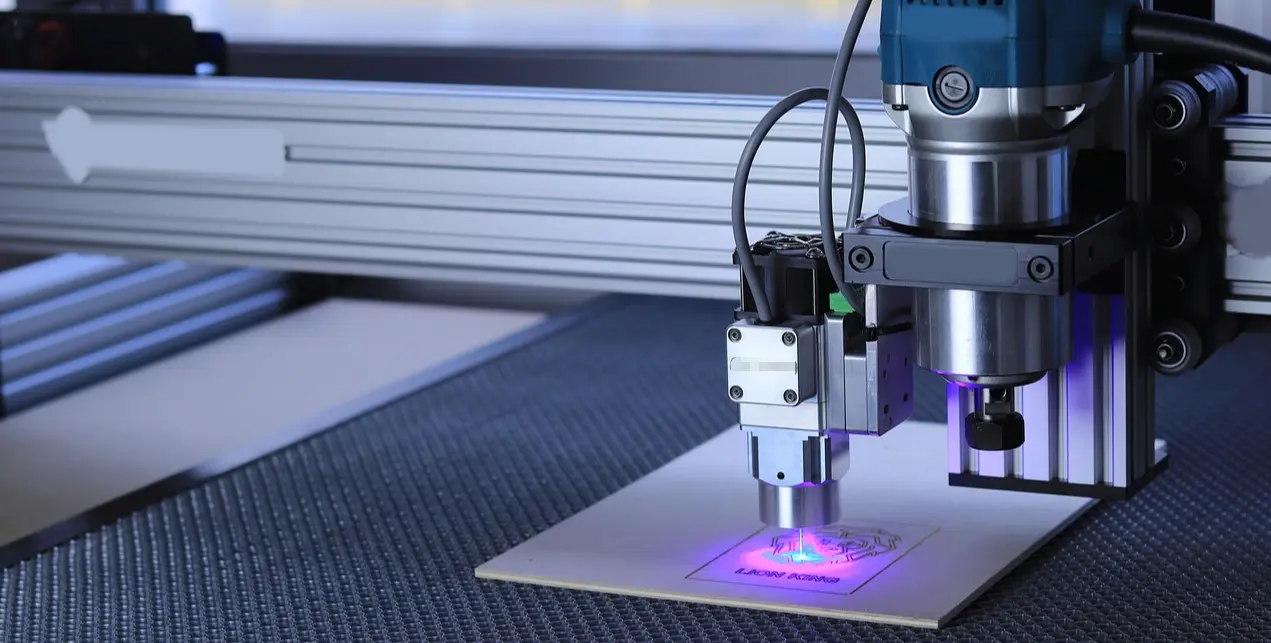
CNC cutting machines use a computer-controlled knife head to follow digital cutting paths4. No physical die needed—you upload a CAD file, and the machine cuts it. This sounds like the perfect solution, but CNC has its own economic boundary.
The equipment investment starts at $15,000 for entry-level models and goes up to $80,000 for industrial production lines. The machine cuts 200-400 pieces per hour for complex shapes, slower than die-cutting but much faster than manual. The real advantage is not speed—it's flexibility without recurring die costs.
We had a customer making custom cardboard packaging for e-commerce brands. Each client wanted different box insert shapes, and batch sizes ranged from 300 to 2,000 pieces. Die-cutting would have required 20+ different dies per year, costing $8,000-$12,000 in die manufacturing alone. Manual cutting could not meet their weekly output target. CNC equipment cost $28,000, but eliminated die costs completely and brought cutting time down from 15 seconds per piece (manual) to 6 seconds per piece (CNC).
Here's the critical break-even calculation most buyers skip: CNC becomes cheaper than die-cutting when (annual batch quantity) × (number of different shapes) × (die cost per shape) exceeds CNC equipment cost + operating cost over equipment lifespan.
For this e-commerce packaging client, the math worked out to:
- Die-cutting path: $10,000/year in dies + $0.10/piece labor = $10,000 + $2,400 = $12,400/year
- CNC path: $28,000 equipment / 5 years = $5,600/year + $0.15/piece operating cost = $5,600 + $3,600 = $9,200/year
CNC saved $3,200 per year, but only because shape variety was high. If they were making one repetitive shape all year, die-cutting would have been $8,000 cheaper.
How do you choose between manual, die-cutting, and CNC cutting?
This is the question customers ask wrong. They ask "which method is best?" instead of "which method fits my specific batch economics and shape complexity?"
The correct selection approach is decision tree logic: start with batch size, then filter by shape complexity, then check quality tolerance, then calculate total cost over 12 months—not purchase price alone.

Step 1: Calculate your real batch volume per shape
Most businesses only count total monthly output, not output per unique shape. I've seen packaging factories cutting 10,000 pieces per month who still should not buy die-cutting equipment—because those 10,000 pieces are split across 30 different customer shapes, meaning 330 pieces per shape. Die-cutting only makes sense when one shape repeats at least 1,000 times.
Ask yourself: how many times will I cut this exact same shape in the next 12 months? If the answer is below 500 pieces total, stick with manual cutting or outsource to a die-cutting service bureau. If it's above 5,000 pieces and the shape never changes, invest in a die. If it's 1,000-5,000 pieces across multiple shapes, CNC starts making economic sense.
Step 2: Map shape complexity to cutting method capability
Cardboard shapes fall into three complexity tiers:
| Complexity tier | Example shapes | Manual feasibility | Die-cutting cost | CNC advantage |
|---|---|---|---|---|
| Simple | Rectangles, squares, straight-edge polygons | Easy, ruler-guided | Low die cost ($200-$400) | No advantage |
| Medium | Rounded corners, simple curves, 1-2 internal holes | Slow, accuracy drops | Medium die cost ($400-$800) | Saves labor time |
| Complex | Intricate curves, 3+ internal cutouts, mixed radii | Very slow, high error rate | High die cost ($800-$2000) | Cuts cost per shape change |
If your shape has no curves and no internal cutouts, manual cutting with a metal ruler and fresh blade works fine up to 200 pieces. Don't over-invest in equipment for problems you don't have.
But if your shape has curves or internal holes, manual cutting becomes impractical above 50 pieces. Human hands cannot replicate complex curves with 1mm precision over 100 repetitions. This is where die-cutting or CNC becomes necessary—not optional.
Step 3: Test whether quality tolerance requires machine precision
Many packaging manufacturers don't realize they have a quality problem until their customer rejects a batch. Cardboard cutting quality has three measurable variables: edge straightness, corner sharpness, and dimensional consistency.
Manual cutting typically achieves ±2mm edge deviation and ±3mm dimensional tolerance5. Die-cutting improves this to ±0.5mm edge and ±0.5mm dimensional6. CNC cutting delivers ±0.3mm edge and ±0.2mm dimensional7. These numbers sound small, but they matter when your cardboard insert needs to fit into a pre-manufactured box with 1mm clearance on each side.
One corrugated box manufacturer we worked with was manually cutting cardboard partitions for bottle packaging. The partitions fit loosely in the box, causing bottles to shift during shipping. They blamed cardboard thickness variation, but when we measured their cut pieces, dimensional deviation was 4-5mm across a 300mm length. Switching to CNC cutting brought deviation down to 0.5mm, and bottle damage claims dropped by 60%.
If your customer never complains about fit or edge quality, and if your cardboard pieces don't need to mate with other components, manual cutting might be sufficient. But if you're losing orders due to quality inconsistency, machine cutting is not an upgrade—it's a requirement.
Equipment purchase price is the most visible cost, but it's often not the largest cost over 12 months. I see businesses buy cheap manual tools and then spend 10x the tool cost on labor, or buy expensive CNC machines and then run them at 30% capacity because batch sizes don't justify the investment.
The total cost of a cutting method includes tool purchase, consumable replacement, labor hours, quality loss, and opportunity cost from speed bottlenecks—most businesses only calculate the first two and make wrong decisions.

Labor cost scales non-linearly with batch size
Manual cutting labor cost is not constant per piece—it increases as batch size grows, because operator fatigue reduces speed and increases error rate8. The first 10 pieces might take 20 seconds each, but pieces 80-100 might take 35 seconds each because the operator needs frequent breaks and makes more mistakes that require re-cutting.
I worked with a cardboard toy manufacturer who calculated manual cutting cost at $0.30 per piece based on their first 50 pieces. But when they scaled to 500 pieces per order, actual labor cost rose to $0.55 per piece because their operator could not sustain cutting speed and needed help from a second person. They were losing money on every order without realizing it.
Die-cutting and CNC eliminate this non-linear cost growth. The 500th piece costs the same per-unit labor as the 50th piece. If you're scaling from 100 pieces/month to 1,000 pieces/month, manual cutting cost will not scale linearly—it will accelerate faster than revenue growth.
Material waste differs dramatically between methods
Manual cutting generates 10-15% material waste9 in most packaging workshops I visit, because operators cannot nest shapes efficiently on cardboard sheets and because cutting errors require re-cutting. Die-cutting reduces waste to 5-8% through optimized nesting10, and CNC cutting can reduce it further to 3-5% through software-driven nesting algorithms11.
One packaging factory was cutting cardboard sheets manually and throwing away 12% of material as scrap. At 5,000 sheets per month and $2 per sheet material cost, they were wasting $1,200/month in material alone. CNC cutting with optimized nesting software reduced their waste to 4%, saving $960/month in material cost. Over 12 months, this material savings alone paid for 40% of the CNC equipment cost.
Material waste is invisible until you measure it systematically. Most businesses blame waste on "cardboard quality variation" or "irregular sheet sizes" when the real cause is poor cutting method efficiency.
Machine downtime and maintenance cost varies by method complexity
Manual cutting tools rarely break—a utility knife needs blade replacement every 200-500 cuts, costing $0.50-$2 per blade. Die-cutting presses require hydraulic oil changes, blade sharpening, and occasional die repair, costing $500-$1,500 per year in maintenance. CNC machines need knife blade replacement, motion system lubrication, and software updates, costing $800-$2,500 per year.
But maintenance cost should be compared against production uptime. A manual operator who stops to change blades 10 times per day loses 30-40 minutes of production time. A die-cutting press that needs blade sharpening every 20,000 cuts loses 2-3 hours per maintenance cycle. A CNC machine with automated tool change loses 2 minutes per blade swap.
The real cost is not maintenance parts—it's production hours lost during maintenance. Calculate maintenance cost as (parts cost) + (hourly production value) × (downtime hours), not parts cost alone.
Can you combine multiple cutting methods for better economics?
This is the question experienced packaging manufacturers ask after they've tried optimizing a single method. The answer is yes, and most mid-size factories should run hybrid workflows instead of forcing all jobs through one method.
Hybrid cutting workflows—using manual for prototypes, CNC for mid-volume complex shapes, and die-cutting for high-volume repetitive shapes—deliver better total economics than single-method optimization, but require clear job routing rules to avoid decision paralysis.

When to use manual cutting as a CNC or die-cutting supplement
We have customers who own CNC equipment but still keep manual cutting stations for specific jobs. Why? Because firing up a CNC machine for 5 prototype pieces costs more in setup time than hand-cutting them. CNC cutting requires CAD file preparation, machine calibration, and test cuts—this overhead takes 20-30 minutes. For small prototype batches, manual cutting finishes the job in 15 minutes total.
One corrugated box manufacturer uses this rule: prototypes and samples under 20 pieces go to manual cutting, orders between 20-1,000 pieces go to CNC, orders above 1,000 pieces with repetitive shapes go to outsourced die-cutting. This routing rule saves them from running CNC at inefficient low volumes and from investing in die-cutting presses they would only use occasionally.
The key is having a clear batch size threshold. Without a written rule, operators waste time debating which method to use for each job, and the decision overhead eats more cost than the cutting itself.
How to calculate the break-even point between CNC and die-cutting
Most buyers ask "should I buy CNC or die-cutting equipment?" but the better question is "at what batch size does die-cutting become cheaper than CNC for my specific shapes?"
The calculation is:
Break-even batch size = (Die manufacturing cost) / (CNC cost per piece - Die-cutting cost per piece)
For example:
- Die cost: $600
- CNC cutting cost: $0.25 per piece (including machine depreciation, labor, electricity)
- Die-cutting cost after die is made: $0.08 per piece
Break-even = $600 / ($0.25 - $0.08) = 3,529 pieces
This means if you're cutting fewer than 3,500 pieces of this shape over the die's lifetime, CNC is cheaper. If you're cutting more than 3,500 pieces, die-cutting is cheaper.
But here's the trap: most businesses calculate lifetime volume wrong. They assume this year's order volume will repeat next year, but product designs change, customers cancel orders, and market demand shifts. I've seen businesses invest in dies for shapes they only cut once because they over-estimated future volume.
A safer rule: only invest in die-cutting if you have confirmed orders or historical data proving you'll cut at least 5,000 pieces of this exact shape within 24 months. Otherwise, use CNC and accept the slightly higher per-piece cost in exchange for flexibility.
What cardboard properties affect cutting method selection?
Not all cardboard is the same. The corrugation type, thickness, and material density change which cutting methods work efficiently12 and which methods produce poor edge quality.
**Cardboard thickness, flute type, and moisture content determine cutting force requirements and edge quality outcomes—manual cutting works for thin single-wall board, die-cutting suits high
"Steel Rule Die Cutting Overview", https://millenniumdie.com/steel-rule-die-cutting-guide/. Steel rule die cutting employs a cutting die with sharp steel rules that are pressed into material using hydraulic or pneumatic force to create precise cuts and shapes. Evidence role: mechanism; source type: encyclopedia. Supports: the mechanical process by which steel rule dies cut materials using hydraulic or pneumatic pressure. Scope note: Source describes the general die-cutting mechanism but may not specifically address cardboard applications ↩
"How Much Does Die Cutting Cost? Tooling, Materials & Labor", https://www.strouse.com/blog/cost-of-a-die-cut. Industrial die-cutting presses for packaging materials typically achieve production rates ranging from several hundred to over one thousand pieces per hour, depending on material thickness and design complexity. Evidence role: statistic; source type: research. Supports: typical production rates for die-cutting presses in packaging applications. Scope note: Actual rates vary significantly based on specific equipment models, material properties, and shape complexity ↩
"What is the life of a steel rule die? - A&A Graphic Dies", https://graphicdies.com/2708-2/. Steel rule dies used in packaging production typically maintain cutting quality for tens of thousands to hundreds of thousands of impressions before requiring sharpening or replacement, with actual lifespan depending on material hardness, die quality, and maintenance practices. Evidence role: statistic; source type: research. Supports: the operational lifespan of steel rule dies measured in number of impressions. Scope note: Lifespan varies widely based on material being cut, die construction quality, and operating conditions ↩
"Computer numerical control - Wikipedia", https://en.wikipedia.org/wiki/Computer_numerical_control. Computer numerical control (CNC) cutting systems use digitally programmed tool paths to guide cutting implements with precision, enabling automated cutting of complex shapes without physical dies or templates. Evidence role: mechanism; source type: encyclopedia. Supports: the operational principle of CNC cutting systems using computer-controlled cutting tools. ↩
"Cutting force measurement: Hand tool instrumentation used ... - PMC", https://pmc.ncbi.nlm.nih.gov/articles/PMC8073857/. Manual cutting operations generally exhibit greater dimensional variation than machine-controlled methods, with tolerances typically measured in millimeters rather than fractions of millimeters, due to human factors affecting consistency. Evidence role: statistic; source type: research. Supports: typical precision tolerances achievable with manual cutting methods. Scope note: Specific tolerance values depend heavily on operator skill, tools used, material properties, and measurement methodology ↩
"Die - Wikipedia", https://en.wikipedia.org/wiki/Die. Die-cutting processes using properly maintained steel rule dies can achieve sub-millimeter tolerances, providing significantly improved dimensional consistency compared to manual methods, though exact precision depends on die quality, press calibration, and material characteristics. Evidence role: statistic; source type: research. Supports: precision tolerances achievable with die-cutting processes. Scope note: Stated tolerance values represent optimal conditions and may vary with equipment condition, material properties, and production variables ↩
"Understanding CNC Machining Tolerances", https://www.protolabs.com/resources/design-tips/fine-tuning-tolerances-for-cnc-machined-parts/. Computer-controlled cutting systems can achieve high precision with tolerances often below half a millimeter, offering superior dimensional accuracy compared to manual methods through elimination of human variability and precise motion control. Evidence role: statistic; source type: research. Supports: precision capabilities of CNC cutting systems. Scope note: Actual precision varies with specific equipment capabilities, material properties, cutting speed, and tool condition ↩
"Impact of fatigue on work productivity and health-related job loss", https://pmc.ncbi.nlm.nih.gov/articles/PMC11419701/. Research in occupational ergonomics demonstrates that sustained repetitive manual tasks lead to operator fatigue, which correlates with decreased work speed and increased error rates as task duration extends, affecting both productivity and quality outcomes. Evidence role: expert_consensus; source type: research. Supports: the relationship between operator fatigue and performance degradation in repetitive manual tasks. ↩
"Paper and Paperboard: Material-Specific Data | US EPA", https://www.epa.gov/facts-and-figures-about-materials-waste-and-recycling/paper-and-paperboard-material-specific-data. Manual cutting operations in manufacturing typically generate higher material waste compared to automated methods due to less efficient nesting patterns, cutting errors requiring rework, and limitations in optimizing material utilization without computer-aided planning. Evidence role: statistic; source type: research. Supports: material waste rates associated with manual cutting operations. Scope note: Waste percentages vary significantly based on operator skill, shape complexity, material dimensions, and whether nesting optimization is performed ↩
"Addressing the challenges of die-cuts waste management in ...", https://www.sparkmachinery.com/news/die-cut-waste. Automated cutting methods with pre-planned nesting patterns can significantly reduce material waste compared to manual operations by maximizing material utilization and minimizing scrap, though actual waste reduction depends on shape geometry and material dimensions. Evidence role: statistic; source type: research. Supports: material waste reduction achievable through die-cutting with optimized layouts. Scope note: Waste percentages depend on specific shapes being cut, material sheet sizes, and quality of nesting optimization ↩
"Everything you need to know about nesting in CNC work", https://www.shopsabre.com/everything-you-need-to-know-about-nesting-in-cnc-work/. Computer-aided nesting algorithms can optimize part placement on material sheets to minimize waste, with advanced systems achieving higher material utilization than manual or fixed-die methods by dynamically arranging shapes to reduce scrap. Evidence role: statistic; source type: research. Supports: material waste reduction achievable through CNC cutting with computational nesting optimization. Scope note: Actual waste reduction depends on shape variety, material dimensions, software sophistication, and whether true optimization or heuristic methods are used ↩
"Influence of Analog and Digital Crease Lines on Mechanical ... - PMC", https://pmc.ncbi.nlm.nih.gov/articles/PMC9268991/. Material characteristics including thickness, density, and structural composition significantly influence cutting process requirements, with different materials and configurations requiring appropriate cutting forces, tool types, and process parameters to achieve desired edge quality and production efficiency. Evidence role: mechanism; source type: research. Supports: how material properties influence cutting process selection and performance. ↩