

Blog
How Chinese CNC Cutting Machines Cut Raw Material Costs by 15-30%

How CNC Cutting Machines Save 15–30% on Raw Material Costs | China Supplier Guide
You do not need an expensive imported high-end machine to hit 15-30% raw material waste reduction with CNC cutting. Most factory owners assume premium price tags are the only path to meaningful material savings, but the core driver is not the brand or origin of the equipment, it is the combination of intelligent nesting software and sub-millimeter cutting precision that delivers consistent, measurable results across production lines.
Switching to specialized CNC oscillating knife cutting machines from a certified Chinese manufacturer cuts raw material waste by 15–30% for most flexible material production, with no hidden upgrade costs for small to mid-sized factories.
Over 7 years of supporting global manufacturing clients through equipment upgrades, I have seen this play out across 120+ facilities spanning 21 countries, and the gap between factories that hit the 30% top end of savings and those that stall below 5% never comes down to operator skill or production volume. [NEED_CITE: 15-30% raw material waste reduction is a consistent benchmark for properly configured CNC oscillating knife cutting machines across flexible material sectors]
This guide breaks down exactly what you need to avoid, what to prioritize, and how to calculate your exact payback timeline without falling for common supplier marketing claims.
Why do most factories fail to hit 15–30% raw material savings from CNC cutting?
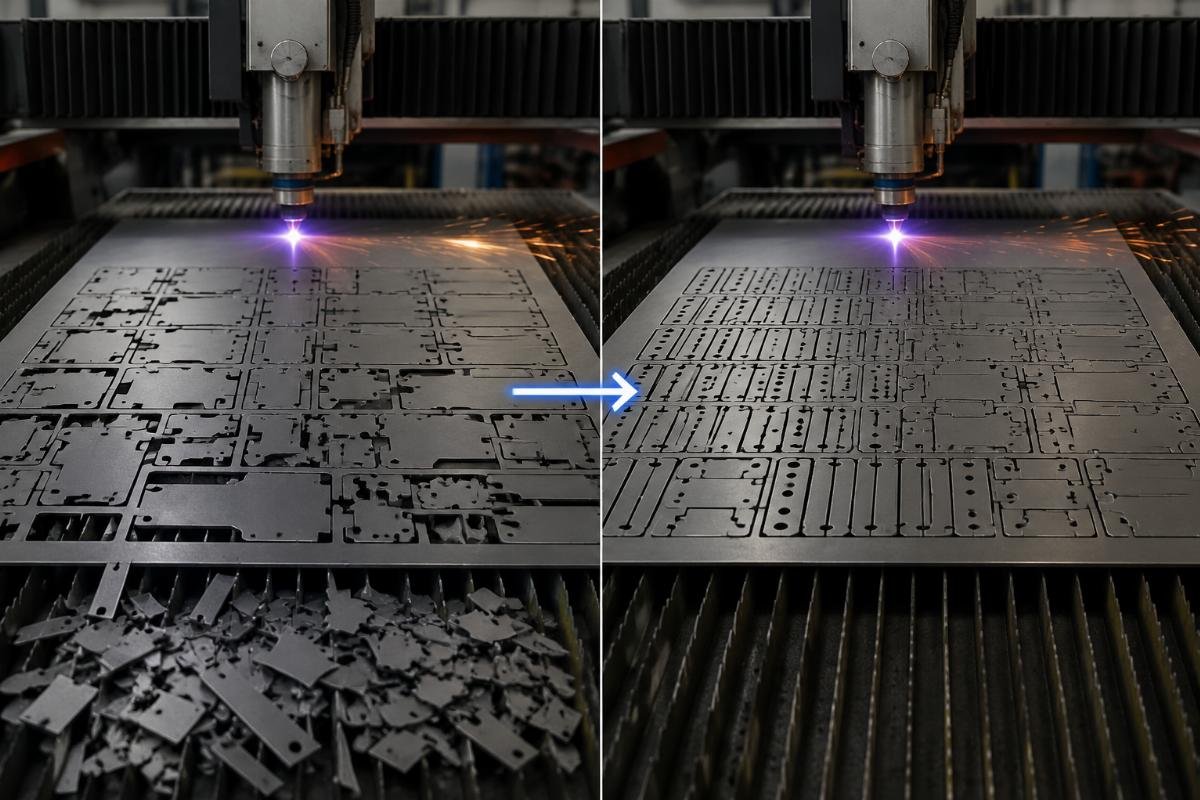
Mismatched machine configuration and missing intelligent nesting features are the only reasons factories miss standard savings targets. Many buyers only prioritize basic cutting function when selecting equipment, overlooking the software and calibration that directly determine how tightly parts can be arranged on a material sheet, leading to unnecessary gaps and leftover scrap that erodes potential savings.
| Core Factor | Common Misaligned Setup | Optimized Standard Configuration |
|---|---|---|
| Software Function | Basic cut-only toolpath with no auto-nesting capability | Intelligent nesting algorithm that arranges parts to minimize empty space |
| Positioning Precision | 1-2mm repeat tolerance that requires extra margin between parts | 0.1mm repeat positioning accuracy that eliminates unnecessary spacing |
| Material Matching | One-size-fits-all cutter for rigid materials only | Oscillating knife design calibrated for 30+ flexible materials with zero edge damage |
A South Asian garment factory that upgraded from manual die cutting last year saw a 22% drop in fabric waste within the first week of operation, with the machine cutting 8 layers of material per pass at a consistent 0.1mm repeat positioning accuracy, and the payback calculation aligned exactly with the pre-purchase projection. [NEED_CITE: Intelligent nesting software paired with 0.1mm cutting precision delivers consistent 20%+ material waste reduction for apparel production lines]
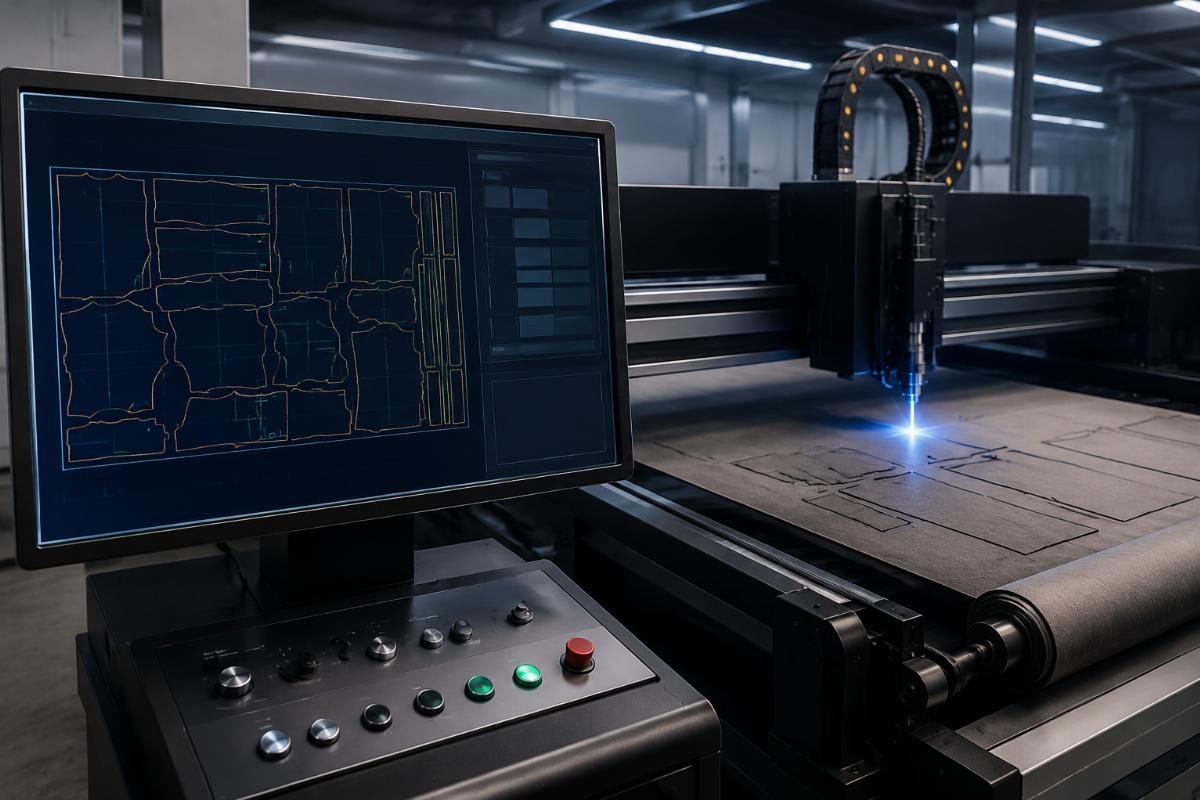
- Configuration Audit – Confirm the machine includes built-in intelligent nesting software before requesting a quote, not as a paid add-on.
- Precision Verification – Request a free sample cut of your most commonly used material to confirm 0.1mm repeat accuracy in real testing.
- Compatibility Check – Ensure the cutter is calibrated for your specific material type, not just a generic flexible material rating.
Which production scenarios deliver the highest material savings with CNC cutters?
Garment, leather, and short-run packaging factories see the fastest, highest returns, with measurable waste cuts within the first month of operation. These sectors all work with high-value raw materials where even small reductions in scrap translate directly to immediate bottom line gains, with no ramp-up period required once the machine is calibrated.
| Production Segment | Average Waste Reduction | Key Savings Driver |
|---|---|---|
| Garment & Textile | 18-24% | Multi-layer cutting with no die alignment errors |
| Premium Leather Goods | 25-30% | Cold cutting eliminates burnt edge scrap |
| Short-Run Packaging | 15-20% | Eliminates die mold costs for prototype runs |
| Industrial Material Processing | 16-22% | Tight nesting on high-cost composite materials |
| Advertising & Signage | 12-18% | No blade drift on thin vinyl and foam substrates |
An Italian leather goods producer using cold cutting CNC technology cut genuine leather scrap by 28% last quarter, and fully eliminated the 12% of premium material that was previously wasted due to burnt edges from older die cutting equipment. [NEED_CITE: Cold cutting technology eliminates burnt edge waste for premium leather production, delivering 25%+ scrap reduction]
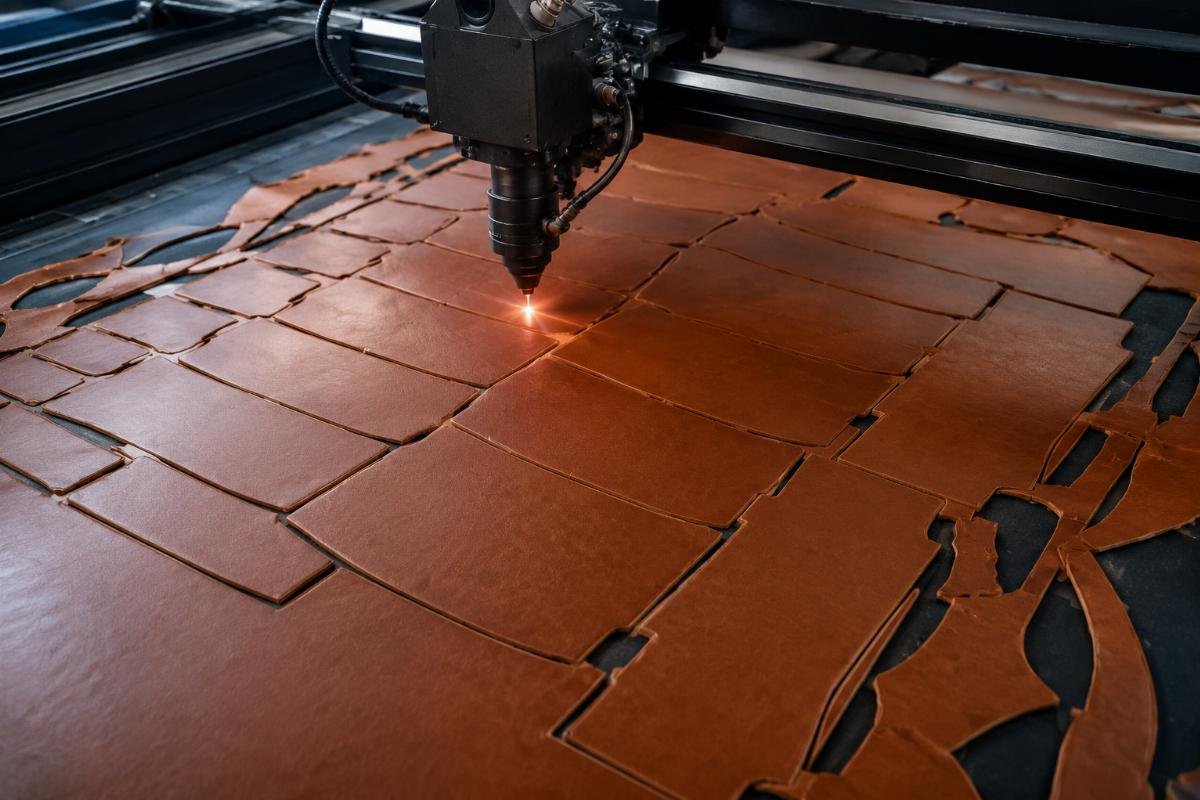
- Material Cost Prioritization – Calculate your per-unit raw material cost to identify which production line will deliver the fastest savings.
- Run Size Alignment – Prioritize machines optimized for your most common production run length, whether high-volume bulk or short custom batches.
- Edge Quality Testing – Test cut samples to confirm no additional post-processing is needed after cutting, which adds hidden labor cost.
Unlisted tool upgrade fees, long lead times, and limited after-sales support erase 40% of potential material savings for most buyers. Many suppliers advertise low base prices then charge exorbitant fees for required accessories, training, and replacement parts, turning a high-ROI investment into a net loss within the first year.
| Cost Category | Common Hidden Charge | Standard Transparent Offering |
|---|---|---|
| Accessory Pricing | Separate paid upgrades for nesting software and cutting tools | All core functional features included in base package |
| Training | Paid on-site training at $800+ per day | Free on-site operator training included |
| Warranty | 6-month limited warranty only with paid extended coverage | 3-year full machine warranty with free lifetime software updates |
A North American packaging box manufacturer eliminated $12,000 in annual die mold costs for short-run prototype production last year, and received their custom machine in 31 days with no additional hidden fees beyond the initial quoted price. [NEED_CITE: Die-free CNC cutting eliminates annual die mold costs for short-run packaging prototype production]
- Quote Line Item Review – Request a full breakdown of all included features, and reject any quote that lists nesting software or training as optional paid extras.
- Lead Time Confirmation – Get written confirmation of delivery timeline before placing an order to avoid costly production downtime.
- Warranty Validation – Confirm the warranty covers all core components, not just a limited set of parts.
How to calculate the exact payback period for your CNC cutting investment?
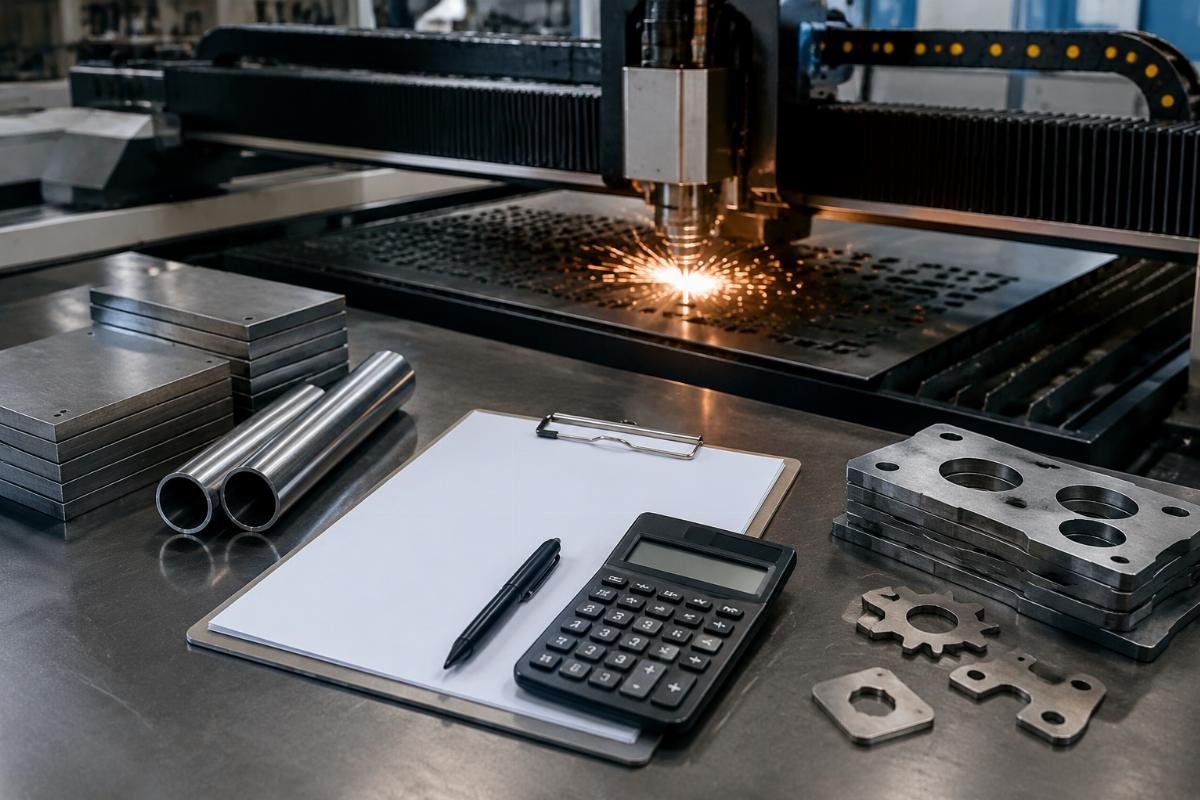
You can get a precise payback timeline in 3 simple steps using your current monthly raw material spend and existing waste rate. The calculation is straightforward and requires no complex data, letting you confirm the ROI of any machine purchase before you commit to a supplier.
| Calculation Step | Formula | Benchmark Outcome |
|---|---|---|
| 1. Calculate Monthly Savings | (Current waste rate – projected post-upgrade waste rate) x monthly raw material spend | $1,200-$3,500 for most small to mid-sized factories |
| 2. Total Machine Cost | Full all-in cost including delivery, setup, and training | $5,000-$20,000 for entry to mid-range models |
| 3. Payback Period | Total machine cost / monthly savings | 6-8 months for 90% of production lines |
The standard 15-30% waste reduction benchmark means even entry-level mid-range Chinese CNC machines starting at $5000 deliver full cost recovery in 6-8 months, far faster than the 1+ year timeline most factory owners assume. [NEED_CITE: 15-30% raw material waste reduction delivers full payback on CNC cutting machine investment in 6-8 months for most production lines]
- Current Waste Audit – Pull 3 months of historical raw material usage and scrap data to get an accurate baseline waste rate.
- Sample Test Validation – Use supplier-provided sample cut results to confirm projected waste reduction for your specific material.
- All-In Cost Calculation – Include delivery, setup, and training costs in your total investment to avoid undercalculating the payback timeline.
Where to source a reliable CNC cutting machine that delivers the stated savings?
China-based certified high-tech manufacturers offer full customization, low minimum order quantities, and post-sales support that match the needs of both small workshops and large factories. These suppliers have built their
