


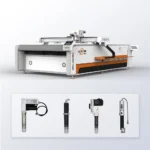
1625 Oscillating Knife Cutting Machine for Fabric and Leather – Manufacturer
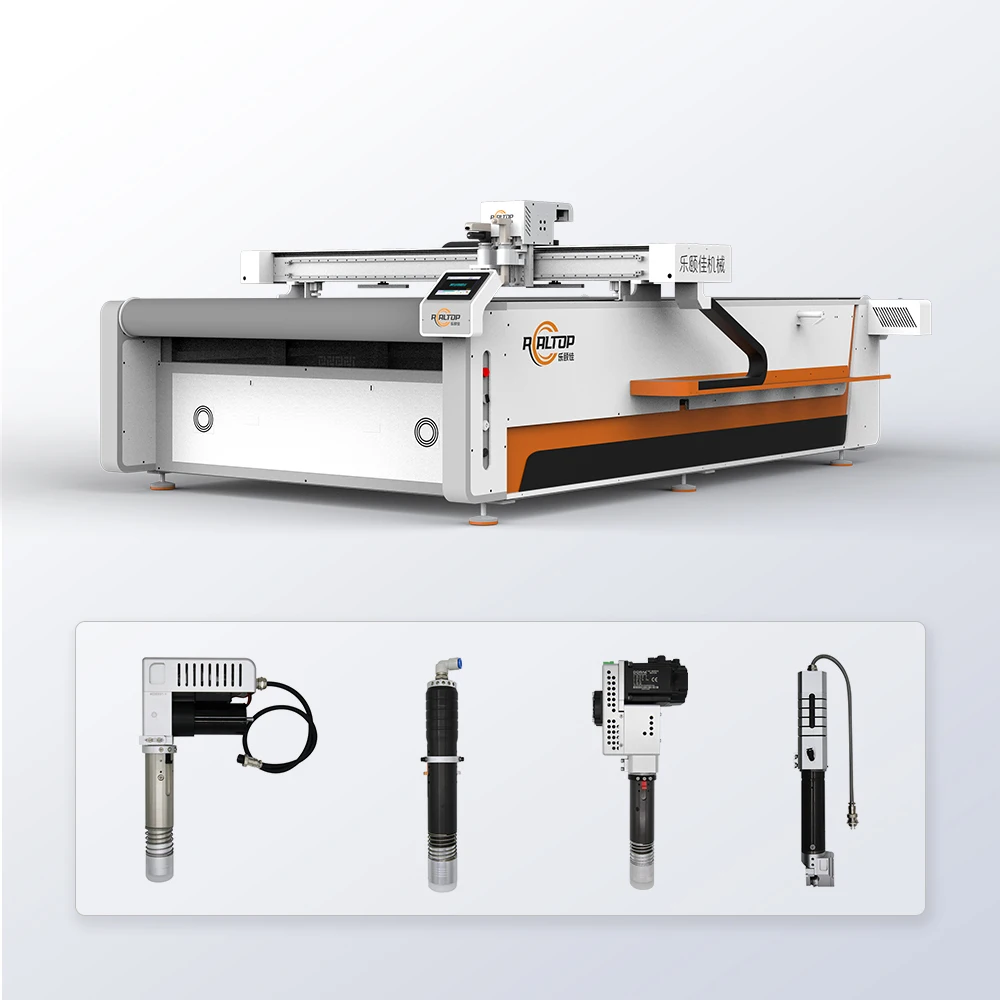
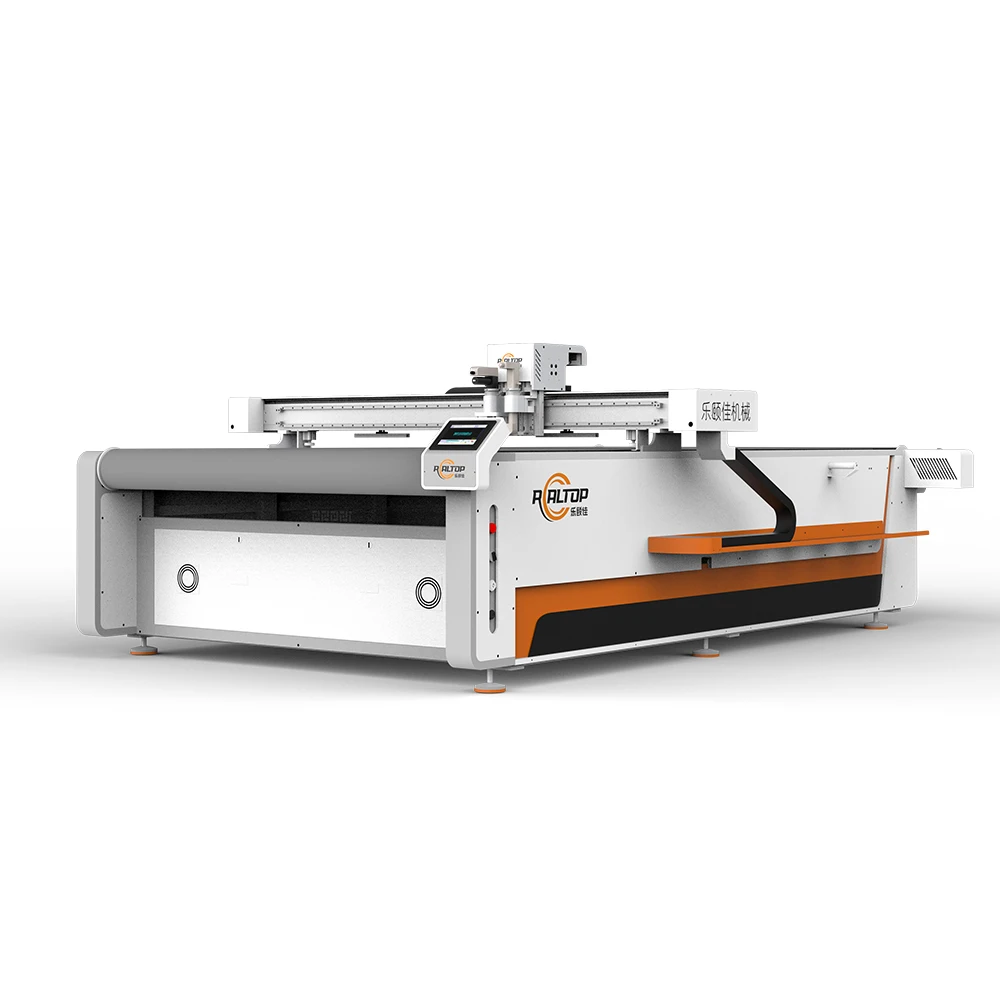
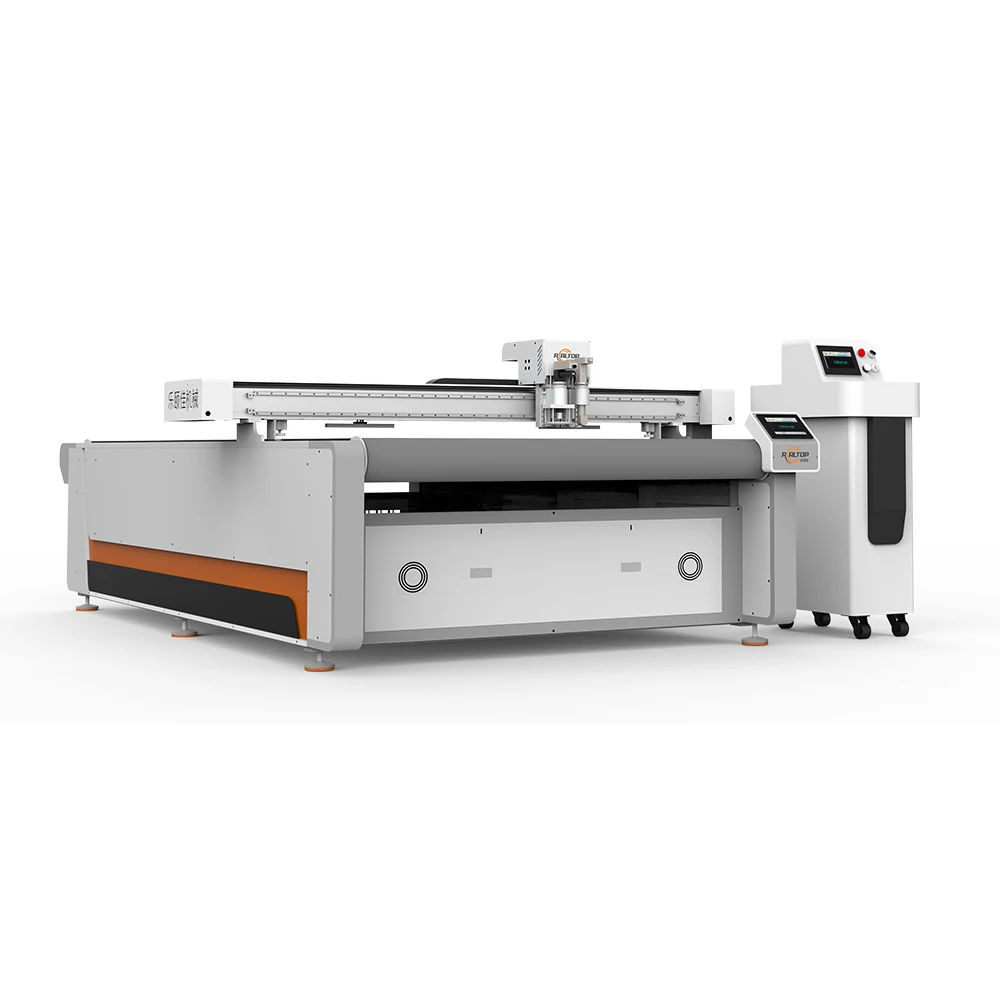
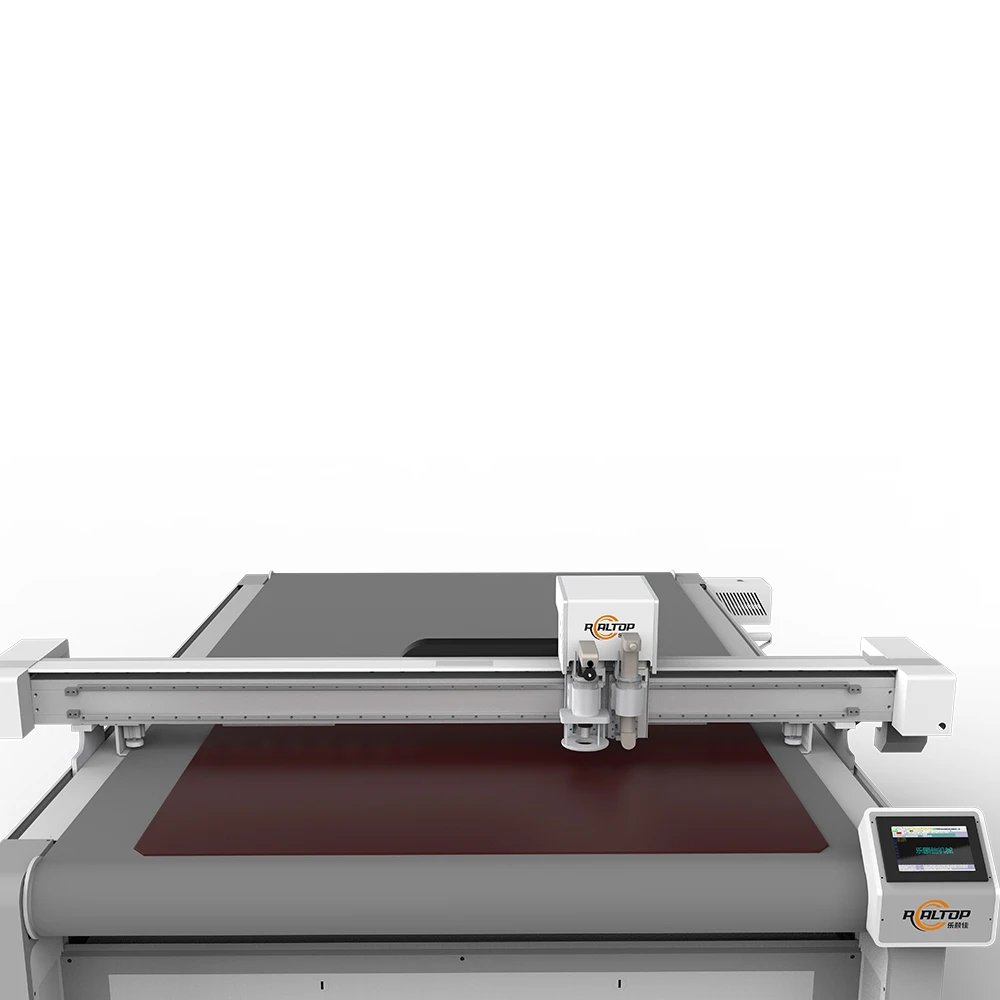
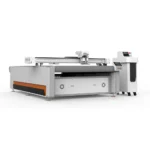
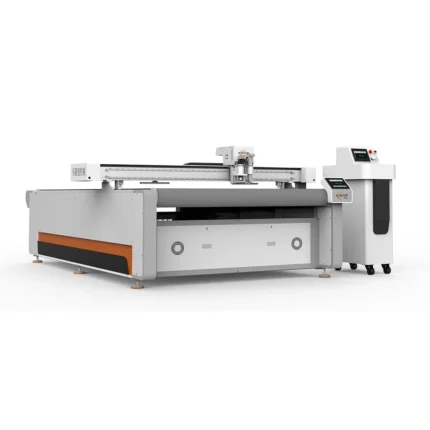
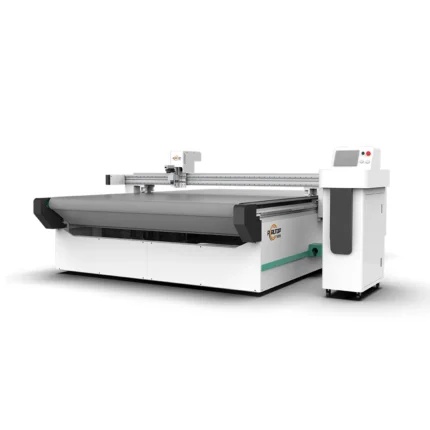
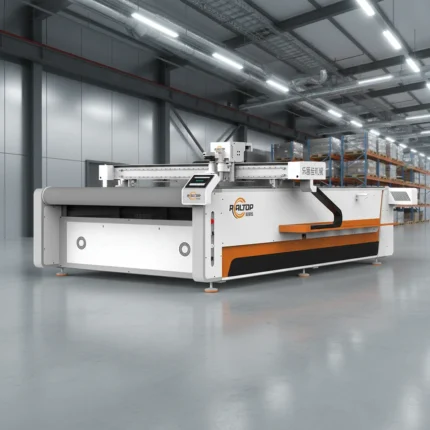
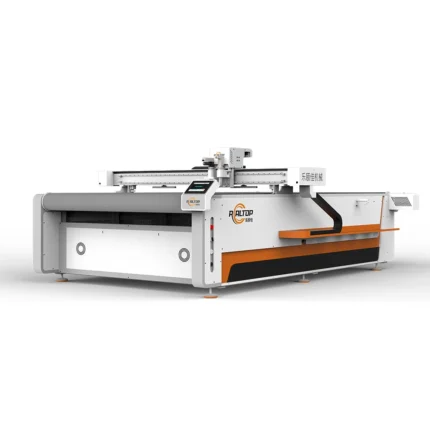
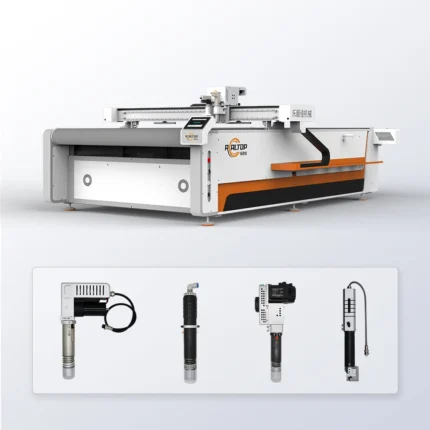
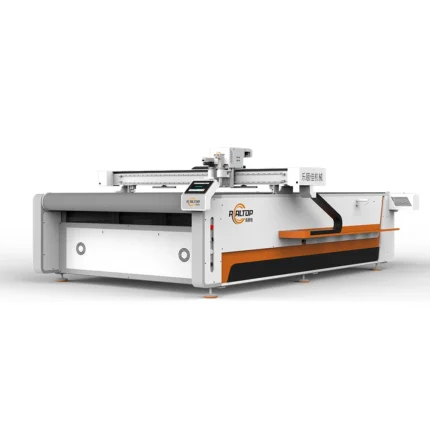
1625 CNC Oscillating Knife Cutting Machine, 1600×2500 mm working area, ±0.1 mm positioning accuracy, interchangeable tool heads including oscillating, rotary and V-groove knives — configured for cold-cutting where laser thermal effects cause scorching or toxic fumes on fabrics, leather and composites.
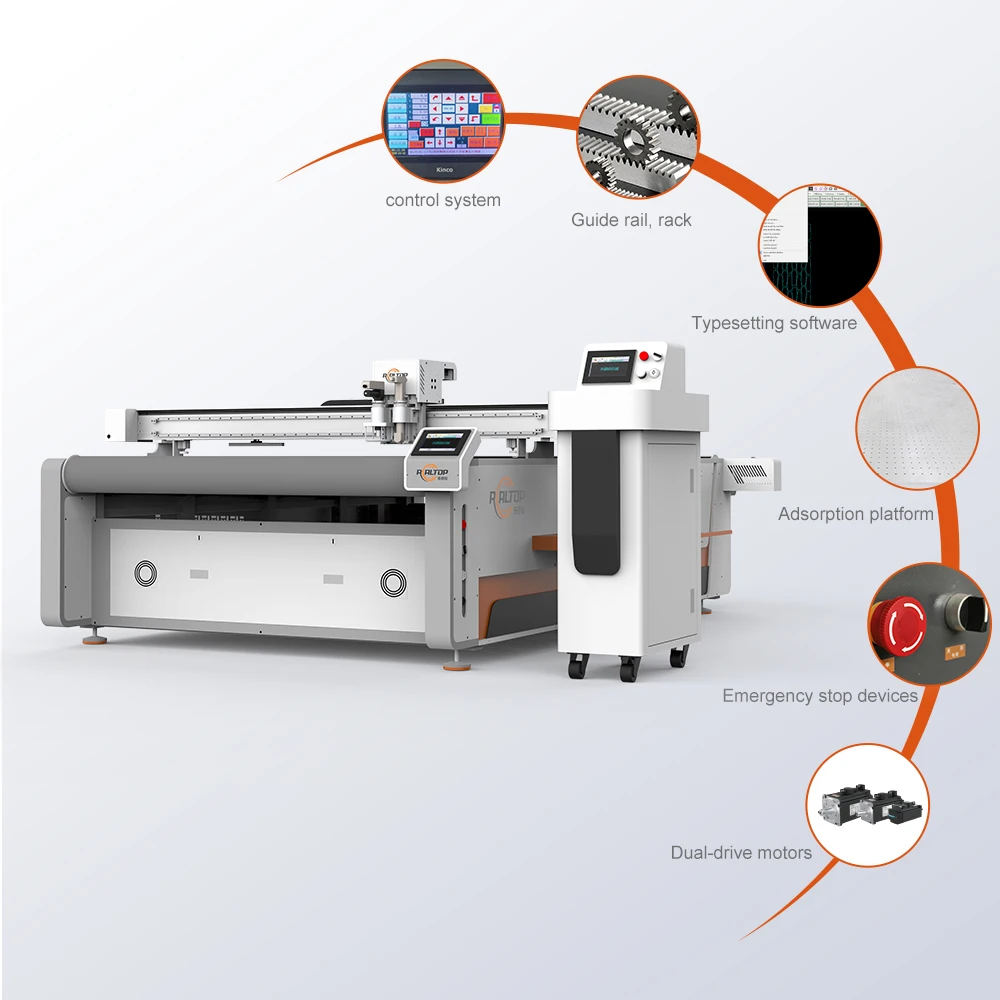
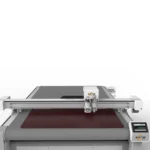
- 9 kW vacuum pump with aluminum bellows table prevents material lift on small parts
- PLC control supports DXF, PLT, AI and PDF import with multi-language interface
Sample cutting on your own material confirms edge quality, cutting depth and speed before order commitment.
In-House Process Engineering — we build both knife and laser platforms under one roof, so we specify the 1625 oscillating knife system around your material’s thermal sensitivity rather than forcing a single cutting method.
Technical Specifications
| Parameter | Value |
|---|---|
| Model | 1625 |
| Product Type | CNC Oscillating Knife Cutting Machine |
| Working Area | 1600×2500 mm |
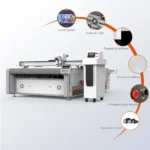
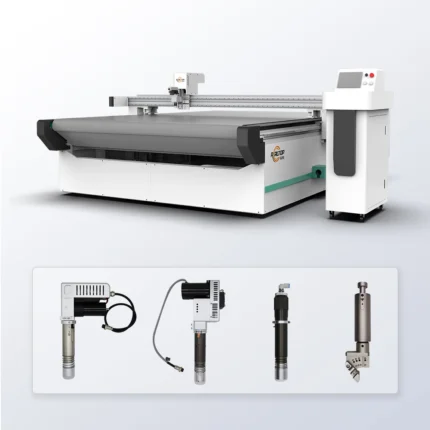
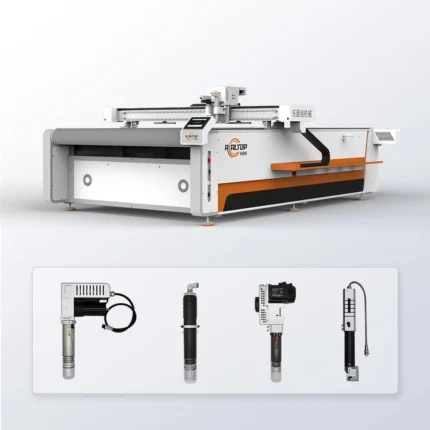
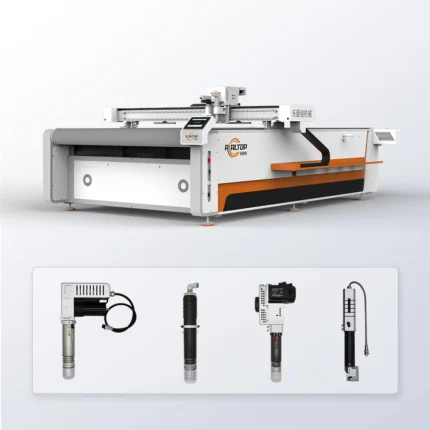
| Tool Head Options | Oscillating knife, Driven rotary knife, Creasing wheel, Kiss cutting tool, Pneumatic knife, Milling tool, V groove knife |
| Cutting Speed | 0–2000 mm/s |
| Cutting Thickness | ≤ 30 mm (basis not stated in source — confirm material type and density) |
| Positioning Accuracy | ±0.1 mm |
| Vacuum Pump Power | 9 kW |
| Vacuum Table | Aluminum bellows vacuum table |
| Control System | PLC control panel |
| Servo Motor Options | Panasonic, Delta, Dorna (source value — verify against manufacturer catalog) |
| Voltage Options | 110V / 220V / 380V (frequency 50Hz or 60Hz to be confirmed) |
| Software File Formats | PLT, DXF, AI, PDF |
| Safety Device | Infrared sensor device and emergency stop device |
| Machine Dimensions (L×W×H) | 3300×2100×1350 mm |
| Language Options | English, Russian, Italian, Chinese; special languages customizable |
| Standards | CE (implied — verify certificate number) |
Application Suitability
| Application | Material or Output |
|---|---|
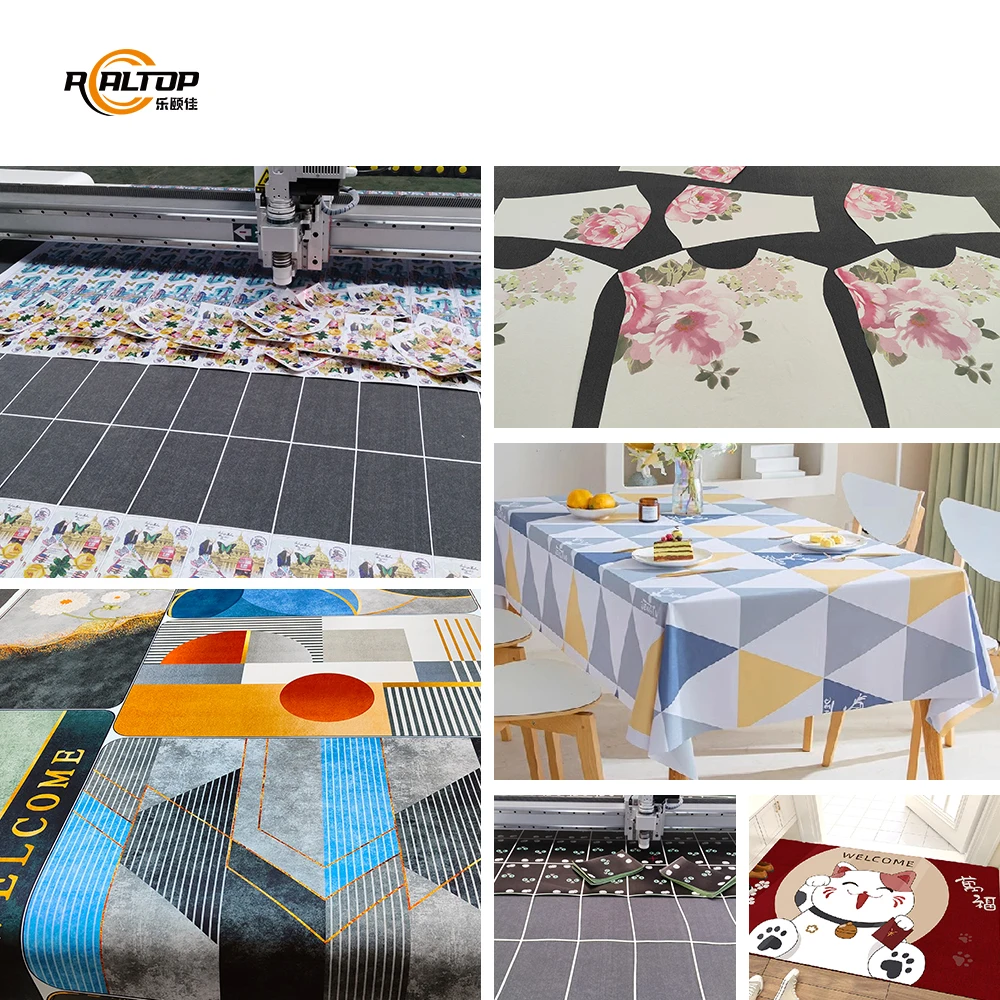
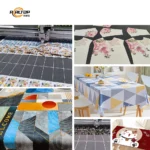
| Apparel and garment manufacturing | Suits, knitwear, lace, complex woven and knitted fabrics with pattern-matching layouts |
| Automotive interior production | Seat fabrics, floor carpets, PVC mats cut to burr-free automotive standards |
| Home textile fabrication | Sofa upholstery fabrics, curtains, area rugs, multi-layer blanket cutting |
| Composite material processing | Carbon fiber prepreg, aramid fabrics, specialty technical textiles |
| General non-metal cutting | Cardboard, carton, EVA foam, leather, acrylic sheet, PTFE, rubber gaskets |
Why the Material Sample Must Arrive Before the Quotation
A cutting system specified on working area alone will fail the moment it meets your actual production material.
I learned this the hard way. A buyer in Turkey ordered a CO2 laser unit for what he described as standard polyester. The sample ran clean, edges sealed, no issues. When his real production roll arrived — coated Oxford cloth — every parameter needed reworking. Edges scorched yellow, and his first production batch nearly went to scrap. That incident changed how I approach every inquiry. Now, before I recommend any configuration, I ask the buyer to ship a roll of the actual material. We run it on the floor, document edge quality, cutting depth, and speed, and only then finalize the tool head and table setup. A laser cutting and engraving machine manufacturer who skips this step is selling you a guess, not a solution [NEED_CITE: material thermal behavior differences between coated and uncoated synthetics].
Cold-Cutting Process Control for Heat-Sensitive Materials
The 1625 operates on an entirely different principle from thermal cutting. Where a laser beam melts or vaporizes material along the cut path, an oscillating knife slices through mechanical force at high frequency. For fabrics with synthetic coatings, thermoplastic laminates, or adhesive-backed composites, this distinction matters. Thermal processes can delaminate coated layers, melt adhesive into the kerf, or release volatile compounds from PVC and foam. The oscillating knife process keeps the material at ambient temperature throughout, preserving the structural integrity of multi-layer constructions and eliminating the need for post-cut edge cleaning.
Tool Head Selection as a Process Variable
The machine supports seven interchangeable tool heads, and choosing correctly is not a catalog exercise — it is a process engineering decision. A standard oscillating knife handles woven textiles and leather cleanly up to moderate thicknesses. A driven rotary knife is better suited for continuous long-path cutting on roll goods where the blade must stay engaged over meters of fabric. A pneumatic knife delivers the downward force needed for dense foam stacks. A kiss cutting tool scores vinyl without penetrating the backing paper. When a buyer sends us their material, we run multiple heads, compare edge quality under magnification, and lock the recommendation into the specification sheet before the order is placed.
Reading the Specifications Against Real Production Needs
The 1600×2500 mm working area accommodates standard textile roll widths and full hide layouts, but the meaningful specifications are the ones that interact with your specific material. The ±0.1 mm positioning accuracy determines whether pattern pieces nest tightly enough to maximize yield from expensive leather hides or carbon fiber prepreg. The 9 kW vacuum pump paired with the aluminum bellows table generates the hold-down force needed to keep thin films and slippery synthetics flat during high-speed traverse — without adequate adsorption, small parts lift and shift, ruining the cut and potentially damaging the blade [NEED_CITE: vacuum hold-down requirements for thin flexible materials]. The PLC control panel with DXF, PLT, AI, and PDF import means your existing design files transfer directly into the cutting workflow, but software compatibility must be verified with your specific nesting software version before the machine ships.
The Cost of Skipping Configuration Verification
When a buyer selects a machine based on price and working area alone, the consequences surface during the first production week. A wrong tool head produces ragged edges on technical textiles or crushes foam instead of cutting it. A vacuum table with insufficient zoning cannot hold small pattern pieces, causing material lift and blade strikes. Voltage mismatches discovered at installation mean weeks of downtime waiting for a transformer. These are not hypothetical failures — they are recurring patterns in equipment returns and warranty disputes across this industry [NEED_CITE: common causes of CNC cutting machine commissioning failures].
Why Procurement Through This Channel Works
We design and manufacture both knife and laser cutting platforms in-house, which means we can honestly tell you when your material belongs on a different process entirely. The 1625 is configured per your material sample, not quoted from a fixed catalog page. Voltage, frequency, and control language are confirmed against your facility’s electrical infrastructure before production begins. Every machine ships with a factory test record cut on your actual material, so edge quality is documented before the crate closes. The PLC control system and software file format compatibility are validated with your existing design workflow during the pre-order phase.
Documentation & Verification
- Machine specification sheet with tool head and vacuum table configuration matched to your material
- Electrical schematic with voltage, frequency, and breaker requirements confirmed for your market
- Sample cutting report on your own fabric or composite with edge photos and speed data
- Software licence and file format compatibility note verified against your nesting workflow
- Factory test record documenting positioning accuracy and cut quality before dispatch
- Operation and maintenance manual in your selected control language
Installation, Commissioning & Support
- Foundation must support the 3300×2100 mm footprint and dynamic loads from the 9 kW vacuum pump
- Dedicated electrical circuit matching confirmed voltage and frequency, sized for total connected load
- Machine ships partially assembled; table leveling and gantry alignment completed on-site
- First-article cutting run on your production material to validate factory test parameters in your environment
- Operator training covers tool head changeover, vacuum zone mapping, and file import from your CAD system
- Spare blade and belt inventory sized to your daily cutting volume and material abrasiveness
Starting the Conversation with the Right Information
To move past general specifications and into a configuration that actually fits your production, I need a few things from your side. Send a sample roll or sheet of the material you cut most often, including any coatings or laminates. Tell me your typical daily volume in linear meters or pieces, and the software you currently use for nesting and pattern design. Confirm your facility voltage, frequency, and the language your operators will work in. If you have existing cutting equipment, note what is working and what is not. With that in hand, we can run your material and build a real proposal.
Frequently Asked Questions
Q: How is the correct tool head selected for my specific material and thickness?
A: We run your actual material sample on multiple tool heads — oscillating knife, driven rotary, pneumatic, and others as appropriate — and compare edge quality, cutting speed, and material hold-down behavior. The selection is documented in your specification sheet before the order is finalized, so there is no guesswork at commissioning.
Q: What voltage and frequency configurations are available, and how is this confirmed?
A: The 1625 is configurable for 110V, 220V, or 380V supply. Before production, we confirm your facility’s exact voltage and frequency in writing and match the electrical schematic accordingly. This prevents the common problem of discovering a voltage mismatch after the machine arrives at your dock.
Q: Can I send my own material for sample cutting before committing to an order?
A: Yes — in fact, we require it. Ship us a representative sample of your production material, including any coatings, laminates, or adhesive layers. We run it on the machine, document edge quality and cutting parameters, and share the results with you before any purchase commitment is made.
Q: What file formats does the software accept, and is my nesting workflow compatible?
A: The control software imports PLT, DXF, AI, and PDF files directly. Before the order, we verify compatibility with your specific nesting software and design workflow. If your current file format requires conversion, we document the process so your operators can transition smoothly.
Q: How are vacuum table zones configured to prevent small parts from lifting?
A: The aluminum bellows vacuum table is divided into independently controlled zones. During commissioning, we map the zone configuration to your typical part sizes and nest patterns, ensuring that small pieces remain flat during high-speed cutting. This mapping is recorded in your operation manual.


Related products
2026 Auto CNC Cloth Cutting Machine High-Precision Fabric Leather Plotter
Product Introduction
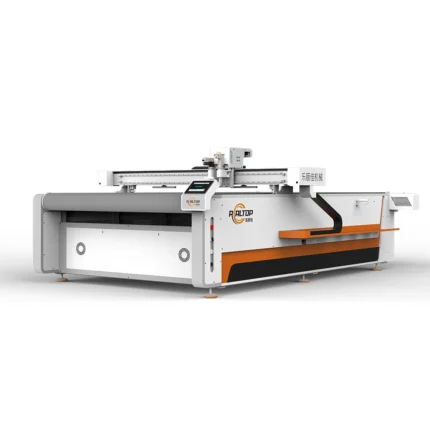
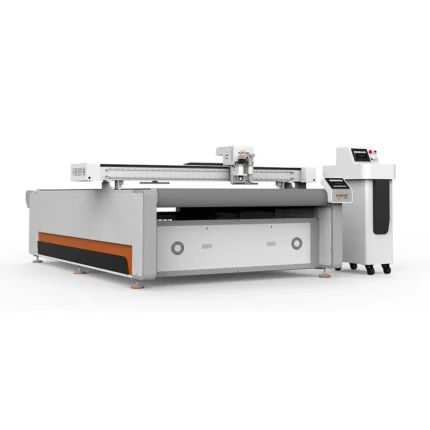
2026 Auto CNC Cloth Cutting Machine, a high-precision fabric & leather plotter designed for efficient cutting. Ideal for textile and leather industries with advanced CNC technology.
Key Specifications
| Model | Auto CNC Cloth Cutting Machine 2026 |
| Application | Fabric & Leather |
| Precision | High-Precision Cutting |
| Type | CNC Plotter |
2026 Automatic PVC Tarpaulin Cutter Machine
Product Introduction
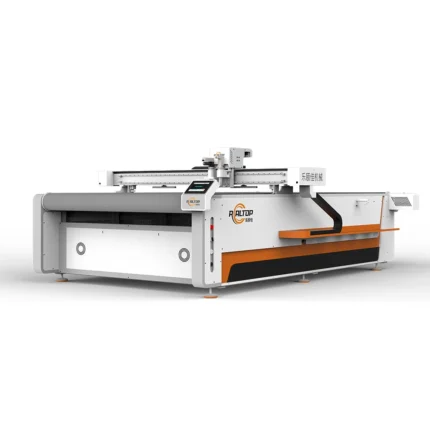
High-performance Automatic PVC Tarpaulin Cutter Machine 2026, ideal for precise and efficient cutting of PVC tarpaulin materials, designed for industrial manufacturing needs with reliable operation and user-friendly control.Product Parameters
| Model | 2026 |
| Type | Automatic PVC Tarpaulin Cutter |
| Application | PVC Tarpaulin Cutting |
| Feature | Precise & Efficient Cutting |
2026 Flatbed Oscillating Knife Cutter 1600x3500mm Auto-Feeding Textile
Product Overview
Flatbed Oscillating Knife Cutting Machine 2026 is a high-precision textile fabric cutter with auto-feeding function, ideal for efficient and accurate cutting tasks in textile manufacturing. It combines advanced oscillating knife technology with a large working area to meet industrial production needs.Key Specifications
| Model | 2026 |
| Working Area | 1600x3500mm |
| Feeding System | Auto-Feeding |
| Cutting Type | Oscillating Knife |
| Application | Textile Fabric |
CNC Vibration Knife System 2026 for Polyester Nylon Non-Woven Prepreg
Product Introduction
CNC Vibration Knife System 2026 is ideal for cutting polyester, nylon, non-woven fabrics, and prepreg materials with precision and efficiency, suitable for industrial manufacturing needs.Product Parameters
| Model | 2026 |
| Cutting Technology | CNC Vibration Knife |
| Materials | Polyester, Nylon, Non-Woven, Prepreg |
High Speed Fabric Cutting Machine 2026 Round Oscillating Knife
Product Overview
High Speed Fabric Cutting Machine 2026 with round and oscillating knife for efficient fabric cutting. Ideal for textile manufacturing and related industries.Key Specifications
| Cutting Type | Round & Oscillating Knife |
| Model Year | 2026 |
| Application | Fabric Cutting |
| Feature | High Speed Performance |
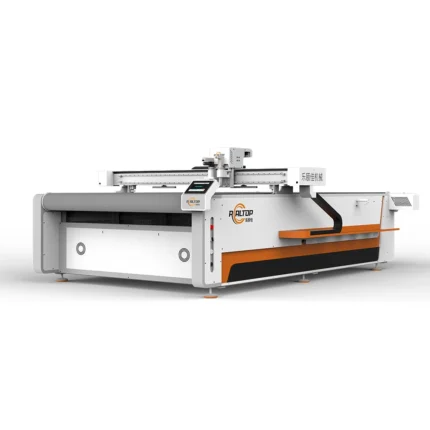
Realtop CNC Fabric Cutting Machine 2026 CE Certified
Product Introduction
Realtop CNC Fabric Cutting Machine 2026, CE Certified, ideal for precision fabric cutting with advanced CNC technology. Engineered for efficiency and reliability in textile manufacturing processes.Key Specifications
| Model | Realtop CNC Fabric Cutting Machine 2026 |
| Certification | CE Certified |
商品评价
There are no reviews yet.