

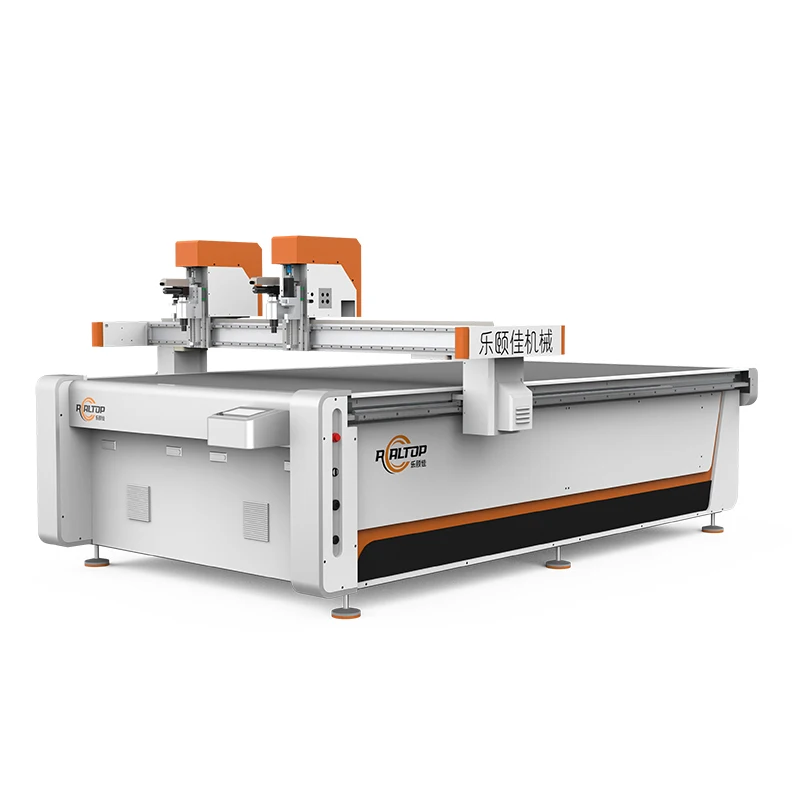
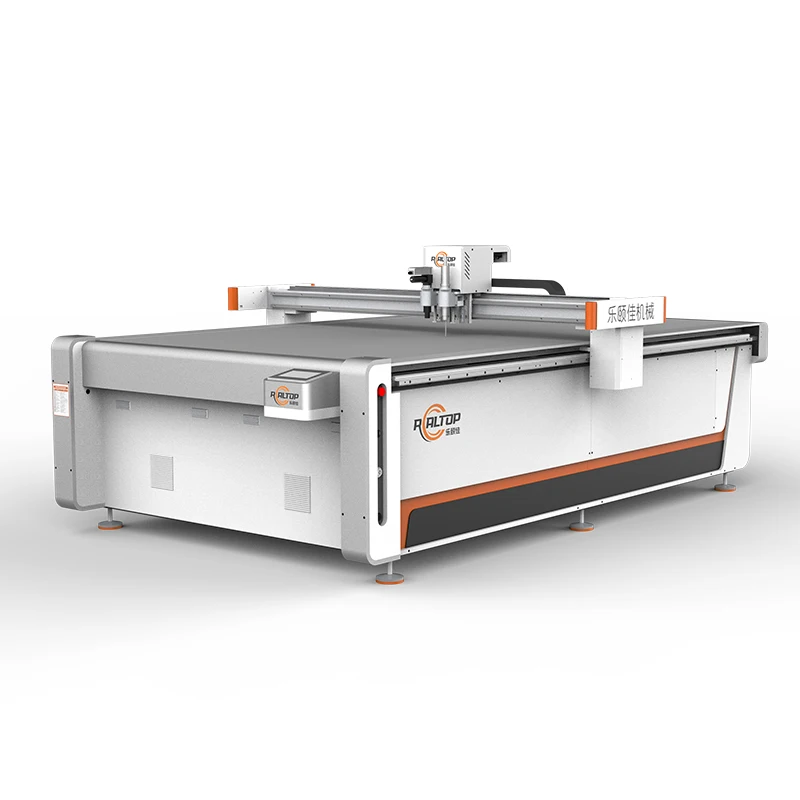
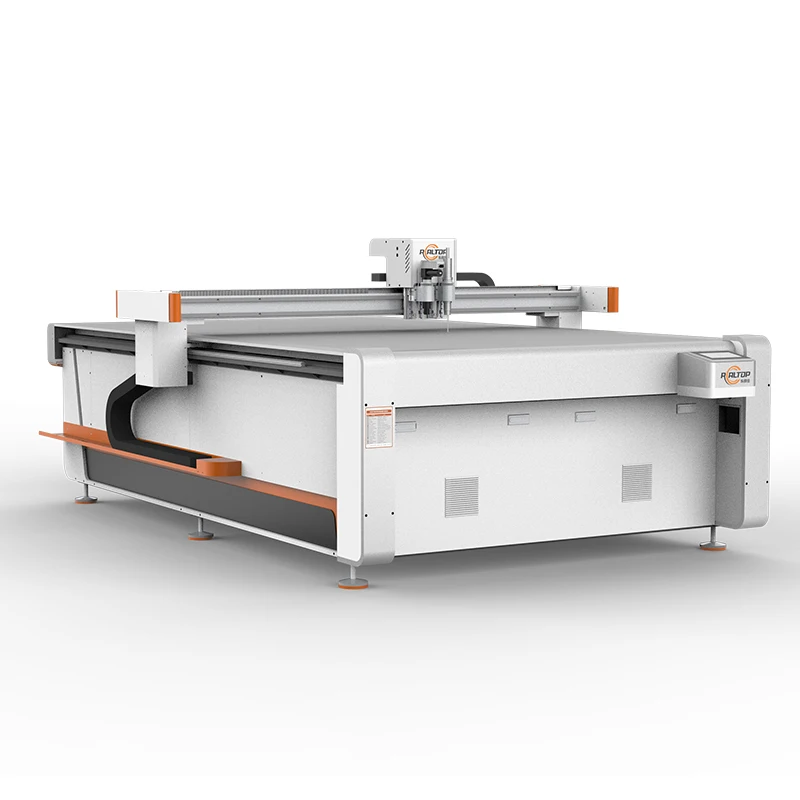
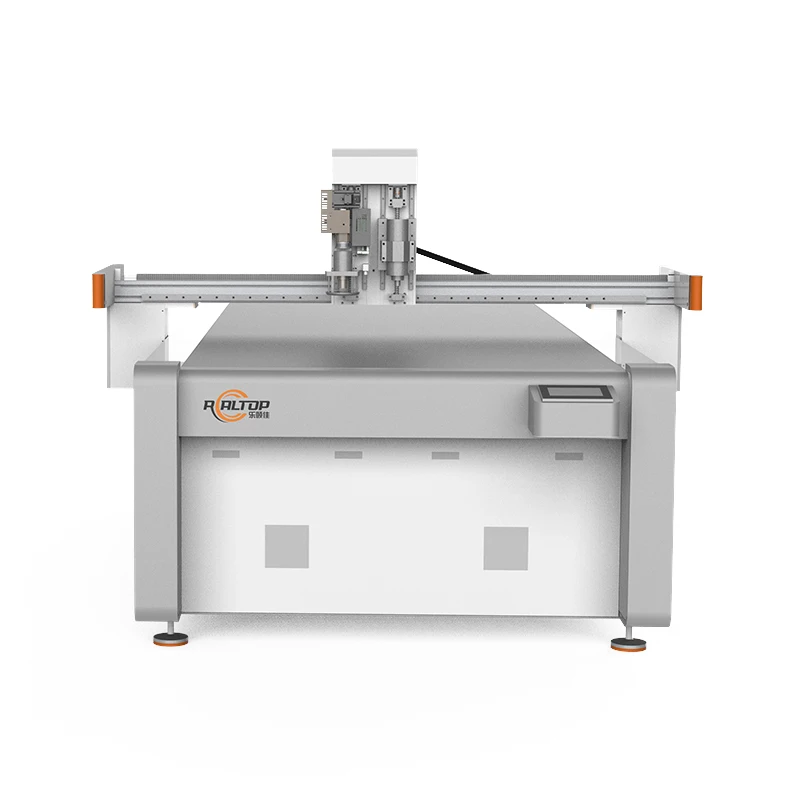
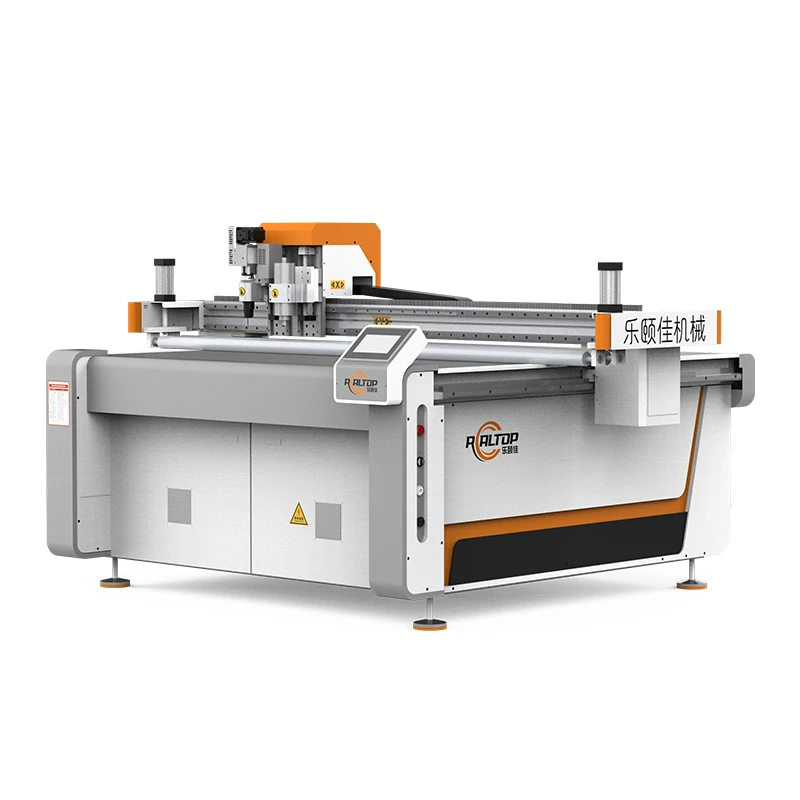
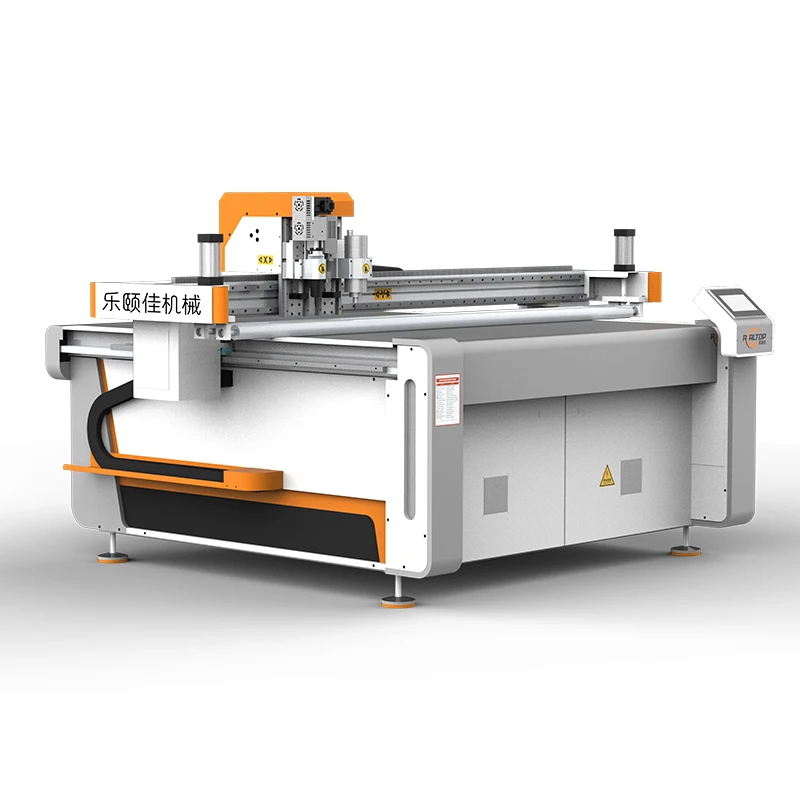

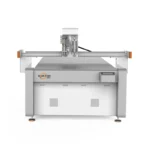
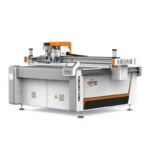
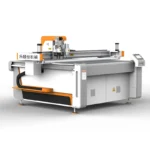
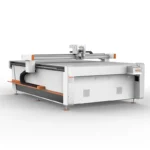

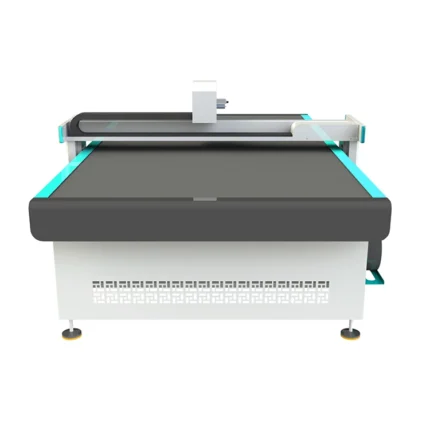
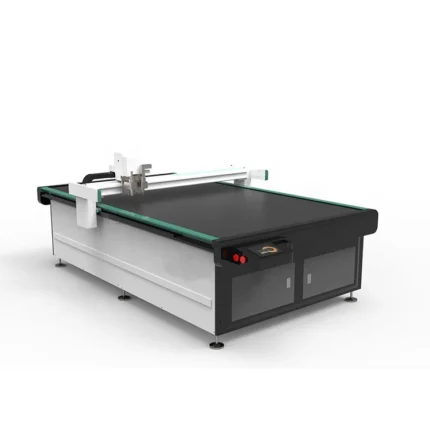
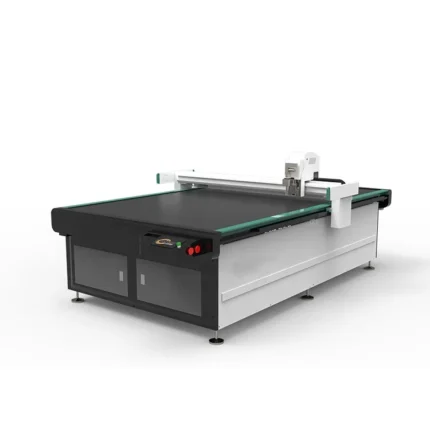
CNC Asbestos EPE Foam Cutting Machine – OEM Available
Sample cutting on your own foam or gasket material is completed before order confirmation, with a full report covering edge quality, cutting depth and tool head match.
Voltage and Tool Head Configuration — the RT-D2516/RT-S2516 is configured per your material’s density and thickness, with voltage, frequency and control language confirmed before production begins.
Technical Specifications
| Parameter | Value |
|---|---|
| Product Type | CNC Oscillating Knife Cutting Machine |
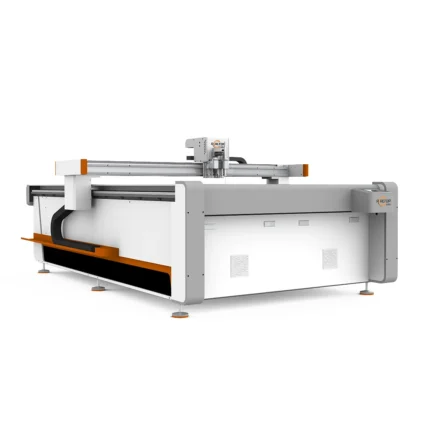
| Model | RT-D2516/RT-S2516 |
| Working Area | 1600 × 2500 mm |
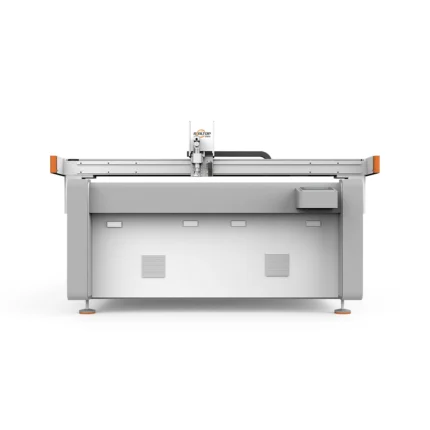
| Overall Dimensions | 3450 × 2300 × 1250 mm |
| Rated Power | 9 kW |
| Voltage | 380V ±10% |
| Frequency | 50Hz / 60Hz (basis to be confirmed per market) |
| Control System | CNC |
| Servo Motor | Delta (optional Panasonic) |
| Transmission System | Imported digital servo motor, linear guide, synchronous belt, ball screw; Taiwan Hiwin rail |
| Vacuum Table | Magnesium-aluminum alloy, fluorocarbon PVDF powder sprayed, anodic and hard oxidation treated flatbed |
| Vacuum Pump | 7.5 kW, integrated aviation aluminum shell with built-in silencer sponge |
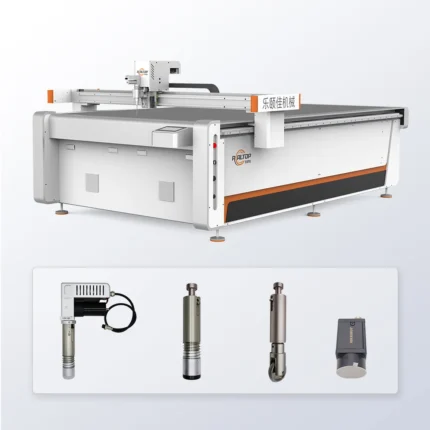
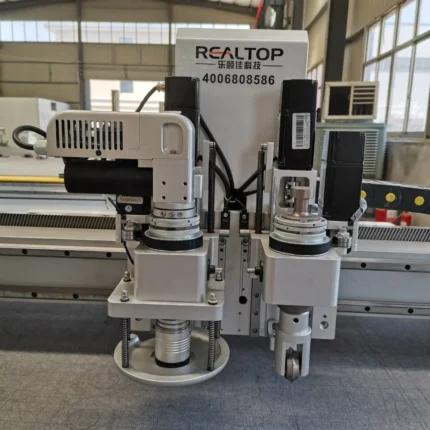
| Tool Head Options | Swiss imported knife (vibration full/half cutting, cursor location), oscillating knife, pneumatic knife, high-power vibrating knife, circular knife, V-cutting knife, drag knife, creasing wheel, dotted line knife, punching, brush |
| Visual Positioning Options | Small CCD camera mark point positioning, panoramic camera recognition positioning, projection positioning |
| Translational Velocity | 800–1200 mm/s |
| Cutting Thickness | 20–80 mm (basis not stated in source — confirm material type, density and compression) |
| Repeated Accuracy | ≤0.1 mm |
| Instruction System | HP-GL compatible format |
| Conveyor Belt | Germany imported (optional configuration) |
| Auto Feeding | Available (optional configuration) |
| Safety Devices | Infrared induction blocking, anti-collision sensors on both sides of beam, emergency stop button with in-situ resume |
| Language Options | English, Russian, Italian, Chinese; special languages customizable |
| Warranty | 1 year (free parts; buyer pays shipping for replacement parts) |
| Certification | CE (declared applicable where required — verify per unit) |
Application Suitability
| Application | Material or Output |
|---|---|
| Packaging insert fabrication | EPE, EVA, XPE foam board cut to nested profiles |
| Automotive interior trimming | Sponge composite leather, non-woven fabric, carpet |
| Gasket and sealing pad production | Rubber, PTFE, silicone, composite sheet to tight tolerance |
| Protective cushioning and case inserts | PU, EVA, EPE foam in multi-layer layups |
| Signage and display component cutting | PVC foam board, corrugated plastic, sticker film |
| Footwear and luggage component cutting | Leather, synthetic textile, shoe material, luggage fabric |
Why "Cutting Thickness 80 mm" Does Not Tell the Whole Story
The number on the spec sheet assumes a specific foam density and compression behavior that rarely matches your actual stock.
When I was setting up an EPE foam cutting line for an Indonesian buyer, the machine ran perfectly on the standard test material we had in the workshop. The buyer’s production stock was asbestos-reinforced composite foam — heavy on fibre, much harder than regular EPE. The blade dulled within three hours, cut edges came out with heavy burring, and an entire batch was scrapped before we caught the mismatch. That is why the first question on every quote now is about exact material composition, not just thickness [NEED_CITE: material density and fibre content effects on oscillating knife wear rate]. A CNC Oscillating Knife Cutting Machine manufacturer that does not ask about your foam type and density before recommending a tool head is guessing.
Matching the Tool Head to the Foam Structure
Foam is not one material — it is a spectrum from open-cell PU sponge to closed-cell XPE, and each structure demands a different blade geometry and oscillation frequency. The RT-D2516/RT-S2516 carries a range of interchangeable heads: the Swiss imported knife handles full and half-depth cuts with cursor location for kiss-cut work, while the high-power vibrating knife takes on denser composite boards. Selecting the correct head is the single biggest variable in edge quality and blade life. A CNC Oscillating Knife Cutting Machine configured with the wrong head for your material will crush the top layers before it cuts through, leaving ragged edges that fail visual inspection.
Vacuum Table Zoning for Small Parts and Nested Layouts
The magnesium-aluminum alloy flatbed on this unit is treated with fluorocarbon PVDF powder spray and hard anodic oxidation, which gives a stable, flat surface under repeated vacuum cycling. The 7.5 kW pump with its integrated silencer maintains suction across the table. But suction area matters as much as pump power — small gasket profiles and nested packaging inserts lose hold-down force if the vacuum zoning is too coarse. Before we ship, the zoning layout is matched to the buyer’s typical part size and nesting pattern so that small pieces do not lift mid-cut [NEED_CITE: vacuum zoning requirements for small-format CNC cutting].
Reading the Specs That Actually Affect Your Floor
The 9 kW rated power covers the servo drives, spindle oscillation and vacuum pump load together, which means the unit needs a dedicated circuit rather than sharing a line with other machines. The Taiwan Hiwin linear rails and ball screw transmission deliver the ≤0.1 mm repeated accuracy, and that repeatability is what holds gasket tolerances across a full shift. Translational velocity of 800–1200 mm/s determines traverse speed between cuts, but actual cutting speed through 60 mm EPE foam will be lower depending on density. The HP-GL compatible instruction system accepts files from most nesting software packages — confirming file format compatibility with your existing workflow before order avoids costly software replacement later [NEED_CITE: HP-GL and DXF file compatibility across nesting platforms].
The Hidden Cost of Skipping the Sample Cut
Every pain point I have seen on foam cutting lines traces back to a configuration decision made without seeing the actual material on the table. Wrong blade geometry produces crushed layers that get rejected by the buyer’s QC. Insufficient vacuum zoning lets small parts shift, pushing tolerance outside spec. A CCD camera that cannot read registration marks at production speed causes contour drift across a full sheet. All of these are caught in a sample cutting run before the order is finalised — and none of them are caught if the sample is run on a different material than what your production floor will see [NEED_CITE: material sample verification practice in CNC cutting procurement].
Why Buyers Source This Unit from REALTOP
The in-house design team covers both knife and laser cutting technologies, so the cutting method is matched to the material rather than forced into one process. Every tool head and table configuration on the RT-D2516/RT-S2516 is specified per the buyer’s material and daily volume, not pulled from a default list. CCD camera positioning options — small mark-point, panoramic and projection — are confirmed against the buyer’s actual printed mark size and press registration tolerance. Software compatibility is verified before the order goes into production, not after the machine arrives. Sample cutting on the buyer’s own stock material is standard practice, not an extra step.
Documentation & Verification
- Machine specification sheet listing every configured tool head and option
- Electrical schematic with voltage, frequency and plug type confirmed per market
- Tool head and vacuum table configuration list matched to your material
- Sample cutting report run on your foam or composite stock before dispatch
- Software licence and HP-GL file format compatibility note for your nesting workflow
- Factory test record with repeated accuracy measurement logged per axis
Installation, Commissioning & Support
- Dedicated 380V circuit required for the 9 kW total rated load with proper isolation
- Overall footprint of 3450 × 2300 mm needs clear access on three sides for material loading
- Assembly state and SKD/CKD packaging confirmed to match your local handling equipment
- First-run parameter setting covers oscillation frequency, vacuum zone mapping and blade offset calibration
- Operator training on tool head changeover, blade replacement and emergency stop in-situ resume
- Spare parts list with Swiss knife blades, vacuum seals and Hiwin rail blocks identified by part number
What to Include with Your Enquiry
Send us the exact material type, density and thickness range you plan to cut, along with a drawing or sample file of your most complex profile. Confirm your local voltage, frequency and plug standard so the electrical cabinet is built correctly before shipment. If your production line runs nesting software, tell us which package you use so we verify HP-GL and DXF import compatibility in advance.
Frequently Asked Questions
Q: How do I verify the cutting thickness rating against my specific foam density?
A: The 20–80 mm range is material-dependent. We run a sample cut on your actual stock, documenting blade type, oscillation frequency, edge quality and cycle time in a cutting report you review before committing to the order.
Q: Which tool head should I choose for my composite foam to avoid ragged edges?
A: Fibre-reinforced and composite foams typically need the high-power vibrating knife or Swiss imported knife rather than a standard oscillating head. We match the head during the sample cutting stage based on cut-edge inspection.
Q: Can the CCD camera track my printed registration marks at full production speed?
A: The panoramic camera and small CCD options both support contour recognition, but mark size, contrast and press registration tolerance vary. We test against your printed sheet during sample cutting to confirm tracking reliability.
Q: What voltage and control language options are available for my market?
A: The unit supports 380V ±10% at 50Hz or 60Hz, with plug type, control panel language and documentation language all confirmed before production. English, Russian, Italian and Chinese are standard; other languages are configurable.
Q: How do I arrange a sample cut on my own material before ordering?
A: Send a roll or sheet of your production stock with a profile drawing or DXF file. We run the sample on the configured RT-D2516/RT-S2516 setup and provide a report covering edge quality, dimensional accuracy and recommended tool head.


Related products

Blade Cutter Cardboard Box Machine for Packaging – OEM Available
CNC Oscillating Knife Cutting Machine, 1600×2500mm working area, ±0.1mm cutting accuracy — configured with interchangeable tool heads including oscillating knife, creasing wheel and V-groove knife for corrugated cardboard, foam and thin plastic packaging substrates.
- Aluminum bellows vacuum table ensures secure holding of irregular sheets during high-speed cutting up to 1500 mm/s
- Dedicated packaging structure design software imports PLT, DXF, AI and PDF files directly into the PLC control workflow
- Supports E-flute through BC-flute corrugated board, EVA/EPE foam inserts and adhesive-backed composite materials
Sample cutting on your own material is completed before order commitment, with tool head and voltage configuration confirmed to match your production requirements.

Carton Box Making Machine for Corrugated Cutting – OEM Available
RT-D2516/RT-S2516 CNC Oscillating Knife Carton Cutting Machine, 1600×2500mm, 9kW — configured for corrugated board, cardboard, PVC and flexible materials.
- Swiss oscillating knife head delivers full-cut, half-cut and creasing in one pass, avoiding charred edges typical of CO2 laser processing on paper substrates
- 7.5kW vacuum pump with aluminum honeycomb table holds corrugated sheets flat; HP-GL compatible software supports multi-format import
- Translational velocity 800–1200 mm/s; cutting speed and thickness depend on material grade and flute profile
Sample cutting on your own corrugated stock confirms edge quality, crease accuracy and real throughput before commitment — request a test report on your specific board.
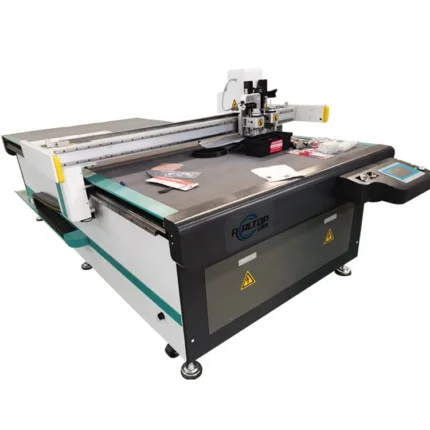

CNC Corrugated Box Cutting Machine for Packaging Sample Making – OEM Available
RT-D2516/RT-S2516 CNC Corrugated Box Cutting Machine, 1600×2500mm, 9kW, Swiss oscillating knife — handles cutting, creasing and marking on corrugated board, grey board and sticker stock.
- ≤0.1mm repeated accuracy via Yaskawa servo, Hiwin guide and ball screw
- 7.5kW vacuum pump with auto-feeding and German conveyor for continuous sheet handling
- HP-GL compatible workflow; CCD contour positioning optional for printed marks
Sample cutting on your own material confirmed before order, with tool head and table configuration matched to your board grade and flute profile.

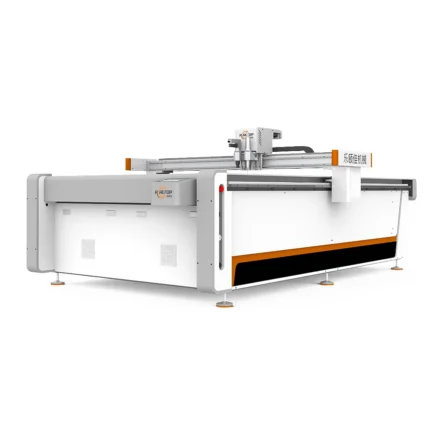
CNC Flatbed Oscillating Knife Cutting Machine for Packaging – OEM Available
1625 CNC Flatbed Oscillating Knife Cutting Machine, 1600×2500mm working area, ≤40mm cutting thickness, ±0.1mm accuracy — configured for packaging sample making and short-run production.
- Tool heads selected per material: oscillating knife, creasing wheel, driven rotary knife and CCD camera for printed contour work
- Aluminum bellows vacuum table with 9KW pump for full-surface hold-down across corrugated cardboard, foam, PVC and composites
- PLC control with dedicated packaging structure software; 110V/220V/380V and multi-language interface confirmed before shipment
Sample cutting on your own material with a full cutting report before commitment, ensuring edge quality and crease depth match your production requirements.
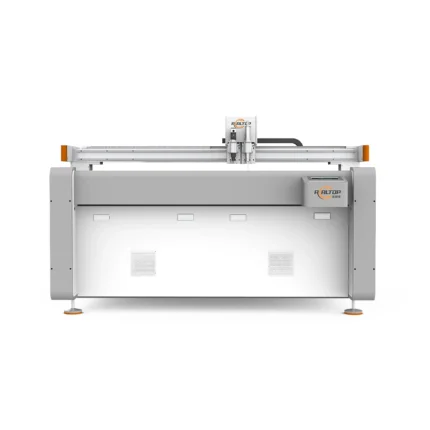
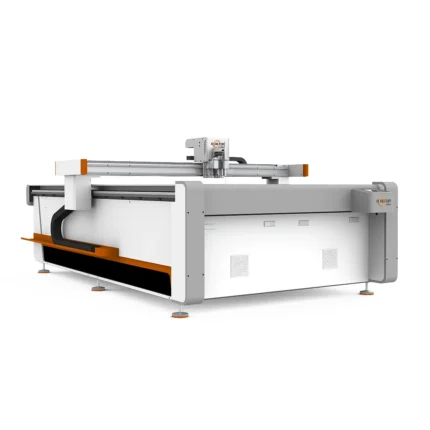
Corrugated Cardboard CNC Oscillating Knife Cutting Machine for Packaging – OEM Available
1625 CNC Oscillating Knife Cutting Machine, 1600×2500mm working area, 9kW vacuum pump — engineered for corrugated board, greyboard and foam packaging workflows where tool head selection and vacuum zoning must match the actual flute profile rather than a generic area quote. Oscillating knife, creasing wheel and V-groove tools handle multi-process carton dielines at ±0.1mm accuracy, with PLC control and dedicated packaging box design software importing PLT/DXF/AI/PDF files directly.
Sample cutting on your own board stock at production speed, with tool configuration and electrical schematic confirmed before shipment.

Professional Gasket CNC Oscillating Knife Cutting Table | OEM Available
RT-D2516/RT-S2516 CNC Oscillating Knife Cutting Table, 1600×2500mm, 9kW — engineered for laser and non-metal cutting workflows. Swiss imported oscillating knife delivers clean edges on gasket, rubber and composite sheets, while the 7.5kW vacuum table ensures stable hold-down at production speed. HP-GL compatible control with Yaskawa servo achieves ≤0.1mm repeatability across cutting, creasing and marking tasks.
Sample cutting on your own material is completed before commitment, verifying real cutting depth and edge quality for your specific application.
商品评价
There are no reviews yet.