


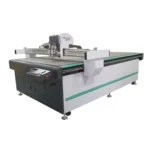
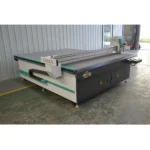
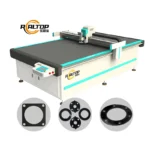
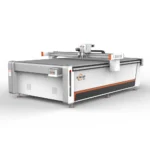
CNC Oscillating Knife Cutting Machine for Gasket Cutting | Full Range
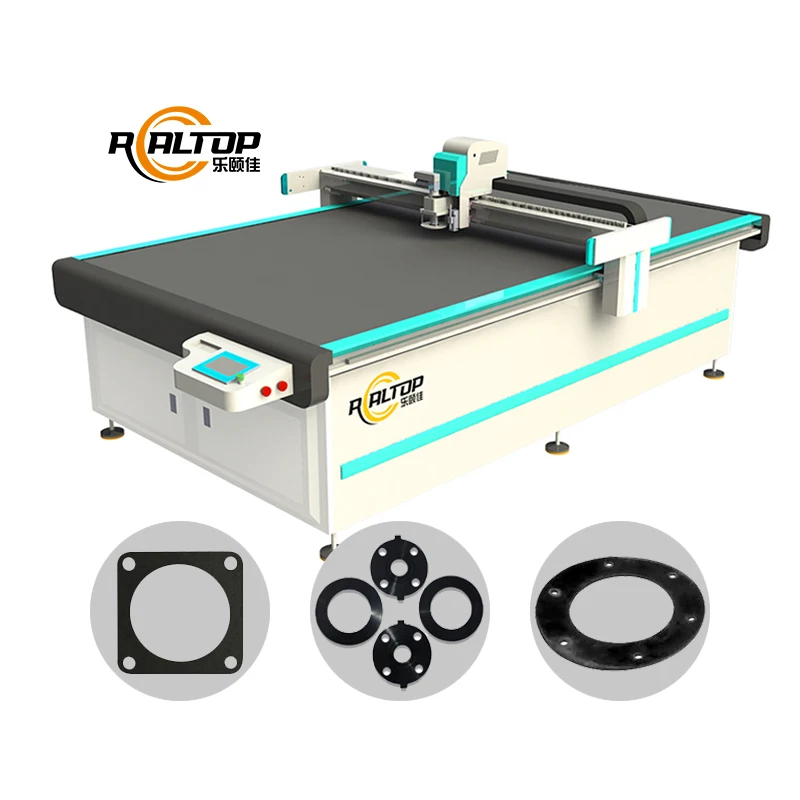
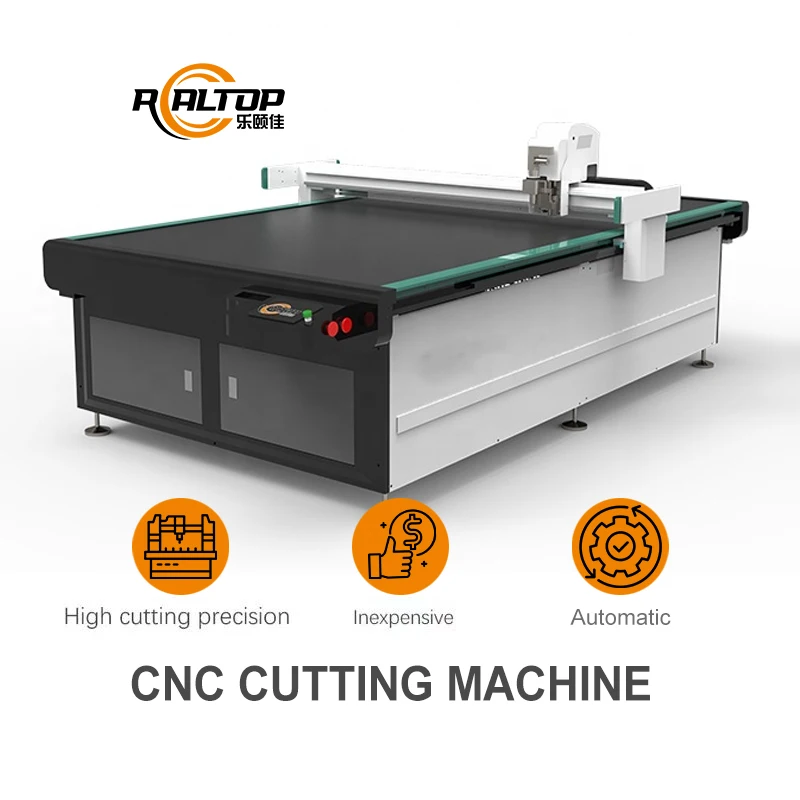
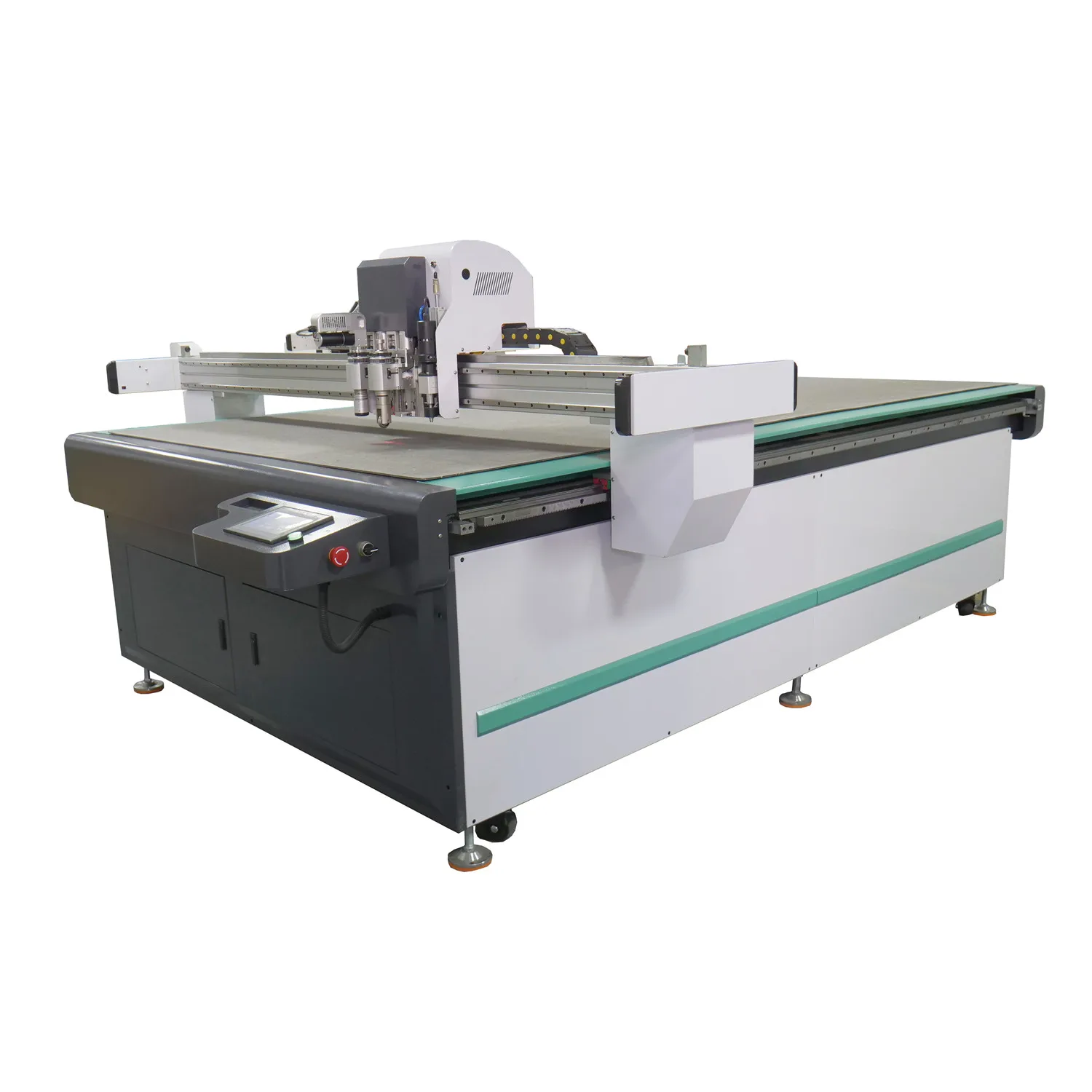
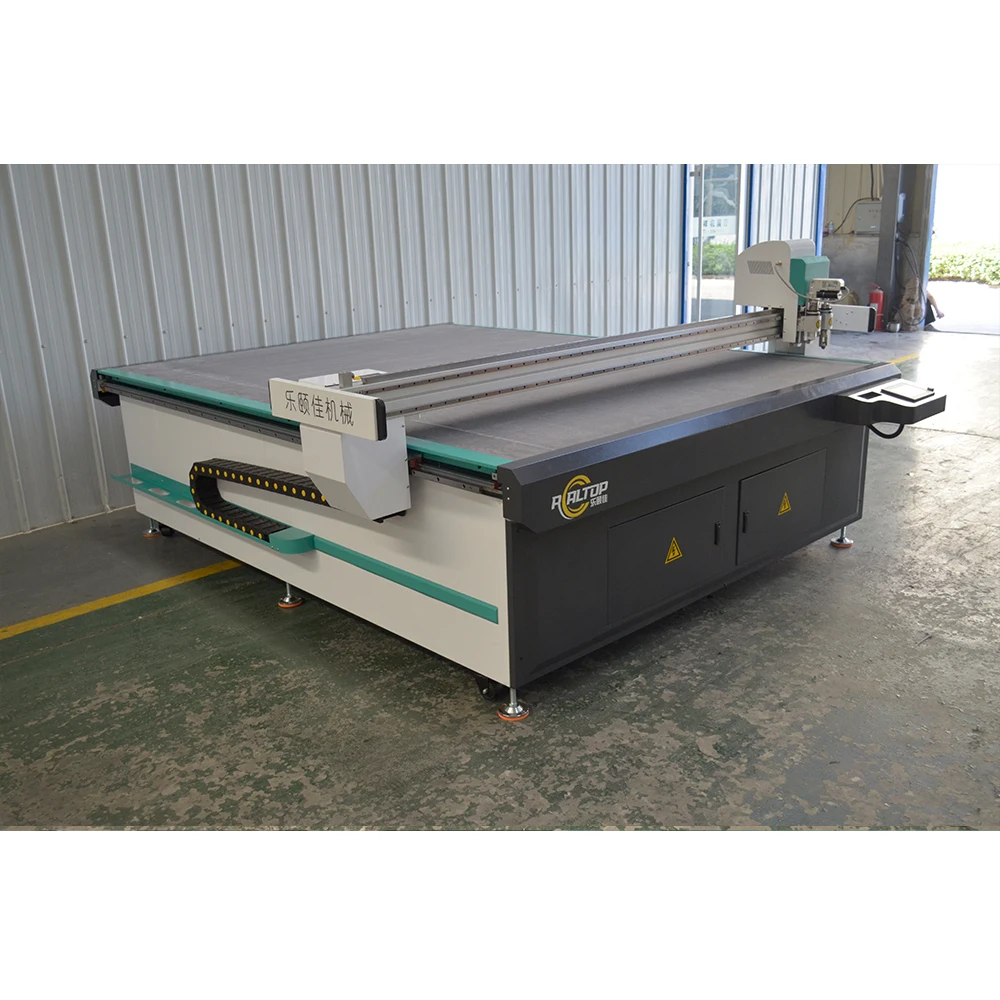
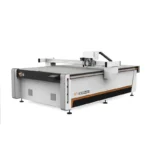
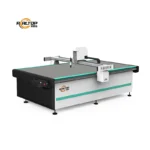
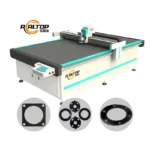
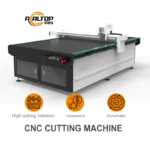
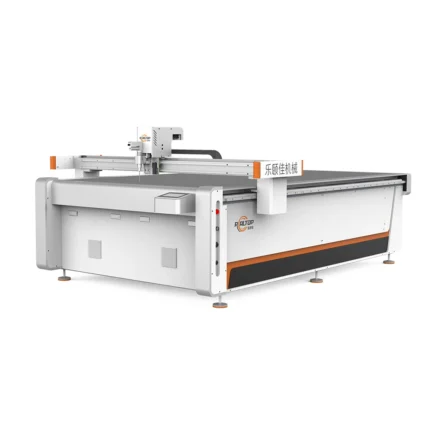
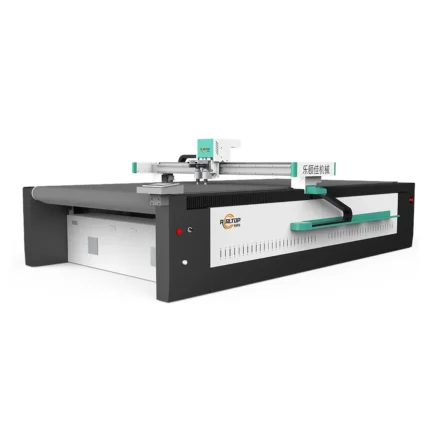
RT-D2516/RT-S2516 CNC Oscillating Knife Cutting Machine, 1600×2500mm Working Area, 20-80mm Cutting Thickness — engineered for gasket and sealing pad fabrication across automotive, industrial and composite applications.
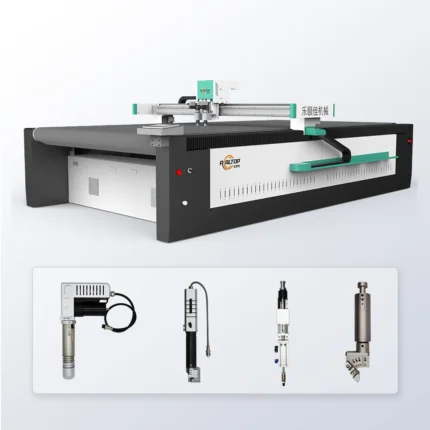
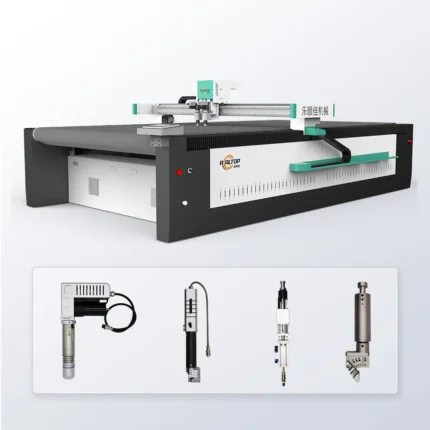
- Swiss imported oscillating knife with multifunctional head options including pneumatic knife, V-cutting and creasing wheel
- Magnesium-aluminum alloy vacuum table with fluorocarbon PVDF coating ensures flat holding for dense gasket materials
- CCD camera and panoramic positioning available for printed contour cutting at production speed
- Delta or Panasonic digital servo with Hiwin linear rails delivers ≤0.1mm repeated accuracy
Sample cutting on your own gasket material is completed before order confirmation, so cutting depth, edge quality and tool head selection are verified against your actual production requirement — not estimated from a catalog table.
Integrated Knife and Laser Platform — Realtop builds both oscillating knife and CO2/fiber laser systems in-house, letting gasket producers match the cutting method to material density and thickness rather than forcing one technology across every job.
Technical Specifications
| Parameter | Value |
|---|---|
| Product Type | CNC Oscillating Knife Cutting Machine |
| Working Area | 1600 × 2500 mm |
| Machine Dimensions | 3450 × 2300 × 1250 mm |
| Rated Power | 9 kW |
| Table Type | Magnesium-aluminum alloy vacuum adsorption table with fluorocarbon PVDF powder spraying, anodic oxidation, hard oxidation |
| Multifunctional Head | Swiss imported knife (vibration full cutting, vibration half cutting, cursor location); options include oscillating knife, pneumatic knife, high-power vibrating knife, circular knife, V cutting knife, drag knife, creasing wheel, dotted line knife, punching, brush |
| Translational Velocity | 800–1200 mm/s |
| Cutting Thickness | 20–80 mm depending on material (basis to be confirmed) |
| Repeated Accuracy | ≤ 0.1 mm |
| Transmission System | Digital servo motor (Delta or Panasonic optional), linear guide, synchronous belt, ball screw; Taiwan Hiwin rail |
| Instruction System | HP-GL compatible format |
| Voltage | 380 V ± 10 % |
| Vacuum Pump | 7.5 kW integrated aviation aluminum shell with built-in silencer sponge |
| Safety Device | Infrared sensors, anti-collision on both sides of beam, emergency stop button |
| Visual Positioning Options | Small CCD camera mark point positioning, panoramic camera recognition positioning, projection positioning |
| Language Options | English, Russian, Italian, Chinese (special languages customizable) |
| Other Configuration | Germany imported conveyor belt, auto feeding |
| Standards | CE declaration where applicable |
Application Suitability
| Application | Material or Output |
|---|---|
| Industrial gasket and sealing pad production | Non-asbestos fiber sheets, PTFE, ETFE, reinforced graphite composite, aramid fiber, rubber compound |
| Automotive interior and sealing components | EPDM foam, silicone sponge, closed-cell foam, PU gasket stock |
| Fluid power and hydraulic seal fabrication | Nitrile rubber, neoprene, cork-rubber composite, compressed fiber |
| HVAC and ductwork sealing | High-temperature silicone sheet, fiberglass-reinforced elastomer |
| Electrical insulation gasket cutting | XPE, PE, PP dielectric sheets, Nomex aramid paper |
Why the Material Sample Must Arrive Before the Quote
A gasket machine specified on working area alone often fails the moment a tougher composite hits the table.
Buyers routinely send an inquiry listing only sheet dimensions and daily volume, then receive a configuration quoted against standard non-asbestos fiber board. When the actual stock turns out to be reinforced graphite laminate or compressed PTFE, the oscillating knife stalls, edge delamination appears, and the production line stops [NEED_CITE: material density and fiber orientation effects on knife cutting resistance]. That mismatch is the single most common reason a gasket cutting installation underperforms in its first month. The fix is simple but non-negotiable: send a representative sample of the exact material — including any reinforcement layer — so the tool head, blade type, vacuum zoning, and feed rate can be verified before the machine leaves the factory.
Matching Tool Head to Gasket Stock
Gasket materials span a wide band of hardness and internal structure. A standard oscillating knife slices cleanly through compressed non-asbestos fiber up to moderate thickness, while a pneumatic knife handles denser reinforced graphite where sustained downward force matters more than stroke frequency. The RT-D2516/RT-S2516 platform supports both heads on the same multifunctional carriage, so a shop running mixed gasket orders can switch tooling without changing machines. Selecting the wrong head for the stock produces ragged edges on fiber sheets or crushed layers on composite laminates — defects that only surface during bolt-torque assembly on the customer’s end.
Vacuum Zoning and Small-Part Hold-Down
Gasket cutting generates dozens of small profiles from a single sheet, and once the surrounding skeleton is released, those parts rely entirely on vacuum hold-down to stay flat. The magnesium-aluminum alloy table on this machine uses a fluorocarbon PVDF-coated surface with hard oxidation treatment, providing consistent suction distribution. Zoning matters because a full-table vacuum spread across a 1600 × 2500 mm area loses effective grip on parts smaller than a few square centimeters [NEED_CITE: vacuum adsorption pressure distribution across zoned flatbed tables]. Proper zone configuration keeps thin PTFE and aramid gaskets from lifting mid-cut, preventing the blade from dragging a partially released piece and ruining the edge finish.
Reading the Specs That Actually Matter for Gasket Work
The repeated accuracy of ≤ 0.1 mm matters most when gasket profiles include bolt-hole patterns that must align with flange drilling. Any cumulative drift across a 2500 mm stroke turns a set of concentric holes into an offset pattern that leaks under pressure. The Taiwan Hiwin linear guide paired with a ball-screw drive maintains positional repeatability over long production runs, while the Delta or Panasonic digital servo motor ensures the oscillating knife starts and stops precisely at path endpoints. The 7.5 kW vacuum pump with integrated silencer sponge sustains suction without excessive workshop noise, which matters when operators need to hear blade contact with dense composite stock. Translational velocity between 800 and 1200 mm/s provides throughput on standard gasket shapes, though actual cutting speed depends on material density and thickness.
What Happens When Configuration Is Guesswork
Shops that skip material testing often discover problems only after the machine is bolted to the floor. A vibration knife chosen for a soft rubber compound will tear through reinforced graphite laminate, sending fragments into the cutting path and scoring the table surface. A vacuum table without adequate zoning lets small nitrile O-ring profiles drift during the final pass, producing out-of-tolerance sealing faces. In the worst cases, the wrong blade geometry causes ply separation in composite gasket material, and the defect is invisible until the gasket fails a pressure test at the end-user site [NEED_CITE: common gasket failure modes from cutting-induced delamination]. Every one of these outcomes traces back to a configuration decision made without the real material on the table.
Why Buyers Source This Platform Here
Realtop designs and manufactures both oscillating knife and laser cutting systems under one roof, so gasket producers get a cutting method matched to their material rather than a forced recommendation. Each machine ships with tool head and table configuration documented against the buyer’s specific stock, confirmed by a sample cutting report run on the actual material. CCD camera positioning is available for shops cutting printed gasket profiles from pre-marked sheets, reducing manual alignment. Voltage, control language, and software file format compatibility are verified before production starts, eliminating surprises at commissioning. The factory test record covers dimensional accuracy, vacuum hold-down performance, and edge quality on the buyer’s material before the machine is crated.
Documentation & Verification
- Machine specification sheet listing continuous rated power, voltage, and tool head configuration confirmed for your gasket material
- Sample cutting report on your actual composite, fiber, or rubber stock showing edge quality and dimensional accuracy
- Electrical schematic and voltage confirmation matched to the destination market supply standard
- Software licence and file format compatibility note verifying your existing DXF or HP-GL nesting workflow
- Factory test record documenting repeated accuracy and vacuum hold-down performance before dispatch
Installation, Commissioning & Support
- Power supply requires a dedicated 380 V ± 10 % circuit rated for the 9 kW total machine load plus 7.5 kW vacuum pump
- Floor space must accommodate the 3450 × 2300 mm footprint with clearance on both sides for beam anti-collision sensor access
- Machine ships with conveyor belt and auto-feeding system pre-assembled; table leveling and rail alignment verified on site
- First-run commissioning includes vacuum zone calibration, servo tuning, and cutting parameter setup on your gasket stock
- Operator training covers tool head changeover, blade replacement intervals, and CCD camera mark point positioning workflow
- Spare parts list identifies oscillating knife blades, vacuum table seals, and drive belt specifications for local sourcing
What to Include with Your Inquiry
Send the exact gasket material type, including any reinforcement layer, along with nominal thickness and sheet dimensions. Specify your daily volume and whether you cut from roll stock or pre-cut sheets. Note the voltage and frequency at your facility, the control interface language your operators need, and whether your existing nesting software exports DXF or HP-GL. If your gasket profiles include printed registration marks, confirm that so the correct visual positioning option can be quoted.
Frequently Asked Questions
Q: How do I choose between oscillating knife and pneumatic knife for my gasket material?
A: Oscillating knives work well on compressed fiber, rubber, and soft composites where high-frequency vibration produces a clean slice. Pneumatic knives deliver steady downward pressure suited to dense reinforced graphite or thick PTFE where sustained force matters more than stroke speed. The decision depends on material density and internal structure, which is why a sample cutting test on your actual stock is required before configuration is finalized.
Q: What does vacuum table zoning mean for small gasket profiles?
A: Zoning divides the 1600 × 2500 mm table into independent suction regions so vacuum concentrates directly under the cutting area. Without zoning, small gasket pieces lose hold-down once surrounding skeleton material is removed, causing lift and edge damage. Proper zone setup ensures even tiny O-ring and flange gaskets stay flat through the final cutting pass.
Q: Can the machine handle printed gasket sheets with registration marks?
A: Yes, visual positioning options include small CCD camera mark point positioning and panoramic camera recognition. The system locates printed marks on your sheet and adjusts the cutting path to match, compensating for print-to-cut misalignment. This is essential for shops cutting pre-printed gasket layouts where manual alignment would slow throughput.
Q: What voltage and language customization is available before shipment?
A: The standard configuration runs on 380 V ± 10 %, but voltage must be confirmed against your facility supply before production. Control interface language options include English, Russian, Italian, and Chinese, with special languages customizable. Confirming both voltage and language before the machine is built avoids costly rewiring or software reconfiguration at your site.


Related products
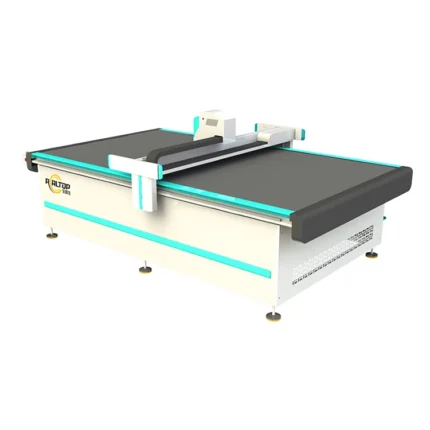
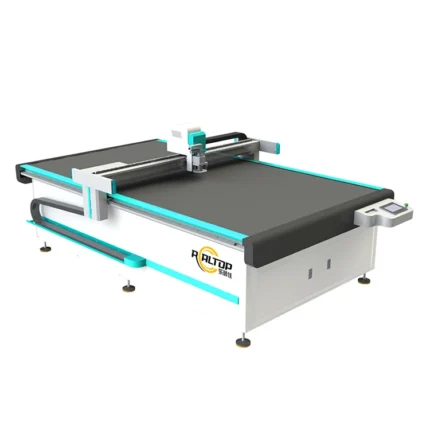
2026 Rubber CNC Cutting Machine High-Precision Auto-Feeding Gasket
Product Introduction
High-precision 2026 model Rubber CNC Digital Cutting Machine designed for gasket production with auto-feeding functionality, ensuring efficient and accurate cutting performance.
Key Specifications
| Model | 2026 |
| Type | Rubber CNC Digital Cutting Machine |
| Application | Gasket Production |
| Feature | High-Precision |
| Function | Auto-Feeding |
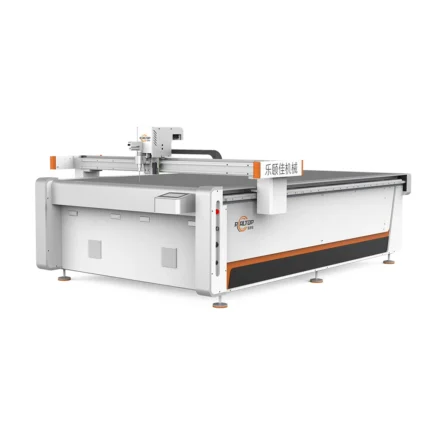
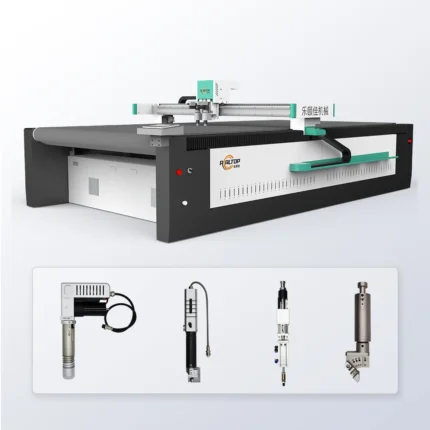
CNC Gasket Cutting Machine 2026 Auto Oscillating Silicone/Asbestos/Felt
Product Introduction
2026 CNC Gasket Cutting Machine with auto oscillating function, ideal for cutting silicone, asbestos, and felt materials. Precision-engineered for efficient gasket production in industrial settings.
Key Specifications
| Type | CNC Gasket Cutting Machine |
| Year | 2026 |
| Function | Auto Oscillating |
| Material Compatibility | Silicone/Asbestos/Felt |
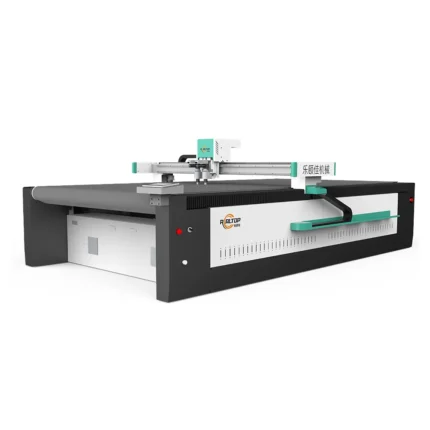
Oscillator Knife CNC Cutter 1625 for Gaskets Rubber Asbestos Graphite PTFE
Product Introduction
Oscillator Knife CNC Cutter 1625, ideal for precision cutting of rubber, asbestos, graphite, PTFE gaskets. Efficient 2026 model from China's leading welding & cutting equipment manufacturer.Key Specifications
| Model | 1625 |
| Cutting Technology | Oscillator Knife |
| Material Compatibility | Rubber, Asbestos, Graphite, PTFE Gaskets |
| Type | CNC Cutter |
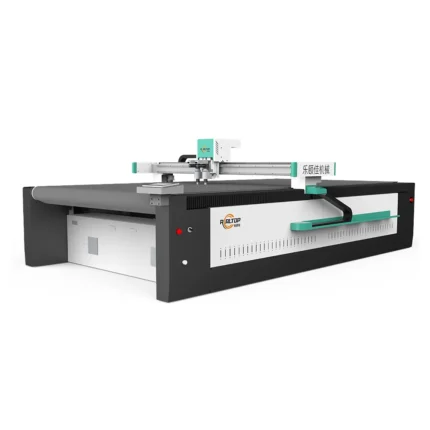
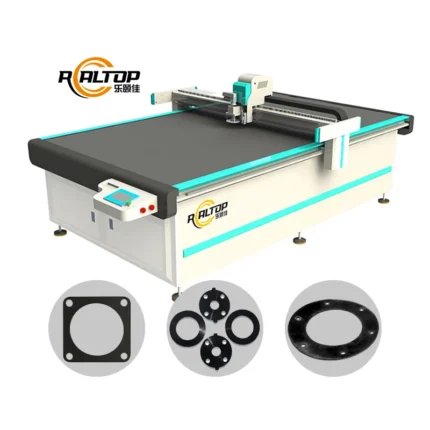
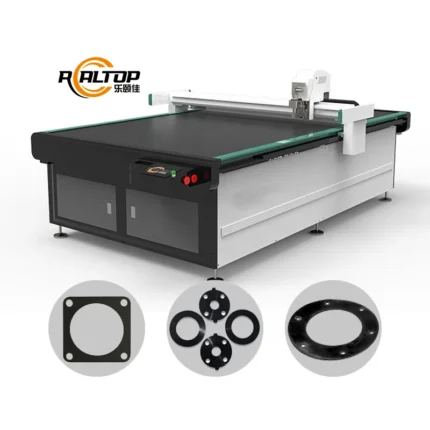
Realtop 2026 CNC Gasket Cutter 1200¡Á2400mm Auto Rubber Cutter
Product Parameters
| Model | Realtop CNC Sealing Gasket Cutter 2026 |
| Working Area | 1200¡Á2400mm |
| Type | Auto Rubber Cutting Machine |
Introduction
Realtop CNC Sealing Gasket Cutter 2026 is an advanced auto rubber cutting machine with a 1200¡Á2400mm working area, ideal for precise and efficient gasket production, manufactured by a leading Chinese welding & cutting equipment factory.
Realtop 2026 PVC Foam Board Cutting Machine
Product Introduction
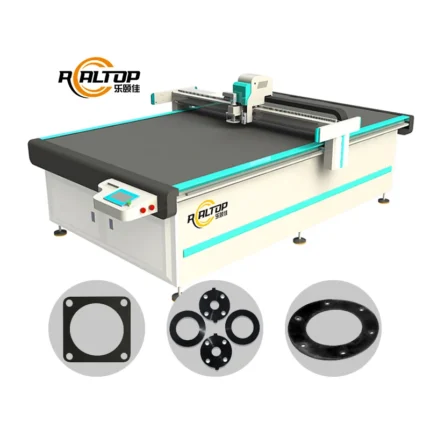
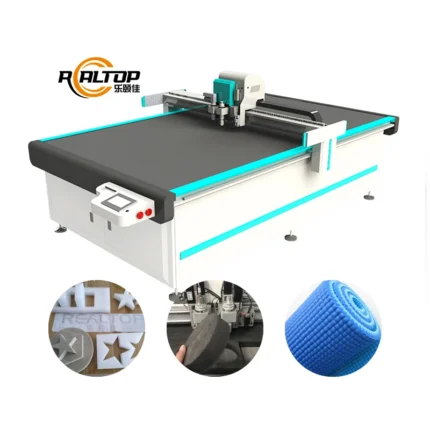
A specialized cutting solution for PVC foam boards, ideal for precision cutting tasks in various manufacturing and fabrication applications. Engineered for efficiency and reliability in processing PVC foam materials.Product Parameters
| Model | Realtop PVC Foam Board Cutting Machine 2026 |
Realtop Graphite Gasket Making Machine 2026 – Advanced Flexible Material Cutter
Product Introduction
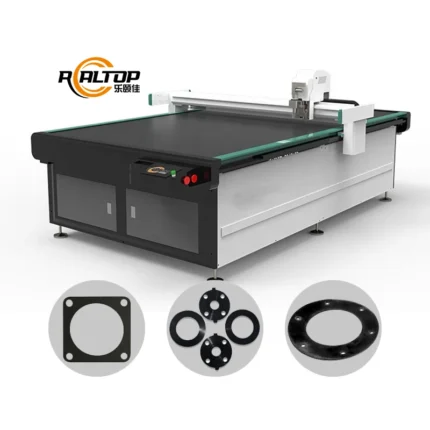
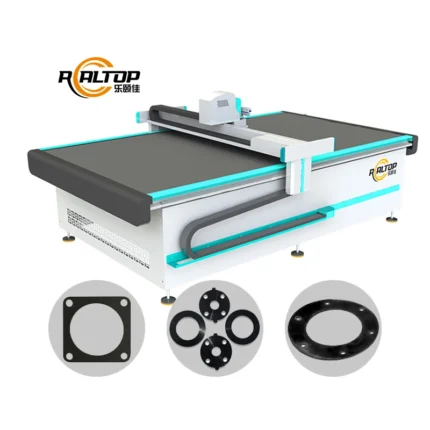
Realtop Graphite Gasket Making Machine 2026 is a professional equipment for graphite gasket production, ideal for manufacturing high-quality gaskets with precision and efficiency, suitable for industrial sealing applications.Product Parameters
| Model | Graphite Gasket Making Machine 2026 |
| Brand | Realtop |
| Application | Graphite Gasket Production |
| Feature | Precision Manufacturing |
Realtop VAWT 2026 Foam Cutting Machine
Product Introduction
Realtop VAWT Foam Cutting Machine 2026 is a professional-grade cutting equipment designed for efficient foam processing, ideal for various industrial applications with reliable performance and precision cutting capabilities.Product Parameters
| Model | Realtop VAWT 2026 |
| Type | Foam Cutting Machine |
| Application | Industrial Foam Processing |
| Feature | Precision Cutting |
商品评价
There are no reviews yet.