

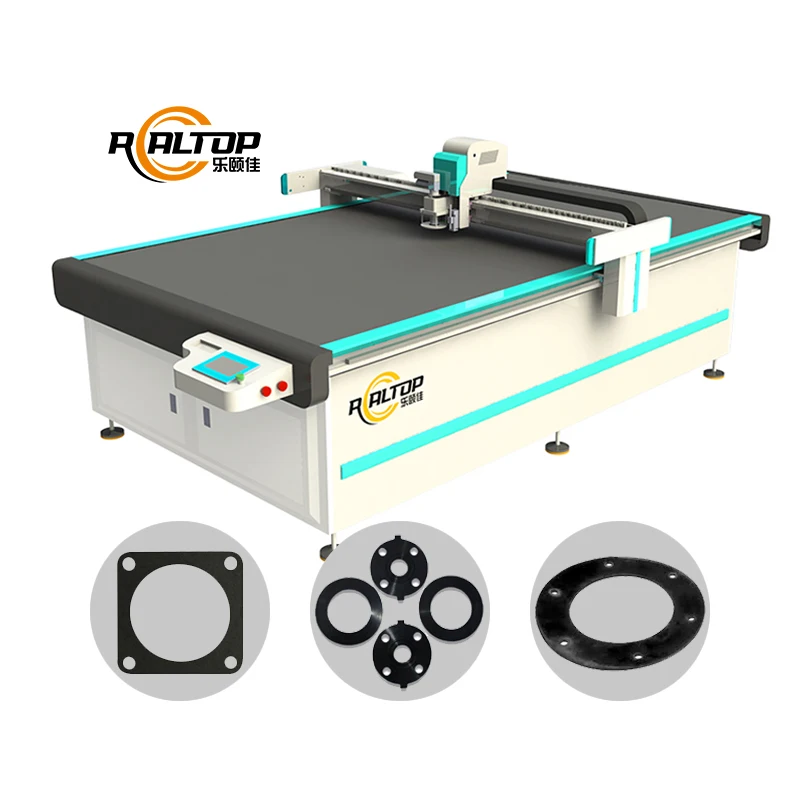
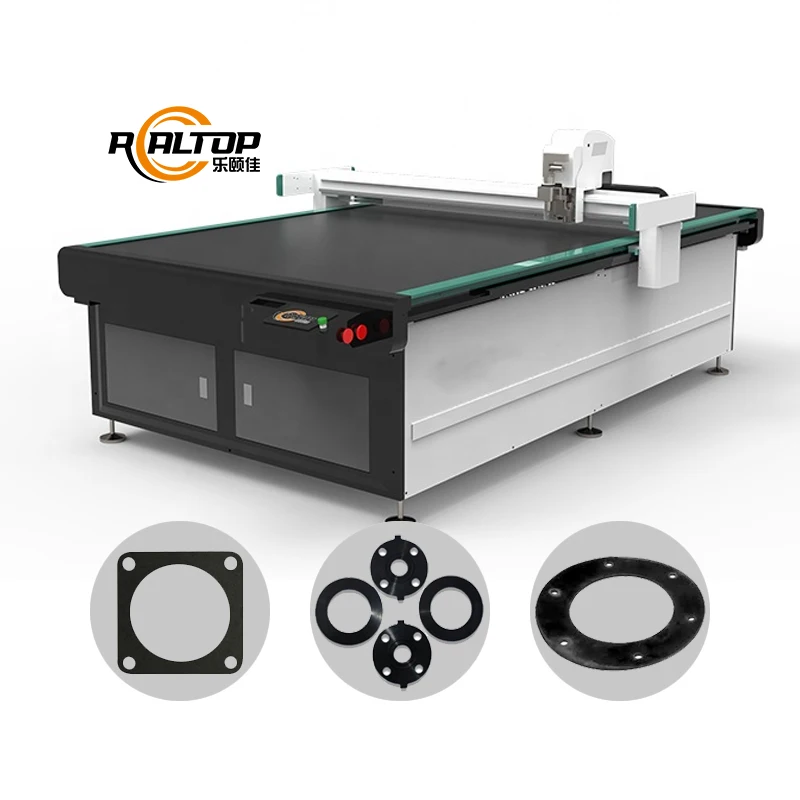
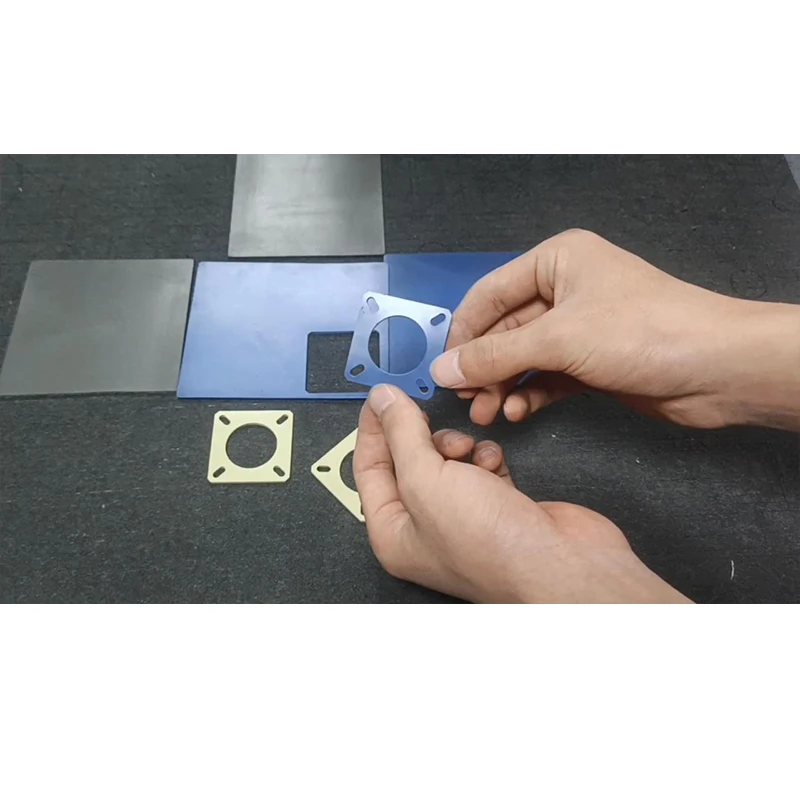
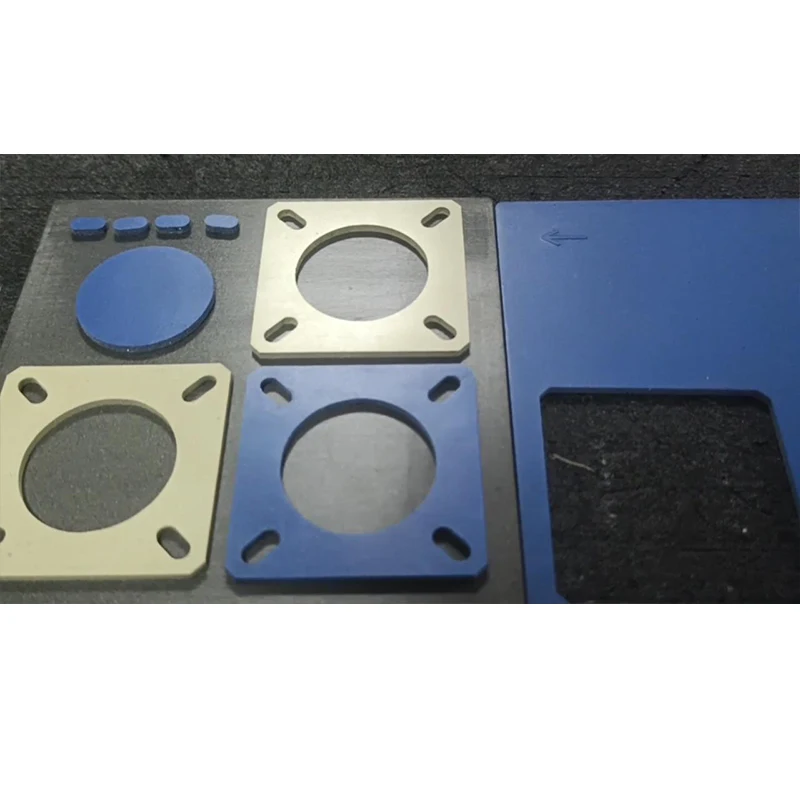
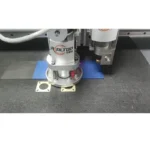
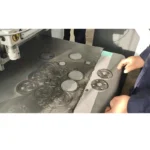
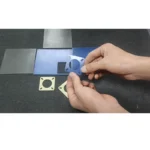
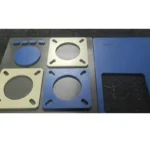
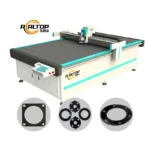
PVC Foam Board Cutting Machine for Gasket – Industrial Application
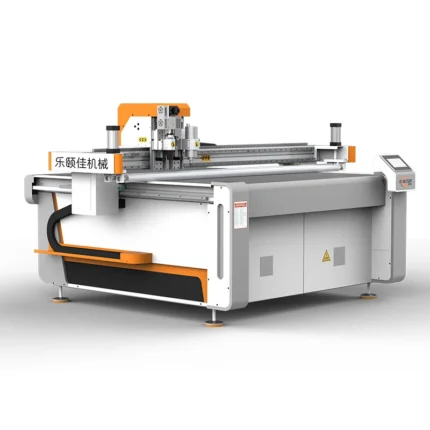
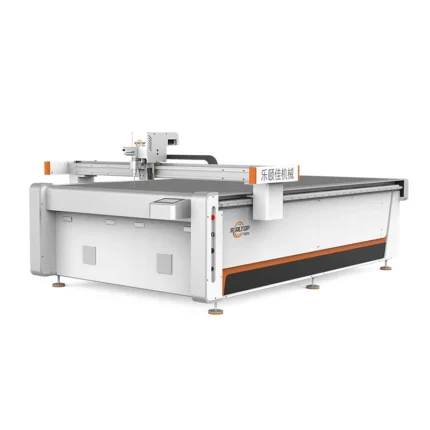
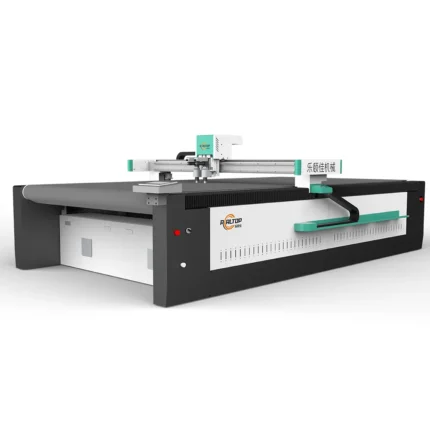
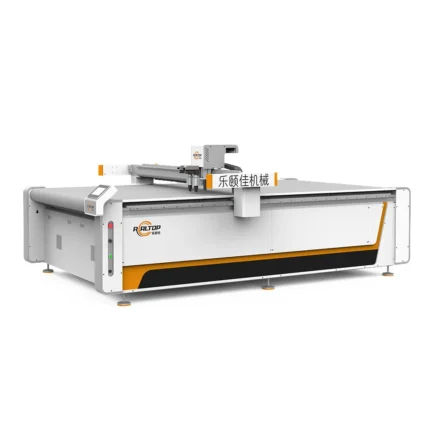
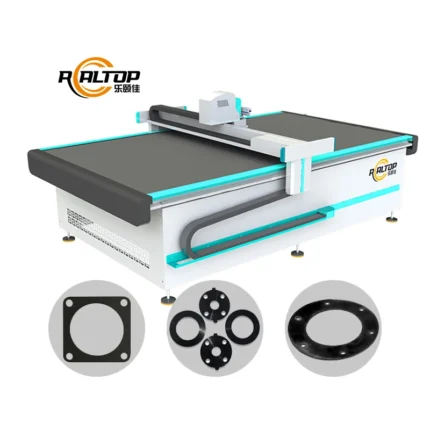
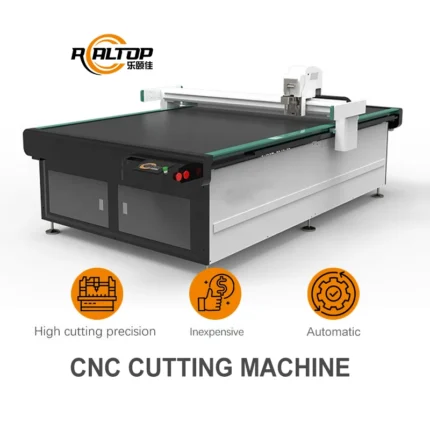
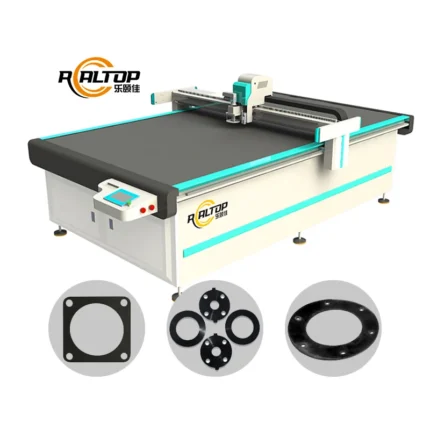
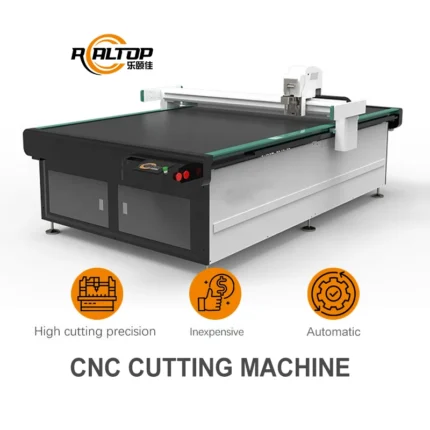
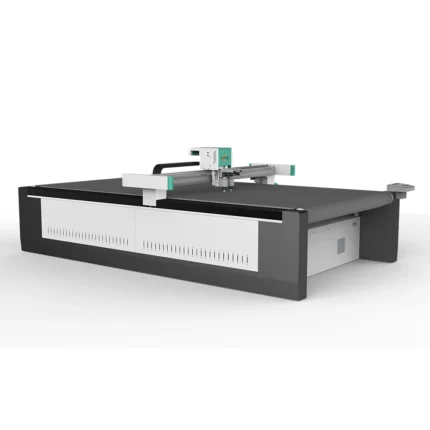
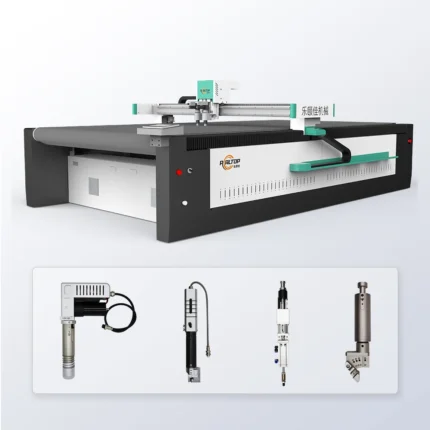
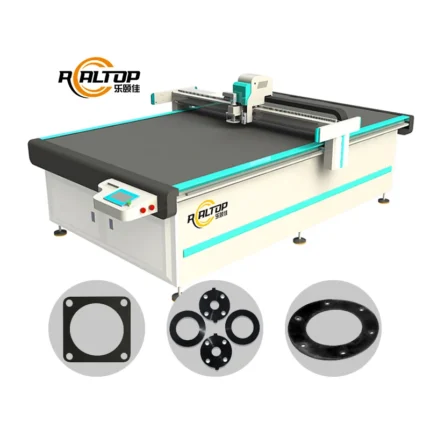
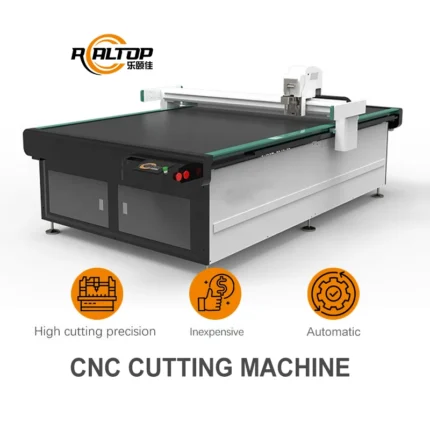
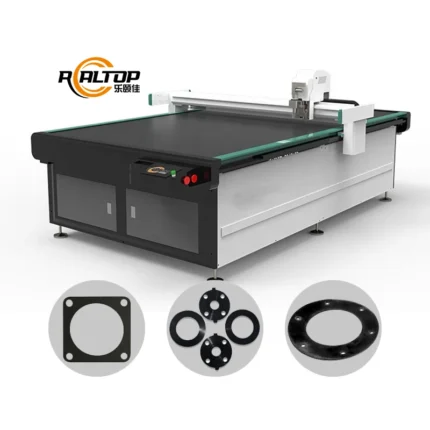
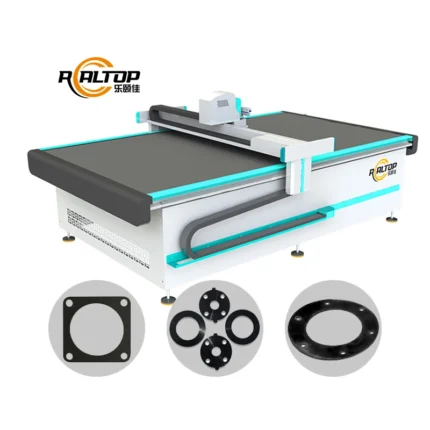
RT-D2516/RT-S2516 CNC Oscillating Knife Cutting Machine, 1600×2500mm Working Area, 20-80mm Cutting Thickness — configured for gasket and non-metal material processing.
While this model uses oscillating knife technology, our laser cutting line offers complementary solutions for gasket producers — distinguishing continuous versus peak power ratings to ensure real cutting depth on PTFE, rubber and composite sheets matches quoted specifications.
- Digital servo motor with ≤0.1mm repeated accuracy for consistent sealing dimensions
- HP-GL compatible format with customizable control language before shipment
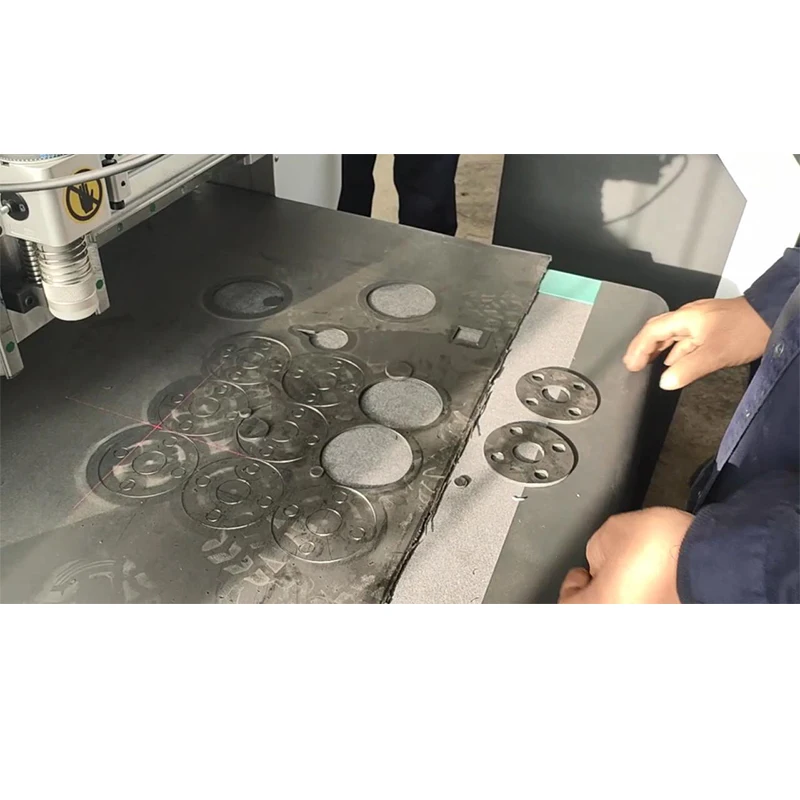
Sample cutting on your own gasket material provided before commitment, with full process comparison between knife and laser methods.
Continuous power verified — our laser and knife cutting systems are matched to your actual material composition, not just nominal thickness ratings.
Technical Specifications
| Parameter | Value |
|---|---|
| Model | RT-D2516/RT-S2516 |
| Working Area | 1600×2500 mm |
| Machine Size | 3450×2300×1250 mm |
| Rated Power | 9 kW |
| Cutting Thickness Range | 20 mm to 80 mm depending on material density |
| Repeated Accuracy | ≤0.1 mm |
| Translational Velocity | 800–1200 mm/s |
| Transmission System | Digital servo motor with linear guide and ball screw |
| Servo Motor Brand | Delta |
| Guide Rail | Taiwan Hiwin |
| Vacuum Table Surface | Magnesium-aluminum alloy with PVDF coating |
| Vacuum Pump | 7.5 kW with integrated silencer |
| Voltage | 380V±10% |
| Compatible Format | HP-GL |
Application Suitability
| Application | Material or Output |
|---|---|
| Automotive interior gasket fabrication | EVA, XPE, and composite foam sheets |
| Industrial sealing pad production | PTFE, ETFE, rubber, and fiberglass composites |
| Packaging and carton sample making | Corrugated cardboard and foam board |
| Soft goods and leather processing | PU, synthetic leather, and textile layers |
| Graphic and signage contour cutting | PVC, sticker film, and printed vinyl |
Why "Peak Power" Claims Leave Your Gasket Uncut
Actual cutting depth depends on continuous thermal output, not marketing peaks.
When sourcing a Laser Cutting and Engraving Machine for Gasket and Non-Metal Materials, buyers often see a high wattage number and assume it covers their material thickness. Many laser sources quote peak pulse ratings that cannot sustain the thermal load needed to penetrate dense rubber or multi-layer composites. The result is a machine that scores the surface but fails to drop through, leaving tabbed parts that require manual separation and rework [NEED_CITE: thermal degradation thresholds for PTFE and composite gaskets]. Evaluating the real-world cutting capacity against your specific sheet density is the only way to prevent line stoppages.
Beam Quality and Edge Sealing on Synthetics
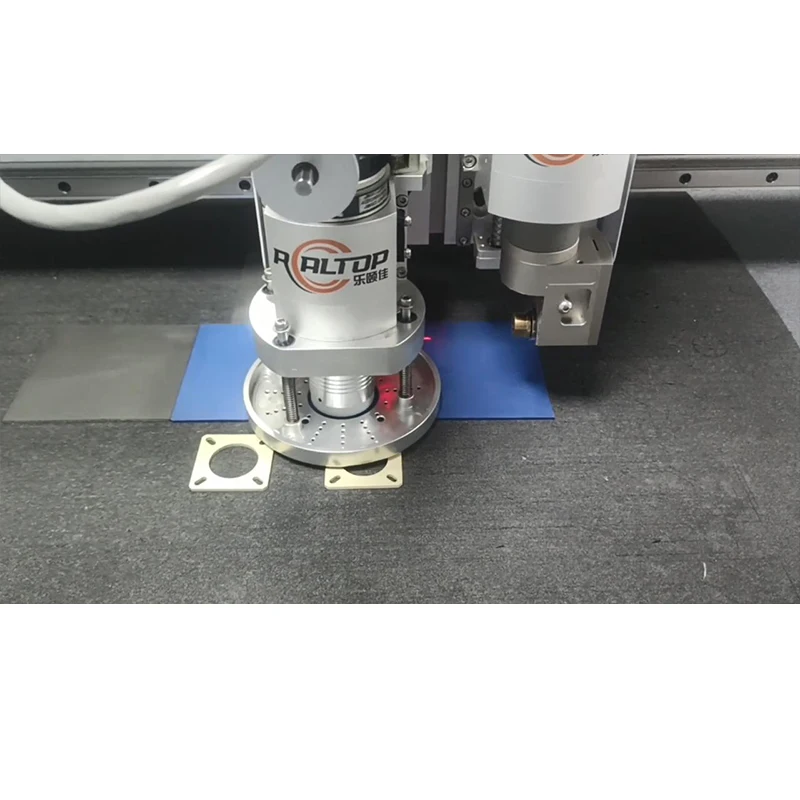
When processing synthetic rubber or foam composites, the laser beam profile directly determines edge quality. A clean, sealed edge prevents delamination during the service life of the gasket. The RT-D2516/RT-S2516 platform supports precise focal control, allowing operators to tune the kerf width and heat-affected zone for different polymer behaviors, ensuring the Laser Cutting and Engraving Machine for Gasket and Non-Metal Materials delivers consistent edge sealing without excessive charring.
Extraction Requirements for Chlorinated and Fluorinated Polymers
Cutting materials like PVC or PTFE releases corrosive and potentially hazardous byproducts. The extraction system must handle the specific particulate and gas profile of your material mix. Before configuring the exhaust routing, we review the material safety data sheets to specify the correct filtration stages and airflow volume, protecting both the machine optics and the workshop environment [NEED_CITE: industrial ventilation standards for polymer laser processing].
Matching Tool Head to Material Behavior
The cutting depth range of 20 mm to 80 mm is material-dependent. For dense, fiber-reinforced gasket sheets, a high-power oscillating knife or pneumatic tool head often outperforms a laser by avoiding thermal degradation. Conversely, thin PTFE films or intricate sealing geometries benefit from the non-contact nature of a laser beam. The system allows configuration with Swiss-imported oscillating knives, drag knives, or laser modules, ensuring the chosen tool matches the shear strength and melting point of your specific stock.
The Hidden Cost of Wrong Zoning and Focal Length
If the vacuum table zoning does not match your part size, small gasket components will lift during high-speed traversal, causing dimensional drift or head crashes. Similarly, a fixed focal length setup will fail when switching between thin PTFE films and thicker EVA foam. These configuration oversights lead to scrapped material batches and unplanned downtime on the shop floor [NEED_CITE: common causes of dimensional deviation in flatbed cutting].
Why Fabrication Partners Choose This Platform
The design team specifies tool heads and laser power ratings based on your actual production volume and material stack. We confirm the HP-GL file format compatibility with your existing nesting software before the order is finalized. Voltage, plug type, and control language are locked in during the schematic review, so the 380V±10% system arrives ready for local power grids. Every unit undergoes a factory test using your supplied material samples, verifying cut depth and edge quality before crating.
Documentation & Verification
- Sample cutting report generated on your specific gasket material thickness
- Electrical schematic confirming 380V±10% compatibility and circuit load
- Tool head and laser configuration list matched to your material matrix
- Software license and HP-GL format compatibility verification note
- Factory test record with dimensional accuracy measurements
- Operation and maintenance manual in your specified control language
Installation, Commissioning & Support
- Foundation leveling for the 3450×2300×1250 mm frame footprint
- Dedicated circuit verification for the 9 kW main plus 7.5 kW vacuum load
- Full assembly verification; machine ships fully assembled for rapid deployment
- First-run parameter tuning for your specific cutting thickness and speed
- Operator training on tool head changes and focal adjustment
- Spare parts list covering belts, guide blocks, and replacement blades
Preparing Your Cutting Evaluation
To recommend the correct cutting method and configuration, we need details on your material composition, maximum sheet thickness, and daily throughput requirements. Please provide your local voltage standard and preferred interface language. Shipping a sample of your actual production material allows us to run a cutting test and verify edge quality before finalizing the machine specification.
Frequently Asked Questions
Q: How do you verify actual cutting depth versus quoted power?
A: We distinguish between continuous and peak power ratings during the specification phase. We then run a sample cutting test using your actual gasket material, measuring the kerf and edge quality at production speed. This report confirms the machine can penetrate your specific thickness without requiring secondary finishing passes.
Q: Should I choose laser or oscillating knife for my gasket material?
A: This depends on the material chemistry and required edge finish. Lasers seal edges on synthetics but can char certain foams or release fumes from fluorinated polymers. Oscillating knives avoid thermal damage and are preferred for fiber-reinforced or thick composite sheets. We test both methods on your sample to recommend the optimal tool head.
Q: What are the extraction requirements for cutting PVC or PTFE?
A: Cutting chlorinated or fluorinated polymers generates corrosive gases that damage optics and require specialized filtration. We review your material safety data to specify the necessary extraction capacity and filter stages, ensuring the system meets workshop safety standards and protects the machine internals.
Q: How is voltage and language confirmed before shipment?
A: During the schematic review, we document your local 380V tolerance, plug type, and required control language. This is written into the production order, so the electrical panel and interface arrive configured for your facility, eliminating the need for local transformers or translation work post-delivery.
Q: Can the software integrate with our existing nesting workflow?
A: The system supports HP-GL compatible formats. Before finalizing the order, we verify that your current CAD files and nesting software can export to the machine controller without data loss. This ensures your file format compatibility and preserves your established material yield calculations.


Related products
2026 Spiral Wound Gasket Cutter CE Hot Sale
Product Introduction
Hot Sale 2026 Spiral Wound Gasket Cutter with CE certification, ideal for precise gasket cutting in industrial applications. Made by a leading Chinese manufacturer of welding and cutting equipment.Product Parameters
| Model | 2026 |
| Certification | CE |
| Type | Spiral Wound Gasket Cutter |
| Application | Industrial Gasket Cutting |
Flexible Material Cutting Machine 005 – Fast, Precise, High Conversion
Product Parameters
| Function | Advertising printing & cutting |
| Demonstration Model | 005 |
| Application | Advertising industry |
| Manufacturer | Chinese leading factory |
| Type | Integrated printing-cutting machine |
Introduction
This Advertising printing and cutting machine (Model 005) is designed for the advertising industry, integrating printing and cutting functions. Manufactured by a renowned Chinese factory, it offers reliable performance for various advertising production needs.
Realtop 2026 Automatic Gasket Cutting Machine
Product Introduction
Realtop Automatic Gasket Cutting Machine 2026 is a high-performance cutting solution designed for efficient gasket production, ideal for industrial manufacturing needs with reliable automatic operation.
Product Parameters
| Model | Realtop 2026 |
| Type | Automatic Gasket Cutting Machine |
| Application | Industrial Gasket Production |
| Operation | Automatic |
Realtop 2026 CNC Vibration Knife Cutter 1600x3200mm Auto Gasket Cutting
Product Introduction
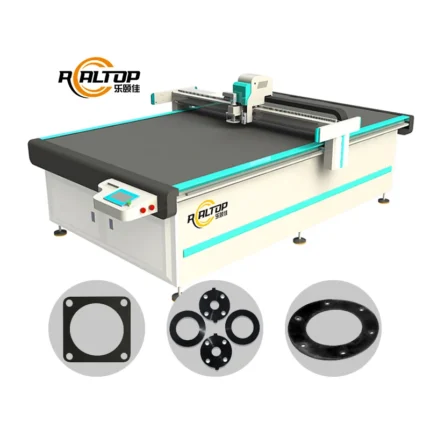
Realtop CNC Vibration Knife Cutter 2026 is an advanced cutting solution ideal for auto gasket cutting, featuring precision and efficiency for industrial applications.Key Specifications
| Model | Realtop CNC Vibration Knife Cutter 2026 |
| Working Area | 1600x3200mm |
| Cutting Type | Vibration Knife |
| Application | Auto Gasket Cutting |
Realtop VAWT 2026 Foam Cutting Machine
Product Introduction
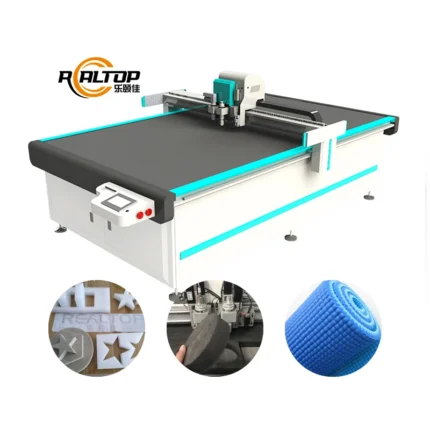
Realtop VAWT Foam Cutting Machine 2026 is a professional-grade cutting equipment designed for efficient foam processing, ideal for various industrial applications with reliable performance and precision cutting capabilities.Product Parameters
| Model | Realtop VAWT 2026 |
| Type | Foam Cutting Machine |
| Application | Industrial Foam Processing |
| Feature | Precision Cutting |
商品评价
There are no reviews yet.