


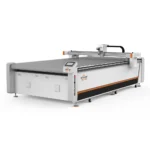
Leather Cardboard CNC Cutting Machine – Model Selection
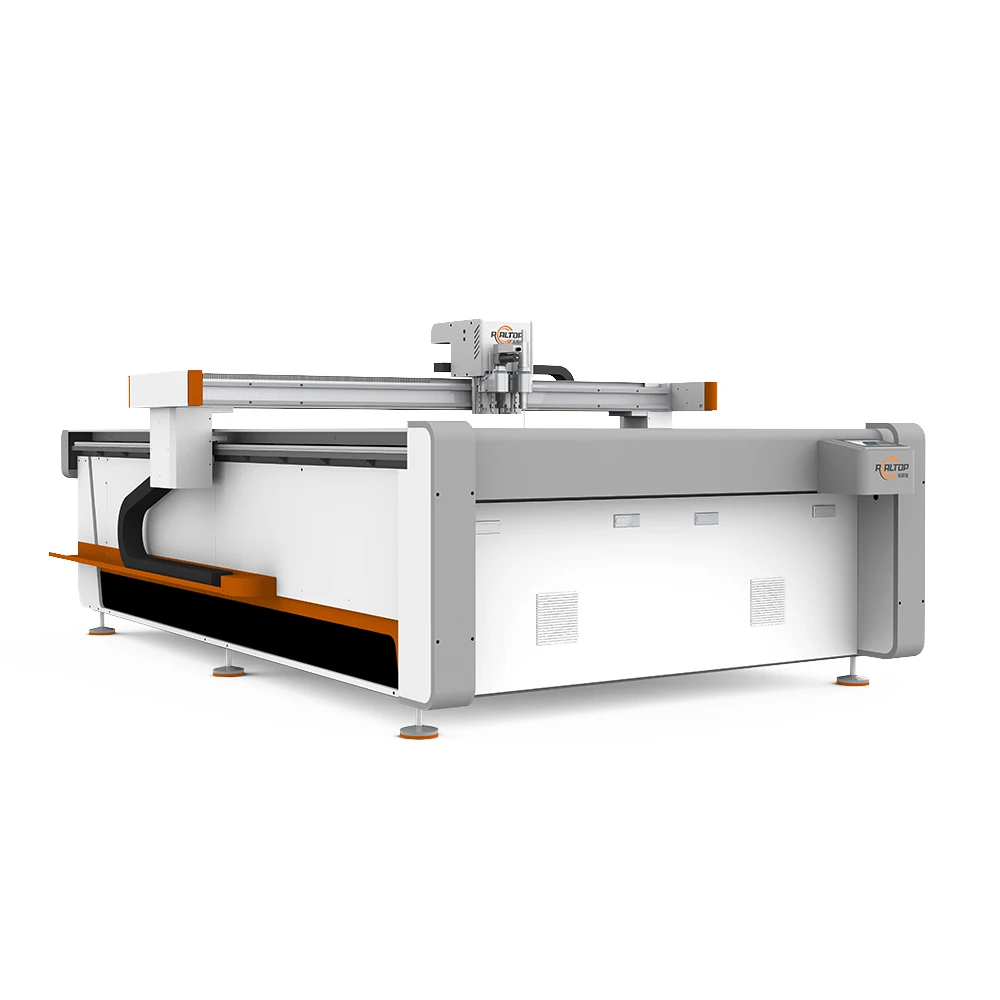
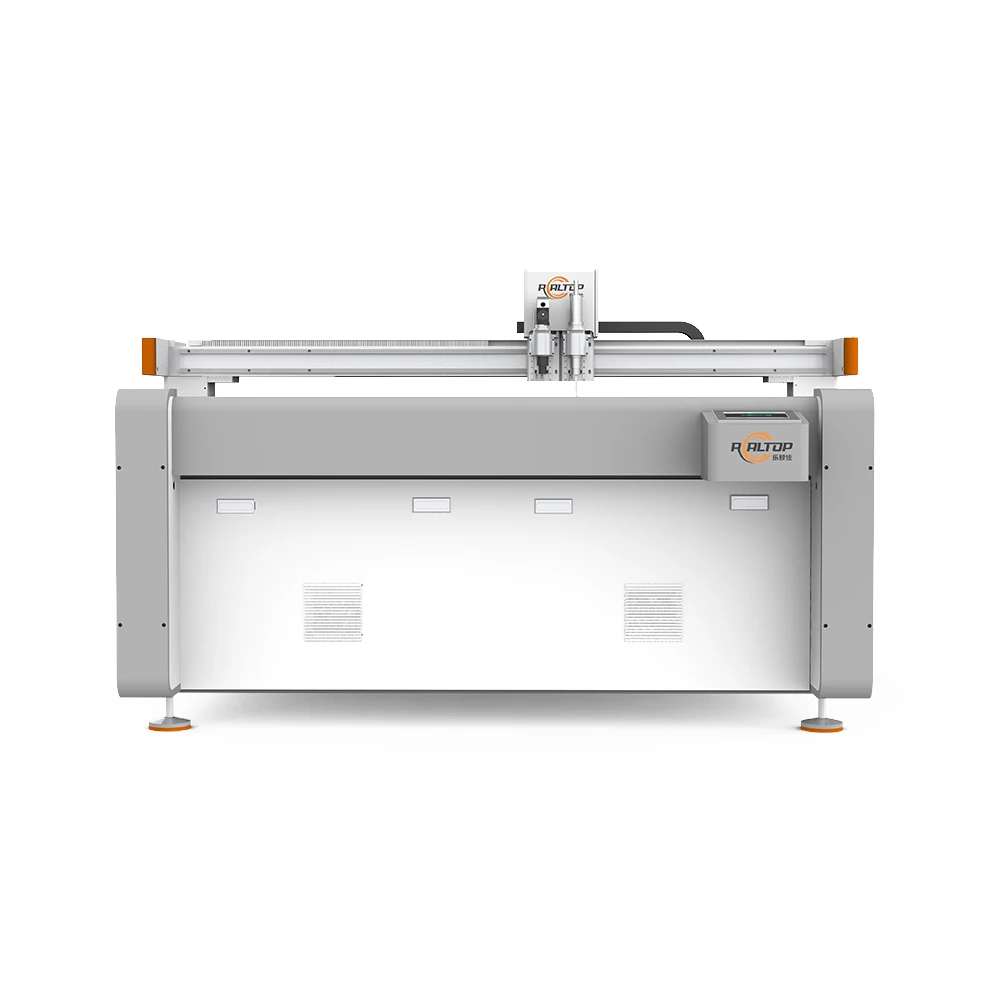
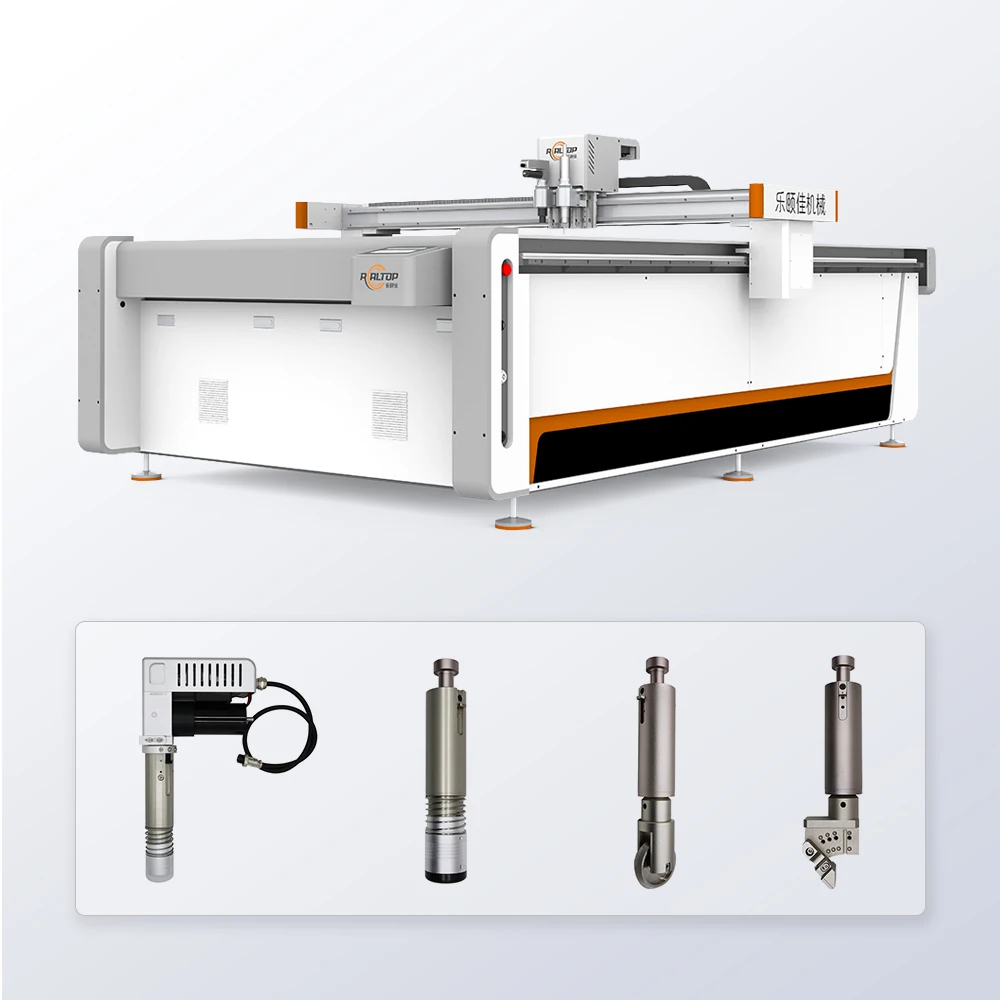
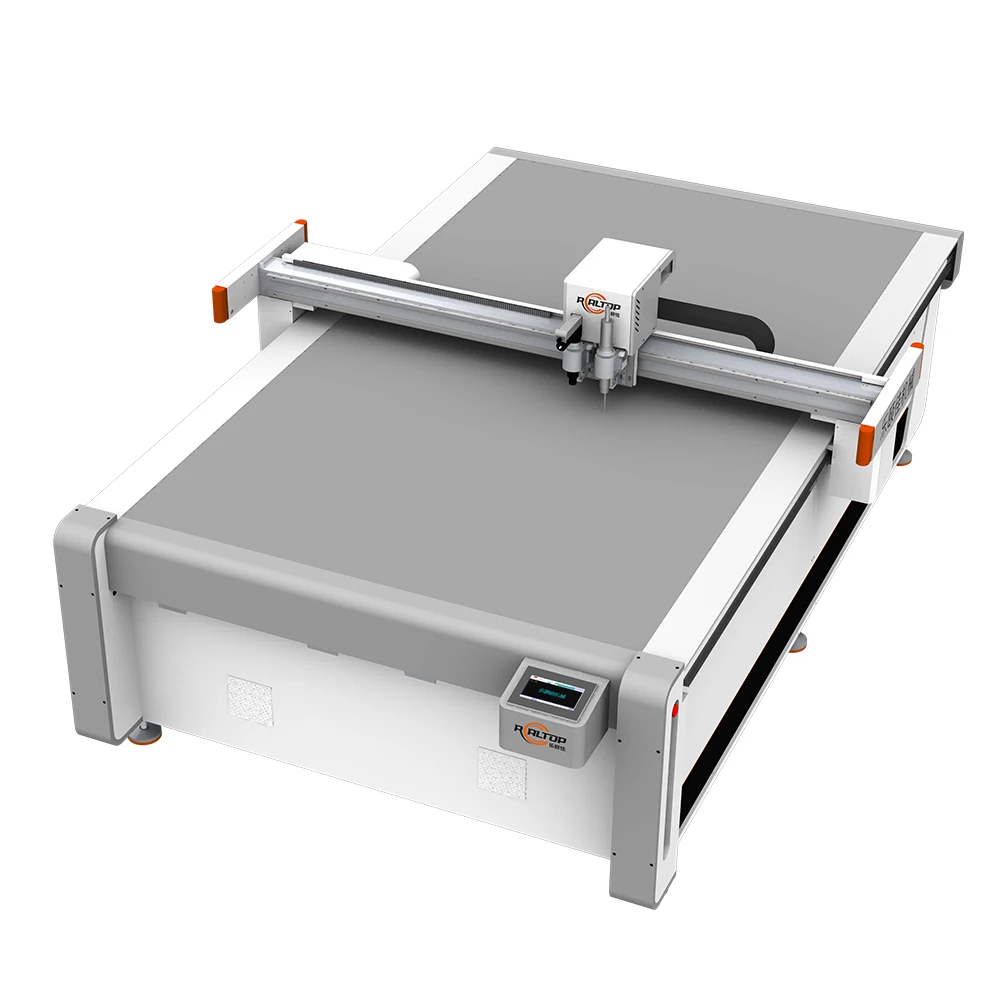
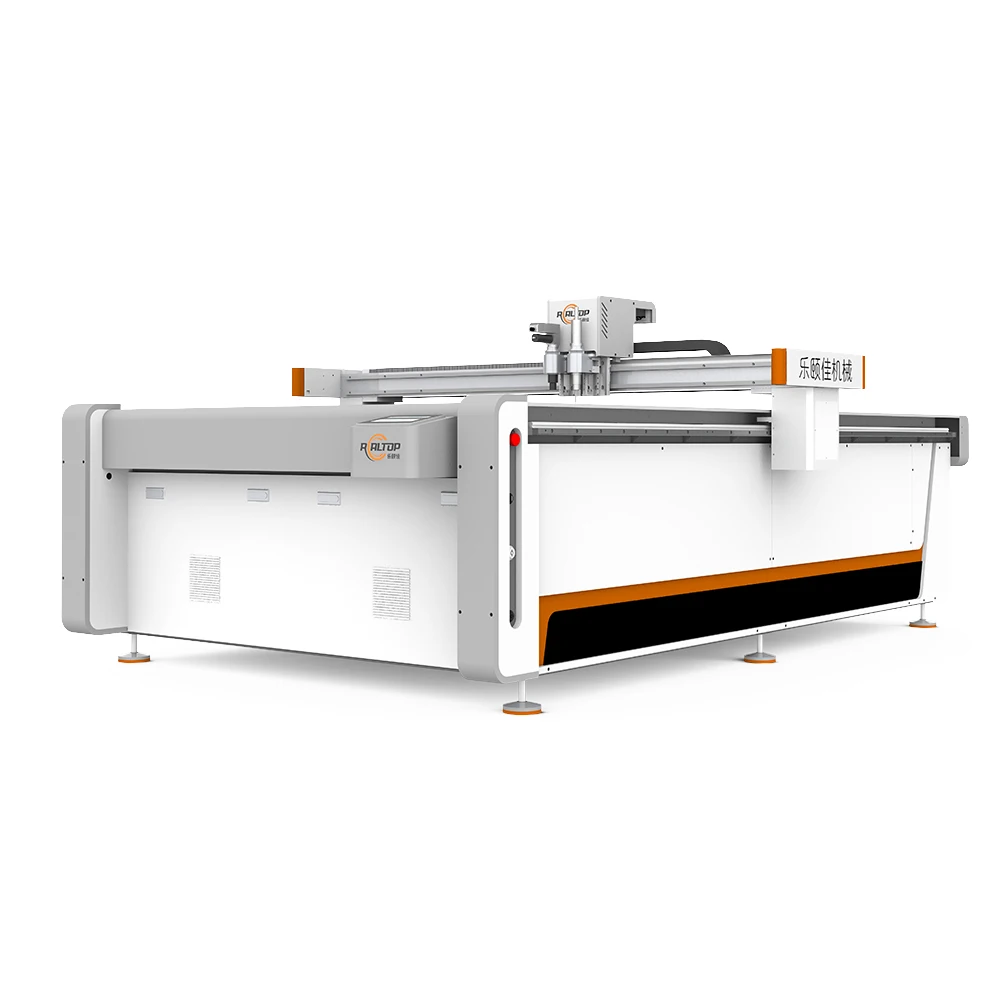
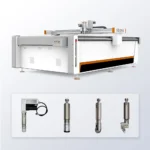
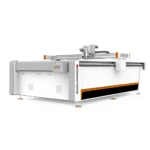
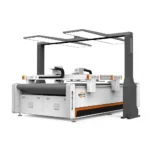
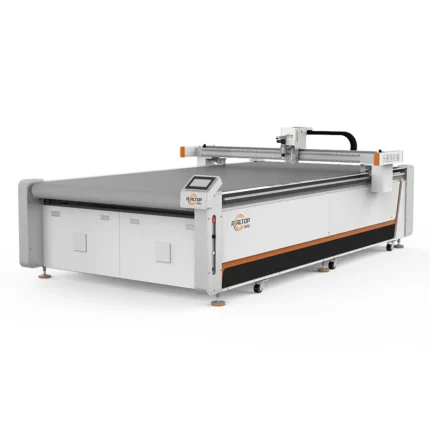
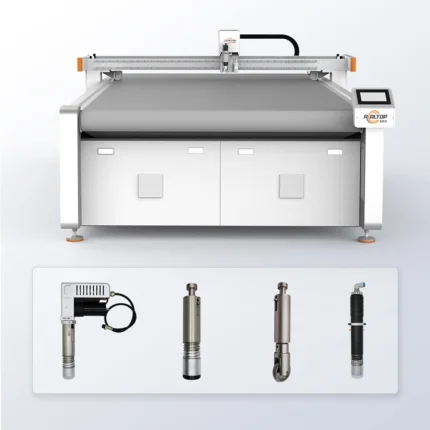
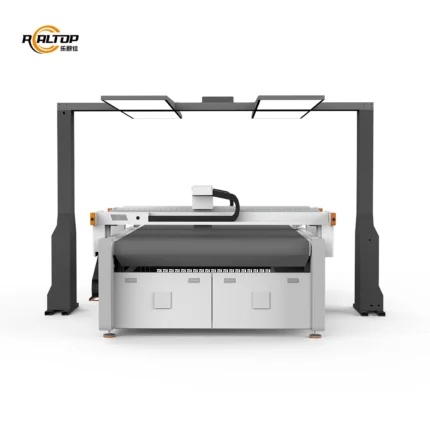
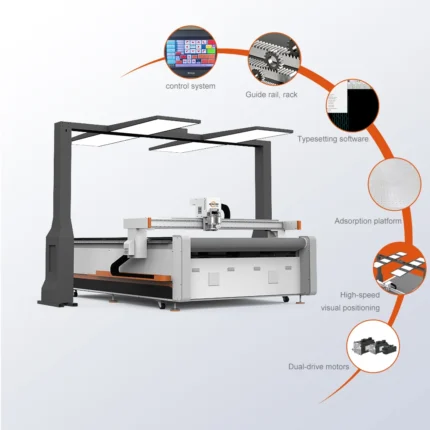
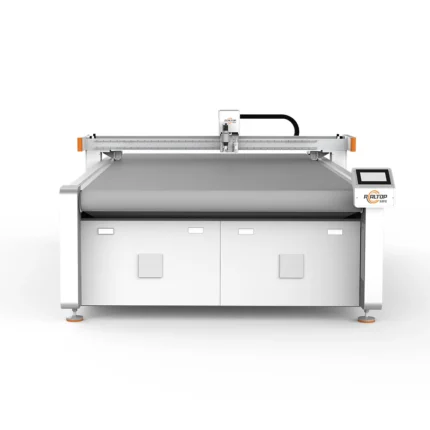
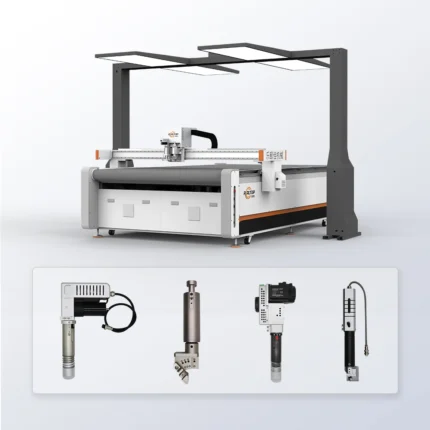
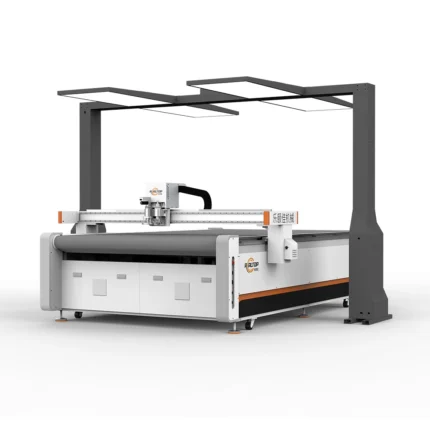
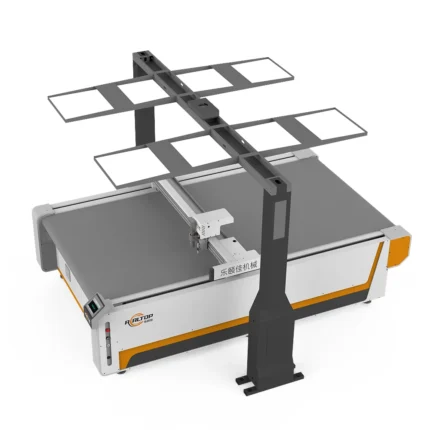
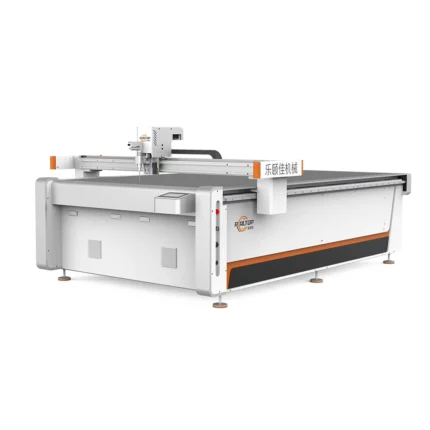
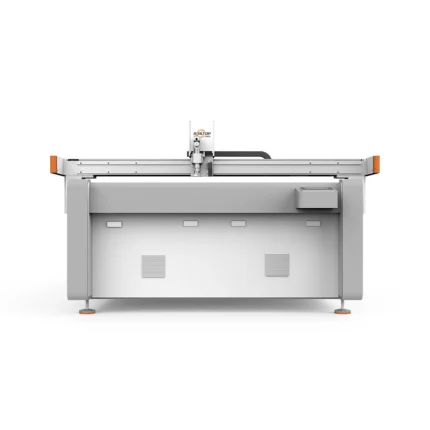
Leather CNC Cutting Machine, 1600×2500mm working area, oscillating knife, ≤40mm cutting depth — configured with driven rotary knife, creasing wheel and V groove tool heads for leather, synthetic leather, cardboard and foam processing. CCD camera positioning tracks printed contour marks at production speed, while vacuum table zoning secures small parts against lift during cutting. Backed by sample cutting on your own material before commitment, tool head specification per production volume, and software compatibility confirmed prior to order.
Laser Process Versatility — A manufacturer offering both CO2 and fiber laser lines, allowing buyers to match the beam source to the material rather than forcing a single wavelength across every job.
Technical Specifications
| Parameter | Value |
|---|---|
| Product Type | CNC Oscillating Knife Cutting Machine |
| Working Area | 1600*2500mm |
| Tool Head Type | Oscillating knife, Driven rotary knife, Creasing wheel, Kiss cutting tool, Pneumatic knife, Milling tool, V groove knife |
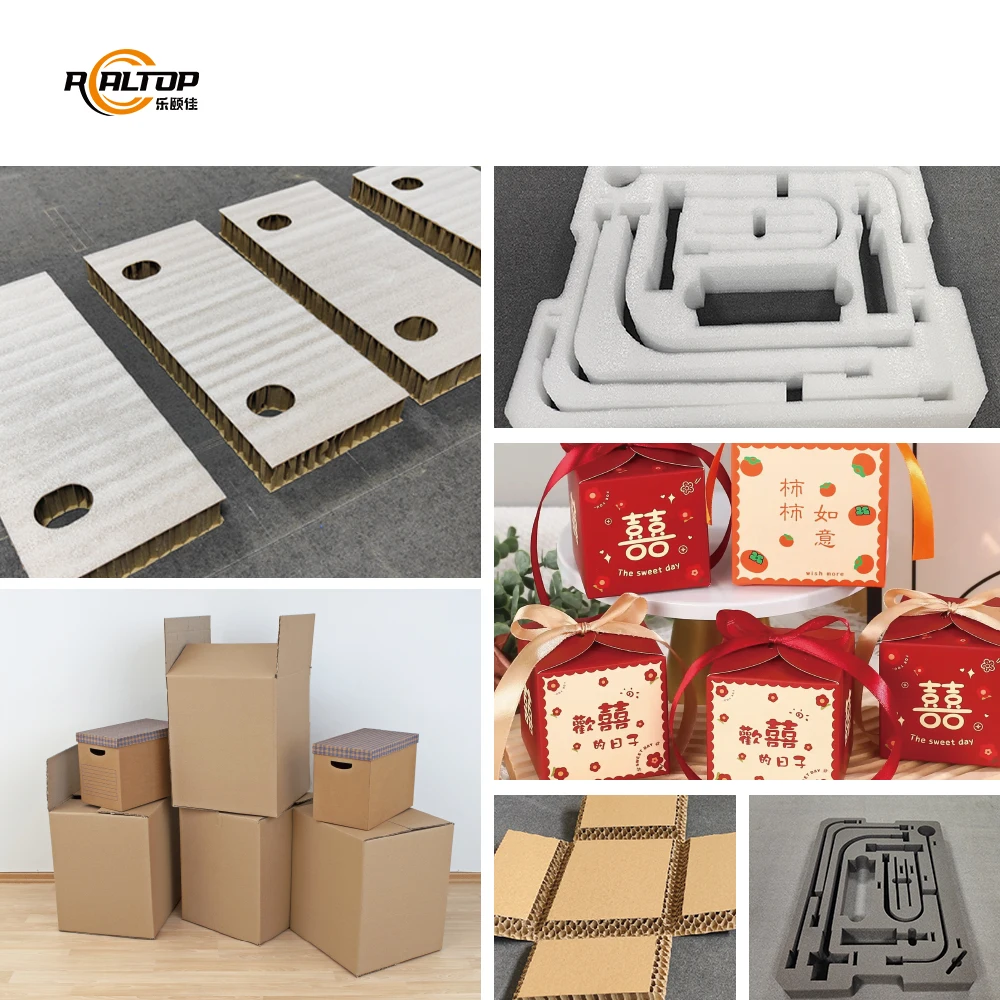
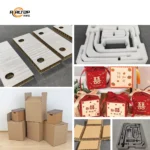
| Applicable Materials | Fabric, Cardboard, Carton, Mats, PVC, EVA, Leather, Acrylic, Foam, PTFE, Rubber |
| Cutting Speed | 0-1500 mm/s |
| Cutting Thickness | ≤ 40mm (basis not stated in source — confirm block format / material / thickness) |
| Positioning Accuracy | ±0.1 mm |
| Vacuum Pump | 9KW |
| Voltage | 110V, 220V, 380V |
| File Formats | PLT, DXF, AI, PDF |
| Safety Device | Infrared sensor device and emergency stop device |
| Machine Size | 330021001350 mm |
| Control System | PLC control panel |
| Language Options | English, Russian, Italian, Chinese (customizable) |
Application Suitability
| Application | Material or Output |
|---|---|
| Packaging Sample Making | Corrugated cardboard, greyboard, specialty paper |
| Foam Processing | EVA, EPE, PU inserts and cushioning components |
| Gasket & Sealing | Rubber mat, PTFE, silicone sheet |
| Leather Goods Production | Genuine leather, synthetic leather, PU hide |
| Textile & Fabric Cutting | Multi-layer fabric, technical textiles, mesh |
| Signage & Graphics | PVC sheet, PET film, adhesive vinyl |
What "Peak Power" Quotation Leaves Out for Laser Cutting Buyers
Always verify continuous power ratings against your actual material thickness before signing a purchase order.
When sourcing from a laser cutting and engraving machine manufacturer, buyers often receive quotes stating peak laser power rather than continuous output. In my time commissioning equipment across South Asian workshops, I have watched operators struggle with a machine rated for a certain wattage, only to find the real cutting depth fell short once the beam was asked to maintain a steady pass through 8mm acrylic. The discrepancy between quoted numbers and workshop reality creates scrap, missed deadlines, and friction with downstream customers who expect clean edges on every batch [NEED_CITE: common discrepancies in laser power rating conventions for industrial equipment].
Beam Source Selection Across Non-Metal and Metal Processing
Selecting between CO2 and fiber laser technology depends fundamentally on the material portfolio a workshop handles daily. CO2 wavelengths are absorbed efficiently by organic and synthetic non-metals, producing sealed edges on acrylic and clean cuts through textiles without fraying. Fiber laser sources, operating at a shorter wavelength, couple effectively with reflective metals, making them the standard for sheet metal and tube fabrication. A laser cutting and engraving machine manufacturer that offers both lines lets a production manager consolidate equipment sourcing under one supplier, simplifying spare parts inventory and operator training.
Assist Gas and Focal Configuration for Edge Quality
The assist gas configuration — whether compressed air, nitrogen, or oxygen — directly determines edge oxidation, kerf width, and the need for secondary finishing. On stainless steel sheet, nitrogen produces an oxide-free edge ready for welding or powder coating, while oxygen accelerates cutting speed on mild steel at the cost of an oxidized surface. Focal length adjustment, whether manual or motorized, must match material thickness; a focal point set too high scorches the surface, while one set too low leaves an incomplete cut at the bottom edge [NEED_CITE: assist gas selection principles for laser cutting of metals and non-metals].
Reading the Specification Sheet Beyond the Headline Numbers
Positioning accuracy of ±0.1 mm on a 1600×2500mm bed means that over the full travel of the gantry, cumulative deviation stays within a tenth of a millimeter — critical for nesting tightly spaced parts where even slight drift wastes material. The 9KW vacuum pump paired with a zoned table holds small, lightweight pieces flat during cutting; without adequate zoning, thin leather or film can lift at the edges mid-pass, producing a ragged cut or damaging the blade. File format compatibility with PLT, DXF, AI, and PDF ensures that artwork from common design software transfers without intermediate conversion, preserving contour accuracy for printed graphics work.
The Cost of Skipping Material-Specific Tool Head Selection
Choosing a tool head based on general catalog descriptions rather than the specific material and thickness in daily production leads to compounding problems. A drag knife meant for thin vinyl will crush and tear through 5mm EVA foam, leaving ragged edges that reject at assembly. Conversely, an oscillating knife set at the wrong frequency can chatter on dense rubber gasket material, producing a wavy edge profile. I once spent days on-site troubleshooting crushed corrugated board because the creasing wheel pressure had been set for standard five-layer board while the customer was running E-flute — the mismatch destroyed two full production runs before we identified the root cause [NEED_CITE: tool head and material thickness matching in CNC digital cutting].
Why Procurement Here Differs From Generic Sourcing
In-house design and production covering both knife and laser cutting means a buyer can match the cutting method to the material rather than force one method across every substrate. Tool head and table configuration is specified per material and production volume, not selected from a fixed catalog. Software compatibility is confirmed against the buyer’s existing file format and nesting workflow before the order is placed. Voltage, plug type, and control language are locked in during pre-production verification, so the machine arrives ready to connect to local power. Sample cutting on the buyer’s own material is conducted before commitment, providing a physical benchmark for edge quality and dimensional accuracy.
Documentation & Verification
- Machine specification sheet listing confirmed tool head and table configuration
- Electrical schematic with voltage and frequency matching the destination market
- Sample cutting report produced on the buyer’s own material before shipment
- Factory test record documenting positioning accuracy and cut quality across the bed
- Software licence documentation with file format compatibility confirmation
- Spare parts list with part numbers for consumable blades and vacuum cups
Installation, Commissioning & Support
- Floor must be level to support the 3300×2100×1350mm frame without torsion stress on the gantry
- Dedicated circuit matching confirmed voltage (110V/220V/380V) with appropriate breaker rating for the 9KW vacuum pump
- Machine ships partially disassembled; gantry and table sections require on-site alignment and calibration
- First-run commissioning includes vacuum zone mapping and tool head offset calibration for the configured tools
- Operator training covers file import, nesting setup, and tool change procedures on the PLC panel
- Consumable blade and vacuum cup inventory recommended for the first operational quarter
Preparing Your Inquiry for Accurate Quotation
When requesting a quotation, provide the material type, maximum thickness, and typical sheet dimensions you process daily. Specify your local voltage and frequency standard, along with the preferred control interface language. If your existing workflow relies on a specific nesting software or file format, include that detail so compatibility can be verified before the machine enters production. For buyers evaluating a laser cutting and engraving machine manufacturer, indicating whether your work is primarily non-metal (CO2) or metal (fiber) allows a precise configuration recommendation from the outset.
Frequently Asked Questions
Q: How do I choose between CO2 and fiber laser for my material mix?
A: CO2 lasers process non-metals like acrylic, wood, and textiles with sealed edges, while fiber lasers cut sheet metal and tube efficiently. If your workshop handles both categories, sourcing both types from one manufacturer simplifies training and spare parts management. Provide your material list and thickness range so the correct source is recommended for each application.
Q: What is the difference between peak and continuous laser power ratings?
A: Peak power describes the maximum instantaneous output during pulsing, while continuous power reflects sustained cutting capability. A machine quoted at peak wattage may not achieve the same cutting depth in continuous operation. Always request a cutting sample on your actual material at production speed to verify real-world performance before committing to an order.
Q: How does assist gas selection affect cut edge quality?
A: Nitrogen produces oxide-free edges on stainless steel suitable for welding, while oxygen increases cutting speed on mild steel but leaves an oxidized surface. Compressed air serves as a cost-effective option for thinner materials. The correct gas, pressure, and nozzle configuration must be matched to your material type and thickness for consistent edge quality.
Q: What ventilation and extraction requirements should my workshop meet?
A: Laser cutting of synthetics, acrylic, and coated metals generates fumes that require extraction. The exhaust system must handle the volume produced at your typical cutting speed and material thickness. Confirm the required duct diameter, airflow rate, and filtration specification with the manufacturer, and ensure your workshop ceiling height accommodates the ductwork routing above the machine enclosure.
Q: Can the control interface and electrical system match my local standards?
A: The PLC control panel supports English, Russian, Italian, and Chinese, with additional languages configurable before shipment. Voltage options include 110V, 220V, and 380V. Both the control language and electrical configuration must be confirmed during the pre-production stage to ensure the machine arrives ready for immediate connection and operation in your facility.


Related products
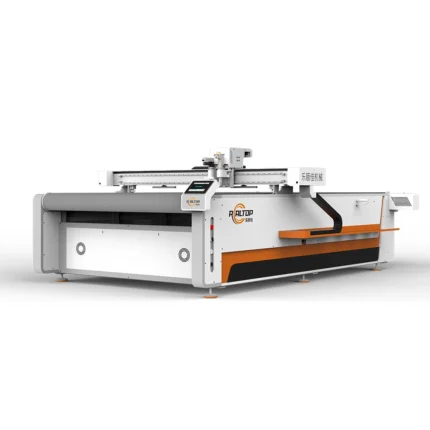
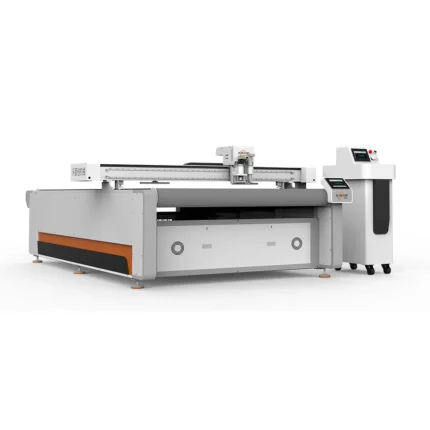
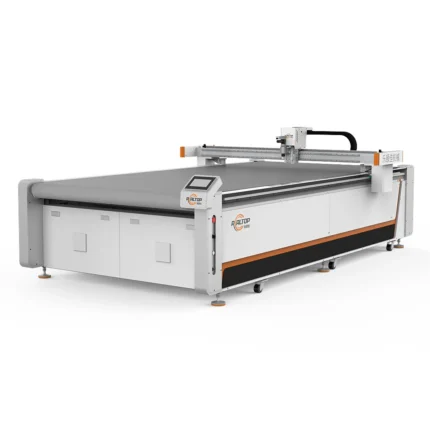

2026 Oscillating Knife Leather Cutting Machine Auto Feed Contour Cut
Product Introduction
2026 New Design Oscillating Knife Cutting Machine, ideal for leather processing with auto feed and contour cut functions, ensuring precise and efficient cutting performance.
Product Parameters
| Function | Auto Feed & Contour Cut |
| Application | Leather Cutting |
| Design | 2026 New Design |
| Type | Oscillating Knife Cutting Machine |


Auto Knife Leather Cutting Machine for Contour & Auto Feed – Manufacturer
RT-D2516/RT-S2516 CNC Oscillating Knife Leather Cutting Machine, 1600×2500mm Working Area, 9kW, 380V — engineered for leather, composite and flexible material processing with Swiss imported knife head supporting full-cut, half-cut and cursor location modes.
- Magnesium-aluminum alloy vacuum table with PVDF coating ensures uniform hold-down across the entire work surface
- CCD camera contour recognition with panoramic and mark-point positioning options for printed leather hides
- Auto-feeding configuration available for continuous medium-to-high volume production runs
- Software supports PLT, DXF, AI formats with auto typesetting and multi-language control panel
Sample cutting on your specific leather type and thickness is completed before order commitment, ensuring tool head selection and edge quality match your production requirements.
CNC Vibration Knife System 2026 Leather Cutting Machine
1625(Standard) CNC Oscillating Knife Cutting Machine, 1600×2500mm, CCD Camera, ≤30mm — configured for leather contour cutting with integrated camera positioning for printed graphics and genuine grain pattern recognition.
- Interchangeable tool heads (oscillating knife, driven rotary, pneumatic, V-groove, creasing wheel) matched to your specific material
- Aluminum bellows vacuum table with 9 kW pump and full-surface adsorption
- PLC control with multi-language support and PLT/DXF/AI/PDF file compatibility
Sample cutting on your own leather stock available before order commitment to verify edge quality and cutting depth.
Oscillating Knife Leather Cutter CNC 2026
Product Introduction
Oscillating Knife Leather Cutter CNC 2026 is a precision cutting solution for leather materials, designed for efficient and accurate fabrication in manufacturing settings. Ideal for leather processing with advanced CNC technology.Product Parameters
| Model | Oscillating Knife Leather Cutter CNC 2026 |
| Cutting Type | Oscillating Knife |
| Application | Leather Materials |
| Control System | CNC |
Realtop 2026 Digital Leather Cutting Machine
Product Introduction
Realtop Digital Leather Cutting Machine 2026 is a professional equipment designed for precise leather cutting, ideal for manufacturing applications. It integrates advanced digital technology to ensure efficient and accurate cutting performance, suitable for various leather processing needs.
Product Parameters
| Model | Realtop 2026 |
| Type | Digital Leather Cutting Machine |
| Application | Leather Processing |
| Core Feature | Precision Cutting Technology |
商品评价
There are no reviews yet.