

Blog
3D Fiber Laser Cutter for Peru Jewelry Manufacturers Wholesale Supplier

3D Fiber Laser Cutter for Peru Jewelry Manufacturers Wholesale Supplier
Higher wattage does not equal better jewelry cutting.
For Peruvian jewelry manufacturers seeking a reliable 3D fiber laser cutter for Peru jewelry manufacturers wholesale supplier, the critical selection criteria are beam quality (M² factor), dynamic focus stability, and anti-reflection protection modules, rather than raw power output. Successful sourcing requires verifying the machine’s ability to handle high-reflectivity metals like gold and silver without thermal distortion, ensuring compatibility with local voltage standards, and confirming the supplier’s capacity for remote technical support and spare parts logistics in Latin America.
I still remember the smell of burnt flux and the silence in a workshop in Riyadh. A client had just unboxed a high-power fiber laser that looked impressive on paper. The sales brochure promised speed, but when we tried to cut intricate patterns on 0.3mm gold sheets, the edges turned black and slagged. The machine was too powerful for the delicate task, and the lack of proper pulse control meant the heat affected the surrounding metal. The client pointed at the machine, then at the wasted material, and asked me why the "best specs" led to the worst results. That moment shifted my perspective from looking at datasheets to looking at the actual cut edge. Since then, I have traveled from the Gulf to South America, observing how different markets approach precision manufacturing. In Lima and Arequipa, the challenges are similar but the materials differ. The shift toward digital fabrication in Peru is not just about replacing hands with machines; it is about achieving a level of consistency that manual tools cannot match. [NEED_CITE: trends in Latin American jewelry manufacturing automation]
The transition is happening now. Traditional artisanal methods are hitting a ceiling as design complexity increases and labor costs rise. The 3D fiber laser cutter for Peru jewelry manufacturers wholesale supplier market is growing because workshops need to produce complex, curved designs that 2D machines simply cannot handle without losing focal accuracy.
Why is Peru’s Jewelry Industry Shifting to 3D Laser Technology?
Manual craftsmanship hits a bottleneck when design complexity scales.
Peru has a rich history of jewelry making, particularly in regions like Cusco and Arequipa. However, modern consumer demands favor intricate, lightweight, and highly detailed pieces that are difficult to produce consistently by hand. The adoption of laser technology is driven by the need for repeatability and speed. In a high-end custom workshop in Lima, artisans used to spend days filing and polishing thin gold sheets. With a properly configured 3D laser system, the same tasks are completed in hours, with the added benefit of digital precision. [NEED_CITE: impact of digital tools on traditional craft industries]
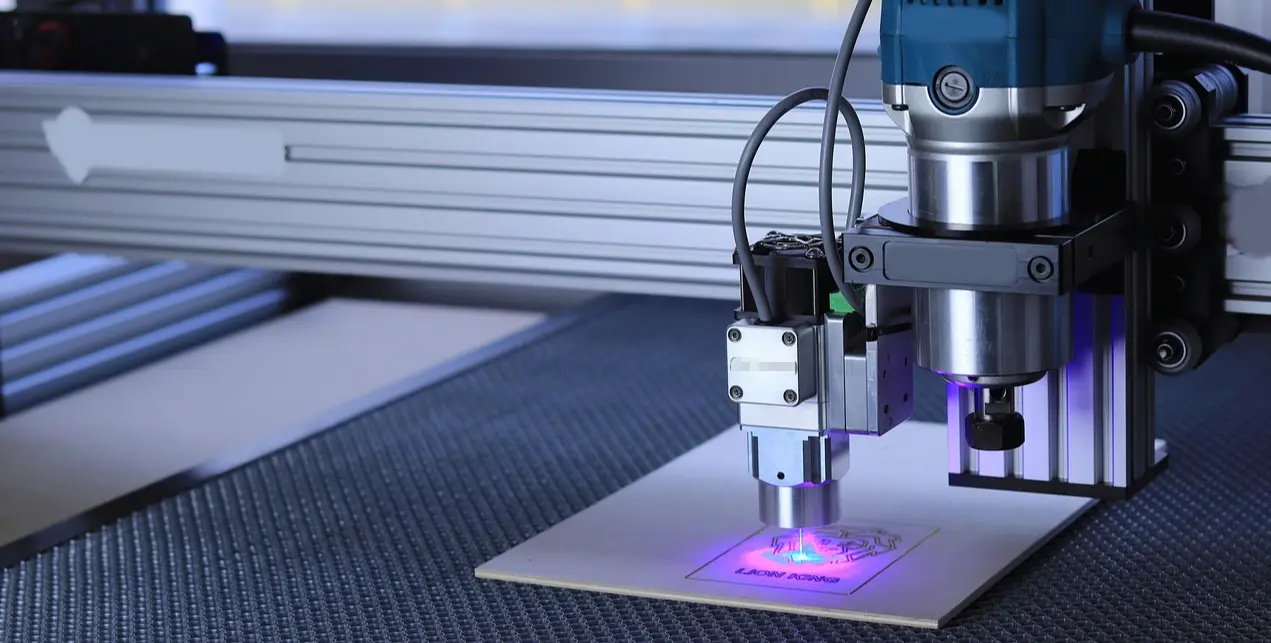
The key driver is the ability to work in three dimensions. Traditional 2D laser cutters assume a flat plane. But jewelry is rarely flat. Rings, pendants, and bracelets have curves. When a 2D laser tries to cut a curved surface, the focal point shifts, leading to uneven cut widths and potential burn marks. A true 3D system adjusts the focus dynamically, maintaining a consistent beam diameter across the entire contour. This capability allows Peruvian manufacturers to take on contracts from international buyers who demand tight tolerances.
I observed a workshop in Arequipa that specialized in silver filigree. The designer created a complex, multi-layered pendant. On their old 2D machine, they had to flatten the design, cut it, and then manually shape it, which often distorted the fine details. With a 3D fiber laser, they could cut the pattern directly onto a pre-formed curved blank. The result was a significant reduction in post-processing time and a noticeable increase in material utilization. [NEED_CITE: efficiency gains in jewelry production with 3D laser cutting]
This shift is not just about speed; it is about capability. The 3D fiber laser cutter for Peru jewelry manufacturers wholesale supplier must offer software that can interpret 3D models and generate the necessary toolpaths for dynamic focusing. Without this, the hardware is just an expensive 2D cutter.
What Are the Critical Specs for Cutting Precious Metals?
Beam quality matters more than wattage for precious metals.
When sourcing a 3D fiber laser cutter for Peru jewelry manufacturers wholesale supplier, many buyers fall into the trap of comparing wattage. For jewelry, however, wattage is secondary to beam quality and pulse control. Gold and silver are highly reflective materials. If the laser beam is not stable or if the peak power is too high without proper modulation, the energy reflects back into the optics, causing damage, or absorbs unevenly, causing oxidation.
The M² factor, which measures beam quality, should be as close to 1 as possible. A lower M² means a tighter, more focused beam, which is essential for cutting thin gauges of gold and silver without widening the kerf. Additionally, the laser source must have an anti-reflection protection module. This feature detects back-reflected light and shuts down the laser instantly to protect the internal components. [NEED_CITE: technical requirements for laser cutting high-reflectivity metals]
| Specification | Importance for Jewelry | Risk if Ignored |
|---|---|---|
| Beam Quality (M²) | Critical for fine detail | Wide kerf, loss of detail |
| Anti-Reflection Module | Essential for gold/silver | Optic damage, machine failure |
| Pulse Frequency Control | High for clean edges | Thermal distortion, blackening |
| Dynamic Focus Range | Required for 3D shapes | Uneven cuts on curves |
| Positioning Accuracy | Micron-level needed | Misalignment in assembly |
In a case from a boutique manufacturer in Lima, they initially purchased a high-wattage machine intended for industrial steel cutting. When they tried to use it for 0.2mm gold sheets, the heat input was too high, causing the metal to warp. They had to switch to a lower-power source with better pulse control. The new machine ran slower but produced clean, oxide-free edges that required minimal polishing. This experience highlights that the right tool is not the most powerful one, but the most precise one. [NEED_CITE: case studies of laser parameter optimization for precious metals]
When evaluating a 3D fiber laser cutter for Peru jewelry manufacturers wholesale supplier, ask for test cuts on actual gold and silver samples. Look for edge smoothness, absence of discoloration, and consistency across the entire piece.
How to Avoid Common Sourcing Pitfalls in Latin America?
Verify voltage compatibility and local support infrastructure.
Sourcing machinery for Peru involves specific logistical and technical considerations. One common pitfall is ignoring voltage and frequency differences. Peru uses 220V and 380V systems, but the frequency and phase stability can vary. A laser cutter designed for a stable European grid might struggle with fluctuations in some Peruvian industrial zones. It is crucial to ensure the machine’s power supply unit is robust and compatible with local conditions. [NEED_CITE: electrical standards and machinery compatibility in Peru]
Another issue is the "parameter inflation" seen in some wholesale offers. Suppliers may list theoretical maximum speeds that are not achievable in real-world jewelry applications. Always request a live video demonstration or, ideally, visit the factory to see the machine running with jewelry-specific materials. Pay attention to the software interface. Is it intuitive? Does it support common CAD formats used by jewelry designers?
I recall a buyer in Cusco who ordered a machine based solely on a PDF brochure. When it arrived, the software was only in a language his team did not speak, and the training materials were missing. The machine sat idle for weeks while they struggled to figure out the basics. This delay cost them more than the savings they thought they were getting. A reliable 3D fiber laser cutter for Peru jewelry manufacturers wholesale supplier will provide multilingual support and comprehensive training resources.
Also, consider the import process. Peru has specific regulations for importing industrial machinery. Ensure the supplier provides all necessary documentation, including CE certification and detailed invoices, to avoid customs delays. [NEED_CITE: import regulations for industrial machinery in Peru]
What After-Sales Support Matters for Remote Operations?
Remote diagnostics and spare parts availability are non-negotiable.
Once the machine is installed, the relationship with the supplier is just beginning. For a Peruvian buyer, having a supplier on another continent means that physical service visits are rare and expensive. Therefore, the quality of remote support is critical. The machine should be equipped with remote diagnostic capabilities, allowing technicians to access the system online to troubleshoot software issues or adjust parameters.
Spare parts availability is another key factor. Laser sources, lenses, and nozzles are consumables or wear items. A good 3D fiber laser cutter for Peru jewelry manufacturers wholesale supplier will have a clear policy on spare parts pricing and shipping times. Ideally, they should keep a stock of critical components that can be shipped quickly via air freight.
Training is also part of after-sales support. Operators need to know not just how to run the machine, but how to maintain it. Regular cleaning of lenses, checking water chillers, and calibrating the focus are daily tasks that prevent major breakdowns. A supplier that offers detailed video tutorials and responsive chat support adds significant value. [NEED_CITE: importance of remote technical support for imported machinery]
In my experience, the suppliers who invest in building a knowledge base for their clients are the ones who retain long-term relationships. They understand that a well-operated machine is a happy customer. For Peruvian manufacturers, this means less downtime and more consistent production.
When negotiating with a 3D fiber laser cutter for Peru jewelry manufacturers wholesale supplier, ask about their average response time for technical queries and their track record for shipping spare parts to South America.
Conclusion
Precision and support outweigh raw power in jewelry laser cutting.
Choosing the right 3D fiber laser cutter for Peru jewelry manufacturers wholesale supplier requires a focus on beam quality, dynamic focusing capabilities, and robust after-sales support. By prioritizing these factors over simple wattage ratings, Peruvian jewelry manufacturers can achieve higher precision, reduce material waste, and expand their design capabilities. The shift to digital fabrication is an opportunity to blend traditional artistry with modern efficiency, provided the right technology partner is selected.

