

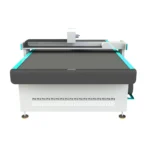
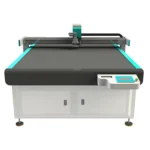
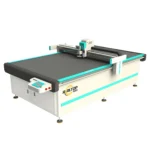
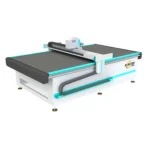
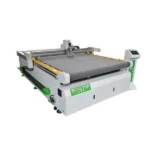
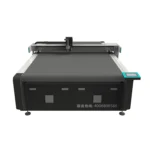
Industrial Application CNC Knife Cutting Machine for Non Woven Bag
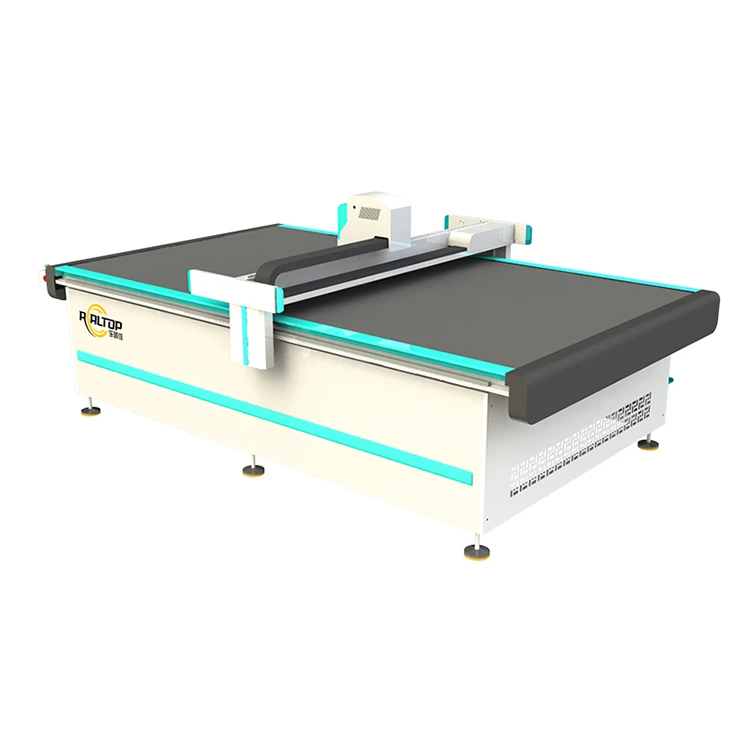
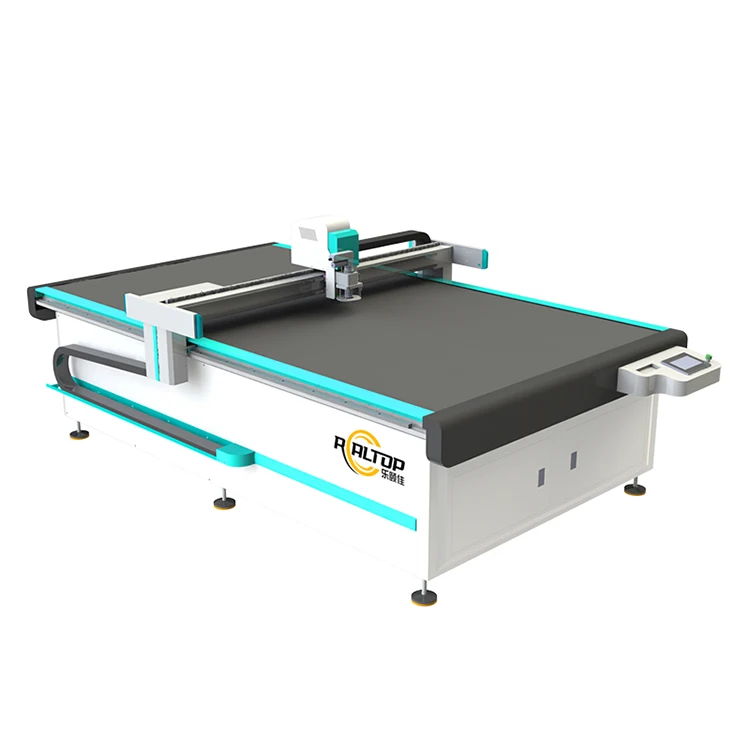
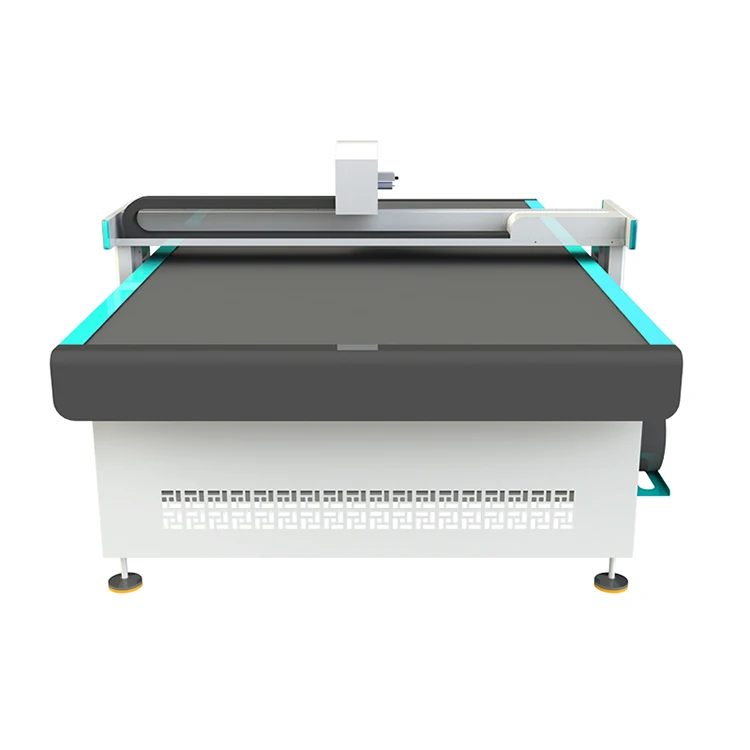
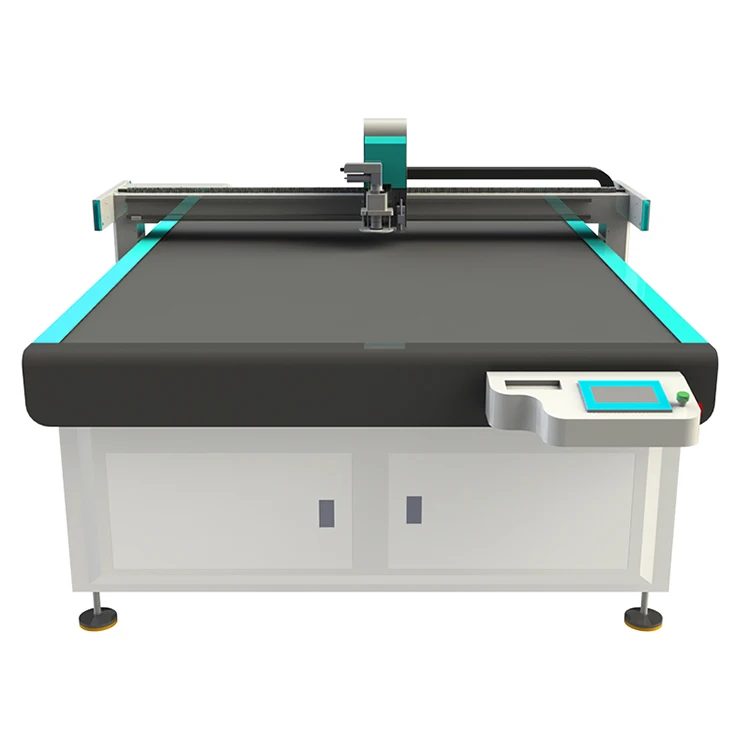
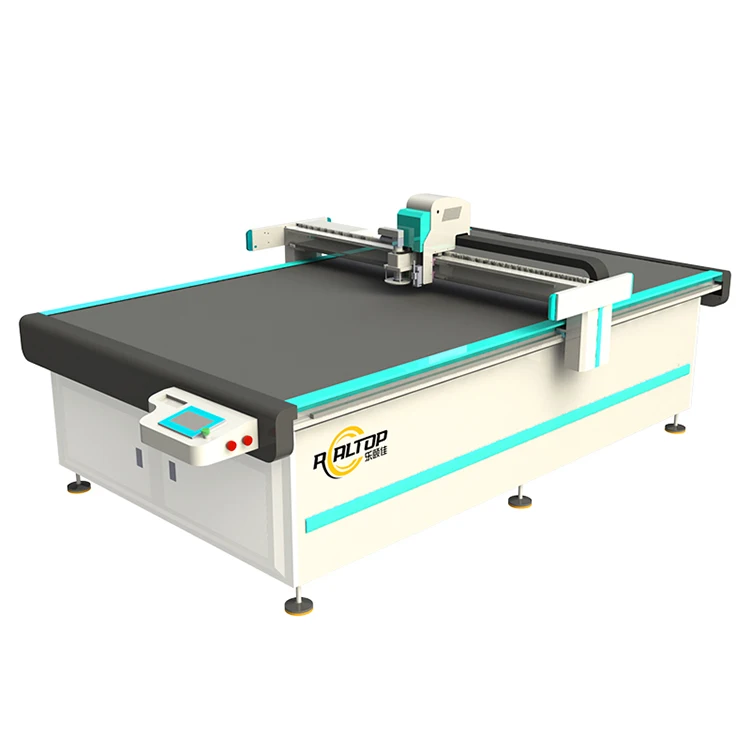
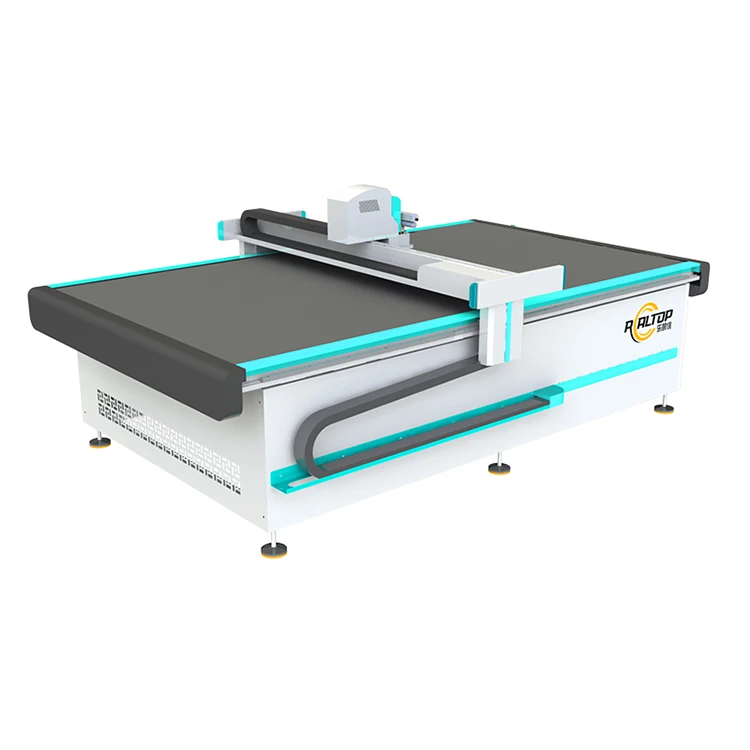
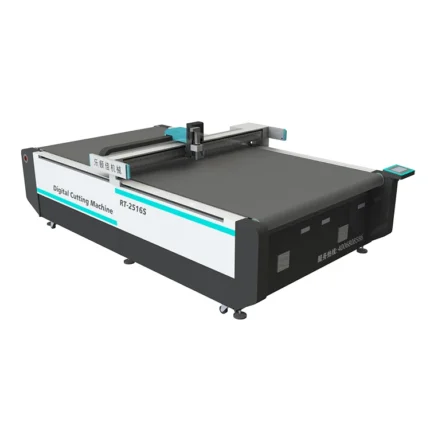
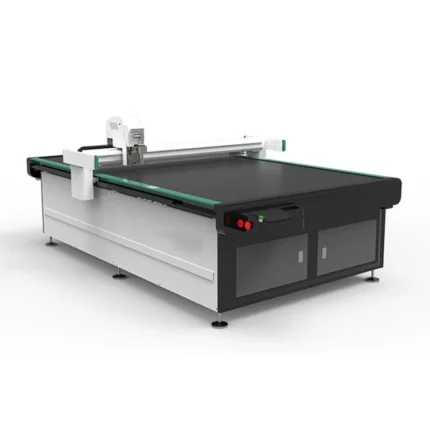
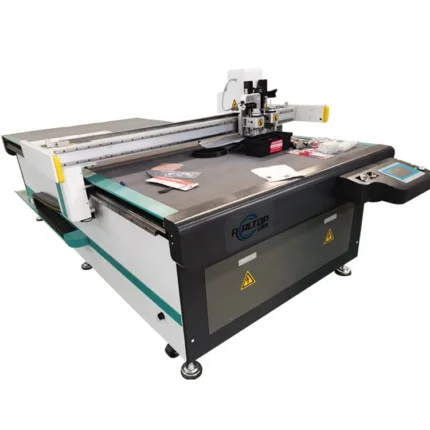
RT-D2516/RT-S2516 CNC Oscillating Knife Cutting Machine, 1600×2500mm Working Area, 7.5kW Vacuum Pump — engineered for soft material processing with Swiss-imported multifunctional knife head delivering full cut, half cut, and cursor location in one setup.
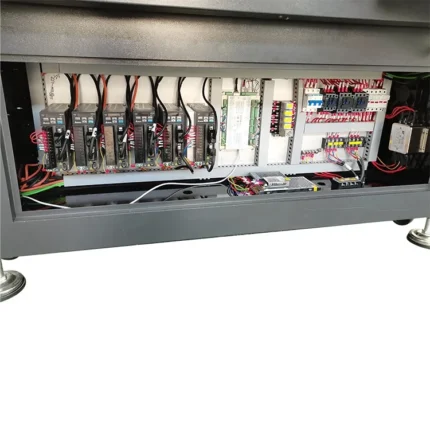
- Japanese Yaskawa servos and Taiwan Hiwin linear rails ensure ≤0.1mm repeated accuracy across fabrics, leather, and sponge composites
- Auto-feeding conveyor with HP-GL compatible control supports continuous roll-to-roll nesting workflows
- Infrared safety sensors and 380V±10% power system configured for industrial environments
We match tool head and vacuum table zoning to your specific material thickness and part geometry — with sample cutting on your own stock confirmed before order.
Swiss Knife Integration — This oscillating knife cutting table uses imported multifunctional tool heads configured per buyer material, verified through pre-order sample cutting runs rather than catalogue assumptions.
Technical Specifications
| Parameter | Value |
|---|---|
| Model | RT-D2516/RT-S2516 |
| Product Type | CNC Oscillating Knife Cutting Machine |
| Working Area | 1600 × 2500 mm |
| Overall Dimensions | 3450 × 2300 × 1250 mm |
| Rated Power | 9 kW |
| Vacuum Pump | 7.5 kW |
| Translational Velocity | 800–1200 mm/s |
| Cutting Speed | 200–800 mm/s (basis not stated in source — confirm block format, material and thickness) |
| Repeated Accuracy | ≤ 0.1 mm |
| Tool Head | Multifunctional (vibration full cutting, half cutting, cursor location) |
| Servo Motor | Japanese Yaskawa |
| Linear Rail | Taiwan Hiwin |
| Conveyor Belt | Germany imported |
| Transmission | Digital servo motor, synchronous belt, ball screw (imported) |
| Instruction Format | HP-GL compatible |
| Table Type | Flat vacuum working table with auto-feeding |
| Voltage | 380V ± 10% |
| Safety Device | Infrared sensors |
Application Suitability
| Application | Material or Output |
|---|---|
| Upholstery and sofa panel cutting | Multi-layer fabric, sponge composite leather, synthetic leather rolls |
| Garment and footwear pre-forming | Natural leather, textile flexible materials, woven and non-woven fabrics |
| Automotive interior trim | Soft gasket materials, carpeting, sound-deadening composites |
| Industrial sealing and gasket production | PVC, silicon, rubber sheets, soft glass |
| Non-woven bag and technical textile processing | Non-woven PP, coated and laminated flexible rolls |
When the Cutting Speed Rating Doesn’t Match Your Material
The CNC Oscillating Knife Cutting Machine specification sheet lists cutting speed up to 800 mm/s, but that figure rarely applies uniformly across every soft material a sofa or garment factory actually processes.
A thick sponge composite will demand a much slower stroke and deeper oscillation than a single ply of woven fabric, and forcing the head to run at the upper limit on dense stock produces frayed edges, crushed foam cores, and rejected panels. [NEED_CITE: relationship between oscillating knife stroke frequency and material density in soft material cutting]
I once spent three days on-site at a bag factory that had switched from plain PP non-woven to a coated composite after their machine arrived. The blade could not hold an edge on the coating, and every cut left hairline burrs that failed their client’s quality check. We finally stabilized the process only after matching blade geometry and oscillation amplitude to the actual roll stock. That is why the sample cutting step on the buyer’s own material matters more than any headline speed figure.
Oscillation Mechanics on Soft and Composite Stocks
The multifunctional tool head on the RT-D2516/RT-S2516 combines full-depth cutting, half-depth scoring, and cursor-based mark location in a single mount. For sofa manufacturers working with sponge-bonded leather, this means one setup can trace the outer panel shape and score internal fold lines without swapping tools mid-cycle. The Swiss-imported blade geometry maintains edge integrity across abrasive coated textiles that typically degrade standard utility blades within a single shift.
Vacuum Hold-Down and Continuous Roll Feeding
A 7.5 kW vacuum pump anchors lightweight or porous materials that tend to lift under high-frequency oscillation. The Germany-imported conveyor belt pairs with the auto-feeding system to advance roll stock across the 1600 × 2500 mm bed in measured increments, reducing the dead time between nests. When cutting long runs of non-woven bag panels, this continuous workflow prevents the operator from manually repositioning sheet stock after every cycle. [NEED_CITE: vacuum table zoning requirements for small-part retention in oscillating knife cutting]
Reading the Specification Sheet Beyond Headline Numbers
The repeated accuracy of ≤ 0.1 mm depends on the combined contribution of Yaskawa digital servo motors and Taiwan Hiwin linear rails; any belt stretch or rail wear directly degrades nesting registration over an eight-hour shift. The 9 kW rated power covers head oscillation, vacuum generation, and drive motion simultaneously, so voltage dips on a shared workshop circuit can cause the servo to lose position mid-cut. HP-GL file compatibility means the machine accepts plot paths from most mainstream nesting and CAD platforms, but confirming your specific file export before order prevents workflow stoppages after delivery. The 380V ± 10% supply requirement demands a dedicated breaker, as fluctuating line voltage on multi-machine circuits is a frequent cause of servo fault codes in export installations.
The Cost of Skipping the Material Compatibility Test
Buyers who specify a cutting table solely on working area dimensions often discover that the tool head cannot handle their actual stock thickness. On dense foam composites used in automotive seating, an under-specified blade produces crushed edges rather than clean shear cuts, sending entire panels to rework. [NEED_CITE: material thickness versus oscillating knife cutting depth limitations] Software incompatibility surfaces even later — when the nesting operator tries to import DXF or proprietary CAM files and the controller refuses the format, delaying first production by days or weeks.
Why Procurement Here Differs from Catalogue Ordering
In-house design covers both knife and laser process domains, so the cutting method is matched to the material rather than forced into whichever machine happens to be in stock. Tool head and table configuration are specified per buyer material and production volume before the order is locked. Pre-shipment sample cutting on the buyer’s own roll stock provides a physical reference rather than a theoretical cutting speed chart. Voltage, plug configuration, and control language customization are confirmed during the engineering stage, avoiding on-site rewiring after the crate arrives. Documentation ships with the machine, including electrical schematics, tool configuration lists, and maintenance schedules specific to the configured setup.
Documentation & Verification
- Electrical schematic confirming 380V ± 10% wiring and breaker sizing for the 9 kW rated load
- Tool head configuration list detailing blade type, oscillation amplitude, and compatible material range
- Factory test record documenting cutting results on buyer-supplied fabric or composite samples
- Software compatibility note confirming HP-GL file acceptance from buyer’s nesting platform
- Spare parts list covering Swiss blades, conveyor belt segments, and vacuum filter elements
Installation, Commissioning & Support
- Dedicated 380V circuit with appropriately rated breaker to handle the 9 kW total draw including the 7.5 kW vacuum pump
- Level concrete floor required across the 3450 × 2300 mm footprint to prevent linear rail binding
- Auto-feeding conveyor calibrated on-site to match buyer roll stock width and feed increment
- Vacuum table zoning tested with buyer’s smallest panel geometry to confirm hold-down adequacy
- Operator training covers blade change procedure, HP-GL file import workflow, and infrared sensor safety protocol
- Spare blade inventory and vacuum filter replacement schedule established before commissioning sign-off
Preparing a Useful Technical Inquiry
Send the specific material type, thickness range, and roll width you actually run in production — not the generic material category. Include your daily cut volume and the nesting software you currently use so we can confirm file format compatibility. State your workshop voltage and frequency along with the preferred control language, and ship a sample roll to our facility so we can run cutting trials before finalizing the RT-D2516/RT-S2516 configuration.
Frequently Asked Questions
Q: When should I choose an oscillating knife over a CO2 laser for fabric cutting?
A: Oscillating knives produce clean, unsealed edges that remain flexible — essential for sofa upholstery and garment panels where stiff laser-sealed edges cause discomfort or cracking. Lasers work better on synthetics where edge sealing prevents fraying. The decision depends on your downstream sewing and assembly requirements rather than cutting speed alone.
Q: How long do Swiss-imported blades last on abrasive composite materials?
A: Blade life varies significantly with material composition. Coated textiles, fiberglass-reinforced composites, and carbon fiber stocks degrade blades far faster than plain woven fabrics. We establish expected blade consumption during the pre-order sample cutting phase so you can budget spare blade inventory accurately before production begins.
Q: Does the system support automatic nesting to maximize material yield?
A: The controller accepts HP-GL compatible format, which integrates with most third-party nesting software platforms. Automatic nesting capability depends on your chosen software license rather than the machine controller itself. We confirm file format compatibility during the pre-order engineering stage to avoid workflow disruptions at commissioning.
Q: How often does the auto-feeding conveyor require recalibration?
A: Feed accuracy depends on conveyor belt tension, material surface friction, and accumulated operating hours. We recommend checking feed registration against the linear rail position at weekly intervals during the first month, then transitioning to monthly checks once the belt tension stabilizes. The Germany-imported belt material maintains dimensional stability longer than standard alternatives.
Q: Can the 380V system be adapted for local industrial power standards?
A: Voltage, frequency, and plug configuration are confirmed during the engineering stage before production begins. The 380V ± 10% system can be configured for various industrial power standards, but transformer or phase converter requirements depend on your local supply. We address this during specification confirmation to prevent on-site electrical issues after delivery.


Related products

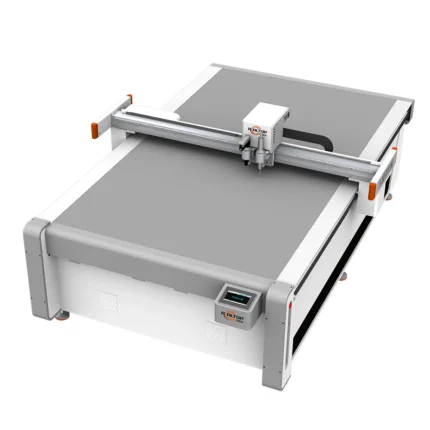
Automatic CNC Oscillating Knife Packaging Cutting Machine
1625 CNC Oscillating Knife Packaging Cutting Machine, 1600×2500mm, ≤40mm Cutting Depth — configured for corrugated cardboard, foam and packaging material prototyping. Multiple tool heads including oscillating knife, creasing wheel and milling cutter let you match the tool to each material instead of forcing one method. Aluminum honeycomb vacuum table with 9KW pump holds small parts flat during cutting. - Sample cutting on your own material available before commitment, with tool head and voltage customization confirmed before shipment.
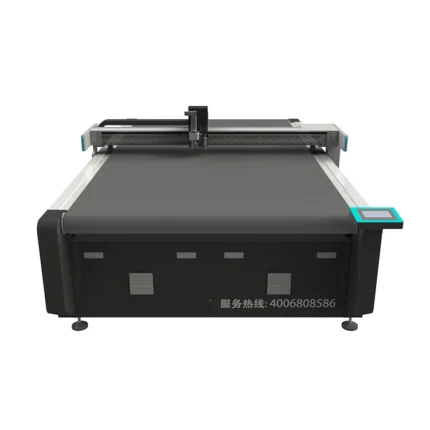
Fabric Sofa CNC Cutting Machine | Laser Cutting and Engraving Manufacturer
RT-D2516/RT-S2516 Fabric Sofa CNC Cutting Machine, 1600×2500mm Working Area, 9kW Rated Power, Swiss Oscillating Knife — engineered for precise contour cutting of leather, fabric, sponge composite and flexible materials in upholstery production.
- Vacuum table with 7.5kW pump and auto feeding system keep soft materials flat and aligned during high-speed cutting
- CCD camera positioning delivers ≤0.1mm repeat accuracy for printed pattern recognition
- HP-GL compatible control integrates with existing nesting software workflows
- Yaskawa servo motors and Hiwin linear rails ensure smooth motion across the full cutting area
Sample cutting on your actual sofa fabric or leather is completed before order confirmation, so edge quality and cutting depth are verified against your specific material stack-up.
Fabric Sofa CNC Cutting Machine for Non Woven Bag – Manufacturer
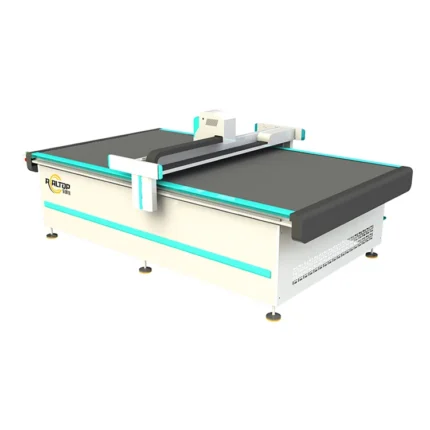
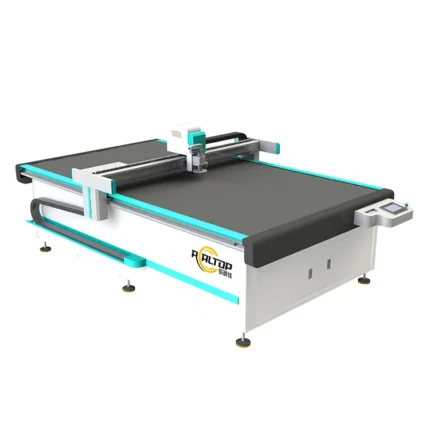
RT-D2516/RT-S2516 CNC Oscillating Knife Cutting Machine, 1600×2500mm Working Area, Swiss Imported Tool Head, ≤0.1mm Repeatability — engineered for fabric sofa and non-woven bag production. Laser versus knife cutting evaluated per material type, with tool head and vacuum table zoning matched to your specific fabric thickness and production volume. CCD camera positioning available for printed contour recognition at production speed. Sample cutting performed on your own material before commitment, with tool head configuration, software file format compatibility, voltage and control language fully documented prior to order.
Ice Silk Mattress Cutter 2026 Round Knife Quilt Blanket Cutting Machine
Product Introduction
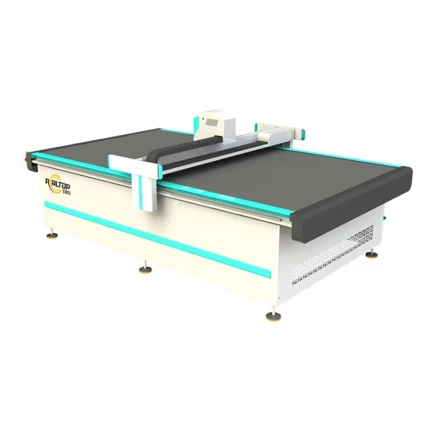
Professional Ice Silk Mattress Cutting Machine with round knife design, ideal for precise cutting of quilts and blankets. Efficient, durable, and suitable for industrial production needs.
Product Parameters
| Model | 2026 |
| Cutting Tool | Round Knife |
| Application | Ice Silk Mattress, Quilt, Blanket |
| Type | Industrial Cutting Machine |
Professional Auto Loading Carpet Cutting Machine 2026
Product Introduction
Professional Auto Loading Carpet Cutting Machine 2026, designed for efficient carpet cutting. Integrated with advanced auto-loading system to streamline workflow, ensuring precise and fast cutting performance for various carpet materials. Ideal for manufacturing and processing industries seeking high productivity.Product Parameters
| Parameter | Detail |
|---|---|
| Model | 2026 |
| Type | Auto Loading Carpet Cutting Machine |
| Function | Professional Carpet Cutting |
| Loading System | Auto Loading |


RT-2026 CNC Digital Carton Cutting Machine – Full Range
RT-2026 CNC Digital Carton Cutting Machine, 1600×2500mm Working Area, 380V — equipped with Swiss imported oscillating knife head delivering vibration full and half cutting for cardboard, sticker and flexible packaging materials.
- Delta servo motor and Taiwan Hiwin rail ensure ≤0.1mm repeated accuracy
- Aluminum honeycomb vacuum platform with automatic zone following prevents small part lift
- HP-GL compatible instruction system supports multiple file format imports
Laser and knife cutting technologies developed in-house allow precise method matching to your material, with sample cutting on buyer's own stock validated before order commitment.
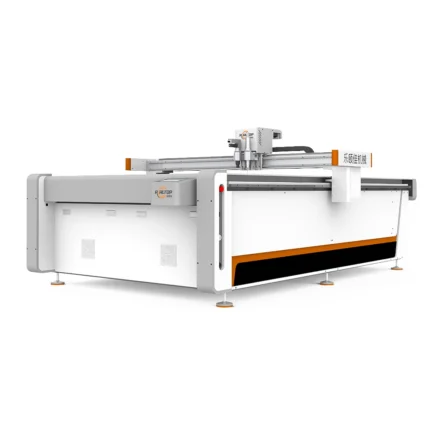

RT-D2516/RT-S2516 CNC Oscillating Knife Cutting Machine | Manufacturer
RT-D2516/RT-S2516 CNC Oscillating Knife Cutting Machine, 1600×2500mm Working Area, 9kW, 380V — engineered for non-thermal processing of packaging and flexible materials where laser cutting leaves charred edges or fails on thick substrates.
- Swiss imported oscillating knife head with full-cut, half-cut and cursor positioning
- Aluminum honeycomb vacuum table with zoned suction for small-part hold-down
- Delta servo and Taiwan Hiwin linear guide, ≤0.1mm repeatability, up to 2000mm/s traverse
- Professional nesting software with crease-line recognition and multi-format import
Sample cutting on your own material, tool head specified per substrate, and voltage plus control language confirmed before shipment — backed by in-house design and core factory production.
Sofa Cover Fabric Oscillating Knife Cutter – Manufacturer
RT-D2516/RT-S2516 Fabric Sofa CNC Cutting Machine, 1600×2500mm Work Area, 9kW Rated Power, Swiss Tool Head — configured for oscillating knife cutting of sofa upholstery fabric, leather and sponge composites with clean-edge full-cut and half-cap modes.
- CO2 vs fiber laser process detail is out of scope here; this platform focuses on knife cutting matched to material type, thickness and daily volume
- Yaskawa servos with Hiwin linear guides deliver ≤0.1mm repeated accuracy; 7.5kW vacuum pump and auto-feeding conveyor support continuous roll-to-sheet workflow
- Sample cutting on your own material is performed before commitment, with voltage, plug type and HMI language confirmed prior to shipment
商品评价
There are no reviews yet.