

Blog
CNC Oscillating Knife Cutting Machine for Composite Materials | Factory Direct Wholesale Supplier

CNC Oscillating Knife Cutting Machine for Composite Materials | Factory Direct Wholesale Supplier
Most buyers assume faster cutting solves composite edge quality — the real bottleneck is how the knife stroke, pneumatic pressure, and vacuum zoning synchronize with the specific resin and weave structure.
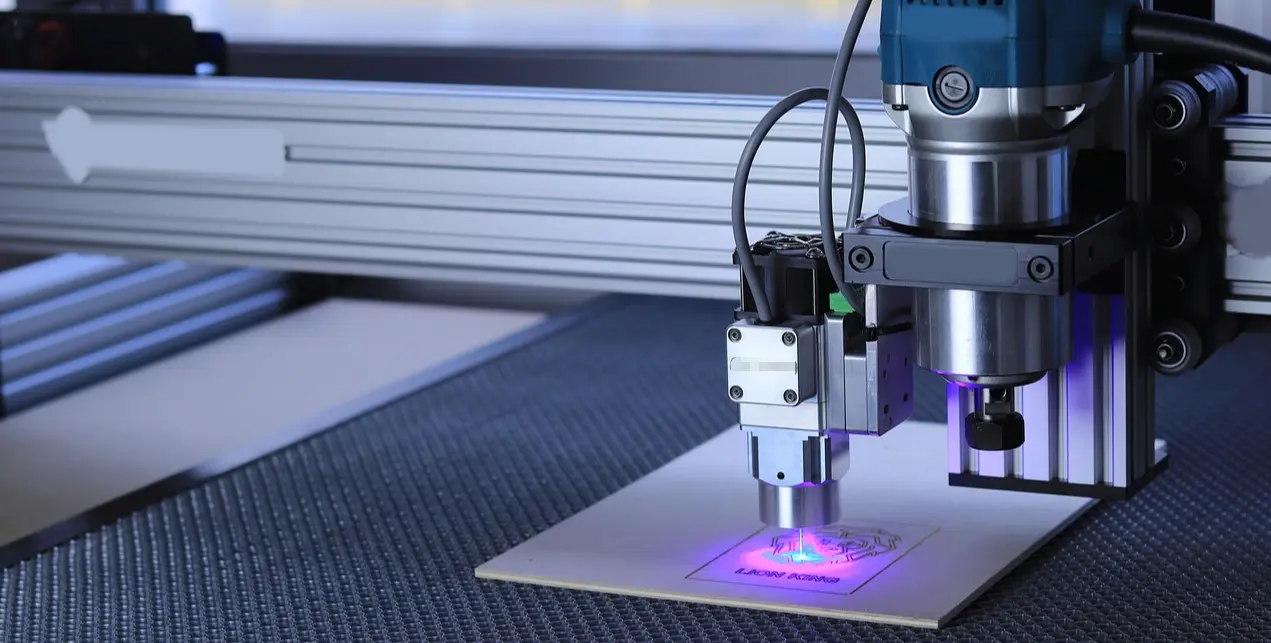
A CNC cutting machine for composite material must pair an oscillating knife with adjustable stroke frequency, pneumatic depth control, and multi-zone vacuum hold-down to prevent delamination, frayed edges, and layer shift — not simply maximize feed speed.
I spent several years on the floor of a composite workshop in Suzhou, handling carbon fiber prepreg rolls and aramid felt stacks daily. When I later moved into international trade, the first question buyers asked was never "can it cut" — it was "will the edge delaminate after cutting." I once shipped a vibrating knife unit to a Dubai-based wind blade accessory plant; the spec sheet looked impressive, but the moment they ran PTFE-coated glass fiber, the blade caused immediate interlayer separation and the entire batch was scrapped. [NEED_CITE: root cause analysis of delamination in PTFE-coated fabric cutting per composite industry processing guidelines] That incident reshaped how I approach every inquiry: I now start by asking about the exact layup structure before discussing any machine parameters.
Let me walk you through what actually determines cut quality in composite processing, which tooling fits which material, and what you should verify before placing an order.
What Makes Composite Material Cutting Different from Regular Fabric?
Layered architecture and resin coatings turn composite cutting into a precision separation task — a single mismatched setting triggers delamination, fiber pull-out, or edge fraying.
Unlike woven cotton or polyester, composite fabrics such as carbon fiber prepreg, fiberglass, and PTFE-coated technical textiles consist of multiple bonded layers held together by resin matrices or thermal coatings. When a blade passes through, it must cleanly separate fibers without dragging the resin bond apart. [NEED_CITE: mechanical separation mechanics of resin-bonded composite laminates during knife cutting] A standard fabric blade with aggressive tooth geometry will tear the matrix rather than slice it, leaving micro-cracks that propagate under stress.
In the Suzhou workshop, we processed multi-ply carbon fiber pre-preg for aerospace secondary structures. The material came in rolls with a tacky resin surface that adhered to the cutting table if vacuum was insufficient — yet too much vacuum pressure on porous layers caused the top ply to stretch before the blade reached it, creating dimensional drift across the sheet. We learned to zone the vacuum table: full suction under the cutting zone, reduced suction in the feed path. This prevented both material lift and resin smear on the blade.
A marine hull fabricator in Southeast Asia faced a similar challenge with multi-layer carbon fiber pre-preg used for boat hull reinforcement. Their previous router-based system generated heat that softened the resin, causing edge chipping. After switching to an oscillating knife module with pneumatic depth control, the edge quality improved visibly — no thermal damage, no resin smearing — and the cycle time per sheet became comparable to their old method while eliminating post-cut edge cleanup entirely.
The key distinction is this: regular fabric cutting prioritizes speed and multi-layer stacking; composite cutting prioritizes edge integrity, layer adhesion preservation, and dimensional accuracy. A CNC cutting machine for composite material must therefore be engineered around these priorities from the tool head up.
Which CNC Cutting Machine Type Fits Carbon Fiber, Fiberglass, and PTFE?
An oscillating knife with adjustable stroke frequency and pneumatic depth control forms the baseline — but the specific tooling module must match the hardness and abrasiveness of each composite type.
Not all oscillating knives are identical. The stroke length, oscillation frequency, and blade geometry must align with the material being processed. [NEED_CITE: tooling selection criteria for abrasive versus non-abrasive composite fabrics per textile machinery standards] Carbon fiber, for instance, is highly abrasive and will dull a standard blade within a single shift if the wrong carbide grade is used. Fiberglass fabric is less abrasive but tends to fray if the blade angle is too steep. PTFE-coated tarpaulin requires a sharp, polished edge to prevent the coating from peeling away from the substrate.
Here is how tooling requirements break down across common composite types:
| Material Type | Blade Geometry | Stroke Frequency | Depth Control | Tooling Wear Resistance |
|---|---|---|---|---|
| Carbon Fiber Prepreg | Narrow angle, polished edge | High frequency, short stroke | Pneumatic, real-time | Substantially extended |
| Fiberglass Fabric | Medium angle, standard edge | Moderate frequency | Pneumatic, adjustable | Standard |
| PTFE-Coated Tarpaulin | Wide angle, razor-polished | Low frequency, long stroke | Pneumatic, fine-tuned | Noticeably reduced |
| Aramid Sandwich | Serrated or specialized | Low frequency | Pneumatic, zone-matched | Controlled |
The oscillating action itself matters. A high-frequency, short-stroke oscillation works well for thin, dense carbon fiber layers because it creates a clean slicing action without lateral drag. A longer stroke at lower frequency suits thicker PTFE-coated fabrics where the blade must penetrate the full coating depth in a single pass.
A European industrial gasket processor worked with aramid and fiberglass sandwich composites for high-temperature insulation applications. Their original flat-blade system caused layer shift — the top aramid layer would slide relative to the fiberglass base during cutting, ruining registration. After retooling with a dedicated oscillating knife module and adding vacuum zone zoning to hold each layer independently, the layer shift problem disappeared. Material waste dropped noticeably because nesting software could now trust the cut path to match the digital layout exactly.
When sourcing a CNC cutting machine for composite material, ask the manufacturer which tooling modules are included as standard and which are optional. A machine delivered with only a single blade type will not handle the full range of composites you may process.
How Do Vacuum Hold-Down and Cutting Speed Affect Edge Quality?
Vacuum zone pressure and feed speed must be balanced per material — maximizing either one independently will degrade edge quality.
It is tempting to crank up vacuum pressure and feed speed simultaneously, assuming both contribute to productivity. In composite cutting, this approach backfires. Excessive vacuum on a porous fiberglass fabric pulls the material into the table honeycomb, creating a slight depression that causes the blade to cut at inconsistent depth. Too little vacuum on a slick PTFE surface allows the material to shift microscopically during the cut, producing wavy edges. [NEED_CITE: vacuum hold-down pressure optimization for porous and non-porous technical textiles]
Feed speed interacts with vacuum in a less obvious way. At high speed, the blade generates lateral vibration. If vacuum is not strong enough to counteract this vibration, the blade path deviates from the programmed trajectory — especially on tight curves and small radii. The result is a cut edge that looks acceptable on straight sections but frays or drifts on corners.
During my time in the Suzhou workshop, we ran a series of tests on PTFE-coated glass fiber used for architectural membrane structures. At maximum feed speed with full vacuum, the edges showed visible coating peel on curves. When we reduced feed speed by a moderate margin and zoned the vacuum to match the cutting head position — full suction only directly under the blade, reduced suction ahead and behind — the edge quality became consistently clean across the entire sheet. The cycle time increased slightly, but scrap rate fell to single digits, which more than compensated for the time difference.
The practical takeaway: vacuum hold-down is not a "set and forget" parameter. It must be adjustable per zone and responsive to the cutting head position. A CNC cutting machine for composite material should feature multi-zone vacuum control with automatic activation tied to the tool head location, not a single on-off switch for the entire table.
What Should Buyers Verify Before Ordering from a China Factory?
Request live sample cuts with your own material, confirm CE certification independently, and verify warranty terms plus remote diagnostics capability — do not rely on spec sheets alone.
The composite cutting market has many manufacturers claiming high precision and broad material compatibility. The gap between brochure specifications and actual on-machine performance can be significant, especially when resin formulations, weave densities, and coating thicknesses vary between batches. [NEED_CITE: verification checklist for CNC cutting equipment procurement per CE machinery safety standards]
Here is what I recommend checking before committing to an order:
- Live sample cutting with your material. Send your actual composite rolls to the factory and request a cutting trial. Record the edge quality, dimensional accuracy, and cycle time. A factory confident in its machine will offer this service without hesitation. Realtop Machinery, for instance, provides a free sample cutting service where buyers can submit material and receive cut samples along with demonstration videos before purchase.
- CE certification verification. Do not accept a certificate copy at face value. Check the certificate number against the issuing body’s database. Ensure the scope of certification covers the specific machine model and configuration you are ordering, not a different variant.
- Warranty and remote support terms. A standard warranty in this industry ranges from one to three years. Realtop offers a three-year warranty with twenty-four-hour online technical support and remote diagnostics capability. Confirm whether remote diagnostics means the manufacturer can actually connect to the machine’s control system to troubleshoot, or whether it is limited to email-based guidance.
- Tooling availability and cost. Ask for a complete list of available blade types, their expected service life on your specific material, and the cost of replacement sets. Some manufacturers quote a low machine price but recover margin through expensive proprietary blades.
- Software compatibility. Verify that the nesting and cutting software supports your file formats and can handle composite-specific requirements such as kerf compensation and material grain direction.
A machinery distributor in Eastern Europe once ordered a composite cutting unit based solely on a spec sheet and video call demonstration. When the machine arrived, the vacuum table lacked zone control, and the included blade module was a general-purpose type unsuitable for the carbon fiber prepreg their end customers processed. The retrofit cost and delay erased the initial price advantage entirely.
How Does Smart Nesting Software Reduce Composite Material Waste?
Automated nesting can significantly cut scrap — but only if kerf compensation and material grain direction are correctly configured for each composite type.
Composite materials are expensive. Carbon fiber prepreg, in particular, carries a cost per square meter that makes even modest nesting inefficiencies financially painful. Smart nesting software arranges parts on the material sheet to minimize waste, but the algorithm must account for the blade kerf width and the directional properties of the composite weave. [NEED_CITE: material utilization optimization methods in digital cutting software for technical textiles]
Kerf compensation is critical. The oscillating knife removes a small but measurable width of material during the cut. If the nesting software does not compensate for this kerf, parts will end up slightly undersized — unacceptable in composite applications where dimensional tolerance is tight. Most basic nesting tools ignore kerf entirely; advanced systems allow per-material kerf values to be stored and applied automatically.
Material grain direction matters equally. Woven composites have mechanical properties that vary with fiber orientation. A part nested without regard to grain direction may be cut quickly but will fail to meet structural requirements. The nesting software must allow the operator to lock grain direction constraints and then optimize part placement within those constraints.
In practice, I have seen nesting efficiency gains that translated to meaningful material savings across full production runs. One processor running high-volume fiberglass gasket cutting reported that after switching to software with proper kerf compensation and grain-lock features, their material waste dropped noticeably — enough to justify the software investment within a short period.
When evaluating a CNC cutting machine for composite material, ask whether the included software handles these composite-specific nesting requirements natively, or whether you need to purchase a separate nesting license. Some manufacturers bundle basic software that handles simple shapes but lacks the advanced features needed for production-grade composite nesting.
Conclusion
Composite cutting quality depends on the synchronization of tooling, vacuum, and speed — not on any single parameter alone.
A CNC cutting machine for composite material must be evaluated on its ability to handle delamination-sensitive layups, maintain edge integrity across varied resin coatings, and integrate software that respects the directional and dimensional requirements of technical fabrics. Verify performance through live sample cuts, confirm certifications independently, and ensure the tooling ecosystem matches your material range before placing an order.

