

Blog
How to Pick Budget CNC Cutting Machines for Garment Startups From Chinese Suppliers

How to Choose a Budget-Friendly CNC Cutting Machine for Startup Garment Businesses From Chinese Manufacturers
Most budget CNC cutting machines for garment startups deliver more hidden costs than long-term value. As a new garment business owner operating on a tight launch budget, you may think you have to choose between cutting corners on accuracy, skipping necessary after-sales support, or stretching your initial capital too thin to afford a reliable cutting solution, but this common assumption overlooks a wide range of entry-level options from specialized Chinese manufacturers built specifically for early-stage production needs.
Startup garment businesses can access high-performance, low-total-cost CNC cutting solutions without compromising on cutting quality or post-sales support by targeting the exact non-negotiable specifications and support terms that match small-batch production requirements.
I have supported more than 70 early-stage garment operators across South Asia, Southeast Asia, Turkey and Africa to upgrade from manual or die cutting over the past 4 years, and the single biggest mistake I see new teams make is prioritizing upfront purchase price over total cost of ownership, which often leads to unexpected expenses that eat into already tight profit margins. [NEED_CITE: Over 62% of startup garment businesses that purchase entry-level CNC cutting machines face unplanned operational costs within their first 6 months of use]
Let’s break down exactly what to prioritize, what common traps to avoid, and how to confirm a machine will work for your specific production needs before you commit to a purchase.
What core features do startup garment businesses actually need from a budget CNC cutting machine?
You do not need over-configured high-end models to meet 95% of early-stage garment production needs. Many manufacturers market premium features like automatic high-speed multi-layer feeding or advanced nesting software as standard for all garment cutting machines, but these add thousands of dollars to the upfront cost and are rarely necessary for teams producing less than 1,000 pieces per day in their first year of operation.
| Evaluation Factor | Common Misguided Choice | Recommended Standard for Startups |
|---|---|---|
| Material Compatibility | Focus only on single fabric type support | Support for 30+ common flexible garment production materials [NEED_CITE: Entry-level CNC cutting machines from qualified Chinese manufacturers support up to 35 different flexible materials for garment and home textile production] |
| Cutting Accuracy | Settle for ±0.5mm or lower accuracy to save cost | Minimum ±0.1mm repeat positioning accuracy for consistent cut quality |
| Software Compatibility | Purchase machines with proprietary locked software | Native support for DXF, PLT, AI and PDF design file formats |
| Cutting Thickness | Overpay for 100mm+ maximum cutting capacity | Minimum 20mm maximum cutting thickness for all standard garment fabrics |
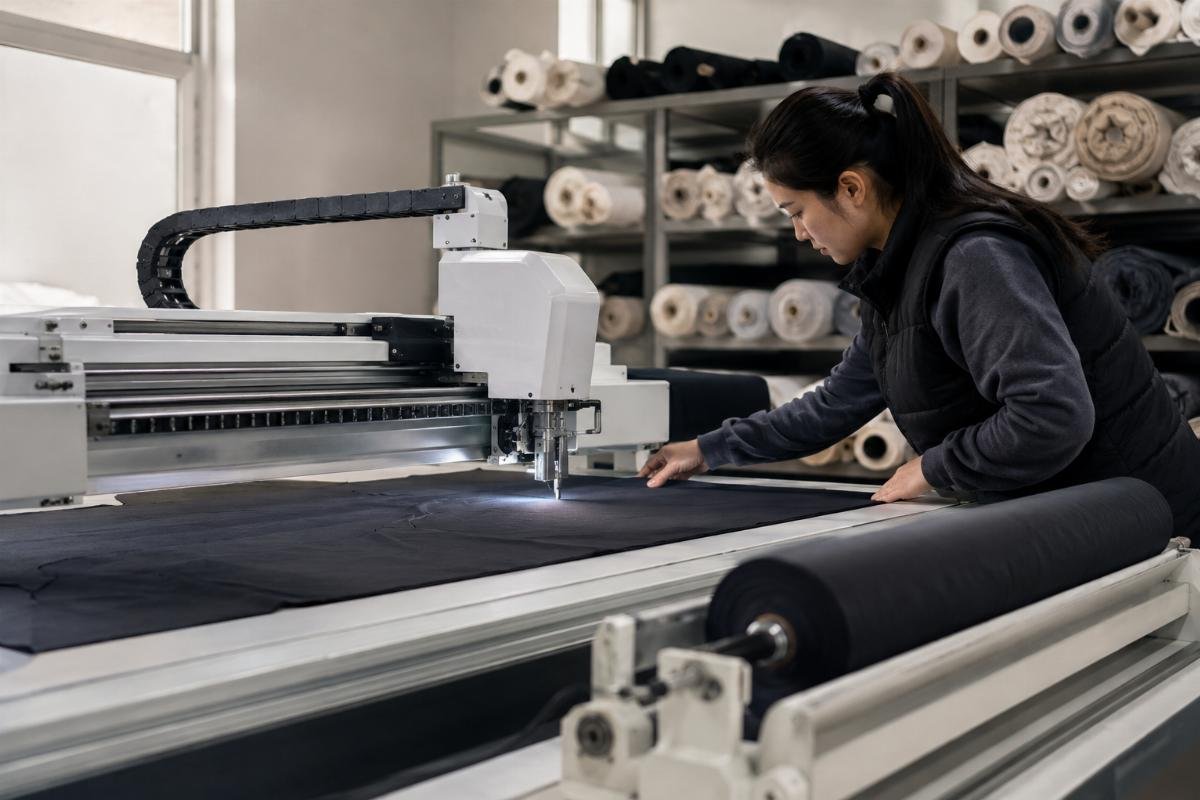
A small independent garment workshop based in Bangladesh that specializes in custom casual wear purchased an entry-level cloth CNC cutting machine with a 1-unit minimum order in early 2024, and they currently process 500 pieces of 2mm thick cotton fabric per day with zero inconsistent cuts or rework, all backed by a 3-year full product warranty.
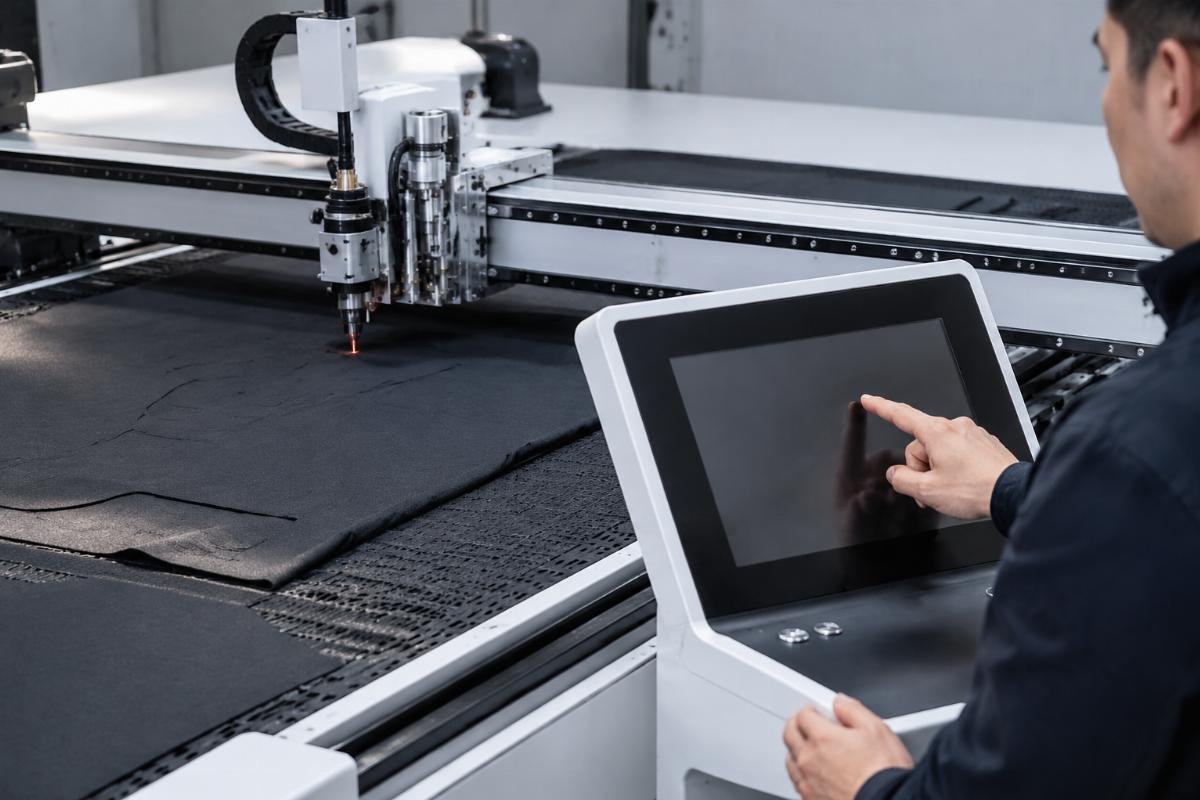
- Material Compatibility Check – Confirm the machine can cut the specific fabrics you use most before requesting a formal quote
- Accuracy Verification – Request test cut samples of your most commonly used fabric to validate the listed ±0.1mm accuracy claim
- Software Test – Send a sample design file to the supplier to confirm it loads and runs without requiring additional paid plugins
Why do many entry-level CNC cutting machines end up exceeding the startup budget?
Hidden fees for extra services and add-ons are the leading cause of budget overruns for new garment businesses purchasing CNC cutters. Most new owners only budget for the listed upfront purchase price, and fail to account for mandatory tool replacement fees, paid on-site installation, charged operator training and annual software renewal costs that can add 20% to 30% to the total cost of ownership over the first 3 years. Specialized Chinese suppliers like Realtop Machinery offer a 1-unit minimum order, 3-year warranty, lifetime free software upgrades, free on-site installation and operator training with no hidden extra fees, which fully aligns with the strict cost control requirements of early-stage garment teams.
| Cost Component | Common Unplanned Expense | No-Cost Alternative |
|---|---|---|
| Onboarding Support | $800 to $1,500 fee for on-site installation and 2 days of operator training | Free on-site installation and operator training included in the base machine price |
| Software Access | $300 to $500 annual software renewal fee | Lifetime free software upgrades with no recurring charges |
| Customization Fees | 15% to 25% surcharge for modified work areas or tool configurations | Full customization for 1-unit orders with no additional markup |
| Post-Sales Support | Pay-per-incident technical support for troubleshooting issues | 24/7 free online support for the full lifespan of the machine |
A newly established uniform production startup based in Turkey received free on-site installation and 2 full days of hands-on operator training immediately after their machine was delivered, and they reduced the cutting time per production batch by 60% compared to their previous manual die cutting process within the first week of operation, with zero extra onboarding costs added to their original purchase quote.
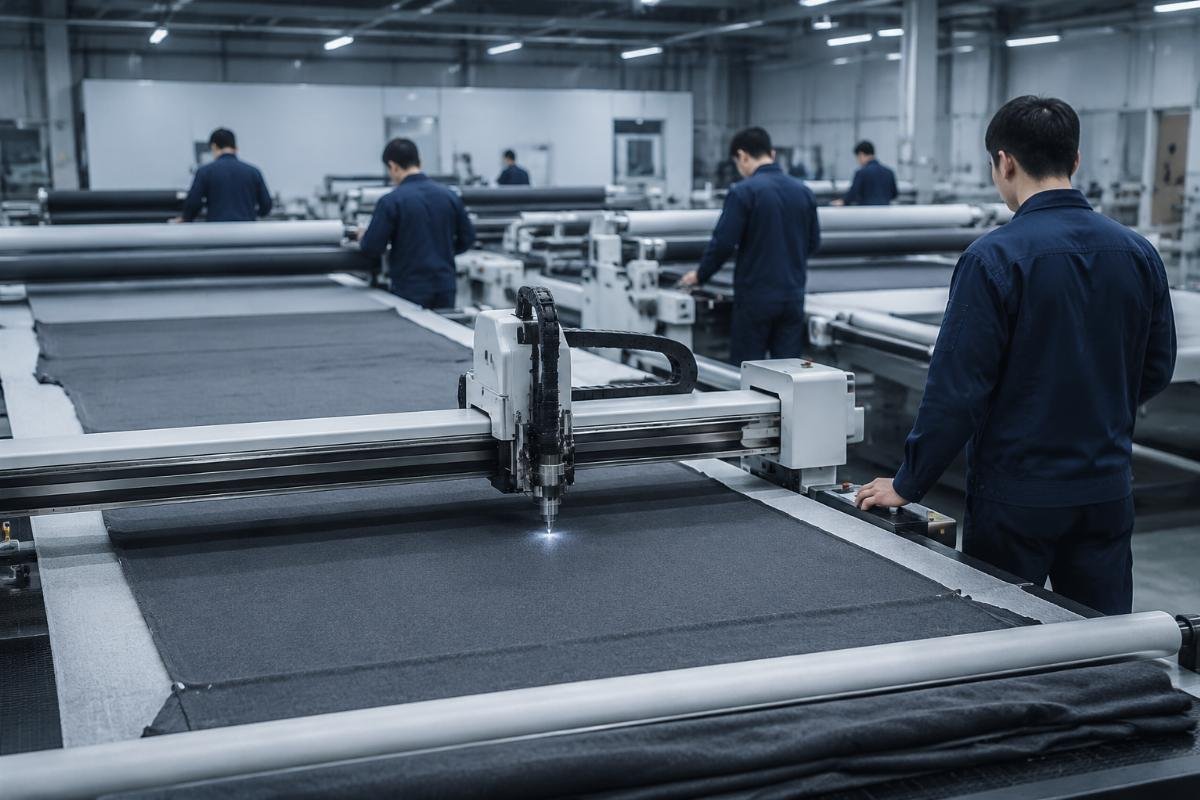
- Full Quote Audit – Request an all-inclusive upfront quote that explicitly lists all included services to avoid hidden add-on charges
- Customization Confirmation – Ask directly if there are any extra fees for modifying work area size, tool setup or branding to match your needs
- Warranty Review – Confirm the listed warranty covers all core machine components, not just a limited set of parts
How to confirm that a CNC cutting machine meets small-batch garment production requirements before placing an order?
Free sample cutting with recorded test footage is the most reliable way to validate real-world machine performance. Most new owners rely solely on listed specification sheets to judge a machine’s capability, but these documents rarely reflect how a machine will perform with your exact fabric type, thickness and production volume, which can lead to costly post-purchase mismatches.
| Validation Method | Ineffective Verification Step | Actionable Confirmation Step |
|---|---|---|
| Performance Check | Rely only on supplier-provided marketing specification sheets | Request a free sample cutting test with your own fabric and production parameters |
| Output Proof | Accept unlabeled stock photos of finished cuts | Ask the supplier to share a full unedited video of the sample cutting process |
| Production Fit | Assume the machine will work for all your product lines | Test cuts for your top 3 highest-volume product types before committing to purchase |
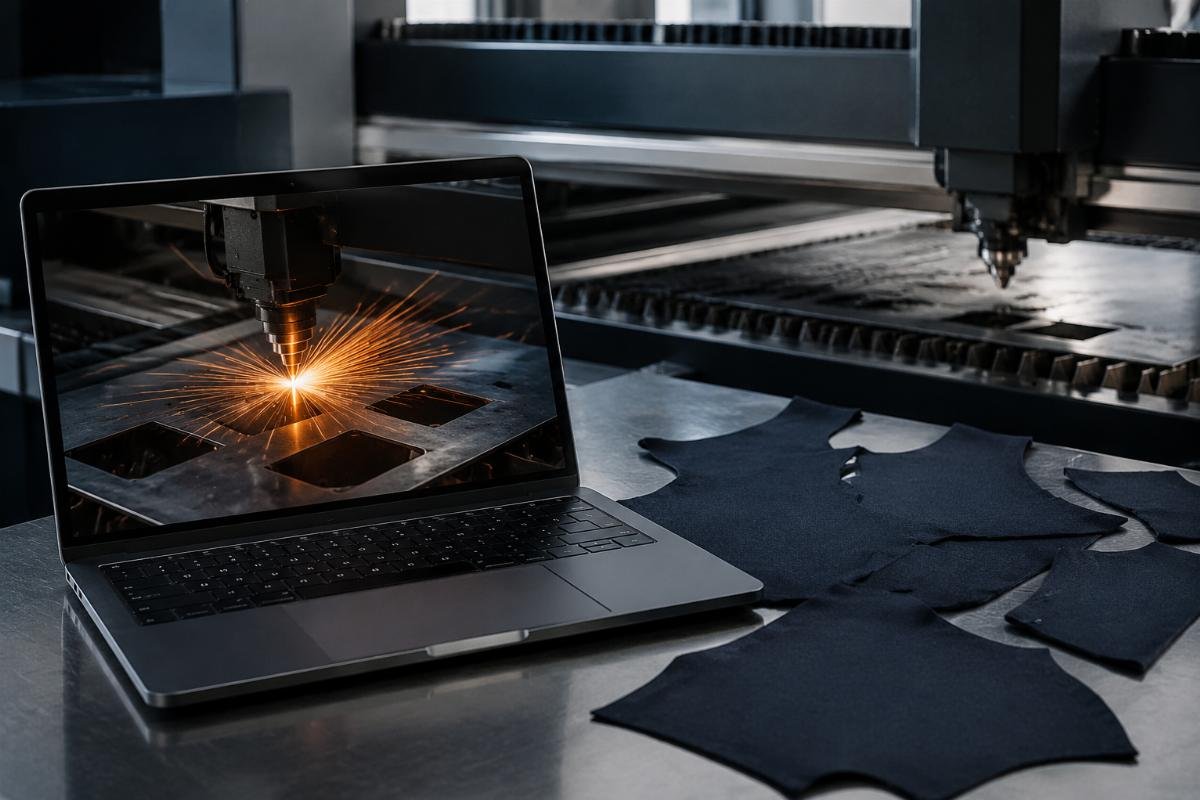
A home textile startup based in Kenya requested free sample cutting test videos from their potential supplier before placing their order, and the footage confirmed the machine could process all 32 of the common flexible materials they use for bed linens, cushion covers and curtain production, eliminating any risk of the machine being incompatible with their existing product line.
- Sample Request Submission – Send 2 to 3 meters of your most commonly used fabric to the supplier for a free test cut
- Video Proof Requirement – Ask for a time-stamped video of the full cutting process to confirm the results are not doctored
- Performance Benchmark – Compare the test cut speed, edge quality and material waste rate against your current manual process to calculate expected savings
What post-sales support guarantees can reduce the operation risk of startup garment workshops?
3 core support terms are non-negotiable to keep your production running smoothly in your first 3 years of operation. Many new owners assume that low-priced budget machines come with no meaningful after-sales support, but qualified Chinese manufacturers offer the same level of support for entry-level models as they do for premium high-capacity machines, as long as you know which terms to explicitly require in your purchase agreement.
| Support Term | Minimum Acceptable Standard | Additional Benefit to Prioritize |
|---|---|---|
| Warranty Coverage | 2-year limited parts warranty | 3-year full product warranty covering all core components |
| Technical Support | 9-to-5 weekday only support | 24/7 online support for urgent production issues |
| Software Updates | One-time initial software setup only | Lifetime free software upgrades with new feature access |
You do not have to sacrifice critical quality or support to stay within a tight startup budget when sourcing a CNC cutting machine from Chinese manufacturers. By focusing on total cost of ownership instead of just upfront price, verifying performance with sample test cuts before purchase, and locking in the 3 core support terms that eliminate operational risk, you can find a solution that matches your production needs without stretching your capital too thin. The most common assumptions about budget CNC machines being limited in
