

1625 CNC Denim Jacket Cutting Machine | Manufacturer1625 CNC Denim Jacket Cutting Machine | Manufacturer
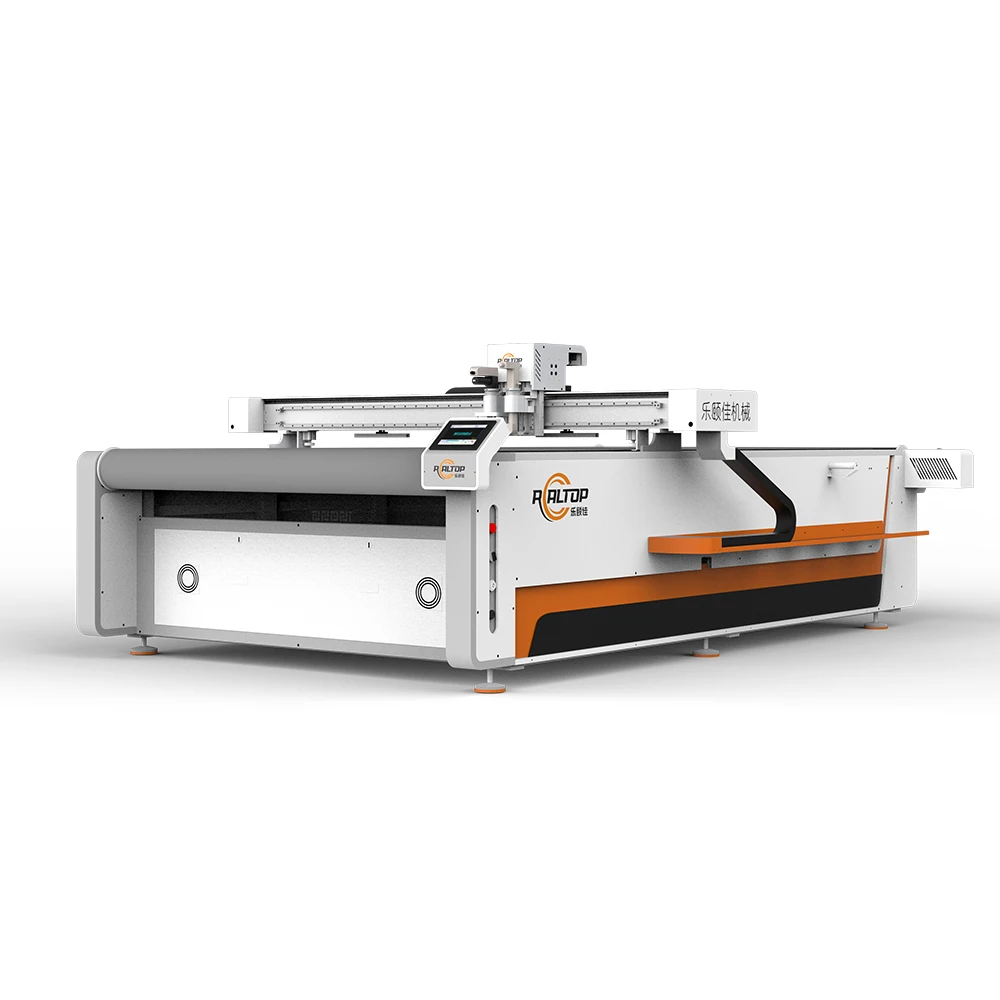
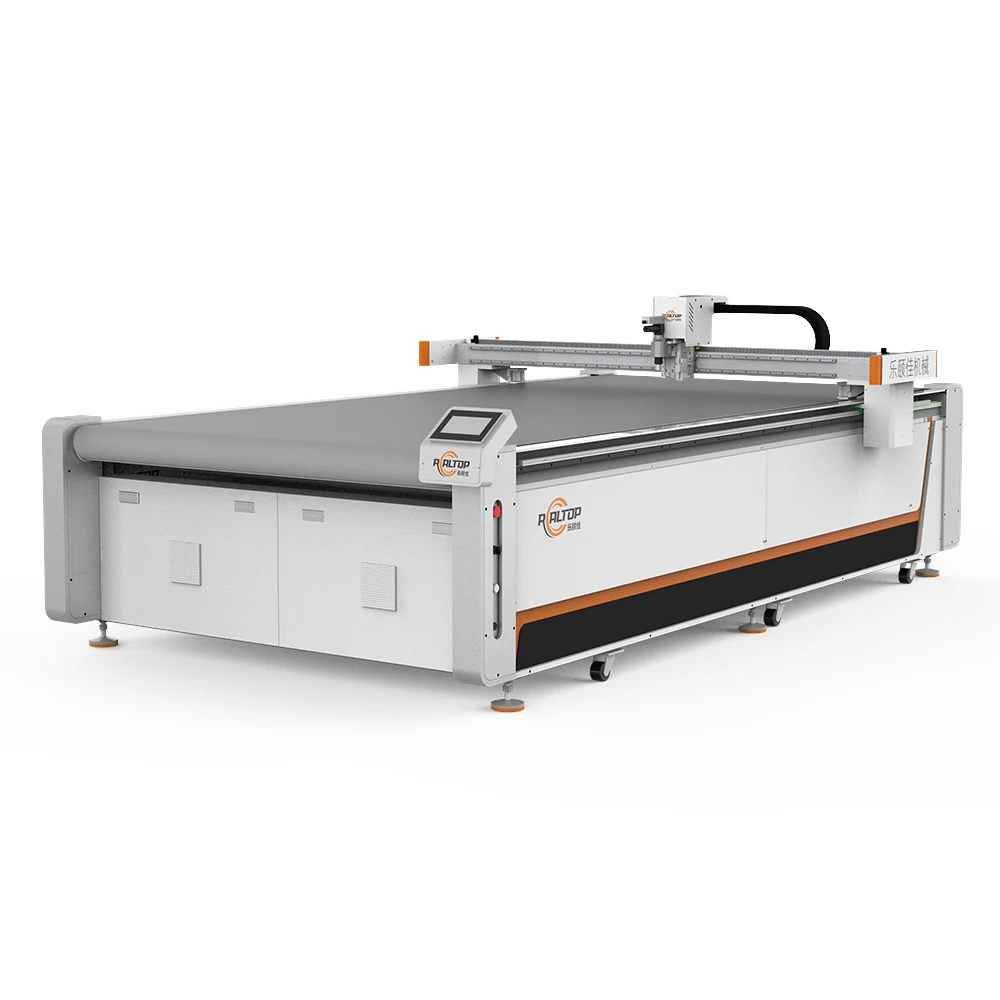
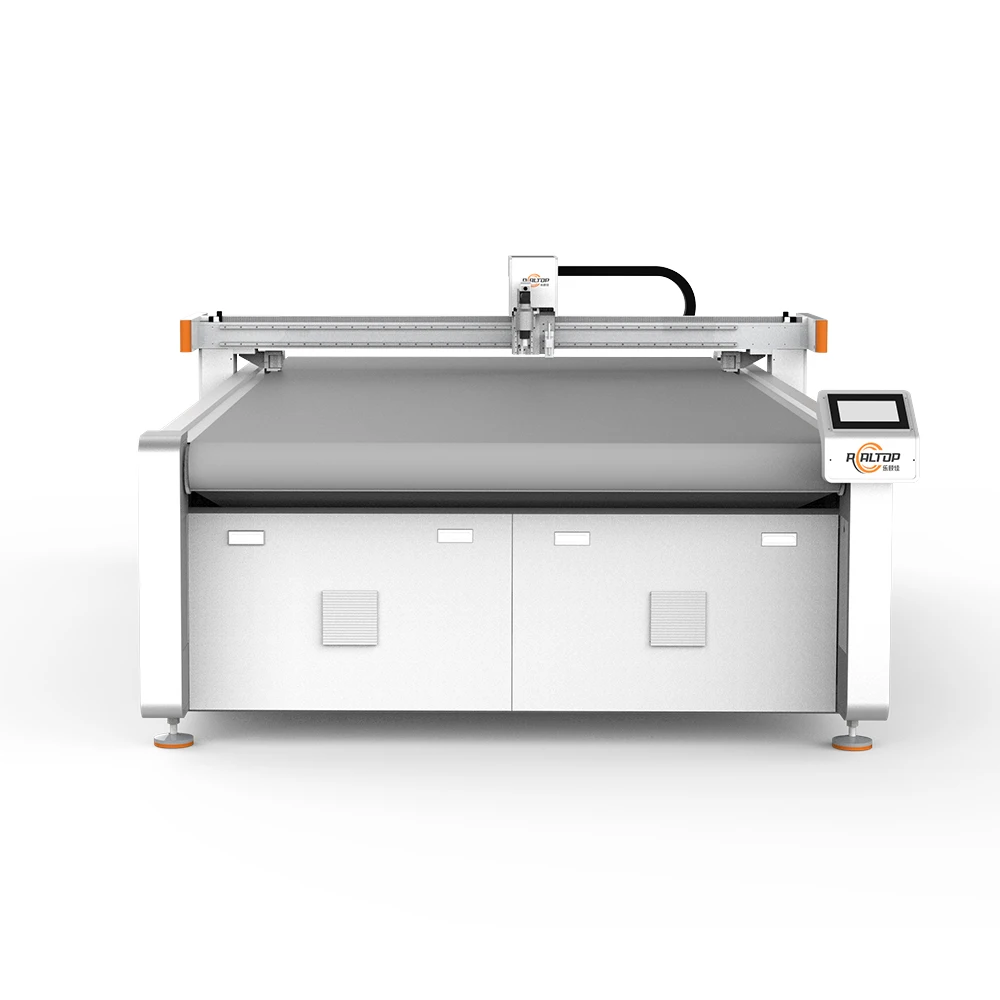
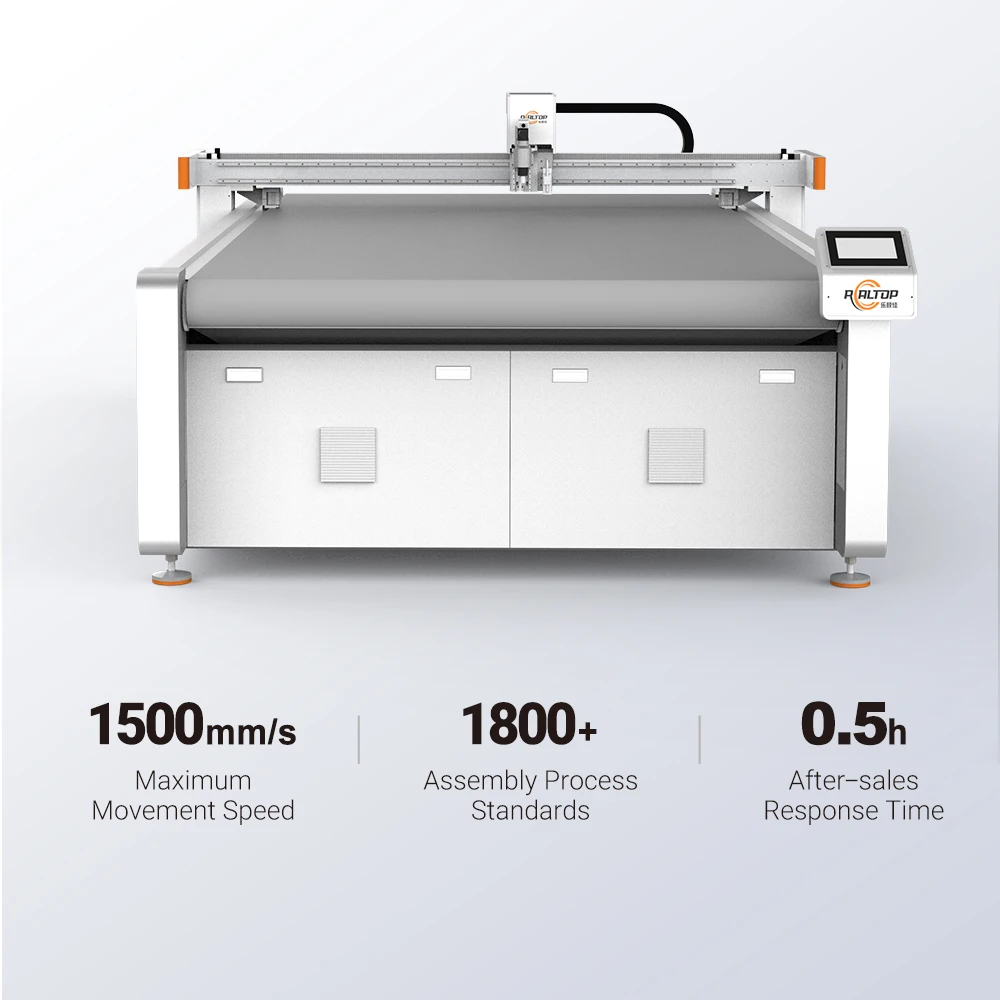
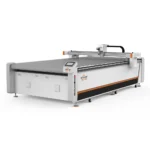
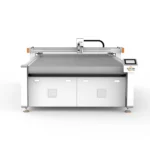
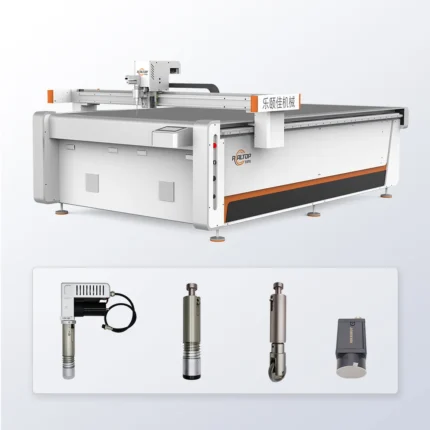
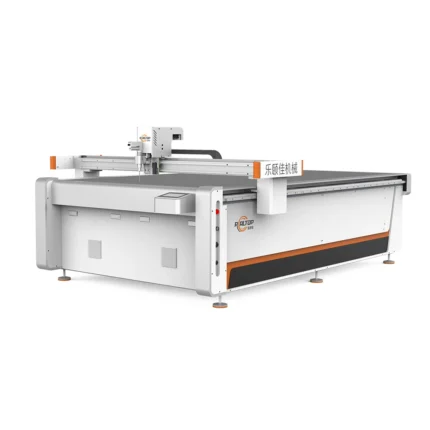
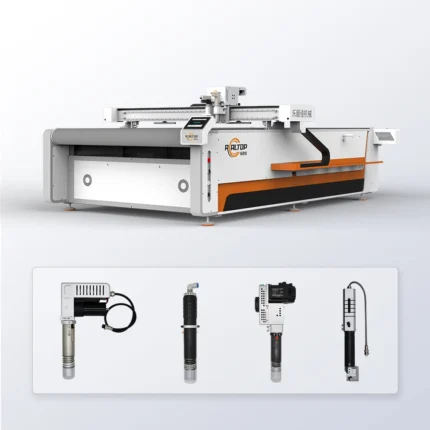
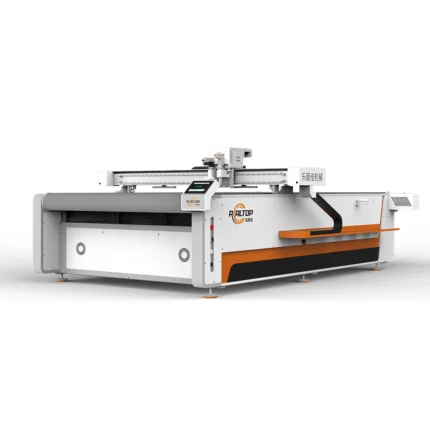
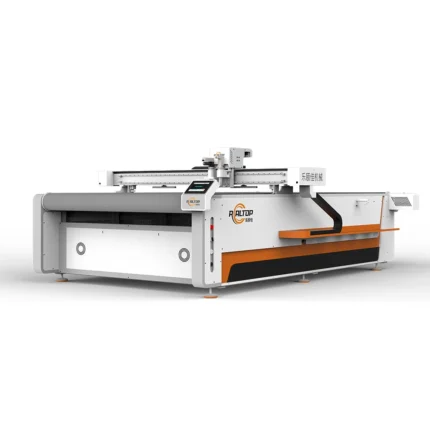
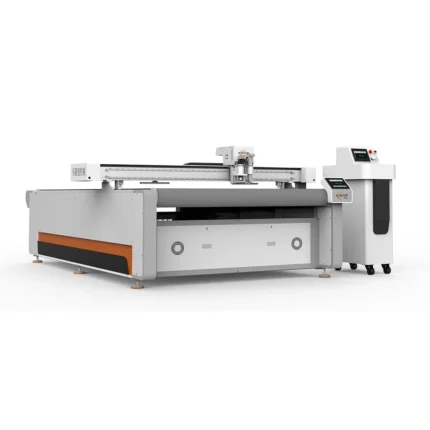
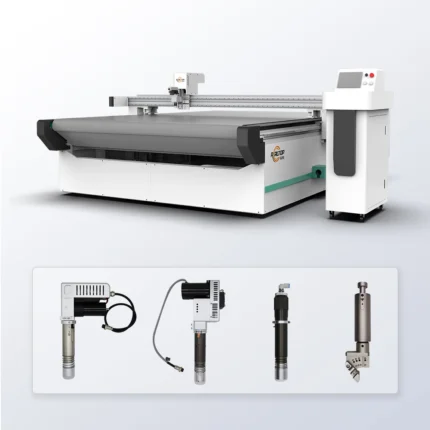
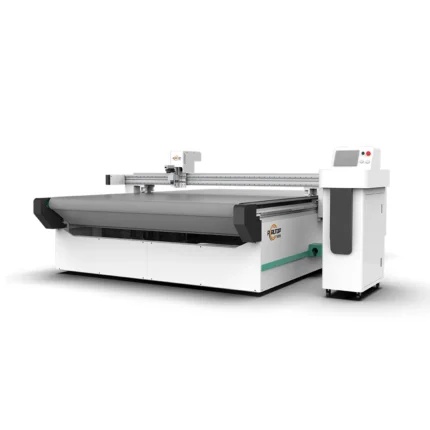
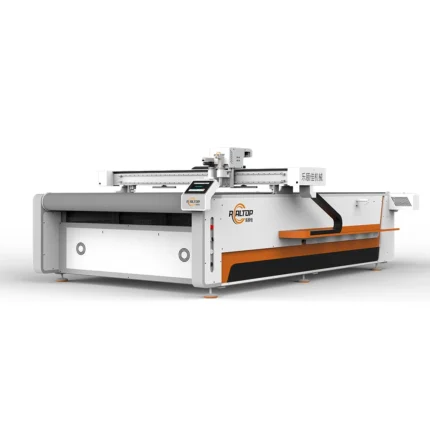
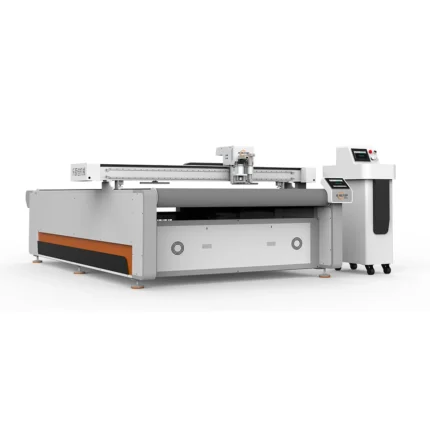
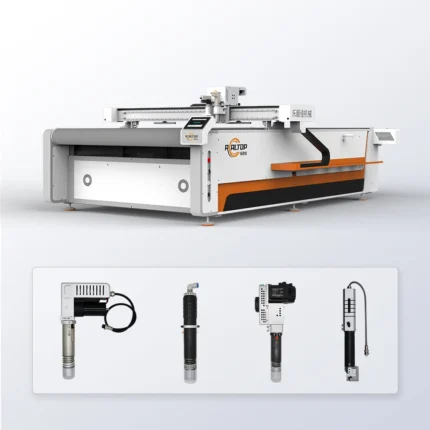
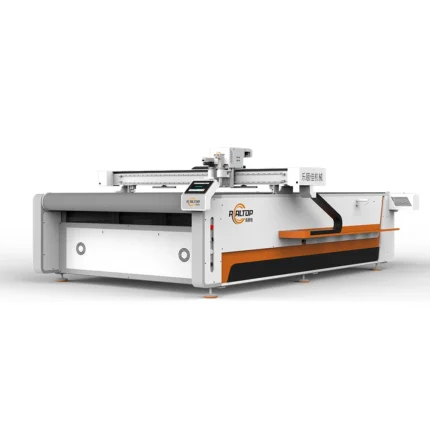
1625 CNC Oscillating Knife Cutting Machine, 1600×2500 mm Working Area, 0–2000 mm/s Cutting Speed — configured for textile and fabric producers who need precise tool head matching to material behavior.
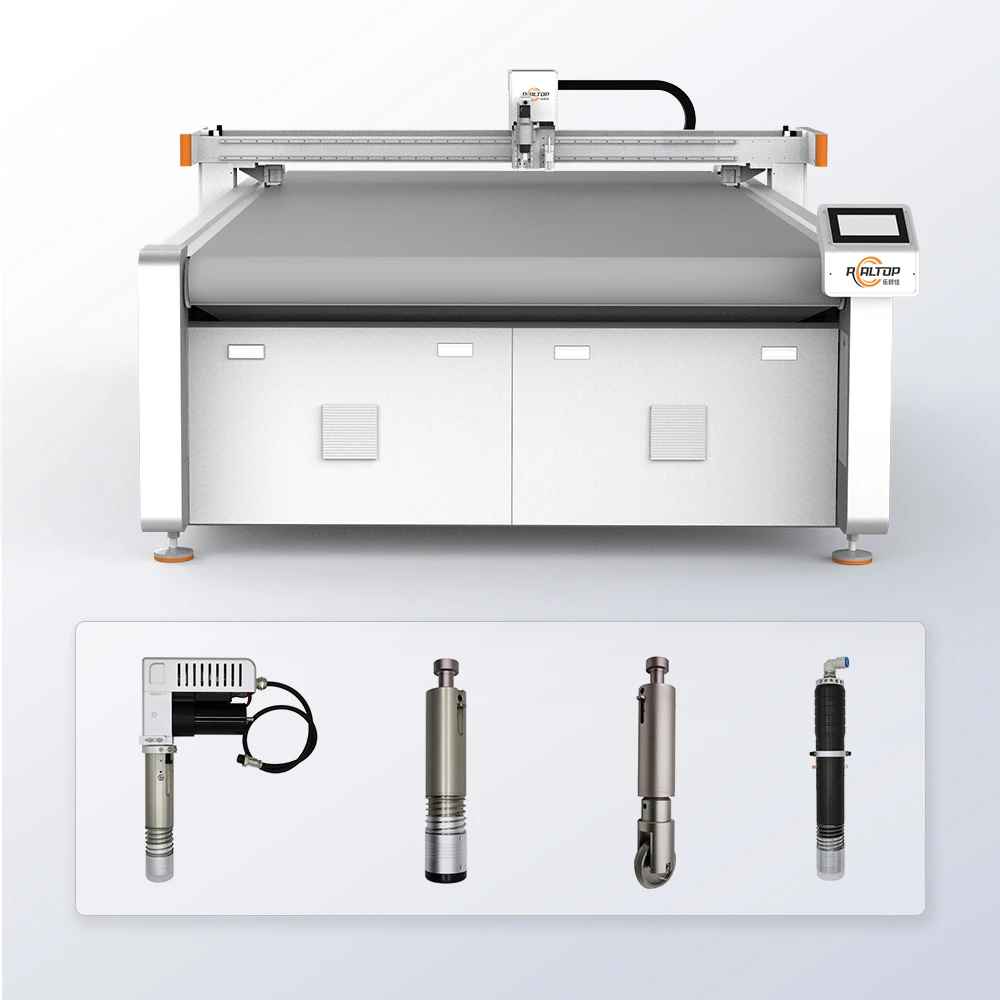
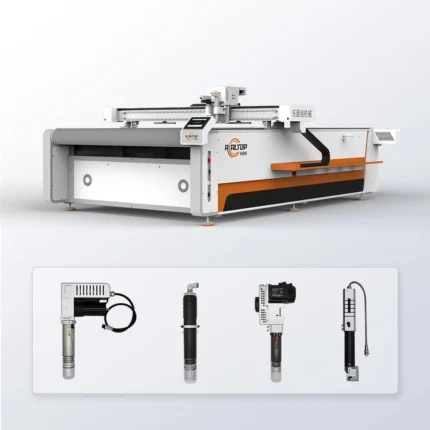
- Interchangeable tool heads including oscillating knife, driven rotary knife and kiss cutting, selected by fabric weight, weave and layer count
- Aluminum bellows vacuum table with full-surface adsorption to prevent small garment pieces from lifting during high-speed contour cutting
- CCD camera contour recognition for printed fabrics, paired with intelligent nesting software supporting DXF, PLT, AI and PDF import
Sample cutting on your own fabric at your specified layer count and speed, with tool head and vacuum zone configuration confirmed before order.
Custom Tool Head Configuration — we match the oscillating knife, rotary knife, or pneumatic tool to your specific fabric weight and layer count instead of shipping a generic flatbed.
Technical Specifications
| Parameter | Value |
|---|---|
| Model | 1625 |
| Product Type | CNC Oscillating Knife Cutting Machine |
| Working Area | 1600×2500 mm |
| Tool Head Options | Oscillating knife, Driven rotary knife, Creasing wheel, Kiss cutting tool, Pneumatic knife, Milling tool, V groove knife |
| Applicable Materials | Fabric, Cardboard, Carton, Mats, PVC, EVA, Leather, Acrylic, Foam, PTFE, Rubber |
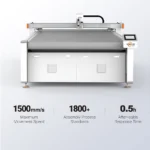
| Cutting Speed | 0–2000 mm/s |
| Cutting Thickness | ≤30 mm (basis to be confirmed by material type and density) |
| Cutting Accuracy | ±0.1 mm |
| Vacuum Pump Power | 9 kW |
| Vacuum Table | Aluminum bellows vacuum table |
| Voltage Options | 110V, 220V, 380V |
| Supported File Formats | PLT, DXF, AI, PDF |
| Safety Device | Infrared sensor device and emergency stop device |
| Overall Dimensions | 3300×2100×1350 mm |
| Servo Motor Brands | Panasonic, Delta, Dorna (source value — verify against manufacturer catalog) |
| Control System | PLC control panel with optional display languages |
| Software Language Options | English, Russian, Italian, Chinese; custom languages available |
| Nesting System | Intelligent nesting with automatic defect avoidance |
| Standards | CE |
Application Suitability
| Application | Material or Output |
|---|---|
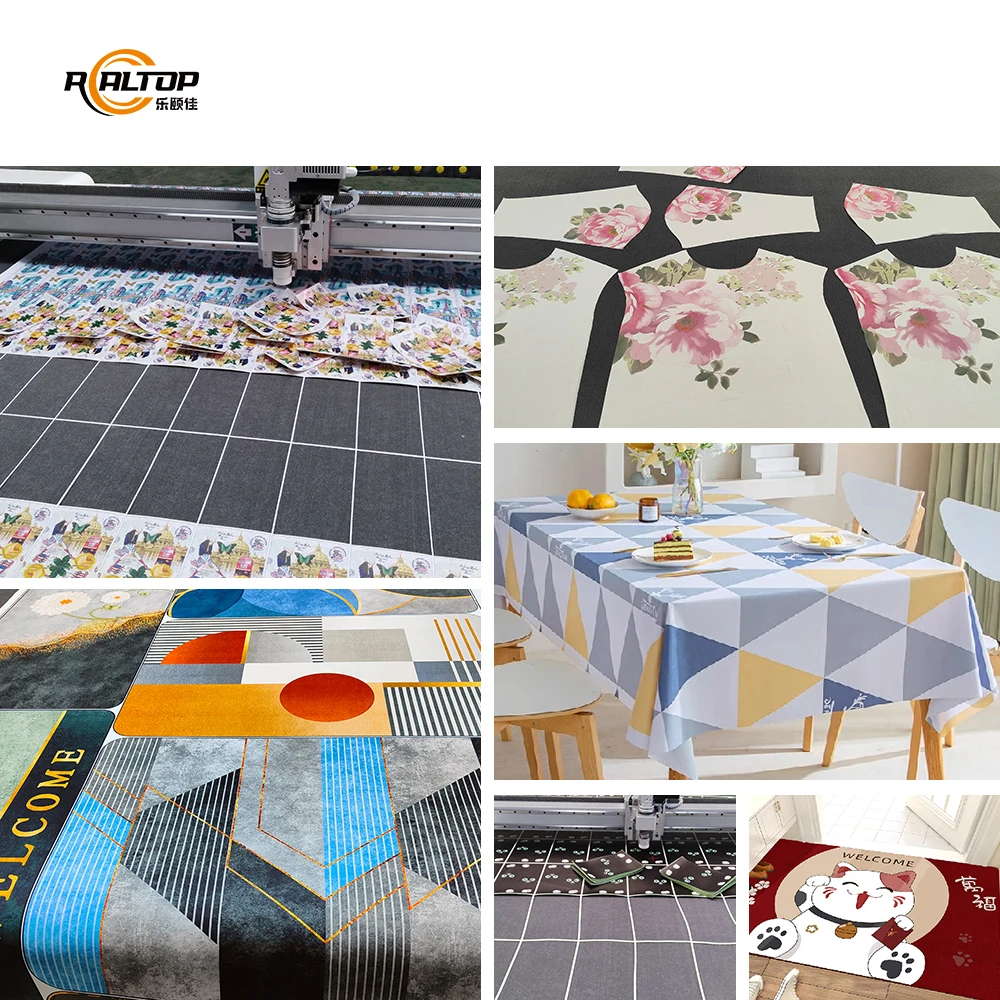
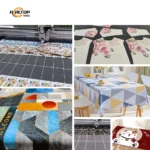
| Apparel manufacturing | Suits, knitwear, lace, complex woven fabrics, pattern-matching layouts |
| Automotive interiors | Seat fabrics, carpets, PVC floor mats |
| Home textiles | Sofa fabrics, curtains, rugs in multi-layer lay-ups |
| Composite material processing | Carbon fiber prepreg, aramid, specialty technical textiles |
Why "Working Area" Alone Fails Fabric Producers
A 1600×2500 mm table that cannot hold down your specific fabric at full speed is just an expensive aluminum frame.
The most common reason textile manufacturers reject a delivered cutting table is not the footprint or the brand on the control panel. It is discovering that the machine was specified only by working area, with no consideration for the actual material thickness, weave density, or layer count the buyer runs daily [NEED_CITE: common causes of fabric cutting table rejection]. A CNC oscillating knife cutting machine for textile and fabric must be configured from the tool head down to the vacuum zoning around the material it will actually cut. When that match is skipped, small pattern pieces lift off the table mid-cut, edges fray on loose-weave knits, and multi-layer stacks shift during contour work.
Matching the Tool Head to the Fabric Behavior
An oscillating knife handles most woven and knit fabrics, but a driven rotary knife cuts through dense denim or heavy canvas with less drag and fewer ragged edges. For thin technical films or coated textiles, a kiss cutting tool scores the top layer without penetrating the backing. The 1625 platform supports all of these heads on a single gantry, so a production floor running mixed fabric weights does not need separate machines for each material. Selecting the right head before the order is placed eliminates the trial-and-error that wastes raw material in the first weeks after installation.
Vacuum Zoning and Multi-Layer Hold-Down
The aluminum bellows vacuum table on this CNC oscillating knife cutting machine for textile and fabric is designed to distribute suction across the entire 1600×2500 mm surface. This matters most when cutting small garment pieces — collar panels, pocket flaps, sleeve cuffs — that have too little surface area for a poorly zoned table to grip [NEED_CITE: vacuum hold-down requirements for small fabric pattern pieces]. A 9 kW vacuum pump paired with multi-zone control keeps the bottom layers of a multi-layer lay-up from shifting while the knife exits the top layers. Without that zoning, a stack of thirty plies of knit fabric will bunch at the trailing edge and produce a miscut that ruins the entire lay.
Reading the Specs That Actually Matter
The ±0.1 mm cutting accuracy figure tells you the machine can follow tight contours on pattern-matched plaids and stripes, where even a slight drift produces a visible mismatch at the seam line. The 0–2000 mm/s cutting speed range is the envelope; your actual running speed depends on the fabric weight, the number of layers, and the complexity of the cut path. The PLC control panel supports multiple display languages, which matters on a factory floor where operators may not read English but need to adjust knife oscillation frequency and vacuum zone assignment on the fly. Intelligent nesting with automatic defect avoidance lets you import DXF, PLT, AI, or PDF files and maximize yield from each lay, reducing fabric waste across long production runs.
The Hidden Cost of Skipping Material Trials
When a buyer does not send sample fabric for test cutting before shipment, the tool head arrives configured for a theoretical material rather than the actual one. The oscillation frequency set for lightweight polyester will tear through heavy denim. The vacuum zoning set for large panels will leave small cuff pieces floating off the table [NEED_CITE: consequences of skipping pre-shipment material trials]. These problems are not visible in a factory acceptance test on the manufacturer’s own sample material. They show up on the buyer’s floor, on the buyer’s fabric, during the first real production run — when the cost of a miscut stack is already multiplied by the raw material price.
Why Source This Table Here
The 1625 is designed and built in-house, covering both knife cutting technologies under one production roof, so the cutting method is matched to the material rather than forced into whatever machine is available. Tool head and table configurations are specified per material and production volume, not picked from a fixed catalog page. Software compatibility is confirmed before the order is placed, with file format import tests on your actual DXF or AI files. Voltage, plug type, and control language are locked in before production starts, eliminating the field rewiring and panel relabeling that delays commissioning. Every unit leaves with a sample cutting report on the buyer’s own fabric at the specified layer count and speed.
Documentation & Verification
- Sample cutting report on your fabric at your specified layer count
- Electrical schematic with voltage and frequency matching your facility
- Tool head and vacuum zone configuration list included in the shipment
- Software license and file format compatibility note for DXF, PLT, AI, PDF
- Factory test record documenting cutting accuracy and edge quality
- Operation and maintenance manual in your selected control language
Installation, Commissioning & Support
- 3300×2100×1350 mm footprint requires a level concrete floor with clearance for material loading on all sides
- 9 kW vacuum pump needs a dedicated circuit separate from the PLC and servo drives
- Table ships as a single assembly; gantry and tool head mount on-site with alignment verification
- First-run parameter setting covers knife oscillation frequency, vacuum zone mapping, and feed speed per your fabric
- Operator training covers tool head changeover, nesting software workflow, and file format import
- Spare parts list includes knife blades, oscillation bearings, and vacuum seals matched to your configuration
What to Include in Your Inquiry
Send the specific fabric types you cut, the typical layer count in your lay-ups, and the daily volume you need to process. Confirm your facility voltage, frequency, and plug type so the electrical system is built to match before production begins. If you run printed fabrics that require contour recognition, describe the print mark format so the configuration accounts for that workflow.
Frequently Asked Questions
Q: How do I choose between an oscillating knife and a driven rotary knife for my fabric?
A: Oscillating knives work well for most woven and knit fabrics up to moderate thickness. Driven rotary knives handle dense materials like heavy denim or canvas with less drag and cleaner edges. The choice depends on your fabric weight, weave, and layer count. Send sample material for a test cut so the correct head is specified before the order.
Q: Why do small garment pieces lift off the table during cutting?
A: Small pattern pieces have insufficient surface area for a standard vacuum zone to grip. The aluminum bellows vacuum table uses multi-zone control so suction concentrates under smaller parts. Confirming the zone layout against your typical piece sizes before shipment prevents lift-related miscuts on your production floor.
Q: What print mark quality is needed for CCD contour recognition on printed fabric?
A: Printed registration marks must have sufficient contrast against the background and a consistent size that the camera can resolve at production speed. Blurred or low-contrast marks cause the system to lose tracking mid-cut. Share a sample of your printed fabric layout so the CCD configuration can be validated before commitment.
Q: How do I confirm my existing design files will work with the nesting software?
A: The system supports PLT, DXF, AI, and PDF imports. Before placing the order, request a file format compatibility note that verifies your specific design files open correctly and nest as expected. This avoids discovering import errors after the machine has already arrived at your facility.
Q: What electrical details should I confirm before the machine ships?
A: Specify your facility voltage, phase, frequency, and plug type. The 1625 supports 110V, 220V, and 380V options. Confirming these details before production ensures the electrical schematic, wiring, and control panel labeling match your local supply, eliminating costly field modifications during installation.


Related products
2026 Cortador de Tela Automático de Cuchilla Circular de Alta Eficiencia
Product Introduction
High Efficiency 2026 Auto Fabric Cutter with Round Knife is a professional cutting equipment designed for fabric processing. It features advanced automation and high cutting efficiency, suitable for various fabric materials in industrial production.Product Parameters
| Model | 2026 |
| Type | Auto Fabric Cutter |
| Blade Type | Round Knife |
| Feature | High Efficiency |
Máquina cortadora automática de lona de PVC 2026
Product Introduction
High-performance Automatic PVC Tarpaulin Cutter Machine 2026, ideal for precise and efficient cutting of PVC tarpaulin materials, designed for industrial manufacturing needs with reliable operation and user-friendly control.Product Parameters
| Model | 2026 |
| Type | Automatic PVC Tarpaulin Cutter |
| Application | PVC Tarpaulin Cutting |
| Feature | Precise & Efficient Cutting |
Cortadora de cuchilla oscilante de mesa plana 2026, 1600x3500 mm, textil con alimentación automática
Product Overview
Flatbed Oscillating Knife Cutting Machine 2026 is a high-precision textile fabric cutter with auto-feeding function, ideal for efficient and accurate cutting tasks in textile manufacturing. It combines advanced oscillating knife technology with a large working area to meet industrial production needs.Key Specifications
| Model | 2026 |
| Working Area | 1600x3500mm |
| Feeding System | Auto-Feeding |
| Cutting Type | Oscillating Knife |
| Application | Textile Fabric |
2026 Máquina de corte para tablas de surf SUP inflables
Product Introduction
Ideal for inflatable surf SUP board production, this 2026 cutting machine ensures precise and efficient cutting, tailored for manufacturers seeking reliable performance in water sports equipment manufacturing.
Specifications
| Application | Inflatable Surf SUP Board |
| Type | Cutting Machine |
| Model Year | 2026 |
Sistema de Cuchilla Vibratoria CNC 2026 para Prepreg No Tejido de Poliéster y Nailon
Product Introduction
CNC Vibration Knife System 2026 is ideal for cutting polyester, nylon, non-woven fabrics, and prepreg materials with precision and efficiency, suitable for industrial manufacturing needs.Product Parameters
| Model | 2026 |
| CNC Vibration Knife | |
| Materials | Polyester, Nylon, Non-Woven, Prepreg |
Máquina de corte de tela de alta velocidad 2026 con cuchilla oscilante redonda
Product Overview
High Speed Fabric Cutting Machine 2026 with round and oscillating knife for efficient fabric cutting. Ideal for textile manufacturing and related industries.Key Specifications
| Cutting Type | Round & Oscillating Knife |
| Model Year | 2026 |
| Application | Fabric Cutting |
| Feature | High Speed Performance |
商品评价
There are no reviews yet.