



Round Knife CNC Cutting Machine for Textile Fabric – Industrial Application
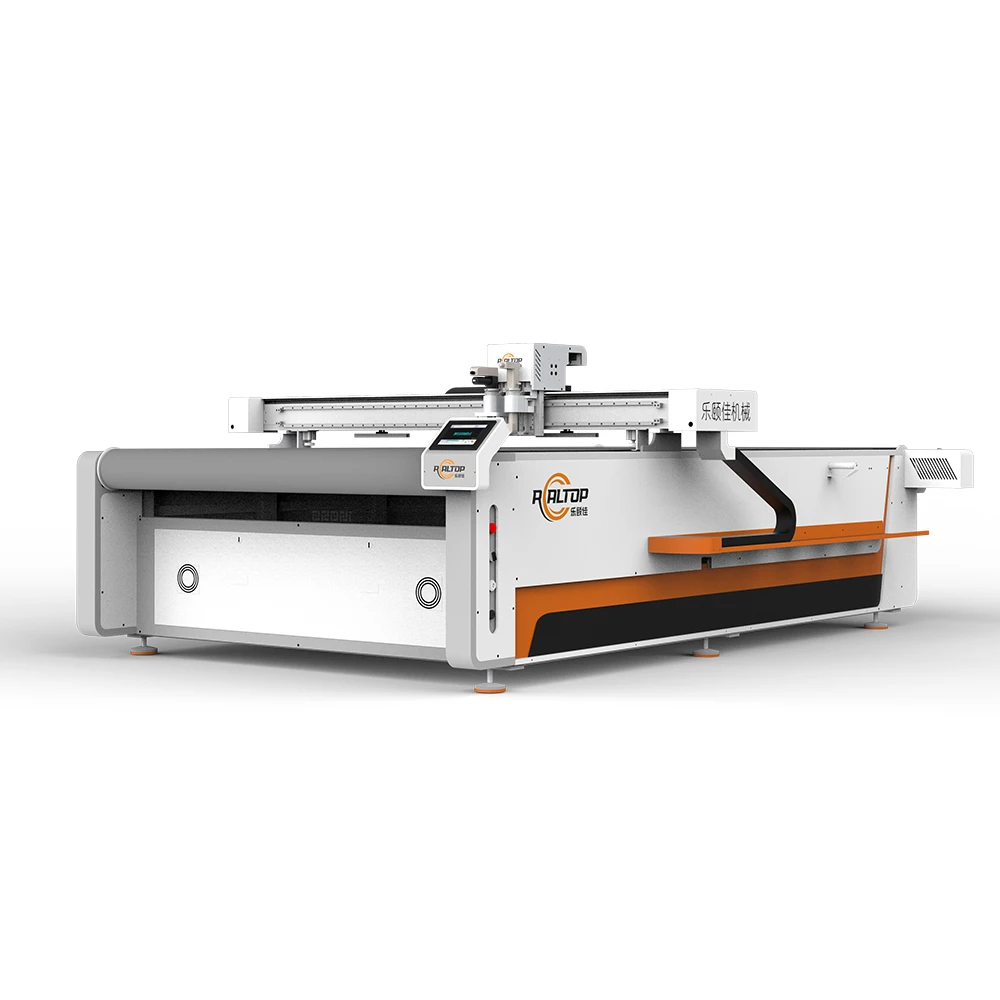
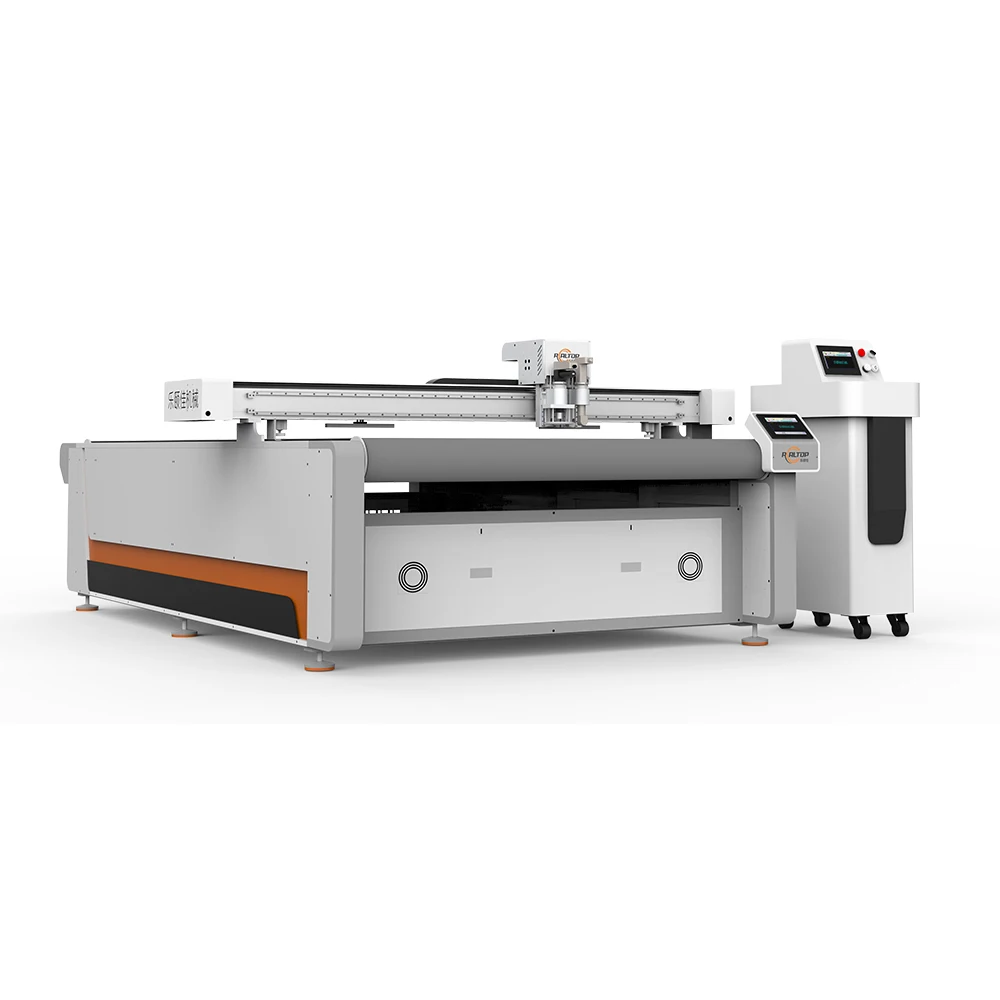
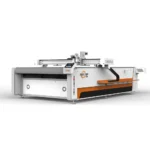
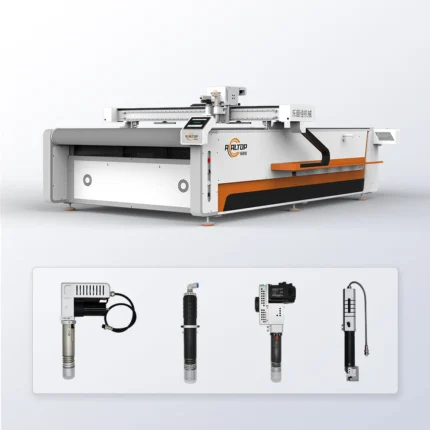
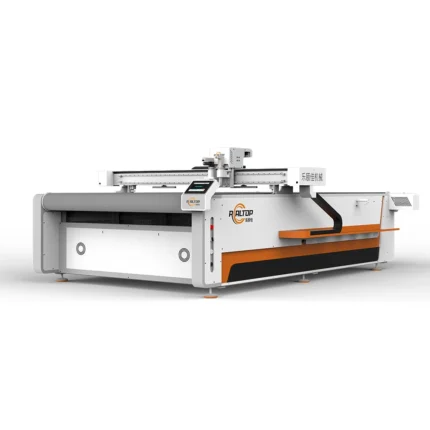
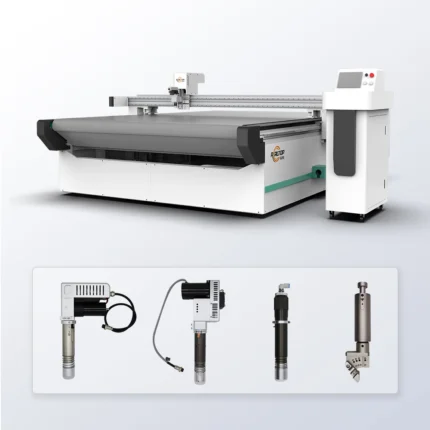
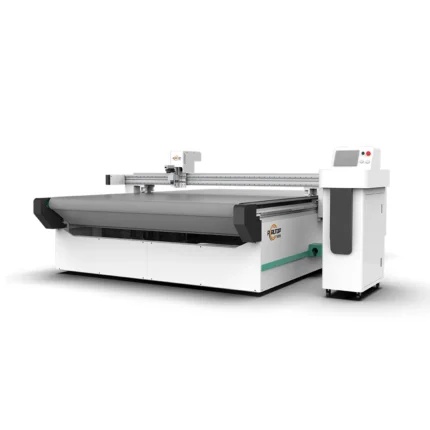
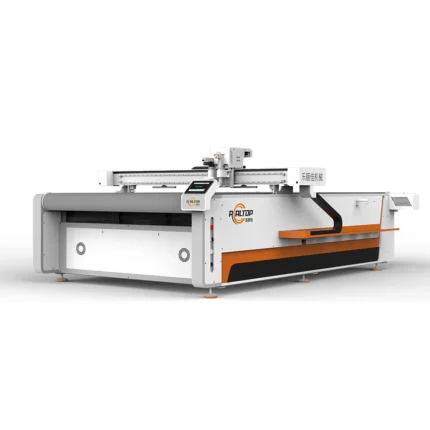
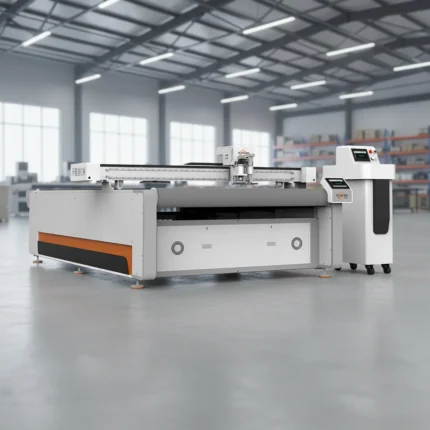
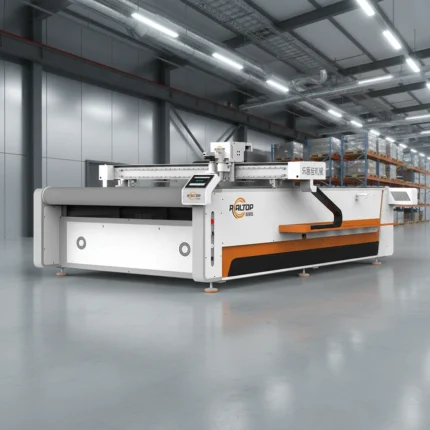
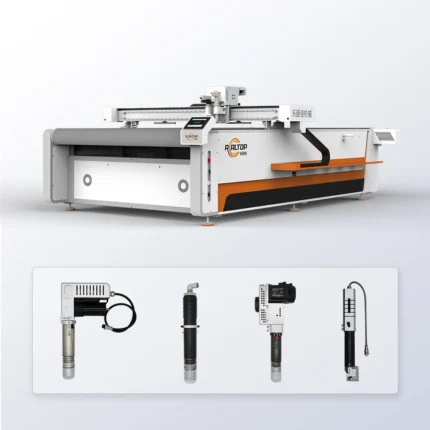
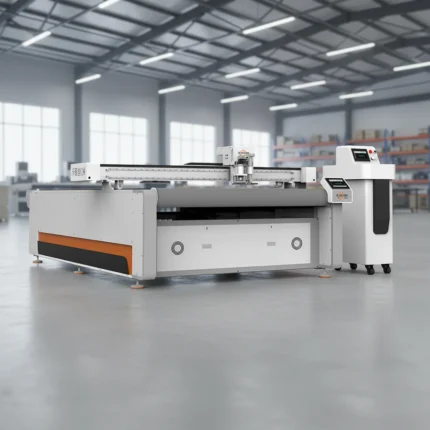
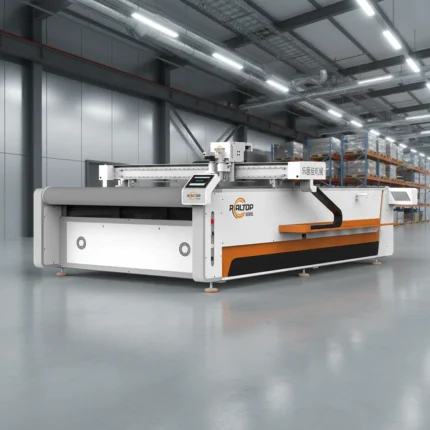
1625 CNC Round Knife Cutting Machine, 1600×2500 mm Working Area, ±0.1 mm Accuracy — engineered for textile and composite cold cutting where laser heat causes scorching, dark edges or fumes.
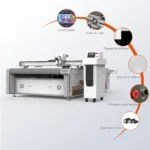
- Oscillating, driven rotary and pneumatic knife heads matched to fabric type, with intelligent nesting and defect avoidance for yield optimization
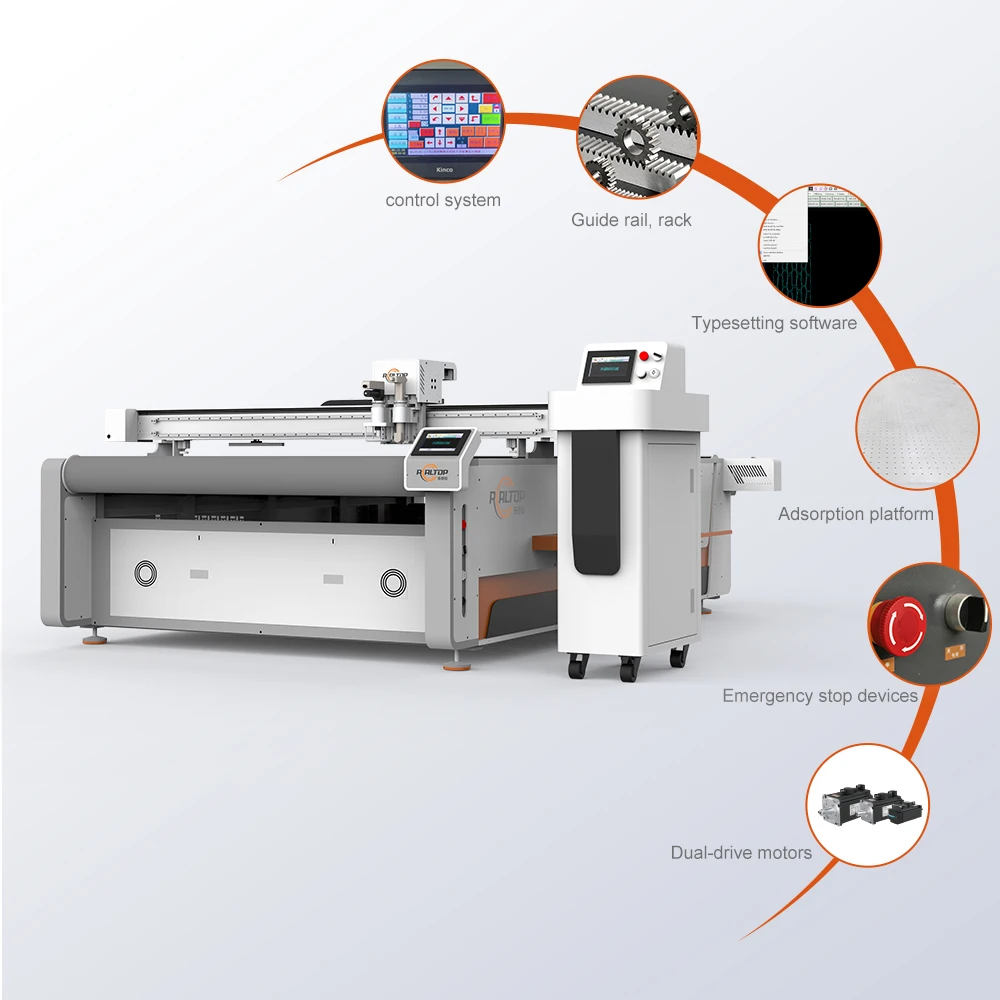
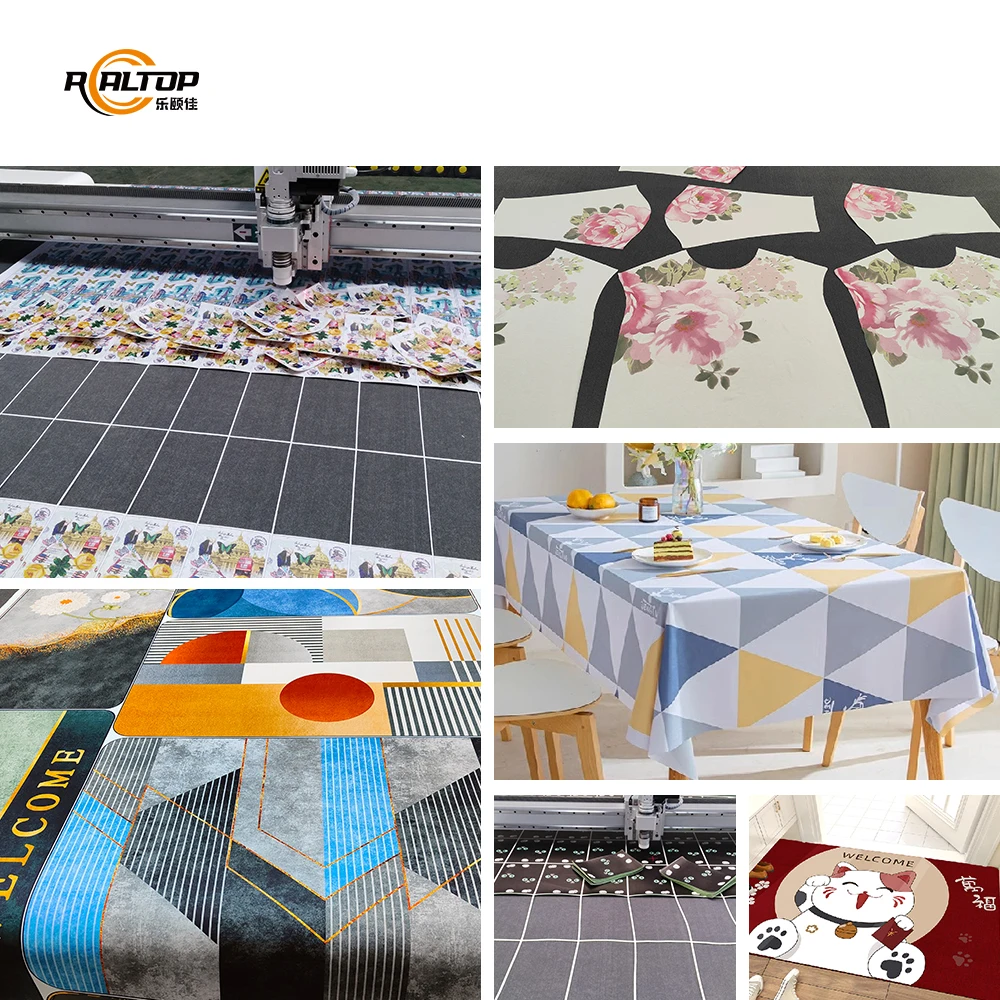
- PLC-controlled interface with multi-language support, aluminum vacuum table and CCD camera positioning for printed contour work
Cold cutting test on your own material confirms edge quality, layer capacity and cycle time before order commitment.
Cold Cutting Precision — In-house knife tooling matched to your textile and composite stack, verified by sample cutting on your actual material before order.
Technical Specifications
| Parameter | Value |
|---|---|
| Model | 1625 |
| Product Type | CNC Round Knife Cutting Machine |
| Working Area | 1600×2500 mm |
| Available Tool Heads | Oscillating knife, Driven rotary knife, Creasing wheel, Kiss cutting tool, Pneumatic knife, Milling tool, V groove knife |
| Cutting Speed | 0–2000 mm/s |
| Cutting Accuracy | ±0.1 mm |
| Repeat Positioning Accuracy | ±0.1 mm |
| Vacuum Pump | 9 kW |
| Voltage Options | 110 V, 220 V, 380 V |
| Control System | PLC control panel with intuitive interface |
| Supported File Formats | PLT, DXF, AI, PDF |
| Vacuum Table | Aluminum bellows vacuum table |
| Safety Devices | Infrared sensor, emergency stop |
| Machine Dimensions (L×W×H) | 3300×2100×1350 mm |
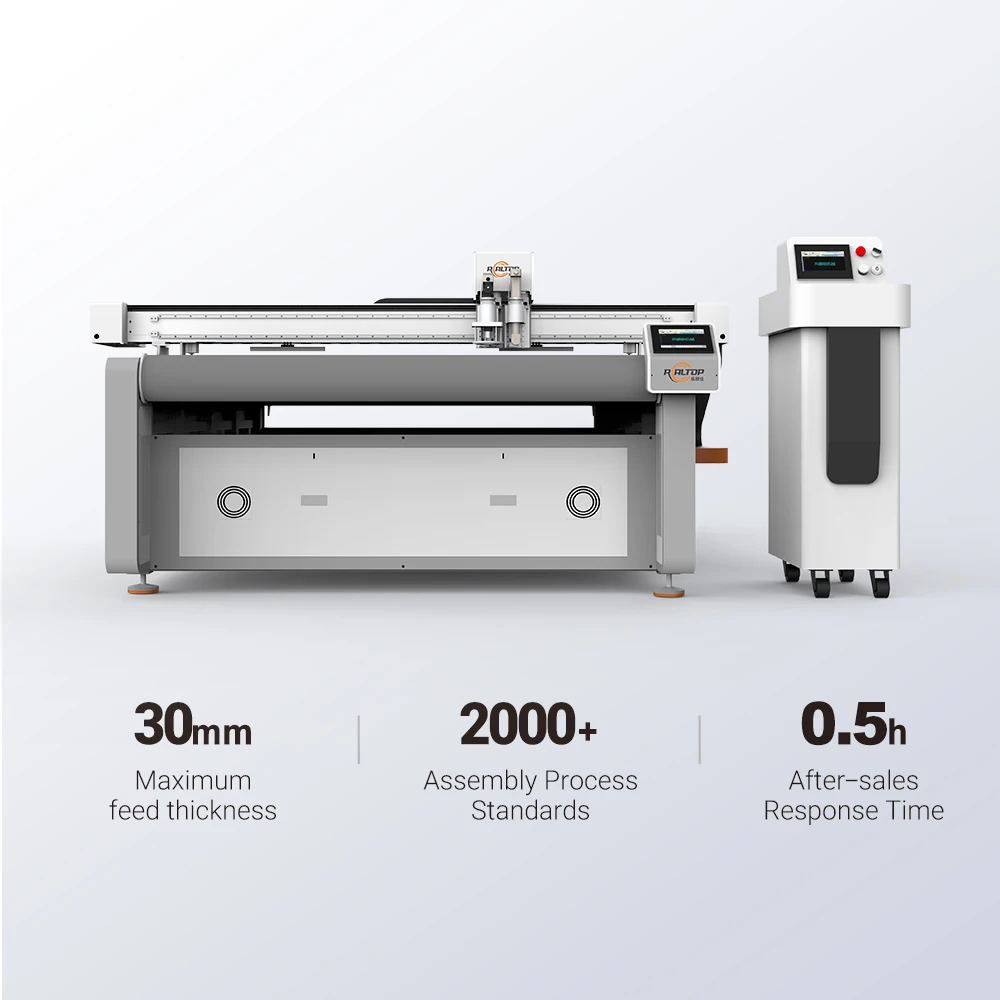
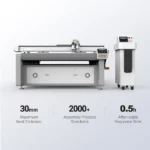
| Multi-layer Cutting Thickness | Up to 30–50 mm (basis not stated in source — confirm material / layer count) |
| Servo Motor Options | Panasonic, Delta, Dorna |
| Language Options | English, Russian, Italian, Chinese; special languages customizable |
| Nesting System | Intelligent nesting with defect avoidance |
| Applicable Materials | Fabric, Cardboard, Carton, Mats, PVC, EVA, Leather, Acrylic, Foam, PTFE, Rubber |
Application Suitability
| Application | Material or Output |
|---|---|
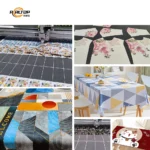
| Apparel and garment production | Multi-layer knitwear, lace, suiting fabric, delicate textiles |
| Automotive interior trimming | Seat fabrics, carpets, PVC floor mats, headliner material |
| Home textile manufacturing | Sofa upholstery fabric, curtain panels, rug backing |
| Composite layup prep | Carbon fiber prepreg, aramid fabric, specialty reinforcement textiles |
What a Stated Cutting Thickness Actually Means for Your Fabric Stack
The number on the spec sheet only matters when tied to your specific material density and layer count.
I once watched a buyer receive a machine quoted for thick multi-layer cutting, only to discover the stated capacity was based on soft foam rather than the dense composite they ran daily. The knife stalled mid-stack, edges frayed, and the entire batch was scrapped. When evaluating any CNC Knife Cutting Machine for Textile, the thickness figure must be anchored to the actual material you feed into it — not a generic reference block. Requesting a sample cut on your own roll goods eliminates that guesswork before the crate leaves the factory floor [NEED_CITE: material density variation across textile grades].
Cold Cutting Where Laser Leaves Scorch Marks
Thermal cutting seals synthetic edges but generates burn lines, yellowing, and volatile fumes on natural fibers and heat-sensitive composites. The driven rotary knife and oscillating knife heads on this system slice without heat, preserving the original color and hand feel of light-colored knitwear, lace, and prepreg fabrics. For manufacturers supplying automotive OEMs or luxury apparel brands, avoiding thermal discoloration is not optional — it is a contract requirement. The CNC Knife Cutting Machine for Textile delivers clean edges that pass visual inspection without secondary trimming.
Holding Tight Tolerance Across a Full Nesting Layout
Repeat positioning accuracy of ±0.1 mm across the entire 1600×2500 mm table means a pattern piece cut at the far corner matches one cut at the origin. The intelligent nesting system places pieces to avoid fabric defects flagged during scanning, maintaining yield without sacrificing dimensional consistency. When cutting fifty-plus layers in a single pass, that positional repeatability keeps every ply aligned so the bottom piece matches the top piece within the same tolerance window [NEED_CITE: nesting accuracy requirements for multi-ply garment cutting].
Reading the Specs That Matter for Your Production Floor
The 9 kW vacuum pump paired with an aluminum bellows vacuum table generates enough hold-down force to keep multi-layer stacks flat during high-speed traverses — but vacuum zoning is equally important. Small pattern pieces like collar stays or gussets lift at the edges if the table cannot isolate suction to the active cutting zone. The available tool head range from oscillating knife to driven rotary knife lets you match the cutting action to fabric behavior: rotary for continuous long cuts on woven rolls, oscillating for tight curves on knit stacks. Supported file formats including PLT, DXF, AI, and PDF mean your existing marker files load without conversion middleware. The PLC control panel with multi-language support reduces operator errors when your floor crew speaks Russian or Italian rather than Mandarin.
The Real Cost of Skipping Tool Head Validation
Selecting a tool head based on a brochure photo rather than your material cross-section leads to ragged edges on technical textiles and crushed plies on foam-backed composites. I have seen buyers specify an oscillating knife for a dense rubber-backed automotive mat because it worked on the sample felt; the result was incomplete cuts and delaminated layers across an entire shift. Wrong vacuum zoning produces the same problem differently — small pieces drift during cutting, shifting the pattern by millimeters that downstream sewing cannot absorb. These failures do not show up until your material is already on the table and your deadline has arrived [NEED_CITE: tooling mismatch incidents in industrial textile cutting].
Why Source This Machine Through Our Workshop
Our design team covers both knife and laser cutting platforms, so the cutting method is chosen to fit your material rather than forced into whichever technology is easiest to ship. Every tool head and table configuration is specified against your material sample and production volume before a purchase order is issued. CCD camera positioning is available for printed contour work on patterned textiles where edge detection alone is insufficient. Software compatibility is confirmed with your file formats during the quotation stage, not discovered after delivery. Voltage, plug type, and control language are locked to your destination market specifications before the machine enters final assembly.
Documentation & Verification
- Machine specification sheet listing every confirmed tool head and table zone
- Electrical schematic with voltage and breaker ratings matched to your facility
- Sample cutting report showing edge quality on your supplied textile roll
- Factory test record documenting accuracy across the full working area before crating
- Software license with file format compatibility confirmed for your nesting workflow
- Spare parts list identifying wear items with lead times for reorder
Installation, Commissioning & Support
- Floor space planning for the 3300×2100 mm footprint plus material feed and offload clearance
- Dedicated electrical circuit sized for the 9 kW vacuum pump and servo drives at your confirmed voltage
- Assembly of the heavy-duty frame and aluminum bellows table on your prepared level floor
- First-run calibration of cutting depth and vacuum zoning against your actual textile stack
- Operator training on the PLC panel covering nesting import, tool change, and emergency stop procedure
- Wear part schedule for knife blades and vacuum seals based on your daily cutting volume
Before You Request a Quote
Send us the exact textile type, whether it is single ply or a multi-layer layup, the sheet or roll dimensions, and your daily cutting volume. Confirm your facility voltage and frequency, the control language your operators need, and whether your nesting files are DXF, PLT, AI, or PDF. If your material is heat-sensitive or composite-backed, ship a sample roll so we can run test cuts and document edge quality before you commit to a configuration.
Frequently Asked Questions
Q: How do I know whether knife cutting or laser cutting suits my textile?
A: Laser works well for synthetics that benefit from sealed edges, but causes scorching and fumes on natural fibers, light-colored fabrics, and heat-sensitive composites. If your material yellows, melts, or emits odor under thermal processing, a CNC Knife Cutting Machine for Textile using cold cutting heads preserves color and fiber integrity without secondary cleaning.
Q: What material and layer count supports the stated cutting thickness?
A: The multi-layer capacity is listed as 30–50 mm, but that figure depends on fabric density, backing type, and compression behavior. Request a sample cutting report on your actual textile stack to confirm achievable thickness, edge quality, and cycle time before placing an order.
Q: Can the control panel and documentation match my local market requirements?
A: The PLC control panel supports English, Russian, Italian, and Chinese, with additional languages customizable. Voltage options span 110 V, 220 V, and 380 V. Confirm your exact frequency and plug type during quotation so the electrical system is built to your standard before shipment.
Q: Will the system import my existing nesting and marker files?
A: The software accepts PLT, DXF, AI, and PDF formats directly. During the quotation stage, we test your actual production files on the system to confirm import, nesting behavior, and cut path output so no conversion work is needed after delivery.
Q: How do I arrange sample cutting on my own material before ordering?
A: Ship a representative roll or stack of your production textile to our workshop. We run test cuts using the recommended tool head, document edge quality, dimensional accuracy, and cycle time, then provide the sample cutting report with physical cut pieces returned for your inspection.


Related products
Máquina cortadora automática de lona de PVC 2026
Product Introduction
High-performance Automatic PVC Tarpaulin Cutter Machine 2026, ideal for precise and efficient cutting of PVC tarpaulin materials, designed for industrial manufacturing needs with reliable operation and user-friendly control.Product Parameters
| Model | 2026 |
| Type | Automatic PVC Tarpaulin Cutter |
| Application | PVC Tarpaulin Cutting |
| Feature | Precise & Efficient Cutting |
Cortadora de cuchilla oscilante de mesa plana 2026, 1600x3500 mm, textil con alimentación automática
Product Overview
Flatbed Oscillating Knife Cutting Machine 2026 is a high-precision textile fabric cutter with auto-feeding function, ideal for efficient and accurate cutting tasks in textile manufacturing. It combines advanced oscillating knife technology with a large working area to meet industrial production needs.Key Specifications
| Model | 2026 |
| Working Area | 1600x3500mm |
| Feeding System | Auto-Feeding |
| Cutting Type | Oscillating Knife |
| Application | Textile Fabric |
Sistema de Cuchilla Vibratoria CNC 2026 para Prepreg No Tejido de Poliéster y Nailon
Product Introduction
CNC Vibration Knife System 2026 is ideal for cutting polyester, nylon, non-woven fabrics, and prepreg materials with precision and efficiency, suitable for industrial manufacturing needs.Product Parameters
| Model | 2026 |
| CNC Vibration Knife | |
| Materials | Polyester, Nylon, Non-Woven, Prepreg |

Cortadora rotativa eléctrica de tela 2026 12V Auto-Cut Industrial
Product Introduction
Industrial-grade Electric Fabric Rotary Cutter designed for precise cutting of scan-printed cloth. Features 12V auto-cut functionality for efficient, automated operation, ideal for professional textile processing.Product Parameters
| Power Supply | 12V |
| Function | Auto-Cut |
| Application | Scan-Printed Cloth |
| Type | Industrial Electric Rotary Cutter |
Jinan Realtop CNC Fabric Slitting Cutter 2026: Cortador avanzado de materiales flexibles
Product Introduction
Jinan Realtop CNC Fabric Slitting Cutter 2026 is a high-performance cutting equipment designed for precise fabric processing, ideal for industrial manufacturing needs with reliable CNC technology.Specifications
| Model | 2026 |
| Type | CNC Fabric Slitting Cutter |
| Manufacturer | Jinan Realtop |
| Application | Fabric Processing |
| Control System | CNC |
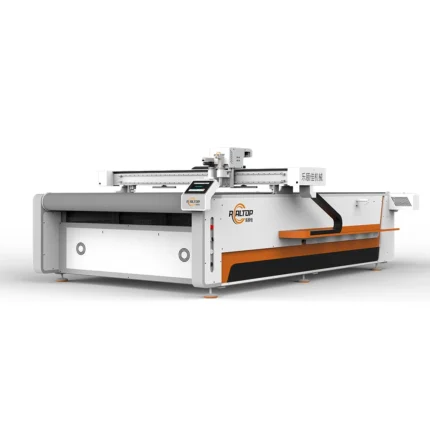
Jinan Realtop CNC Cortadora de Cuchilla Oscilante 2026
Product Introduction
Jinan Realtop CNC Oscillating Knife Cutter 2026, a precision cutting solution from China's leading welding & cutting equipment manufacturer, ideal for efficient material processing with advanced CNC technology.
Key Specifications
| Model | 2026 |
| Type | CNC Oscillating Knife Cutter |
| Manufacturer | Jinan Realtop |
商品评价
There are no reviews yet.