


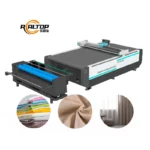
Auto Feeding CNC Fabric Cutter for Zebra Roller Blinds – Manufacturer
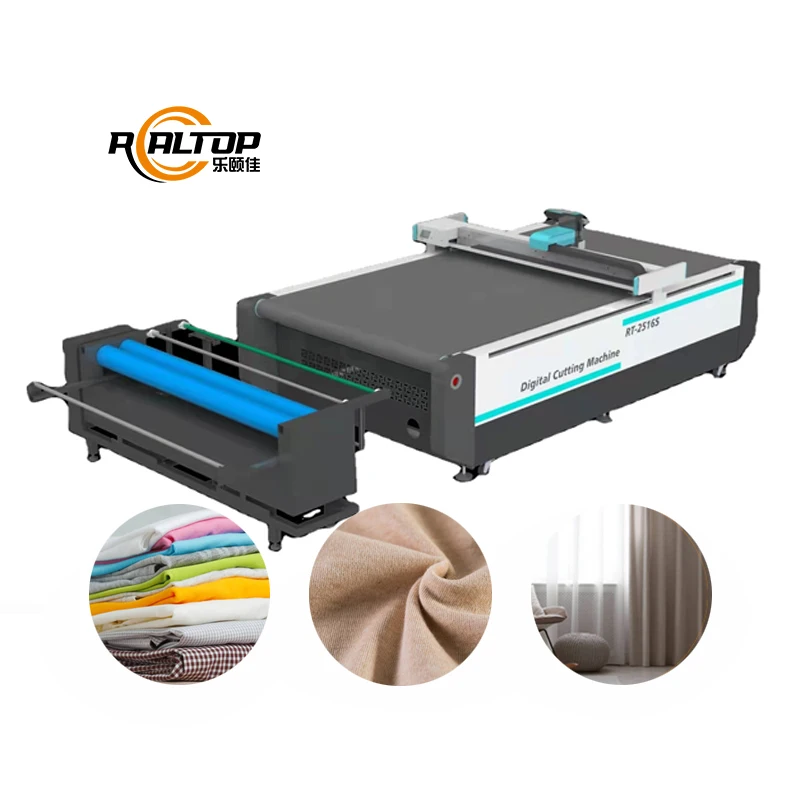
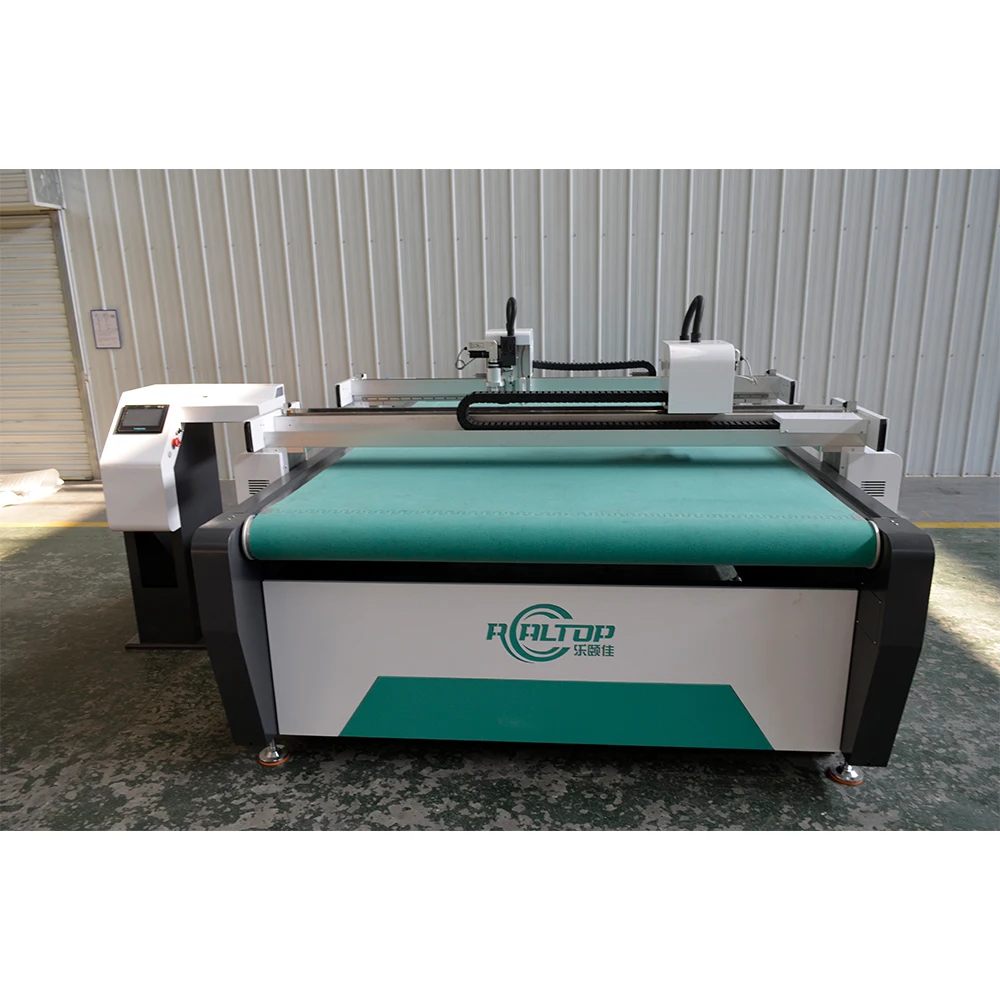
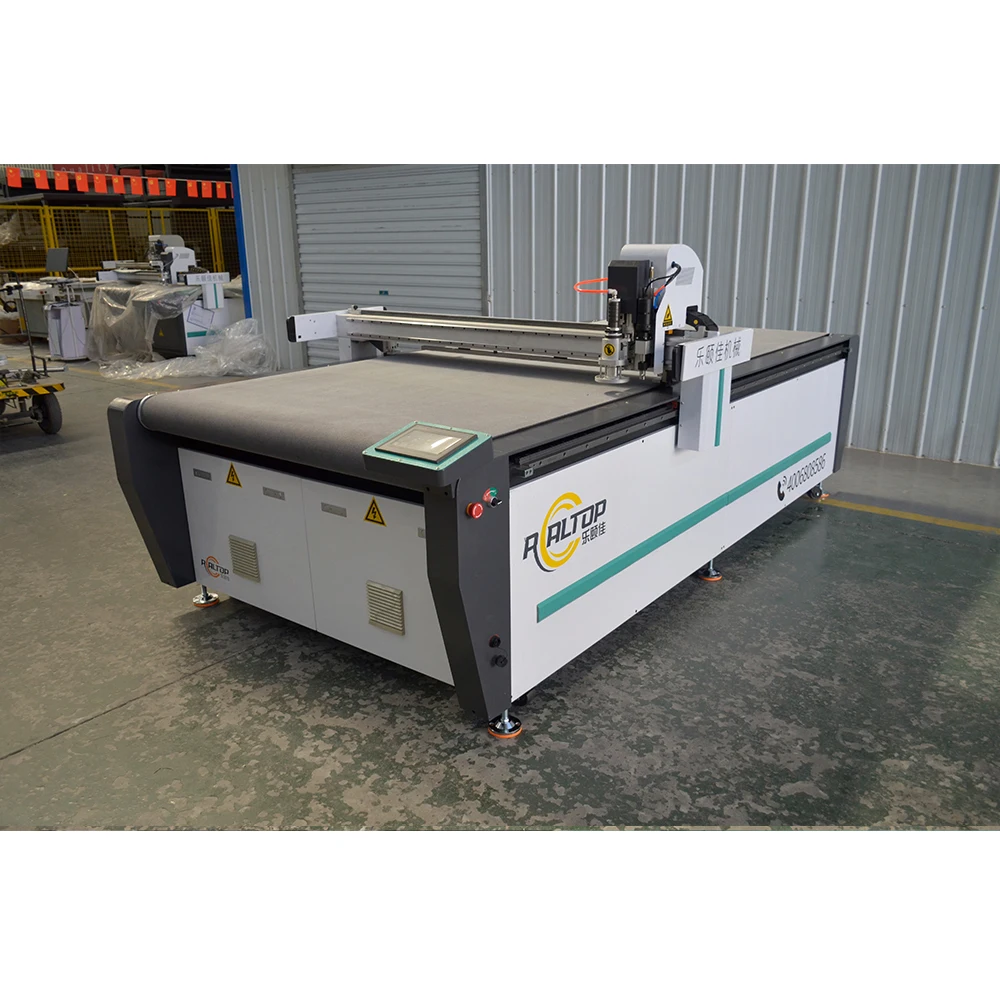
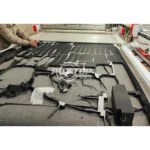
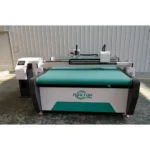
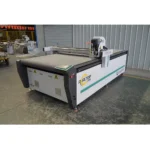
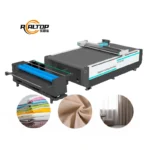
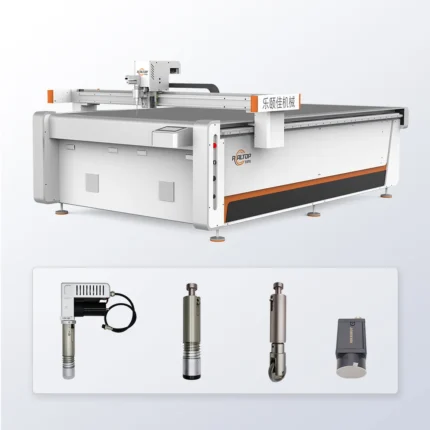
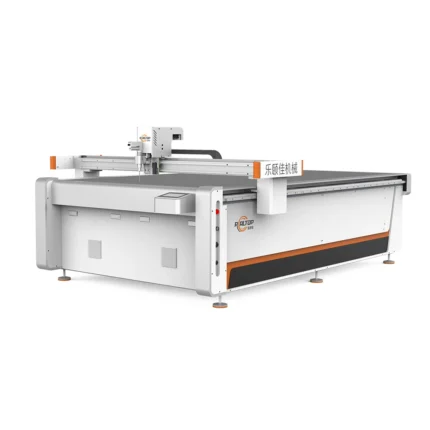
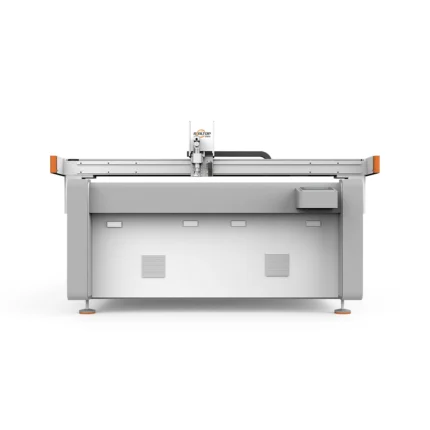
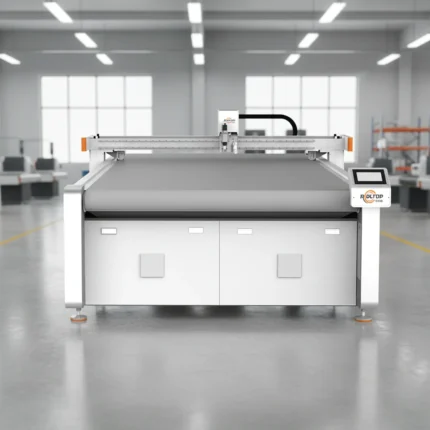
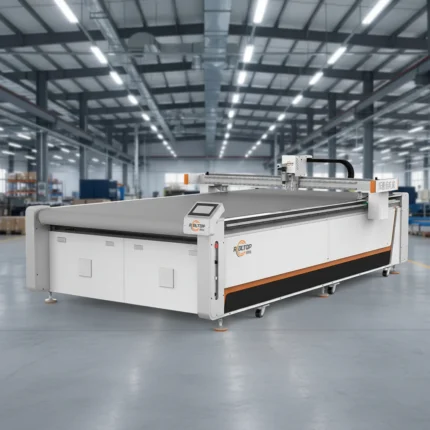
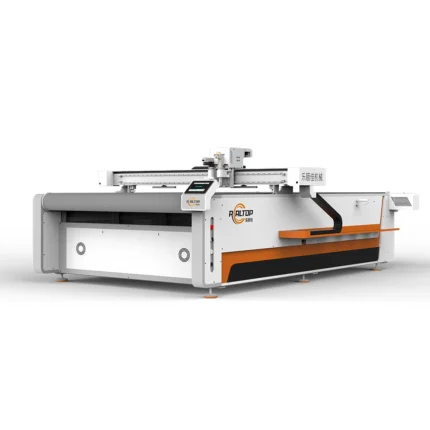
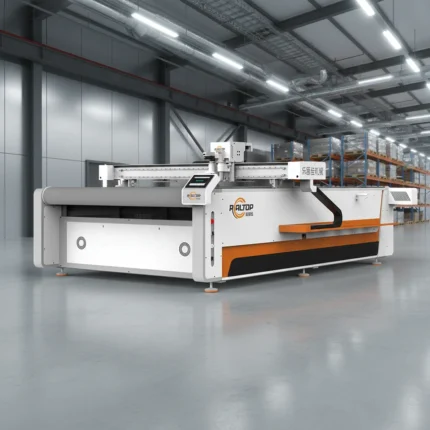
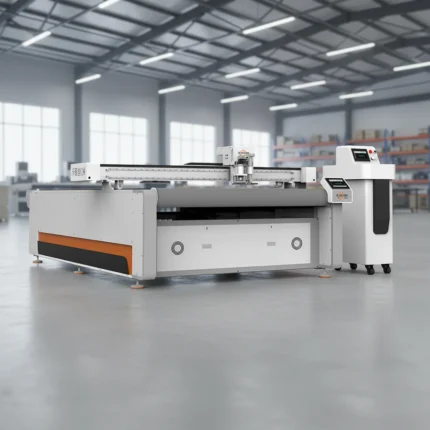
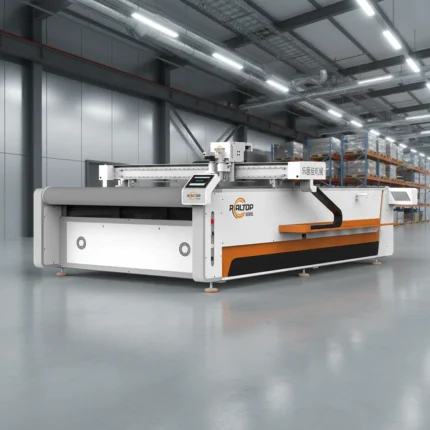
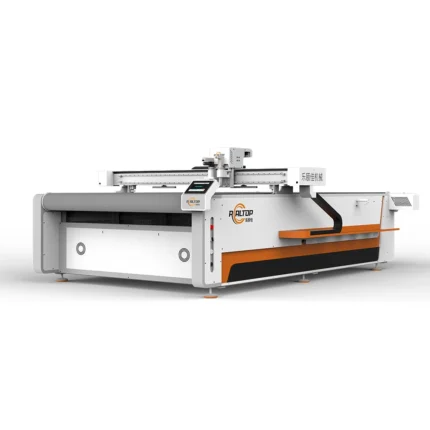
RT-D2516/RT-S2516 CNC Fabric Cutting Machine, 1600×2500mm Working Area, 9kw Rated Power — equipped with Swiss imported knife technology supporting vibration full and half cutting modes for diverse textile applications.
- Auto-feeding system with German conveyor belt and 7.5kw vacuum pump ensures continuous material handling and secure hold-down during operation
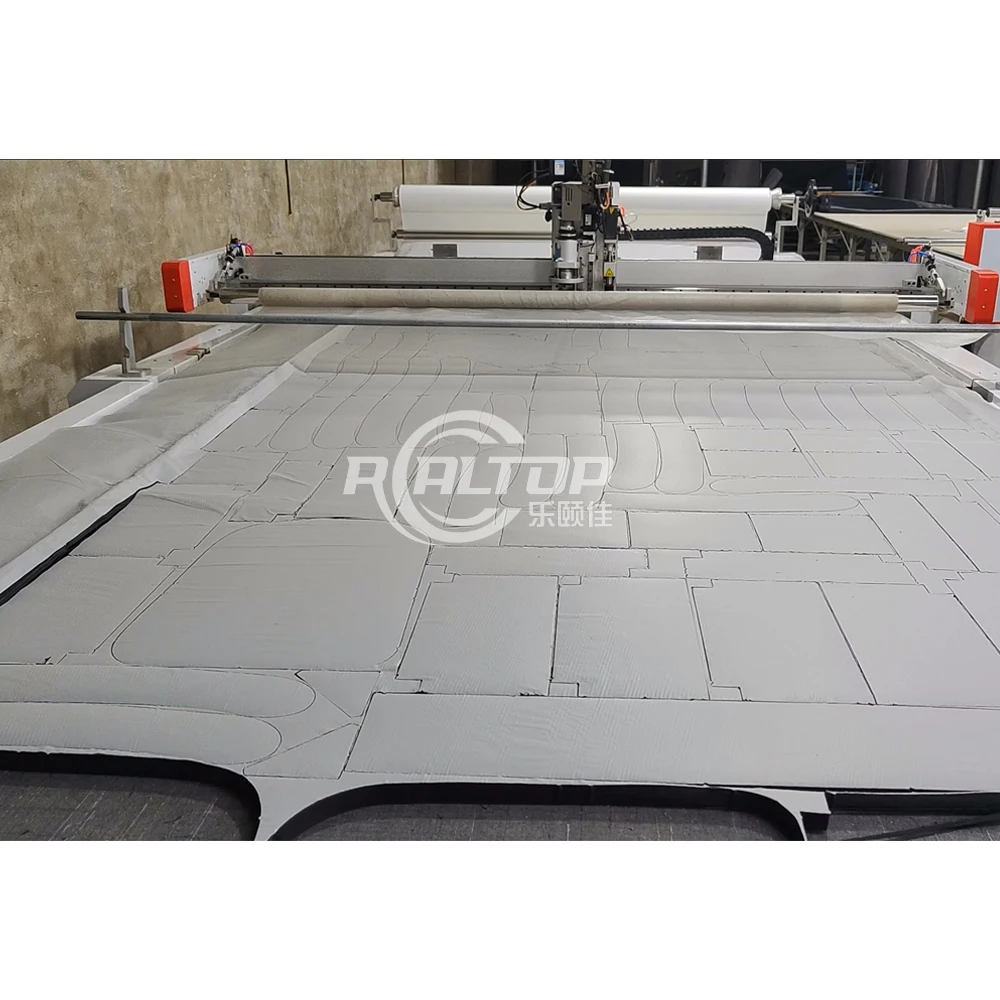
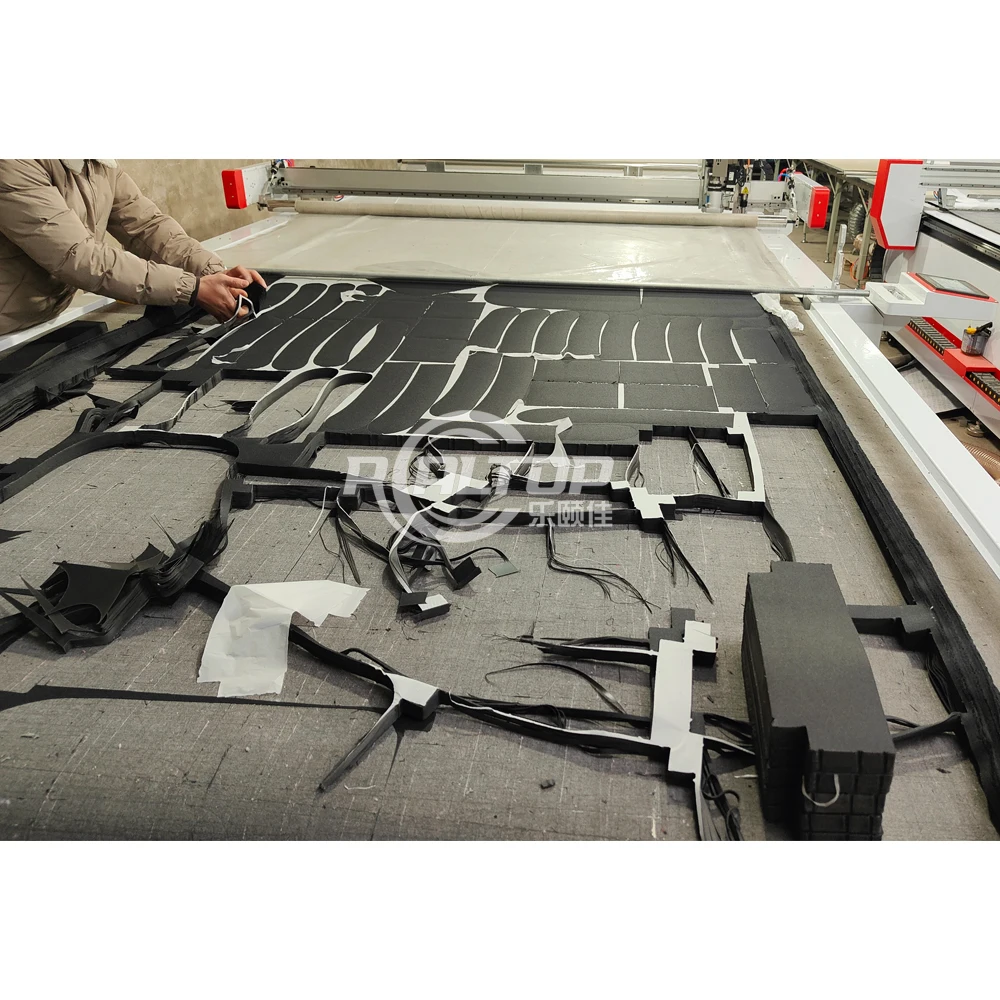
- Designed for zebra roller blinds, garment multi-layer fabrics and automotive upholstery cutting workflows
- Digital servo motor with Taiwan Hiwin linear guide delivers ≤0.1mm repeated accuracy across the full cutting area
- HP-GL compatible instruction system with multi-language software support including English, Russian and Italian
Sample cutting on buyer’s own material is completed before order commitment, ensuring cutting depth and edge quality match the specific fabric density and composition.
Integrated Knife Technology — in-house oscillating and drag knife development means fabric cutting parameters are tuned to your textile density, not forced from a generic tooling library.
Technical Specifications
| Parameter | Value |
|---|---|
| Product Type | CNC Fabric Cutting Machine |
| Model | RT-D2516/RT-S2516 |
| Working Area | 1600 × 2500 mm |
| Machine Dimensions | 3450 × 2300 × 1250 mm |
| Rated Power | 9 kW |
| Working Table | Flat vacuum table with auto-feeding conveyor |
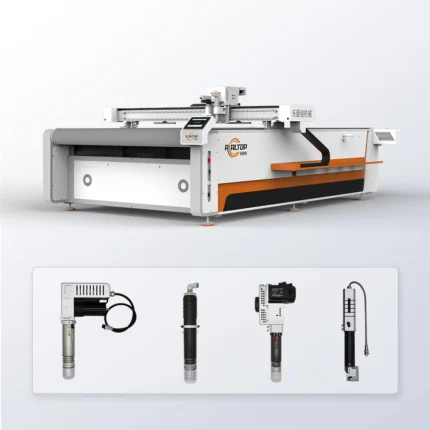
| Tool Head | Swiss imported knife with vibration full cutting, vibration half cutting, and cursor location |
| Safety Device | Infrared sensors |
| Translational Velocity | 800–1200 mm/s |
| Cutting Thickness | ≤50 mm (basis not stated in source — confirm block format / material / thickness) |
| Repeated Accuracy | ≤0.1 mm |
| Transmission System | Digital servo motor, linear guide, synchronous belt, ball screw |
| Instruction System | HP-GL compatible format |
| Voltage | 380V ± 10% |
| Vacuum Pump | 7.5 kW |
| Key Features | Delta servo motor, Germany imported conveyor belt, Taiwan Hiwin rail, aviation aluminum countertop, rack and pinion transmission, software available in English, Russian, Italian, Chinese with custom language options |
Application Suitability
| Application | Material or Output |
|---|---|
| Zebra roller blind production | Multi-layer woven polyester and PVC-coated shading fabrics on continuous rolls |
| Garment batch cutting | Cotton, denim, linen, silk, and blended textile lays for apparel manufacturing |
| Automotive upholstery | Composite leather, sponge-bonded textiles, and synthetic suede for seat covers and door panels |
| Interior soft furnishings | Curtain panels, cushion covers, and drapery fabrics from flexible rolls |
| Technical textile processing | PVC, soft glass, silicon sheets, and rubber gaskets up to rated thickness |
What "Cutting Thickness ≤50 mm" Actually Means for Your Fabric
A 50 mm rating on rigid foam does not translate to 50 mm of compressed multi-layer cotton.
When buyers see a cutting depth figure on a CNC Fabric Cutting Machine manufacturer’s spec sheet, they often assume it applies universally across all materials they plan to run. In reality, that number is typically established on a specific material — often dense foam or rigid composite — under controlled single-layer conditions. Stack thirty plies of tightly woven denim and the actual resistance the blade encounters is fundamentally different. The knife must*y layer without dragging or fraying the bottom sheets. I have visited garment workshops where the operator had to reduce the lay height to barely half of what was expected, simply because the material density was never discussed during the quotation stage [NEED_CITE: cutting depth verification across textile densities]. Confirming cutting thickness on your actual fabric roll, in your typical lay configuration, before the order is signed is the only way to avoid that conversation on the production floor.
Swiss Knife Oscillation and Textile Edge Integrity
The tool head on the RT-D2516/RT-S2516 uses a Swiss imported knife with dual-mode vibration — full cutting and half cutting — paired with a cursor location function. Full cutting mode drives the blade through the entire fabric stack at high oscillation frequency, separating each ply cleanly from top to bottom. Half cutting mode is used when kiss-cutting is required, such as scoring the top layer of a laminated composite without penetrating the backing. This distinction matters for automotive upholstery producers who work with sponge-bonded leather where the fabric face must be separated but the foam carrier must remain intact. The cursor location function aids the operator in visually confirming the blade entry point on patterned or printed textiles before the cut cycle begins. For a CNC Fabric Cutting Machine manufacturer to supply this tooling configuration means the machine is not relying on a static drag knife that tears through delicate weaves.
Vacuum Hold-Down and Aviation Aluminum Countertop Distribution
A 7.5 kW vacuum pump paired with an aviation aluminum countertop creates the suction distribution needed to keep flexible fabric flat during high-speed cutting. Woven textiles, especially lightweight synthetics used in roller blinds and curtains, tend to lift at the edges when the oscillating knife changes direction at translational velocities reaching 1200 mm/s. The aluminum countertop is perforated and machined flat, allowing vacuum to pull evenly across the entire 1600 × 2500 mm working area rather than concentrating suction in isolated zones [NEED_CITE: vacuum table zoning standards for flexible material processing]. When small pattern pieces are nested closely — such as collar and cuff shapes in garment cutting — inadequate zoning allows individual pieces to shift before the cut path completes. The conveyor belt, sourced from a German supplier, feeds material from the roll onto the table in a controlled sequence, reducing manual handling of heavy fabric rolls.
Reading the Specs That Dictate Cut Quality
The repeated accuracy of ≤0.1 mm is achieved through a combination of Taiwan Hiwin linear rails, ball screw drives, and Delta digital servo motors. In fabric cutting, this tolerance directly determines whether pattern pieces nest correctly during assembly — a sleeve cap that is off by a fraction of a millimeter across thirty layers compounds into visible misalignment in the finished garment. The rack and pinion transmission provides the bearing capacity needed when the cutting head encounters dense composite materials like sponge-bonded leather, preventing the positional drift that belt-only systems experience under load. The HP-GL instruction format ensures compatibility with pattern design software already running in most garment and upholstery CAD environments, avoiding the need to convert or re-draw existing pattern libraries. Machine size at 3450 × 2300 × 1250 mm means the unit fits within standard industrial bay dimensions without requiring structural modification, but the 9 kW rated power demands a dedicated circuit with appropriate breaker sizing at 380V ± 10%.
The Cost of Skipping the Material Trial
Buyers who specify a CNC Fabric Cutting Machine manufacturer based on working area alone — without confirming the tool head against their actual material — regularly encounter ragged edges on woven textiles or crushed foam in composite lays. The wrong oscillation frequency on delicate silk produces pulled threads that propagate inward from the cut line. On PVC and soft glass, an incorrect blade angle leaves a burr that requires secondary trimming, eliminating the time savings the machine was purchased to deliver [NEED_CITE: tool head selection errors in textile cutting procurement]. Vacuum suction that is adequate for full-sheet cutting may fail entirely when the nested layout consists of many small pieces, because air leaks through cut lines and reduces hold-down force on remaining sections. These problems surface only after the machine is installed, when returning to the quotation stage means weeks of lost production.
Why Production Teams Source This Configuration Here
Tool head selection is matched to the buyer’s material type and thickness before the order is confirmed, not left to post-delivery adjustment. Sample cutting on the buyer’s own fabric roll — at the intended lay height and speed — is performed before commitment, generating a documented cutting report. Voltage, plug type, and control language are confirmed against the destination workshop’s electrical standard and operator preference before shipment. Software compatibility is verified against the buyer’s existing HP-GL pattern files and nesting workflow to eliminate file format bottlenecks. The RT-D2516/RT-S2516 platform is built by a manufacturer that produces both knife and laser cutting systems in-house, allowing a buyer to evaluate which technology suits their material rather than being steered toward one method by default. CCD camera contour recognition is available for printed textile applications where cut lines must follow registered marks, with tracking performance confirmed at production speed during the sample test.
Documentation & Verification
- Machine specification sheet listing confirmed tool head, table configuration, and voltage for your RT-D2516/RT-S2516 unit
- Sample cutting report on your fabric type, ply count, and lay height performed before shipment
- Software licence and HP-GL file format compatibility note matching your existing CAD system
- Electrical schematic with 380V circuit requirements and dedicated breaker specifications confirmed
- Operation manual in selected control language with tool change and blade replacement procedures
- Spare parts list identifying consumable blades, vacuum seals, and conveyor belt sections
Installation, Commissioning & Support
- Floor space of approximately 3450 × 2300 mm plus clearance for roll loading on the auto-feeding side
- Dedicated 380V ± 10% circuit with breaker rated for the 9 kW total load including the 7.5 kW vacuum pump
- Machine arrives partially assembled; conveyor table and tool head gantry require on-site alignment and belt tensioning
- First-run commissioning includes vacuum calibration across the 1600 × 2500 mm table and servo tuning for repeated accuracy verification
- Operator training covers blade change procedures, vacuum zoning adjustment, and HP-GL file import workflows
- Consumable Swiss knife blades and vacuum table seals stocked as recommended spare parts with lead time confirmed
What to Prepare Before Your Inquiry
Share the specific fabric composition, weight per square meter, and typical lay height you intend to cut, along with your daily volume target so the correct feeding and cutting configuration can be recommended. Confirm your workshop voltage, frequency, and plug standard, plus the preferred control language for the operator interface. If you are running printed textiles requiring contour recognition, provide a sample of the printed mark so tracking reliability can be tested before the machine is configured.
Frequently Asked Questions
Q: How does cutting thickness capacity change with different fabric densities?
A: The ≤50 mm figure is established under specific material conditions. Dense woven cotton compressed into a multi-ply lay presents more resistance to the oscillating knife than open-cell foam of the same nominal thickness. We run a sample cutting test on your actual fabric at your intended ply height to confirm achievable depth and edge quality before the order proceeds.
Q: Is the vacuum table sufficient for small nested pattern pieces?
A: The 7.5 kW pump and aviation aluminum countertop distribute suction across the full 1600 × 2500 mm area. Small pieces can lose hold-down as air escapes through completed cut paths. We review your nesting layout during the sample phase and confirm whether additional zoning or a modified cutting sequence is needed for your specific pattern mix.
Q: Can the machine track printed marks for contour cutting?
A: CCD camera positioning is available as a configuration option on the RT-D2516/RT-S2516 platform. Tracking performance at production speed depends on mark contrast, print quality, and fabric movement. We test with your actual printed material to verify registration accuracy before the system is finalized.
Q: How is the tool head selected for my fabric type?
A: The Swiss imported knife supports full cutting for complete ply separation and half cutting for kiss-cutting laminated materials. Blade angle, oscillation frequency, and cutting pressure are matched to your fabric during the sample test. The wrong configuration produces frayed edges on woven textiles or incomplete cuts on dense composites.
Q: Will my existing pattern files work with this system?
A: The instruction system accepts HP-GL compatible format, which covers most garment and textile CAD outputs. We request a sample file from your current workflow before shipment to verify import, nesting, and cutting path generation. If conversion is required, this is identified and resolved before the machine leaves the factory.


Related products
2026 Cortador de Tela Automático de Cuchilla Circular de Alta Eficiencia
Product Introduction
High Efficiency 2026 Auto Fabric Cutter with Round Knife is a professional cutting equipment designed for fabric processing. It features advanced automation and high cutting efficiency, suitable for various fabric materials in industrial production.Product Parameters
| Model | 2026 |
| Type | Auto Fabric Cutter |
| Blade Type | Round Knife |
| Feature | High Efficiency |
2026 Carbon Fiber Cloth Cutting Machine – China Manufacturer
Product Introduction
Fabric Sample Cutter Pillow Machine ¨C 2026 Carbon Fiber Cloth Cutting Machine, ideal for precise cutting of carbon fiber cloth and fabric samples, suitable for pillow production and related textile applications.Product Parameters
| Name | Fabric Sample Cutter Pillow Machine |
| Model | 2026 |
| Material | Carbon Fiber Cloth |
| Application | Pillow Fabric Cutting |
Cortadora automática multicapa de cuchillo vibratorio 2026
Product Introduction
Automatic Multi-Layer Vibrating Knife Cutter 2026, ideal for precise cutting of various materials with multi-layer processing capability, enhancing production efficiency.
Key Specifications
| Type | Automatic Vibrating Knife Cutter |
| Layer Capacity | Multi-Layer |
| Model | 2026 |
| Function | Precision Cutting |
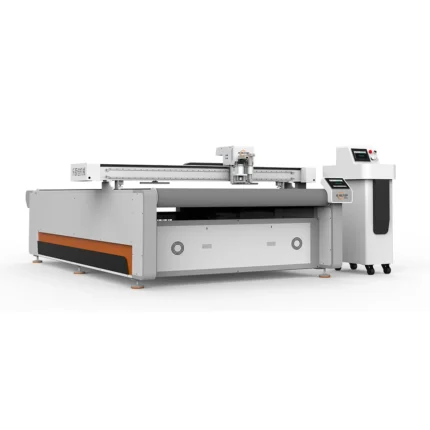
CNC Oscillating Knife Cutting Machine 2026 3000¡Á1600mm High-Speed
Product Parameters
| Model | CNC Oscillating Knife Cutting Machine 2026 |
| Working Area | 3000mm¡Á1600mm |
| Cutting Type | Oscillating Knife |
| Application | Fabric Cutting |
| Feature | High-Speed |
Introduction
High-performance CNC oscillating knife cutting machine with 3000mm¡Á1600mm working area, ideal for high-speed fabric cutting. Precision and efficiency for professional textile processing needs.
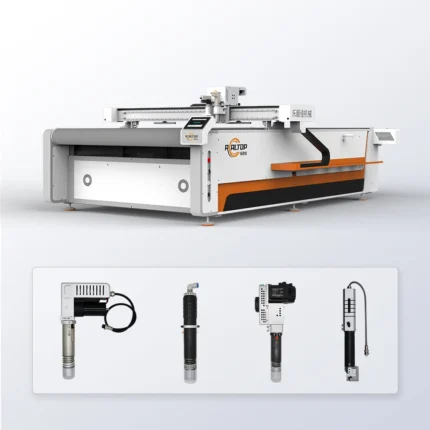
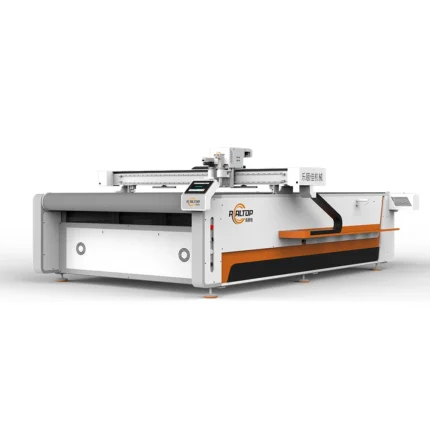
Máquina de corte de tela de alta velocidad 2026 con cuchilla oscilante redonda
Product Overview
High Speed Fabric Cutting Machine 2026 with round and oscillating knife for efficient fabric cutting. Ideal for textile manufacturing and related industries.Key Specifications
| Cutting Type | Round & Oscillating Knife |
| Model Year | 2026 |
| Application | Fabric Cutting |
| Feature | High Speed Performance |
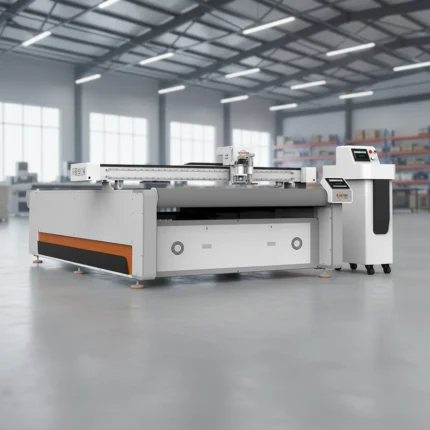
Máquina de Corte de Tela CNC Realtop 2026 Certificada CE
Product Introduction
Realtop CNC Fabric Cutting Machine 2026, CE Certified, ideal for precision fabric cutting with advanced CNC technology. Engineered for efficiency and reliability in textile manufacturing processes.Key Specifications
| Model | Realtop CNC Fabric Cutting Machine 2026 |
| Certification | CE Certified |
商品评价
There are no reviews yet.