







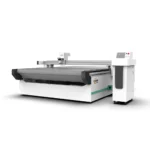

Auto-Feeding Vibrating Knife Cutter for Cloth – Manufacturer
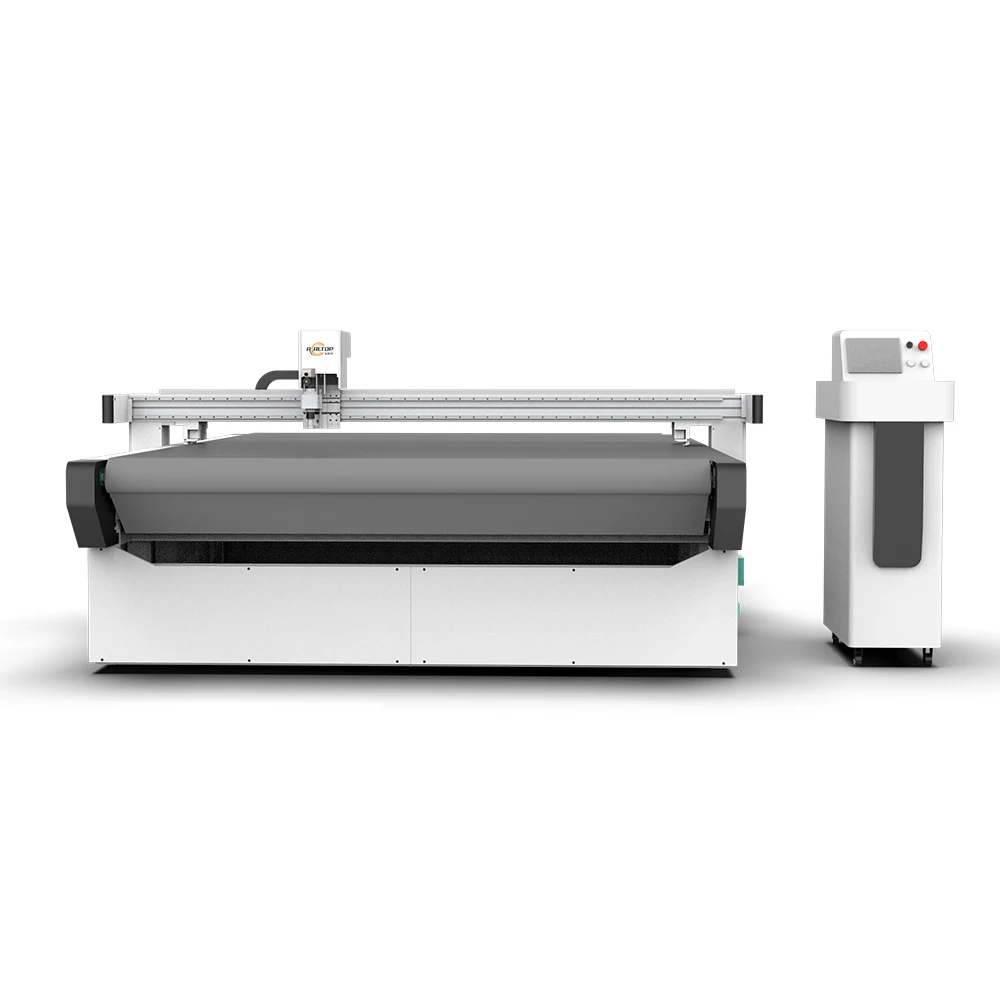
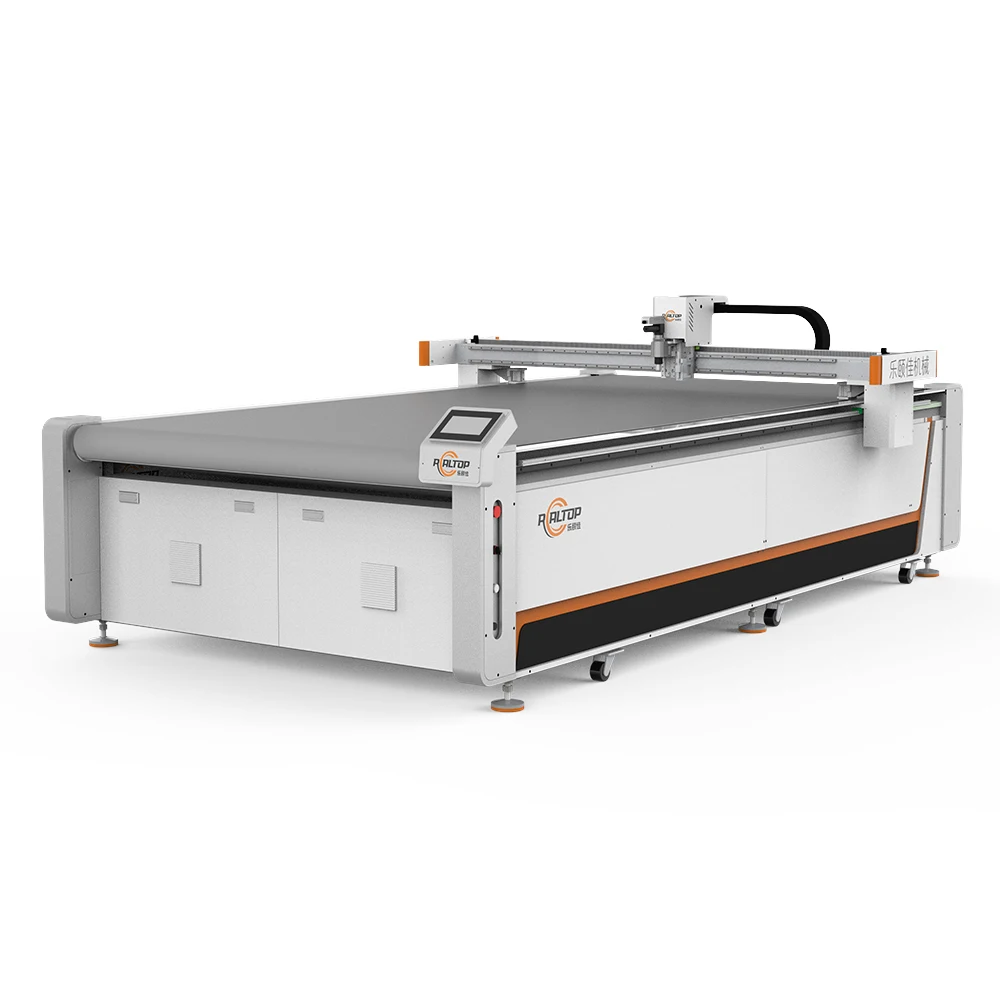
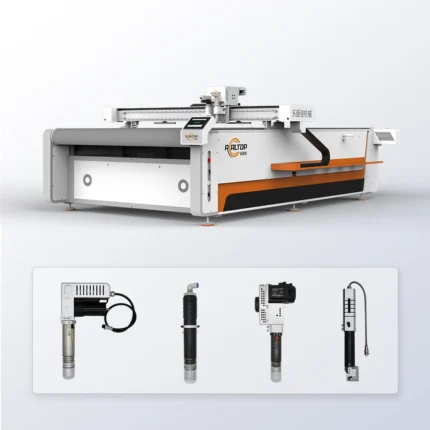
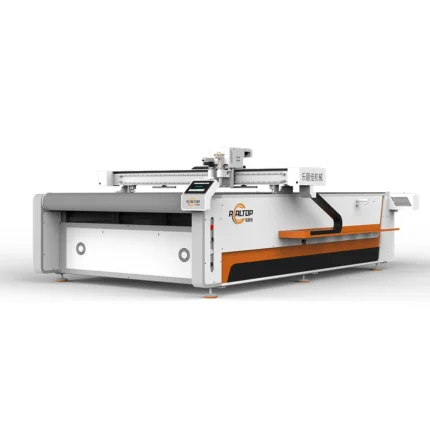
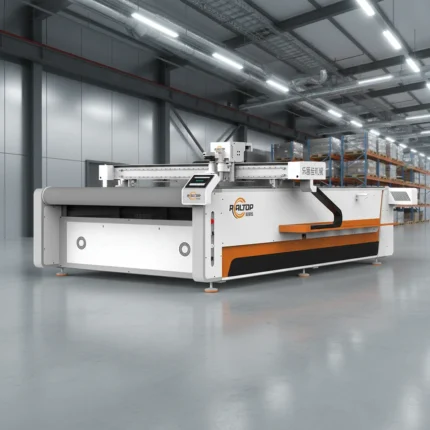
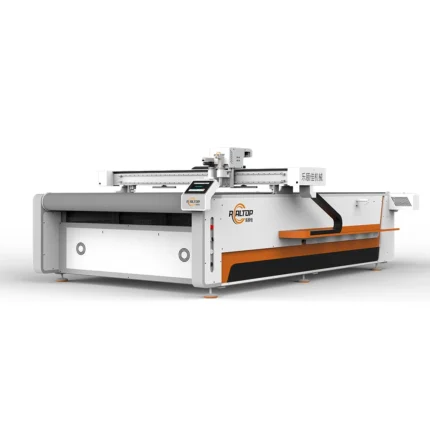
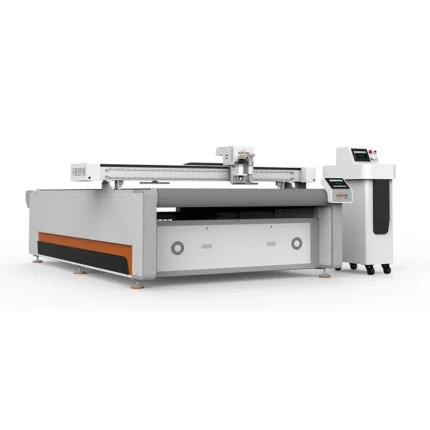
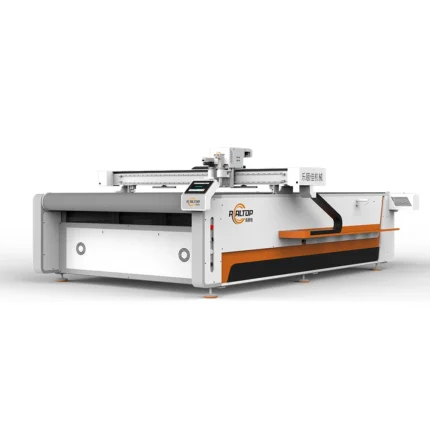
Cloth CNC Cutting Machine, 1600×2500 mm, Oscillating Knife, Auto-Feeding — configured per fabric weight, weave type and daily volume rather than sold as a fixed spec.
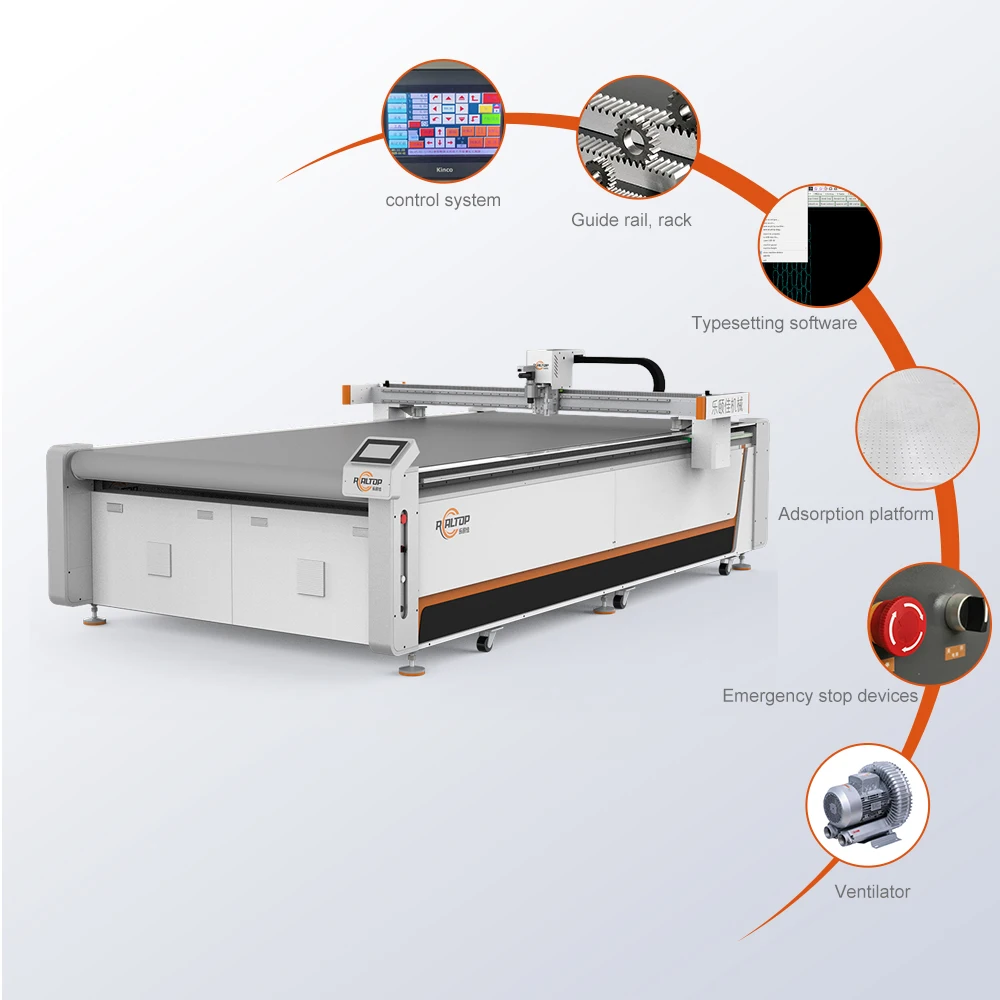
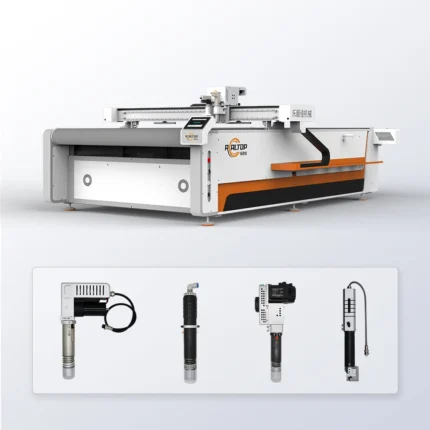
- Interchangeable tool heads matched to textile thickness with aluminum bellows vacuum table zoning for small garment panels
- Intelligent nesting with defect avoidance and CCD contour recognition for printed fabric
Sample cutting on buyer’s own material before commitment, with tool head configuration and voltage confirmed to match production requirements.
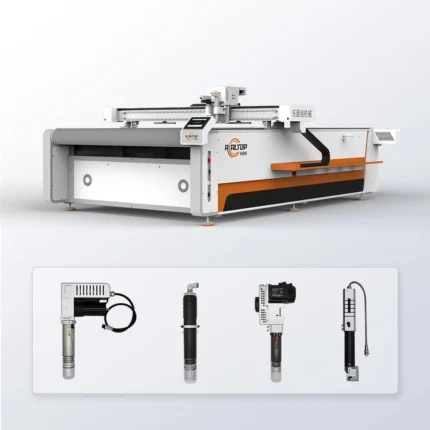
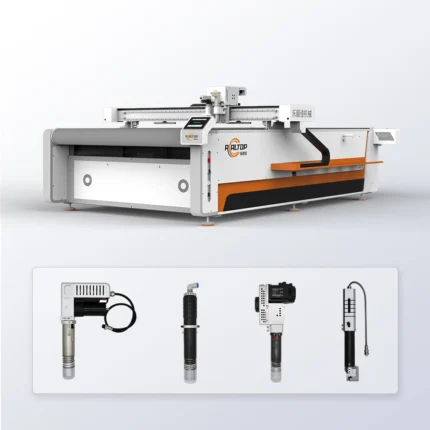
Tool Head Matched to Fabric — We configure oscillating, driven rotary or pneumatic knife heads based on your specific textile weave and layer count, not a default setup.
Technical Specifications
| Parameter | Value |
|---|---|
| Product Type | CNC Oscillating Knife Cutting Machine with Auto-Feeding |
| Working Area | 1600×2500 mm |
| Tool Head Options | Oscillating knife, Driven rotary knife, Creasing wheel, Kiss cutting tool, Pneumatic knife, Milling tool, V groove knife |
| Cutting Speed | 0–2000 mm/s |
| Cutting Thickness | ≤ 30 mm (basis not stated in source — confirm block format, material and layer count) |
| Positioning Accuracy | ±0.1 mm |
| Repeatability | ±0.1 mm |
| Vacuum Pump Power | 9 kW |
| Vacuum Table Type | Aluminum bellows vacuum table |
| Control System | PLC control panel |
| Servo Drive Options | Panasonic, Delta, Dorna (source value — verify against manufacturer catalog) |
| Voltage Options | 110V, 220V, 380V |
| Software & File Formats | PLT, DXF, AI, PDF |
| Safety Device | Infrared sensor device and emergency stop device |
| Machine Size | 3300×2100×1350 mm |
| Language Options | English, Russian, Italian, Chinese, custom languages available |
| Nesting System | Intelligent nesting with automatic defect avoidance |
| Packaging Software | Dedicated packaging box structure design software included |
| Certification | CE |
Application Suitability
| Application | Material or Output |
|---|---|
| Apparel manufacturing | Suits, knitwear, lace, complex pattern-matching woven and knit fabrics |
| Automotive interiors | Seat fabrics, carpets, PVC mats requiring burr-free edges |
| Home textiles | Sofa fabrics, curtains, rugs, multi-layer cutting for quilting lines |
| Composite material processing | Carbon fiber prepreg, aramid, specialty layered fabrics |
| Footwear and bags | Leather, synthetic leather, multi-layer textile uppers and linings |
Why "30 mm Cutting Capacity" Means Nothing Without Your Fabric Sample
Cutting thickness on textile is defined by fabric density, layer count and backing, not a single number.
Buyers often receive a spec sheet stating 30 mm and assume any fabric stack up to that height will cut cleanly. I have seen production floors in Latin America where a machine ran perfectly on single-layer polyester during the factory test, then choked on coated composite cloth at full production speed — ragged edges, slipped feeding, an entire batch of panels scrapped. The real capacity depends on what is actually on your table [NEED_CITE: textile cutting thickness verification by material type].
A CNC oscillating knife cutting machine for textile must be validated against your specific fabric, at the layer count and speed you will actually run. Without that sample report, the spec sheet number is just a starting conversation.
Matching the Tool Head to Your Weave
The available tool heads — oscillating knife, driven rotary knife, pneumatic knife, creasing wheel, kiss cutting tool and V groove knife — each handle different fabric behaviors. An oscillating knife works through multi-layer woven material with consistent edge quality, while a driven rotary knife suits continuous single-layer runs of knit or stretch fabric where drag would distort the weave. Choosing the wrong head for your textile is the most common reason for ragged or fused edges on the finished panel.
Holding Small Garment Panels Flat at Speed
The aluminum bellows vacuum table with a 9 kW pump provides full-surface adsorption across the 1600×2500 mm working area. Small pattern pieces — collar stays, pocket flaps, cuff facings — are the hardest to hold. If vacuum zoning is not configured for your typical piece size, fabric lifts during the cut and the ±0.1 mm positioning accuracy becomes irrelevant [NEED_CITE: vacuum table zoning requirements for small garment panels]. Proper zoning keeps every piece locked from first cut to last.
Reading the Parameters That Matter on the Floor
The 0–2000 mm/s cutting speed range is achievable only when the fabric is held flat and the tool head matches the material — coated or laminated textiles often require a slower pass to avoid delamination. The PLC control panel supports multiple languages including English, Spanish-ready custom options, which matters when your operators need to adjust mid-shift. Intelligent nesting with automatic defect avoidance reads fabric flaws and reroutes pattern placement, reducing waste on expensive materials like carbon fiber prepreg or premium wool.
The Hidden Cost of Skipping Configuration
A machine ordered on working area alone, without confirming vacuum zoning, tool head and feeding system against your fabric, arrives as a generic platform rather than a production tool. I have watched coated composite material slip under the auto-feed roller because the pressure was set for standard polyester — every panel shifted, every cut was off-grain. The cost is not just the scrap fabric; it is the production hours lost and the delivery deadlines missed [NEED_CITE: material feeding slippage in textile cutting operations].
Why Buyers Source This Machine Here
The design and production of both knife and laser cutting systems in-house means the cutting method is matched to your material rather than forced into one technology. Each tool head and table configuration is specified per your fabric type and daily volume. The auto-feeding system and intelligent nesting software are confirmed against your existing DXF, PLT, AI and PDF files before the order is placed. Sample cutting on your actual material documents edge quality, layer count and nesting yield. Voltage, plug type and control language are locked in before the machine leaves the factory.
Documentation & Verification
- Electrical schematic with voltage and plug type confirmed against your facility supply
- Sample cutting report on your fabric at production speed showing edge quality and nesting yield
- Tool head and vacuum table configuration list matched to your material and piece size
- Software licence and file format compatibility note for your existing PLT, DXF, AI or PDF workflow
- Factory test record documenting repeatability and cutting accuracy before dispatch
Installation, Commissioning & Support
- Floor space requirement of approximately 3300×2100 mm with clearance for material roll loading on the feeding side
- Dedicated circuit matching confirmed voltage option (110V, 220V or 380V) before electrical hookup
- Vacuum pump 9 kW power draw verified against facility capacity to avoid tripping shared breakers
- First-run parameter setting on your fabric to establish cutting speed and oscillation frequency baseline
- Operator training on PLC control panel in confirmed language with tool head changeover procedure
- Spare knife blades and wear parts list provided with recommended reorder intervals
Before You Request a Quote
Tell us your fabric type, weight and whether you run single-layer or multi-layer stacks. Share your typical piece dimensions so vacuum zoning can be planned, and confirm your facility voltage and preferred control language. If you have an existing nesting workflow or file format, include that so software compatibility is verified before the machine is built.
Frequently Asked Questions
Q: How is cutting thickness verified on my specific fabric?
A: We run a sample cut on your actual material at the layer count and speed you will use in production. The report documents edge quality, any delamination or fraying observed, and the effective cutting capacity for your fabric. This replaces the generic spec sheet number with a result tied to your textile.
Q: Which tool head do you recommend for my material?
A: The recommendation depends on your fabric weave, weight and whether you run single or stacked layers. An oscillating knife suits multi-layer woven cloth, while a driven rotary knife handles continuous single-layer knits. Edge quality is confirmed on your material sample before any configuration is finalized.
Q: What voltage and language are confirmed before shipment?
A: Your facility voltage (110V, 220V or 380V), plug type and preferred control panel language are documented in the electrical schematic and specification sheet before production begins. This avoids rewiring or reprogramming after the machine arrives at your facility [NEED_CITE: export voltage and frequency standards].
Q: Does the software import my existing DXF and PLT files?
A: The system supports PLT, DXF, AI and PDF formats. Before the order is confirmed, we test your existing files for import compatibility and verify that the intelligent nesting software works with your current workflow without requiring format conversion.
Q: How is the vacuum table configured for small garment pieces?
A: The aluminum bellows vacuum table zoning is planned around your typical piece dimensions. Small panels like pocket flaps and collar pieces require tighter zoning to prevent lift during high-speed cutting. Your piece size data is used to set the zone layout before the table is built.


Related products
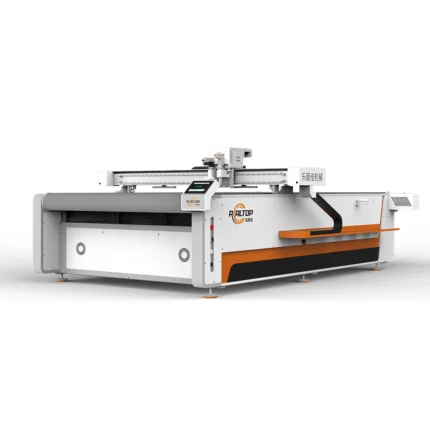
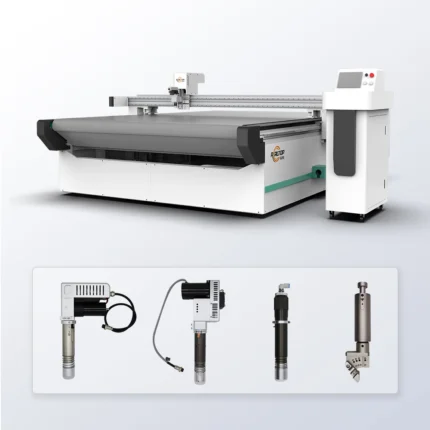
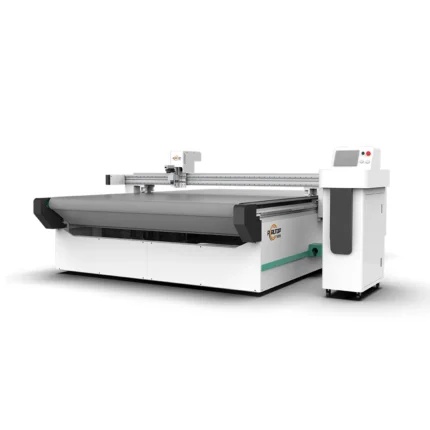
Cortadora de cuchilla oscilante de mesa plana 2026, 1600x3500 mm, textil con alimentación automática
Product Overview
Flatbed Oscillating Knife Cutting Machine 2026 is a high-precision textile fabric cutter with auto-feeding function, ideal for efficient and accurate cutting tasks in textile manufacturing. It combines advanced oscillating knife technology with a large working area to meet industrial production needs.Key Specifications
| Model | 2026 |
| Working Area | 1600x3500mm |
| Feeding System | Auto-Feeding |
| Cutting Type | Oscillating Knife |
| Application | Textile Fabric |
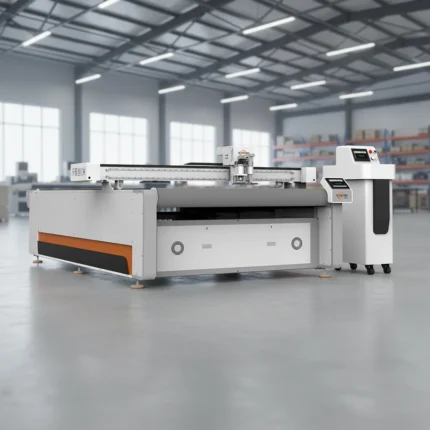
2026 Máquina de corte para tablas de surf SUP inflables
Product Introduction
Ideal for inflatable surf SUP board production, this 2026 cutting machine ensures precise and efficient cutting, tailored for manufacturers seeking reliable performance in water sports equipment manufacturing.
Specifications
| Application | Inflatable Surf SUP Board |
| Type | Cutting Machine |
| Model Year | 2026 |
Sistema de Cuchilla Vibratoria CNC 2026 para Prepreg No Tejido de Poliéster y Nailon
Product Introduction
CNC Vibration Knife System 2026 is ideal for cutting polyester, nylon, non-woven fabrics, and prepreg materials with precision and efficiency, suitable for industrial manufacturing needs.Product Parameters
| Model | 2026 |
| CNC Vibration Knife | |
| Materials | Polyester, Nylon, Non-Woven, Prepreg |
Máquina de corte de tela de alta velocidad 2026 con cuchilla oscilante redonda
Product Overview
High Speed Fabric Cutting Machine 2026 with round and oscillating knife for efficient fabric cutting. Ideal for textile manufacturing and related industries.Key Specifications
| Cutting Type | Round & Oscillating Knife |
| Model Year | 2026 |
| Application | Fabric Cutting |
| Feature | High Speed Performance |

Jinan Realtop Máquina de Corte de PVC 2026 Certificado CE
Product Introduction
Jinan Realtop PVC Cutting Machine 2026 is a CE-certified cutting solution, ideal for precise PVC material processing. Designed for efficiency and reliability in industrial applications.Product Parameters
| Model | 2026 |
| Certification | CE Certified |
| Application | PVC Cutting |
| Manufacturer | Jinan Realtop |
商品评价
There are no reviews yet.