

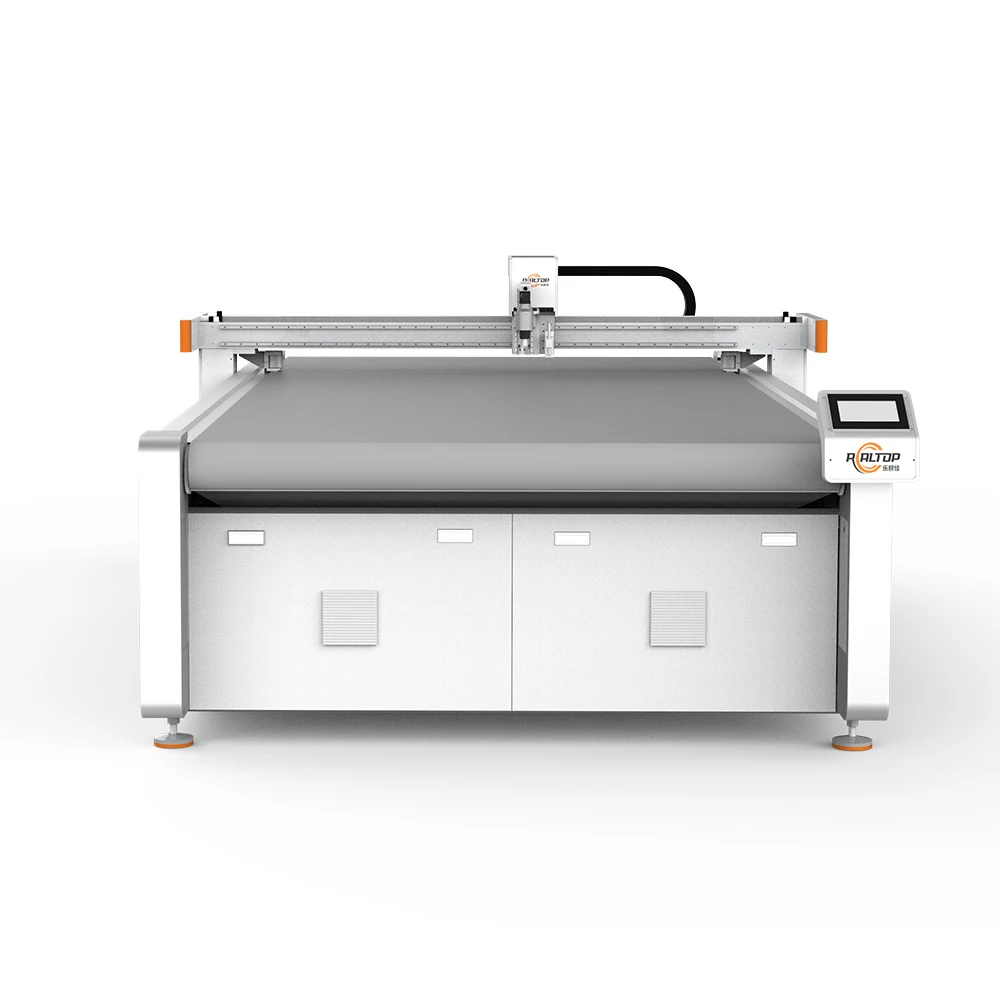
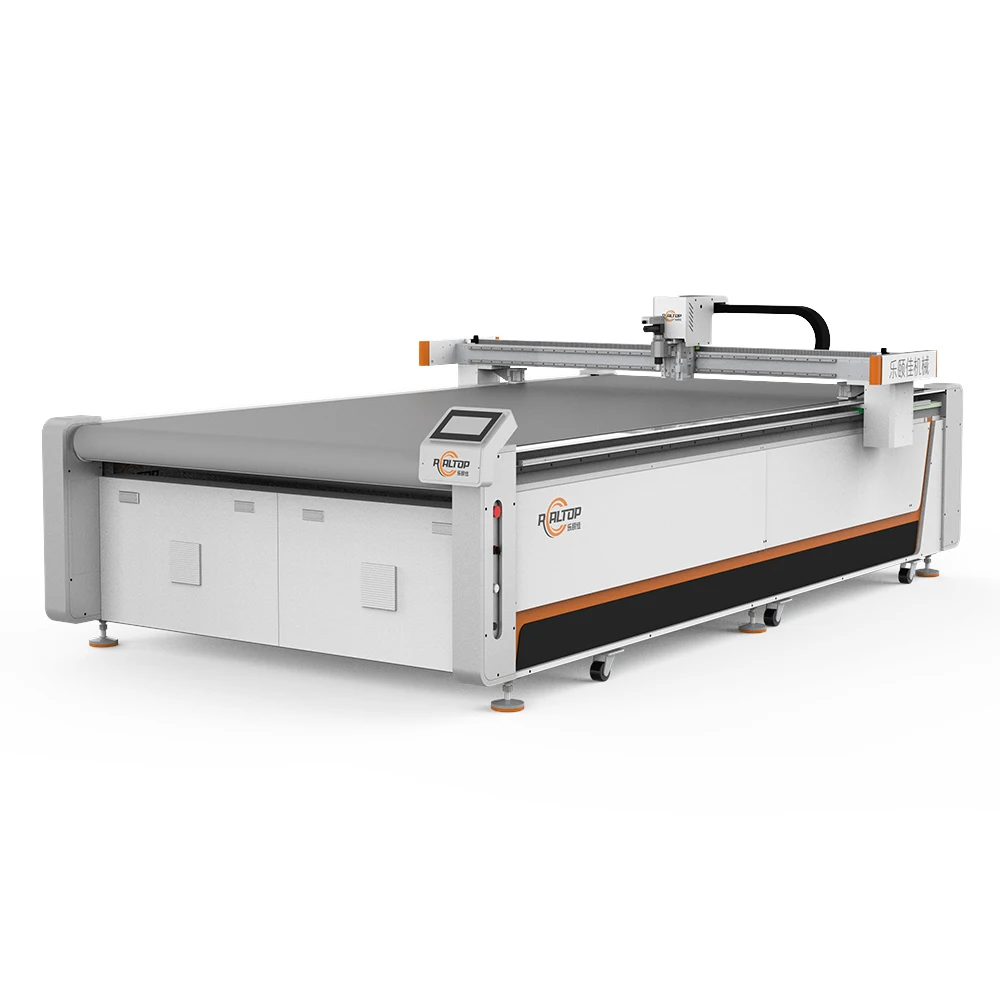
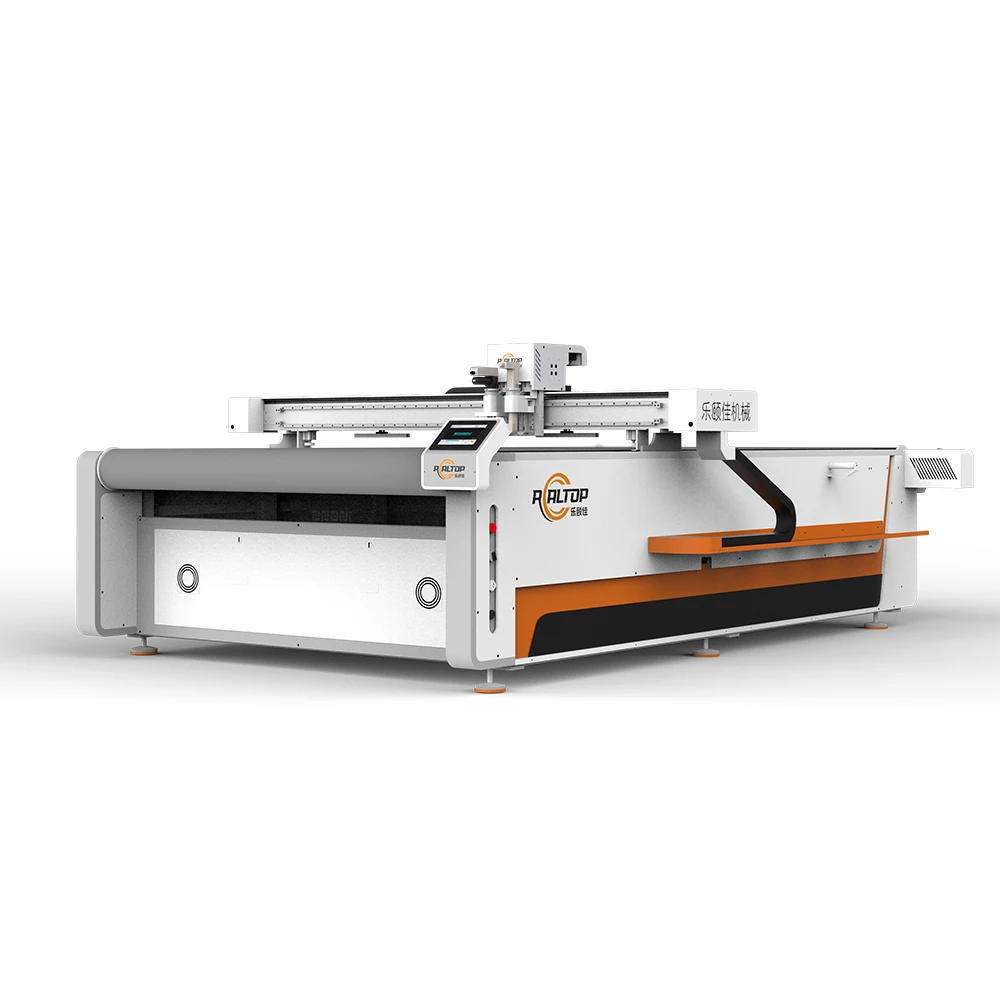
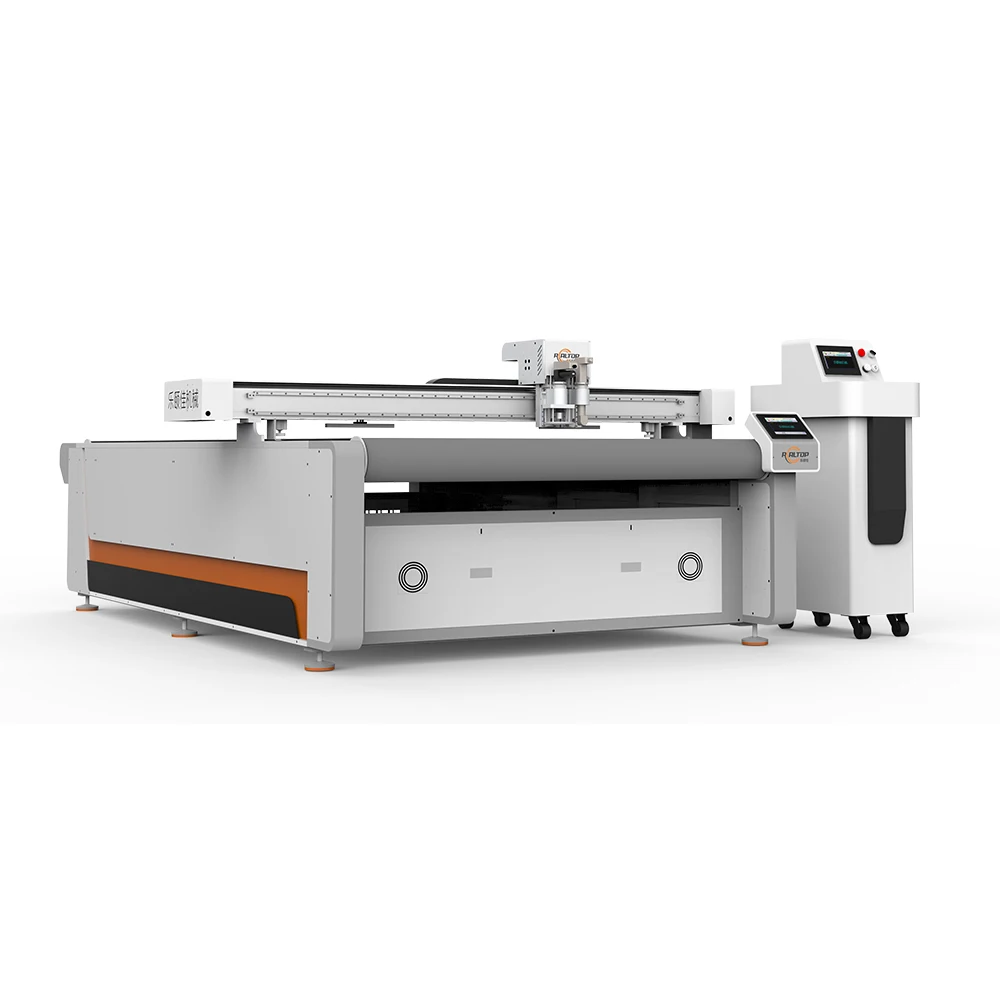
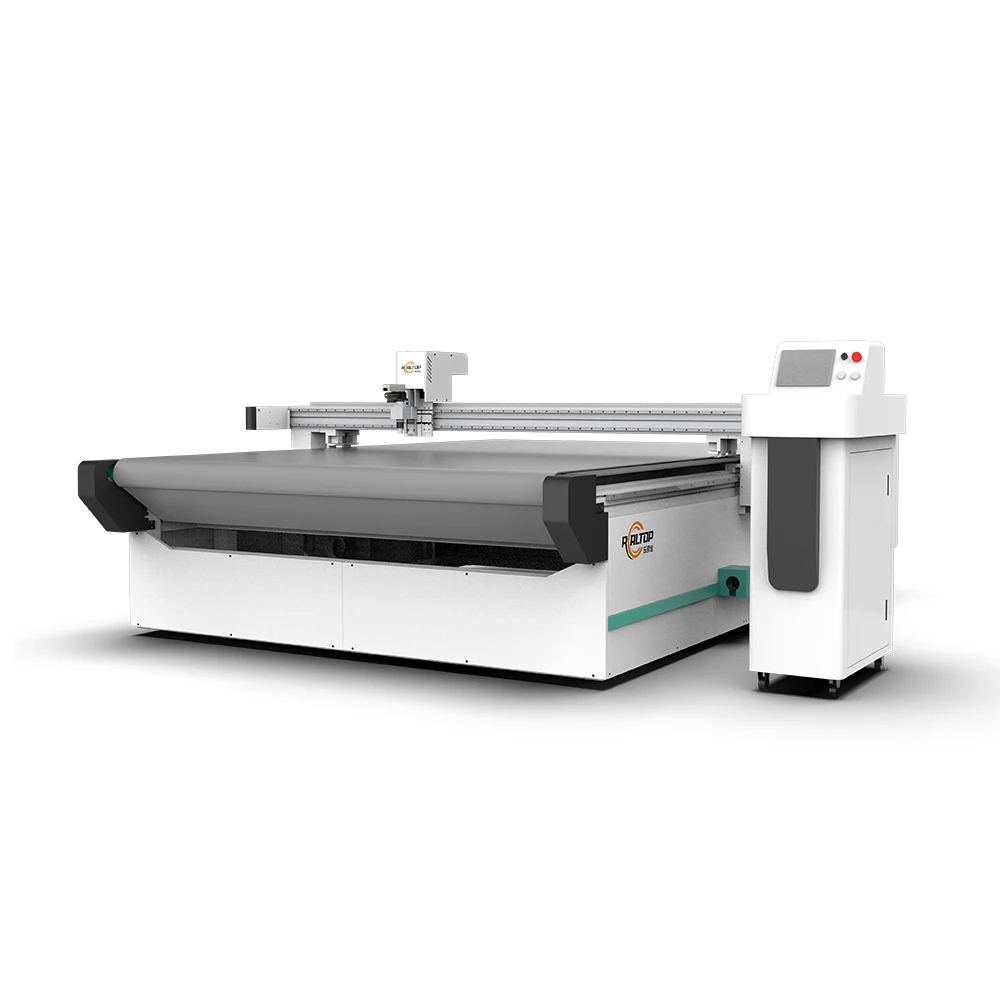

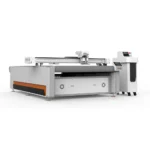
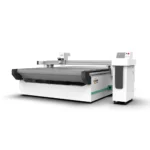

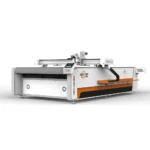
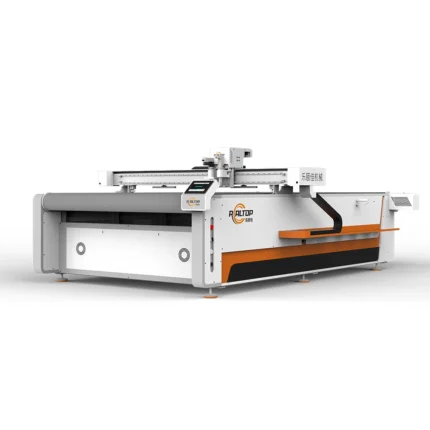
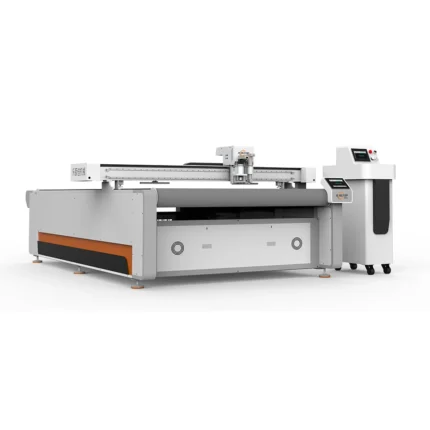
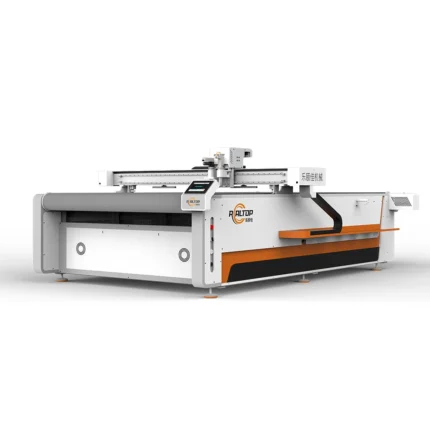
CNC Oscillating Knife Cutter 1625 for Fabric Cutting – Manufacturer
Sample cutting on your own material provided before commitment to verify edge quality, depth and speed on your specific fabric or composite.
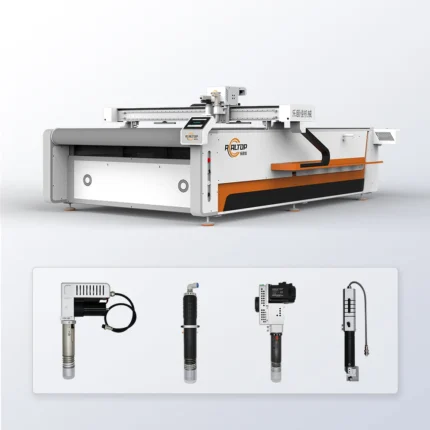
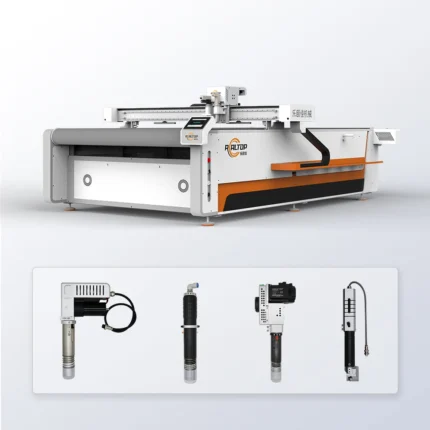
Tool head matched to material — our configuration starts with the fabric type, thickness and daily volume before selecting between oscillating knife, driven rotary, creasing wheel or kiss cutting tool heads for each production run.
Technical Specifications
| Parameter | Value |
|---|---|
| Model | 1625 |
| Product Type | CNC Oscillating Knife Cutting Machine |
| Working Area | 1600×2500 mm |
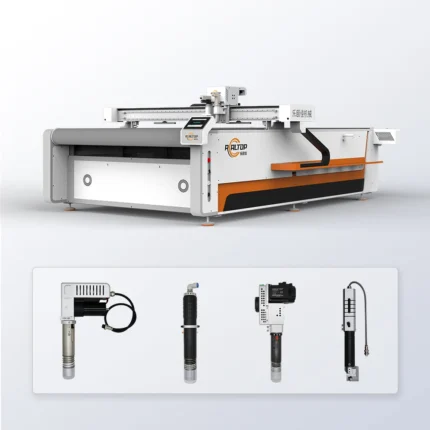
| Tool Head Options | Oscillating knife, Driven rotary knife, Creasing wheel, Kiss cutting tool, Pneumatic knife, Milling tool, V groove knife |
| Cutting Speed | 0–2000 mm/s |
| Cutting Thickness | Up to 30 mm (basis to be confirmed) |
| Positioning Accuracy | ±0.1 mm |
| Vacuum Pump Power | 9 kW |
| Vacuum Table | Aluminum bellows vacuum table |
| Servo Motor Options | Panasonic, Delta, Dorna |
| Control System | PLC control panel with intuitive interface |
| Voltage Options | 110V / 220V / 380V |
| Software Language Options | English, Russian, Italian, Chinese (custom languages available) |
| File Format Compatibility | PLT, DXF, AI, PDF |
| Safety Device | Infrared sensor and emergency stop |
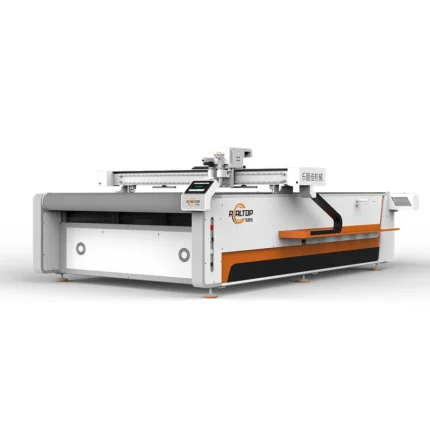
| Machine Dimensions (L×W×H) | 3300×2100×1350 mm |
| Certification | CE |
Application Suitability
| Application | Material or Output |
|---|---|
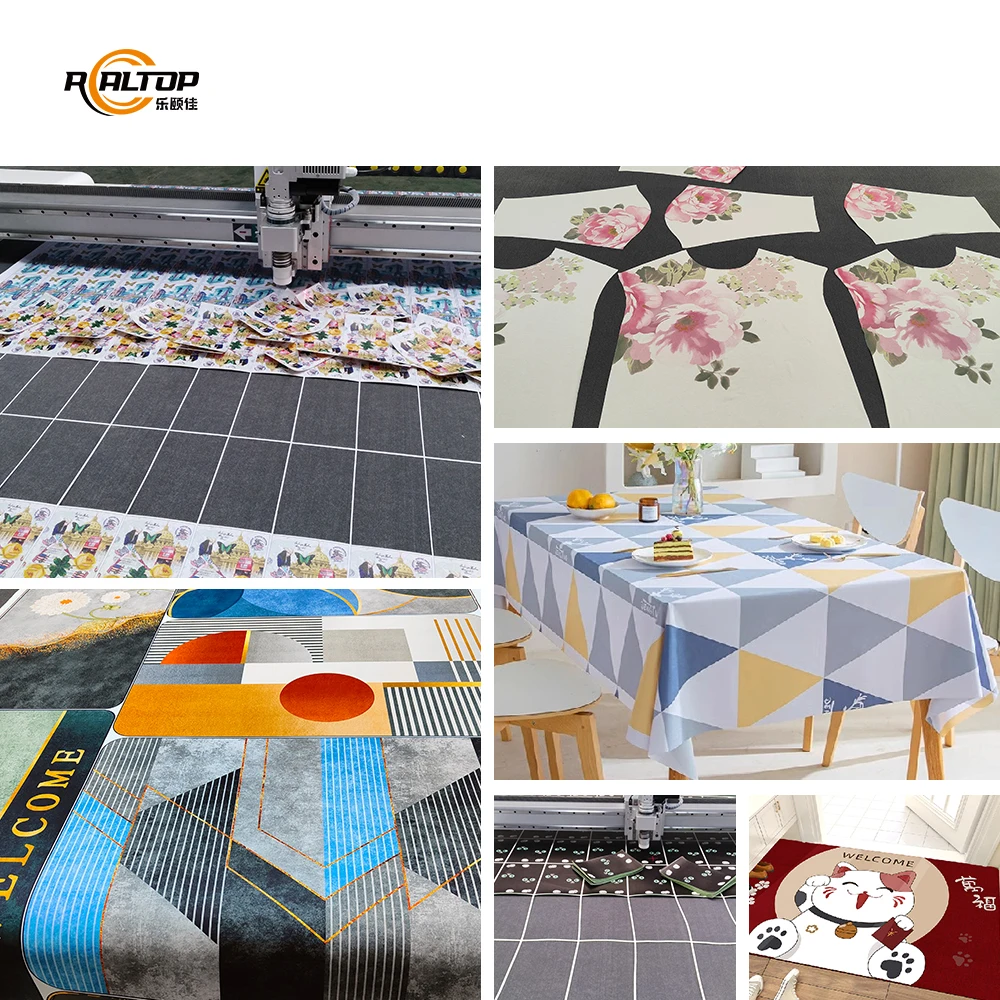
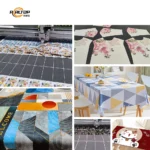
| Apparel manufacturing | Suits, knitwear, lace, complex pattern-matched fabrics |
| Automotive interiors | Seat fabrics, carpets, PVC mats with burr-free cold cutting |
| Home textiles | Sofa fabrics, curtains, rugs in multi-layer lays |
| Composite processing | Carbon fiber prepreg, aramid, specialty technical textiles |
| General soft materials | Leather, cardboard, EVA, foam, PTFE, rubber, acrylic |
Why Material Thickness Changes the Whole CNC Oscillating Knife Cutting Machine Configuration
A cutting table specified only by working area will fail the moment the material stack changes.
I spent years installing CNC vibrating knife tables in Pearl River Delta workshops. The machine footprint stayed the same, but the job changed — and suddenly the vacuum could not hold the lay, the tool head crushed the foam instead of shearing it, and the edge quality dropped off a cliff. Buyers often focus on the 1600×2500 mm bed size and assume everything else follows. In reality, cutting thirty millimetres of dense gasket material demands a completely different tool head, vacuum zoning strategy and knife frequency than slicing two layers of Lycra. The CNC oscillating knife cutting machine manufacturer you work with needs to see your actual material before making any recommendation [NEED_CITE: material-specific tooling selection principles for oscillating knife systems].
Interchangeable Tool Heads for Real Production Variables
The 1625 platform supports seven distinct tool head types — oscillating knife, driven rotary knife, creasing wheel, kiss cutting, pneumatic knife, milling tool and V-groove knife — and the selection is not cosmetic. An oscillating knife handles woven and non-woven fabrics at high frequency, while a driven rotary knife suits continuous curves on knits without fraying the edge. For carton and packaging sample work, the creasing wheel scores fold lines without cutting through the board. This CNC oscillating knife cutting machine manufacturer builds the configuration around what you actually run on the floor, not a one-size-fits-all head bolted to every machine.
Vacuum Hold-Down Across the Full 1600×2500 mm Bed
The aluminum bellows vacuum table on the 1625 provides a flat, sealed surface that maintains consistent suction across the entire working area. When cutting small pattern pieces — collar stays, gussets, gaskets — the vacuum must hold the material at the edges of each nest zone, not just the centre. A table that loses suction at the perimeter causes fabric to lift mid-cut, producing ragged edges that require manual re-trimming. The 9 kW vacuum pump construction uses aerospace-grade aluminum casting to reduce energy consumption relative to conventional cast-iron pumps [NEED_CITE: vacuum table zoning requirements for small-part nesting].
Reading the Specs That Actually Matter
Cutting speed is rated at 0–2000 mm/s, but the useful speed depends on the material and the complexity of the contour — tight curves on lace demand slower traversal than straight lays on canvas. The ±0.1 mm positioning accuracy determines whether pattern-matched pieces align after cutting; anything looser causes mismatch at the sewing stage. The PLC control panel accepts PLT, DXF, AI and PDF files, which covers most nesting software outputs used in garment and signage workflows. Servo motor options from Panasonic, Delta or Dorna let the buyer match component sourcing to local service availability in their market.
The Cost of Skipping the Material Trial
When a buyer specifies a machine on bed size alone and skips sample cutting on their own fabric, the problems surface during commissioning. The tool head may produce crushed edges on foam or delaminated cuts on carbon fiber prepreg. The vacuum zoning may prove insufficient for the smallest pieces in the nest, causing lift and scrap. Software that cannot import the buyer’s existing DXF files stalls production before the first shift begins. These are not warranty issues — they are specification failures that no amount of on-site adjustment can fully correct [NEED_CITE: pre-purchase sample cutting verification in digital cutting procurement].
What In-House Design and Production Actually Delivers
This CNC oscillating knife cutting machine manufacturer maintains its own design team and core factory covering both knife and laser cutting technologies, so the cutting method is matched to the material rather than forced into one process. Tool head and table configurations are specified per material type and daily production volume before the order is placed. Sample cutting on the buyer’s own material is completed before commitment, producing a documented report on edge quality, cutting depth and achievable speed. Voltage, plug type and control panel language — available in English, Russian, Italian, Chinese or custom languages — are confirmed in writing before shipment. The result is a machine that arrives configured for the actual job, not a generic platform that the buyer must re-engineer on the shop floor.
Documentation & Verification
- Factory test record run on your specific fabric thickness and lay height before dispatch
- Tool head and vacuum table configuration list matched to your material and daily volume
- Electrical schematic confirming voltage, frequency and plug type for your local supply
- Software licence and file format compatibility note covering PLT, DXF, AI and PDF imports
- CE declaration and packing photographs provided with shipment documentation
Installation, Commissioning & Support
- Floor space of approximately 3300×2100 mm with clearance for material loading on both long sides
- Dedicated electrical circuit matching confirmed voltage option of 110V, 220V or 380V before energizing
- Machine arrives fully assembled on the frame; vacuum table and gantry require on-site alignment and calibration
- First-run parameter setting includes knife frequency, vacuum zoning and cutting speed tuned to your material sample
- Operator training covers PLC panel navigation, tool head changeover and nesting file import workflow
- Spare parts list with oscillating knife blades, vacuum seals and servo motor consumables identified for local sourcing
What to Include in Your Inquiry
Send the material type, thickness per layer, maximum lay height, sheet dimensions and estimated daily volume so we can specify the correct tool head and vacuum zoning. Confirm your local voltage, frequency and preferred control panel language. If you are running printed fabrics with contour recognition requirements, note the mark style and registration method so the configuration can be validated before production [NEED_CITE: industrial cutting machine inquiry data requirements for material-specific configuration].
Frequently Asked Questions
Q: How is the cutting method and tool head selected for my specific material and thickness?
A: The selection starts with your material sample — type, thickness, lay height and edge quality requirement. We run trial cuts using different tool head options such as oscillating knife for woven fabrics or driven rotary for knits, then document the edge result, achievable speed and cutting depth before recommending a fixed configuration for your order.
Q: Can I send sample material for trial cutting before placing the order?
A: Yes. Send a representative sample of your actual production material, including the full lay thickness you intend to cut. We produce a sample cutting report showing edge quality, dimensional accuracy and cycle time on that specific fabric, so you can evaluate the result before committing to the machine build.
Q: What voltage, plug and software language configurations are confirmed before shipment?
A: Voltage is selectable from 110V, 220V or 380V, and the plug type is matched to your local standard. The PLC control panel software is available in English, Russian, Italian or Chinese, with custom languages possible on request. All three parameters are confirmed in writing before the machine leaves the factory.
Q: How does the vacuum table handle small parts without material lift?
A: The aluminum bellows vacuum table on the 1625 provides a flat, sealed surface across the full 1600×2500 mm working area. The 9 kW pump maintains suction at the perimeter of each nest zone, which is where small pieces like collar stays or gaskets are most prone to lifting during the cut.
Q: What file formats does the software accept, and will it integrate with my nesting workflow?
A: The control system accepts PLT, DXF, AI and PDF file formats directly. If your existing nesting software exports in one of these formats, the file imports without conversion. We confirm file format compatibility with a sample file from your workflow before the order is finalized.


Related products
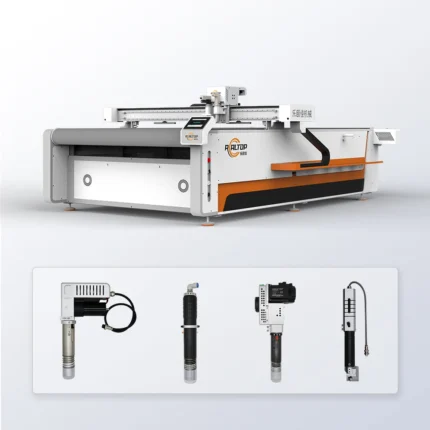
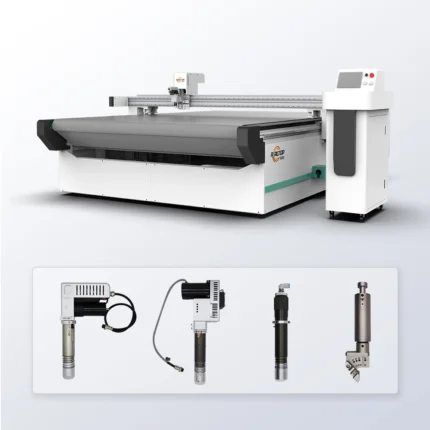
2026 Máquina de corte de tela CNC automática Plotter de tela y cuero de alta precisión
Product Introduction
2026 Auto CNC Cloth Cutting Machine, a high-precision fabric & leather plotter designed for efficient cutting. Ideal for textile and leather industries with advanced CNC technology.
Key Specifications
| Model | Auto CNC Cloth Cutting Machine 2026 |
| Application | Fabric & Leather |
| Precision | High-Precision Cutting |
| Type | CNC Plotter |
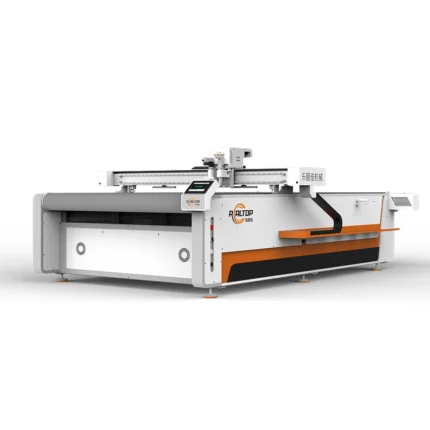
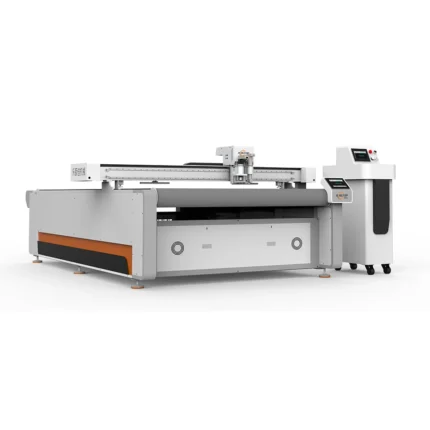
Máquina de corte automático de tela 1200mm Delta Servo 2026
Product Parameters
| Cutting Width | 1200mm |
| Servo System | Delta Servo |
| Model Year | 2026 |
Introduction
High-performance Automatic Fabric Cutting Machine with 1200mm cutting width, equipped with Delta Servo for precision. Ideal for efficient fabric processing in textile industry, ensuring accurate and fast cutting operations.
Sistema de Cuchilla Vibratoria CNC 2026 para Prepreg No Tejido de Poliéster y Nailon
Product Introduction
CNC Vibration Knife System 2026 is ideal for cutting polyester, nylon, non-woven fabrics, and prepreg materials with precision and efficiency, suitable for industrial manufacturing needs.Product Parameters
| Model | 2026 |
| CNC Vibration Knife | |
| Materials | Polyester, Nylon, Non-Woven, Prepreg |

Cortadora rotativa eléctrica de tela 2026 12V Auto-Cut Industrial
Product Introduction
Industrial-grade Electric Fabric Rotary Cutter designed for precise cutting of scan-printed cloth. Features 12V auto-cut functionality for efficient, automated operation, ideal for professional textile processing.Product Parameters
| Power Supply | 12V |
| Function | Auto-Cut |
| Application | Scan-Printed Cloth |
| Type | Industrial Electric Rotary Cutter |
商品评价
There are no reviews yet.