




Technical Guide Cloth CNC Cutting Machine for Edge Cutting
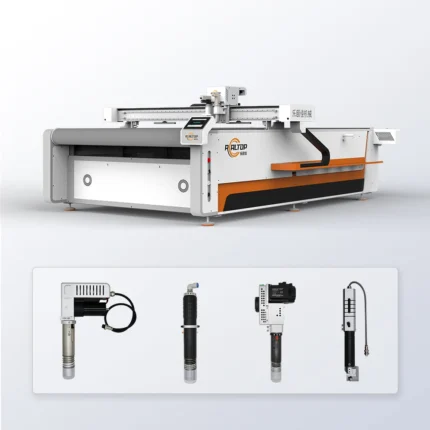
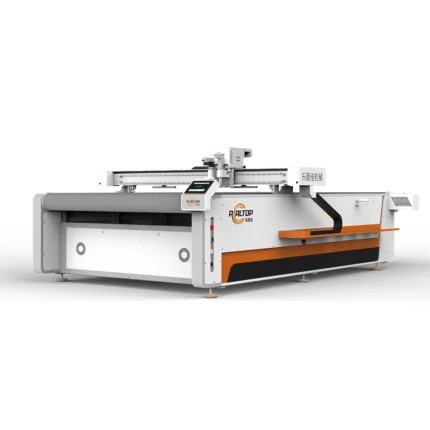
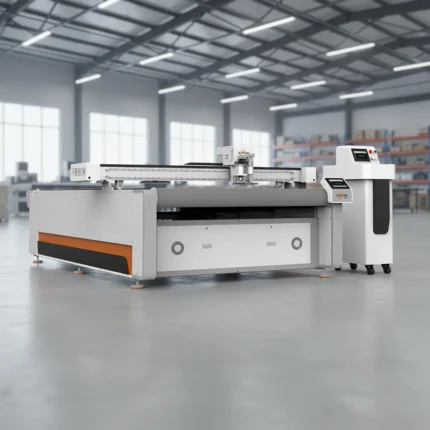
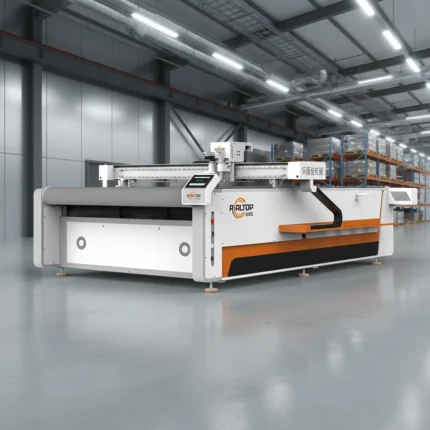
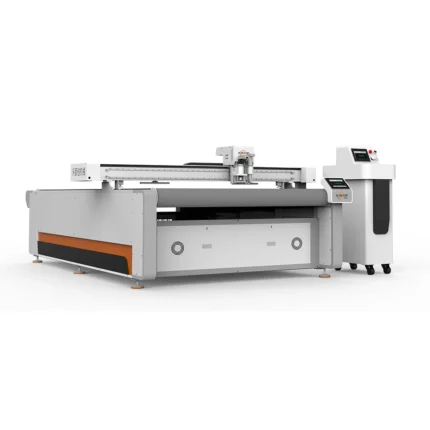
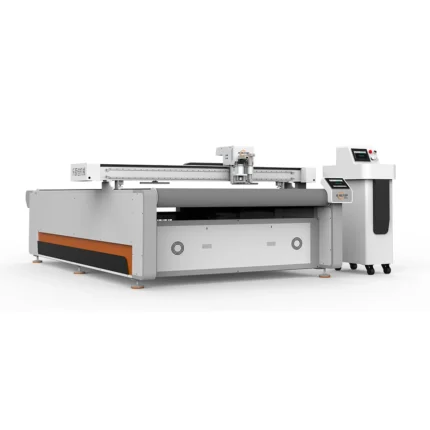
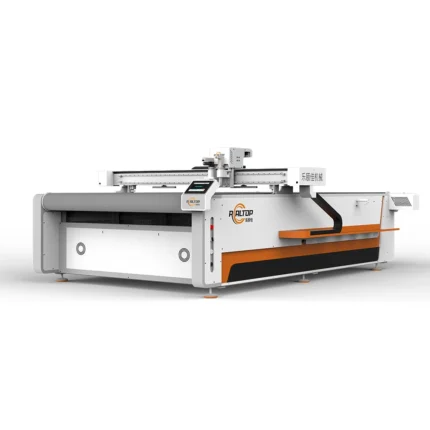
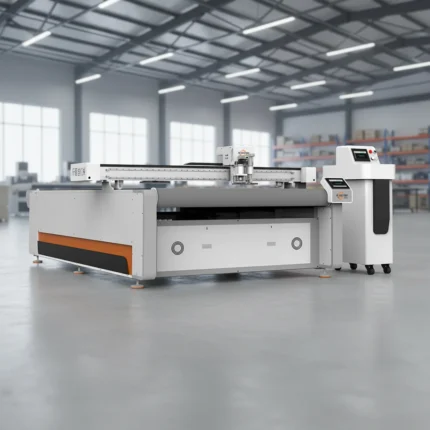
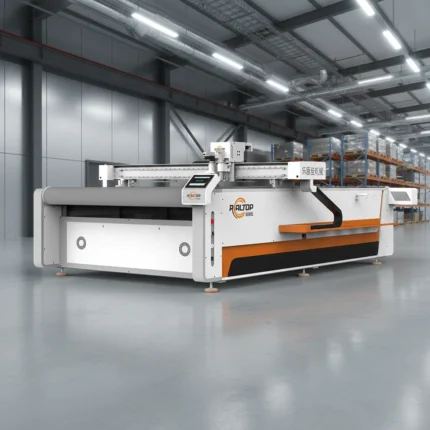
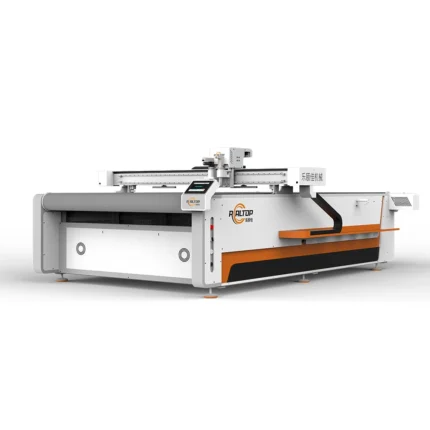
1625 CNC Oscillating Knife Cutting Machine, 1600×2500mm Working Area, ±0.1mm Accuracy — configured with aluminum bellows vacuum table and PLC control for precise fabric and textile edge cutting.
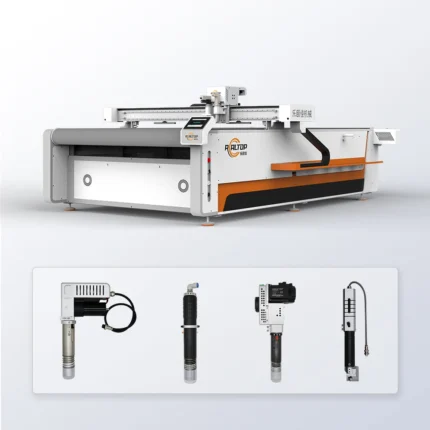
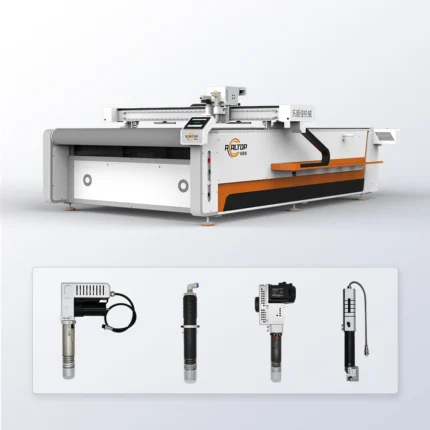
- Multi-tool head setup includes oscillating knife, driven rotary knife and pneumatic knife options matched to material density and layer count
- Supports PLT, DXF, AI and PDF file formats with dedicated nesting software for multi-layer fabric stacks up to 30–50mm
Sample cutting on your own material is performed before order confirmation to validate tool head selection, cutting quality and vacuum hold-down performance.
Precision-Cut Edges Without Thermal Distortion — a 1600×2500mm flatbed cutting table with aluminum bellows vacuum hold-down and multi-tool head configuration ensures clean, burr-free results across fabrics, leather, foam, and composite layers without the yellowing or sealing issues common in thermal processes.
Technical Specifications
| Parameter | Value |
|---|---|
| Model | 1625 |
| Product Type | CNC Oscillating Knife Cutting Machine |
| Working Area | 1600×2500 mm |
| Machine Dimensions | 3300×2100×1350 mm |
| Cutting Accuracy | ±0.1 mm |
| Repeat Positioning Accuracy | ±0.1 mm |
| Cutting Speed | 0–2000 mm/s (basis not stated in source — confirm material type / thickness / tool head) |
| Cutting Thickness | ≤ 30 mm (basis not stated in source — confirm material type / layer count) |
| Multi-layer Cutting | Up to 30–50 mm thickness (basis not stated in source — confirm fabric type / density / layer count) |
| Vacuum Pump | 9 kW |
| Vacuum Table | Aluminum bellows vacuum table |
| Tool Head Options | Oscillating knife, Driven rotary knife, Creasing wheel, Kiss cutting tool, Pneumatic knife, Milling tool, V-groove knife |
| Servo Motor Options | Panasonic, Delta, Dorna |
| Control System | PLC control panel with optional display languages |
| Language Options | English, Russian, Italian, Chinese (special languages customizable) |
| Software | Dedicated packaging box structure design software included |
| Profile Formats | PLT, DXF, AI, PDF |
| Voltage Options | 110V, 220V, 380V (frequency not stated in source) |
| Safety Devices | Infrared sensor device, emergency stop device |
| Certification | CE |
Application Suitability
| Application | Material or Output |
|---|---|
| Apparel manufacturing | Suits, knitwear, lace, complex multi-layer fabrics |
| Automotive interior production | Seat fabrics, carpets, PVC floor mats |
| Home textile fabrication | Sofa fabrics, curtains, rugs, upholstery layers |
| Composite material processing | Carbon fiber prepreg, aramid, specialty technical textiles |
| Packaging and carton sample making | Corrugated cardboard, folding carton, greyboard |
| Advertising and signage | Vinyl, flexible PVC, foam board, self-adhesive films |
Why "Cutting Speed" Without Material Context Misleads Buyers
A quoted 2000 mm/s figure means nothing unless you know the material, thickness, and tool head behind it.
I once watched a fabric producer celebrate a fast cycle time on a single ply of cotton, only to discover the same machine crawled through a 20-layer stack of automotive seat material. The oscillating knife simply cannot maintain its top travel speed when the blade meets real resistance. That gap between catalog numbers and workshop reality is where production schedules fall apart [NEED_CITE: material-specific cutting speed validation in industrial textile production]. This Cloth CNC Cutting Machine lists 0–2000 mm/s, but what actually matters is the speed your specific fabric and layer count will sustain over an eight-hour shift.
Cold Knife Edge Quality Versus Thermal Alternatives
When synthetic fabrics and foams meet a laser beam, the edge seals — sometimes desirable, often not. For garment producers cutting polyester blends or automotive suppliers slicing headliner foam, a sealed edge can mean stiffness, discoloration, or visible melt lines on the finished product. The 1625 uses cold oscillating and rotary knife tooling, leaving a clean, unsealed edge that behaves naturally during sewing and assembly. That distinction alone determines whether a cut part passes quality inspection or goes to the reject bin.
Tool Head Selection and the Material Match Problem
Choosing the wrong tool head is one of the most common specification errors I see in this industry. A pneumatic knife handles thick foam stacks that would stall an oscillating blade, while a driven rotary knife tracks curves in woven fabrics without fraying the weave. The 1625 supports seven distinct tool options — oscillating knife, driven rotary knife, creasing wheel, kiss cutting tool, pneumatic knife, milling tool, and V-groove knife — so the cutting method follows the material rather than forcing the material to fit one tool [NEED_CITE: tool head selection criteria for flatbed digital cutting systems].
What the Specification Sheet Actually Tells You
The ±0.1 mm cutting accuracy and repeat positioning accuracy set the tolerance band for nested layouts on expensive composite prepregs where every millimeter of yield counts. The 9 kW vacuum pump paired with the aluminum bellows vacuum table generates the hold-down force needed to keep thin films and slippery technical textiles flat during high-speed traverses — without adequate suction, small parts lift, shift, or skew mid-cut. Servo motor options from Panasonic, Delta, and Dorna give buyers the flexibility to align with existing maintenance inventories or regional service networks. The PLC control panel accepts PLT, DXF, AI, and PDF profiles, meaning most nesting workflows and CAD outputs feed directly into the machine without intermediate file conversion. Multi-layer cutting claims up to 30–50 mm, though the practical depth depends entirely on fabric density and compressibility under vacuum.
The Hidden Cost of Undersized Vacuum Zoning
When a vacuum table has too few zones, small cut parts lose suction the moment the knife penetrates the material and breaks the seal. I have seen fabric producers lose entire nests because a single lifted corner cascaded into misaligned cuts across the full 1600×2500 mm bed. The result is wasted material, missed delivery windows, and operators taping down edges by hand — exactly the kind of workaround that defeats the purpose of automated cutting [NEED_CITE: vacuum table zoning impact on small-part cutting yield].
Why Source From This Manufacturer
In-house design covers both knife and laser technologies, so the cutting method recommendation follows material science rather than product catalog convenience. Every tool head and table configuration gets specified against your actual material type, thickness, and daily volume before the order is finalized. Sample cutting on your own production material happens before commitment, not after the machine arrives. Voltage, plug type, and control language are confirmed in writing before shipment — no surprises on the loading dock. The dedicated packaging box structure design software ships with the machine, so carton sample makers can begin prototyping immediately without third-party license negotiations.
Documentation & Verification
- Machine specification sheet detailing configured tool heads and table zones for your material
- Electrical schematic with voltage and frequency confirmation matching your workshop supply
- Sample cutting report produced on your actual fabric or composite before order placement
- Factory test record documenting accuracy verification across your specified material stack
- Software license and file format compatibility note covering PLT, DXF, AI, and PDF imports
- Spare parts list identifying wear components for oscillating and rotary knife assemblies
Installation, Commissioning & Support
- Confirm workshop floor can support 3300×2100×1350 mm footprint with level access for the 9 kW vacuum pump
- Provide dedicated electrical circuit matching confirmed voltage option at 110V, 220V, or 380V
- Machine ships as a single-frame unit requiring on-site table leveling and vacuum seal inspection
- First-power commissioning includes PLC language configuration and servo calibration across all installed tool heads
- Operator training covers tool head changeover, vacuum zone activation, and nesting software workflow
- Wear-part replacement schedule for oscillating knife blades and vacuum table seals based on your material abrasiveness
What We Need to Quote Accurately
Send us your actual production material — not a data sheet, but a physical sample in the thickness and layer count you run daily. Specify your workshop voltage and frequency so the electrical system matches before the machine leaves the factory. Tell us which file formats your current design team outputs so we confirm software compatibility before the purchase order. If you are cutting small parts, share a typical nest layout so vacuum zoning can be configured to prevent part lift during production.
Frequently Asked Questions
Q: How do I verify that the cutting speed claim applies to my specific fabric?
A: Request a sample cutting test on your own material at your intended layer count. The 0–2000 mm/s range depends entirely on tool head selection, material density, and stack height. We run your fabric through the 1625 under production conditions and document the sustainable speed before you commit to an order.
Q: Which tool head should I use for thick automotive carpet stacks?
A: Thick carpets and dense foam materials typically require a pneumatic knife for downward cutting force, while woven seat fabrics respond better to an oscillating knife. We configure the tool head based on the sample you send, not on general catalog recommendations, and document the selection in your specification sheet.
Q: Will the vacuum table hold small pattern pieces during high-speed cutting?
A: The aluminum bellows vacuum table provides full-surface suction, but hold-down effectiveness on small parts depends on zone configuration. Share your typical nest layout with us so we can confirm zoning adequacy. Inadequate zoning causes part lift, which is one of the most frequent production complaints in flatbed cutting [NEED_CITE: vacuum zoning best practices for small-part nesting].
Q: Can the included software handle my existing DXF and AI design files?
A: The dedicated software imports PLT, DXF, AI, and PDF formats directly. Before shipment, we run your actual production files through the system and confirm compatibility, including nesting behavior and toolpath generation. A software license and file format compatibility note ships with your documentation package.
Q: What voltage and control language options are available for my market?
A: The 1625 supports 110V, 220V, and 380V configurations, with control panel languages available in English, Russian, Italian, and Chinese as standard. Special language requirements are customizable. Voltage, plug type, and language are confirmed in writing before production begins.


Related products
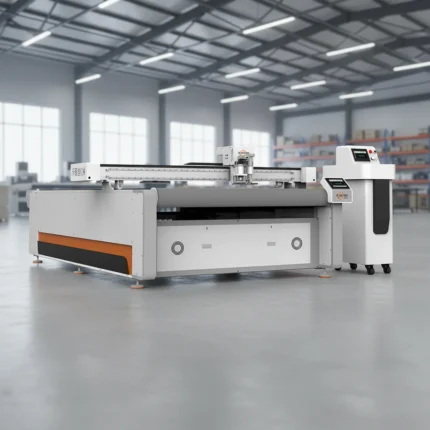
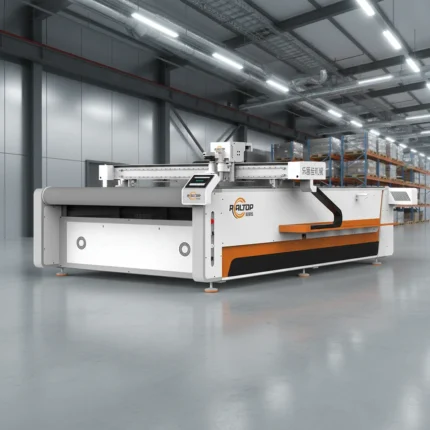
2026 Máquina de Corte con Cuchilla CNC para Tela Cuero PVC en Venta Caliente
Product Introduction
2026 Hot Sale CNC Knife Cutting Machine for Fabric, Leather, PVC. Ideal for precise cutting of various materials with advanced CNC technology, perfect for manufacturing needs.
Product Parameters
| Application | Fabric, Leather, PVC |
| Type | CNC Knife Cutting Machine |
| Feature | Precision Cutting |
| Year | 2026 Model |
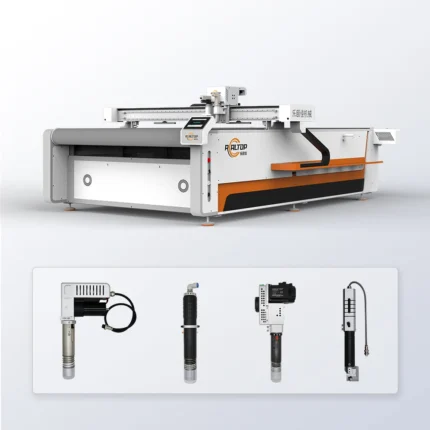
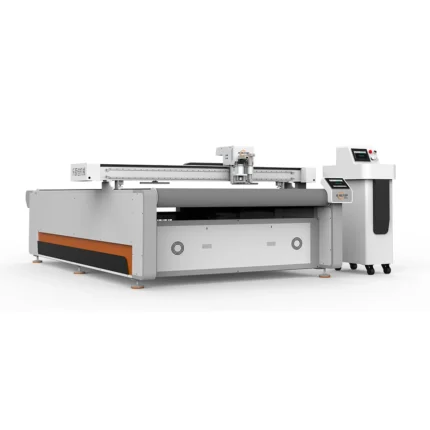
Máquina CNC personalizada de corte de tela para camisetas 2026
Product Introduction
Custom CNC Shirt Fabric Cutting Machine 2026, ideal for precise fabric cutting in garment manufacturing, offering efficient and accurate cutting solutions.
Product Parameters
| Model | Custom CNC Shirt Fabric Cutting Machine 2026 |
| Type | CNC Fabric Cutting Machine |
| Application | Shirt Fabric Cutting |
| Year | 2026 |
Jinan Realtop CNC Fabric Slitting Cutter 2026: Cortador avanzado de materiales flexibles
Product Introduction
Jinan Realtop CNC Fabric Slitting Cutter 2026 is a high-performance cutting equipment designed for precise fabric processing, ideal for industrial manufacturing needs with reliable CNC technology.Specifications
| Model | 2026 |
| Type | CNC Fabric Slitting Cutter |
| Manufacturer | Jinan Realtop |
| Application | Fabric Processing |
| Control System | CNC |
Jinan Realtop CNC Cortadora de Cuchilla Oscilante 2026
Product Introduction
Jinan Realtop CNC Oscillating Knife Cutter 2026, a precision cutting solution from China's leading welding & cutting equipment manufacturer, ideal for efficient material processing with advanced CNC technology.
Key Specifications
| Model | 2026 |
| Type | CNC Oscillating Knife Cutter |
| Manufacturer | Jinan Realtop |
商品评价
There are no reviews yet.