



Corrugated Cardboard Oscillating Knife Cutting Machine – Manufacturer
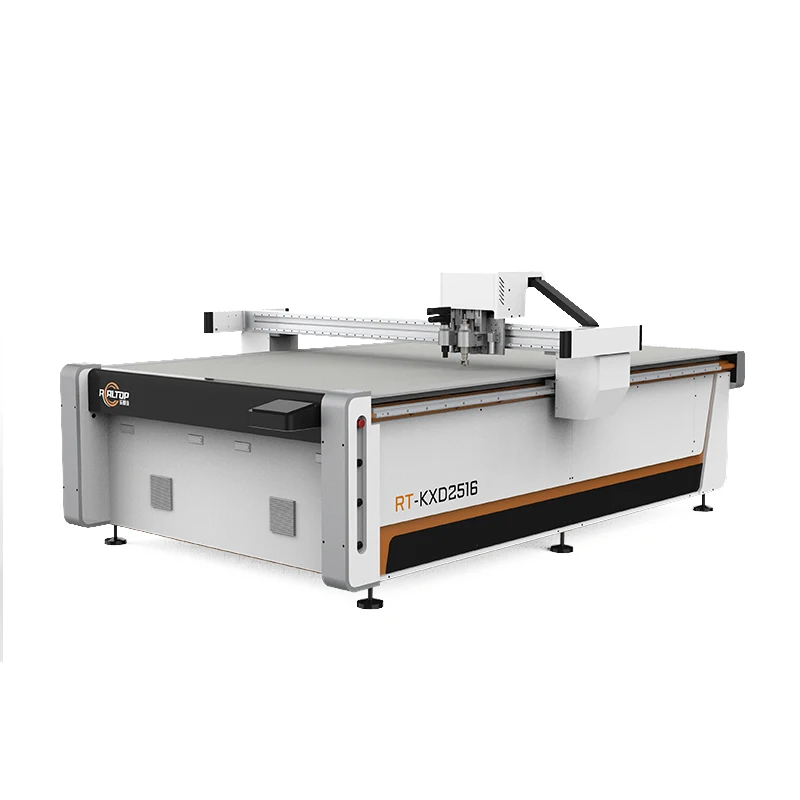
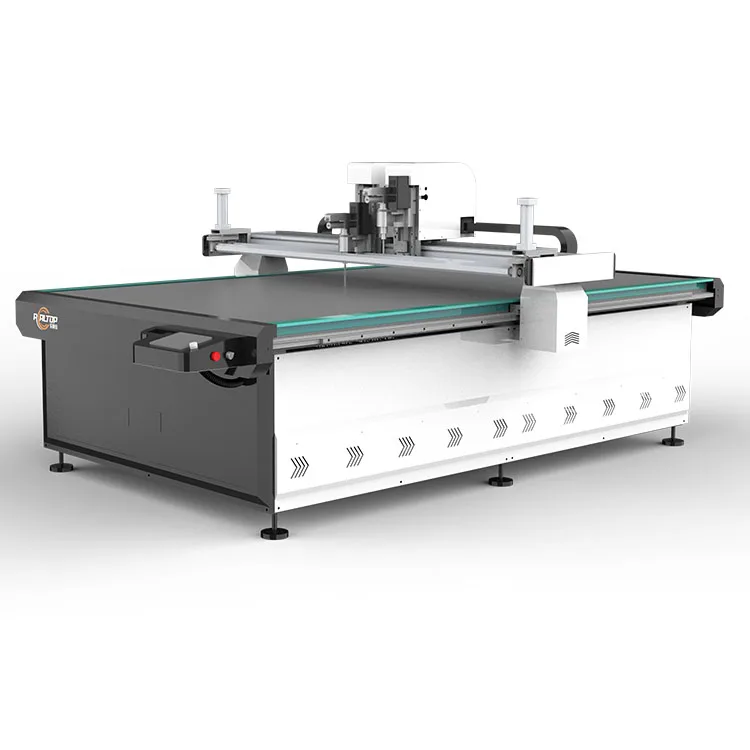
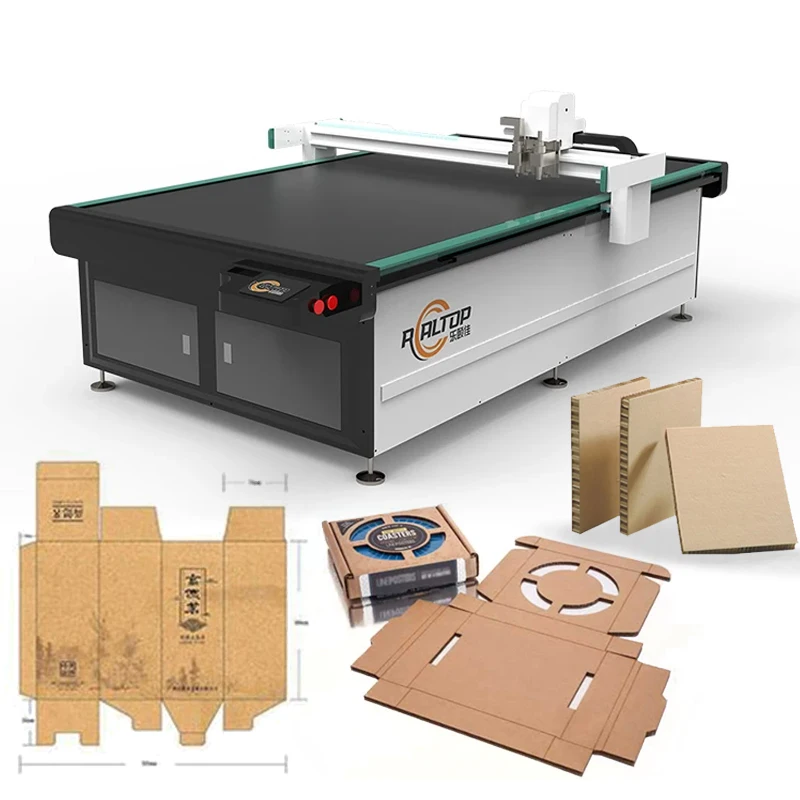
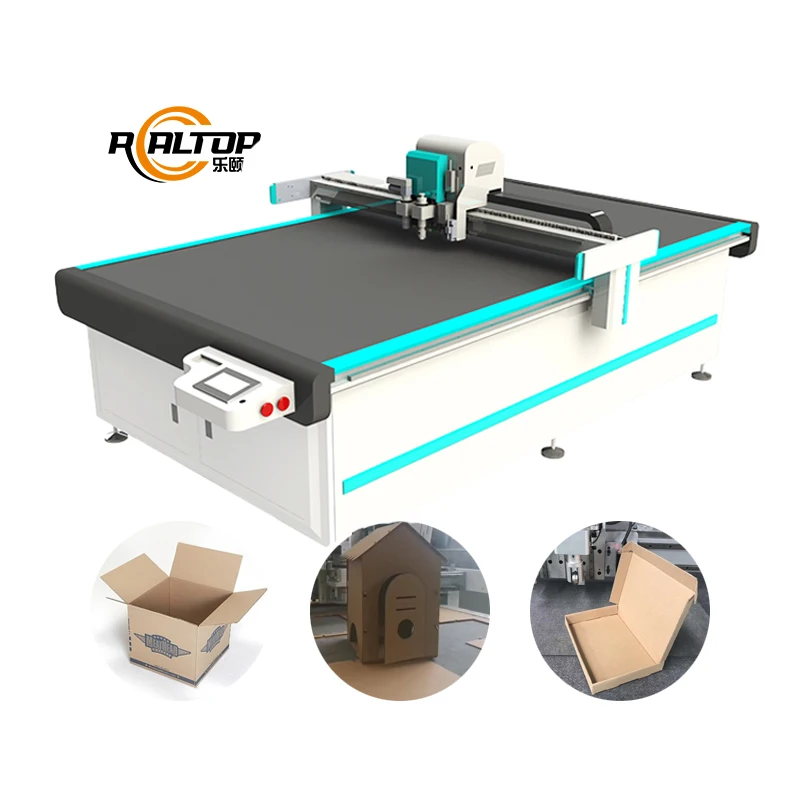
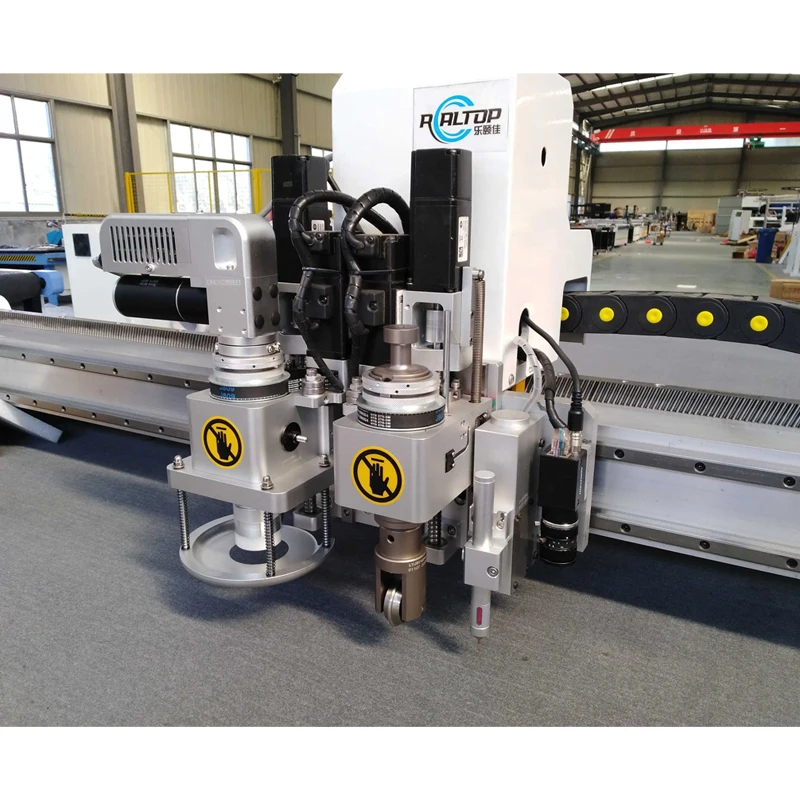
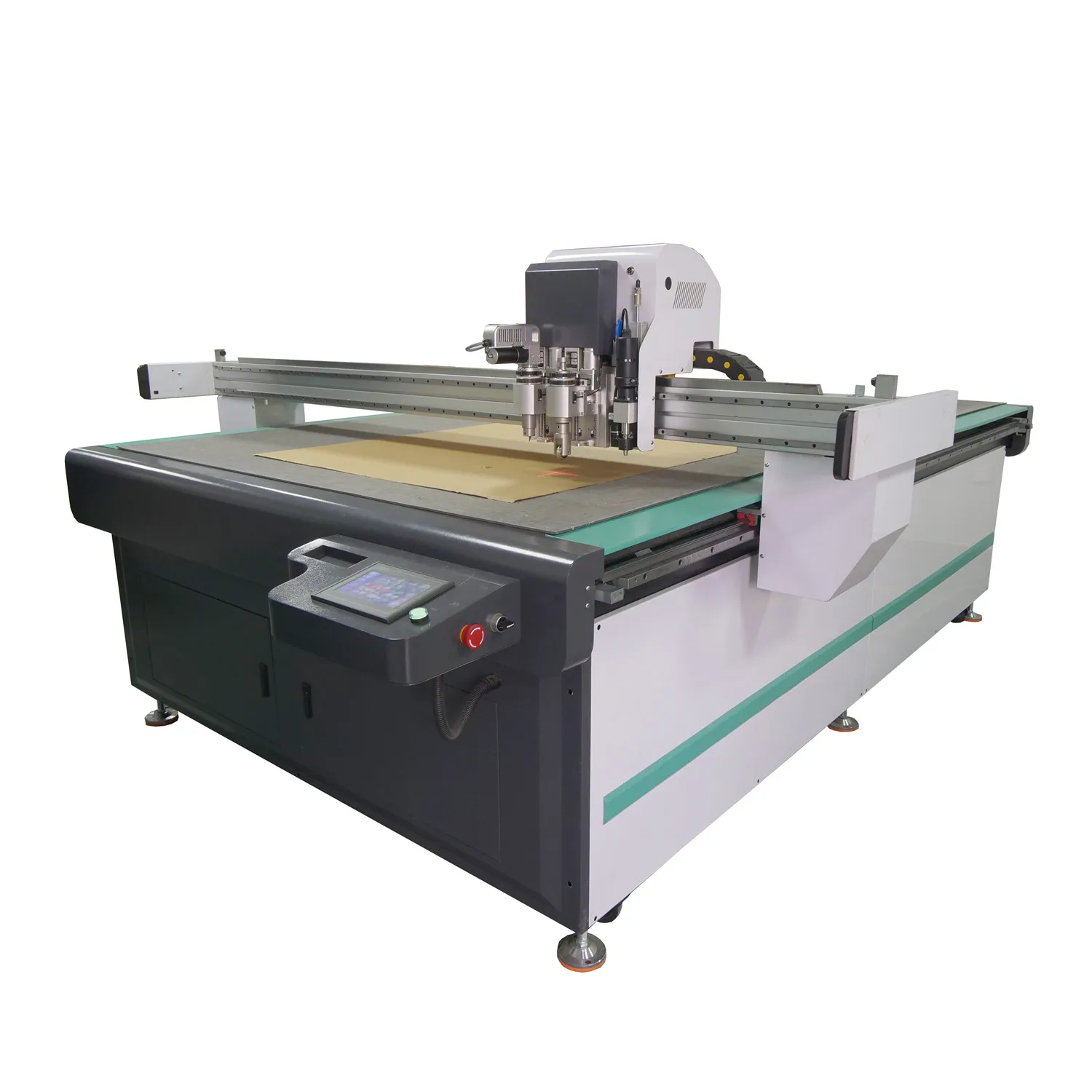
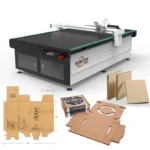
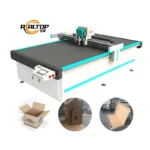
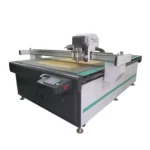
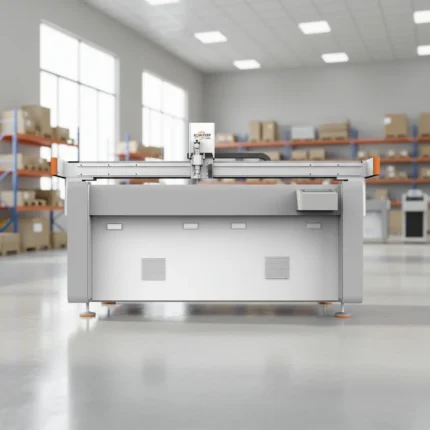
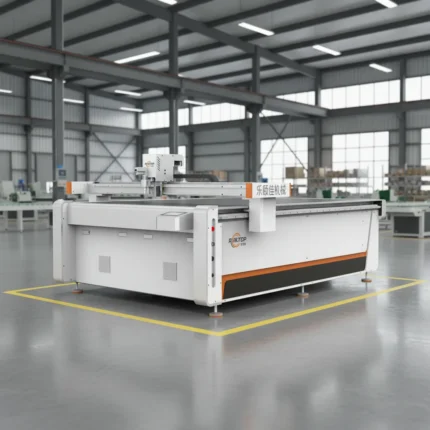
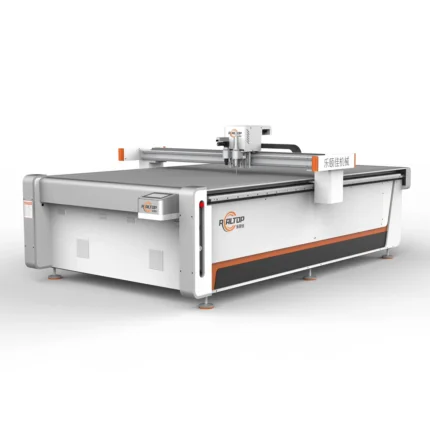
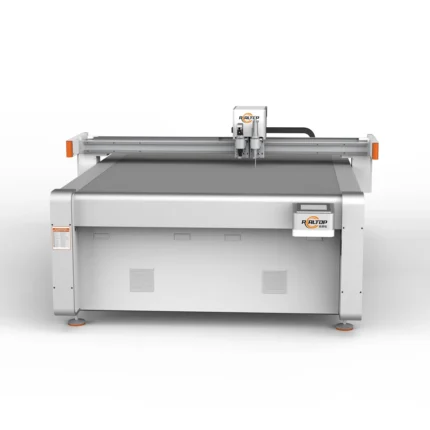
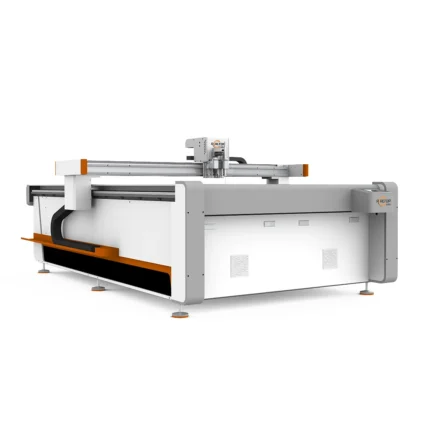
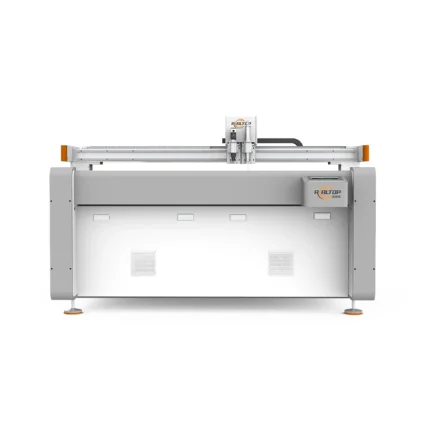
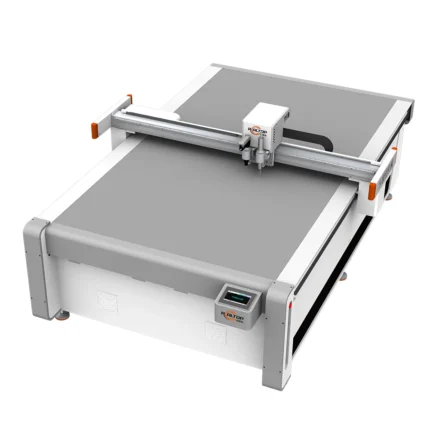
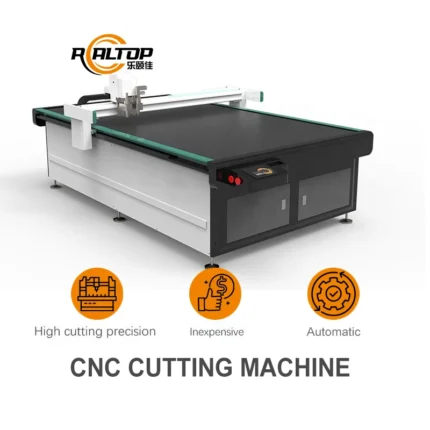
RT-D2516/RT-S2516 CNC Oscillating Knife Cutting Machine, 1600×2500 mm working area, Swiss oscillating knife head, aluminum honeycomb vacuum platform — engineered for corrugated cardboard and packaging sample production.
- Taiwan Delta servo motors and Hiwin linear guides deliver ≤0.1 mm repeated accuracy
- Professional carton software supports multiple file formats with automatic nesting for cutting, marking and creasing
- Auto feeding system with Germany imported conveyor belt handles continuous sheet workflow
- Infrared sensors and emergency stop devices ensure operator safety
Realtop provides sample cutting on your own cardboard grade before commitment, with voltage, plug and control language fully confirmed prior to shipment.
In-house design control — Realtop engineers the RT-D2516/RT-S2516 frame, motion system and tool head layout in-house, allowing configuration changes to match your packaging stock rather than forcing a fixed catalog model onto your production line.
Technical Specifications
| Parameter | Value |
|---|---|
| Model | RT-D2516 / RT-S2516 |
| Product Type | CNC Oscillating Knife Cutting Machine |
| Working Area | 1600 × 2500 mm |
| Machine Dimensions (L×W×H) | 3450 × 2300 × 1250 mm |
| Rated Power | 9 kW |
| Voltage | 380V ±10% (50/60 Hz to confirm) |
| Table Type | Aluminum alloy honeycomb vacuum adsorption platform |
| Tool Head | Swiss imported oscillating knife (full cut, half cut, cursor location) |
| Translational Velocity | 800–2000 mm/s |
| Cutting Speed | 200–800 mm/s (basis not stated in source — confirm material type and thickness) |
| Cutting Thickness | ≤100 mm (basis not stated in source — confirm material density) |
| Repeated Accuracy | ≤0.1 mm |
| Transmission System | Taiwan Delta servo motors and drivers, Taiwan Hiwin linear guide, synchronous belt, ball screw |
| Vacuum Pump | 7.5 kW |
| Conveyor Belt | Germany imported |
| Auto Feeding | Yes |
| Safety Device | Infrared sensors, emergency stop |
| Instruction System | HP-GL compatible format |
| Software | Professional carton cutting design software (automatic positioning, marking, creasing) |
| Language Options | English, Russian, Italian, Chinese (special languages customizable) |
Application Suitability
| Application | Material or Output |
|---|---|
| Packaging prototyping and short-run carton production | Corrugated cardboard, gray board, folding carton stock |
| Electrical appliance and express shipping carton sample making | Single and double-wall corrugated, honeycomb paper board |
| Sticker and label contour cutting | Vinyl, self-adhesive paper, synthetic label stock |
| Billboard and signage blank cutting | PVC foam board, corrugated plastic, cardboard |
| Flexible non-metal processing | Leather, garment fabric, sponge composite, PVC, soft glass, silicone, rubber gaskets |
Why Vacuum Zoning Matters More Than Working Area on a Corrugated Cardboard Oscillating Knife Cutting Machine
A flatbed table only holds what it can cover — and most small carton parts lift before the knife finishes the cut.
I spent years troubleshooting CNC knife tables in packaging workshops across the Pearl River Delta, and the most common complaint was never about speed. It was parts shifting mid-cut. A full-sheet vacuum table draws air across the entire 1600 × 2500 mm surface, but when you are nesting small gift box blanks or hang tags, most of that suction is wasted on empty space. The aluminum honeycomb platform on this machine addresses that with zoned adsorption that follows the active cutting area [NEED_CITE: vacuum zoning principles for flatbed digital cutting tables]. Without proper zoning, corrugated flute structure breaks unevenly and crease lines drift off register.
Oscillating Knife Mechanics for Corrugated and Carton Stock
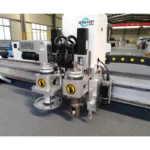
The Swiss imported oscillating knife head on the RT-D2516/RT-S2516 delivers high-frequency vertical vibration that slices through corrugated flute without crushing it. Unlike a static drag knife that drags and tears layered board, the oscillating motion separates fibers cleanly at each layer boundary. This matters when a packaging buyer demands clean edges on E-flute and B-flute samples shown at trade fairs — ragged edges signal poor tooling to their end customers. The tool station combines full-cut, half-cut and cursor positioning in one head, so the machine scores crease lines and cuts outlines without manual tool changes interrupting the workflow.
Motion Components That Hold Repeatability Across Long Production Shifts
Taiwan Delta digital servo motors paired with Hiwin linear guides form the motion backbone of this corrugated cardboard oscillating knife cutting machine. Rack-and-pinion transmission across the 2500 mm axis length prevents the belt stretch and positional drift that plague lighter machines during multi-shift carton sample runs. Repeated accuracy holds at ≤0.1 mm, which means a crease line scored at the start of a batch still aligns with the fold tab at the end [NEED_CITE: linear guide and servo accuracy standards in CNC flatbed cutting]. The 7.5 kW vacuum pump maintains consistent hold-down pressure even when cutting porous corrugated board that bleeds air through open flutes.
How Specs Translate to Real Carton Output
Cutting thickness capacity reaches up to 100 mm depending on material density, meaning the machine handles everything from thin folding carton stock through thick gray board used in premium packaging. Cutting speed spans 200 to 800 mm/s, but actual throughput depends entirely on the flute profile and board grade you run — a dense double-wall corrugated sheet cuts slower than a single-face display board. The 9 kW rated power covers the combined draw of servo drives, oscillating motor and vacuum pump without requiring a dedicated high-capacity circuit beyond standard 380V three-phase supply. HP-GL instruction compatibility means the controller accepts paths from most carton CAD systems already used in packaging design studios, reducing the learning curve when operators migrate from older sample-making tables.
The Cost of Skipping Material-Specific Configuration
One packaging client ordered a digital cutting table specified only by working area, ignoring the vacuum zoning layout and tool head selection. Their typical job mix included small cosmetic box inserts cut from dense gray board. The full-surface vacuum pulled unevenly on small nested parts, edges lifted during the final cut pass, and the static drag knife crushed rather than sliced the board edge. Three months of rejected samples and re-cut jobs later, they retrofitted a zoned honeycomb platform and switched to an oscillating head — the exact configuration this machine ships with. Specifying the wrong hold-down method or tool type for your actual stock turns a productive asset into a bottleneck [NEED_CITE: common CNC cutting configuration mismatches in packaging workshops].
Why Source This Machine Directly from the Manufacturer
Realtop operates in-house design and production covering both knife and laser cutting platforms, so you select the cutting method that fits your material rather than forcing one technology across every application. Tool head and table configuration are specified per your material type, thickness and daily volume before the order is locked. Sample cutting on your own corrugated board or carton stock runs before commitment, producing a documented report on edge quality, crease depth and cutting speed. Voltage, plug type and control language are confirmed in writing with an electrical schematic before shipment — not discovered at the crate. Software file format compatibility with your existing DXF, PLT or AI workflow is verified during the pre-order stage so operators are productive from day one.
Documentation & Verification
- Machine specification sheet confirming working area, tool head options and vacuum zoning layout
- Electrical schematic with voltage, frequency and plug type matched to your facility
- Sample cutting report produced on your specific corrugated grade and flute type
- Tool head and table configuration list locked before production begins
- Software license and file format compatibility note for your design workflow
- Factory test record documenting positional accuracy and cut quality before dispatch
Installation, Commissioning & Support
- Floor space allocation for 3450 × 2300 mm footprint plus material staging and offcut zones
- Dedicated 380V three-phase circuit sized for 9 kW machine load plus 7.5 kW vacuum pump
- Assembly of honeycomb vacuum platform sections and conveyor belt alignment on arrival
- First-run calibration of oscillating knife depth and crease wheel pressure on your board stock
- Operator training covering nesting software, file import workflow and tool change procedure
- Spare knife blades and creasing wheel inventory matched to your corrugated and gray board mix
What to Include in Your Inquiry
Send your typical material types with flute designation, board thickness and GSM weight so the tool head and vacuum zoning can be matched before quotation. Confirm your destination voltage, frequency and plug standard along with the preferred control language for operators. If you run specific carton CAD software, share sample export files so format compatibility is tested before commitment.
Frequently Asked Questions
Q: How do I select the right tool head for different corrugated flute types?
A: E-flute and F-flute micro-corrugated board typically cuts cleanly with a high-frequency oscillating knife at moderate depth settings, while B-flute and C-flute require deeper stroke and slower feed to avoid crushing the flute structure. Half-cut and creasing wheel tools handle fold lines without penetrating the full board thickness. Request a sample cutting report on your specific board grade before ordering.
Q: What vacuum table zoning do small carton parts actually need?
A: Small nested parts like gift box inserts or hang tags require zoned vacuum adsorption that activates only beneath the active cutting area, preventing edge lift and reducing pump load. A full-sheet vacuum without zoning wastes suction on empty table space and fails to hold lightweight or narrow blanks flat during high-speed contour cuts.
Q: Which file formats does the included carton software accept?
A: The professional carton design software imports standard vector formats including DXF, PLT and AI files generated by most packaging CAD systems. It also supports automatic positioning for cutting, marking and creasing operations. Confirm your specific file export format during the pre-order stage so compatibility is verified before shipment.
Q: How do I verify cutting speed claims against my actual material?
A: Published cutting speed ranges assume specific material types and thicknesses that may not match your production stock. The only reliable method is a sample cutting test on your own corrugated board or gray board, which documents real cutting speed, edge quality and tool wear rate under your exact conditions before you commit to an order.
Q: What voltage and language options are confirmed before shipment?
A: The machine ships with voltage configured to your facility supply, with frequency, plug type and control panel language all confirmed in the pre-shipment electrical schematic. Standard language options include English, Russian, Italian and Chinese, with special language customization available upon request during the specification stage.


Related products
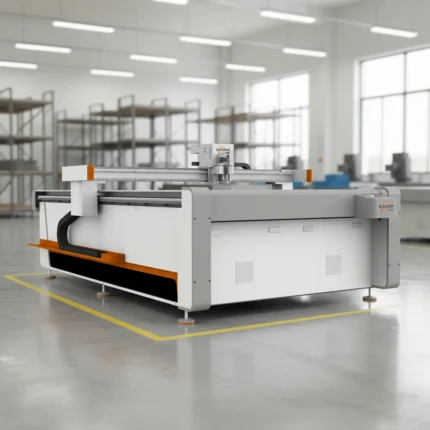
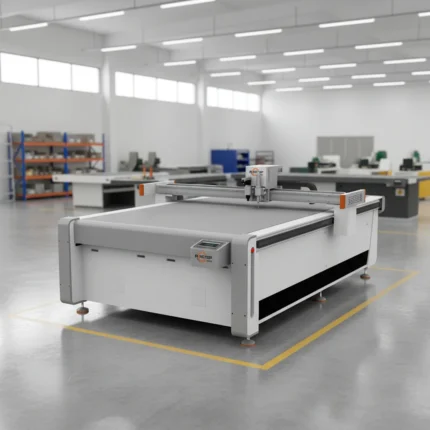
2026 Digital Flatbed Cutting Plotter Auto Corrugated Box Die Cutter
Product Introduction
Digital Flatbed Cutting Plotter 2026, ideal for auto corrugated box die cutting, offering precision and efficiency for professional packaging production.Specifications
| Type | Digital Flatbed Cutting Plotter |
| Model | 2026 |
| Application | Auto Corrugated Box Die Cutting |
| Function | Precision Cutting & Plotting |
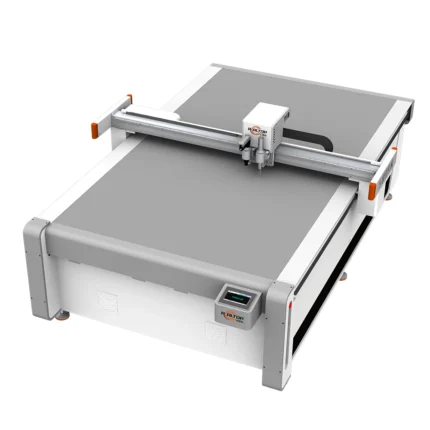
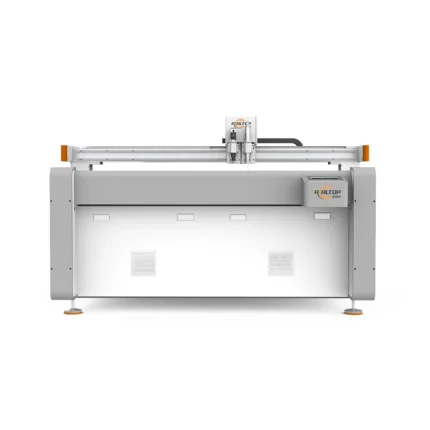
Automatic CNC Cutter Plotter 2026 Flat Bed Cardboard Cutter
Product Introduction
Automatic CNC Cutter Plotter 2026 is a flat bed cardboard cutting machine designed for precise and efficient cutting tasks. Ideal for various cardboard processing needs, it combines advanced CNC technology to deliver accurate results, suitable for manufacturing and packaging applications.Product Parameters
| Type | Automatic CNC Cutter Plotter |
| Model | 2026 |
| Design | Flat Bed |
| Application | Cardboard Cutting |
Automatic Die-less Cardboard Vibrating Knife Cutter 2026
Product Introduction
Automatic Die-less Cardboard Vibrating Knife Cutter 2026, a precision cutting solution for cardboard materials, featuring advanced die-less technology for efficient and flexible cutting operations. Ideal for various cardboard processing needs in manufacturing and packaging industries.Key Specifications
| Model | 2026 |
| Type | Automatic Die-less Cutter |
| Cutting Tool | Vibrating Knife |
| Material | Cardboard |
Automatic Digital Cardstock Cutter 2026 CNC Cutter
Product Introduction
Automatic Digital Cardstock Cutter 2026 is a CNC cutting machine ideal for white cardboard and kraft paper. It offers precise and efficient cutting performance, suitable for various paper processing needs in manufacturing and craft applications.Key Specifications
| Type | CNC Digital Cutting Machine |
| White Cardboard, Kraft Paper | |
| Operation | Automatic |
| Application | Paper Cutting & Processing |
Digital Box Cutter 2026 Oscillating Knife Cardboard Cutter
Product Parameters
| Model | Digital Box Cutter 2026 |
| Cutting Type | Oscillating Knife |
| Material | Corrugated Cardboard |
Introduction
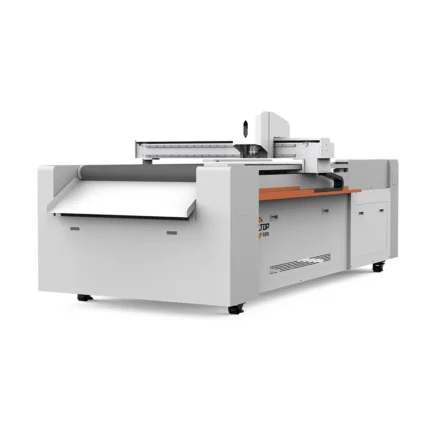
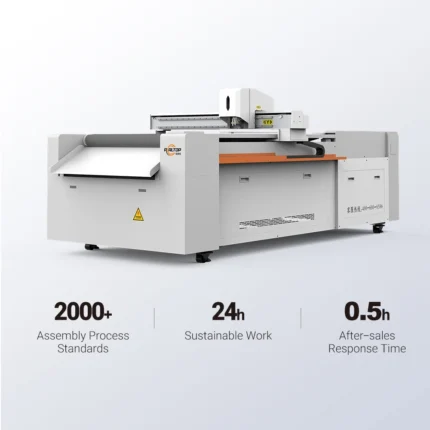
Professional oscillating knife cutting machine for corrugated cardboard. Ideal for precise, efficient cutting in packaging production. Reliable performance from China's leading welding & cutting equipment manufacturer.


Realtop 2026 CNC Oscillating V-Cut Machine
Product Introduction
Realtop CNC Oscillating V-Cut Machine 2026 is a precision equipment designed for efficient V-cutting operations, ideal for various material processing needs with advanced CNC technology.
Key Specifications
| Model | Realtop CNC Oscillating V-Cut Machine 2026 |
| Type | CNC Oscillating V-Cut Machine |
| Application | Precision V-cutting operations |
| Feature | Advanced CNC technology |
商品评价
There are no reviews yet.