



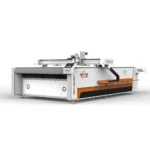

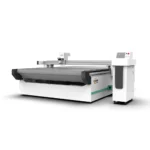
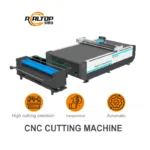
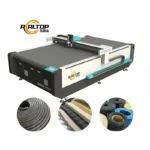
RT-D2516/RT-S2516 CNC Oscillating Knife Cutter for Cloth – Factory Direct
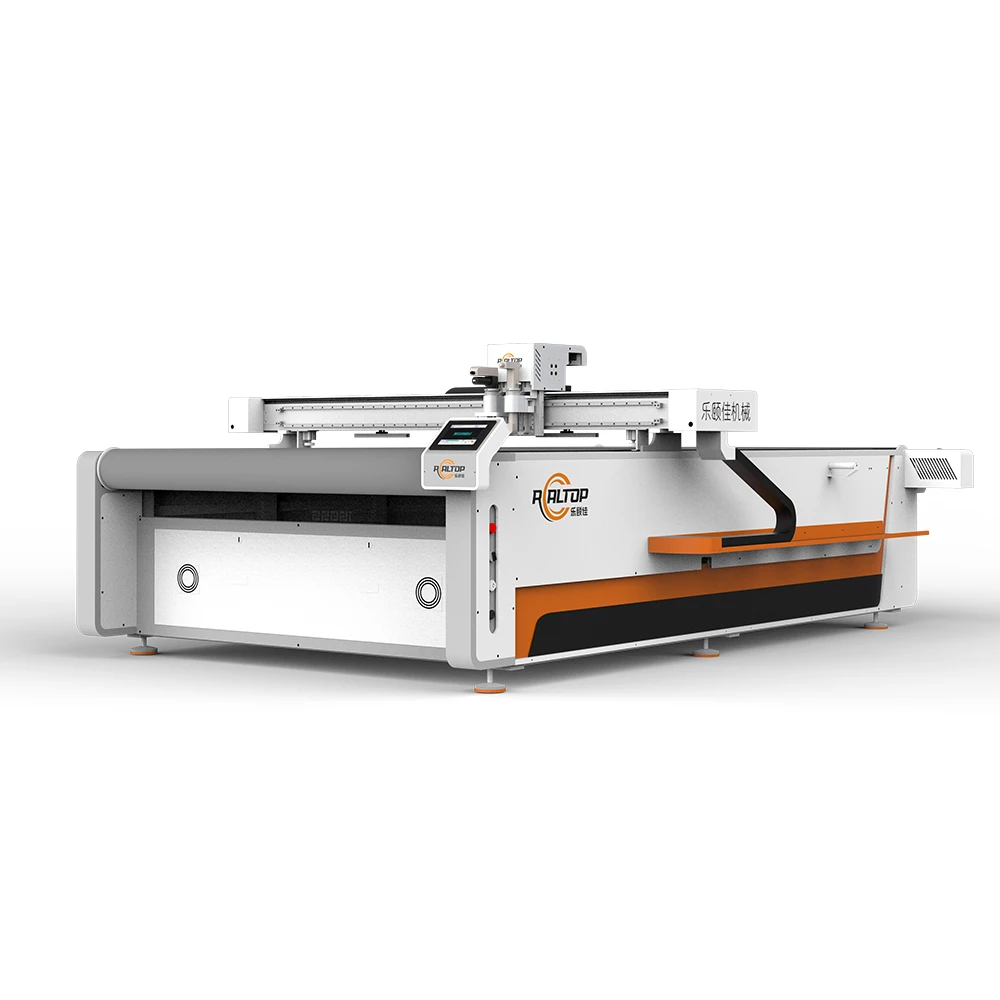
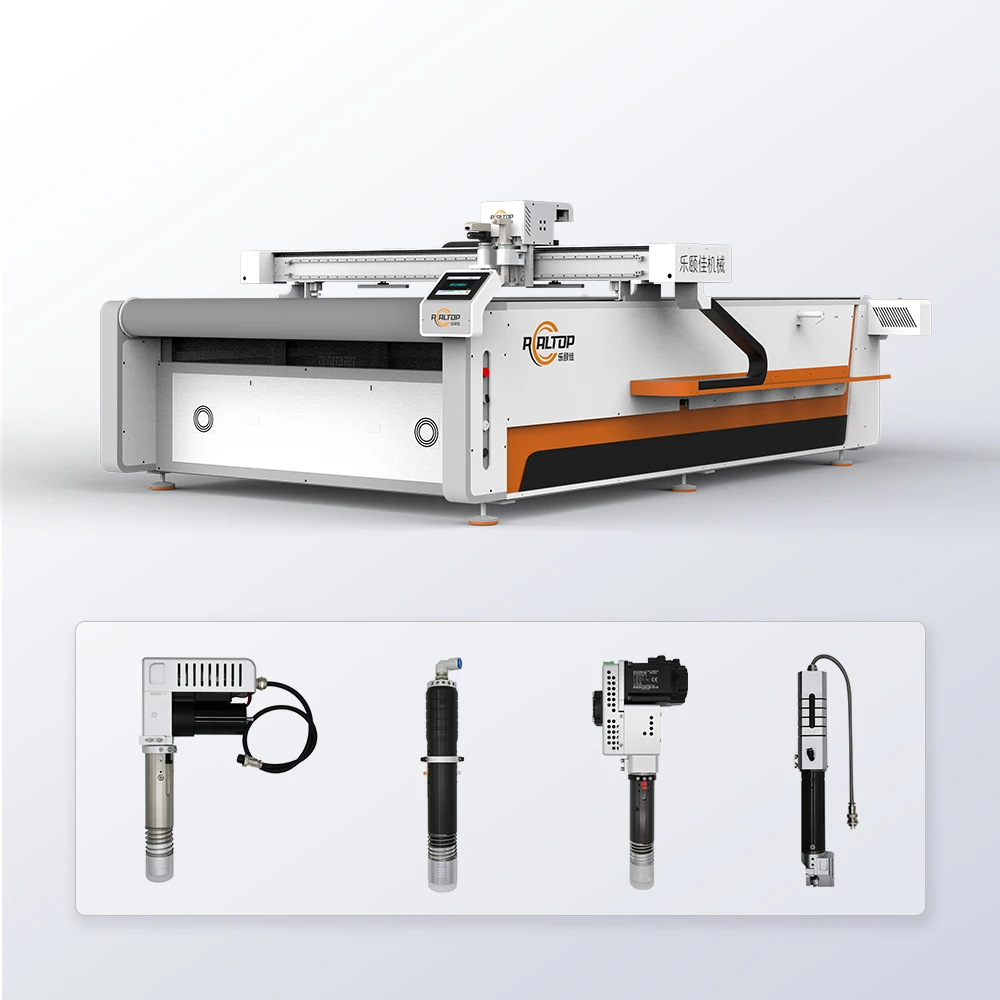
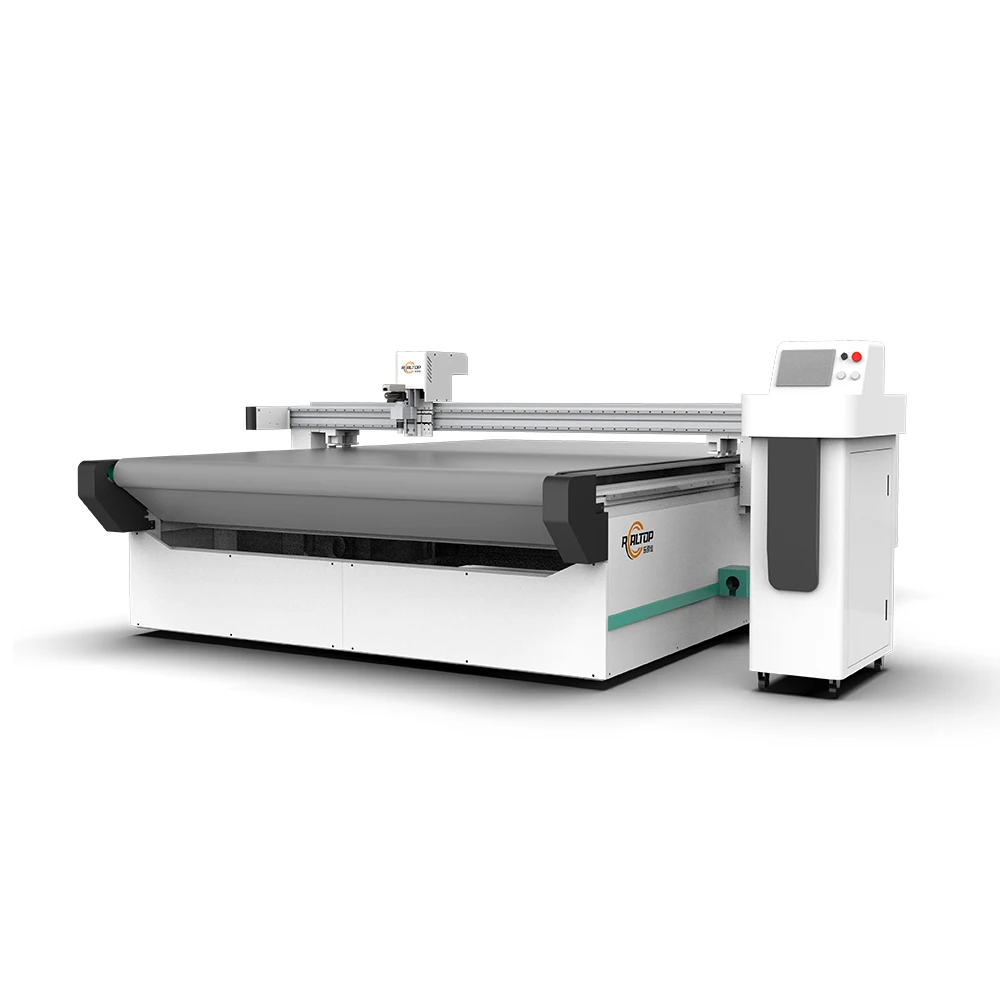
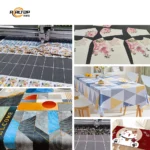
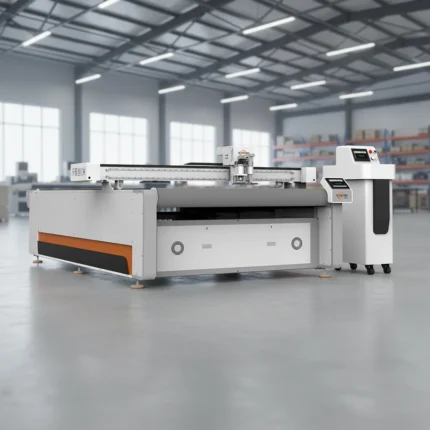
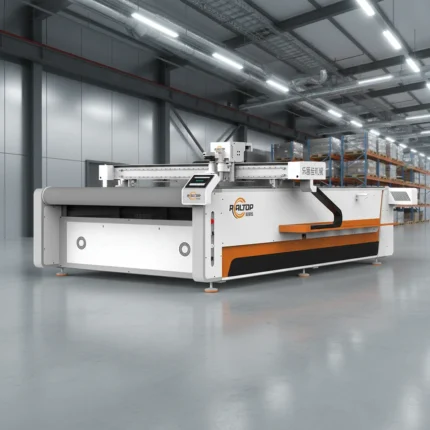
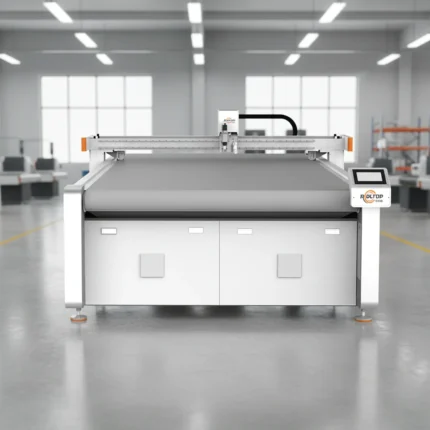
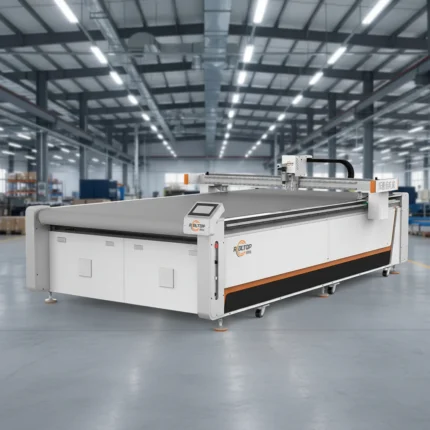
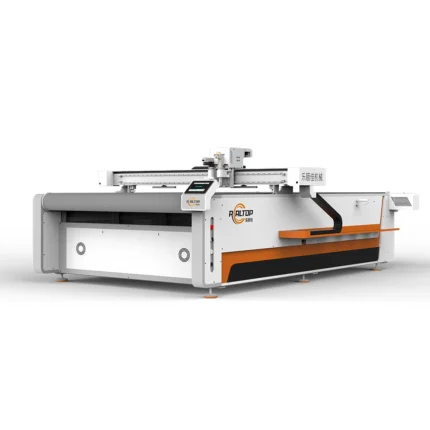
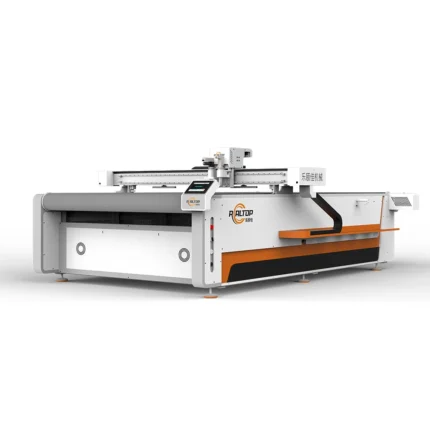
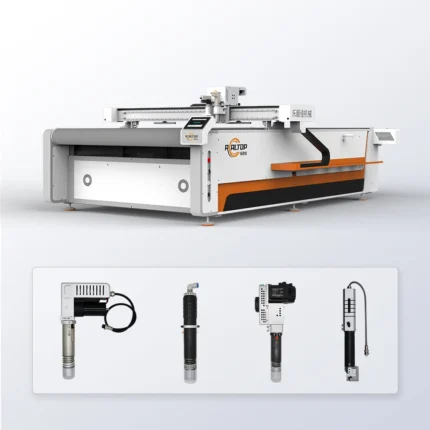
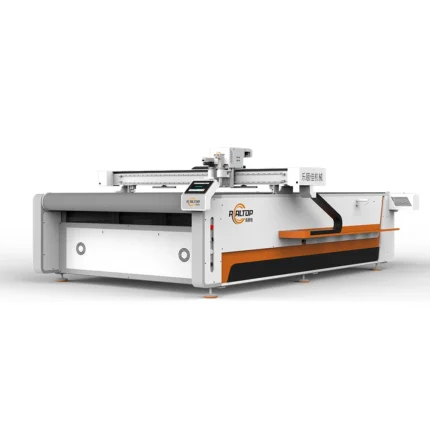
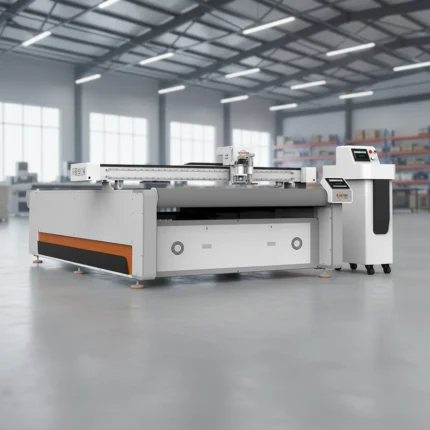
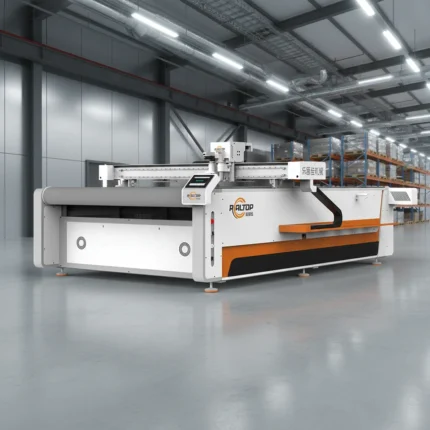
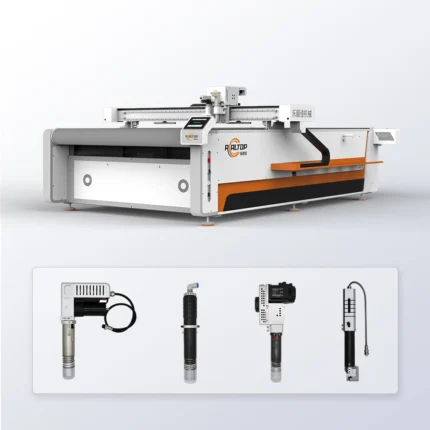
RT-D2516/RT-S2516 CNC Oscillating Knife Cutter for Cloth, 1600×2500mm Working Area, 9kW Rated Power, ≤100mm Cutting Thickness — configured with multifunctional tool heads including oscillating knife, drag knife and creasing wheel to match fabric, leather and composite materials precisely.
- CCD camera positioning tracks printed contour marks at production speed, while digital servo motors and Taiwan Hiwin linear guides maintain ≤0.1mm repeated accuracy across the full cutting bed.
- Swiss imported knife and Germany imported conveyor belt ensure consistent edge quality without fraying or crushing on multi-layer textile stacks.
Sample cutting on your own cloth material is arranged before commitment, with voltage, control language and software file format compatibility confirmed prior to shipment.
Laser Process Customization — continuous versus peak output specified per material so buyers know the exact cutting depth before signing the purchase order, with sample reports provided on your own stock.
Technical Specifications
| Parameter | Value |
|---|---|
| Model | RT-D2516/RT-S2516 |
| Product Type | CNC Oscillating Knife Cutting Machine |
| Working Area | 1600 × 2500 mm |
| Machine Size | 3450 × 2300 × 1250 mm |
| Rated Power | 9 kW |
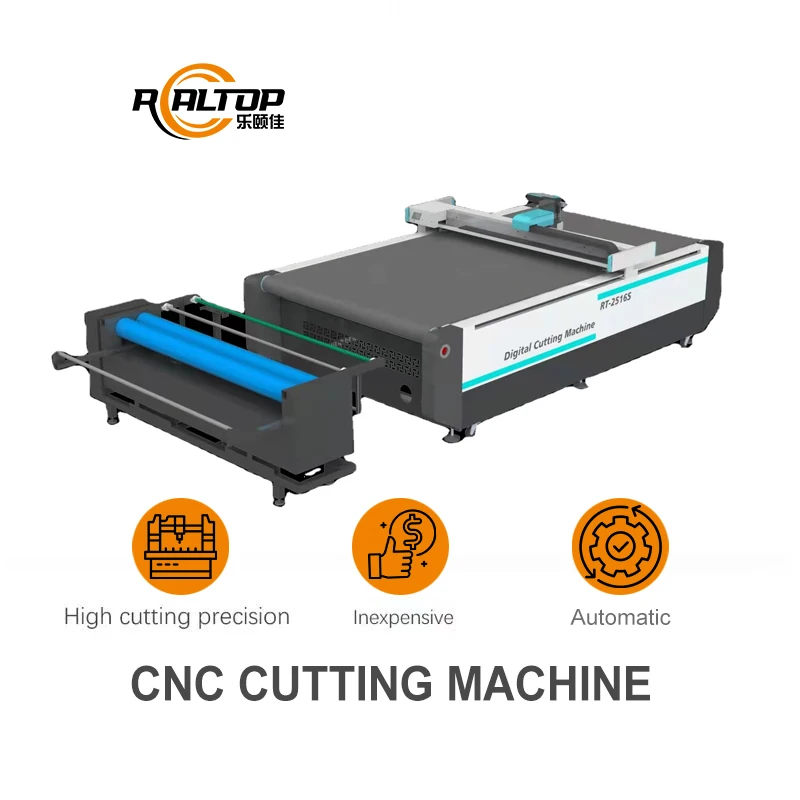
| Table Type | Flat working table; auto feeding table |
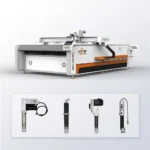
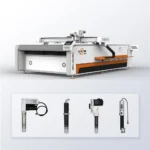
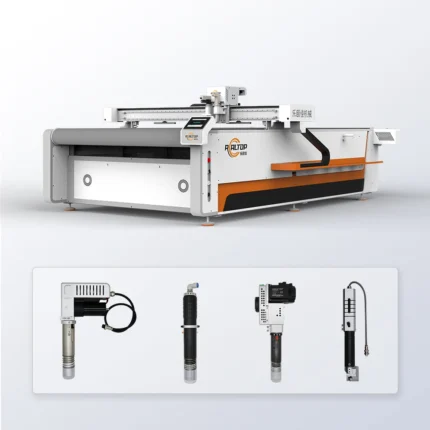
| Tool Head Options | Oscillating knife, pneumatic knife, high-power vibrating knife, circular knife, V cutting knife, drag knife, creasing wheel, dotted line knife, punching, brush |
| Multifunctional Head | Swiss imported knife with vibration full cutting, vibration half cutting, cursor location |
| Visual Positioning | Small CCD camera mark point positioning, panoramic camera recognition positioning, projection positioning |
| Safety Device | Infrared sensors, anti-collision, emergency stop |
| Translational Velocity | 800–2000 mm/s |
| Cutting Speed | 200–800 mm/s (varies with material) |
| Cutting Thickness | ≤100 mm (varies with material) |
| Repeated Accuracy | ≤0.1 mm |
| Transmission System | Digital servo motor, linear guide, synchronous belt, ball screw |
| Instruction System | HP-GL compatible format |
| Voltage | 380V ±10% |
| Servo Motor Brand | Delta (optional Panasonic) |
| Conveyor Belt | Germany imported |
| Vacuum Table | Magnesium-aluminum alloy with fluorocarbon PVDF powder spraying, anodic oxidation, hard oxidation |
| Vacuum Pump | 7.5 kW, integrated aviation aluminum shell with built-in silencer sponge |
| Guide Rail | Taiwan Hiwin |
| Control Panel | Touch screen, multiple language supported (English, Russian, Italian, Chinese, customizable) |
| Software File Formats | PLT, DXF, AI |
| Frame | Thick-walled seamless steel structure, high-temperature tempering, CNC machining center finished |
| Standards | CE declaration where applicable |
Application Suitability
| Application | Material or Output |
|---|---|
| Automotive interior trimming | Leather, fabric, PU, EVA, composite seat covers and door panels |
| Garment and footwear production | Clothing cloth, shoe material, non-woven fabric, luggage material |
| Soft home furnishings and carpets | Carpet, sponge, textile, foam board |
| Signage and packaging sample making | Cardboard, corrugated cardboard, sticker, film, plastic box |
| Gasket and sealing fabrication | Rubber, PTFE, ETFE, gasket material, fiberglass |
| Sports and outdoor gear | XPE, PVC, PP, PE, composite materials |
Why "Peak Power" Claims Leave Buyers With Underpowered Lasers
Continuous output, documented before the order, is the only laser rating that determines real cutting depth on your material.
A surprising number of suppliers quote laser power at peak rather than continuous output, leaving buyers to discover on the shop floor that the machine cannot penetrate the material thickness they need. When a laser cutting and engraving machine manufacturer lists only peak wattage, the real cutting depth often falls well short of expectation [NEED_CITE: laser power rating standards for industrial cutting equipment]. The RT-D2516/RT-S2516 approaches this differently: every power rating is stated as continuous output, matched to the material and thickness range you will actually run. From my years servicing laser installations across workshops in eastern China, I have watched operators struggle with machines that simply could not sustain the depth required on thicker acrylic or coated metals — all because the specification sheet told a different story than the beam at the nozzle.
Laser Source Matching: CO2 for Non-Metals, Fiber for Metals
Choosing between CO2 and fiber laser sources determines which materials the machine can process effectively. CO2 lasers handle acrylic, wood, textile, and non-metal stock with clean edge sealing, while fiber lasers address sheet metal and tube cutting with higher energy absorption on reflective surfaces. As a laser cutting and engraving machine manufacturer covering both platforms, REALTOP specifies the source type against your actual material stack rather than selling one technology for every job.
Edge Sealing on Synthetics Without Burn Marks or Discoloration
Synthetic fabrics and thermoplastic sheets melt at the cut edge, which can seal the edge cleanly or leave a charred, discolored line depending on how power and speed are balanced. The correct combination of focal position, assist gas, and feed rate produces a sealed edge with no burr and no burnt residue [NEED_CITE: laser edge sealing parameters for synthetic textiles]. This matters in automotive interiors and garment production, where a visible burn mark on a seat cover or shoe upper is an immediate rejection.
Reading the Specs That Matter on the Production Floor
The 7.5 kW vacuum pump with its integrated aviation aluminum shell and built-in silencer sponge is not just about noise reduction — it sustains the negative pressure required to hold thin fabrics and films flat on the 1600 × 2500 mm magnesium-aluminum alloy table during high-speed cutting. The fluorocarbon PVDF powder spraying on the vacuum surface resists abrasion from repeated material loading. Taiwan Hiwin linear guides paired with Delta servo motors maintain the ≤0.1 mm repeated accuracy that contour cutting demands, particularly when the CCD camera tracks printed marks across large-format textile panels. Cutting speed ranges from 200 to 800 mm/s depending on the material, and the thick-walled seamless steel frame with high-temperature tempering prevents the vibration that would otherwise degrade edge quality on multi-layer fabric stacks.
The Hidden Cost of Skipping Configuration Verification
When the tool head is chosen based on catalog defaults rather than actual material behavior, the consequences appear within the first production run. A drag knife meant for vinyl applied to thick foam crushes the material instead of slicing through it, leaving ragged edges that require manual trimming. CCD contour recognition that works at sample speed may fail to track printed marks once the line is running at full throughput [NEED_CITE: vision system tracking limits at production cutting speeds]. Voltage mismatches discovered after shipment mean rewiring delays or, worse, component damage that voids the warranty.
Why Buyers Source This Equipment Here
In-house design and production cover both knife and laser cutting technologies, allowing a buyer to match the cutting method to the material rather than forcing one approach across every job. Tool head and table configurations are specified per material type and production volume, not pulled from a standard catalog. CCD camera positioning is tested against the buyer’s own printed patterns before the order is finalized. Software compatibility with PLT, DXF, and AI formats is confirmed so existing design workflows connect directly. Voltage, plug type, and control panel language are locked in before the machine leaves the factory, not discovered at unloading.
Documentation & Verification
- Machine specification sheet listing continuous power ratings per laser source option
- Electrical schematic and voltage confirmation matched to your facility’s supply
- Tool head and table configuration list reflecting your material and part geometry
- Sample cutting report on your own fabric or composite stock before commitment
- Software licence and file format compatibility note for PLT, DXF, AI workflows
- Factory test record documenting accuracy and cutting quality on your specified material
Installation, Commissioning & Support
- Foundation must support 3450 × 2300 × 1250 mm footprint with level tolerance for the 1600 × 2500 mm table
- Dedicated 380V ±10% circuit required for the 9 kW rated power and 7.5 kW vacuum pump
- Machine ships as a single assembly with auto feeding table and conveyor belt pre-mounted
- First-run parameter tuning covers cutting speed, vacuum zoning, and CCD calibration on your material
- Touch screen control panel configured in your chosen language before dispatch
- Spare parts list includes Swiss knife blades, CCD lens covers, and guide rail lubricant
Preparing Your Inquiry With the Right Details
Send the material type, sheet thickness, maximum part dimensions, and your daily volume target so the cutting method and tool head configuration can be matched precisely. Specify your local voltage and frequency, the control language your operators need, and whether your existing design files use PLT, DXF, or AI format. If you want a sample cut on your own stock before committing, include a few sheets of the actual material you will run in production.
Frequently Asked Questions
Q: CO2 or fiber laser — how do I decide which source fits my material?
A: CO2 lasers cut non-metals like acrylic, wood, and textiles with sealed edges, while fiber lasers are designed for sheet metal and tube. The choice depends entirely on the material stack you run. REALTOP produces both platforms and will recommend the source after reviewing your specific material type, thickness, and edge quality requirements.
Q: How do I verify the laser is rated at continuous rather than peak power?
A: Request a specification sheet that explicitly states continuous output in watts at the given duty cycle. A reputable laser cutting and engraving machine manufacturer documents continuous power separately from peak and provides a sample cutting report showing the actual depth achieved on your material thickness.
Q: What edge quality should I expect on acrylic, textile, and coated metals?
A: On acrylic and textiles, a properly configured CO2 laser produces a sealed edge with no burr, no char, and no discoloration. On coated metals processed with fiber laser, the edge remains clean with minimal dross. Actual results depend on power, assist gas, and focal position settings matched to your material.
Q: Can the voltage and control language be customized for my market?
A: Yes. The RT-D2516/RT-S2516 supports 380V ±10% with configurable plug types, and the touch screen control panel offers English, Russian, Italian, Chinese, and other languages by request. Voltage, frequency, and language are confirmed in writing before production begins.
Q: How do I arrange a sample cut on my own material before ordering?
A: Send a few sheets of the material you plan to run in production, along with your file in PLT, DXF, or AI format. The factory cuts your samples, documents edge quality and cutting depth, and returns a sample cutting report so you can evaluate the results before making a commitment.


Related products
Cortadora automática multicapa de cuchillo vibratorio 2026
Product Introduction
Automatic Multi-Layer Vibrating Knife Cutter 2026, ideal for precise cutting of various materials with multi-layer processing capability, enhancing production efficiency.
Key Specifications
| Type | Automatic Vibrating Knife Cutter |
| Layer Capacity | Multi-Layer |
| Model | 2026 |
| Function | Precision Cutting |
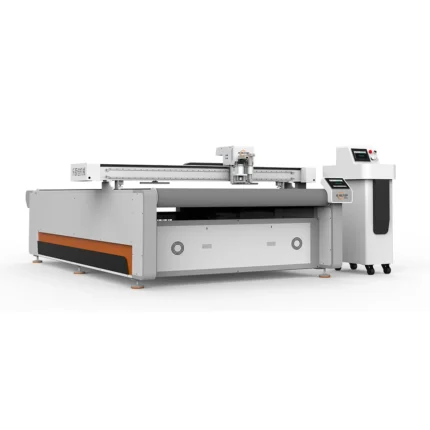
CNC Oscillating Knife Cutting Machine 2026 3000¡Á1600mm High-Speed
Product Parameters
| Model | CNC Oscillating Knife Cutting Machine 2026 |
| Working Area | 3000mm¡Á1600mm |
| Cutting Type | Oscillating Knife |
| Application | Fabric Cutting |
| Feature | High-Speed |
Introduction
High-performance CNC oscillating knife cutting machine with 3000mm¡Á1600mm working area, ideal for high-speed fabric cutting. Precision and efficiency for professional textile processing needs.
Máquina CNC personalizada de corte de tela para camisetas 2026
Product Introduction
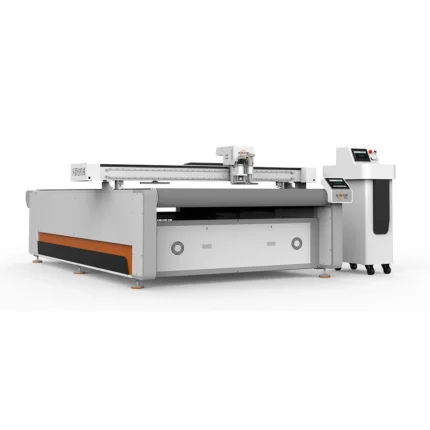
Custom CNC Shirt Fabric Cutting Machine 2026, ideal for precise fabric cutting in garment manufacturing, offering efficient and accurate cutting solutions.
Product Parameters
| Model | Custom CNC Shirt Fabric Cutting Machine 2026 |
| Type | CNC Fabric Cutting Machine |
| Application | Shirt Fabric Cutting |
| Year | 2026 |
Máquina de corte de tela de alta velocidad 2026 con cuchilla oscilante redonda
Product Overview
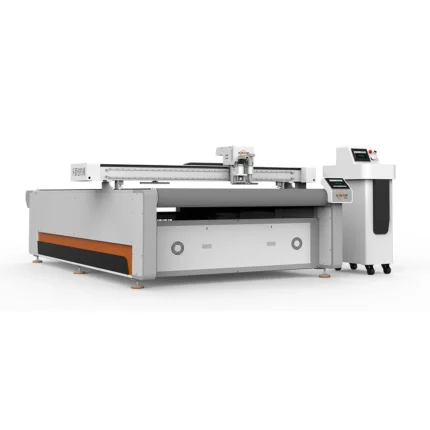
High Speed Fabric Cutting Machine 2026 with round and oscillating knife for efficient fabric cutting. Ideal for textile manufacturing and related industries.Key Specifications
| Cutting Type | Round & Oscillating Knife |
| Model Year | 2026 |
| Application | Fabric Cutting |
| Feature | High Speed Performance |

Jinan Realtop Máquina de Corte de PVC 2026 Certificado CE
Product Introduction
Jinan Realtop PVC Cutting Machine 2026 is a CE-certified cutting solution, ideal for precise PVC material processing. Designed for efficiency and reliability in industrial applications.Product Parameters
| Model | 2026 |
| Certification | CE Certified |
| Application | PVC Cutting |
| Manufacturer | Jinan Realtop |
商品评价
There are no reviews yet.