

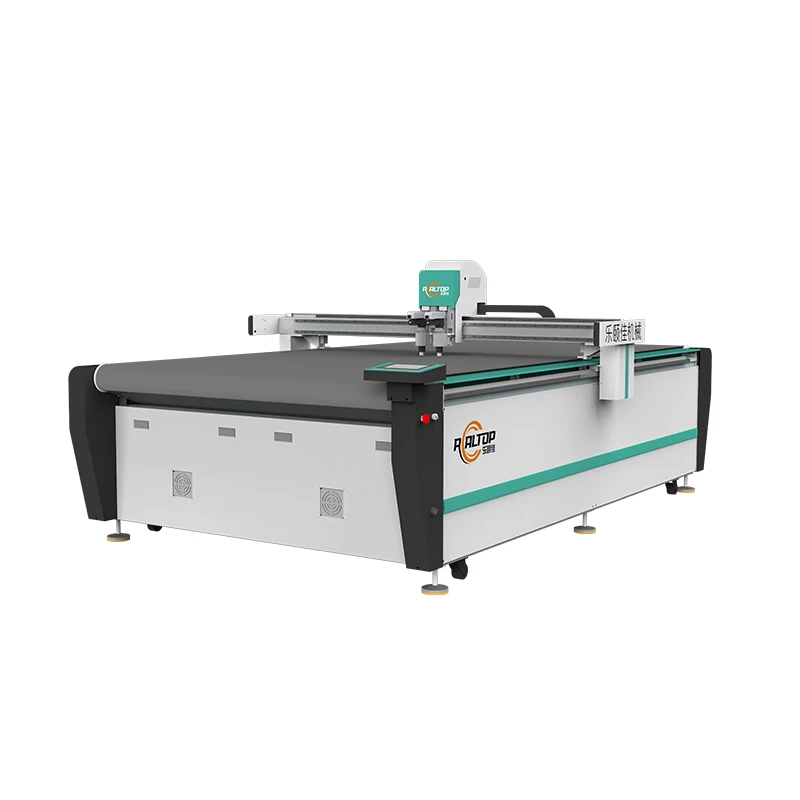
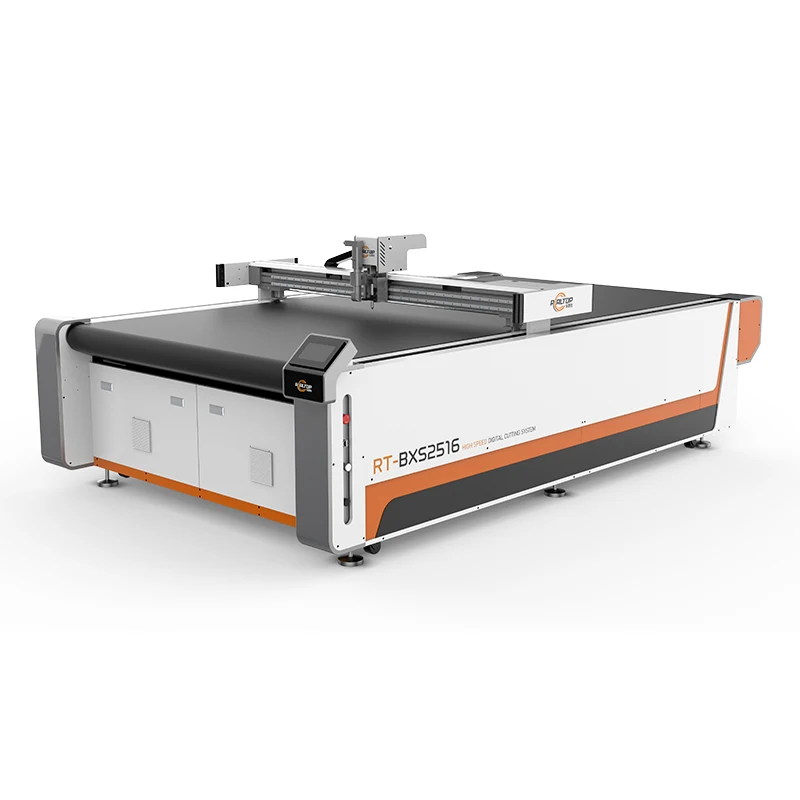
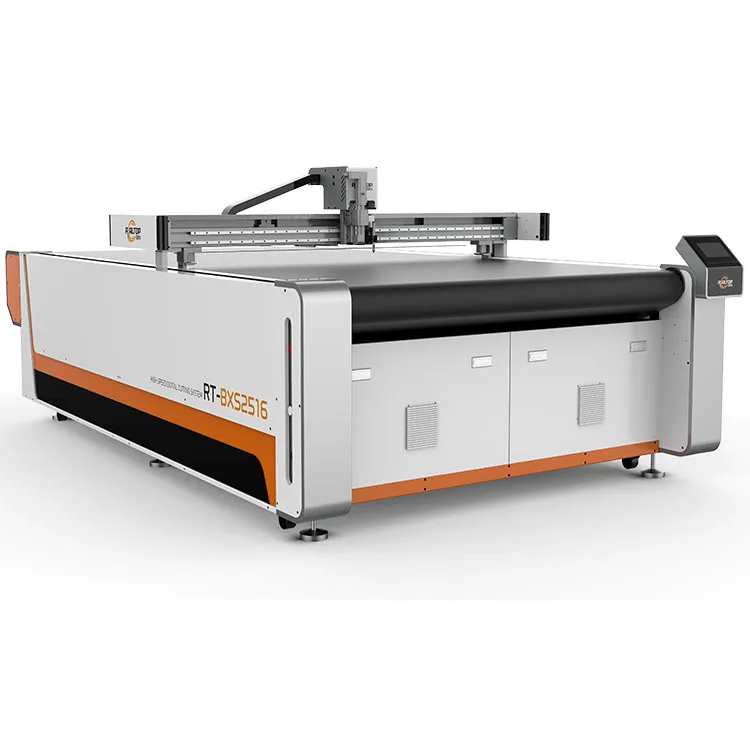
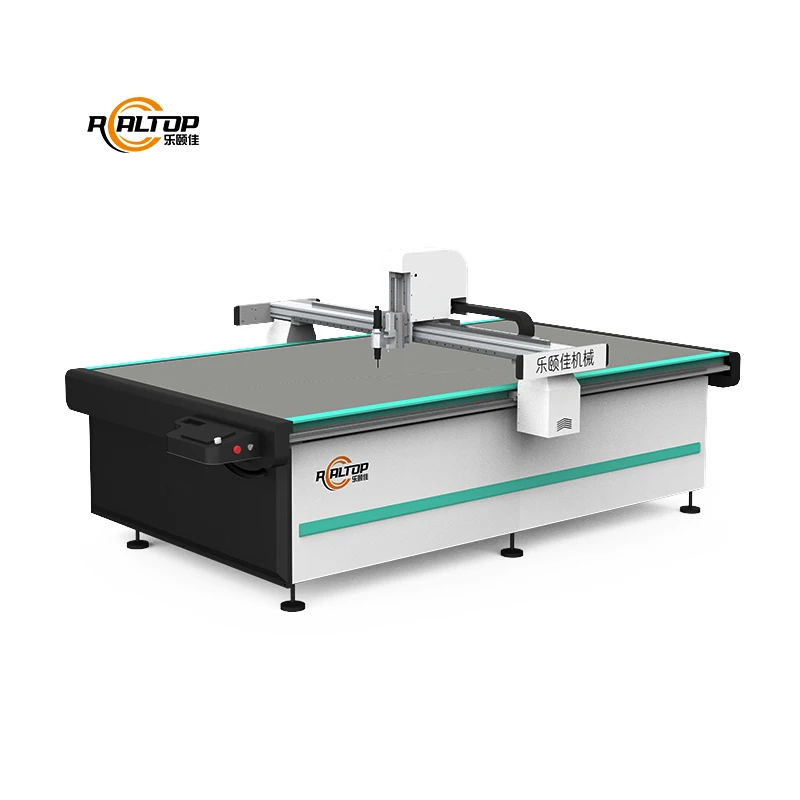
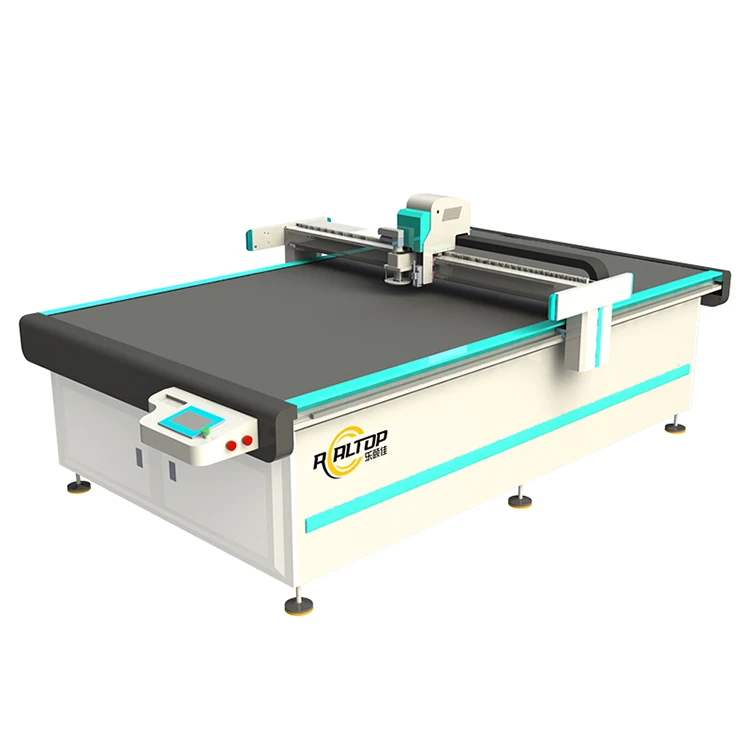
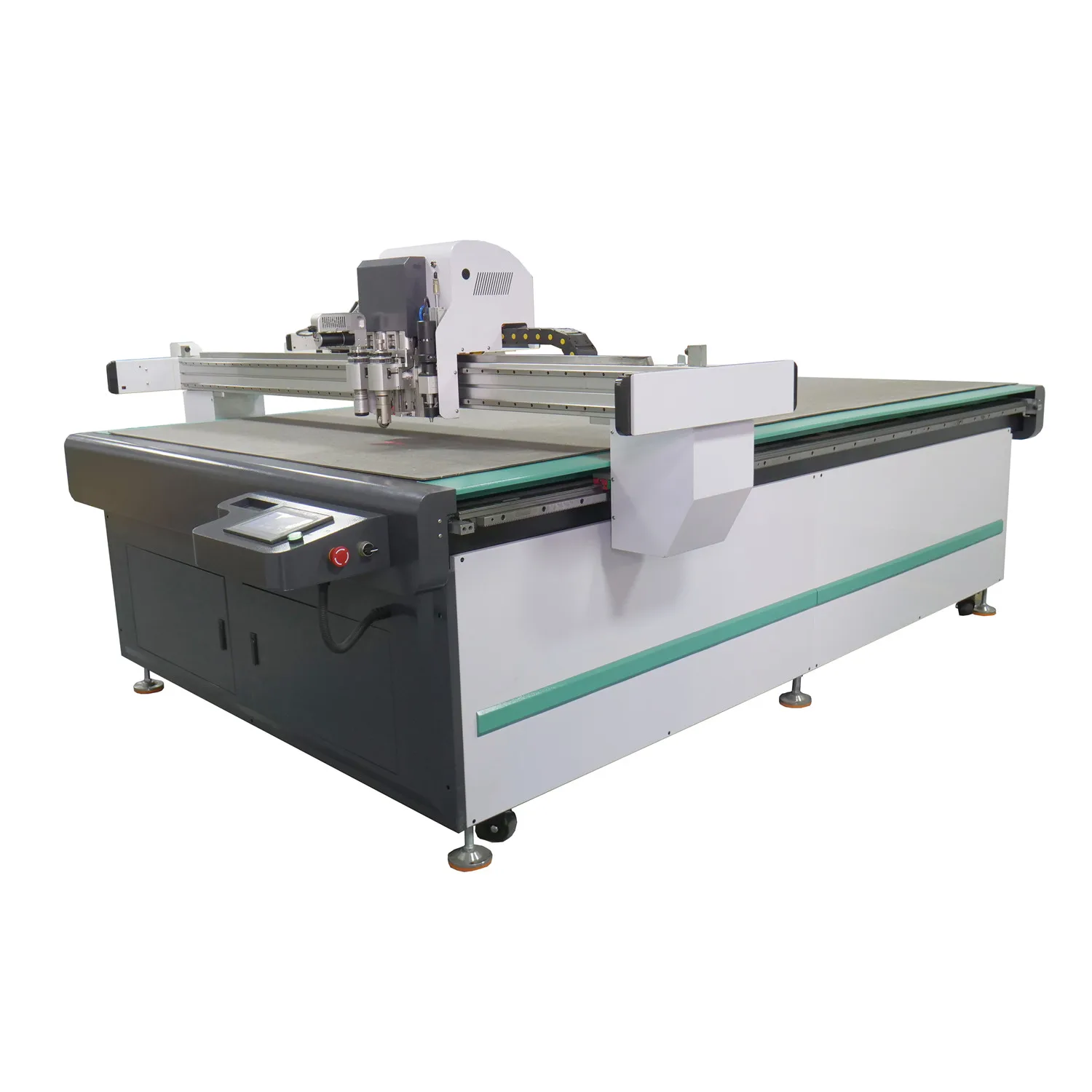

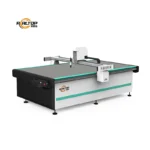
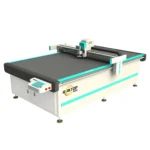
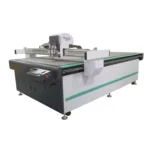

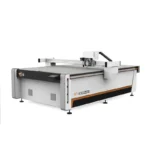
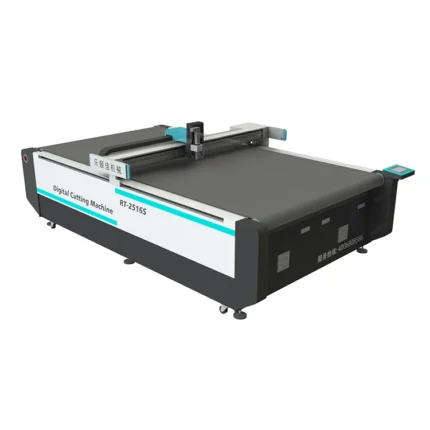
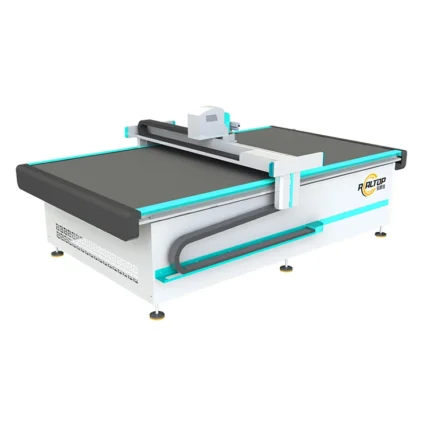
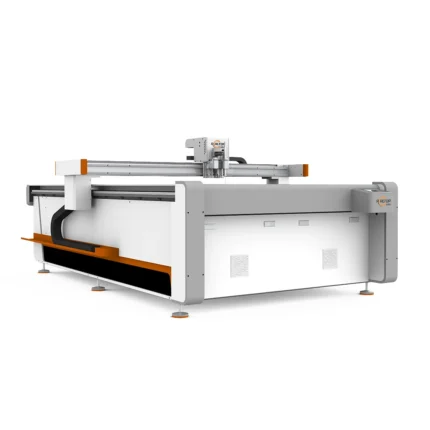
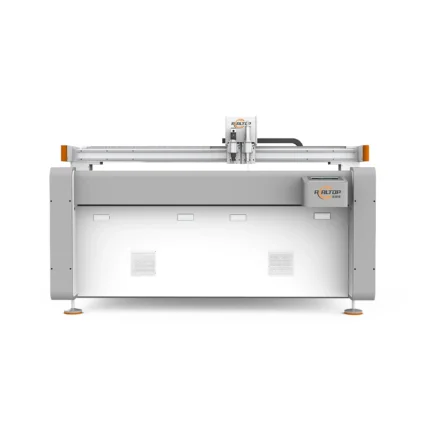
RT-D2516/RT-S2516 CNC Oscillating Knife Cutting Machine for Composite Carbon Fiber – OEM Available
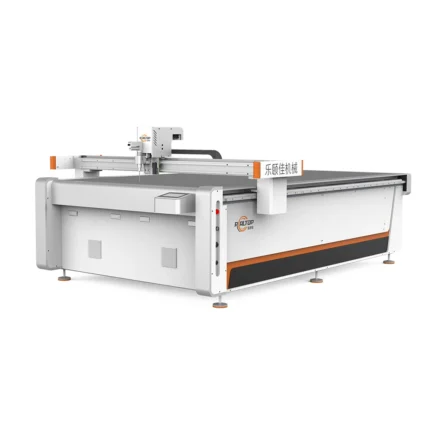
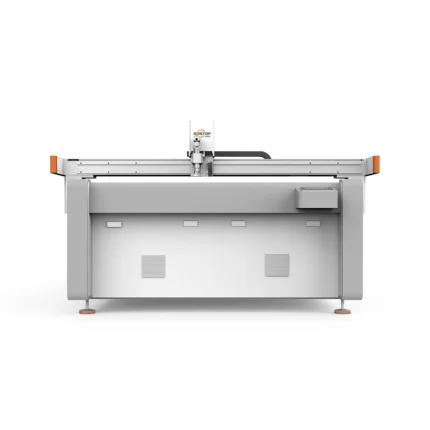
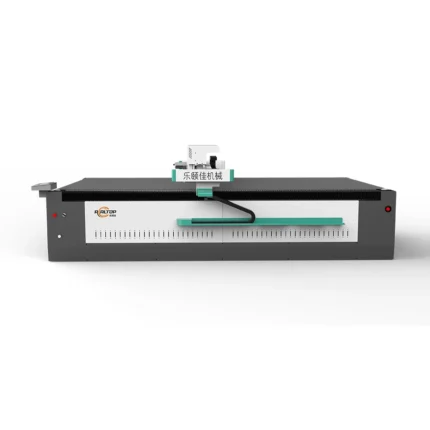
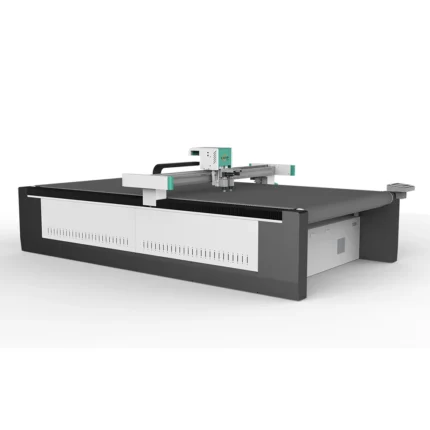
RT-D2516/RT-S2516 CNC Oscillating Knife Cutting Machine, 1600×2500mm Working Area, ≤100mm Cutting Thickness, 7.5kW Vacuum Pump — engineered for composite, carbon fiber and flexible material processing.
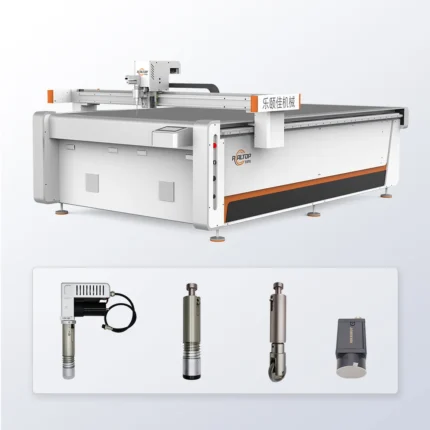
- Multi-tool head configuration with Swiss imported oscillating knife, pneumatic knife and drag knife selected per material density and thickness
- Magnesium-aluminum alloy vacuum adsorption table with uniform zoning holds small composite parts flat during high-speed cutting at 200–800 mm/s
- CCD mark point, panoramic camera and projection positioning options verified on your printed material before shipment
Sample cutting on your own composite or carbon fiber stock confirms edge quality, cycle time and tool head match before you commit.
Material-Matched Configuration — We verify oscillating knife versus drag knife selection on your actual composite layup, resin content, and ply thickness before quoting the RT-D2516/RT-S2516, ensuring clean, delamination-free edges from the first production run.
Technical Specifications
| Parameter | Value |
|---|---|
| Model | RT-D2516 / RT-S2516 |
| Product Type | CNC Oscillating Knife Cutting Machine |
| Working Area | 1600 × 2500 mm |
| Machine Dimensions | 3450 × 2300 × 1250 mm |
| Rated Power | 9 kW |
| Vacuum Pump | 7.5 kW (aviation aluminum shell, integrated silencer sponge) |
| Table Construction | Magnesium-aluminum alloy with fluorocarbon PVDF coating, anodic and hard oxidation |
| Translational Velocity | 800 – 2000 mm/s |
| Cutting Speed | 200 – 800 mm/s (basis not stated in source — confirm with sample cutting) |
| Maximum Cutting Thickness | ≤100 mm (varies by material and tool head) |
| Repeated Positioning Accuracy | ≤0.1 mm |
| Drive System | Digital servo motor (Delta or Panasonic, IP67), Taiwan Hiwin linear guide |
| Transmission | Synchronous belt and ball screw |
| Multifunctional Head | Swiss imported knife (vibration full/half cutting, cursor location); optional oscillating, pneumatic, high-power vibrating, circular, V-cutting, drag, creasing, dotted line, punching, brush |
| Visual Positioning | Small CCD mark point, panoramic camera recognition, projection positioning (optional) |
| Control Format | HP-GL compatible |
| Voltage | 380V ±10% |
| Safety Devices | Infrared sensors, beam anti-collision, emergency stop (resume in situ) |
| Standards | CE declaration where applicable |
Application Suitability
| Application | Material or Output |
|---|---|
| Composite structural panel cutting | Carbon fiber prepreg sheets, fiberglass laminates |
| Automotive interior trimming | Multi-layer sponge composite leather, sound-deadening foam |
| Gasket fabrication | Aramid fiber, compressed non-asbestos sheet, rubber compounds |
| Flexible packaging sample making | Corrugated board, PVC, soft glass, silicon rubber |
| Apparel and leather goods | Technical fabrics, layered textile, genuine and synthetic leather |
Why the CCD Camera Promise Often Fails at Production Speed
Visual positioning must be validated on your specific printed material, not just on a manufacturer’s demo sample.
Many buyers specify a CCD camera for contour recognition based on a clean demonstration run, only to discover at full production speed that the sensor loses track of fiducial marks printed on glossy carbon fiber or reflective prepreg surfaces. I have spent days on shop floors adjusting exposure thresholds and re-printing registration marks because the camera specification was treated as a checkbox rather than a process parameter [NEED_CITE: optical sensor performance on reflective composite surfaces]. The RT-D2516/RT-S2516 offers three distinct positioning options — small CCD mark point, panoramic camera recognition, and projection positioning — and the correct choice depends on your print contrast, surface reflectivity, and daily throughput target.
Matching the Tool Head to Your Resin System
The multi-tool head configuration on this CNC oscillating knife cutting machine for composite and carbon fiber is not a menu of extras; it is a material-matching decision. A high-resin carbon fiber sheet behaves differently under a vibration full-cutting blade than a dry-lay fiberglass mat does. Selecting the wrong oscillation frequency or blade geometry produces frayed edges, micro-delamination between plies, or excessive blade wear that forces unplanned downtime. We recommend a sample cutting run on your own stock before the tool head configuration is locked into the build specification.
Vacuum Zoning and the Small-Part Lift Problem
Flat vacuum tables hold large sheets reliably, but small composite brackets and gasket profiles tend to lift at the edges when the cutting tool exits the material. The 1600 × 2500 mm magnesium-aluminum table on the RT-D2516/RT-S2516 can be zoned so that suction concentrates only under the active cutting area. This zoning, paired with the 7.5 kW pump and its integrated silencer, prevents part movement without requiring custom fixturing for every new geometry [NEED_CITE: vacuum hold-down zoning strategies for small composite parts].
Reading the Spec Sheet for Real Cutting Depth
The rated 9 kW power and 200–800 mm/s cutting speed range tell you what the machine can do in general, not what it will do on your specific composite layup. A 3 mm carbon fiber sheet with high epoxy content requires different blade penetration and oscillation amplitude than a 10 mm foam-core sandwich panel. The Taiwan Hiwin linear guides and IP67-rated Delta or Panasonic servos maintain ≤0.1 mm repeated accuracy, but accuracy alone does not guarantee edge quality. Blade type, tool head oscillation, vacuum hold-down pressure, and feed rate must all be tuned together. We document these parameters in a sample cutting report on your actual material before the order enters production.
The Hidden Cost of Skipping the Voltage Confirmation
Voltage, plug type, and control language are often the last items confirmed before shipment, yet they cause the longest delays on site. A machine wired for 380V ±10% arrives at a facility with unstable local supply, the servo drives fault repeatedly, and production stalls while an electrician sources a transformer [NEED_CITE: industrial voltage tolerance requirements for servo-driven CNC equipment]. I now treat the electrical schematic review and language confirmation as a gate in the sales process — the RT-D2516/RT-S2516 does not ship until the buyer has signed off on the exact voltage, frequency, plug configuration, and HMI language.
Why Buyers Keep the Build In-House
The design team and core factory cover both knife and laser cutting technologies, so a composite fabricator is not forced into one method when the material demands another. The thick-walled seamless steel frame undergoes high-temperature tempering and CNC machining center finishing, which keeps the linear guides in alignment under continuous oscillating loads. Every machine ships with a factory test record run on the buyer’s own material specification. Software license and file format compatibility — HP-GL and nesting workflows — are confirmed before production begins, not discovered during commissioning.
Documentation & Verification
- Machine specification sheet listing confirmed tool head and vacuum table zoning for your composite layup
- Electrical schematic with voltage, frequency, and plug type matched to your facility
- Sample cutting report on your material documenting edge quality, cutting speed, and cycle time
- Software license and HP-GL file format compatibility note for your nesting workflow
- Packing photographs showing machine securing and tool head protection before dispatch
Installation, Commissioning & Support
- Foundation must support 3450 × 2300 × 1250 mm footprint and 9 kW total load on a dedicated 380V circuit
- Integrated 7.5 kW vacuum pump arrives pre-mounted; connect extraction ducting to your workshop filtration
- Delta or Panasonic IP67 servos require parameter download matched to your confirmed tool head configuration
- First-run calibration uses your sample material to set oscillation amplitude, vacuum zone pressure, and feed rate
- Operation manual and maintenance schedule cover blade replacement intervals for your specific composite resin system
- Spare parts list includes Swiss imported blades, vacuum seals, and Hiwin rail carriage blocks
Starting Your Quotation with the Right Details
Send us your material data sheet, resin type, ply count, and the largest sheet size you run daily. Let us know your workshop voltage and frequency, the HMI language your operators need, and whether your nesting software exports HP-GL or requires a different format. If you have printed fiducial marks for contour work, include a sample panel so we can test all three visual positioning options on your actual surface finish.
Frequently Asked Questions
Q: How do you confirm cutting speed and thickness for my specific composite material?
A: We run a sample cutting test on your actual material, documenting the tool head selected, oscillation setting, feed rate, vacuum pressure, and edge quality. The cutting speed of 200–800 mm/s is a general range; the verified value for your layup and resin content is recorded in the sample report you review before the order is confirmed.
Q: Which visual positioning option fits my printed contour workflow?
A: The RT-D2516/RT-S2516 offers small CCD mark point positioning, panoramic camera recognition, and projection positioning. The correct choice depends on your fiducial mark size, print contrast, surface reflectivity, and production speed. We test all applicable options on your sample panel before recommending one.
Q: How do I choose between oscillating, drag, pneumatic, and punching tool heads?
A: Tool head selection depends on your material thickness, resin content, and whether you need full-cut, kiss-cut, or creasing. We match the Swiss imported knife configuration to your specific composite layup during the sample cutting phase, not from a catalog table.
Q: What voltage, plug, and control language are confirmed before shipment?
A: The default is 380V ±10%, but we verify your exact voltage, frequency, plug type, and HMI language before production. The electrical schematic is sent for your sign-off, and the machine does not ship until these details are locked in.
Q: How is vacuum zoning handled for small composite parts that lift during cutting?
A: The magnesium-aluminum vacuum table can be zoned to concentrate suction under the active cutting area. We configure the zoning layout based on your smallest part geometry and confirm hold-down performance during the sample cutting test on your material.


Related products

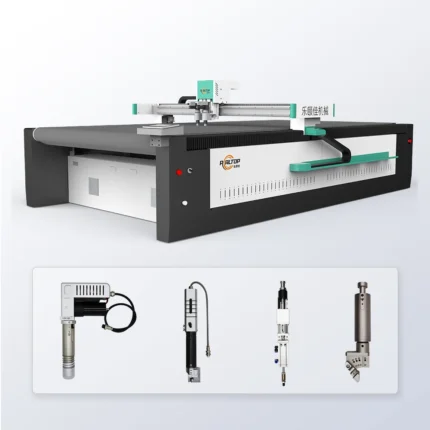
Máquina de corte por cuchillo vibrante CNC 2516 2026
Product Introduction
2516 CNC Vibrating Knife Cutting Machine 2026, a precision cutting solution from China's leading welding & cutting equipment manufacturer. Ideal for efficient, high-quality material processing with advanced CNC technology.
Key Specifications
| Model | 2516 |
| Type | CNC Vibrating Knife Cutting Machine |
| Year | 2026 |
| Origin | China |
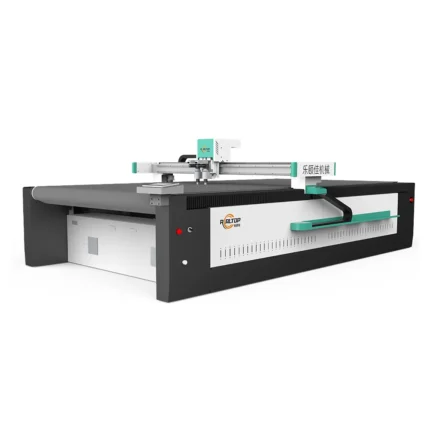
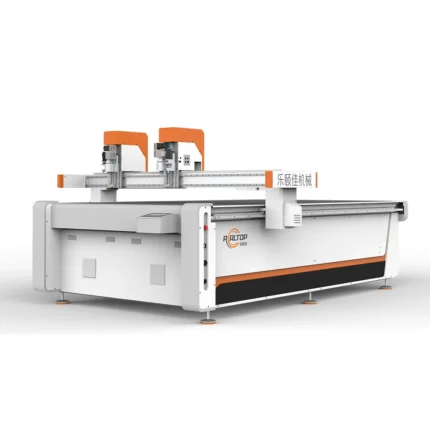
Máquina de corte con cuchilla oscilante CNC automática 2026
Product Introduction
Auto CNC Oscillating Knife Cutting Machine 2026 is a high-precision cutting solution from a leading Chinese welding & cutting equipment manufacturer, ideal for efficient and accurate material processing across various industrial applications.Key Specifications
| Type | Auto CNC Oscillating Knife Cutting Machine |
| Model | 2026 |
| Manufacturer | Chinese Leading Welding & Cutting Equipment Factory |
| Core Feature | High-precision CNC Control |
| Application | Industrial Material Cutting |
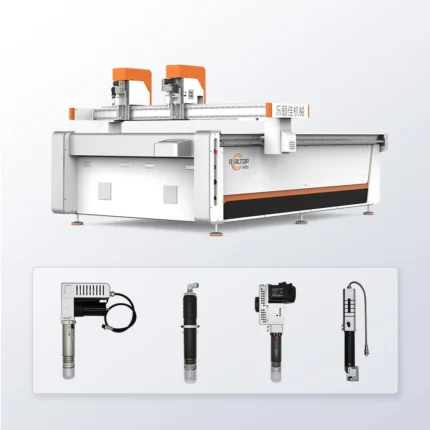
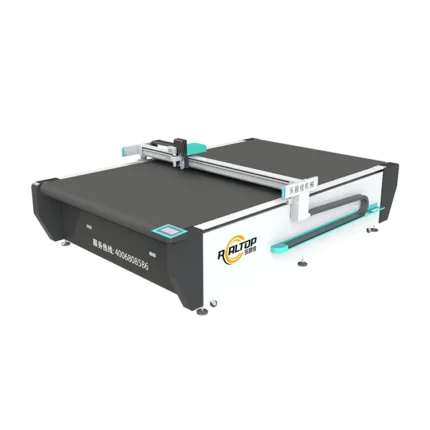
Máquina de Corte Realtop CNC 2026 Fibra de Carbono Fibra de Vidrio PVC
Product Introduction
Realtop CNC Cutting Machine 2026, ideal for cutting carbon fiber, glass fiber, and PVC with precision and efficiency, designed for professional manufacturing needs.
Key Specifications
| Carbon Fiber, Glass Fiber, PVC | |
| Type | CNC Cutting Machine |
| Model | 2026 |

商品评价
There are no reviews yet.