

Blog
CO2 Laser Engraver for Serial Number Marking Wholesale Supplier

CO2 Laser Engraver for Serial Number Marking Wholesale Supplier
Most buyers assume higher wattage solves marking speed issues, but poor beam alignment is the true bottleneck.
Proper installation of a CO2 laser engraver for serial number marking requires strict attention to environmental controls and optical alignment, not just electrical connection. Neglecting thermal management in harsh environments leads to premature tube failure and inconsistent mark depth. The core challenge is not power output, but maintaining wavelength stability through closed-loop cooling and ensuring the optical path remains free of dust-induced scattering.
I have spent years traveling to industrial sites across the Middle East, installing marking systems in facilities where ambient conditions push equipment to its limits. In one instance, a factory in Riyadh attempted to run a standard air-cooled unit in a non-climate-controlled workshop during peak summer. The laser tube overheated within hours, causing the output power to drop significantly despite the controller showing full command. The issue was not the laser itself, but the inability of the cooling system to dissipate heat against a fifty-degree Celsius ambient temperature. This experience highlighted that the physical environment dictates the hardware specification, not the other way around. [NEED_CITE: thermal dissipation requirements for gas lasers]
What Are the Critical Pre-Installation Checks for CO2 Laser Engravers?
Verify power stability, water quality, and ambient temperature limits before unboxing the machine.
Before any mechanical assembly begins, the installation site must meet specific environmental criteria. Many procurement officers focus solely on the footprint of the CO2 laser engraver for serial number marking, overlooking the infrastructure required to support it. Power fluctuations common in industrial grids can damage the laser power supply and control board. A stable voltage source with surge protection is non-negotiable. [NEED_CITE: IEC safety standards for industrial laser equipment]
Water quality is another frequent oversight. Using tap water in the cooling circuit introduces minerals that precipitate inside the laser tube and chiller lines, forming insulating scale layers. This reduces heat transfer efficiency and eventually blocks flow entirely. Deionized or distilled water must be used from day one. Additionally, the ambient temperature of the room affects the baseline performance of the cooling system. If the room temperature exceeds the design limit of the chiller, the laser tube will operate at an elevated temperature, shortening its lifespan and shifting the output wavelength.
| Checkpoint | Requirement | Risk of Neglect |
|---|---|---|
| Power Supply | Stable voltage with surge protection | Control board failure, erratic firing |
| Cooling Water | Deionized or distilled only | Scale buildup, tube overheating |
| Ambient Temp | Within chiller operating range | Reduced tube life, power instability |
| Floor Stability | Level, vibration-free surface | Beam misalignment, poor mark quality |
In dusty regions, pre-installation also involves sealing the facility. Sand and fine particulate matter are the enemies of optical systems. If the installation area cannot be kept clean, positive pressure enclosures or enhanced filtration systems must be planned into the setup. This proactive step prevents the need for frequent maintenance later.
How to Optimize Cooling Systems for Continuous Serial Number Marking?
Match chiller capacity to laser wattage and ambient heat load to prevent tube degradation.
Industrial serial marking often involves high-duty cycles, where the laser fires repeatedly for extended periods. This generates significant heat within the gas mixture of the laser tube. Standard air-cooling methods are insufficient for consistent industrial use. A closed-loop water chiller is required to maintain the tube temperature within a narrow stability range. [NEED_CITE: Laser Institute of America guidelines on thermal management]
The capacity of the chiller must exceed the heat load generated by the laser. In hot climates, the temperature delta between the coolant and the ambient air is reduced, making heat rejection more difficult. A chiller that performs adequately in a temperate climate may struggle in a desert environment. Selecting a chiller with a higher cooling capacity than the minimum requirement provides a safety margin. Professional manufacturers often provide matched industrial chillers designed to handle these extreme conditions, ensuring system stability where generic setups might fail.
Temperature stability is critical for marking consistency. Fluctuations in coolant temperature cause the laser tube to expand and contract slightly, altering the resonator length. This shifts the output wavelength and can defocus the beam at the material surface. Maintaining water temperature within a tight tolerance ensures that the focal point remains fixed, producing deep, clear serial numbers every time.
Regular monitoring of the chiller’s performance is essential. Checking the flow rate and temperature difference between inlet and outlet helps detect early signs of blockage or pump failure. Keeping the condenser coils clean ensures efficient heat exchange with the surrounding air. In dusty environments, this cleaning frequency must increase to prevent insulation buildup on the coils.
Why Does Beam Alignment Affect Marking Quality and Speed?
Misaligned beams reduce energy density, requiring slower speeds or higher power, risking material damage.
A common misconception is that increasing laser power will compensate for poor marking quality. In reality, a misaligned beam spreads the energy over a larger area, reducing the intensity at the focal point. This forces operators to slow down the marking speed or increase power settings, which can burn the material or produce shallow marks. Proper alignment ensures the maximum energy density is delivered to the smallest possible spot size. [NEED_CITE: optical alignment principles for Gaussian beams]
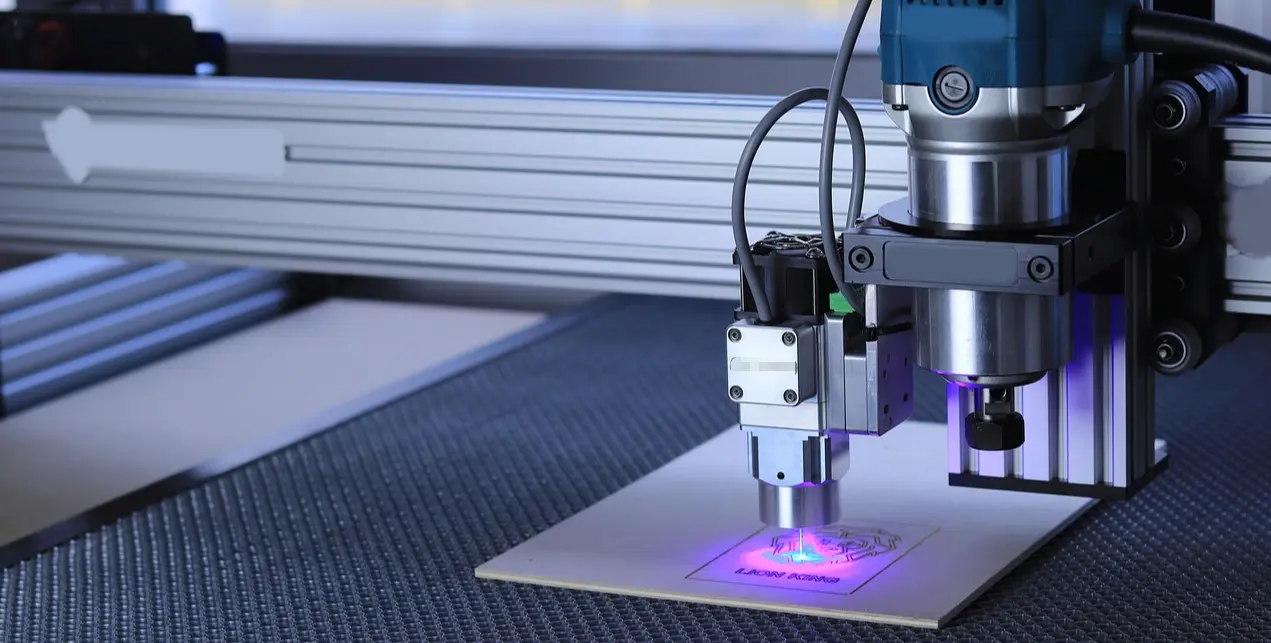
The optical path of a CO2 laser engraver for serial number marking consists of multiple mirrors that direct the beam from the tube to the focusing lens. Each mirror must be precisely angled to ensure the beam travels centrally through the lens aperture. Vibration from nearby heavy machinery, such as stamping presses or forklifts, can gradually shift these mirrors out of alignment. In high-vibration zones, re-alignment may be needed every few months to maintain optimal performance.
Alignment checks should be performed using an infrared sensor card or a low-power visible guide beam if available. The procedure involves adjusting each mirror sequentially, starting from the laser tube and moving toward the lens. The goal is to ensure the beam hits the center of each mirror and passes through the center of the lens without clipping. Clipping the lens edge causes diffraction patterns that distort the mark shape and reduce power.
| Alignment Step | Tool Required | Indicator of Success |
|---|---|---|
| Mirror 1 Adjustment | IR Card | Beam centered on Mirror 2 |
| Mirror 2 Adjustment | IR Card | Beam centered on Mirror 3/Lens |
| Lens Centering | Visual Inspection | No beam clipping at aperture |
| Focal Length Check | Test Material | Smallest spot size, deepest mark |
Once aligned, the focusing lens must be set to the correct focal distance for the material being marked. Different materials require different focal points to achieve the best contrast and depth. Testing on sample pieces helps determine the optimal Z-axis height for each application. Keeping a record of these settings for different materials speeds up future job setups.
What Routine Maintenance Prevents Unexpected Downtime?
Regular lens cleaning and mirror inspection are vital in dusty industrial environments.
Dust ingress is a primary cause of performance degradation in CO2 laser systems. Particulate matter settles on the focusing lens and mirrors, absorbing laser energy and heating up. This can cause thermal lensing, where the lens distorts due to heat, defocusing the beam. In severe cases, contaminated optics can crack or shatter under thermal stress. [NEED_CITE: maintenance schedules for industrial laser optics]
In clean environments, monthly cleaning might suffice. However, in dusty regions like the Middle East, weekly inspection and cleaning are necessary. Use only lint-free wipes and high-purity isopropyl alcohol or specialized optical cleaning solutions. Never use abrasive materials or excessive pressure, as this can scratch the delicate coating on the optics. Scratched lenses scatter light and reduce marking power permanently.
The exhaust system also requires regular attention. Laser marking ablates material, creating smoke and particulate waste. If the exhaust airflow is insufficient, this debris can settle back onto the optics or the workpiece. Calculating the required airflow based on the material ablation rate ensures effective removal of contaminants. Clogged filters reduce airflow, so they must be replaced or cleaned regularly.
Mechanical components such as belts and bearings should be inspected for wear. Loose belts cause positioning errors, resulting in distorted serial numbers. Lubricating moving parts according to the manufacturer’s schedule prevents premature wear and ensures smooth motion. Keeping a maintenance log helps track when services were performed and predicts when parts might need replacement.
Conclusion
Successful CO2 laser installation depends on environmental control and optical precision, not just power ratings.
Ignoring thermal management and alignment leads to inconsistent marking and frequent downtime. Prioritizing proper cooling, regular optical cleaning, and vibration isolation ensures reliable serial number marking in harsh industrial conditions. A well-maintained CO2 laser engraver for serial number marking delivers consistent quality and longevity, protecting production schedules and reducing operational costs.

