

Blog
Fiber Laser Cutter for Custom Metal Art OEM Manufacturer

Fiber Laser Cutter for Custom Metal Art OEM Manufacturer
Higher wattage does not guarantee finer artistic detail.
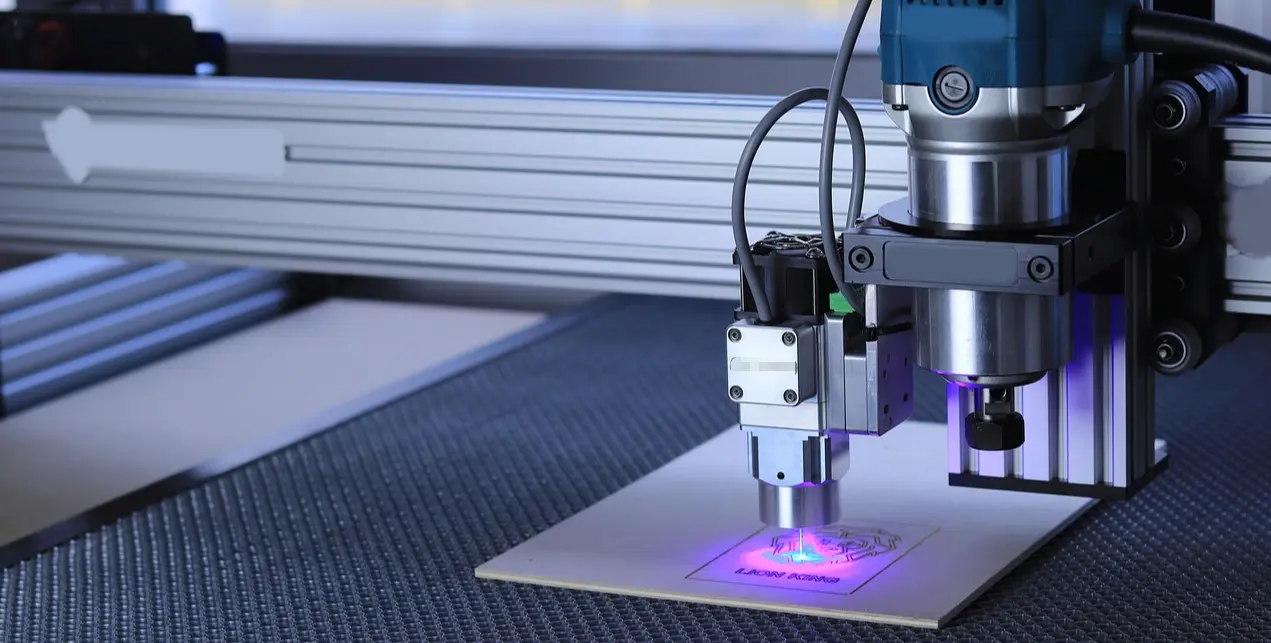
For custom metal art production, the critical requirement is not raw power but beam quality and motion stability. A fiber laser cutting machine for custom metal art must deliver a small focal spot and consistent low-power output to handle intricate designs on reflective materials like brass and stainless steel without thermal distortion. Buyers should prioritize positioning accuracy and anti-reflection protection over maximum thickness capacity.
When I first started coordinating equipment shipments from Jinan, I assumed that a client’s request for "high precision" simply meant buying the highest wattage source available. It was a costly assumption. A decorative screen manufacturer in Mexico ordered a high-power unit expecting crisp edges on 0.8mm stainless steel lattice work. Instead, the heat input was too aggressive for such thin material. The edges turned yellow and black due to excessive thermal accumulation, and the fine joints warped slightly. The entire batch was rejected. That failure shifted my focus from spec sheets to process parameters. I learned that artistic cutting is less about penetration force and more about control. Now, when evaluating a fiber laser cutting machine for custom metal art, I look for how well the system manages gas assistance and pulse frequency at low powers, rather than just its ability to slice through thick plates.
Why Standard Industrial Cutters Fail at Artistic Detail
Standard industrial fiber lasers are engineered for speed and thick-plate penetration. They operate with beam modes optimized for maximizing energy density in a larger area to melt through heavy steel quickly. This approach is counterproductive for delicate metal art. Artistic pieces often involve complex vector paths with tight corners and varying line widths. If the laser beam mode is not stable at lower power levels, the kerf width fluctuates, leading to inconsistent cut quality.
The core issue lies in the beam quality factor, often referred to as M². A lower M² value indicates a beam that can be focused to a smaller spot size. For intricate details, a small focal spot is essential to maintain sharp corners and prevent the laser from "bleeding" into adjacent areas. [NEED_CITE: relationship between beam quality M2 factor and focal spot size] Many standard industrial machines sacrifice this fine focus for robustness in heavy-duty applications. When these machines attempt to cut thin, decorative metals, the excess energy causes micro-burning and edge discoloration.
Furthermore, motion control plays a pivotal role. Artistic designs require frequent acceleration and deceleration as the laser head navigates complex curves. If the CNC system lacks responsiveness or if the mechanical bed has slight vibrations, the resulting cuts will show jagged edges or dimensional inaccuracies. A fiber laser cutting machine for custom metal art must feature a rigid bed structure and a high-response servo drive system to ensure that the physical movement matches the digital design perfectly. Without this synchronization, even the best laser source cannot produce high-quality art.
Critical Equipment Specs for Metal Art OEMs
Selecting the right equipment requires looking beyond the headline wattage. Buyers often fixate on power ratings, but for artistic applications, other specifications determine the final product quality. The following table outlines the key differences between general-purpose industrial cutters and those suited for detailed metal art.
| Specification | General Industrial Cutter | Art-Oriented Precision Cutter | Impact on Metal Art |
|---|---|---|---|
| Beam Quality | Standard Multi-mode | High-quality Single-mode or Near-single-mode | Determines minimum line width and corner sharpness |
| Positioning Accuracy | ±0.1mm typical | ±0.03mm or better | Ensures pattern fidelity in complex nested designs |
| Motion Control | Standard AC Servo | High-response Digital Servo | Reduces jitter during frequent direction changes |
| Gas Control | Basic On/Off or Simple Regulation | High-precision Proportional Valve | Prevents oxidation and ensures clean edges on thin sheets |
| Software Integration | Basic G-code Support | Advanced Nesting & CAD/CAM Link | Optimizes material usage and reduces setup time |
[NEED_CITE: industry standards for laser cutting positioning accuracy]
A client producing architectural decorative screens once struggled with batch consistency. They needed identical patterns across hundreds of units. The issue was not the laser source but the mechanical repeatability of the machine. By switching to a system with higher positioning accuracy and better vibration damping, they achieved uniform results. This highlights that for OEMs, the stability of the motion platform is as critical as the laser itself. When sourcing a fiber laser cutting machine for custom metal art, verify the machine’s ability to maintain accuracy over long production runs.
Additionally, software capabilities matter. Efficient nesting algorithms can significantly reduce material waste, which is crucial when working with expensive metals like copper or brass. The software should also support smooth path planning to minimize sudden stops and starts that can mar the cut edge.
Handling High-Reflectivity Metals Safely
Cutting reflective metals such as copper, brass, and gold-plated steel presents unique challenges. These materials reflect a significant portion of the laser light back into the optical system. In standard fiber lasers, this reflected energy can damage the laser source, lenses, and nozzles. This risk is particularly high when cutting thin sheets, where the reflection is more intense.
Many buyers assume that any fiber laser can handle brass if it has enough power. This is a dangerous misconception. Without specific anti-reflection modules, high-reflectivity metals can cause catastrophic failure of the laser source. [NEED_CITE: risks of back-reflection in fiber laser cutting of copper and brass] Specialized nozzles and protective optics are non-negotiable for safe operation. These components are designed to deflect or absorb reflected light before it reaches sensitive internal parts.
I recall a project involving mixed-material artworks that included thin copper sheets. The initial setup used standard nozzles, leading to frequent lens contamination and occasional source alarms. After upgrading to a configuration with anti-reflection protection and optimizing the gas pressure, the process became stable. The key was using high-purity nitrogen to assist the cut, which helped eject molten material quickly and reduced the time the laser interacted with the reflective surface.
When evaluating a fiber laser cutting machine for custom metal art, ask specifically about its anti-reflection features. Does it have isolated optical paths? Are the nozzles designed for reflective materials? These details separate a machine that can occasionally cut brass from one that can do it reliably and safely every day.
From Design to Finished Product: The OEM Workflow
The transition from a digital design to a physical metal art piece involves several critical steps. Seamless integration between CAD/CAM software and the laser cutter is essential for maintaining design fidelity. Errors often occur during file conversion or parameter setting, leading to deviations from the original artwork.
A robust OEM workflow begins with sample testing. Before committing to mass production, it is vital to run test cuts on the actual material batch. Material properties can vary even within the same grade, affecting how the laser interacts with the surface. A systematic testing protocol involves adjusting power, speed, and gas pressure to find the optimal matrix for each specific sheet. [NEED_CITE: best practices for laser cutting parameter optimization]
For instance, a furniture OEM needed to produce intricate metal inlays. By sending sample materials for pre-production validation, we identified that a slight adjustment in pulse frequency eliminated edge discoloration. This step saved them from potential rework costs later. Remote diagnostics and free sample cutting services can facilitate this validation process, ensuring that the fiber laser cutting machine for custom metal art is tuned correctly for the specific application.
Moreover, operator training plays a role. Even the most advanced machine requires skilled operation to handle artistic nuances. Training should cover not just basic operation but also troubleshooting common issues like edge roughness or thermal distortion. Understanding how to adjust focus position and gas flow dynamically can make a significant difference in final quality.
Conclusion
Precision in metal art is defined by control, not just power.
Achieving high-quality custom metal art requires a fiber laser cutting machine for custom metal art that prioritizes beam quality, motion stability, and safety features for reflective materials. By focusing on these technical aspects and validating processes through sample testing, manufacturers can ensure consistent, high-fidelity results. The right equipment transforms complex designs into flawless metal realities.

