

Blog
Realtop CNC Oscillating Knife Cutter vs Bystronic Laser: OEM Manufacturer

Realtop CNC Oscillating Knife Cutter vs Bystronic Laser: OEM Manufacturer
Laser cutters cannot process flexible, heat-sensitive materials without thermal damage.
For cutting cardboard, fabric, leather, foam, and composites, a CNC oscillating knife cutter is the only viable industrial solution. While Bystronic dominates the metal laser sector, it does not offer a competitive alternative for non-metallic flexible materials. The choice is not between two similar technologies, but between a thermal process that burns edges and a mechanical process that preserves material integrity. Buyers comparing China sheet metal laser cutter vs Bystronic durability must first recognize that this comparison applies strictly to metal fabrication. For packaging, apparel, and automotive interiors, the relevant comparison is between mechanical knife systems and inferior digital alternatives.
I spent years crawling under gantries in Suzhou workshops, tightening belts and calibrating sensors on machines that were supposed to run 24/7. One afternoon, a packaging factory owner pulled me aside while I was debugging a vibration issue. He had just scrapped an entire batch of automotive floor mats because he tried to use a laser source on EVA foam. The edges were hardened, blackened, and emitted a pungent odor that ruined the interior air quality standards. He asked why his high-end laser couldn’t handle the job. The answer was simple physics, not machine quality. Lasers vaporize material; knives displace it. When you are dealing with flammable or meltable substrates, thermal energy is the enemy. This realization shifted my focus from selling hardware to solving material compatibility issues. [NEED_CITE: thermal degradation mechanisms in polymer foams]
The market is flooded with comparisons of China sheet metal laser cutter vs Bystronic durability, driven by procurement managers looking to optimize capital expenditure for metal shops. However, this narrative often bleeds into unrelated industries, causing confusion for buyers in the packaging and textile sectors. They see "durability" and assume it translates across all material types. It does not. A machine built to withstand the recoil of cutting steel plate has different structural requirements than one designed for the high-speed, low-force oscillation needed for multi-layer fabric. Understanding this distinction is critical before evaluating any OEM manufacturer.
Bystronic has built a reputation on reliability in the fiber laser market. Their machines are engineered for heavy-duty metal processing, where rigidity and thermal stability are paramount. When buyers search for China sheet metal laser cutter vs Bystronic durability, they are often looking for validation that a lower-cost alternative can survive the same harsh industrial environment. In the metal sector, this is a valid concern. But in the world of flexible material cutting, the "durability" metric changes entirely.
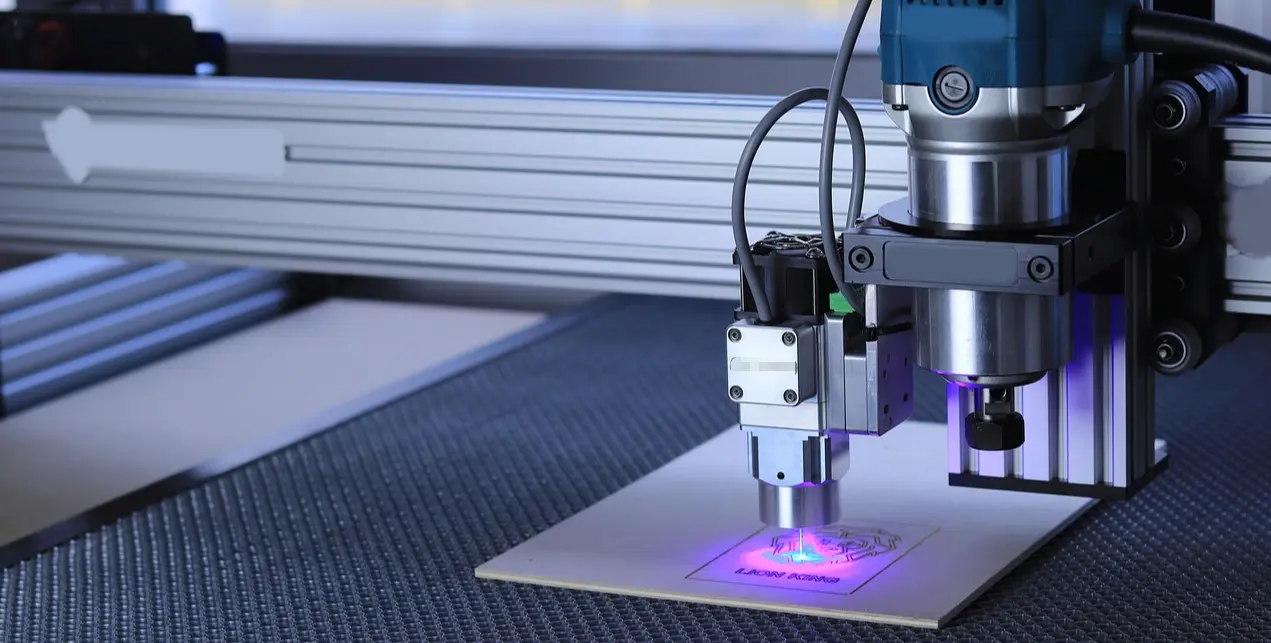
For a CNC oscillating knife cutter, durability is not about resisting high-power laser reflection or managing extreme heat zones. It is about the longevity of mechanical components under constant vibration. The oscillating head moves up and down thousands of times per minute. The wear points are the bearings, the drive belts, and the knife holder mechanism. A European brand might offer superior initial calibration, but the core components—servo motors, linear guides, and control cards—are often sourced from the same global suppliers as those used by top-tier Chinese OEMs. [NEED_CITE: global supply chain transparency in CNC manufacturing]
The misconception is that European engineering implies better steel or more robust frames for all machine types. In reality, for non-metal cutting, the frame design prioritizes lightweight agility over massive inertia. A machine that is too heavy wastes energy accelerating and decelerating during intricate contour cuts. Therefore, the durability question shifts from "will it break?" to "how easily can it be maintained?" Chinese manufacturers have improved significantly in this area, offering modular designs where worn parts can be replaced quickly without realigning the entire gantry.
How Do Top Chinese OEMs Match European Lifespan? Core Conclusion: Global supply chains allow Chinese manufacturers to use identical core components.
The gap in build quality between premium European brands and leading Chinese OEMs has narrowed considerably. This is not due to a sudden leap in domestic metallurgy, but rather the globalization of component sourcing. A high-end CNC oscillating knife cutter from a reputable Jinan manufacturer now uses the same servo drives, precision rack and pinion gears, and industrial PCs as many Western counterparts. The difference lies in assembly rigor and quality control protocols, not the raw materials themselves.
When evaluating China sheet metal laser cutter vs Bystronic durability, buyers often overlook that the "Chinese" label covers a vast spectrum of quality. At the top end, factories serving export markets adhere to ISO 9001 standards and CE certification requirements. These facilities implement strict incoming inspection for critical components. For instance, the linear guide rails are tested for straightness and load capacity before assembly. The oscillating heads are balanced dynamically to reduce vibration at high speeds. This level of attention ensures that the machine maintains its precision over years of operation, matching the lifespan expectations set by European brands.
Moreover, the software ecosystem has matured. Modern nesting algorithms optimize material usage and reduce unnecessary tool paths, which directly reduces mechanical wear. A machine that cuts efficiently experiences less stress on its motors and drives. This software-hardware integration is where top Chinese OEMs have invested heavily, providing a user experience that rivals established international brands. [NEED_CITE: impact of nesting efficiency on mechanical wear rates]
Critical Durability Checks Before Buying Chinese. Core Conclusion: Verify component brands and ask for MTBF records, not just warranty terms.
Buying a CNC oscillating knife cutter requires a different due diligence process than buying a laser. Since the primary stress is mechanical vibration, buyers must verify the specific brands of the motion components. Do not accept generic descriptions like "high-quality servo motor." Ask for the manufacturer name and model number. Reputable OEMs will provide a detailed bill of materials. Look for known brands in servos, reducers, and electrical components. This transparency is a strong indicator of overall build quality.
Another critical check is the Mean Time Between Failures (MTBF) data for the oscillating head. This component undergoes the most stress. Request test reports or case studies that demonstrate the head’s performance over extended periods. A reliable manufacturer will have this data available. Additionally, inspect the bed structure. For flexible materials, a honeycomb or slat table is common, but the flatness of the surface is crucial for consistent cut depth. Ask about the leveling procedure and whether the table supports vacuum zoning for holding down lightweight materials like paper or thin fabric.
It is also essential to evaluate the supplier’s after-sales support structure. Durability is not just about how long a machine runs before breaking, but how quickly it can be restored to operation. Chinese OEMs with a strong export presence often provide remote diagnostic tools and video support. This capability can resolve many issues without waiting for a technician to fly in. Verify that the supplier offers comprehensive training and documentation in your local language. A well-trained operator is the best defense against premature wear.
Total Cost of Ownership: Repair Speed vs. Initial Price. Core Conclusion: Chinese OEMs often win on TCO due to cheaper, faster-accessible spare parts.
The initial purchase price of a CNC oscillating knife cutter from a Chinese OEM is typically lower than that of a European equivalent. However, the total cost of ownership (TCO) depends heavily on maintenance and repair costs. Spare parts for European machines can be expensive and subject to long lead times. In contrast, Chinese manufacturers often stock common wear parts locally or ship them rapidly via air freight. The cost of a replacement knife holder or drive belt is significantly lower, reducing the financial impact of routine maintenance.
Furthermore, the simplicity of mechanical cutting systems means that many repairs can be performed by in-house technicians with basic training. Unlike laser systems, which require specialized knowledge of optics and gas dynamics, oscillating knife cutters are mechanically intuitive. This reduces dependency on external service providers and lowers long-term operational costs. When buyers compare China sheet metal laser cutter vs Bystronic durability, they should consider that the "durability" of a knife cutter is largely manageable through proactive maintenance and affordable part replacement.
For industries like packaging and apparel, where margins are tight and production volumes are high, this TCO advantage is decisive. The ability to keep machines running with minimal downtime and low repair costs contributes directly to profitability. A machine that is slightly less "premium" in brand name but highly serviceable and efficient often delivers better returns than a prestigious but costly-to-maintain alternative. [NEED_CITE: TCO analysis models for industrial cutting equipment]
Conclusion
Durability is defined by suitability, not just brand heritage.
For flexible materials, a CNC oscillating knife cutter is the only appropriate technology. While the debate over China sheet metal laser cutter vs Bystronic durability remains relevant for metal fabricators, it is a distraction for buyers in packaging, textiles, and automotive interiors. Focus on component transparency, mechanical design for vibration resistance, and after-sales support accessibility. These factors determine the true lifespan and value of your cutting investment.

