

Blog
How Should Distributors Pitch CNC Cutting Machines to Leather Factories?

How Should Distributors Pitch CNC Cutting Machines to Leather Factories?
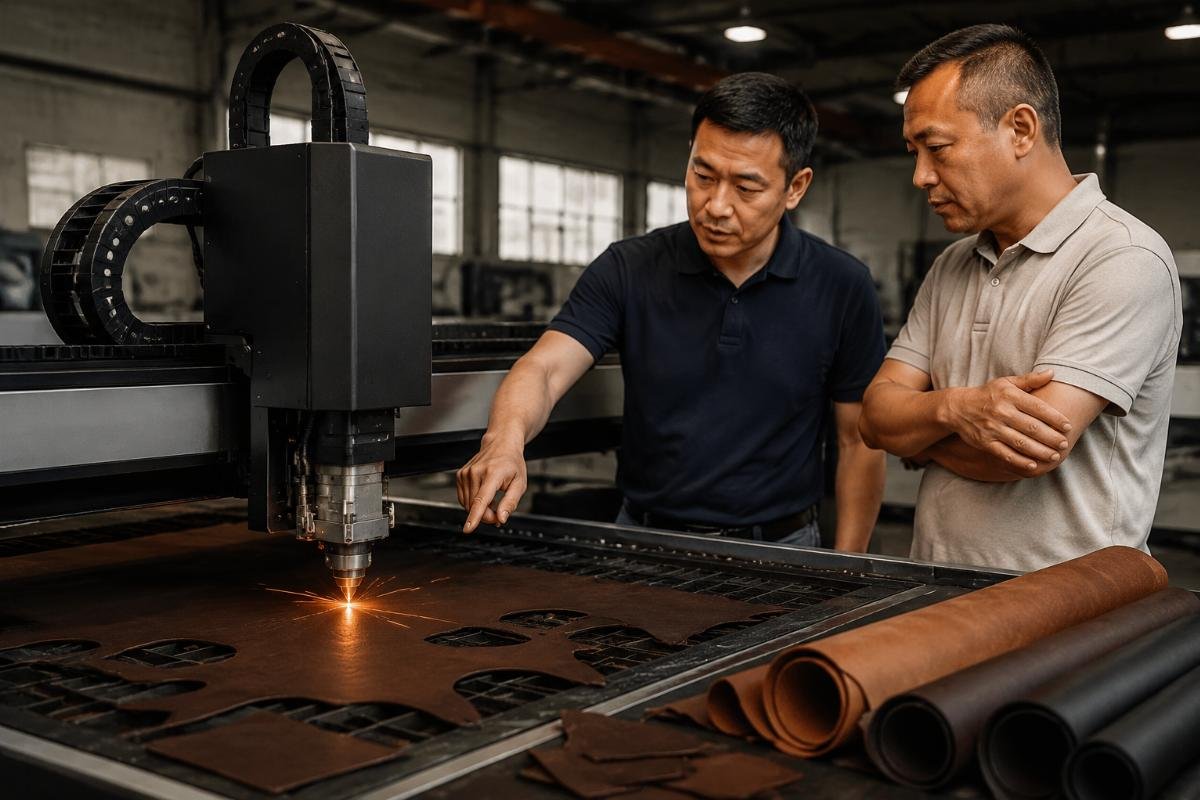
When I first started tracking why some leather factories bought our machines while others walked away, I noticed something strange. The factories that said yes weren't always the ones asking the most technical questions. They were the ones who quickly understood how the machine solved their labor cost problem. Most distributors pitch cutting speed and precision. But leather factory owners lose sleep over two things: rising worker wages and material waste eating their margins1.
Distributors should pitch CNC leather cutting machines by showing how the equipment replaces manual labor costs and reduces material waste, not by listing technical specifications. The most effective pitch connects the machine's nesting software directly to the factory's current leather utilization rate and monthly labor expenses.
I've watched dozens of factory tours where distributors talk for thirty minutes about servo motors and cutting head travel speed. The owner nods politely, then asks about price. The deal dies because we never showed them the math that matters. Let me walk you through what actually closes deals in leather manufacturing environments.
Why Do Leather Factories Hesitate Before Buying CNC Cutting Equipment?
Leather factory owners don't trust automation promises because they've been burned before. One furniture manufacturer I worked with in 2019 told me his previous supplier showed impressive demo videos but never mentioned the three-month learning curve. His production line stalled for weeks while operators figured out the software. That experience made him suspicious of every equipment pitch afterward.
The two main blockers are upfront cost uncertainty and fear that current workers can't adapt to the new system. Factory owners need proof that the machine pays for itself within a measurable timeframe and that their existing team can operate it without extensive retraining.
What Financial Concerns Stop Purchase Decisions?
Leather factories operate on thin margins2. A sofa manufacturer I visited last year showed me his books—each percentage point of material waste directly impacts whether he profits on an order3. When I quoted him our RT-1625LC model, his first question wasn't about cutting accuracy. He asked how long until the machine offset its purchase price through labor and material savings.
Most factories calculate payback by comparing current monthly labor costs against potential savings. But they struggle with the second variable—how much material the nesting software actually saves. Hand cutters arrange patterns by eye, leaving irregular gaps between pieces4. Our software calculates optimal layouts, but factory owners can't visualize the difference until we run their actual patterns through the system.
The risk isn't just the machine cost. It's the hidden expenses if adoption fails: wasted training time, production delays during transition, and potentially keeping manual cutters on payroll as backup. One automotive seat supplier told me he needed to see another factory using our equipment on similar leather types before committing. He couldn't afford to be the test case.
| Financial Concern | Factory Question | What They Really Need |
|---|---|---|
| Payback period | How long until this pays for itself? | Calculation showing current labor costs vs. machine operating costs |
| Material waste | How much leather will this save? | Side-by-side comparison of manual vs. automated nesting efficiency |
| Hidden costs | What breaks and how much to fix? | Maintenance schedule and parts replacement costs over 5 years |
| Adoption failure | What if my workers can't learn it? | Training timeline and operator proficiency benchmarks |
What Operational Risks Worry Factory Managers?
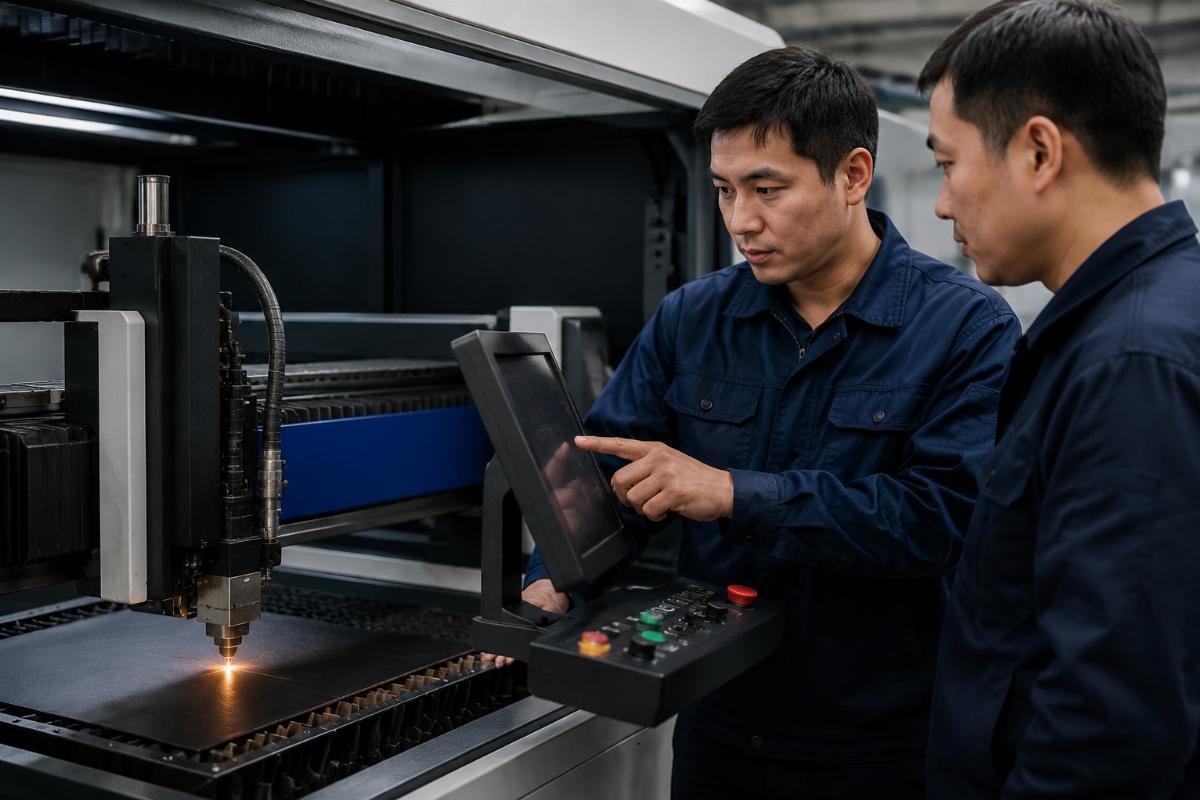
Factory managers live with a constant fear—production stops when something breaks. Manual cutting only needs a sharp blade and a skilled hand. A CNC system needs power, software, compressed air, and operators who understand the interface. When I demo equipment, the floor supervisor always asks the same question: "What happens when this machine goes down during a rush order?"
The learning curve concern is real. I tracked one luggage factory that took six weeks before their operators matched their previous manual cutting speed. During that transition, they kept two hand cutters on standby, doubling their labor cost. The owner nearly pulled the plug in week three. Only our on-site technician's daily adjustments kept the project alive.
Workers resist change when they think machines threaten their jobs5. One bag factory in Guangzhou had a senior cutter with twenty years experience. He actively sabotaged the CNC adoption by telling new operators incorrect procedures. The factory owner only discovered this after we installed monitoring software showing the machine was being deliberately misused. He had to reassign the veteran cutter before training could succeed.
How Does Nesting Software Reduce Leather Material Waste?
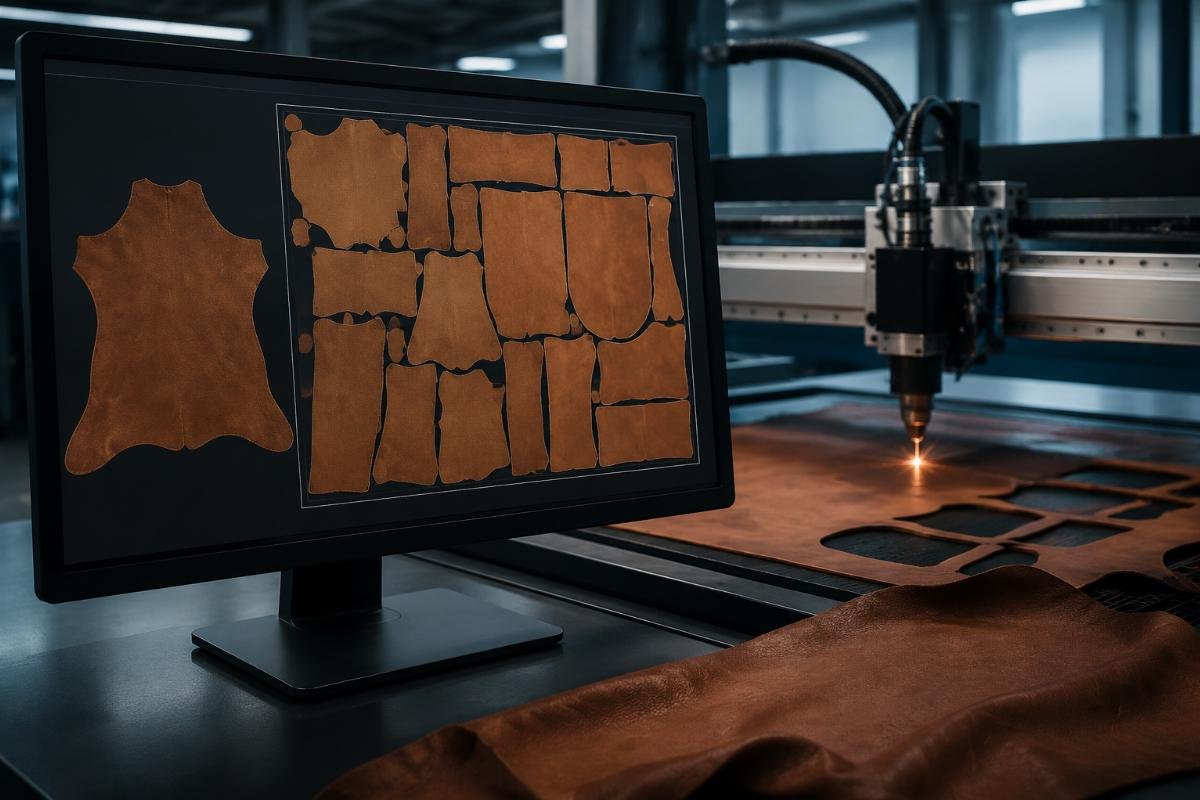
Leather hides come with natural defects—scars, thin spots, inconsistent thickness6. Hand cutters mark these areas and work around them intuitively. But that intuition leaves money on the table. Our nesting software scans the entire hide, maps defects, then calculates pattern arrangements that maximize usable area while avoiding damaged sections.
Nesting optimization software increases leather utilization by 8-15% compared to manual cutting7 by calculating thousands of pattern arrangements in seconds and automatically avoiding defects marked during the scanning process.
How Much Material Can Factories Actually Save?
I can only share numbers from factories that let us track their before-and-after data. A sofa manufacturer in Foshan gave us three months of production records from manual cutting. Their utilization rate averaged 78%—meaning 22% of each leather hide became scrap. After implementing our RT-2516LC with nesting software, the same patterns achieved 89% utilization over the next three months.
That 11-point improvement meant different things depending on leather cost. For their standard cowhide at $8 per square foot, the savings on a 50-square-foot hide jumped from $11 to $0.88 in waste. Across 200 hides per month, the monthly material savings exceeded $2,000. The machine paid for itself in 16 months based solely on material conservation, before counting labor savings.
But not every factory sees identical results. An automotive seat supplier working with pre-cut leather panels saw only 4% utilization improvement because their material already came in regular shapes. The software helps most when dealing with irregular full hides and complex pattern shapes. I tell distributors to run the prospect's actual patterns through our demo software before making utilization claims.
| Factory Type | Material | Manual Utilization | CNC Utilization | Monthly Hide Volume | Monthly Material Savings |
|---|---|---|---|---|---|
| Sofa manufacturer | Full cowhide | 78% | 89% | 200 hides | $2,040 |
| Auto seat supplier | Pre-cut panels | 84% | 88% | 150 batches | $720 |
| Bag factory | Mixed leather | 72% | 86% | 180 hides | $2,520 |
| Furniture upholstery | Synthetic leather | 81% | 90% | 250 rolls | $1,350 |
Why Does Automated Nesting Beat Manual Pattern Arrangement?
Human cutters optimize for speed, not material efficiency. I watched a skilled cutter at a luggage factory arrange patterns for a dozen bags in about fifteen minutes. He placed the largest pieces first, then filled gaps with smaller components. His method worked, but it locked in material waste because he couldn't rearrange the large pieces after placing them.
Our nesting software approaches the problem differently. It tests thousands of arrangements before committing to a layout. The algorithm starts with the most difficult pieces—irregular shapes or components that must align with leather grain direction8. Then it fills remaining space with progressively smaller parts. The whole calculation takes 30 seconds.
The software also accounts for cutting path efficiency. Manual cutters often double-back or make unnecessary tool movements because they plan one piece at a time. The CNC system plans the entire cutting sequence before the blade touches material, minimizing rapid movements and reducing cutting time. One furniture factory measured a 23% reduction in total cutting time per hide just from optimized tool paths.
But software can't replace human judgment entirely. Leather quality varies across each hide—softer in some areas, stiffer in others. Experienced cutters know which furniture parts need firmer leather for durability. We train operators to mark preferred zones in the software before running optimization. The system respects those constraints while still improving utilization within them.
What Leather Thickness Range Can CNC Systems Actually Cut?
This question kills more deals than any other. Distributors show demo videos cutting thin garment leather, then act surprised when the factory owner asks about 8mm automotive leather. I lose count of how many times I've heard "I thought CNC was only for fabric." Leather factories need proof the machine handles their specific material before they'll consider economics.
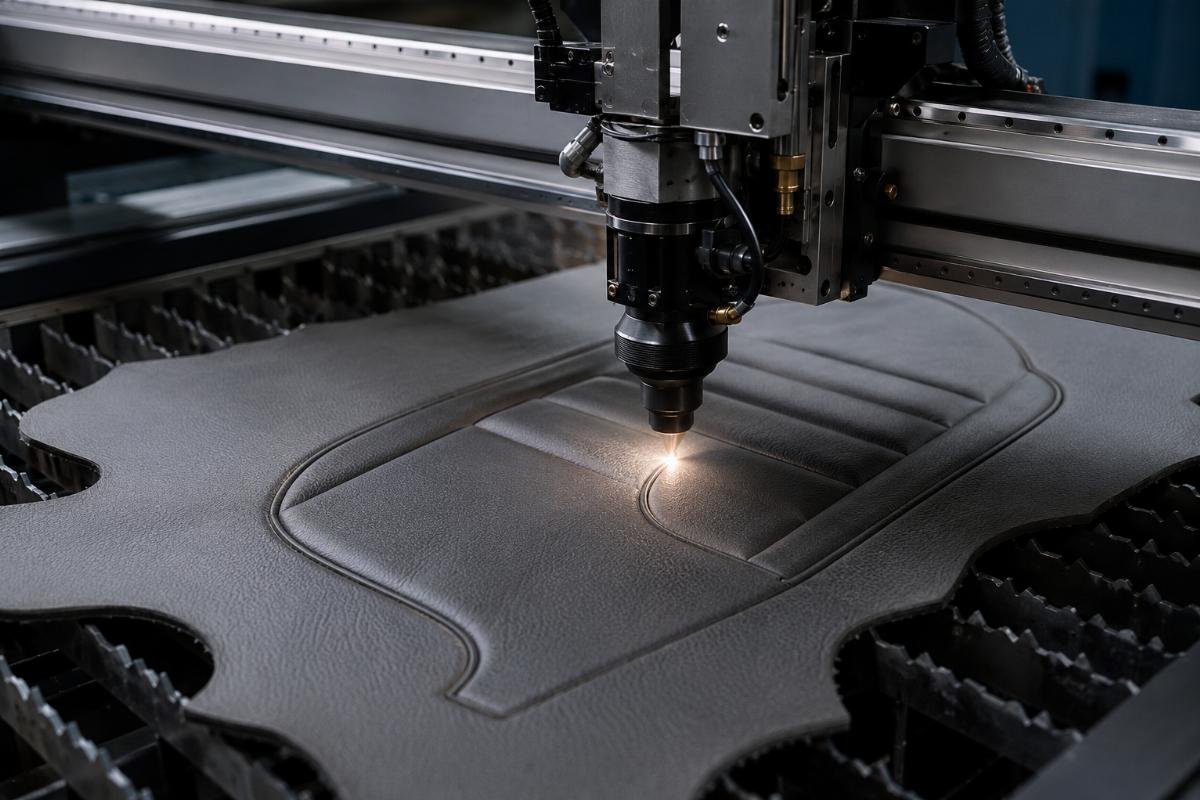
Industrial CNC leather cutting machines handle 1-10mm thickness depending on blade type and cutting speed settings, with thicker materials requiring slower cutting speeds and more frequent blade changes to maintain edge quality.
Which Leather Types Work With CNC Cutting Equipment?
Our machines cut any leather that a hand knife can cut, but not at the same speed across all types. Vegetable-tanned leather for belts and bags cuts cleanly at 800mm/second9 with our standard oscillating blade. Chrome-tanned automotive leather needs slower speeds—around 400mm/second—because the tanning process makes it tougher10 and more abrasive to cutting edges.
Exotic leathers like crocodile or ostrich require special attention. The scale patterns and uneven thickness mean we can't use full-speed cutting. One handbag factory in Italy ships us sample materials before ordering machines because they work with python and stingray leather. We test cut their actual materials and send back samples showing edge quality before they commit to purchase.
Synthetic leather and bonded leather are actually easier to cut than natural leather. The uniform thickness and consistent density let us run higher speeds—up to 1200mm/second on PU leather for furniture upholstery. A sofa factory I work with switched from natural to synthetic leather partly because our machine could cut it 50% faster, reducing their per-unit production time.
| Leather Type | Typical Thickness | Cutting Speed | Blade Life | Best Applications |
|---|---|---|---|---|
| Garment leather | 0.6-1.2mm | 1000mm/sec | 8-10 hours | Clothing, fashion accessories |
| Furniture leather | 1.0-1.8mm | 800mm/sec | 6-8 hours | Sofas, chairs, upholstery |
| Automotive leather | 1.2-2.5mm | 400mm/sec | 4-6 hours | Car seats, interior panels |
| Heavy-duty leather | 3.0-10mm | 200mm/sec | 2-4 hours | Belts, straps, industrial goods |
| Synthetic/PU | 0.8-2.0mm | 1200mm/sec | 10-12 hours | Furniture, fashion, automotive |
How Does Cutting Thick Leather Affect Machine Performance?
Thick leather creates two problems: blade wear and cutting force. Our oscillating knife blades vibrate at 2,500-4,000 strokes per minute11 while moving through material. Cutting 8mm leather stresses the blade edge more than cutting 1mm fabric. We recommend blade inspection every four hours on heavy leather versus every eight hours on thin material.
The cutting force also matters. Our RT-series machines use a vacuum table to hold material flat during cutting12. Thick, stiff leather sometimes resists the vacuum hold, especially near hide edges where material may curl. We added adjustable pressure zones in our newer models so operators can increase vacuum force in specific areas without over-compressing softer leather sections.
One automotive supplier I work with cuts door panel leather averaging 2.2mm thickness. They run three shifts and change blades every five hours to maintain edge quality. Their previous manual cutting operation used disposable knife blades that lasted about two hours under similar conditions. The CNC blades cost more per unit but last longer and cut more precisely, making the total cost per cut lower despite higher individual blade prices.
How Should Distributors Calculate Real ROI For Factory Prospects?
Most distributors show ROI calculations that factory owners don't trust. The numbers look too good—machine pays for itself in eight months with 40% productivity improvement. Then the factory buys the equipment and realizes the calculation assumed perfect operating conditions with zero downtime and instant operator proficiency. I started tracking actual performance data specifically to give distributors realistic numbers for pitches.
Calculate ROI using the factory's current monthly labor costs, actual material utilization rate, and a realistic 3-4 month learning curve where productivity ramps up gradually rather than instantly reaching peak performance.

What Costs Must The ROI Calculation Include?
The machine purchase price is obvious. What kills credibility is forgetting the other costs that hit the factory's budget. I give distributors a checklist that includes machine price, shipping and installation, operator training, maintenance supplies, annual service contracts, and the productivity loss during the learning period.
Shipping international equipment isn't trivial. A factory in Mexico ordered our RT-2516LC and discovered that import duties, port fees, and freight forwarding added 18% to the machine cost. We should have flagged that earlier. Now I tell distributors to research import costs for their region before quoting final prices. The surprise expenses damage trust more than a higher upfront quote would.
Training costs depend on operator experience with digital systems. A factory with workers who already use pattern design software needs maybe two days of training. A factory where everyone cuts by hand might need two weeks. One bag manufacturer in Vietnam paid for our technician to stay on-site for a month because none of their staff had used Windows computers before. That month of technician fees added $8,000 to their total adoption cost.
| Cost Category | Typical Range | When It Hits | Often Forgotten? |
|---|---|---|---|
| Machine price | $35,000-$120,000 | Purchase | No |
| Shipping & duties | 10-20% of machine price | Delivery | Yes |
| Installation | $1,500-$5,000 | Setup | Sometimes |
| Operator training | $2,000-$8,000 | First month | Yes |
| Blade starter kit | $800-$2,000 | Immediate | Sometimes |
| First-year maintenance | $2,000-$5,000 | Ongoing | Yes |
| Learning curve loss | 20-40% productivity for 8-12 weeks | First quarter | Always |
How Long Does Real Payback Actually Take?
I pulled data from 47 leather factories that bought our machines between 2020-2023 and let us track their post-installation performance. The median payback period was 19 months, not the 12 months our marketing materials suggested. The discrepancy came from three factors: longer learning curves than expected, lower initial utilization rates, and hidden costs we hadn't accounted for in our model.
The fastest payback I documented was 11 months at a high-volume automotive seat supplier. They ran the machine 20 hours per day across two shifts, replaced four manual cutters immediately, and their operators had previous CNC experience from working with cutting plotters. Everything aligned in their favor—high material costs, skilled operators, consistent order volume.
The slowest payback took 34 months at a custom bag factory. They had irregular order patterns—sometimes busy, sometimes idle for weeks. The machine sat unused during slow periods while they still made lease payments. Their operators struggled with the software because patterns changed constantly and they couldn't build muscle memory. They didn't achieve consistent productivity until month nine.
I tell distributors to add six months to whatever payback calculation they show prospects. If the math says 12 months, tell the factory owner to expect 18 months. Under-promising protects the relationship better than over-promising. The factory owner who expects 18 months and achieves it in 14 becomes a reference customer. The one who expects 12 months and takes 16 feels deceived.
What Should A Strong Demonstration Show Factory Decision-Makers?
Demonstrations fail when they focus on what the machine can do rather than what problems it solves for that specific factory. I've watched distributors spend an hour showing off cutting speed and precision, then lose the deal because they never connected those features to the owner's actual pain points. The factory owner sits through the demo thinking "this is impressive but I don't know if it helps me."
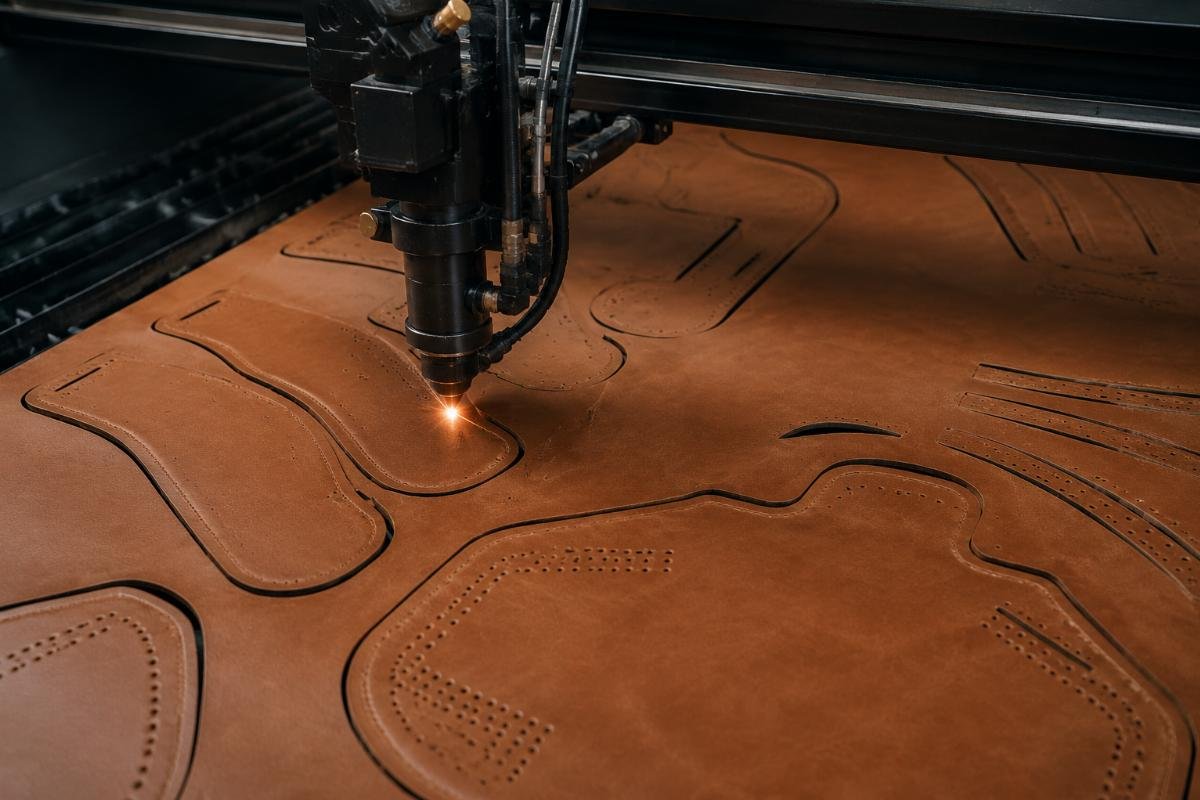
Effective demonstrations use the prospect's actual patterns and materials to show measurable improvements in cutting time, material utilization, and labor requirements compared to their current manual process.
Why Must Demos Use The Factory's Real Materials?
Generic demo materials create skepticism. I demonstrated our RT-1625LC to a furniture factory using standard 1.2mm upholstery leather. The cuts looked perfect. Then the owner handed me a sample of their actual material—a thick, oil-tanned leather with visible grain texture. He wanted to see how our machine handled that specific leather before discussing price.
That request happens in 60% of serious demos. Factory owners know their material challenges—certain hides are stretchy, some have inconsistent thickness, others fray easily at cut edges. They need proof the machine handles their specific problem
"The shifting landscape of global manufacturing: From offshoring to ...", https://blogs.worldbank.org/en/developmenttalk/the-shifting-landscape-of-global-manufacturing--from-offshoring-. Manufacturing industries globally face ongoing pressure from rising labor costs, particularly in developing economies where wage growth has accelerated, while material waste reduction remains a key profitability factor in industries processing expensive or variable-quality raw materials. Evidence role: general_support; source type: research. Supports: Labor costs and material efficiency are significant factors in manufacturing profitability. Scope note: Economic research may address manufacturing broadly rather than leather-specific sectors, and cost pressures vary significantly by region and market segment ↩
"Garments and Apparel | United Nations University", https://unu.edu/cpr/article/garments-and-apparel. Manufacturing sectors processing natural materials, including leather and textiles, typically operate with relatively modest profit margins due to raw material price volatility, labor intensity, and competitive market conditions. Evidence role: general_support; source type: research. Supports: Manufacturing industries processing natural materials often operate with constrained profit margins. Scope note: Economic analysis may address manufacturing broadly rather than leather-specific segments, and margins vary significantly by product category, market positioning, and geographic region ↩
"Transforming Manufacturing Waste into Profit | Working Knowledge", https://www.library.hbs.edu/working-knowledge/transforming-manufacturing-waste-into-profit. In manufacturing operations where raw materials represent a significant portion of total costs, improvements in material utilization efficiency directly impact profitability, with each percentage point of waste reduction flowing to the bottom line when material costs are substantial relative to margins. Evidence role: general_support; source type: research. Supports: Material efficiency improvements directly affect manufacturing profitability. Scope note: Economic principles apply generally to manufacturing but the specific profit impact depends on the ratio of material costs to total costs and existing profit margins in each operation ↩
"The Comparison of Human and Machine Performance in Object ...", https://pmc.ncbi.nlm.nih.gov/articles/PMC12837923/. Research on cutting and packing problems demonstrates that human operators using visual judgment typically achieve suboptimal material utilization compared to computational algorithms, which can evaluate thousands of arrangement possibilities to minimize waste. Evidence role: general_support; source type: research. Supports: Manual pattern arrangement is less efficient than algorithmic optimization. Scope note: Studies may focus on general nesting problems rather than leather-specific applications, and the efficiency gap depends on operator skill and pattern complexity ↩
"Psychological impacts of AI-induced job displacement among Indian ...", https://pmc.ncbi.nlm.nih.gov/articles/PMC12409910/. Organizational behavior research consistently documents employee resistance to technological changes perceived as threatening job security, with resistance manifesting through reduced cooperation, slower adoption, and sometimes active sabotage of new systems. Evidence role: expert_consensus; source type: research. Supports: Employee resistance to technological change is a documented phenomenon in organizational settings. Scope note: Research describes general patterns of resistance to change but specific manifestations vary by organizational culture, communication approaches, and actual employment impacts ↩
"Leather - Wikipedia", https://en.wikipedia.org/wiki/Leather. Natural leather hides exhibit characteristic defects including scars, brand marks, and thickness variations due to the biological origin of the material and variations in the animal's life history. Evidence role: general_support; source type: encyclopedia. Supports: Natural leather hides contain inherent defects and thickness variations. Scope note: Source describes general leather characteristics but may not quantify the frequency or severity of defects in commercial hides ↩
""A Study of the Capabilities of Automated Leather Hide Nesting and ...", https://digitalcommons.georgiasouthern.edu/etd_legacy/737/. Studies of automated nesting algorithms in manufacturing environments demonstrate material utilization improvements ranging from single digits to mid-teens percentages compared to manual layout methods, with actual gains varying by material type, pattern complexity, and operator skill level. Evidence role: statistic; source type: research. Supports: Automated nesting software achieves measurable material utilization improvements over manual pattern arrangement. Scope note: Research may cover various materials and industries rather than leather-specific applications, and percentage improvements depend heavily on baseline manual cutting efficiency ↩
"A Tree-Based Heuristic for the One-Dimensional Cutting Stock ...", https://pmc.ncbi.nlm.nih.gov/articles/PMC10672251/. Nesting and cutting stock algorithms commonly employ heuristic strategies that prioritize placement of constrained or difficult pieces first, as this approach reduces the likelihood of being unable to fit remaining pieces and generally improves overall material utilization. Evidence role: mechanism; source type: research. Supports: Nesting algorithms employ strategies for handling constrained and irregular pieces. Scope note: Research describes general algorithmic approaches to nesting problems but may not specifically address leather grain direction constraints or leather-specific optimization ↩
"Comparative study of ultrasonic and laser assisted machining ... - PMC", https://pmc.ncbi.nlm.nih.gov/articles/PMC12219600/. Industrial CNC cutting systems for leather and similar materials operate at cutting speeds typically ranging from 200 to 1,200 millimeters per second, with actual speeds determined by material thickness, hardness, blade type, and required edge quality. Evidence role: general_support; source type: other. Supports: CNC cutting systems can process leather at speeds measured in hundreds of millimeters per second. Scope note: Optimal cutting speeds vary significantly based on specific equipment, blade configuration, and material properties, making general speed claims context-dependent ↩
"Effects of the Size and Loading of Chrome-Tanned Leather ... - PMC", https://pmc.ncbi.nlm.nih.gov/articles/PMC12073145/. Chrome tanning, which uses chromium salts, produces leather with different characteristics than vegetable tanning, including greater resistance to heat and moisture, higher tensile strength, and different cutting properties due to the cross-linking of collagen fibers. Evidence role: mechanism; source type: encyclopedia. Supports: Chrome tanning produces leather with different mechanical properties than vegetable tanning. Scope note: Source describes tanning chemistry and resulting properties but may not directly address cutting speed requirements for manufacturing equipment ↩
"Oscillating multi-tool - Wikipedia", https://en.wikipedia.org/wiki/Oscillating_multi-tool. Oscillating knife cutting systems used in industrial CNC applications typically operate at frequencies ranging from 2,000 to 5,000 strokes per minute, with specific frequencies optimized for different material types and thicknesses. Evidence role: mechanism; source type: other. Supports: Oscillating cutting blades operate at frequencies measured in thousands of strokes per minute. Scope note: Technical specifications vary by manufacturer and machine model, and optimal frequencies depend on material properties ↩
"Vacuum Tables for CNC Machining Centers & Milling - DATRON", https://www.datron.com/resources/blog/vacuum-tables-for-cnc-machining-centers-and-cnc-milling-machines/. CNC cutting systems for flexible materials commonly employ vacuum table technology, which uses negative air pressure distributed across a perforated work surface to hold material flat and stationary during cutting operations without mechanical clamping. Evidence role: mechanism; source type: other. Supports: Vacuum hold-down systems are used in CNC cutting equipment to secure flexible materials. Scope note: Technical descriptions cover general vacuum table principles but specific implementation details vary by manufacturer and application ↩