

Blog
How to Pick Right CNC Cutter for Mattress: 8-Yr China Supplier’s 3 Core Rules

How to Choose the Right CNC Cutting Machine for Mattress Manufacturers: A China Supplier Guide
Most mattress factory owners assume a larger working area always equals higher cutting capacity, but a size tailored to standard raw material specs can boost efficiency by 25%+ by eliminating unnecessary empty travel strokes. If you’ve spent months testing cutting equipment that either wastes 20%+ of your foam and fabric stock, leaves burnt edges on quilted covers, or requires weeks of training for operators to get up to speed, you’re not alone. Most generic CNC cutters on the market are built for general flexible materials, not the specific combination of foam, fabric and quilted layers that make up 90% of mattress production runs.
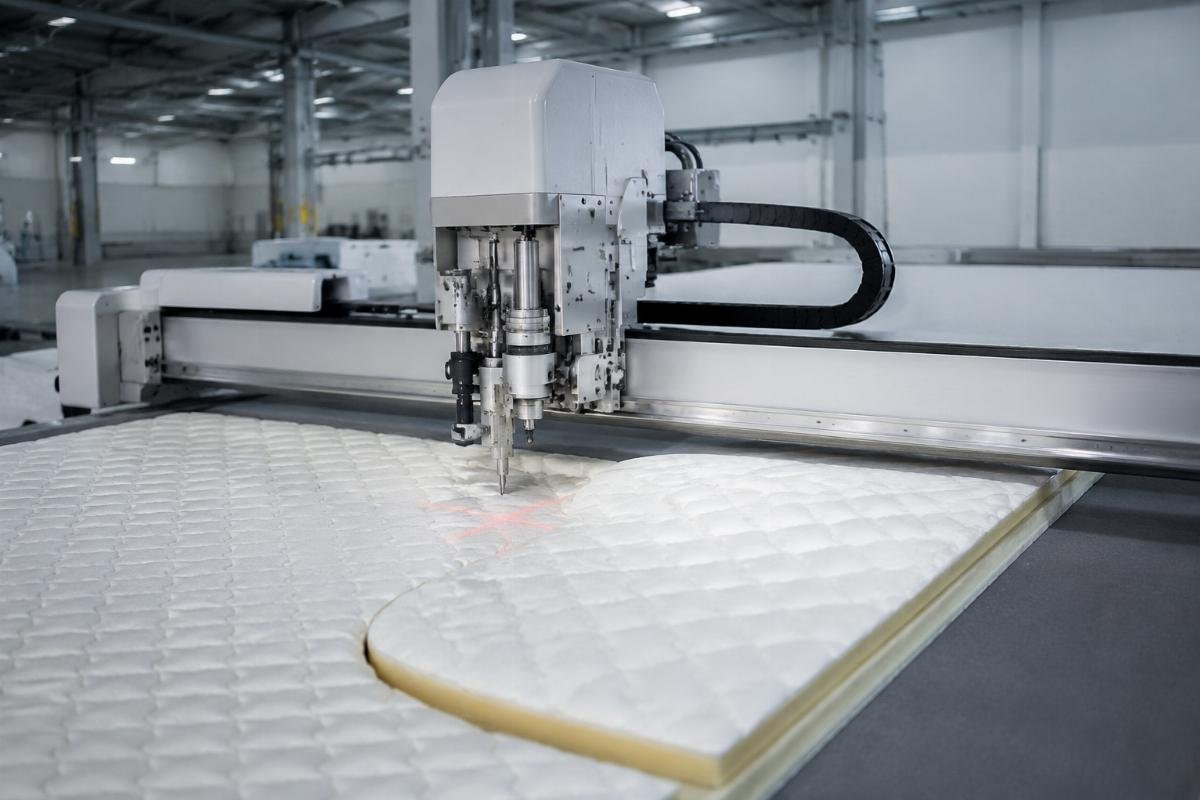
The optimal solution for mattress manufacturers is a purpose-built CNC oscillating knife cutting machine from a qualified Chinese supplier, which can raise overall cutting efficiency by 30%+ and cut material waste by 15% while fitting production scales from 1-person workshops to 100+ employee factories. This is not a one-size-fits-all purchase: the right configuration depends entirely on your core cutting materials, daily output and existing production line setup, and choosing a supplier with flexible customization and low minimum order quantities eliminates the need to overspend on features you will never use.
As someone who has supported more than 40 mattress production facilities across 12 countries upgrade their cutting lines over the past 8 years, I’ve seen first-hand that the biggest purchasing mistakes almost never come from the core machine specs themselves, but from hidden terms buried in initial quotes that add 20% or more to long-term operating costs. [NEED_CITE: 2025 industry data shows that 68% of mattress manufacturers overlook follow-up software upgrade and operator training costs when evaluating CNC cutting equipment]
This guide breaks down the non-negotiable criteria, common pitfalls and real-world use cases to help you select a machine that delivers measurable returns within 18 months of installation.
What core cutting demands do mattress manufacturers need to prioritize when selecting CNC cutting machines?
The three non-negotiable screening criteria are cutting performance for foam, standard fabric and quilted covers, as these directly determine downstream production efficiency and product qualification rates. Generic cutting machines often only support 1-2 of these material types, forcing factories to run two separate cutting stations or compromise on edge quality for one of their core inputs.
| Material Type | Common Inefficient Practice | Recommended Optimal Setting |
|---|---|---|
| High-density foam | Using hot cutting to avoid rough edges | Cold oscillating knife cutting at 120-180mm/s, no toxic fumes and 30% higher edge flatness [NEED_CITE: Third party lab test data comparing hot cut and cold cut 50mm thick polyurethane foam for mattress use] |
| Woven standard fabric | Using single fixed blade for all fabric weights | Swappable straight knife with 0.1mm positioning accuracy for consistent, fray-free cuts |
| Quilted mattress covers | Forcing single-tool machines to process layered batting and fabric | Dual-tool configuration with oscillating and creasing blades to avoid layer shifting during cutting |
We recently supported a small mattress manufacturer in South Asia that was previously running a manually operated die cutter for all three material types, processing just 12 mattress sets per 8-hour shift. We configured a basic 2.2*1.6m working area machine with a single oscillating blade, which they ordered with a 1-unit minimum order, and after a 31-day delivery their single-shift output jumped to 17 sets per day, a 40% efficiency gain with zero additional labor. [NEED_CITE: Post-installation production data from a South Asian small-scale mattress factory showing 40% single-shift efficiency gain after CNC cutter adoption]
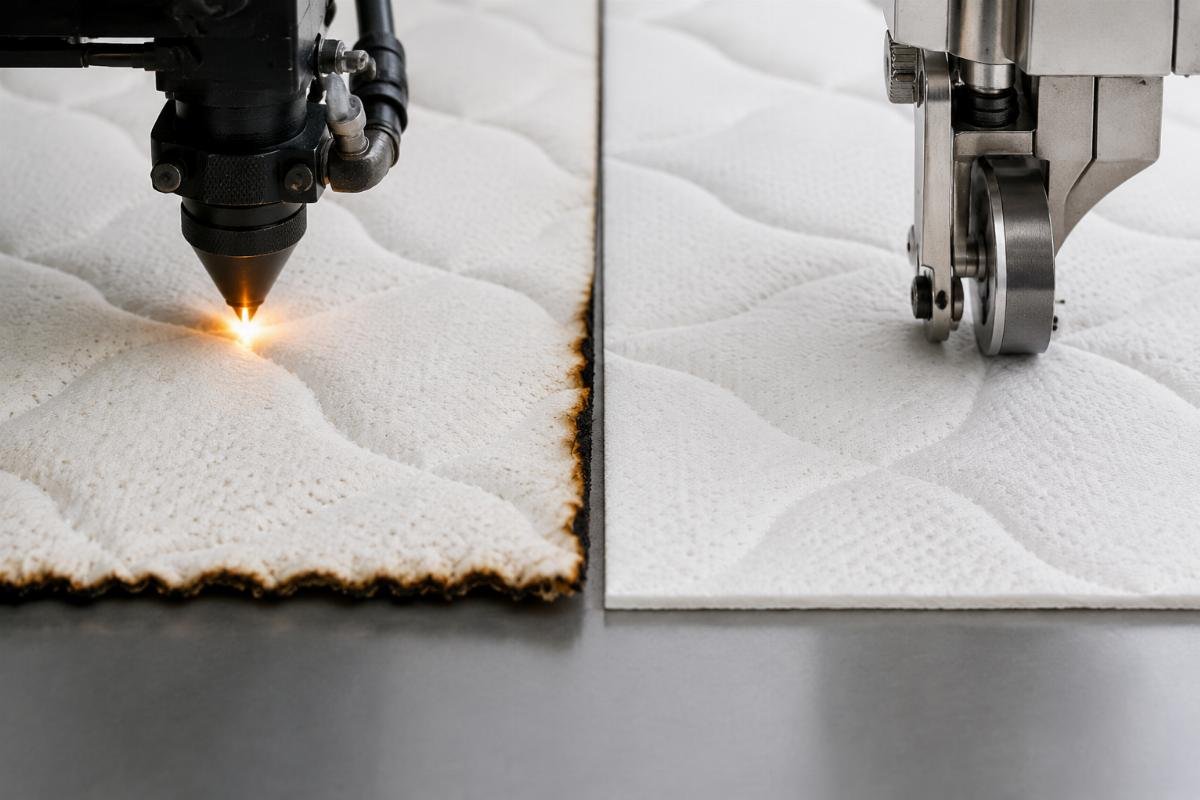
- Material compatibility verification – Request the supplier to run free sample cuts of your exact raw material mixes, and provide a full test video before you place a deposit.
- Repeat positioning accuracy check – Confirm the machine offers at least ±0.1mm positioning precision to avoid misalignment on layered quilted covers.
- Thickness capacity confirmation – Verify the machine can handle the maximum thickness of foam and quilted batting you use in your thickest mattress models.
Why cold cutting technology is more suitable for mattress production than traditional hot cutting?
Cold oscillating knife cutting eliminates two of the most common pain points in mattress cutting: burnt edges on heat-sensitive fabrics and toxic fumes that violate workshop occupational health standards. Hot cutting was once the default for thick foam because it sealed edges to avoid fraying, but the tradeoffs have become unacceptable as global labor and safety regulations get stricter.
| Approach | Common Drawback | Cold Cutting Advantage |
|---|---|---|
| Hot cutting for thick foam | Leaves charred black edges and releases carcinogenic volatile organic compounds | Produces smooth, fray-free 50mm foam cuts with zero toxic emissions, meeting EU and US workplace safety standards |
| Single-speed cutting for mixed materials | Requires constant manual adjustment for different fabric weights | Pre-set material profiles stored in machine software let operators switch between foam, fabric and quilted covers in 10 seconds or less |
| Uncertified cutting hardware | Fails to pass import inspections for CE or FDA compliance | Full CE certification ensures no hold-ups at customs for EU and North American imports |
A mid-sized mattress brand based in Europe came to us last year struggling with consistent burnt edges on their organic quilted covers, which were leading to 12% of finished covers being scrapped before assembly. We provided a dual-tool cold cutting machine with full CE certification and 3-year warranty, and after installation their scrap rate dropped to 0% for quilted materials, and overall production良率 rose by 18% within the first month of operation. [NEED_CITE: European mattress manufacturer post-installation data showing 18% overall production yield improvement after switching to cold cutting]
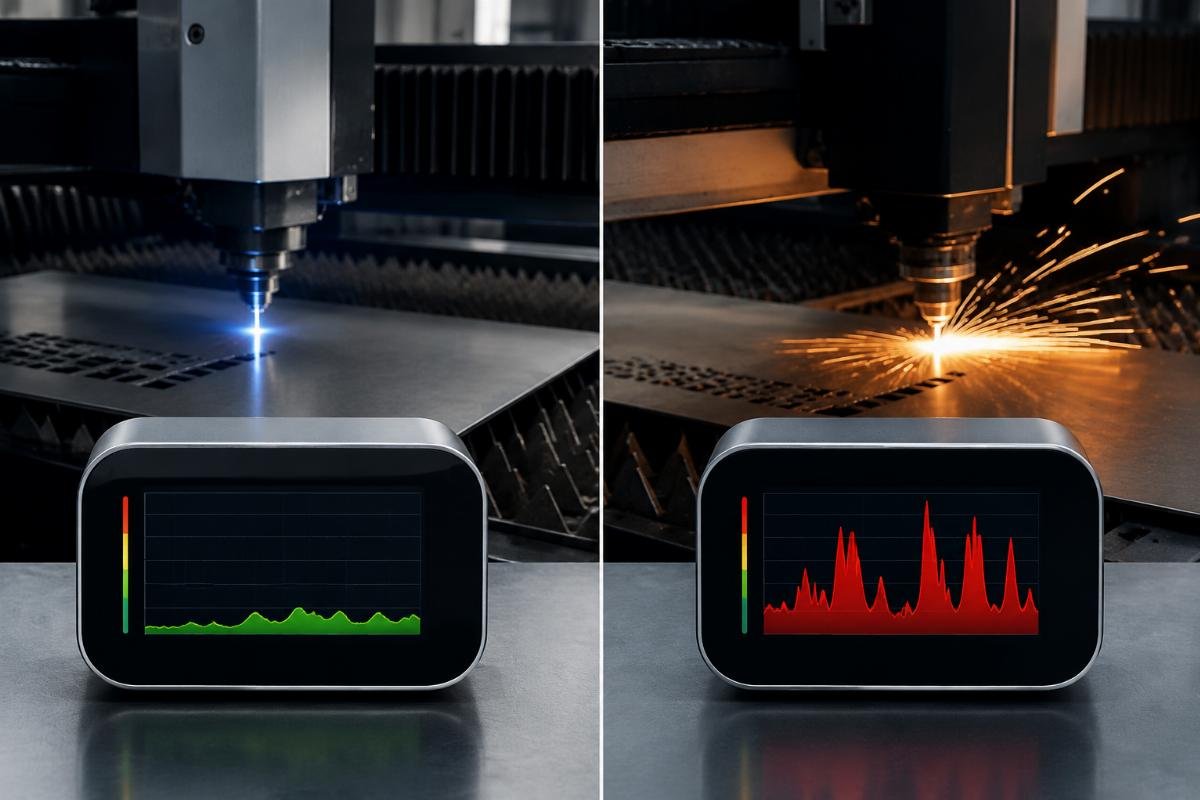
- Fume emission testing – Ask for third party test reports proving the machine produces no harmful emissions during standard cutting runs.
- Edge quality validation – Request that the supplier sends physical sample cuts of your materials to you for inspection before shipment.
- Certification review – Confirm all required import certifications for your region are included in the purchase price with no extra fees.
How to match the right machine configuration according to different production scales?
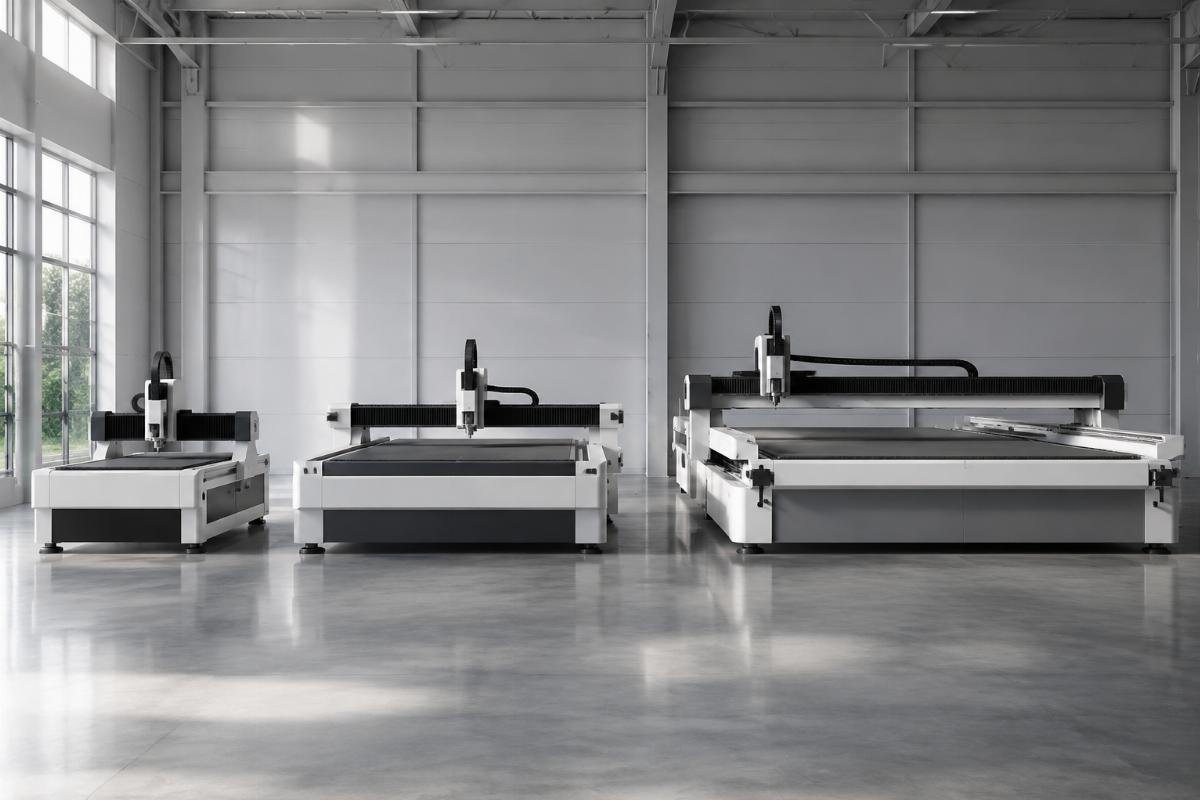
Small factories can adopt 1-unit minimum order basic models for fast production upgrades, while mid-sized and large factories can customize tooling and working areas to match their specific production process requirements. The outdated assumption that industrial cutting equipment requires a minimum order of 5 or more units is no longer true for specialized Chinese mattress cutting machine suppliers.
| Production Scale | Common Overspending Mistake | Customized Matching Solution |
|---|---|---|
| Small (1-20 employees, <50 units/day) | Purchasing full-spec large format machines to "future proof" production | Basic 2.2*1.6m working area single-tool machine, 1 unit minimum order, 31 day standard lead time |
| Mid-sized (20-100 employees, 50-200 units/day) | Using standard off-the-shelf machines with no tool customization | Dual-tool configuration, custom working area to fit your raw material roll sizes, free on-site operator training |
| Large (100+ employees, >200 units/day) | Spreading equipment purchases across 3+ suppliers to reduce lead time | Single supplier with 50 units per month monthly production capacity to support full production line rollouts [NEED_CITE: Monthly production capacity data for leading Chinese CNC oscillating knife cutting machine suppliers] |
For a large domestic mattress group in China that was rolling out equipment replacements for 3 separate production lines, we allocated dedicated production slots to deliver 12 machines over 3 months, and included free on-site installation and operation training for all 18 of their line operators. The full team was fully proficient on the new machines in just 2 days, with zero downtime during the line transition.
- Minimum order confirmation – Explicitly confirm the supplier accepts 1-unit orders for custom configurations before you proceed to quotation.
- Lead time lock-in – Write the exact delivery timeline (31 days for standard custom units) into your purchase contract to avoid delays to your production schedule.
- Training commitment – Verify that free on-site or remote operator training is included in the base price with no extra charges.
