

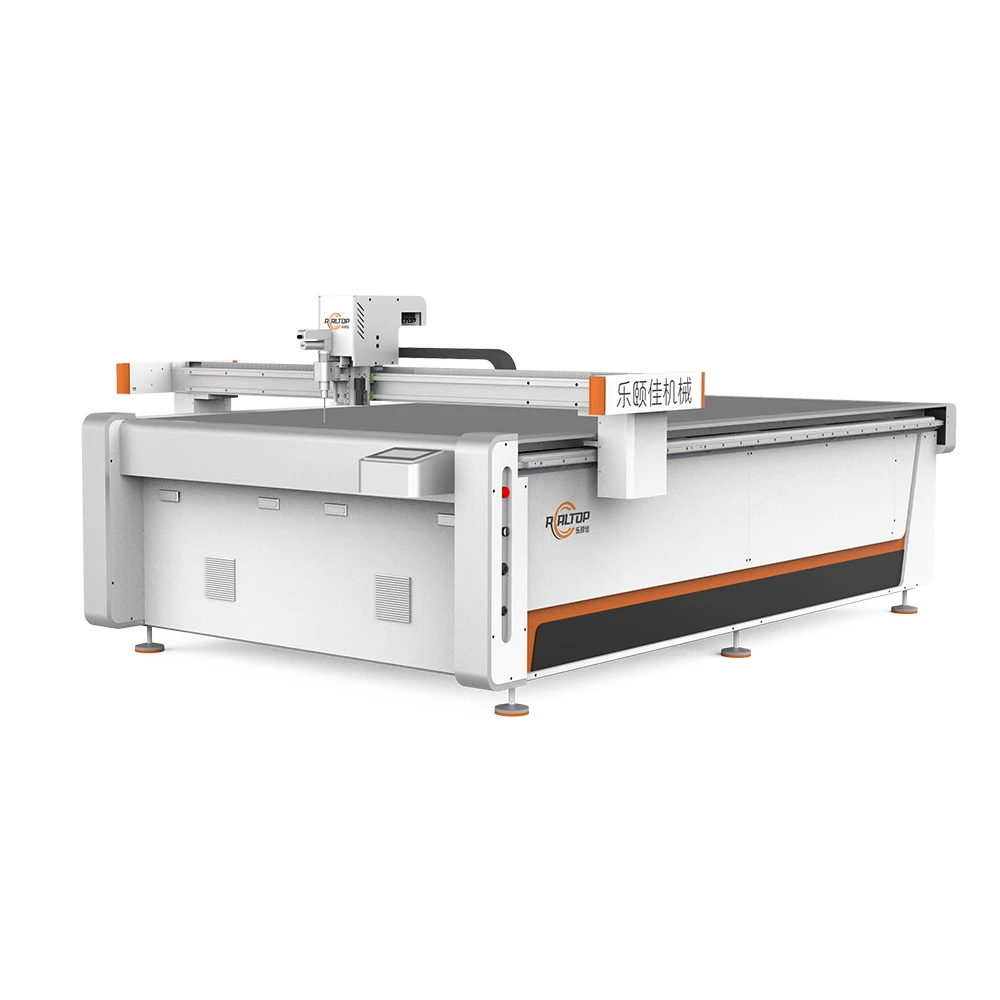
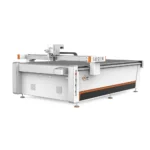
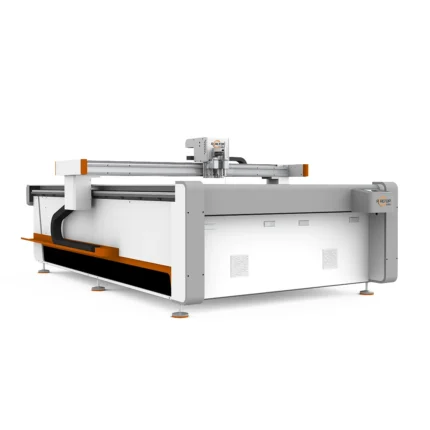
Acoustic Panels CNC Knife Cutting Machine 1625 – OEM Available
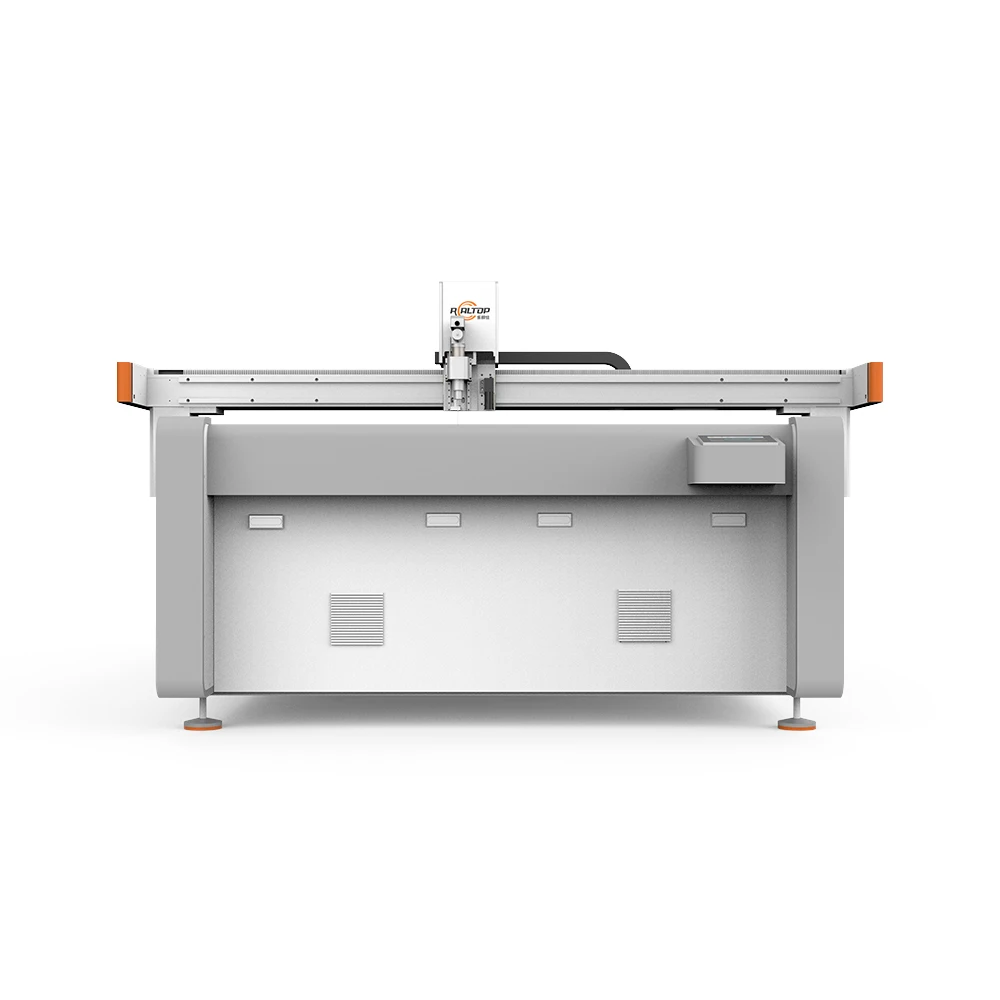
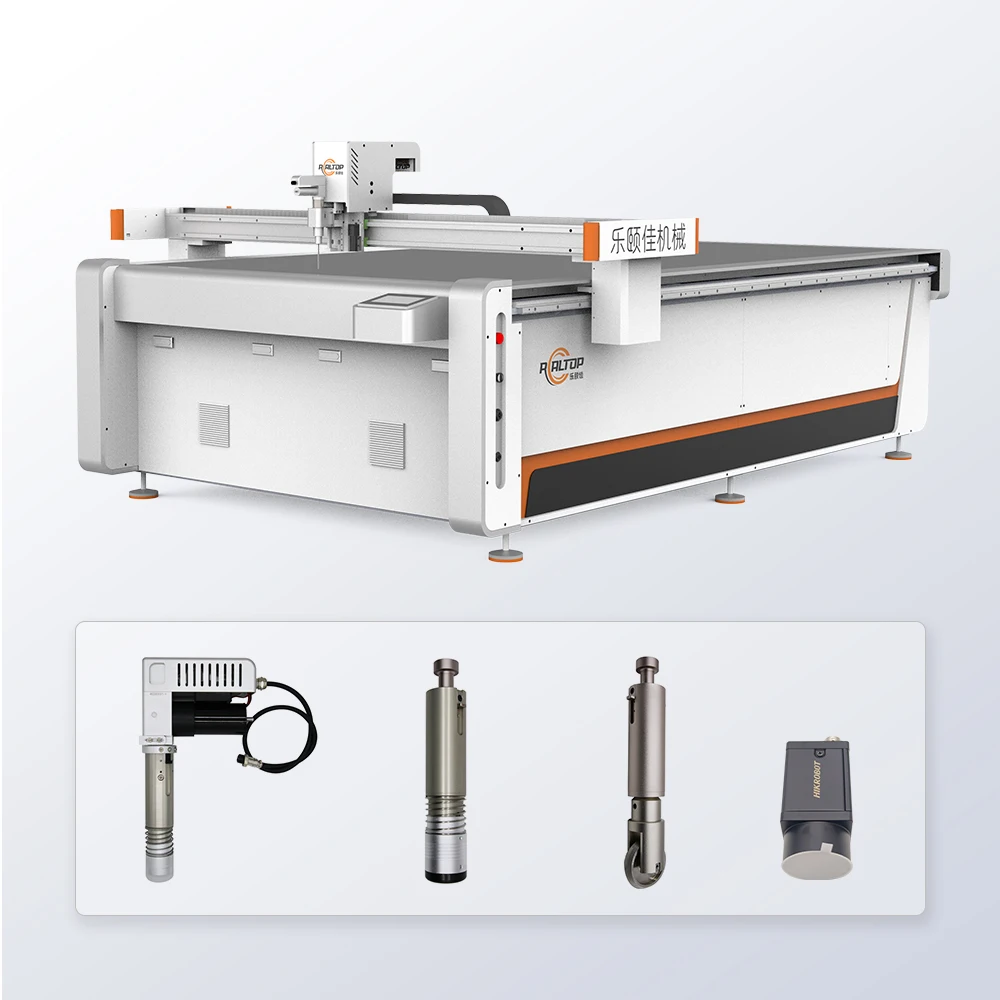
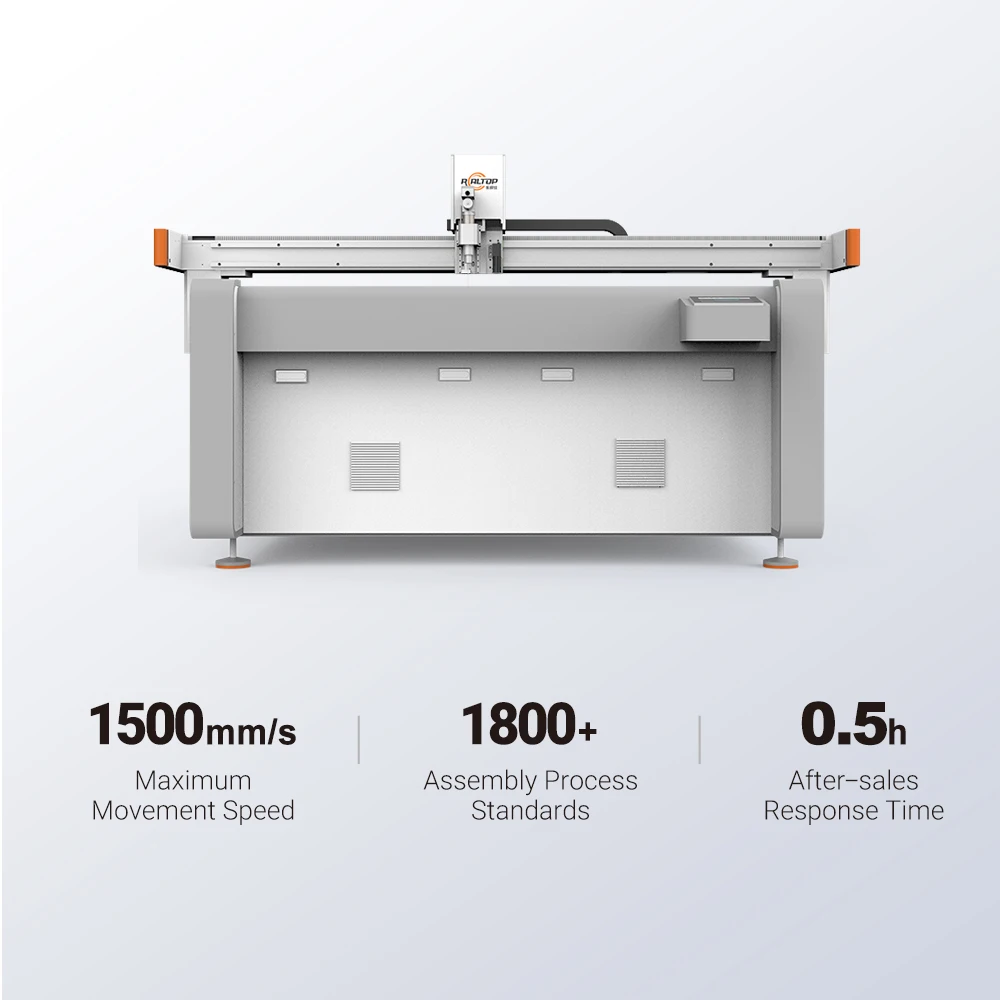
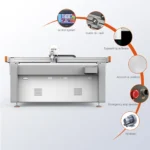
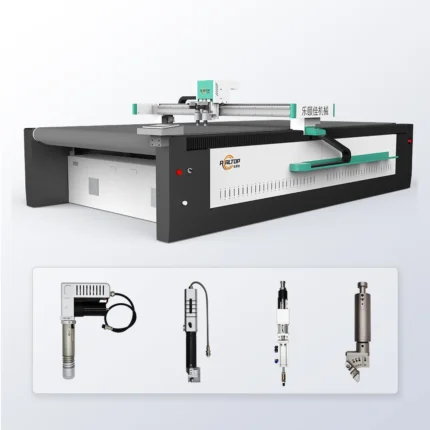
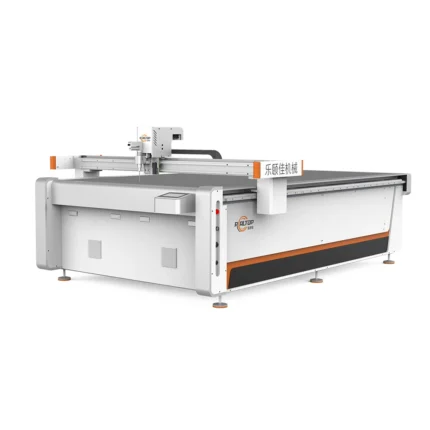
1625 CNC Oscillating Knife Cutting Machine for Composites, 1600×2500mm Working Area, ≤30mm Cutting Thickness — configured with interchangeable tool heads including oscillating knife, driven rotary knife and V groove knife to match material density from soft fiberglass cloth to rigid carbon fiber board. Aluminum bellows vacuum table ensures flat adsorption for large-format prepreg and honeycomb core cutting. – Sample cutting on your composite material before order
- Tool head and table configuration matched to your material type
- Voltage, control language and software format confirmed before shipment
Cold-Cutting Precision for Composites — Realtop builds the 1625 oscillating knife platform around material-specific tool head selection, ensuring no thermal damage to resin-based composite structures during cutting.
Technical Specifications
| Parameter | Value |
|---|---|
| Model | 1625 |
| Product Type | CNC Oscillating Knife Cutting Machine for Composites |
| Working Area | 1600 × 2500 mm |
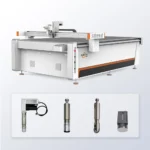
| Available Tool Heads | Oscillating knife, driven rotary knife, creasing wheel, kiss cutting tool, pneumatic knife, milling tool, V groove knife |
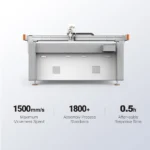
| Cutting Speed | 0–2000 mm/s |
| Maximum Cutting Thickness | ≤ 30 mm |
| Cutting Accuracy | ±0.1 mm |
| Vacuum Pump Power | 9 kW |
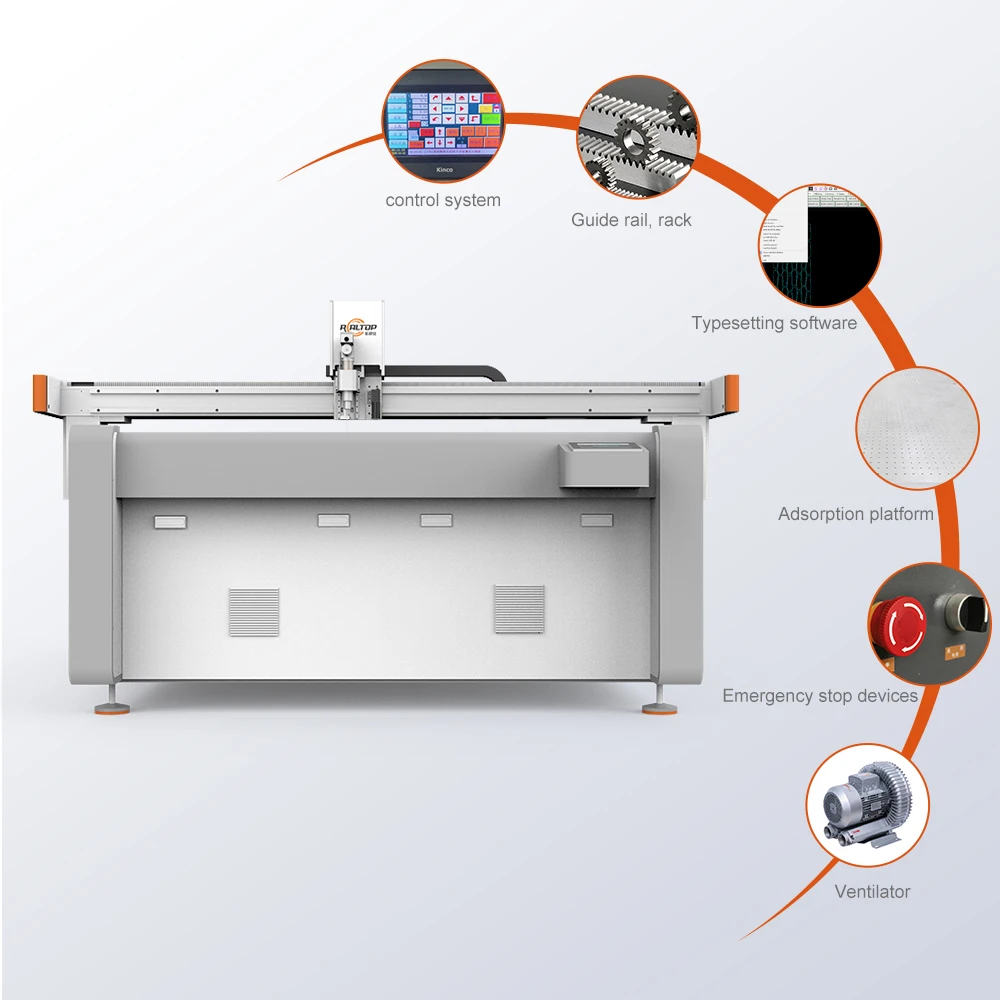
| Vacuum Table | Aluminum bellows vacuum table |
| Control System | PLC control panel with intuitive interface |
| Voltage Options | 110V / 220V / 380V (configurable per destination market) |
| Servo Motor Options | Panasonic, Delta, or Dorna servo drives |
| Supported File Formats | PLT, DXF, AI, PDF |
| Safety Devices | Infrared sensor device and emergency stop device |
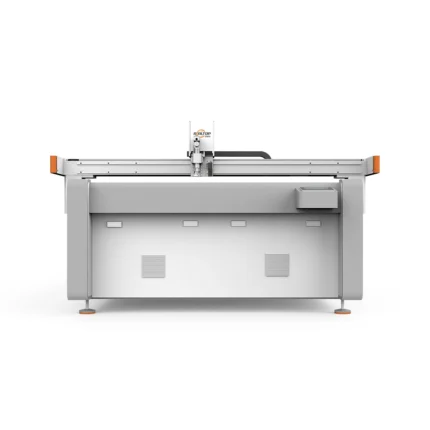
| Machine Dimensions | 3300 × 2100 × 1350 mm |
| Language Options | English, Russian, Italian, Chinese (special languages customizable) |
| Assembly State | Fully assembled |
| Certification | CE |
Application Suitability
| Application | Material or Output |
|---|---|
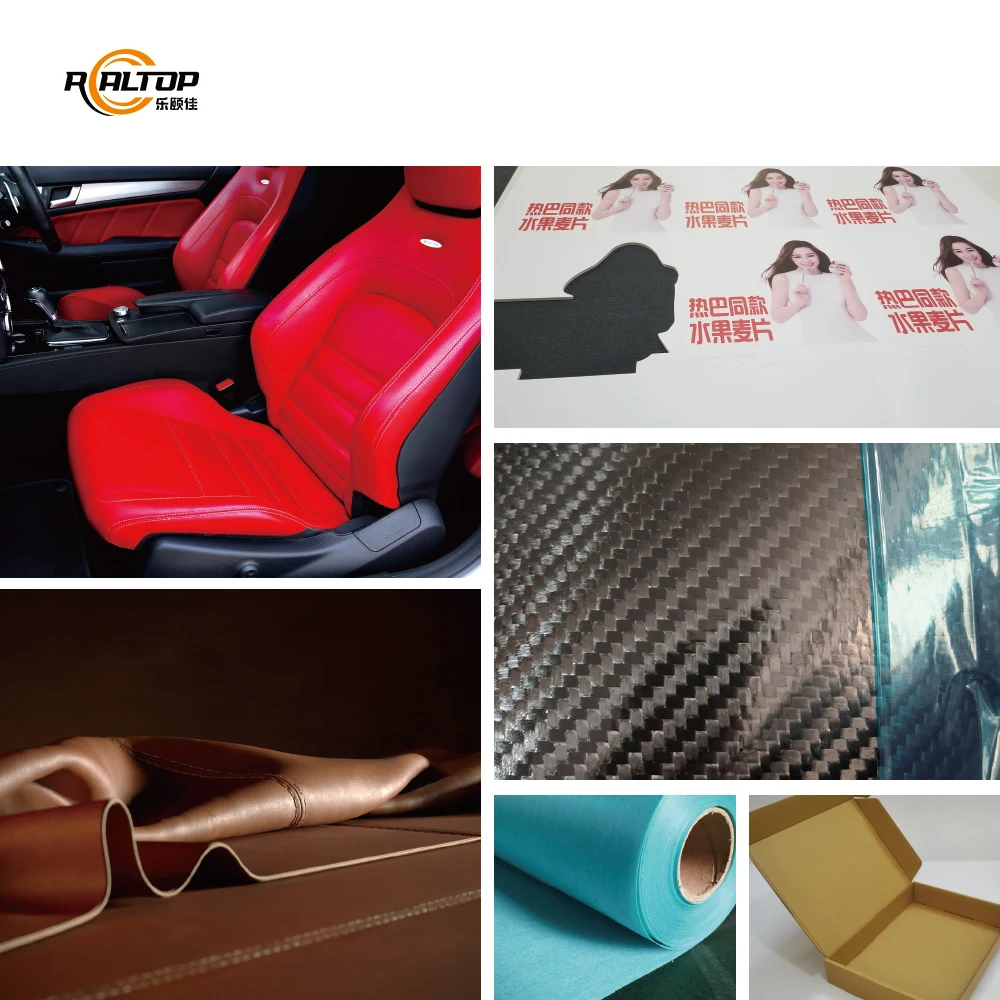
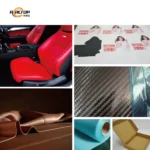
| Aerospace interior and insulation cutting | Carbon fiber prepreg, aramid honeycomb (Nomex), fiberglass cloth, ceramic fiber blankets, thermal and acoustic insulation foam |
| Automotive and rail vehicle interior production | Carbon fiber covers, FRP panels, acoustic felt, damping pads, floor carpets, sealing strips, seat foam |
| Wind energy blade material processing | Fiberglass cloth, carbon fiber cloth, vacuum infusion mesh, PET and PVC foam core materials, insulating sheets |
| Sporting goods and leisure equipment manufacturing | Carbon fiber sheets and fabric, Kevlar, high-performance foam, composite fabrics for helmet liners, surfboards, skis, and kayak components |
Why Material Thickness Alone Does Not Determine the Right CNC Oscillating Knife Cutting Machine for Composites
Specifying a cutter by working area without matching tool head to material structure leads to delamination, frayed edges, and scrapped composite layups.
I once worked with a buyer cutting acoustic insulation panels for automotive headliners. The material was a multi-layer sandwich — soft foam core bonded to a fiberglass skin. They had selected a machine based purely on the 1600 × 2500 mm bed size, assuming any oscillating knife would handle it. The default blade crushed the foam and tore the skin layer apart. Only after switching to a driven rotary knife with adjusted oscillation frequency did the edges come out clean. Composite materials are not uniform — carbon fiber prepreg behaves nothing like Nomex honeycomb, and a 30 mm acoustic foam block requires different tooling than a 2 mm fiberglass cloth [NEED_CITE: tool head selection criteria for layered composite materials].
Cold Cutting Preserves Resin Integrity Across Composite Structures
Thermal cutting methods like laser or hot wire introduce heat into resin matrices, causing melting, scorching, or delamination at the cut edge. The CNC Oscillating Knife Cutting Machine for Composites operates entirely without heat, preserving the chemical and structural properties of prepreg resins, thermoplastic binders, and foam cores. This matters most in aerospace and automotive applications where cut edges may undergo subsequent bonding or lamination — any thermal degradation at the edge compromises adhesion strength in the finished assembly.
Tool Head Interchangeability Matches the Cutting Action to Material Density
The 1625 platform supports seven distinct tool head types, each addressing a different composite behavior. Oscillating knives handle soft, fibrous materials like acoustic felt and insulation foam by vibrating the blade at high frequency to slice through without dragging. Driven rotary knives shear through tougher woven fabrics such as fiberglass cloth and carbon fiber sheets. Milling tools and V groove knives address rigid composite boards where scoring or grooving is needed for folding or panel joining. Pneumatic knives offer adjustable downward force for materials where consistent pressure prevents layer separation during the cut [NEED_CITE: comparative cutting methods for composite material processing].
Reading the Specification Sheet for Real Production Impact
The 9 kW vacuum pump paired with the aluminum bellows vacuum table is not just a holding mechanism — it addresses a specific problem in composite cutting. Flexible materials like vacuum infusion mesh and fiberglass cloth tend to lift and shift during high-speed knife travel. The aluminum bellows design provides high flatness across the 1600 × 2500 mm surface, maintaining uniform suction distribution so thin, lightweight composite fabrics stay registered throughout the cut path. The ±0.1 mm cutting accuracy specification means that nested patterns — common when cutting automotive headliner blanks or aerospace gasket profiles from expensive prepreg — maintain dimensional consistency across production runs. At cutting speeds up to 2000 mm/s, throughput on thin materials like 2 mm fiberglass cloth is substantially higher than on 30 mm acoustic foam blocks, where the knife must penetrate deeper and oscillation frequency must be balanced against edge quality.
What Happens When the Vacuum Table Zoning Does Not Match Your Part Size
Buyers often test machines with large, full-sheet composite panels that sit flat under vacuum without issue. Production reality involves cutting dozens of smaller gaskets, insulation pads, or interior trim blanks from a single sheet. If the vacuum table zoning does not create sufficient suction in the areas where small parts are located, those parts lift during the final cuts — producing dimensional drift or, worse, catching the knife and tearing the material. This is not a software problem; it is a mechanical adsorption design question that must be verified on the buyer’s actual nesting layout before the machine ships [NEED_CITE: vacuum table zoning requirements for small-part composite cutting].
Why Sourcing Composites Cutting Equipment from a Knife-and-Laser Manufacturer Matters
Realtop operates in-house design and production for both knife and laser cutting systems, which means the recommendation to use oscillating knife rather than laser for a given composite is based on material science rather than available inventory. Tool head and table configurations are specified per material type and production volume — not defaulted to a standard package. Every CNC Oscillating Knife Cutting Machine for Composites ships with a sample cutting report generated on the buyer’s own material, documenting edge quality, cutting depth achieved, and any delamination observed. Voltage, plug type, and control language are confirmed before production begins, eliminating the post-delivery discovery that a 380V machine arrived in a 220V workshop. The PLC control panel supports multiple languages including English, Russian, Italian, and Chinese, with special language customization available for operators who need instructions in their native interface.
Documentation & Verification
- Machine specification sheet with confirmed voltage and tool head configuration for your composite material
- Sample cutting report on your carbon fiber, honeycomb, or foam material before order commitment
- Factory test record documenting cutting accuracy and vacuum table performance across the full work area
- Electrical schematic with voltage confirmation matching destination market requirements
- Software license and file format compatibility note for PLT, DXF, AI, and PDF workflows
- Spare parts list identifying blade types and wear components specific to your configured tool heads
Installation, Commissioning & Support
- Machine arrives fully assembled at 3300 × 2100 × 1350 mm — verify workshop door clearance and floor load capacity before delivery
- Dedicated electrical circuit required matching confirmed voltage option (110V, 220V, or 380V) and the 9 kW vacuum pump draw
- PLC control panel configured to selected operator language before dispatch, with on-site parameter tuning during commissioning
- First-run calibration includes vacuum table flatness verification and cutting accuracy check at ±0.1 mm on your composite material
- Tool head changeover training covering all configured options — oscillating knife, rotary knife, milling, and V groove as applicable
- Blade and knife consumables identified per material type with recommended replacement intervals included in maintenance manual
Preparing Your Inquiry for a Composite Cutting Solution
Send your material type, maximum thickness, and typical sheet or roll dimensions so the correct tool head and vacuum table configuration can be specified. Include your daily production volume and nesting layout to determine whether the 1600 × 2500 mm working area accommodates your part mix efficiently. Confirm your workshop voltage, frequency, and preferred control language so the machine ships ready for immediate commissioning without electrical modifications.
Frequently Asked Questions
Q: How is the correct tool head selected for my specific composite material?
A: Tool head selection depends on material density, layer structure, and thickness. Soft fibrous materials like acoustic felt use oscillating knives to prevent dragging, while woven fiberglass and carbon fiber sheets require driven rotary knives for clean shearing. Rigid composite boards may need milling or V groove tools. We run sample cuts on your actual material to confirm the right tool head before finalizing the machine configuration.
Q: Can the vacuum table hold small composite parts securely during high-speed cutting?
A: The aluminum bellows vacuum table is designed for high flatness and uniform suction across the entire 1600 × 2500 mm surface. For production layouts with many small parts, vacuum zoning must be evaluated against your specific nesting pattern. We verify adsorption performance on your actual cutting layout during the sample testing phase to ensure no part lift occurs.
Q: What is the practical cutting thickness range for different composite materials?
A: The machine handles up to 30 mm thickness, but achievable depth varies by material hardness. Soft insulation foam cuts cleanly at full 30 mm depth, while rigid carbon fiber board typically requires shallower passes or milling tool configurations. Cutting speed also decreases with thickness — thin fiberglass cloth processes faster than thick honeycomb core material.
Q: How do I verify cutting accuracy and edge quality before placing an order?
A: We require buyers to send their actual composite material for sample cutting. The resulting sample cutting report documents edge quality, dimensional accuracy against the ±0.1 mm specification, and any delamination or fraying observed. This report forms part of the order documentation and confirms the tool head and speed settings matched to your material.
Q: What voltage and control language options are confirmed before shipment?
A: Voltage is configurable across 110V, 220V, and 380V to match your workshop supply. Control language options include English, Russian, Italian, and Chinese, with special languages available on request. Both voltage and language are confirmed during the specification review stage before production begins, so no post-delivery modifications are needed.


Related products

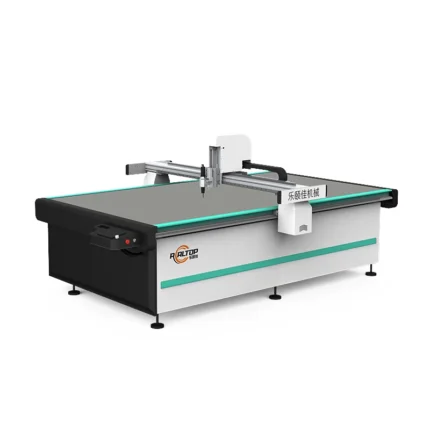

2026 Oscillating Knife Foam Insert Digital Packaging Cutter
Product Introduction
Designed for foam insert cutting, this 2026 Digital Packaging Cutter features oscillating knife technology, ideal for precise digital packaging applications with efficient cutting performance.Product Parameters
| Parameter | Details |
|---|---|
| Type | Oscillating Knife Cutting Machine |
| Application | Foam Insert Cutting |
| Model Year | 2026 |
| Category | Digital Packaging Cutter |
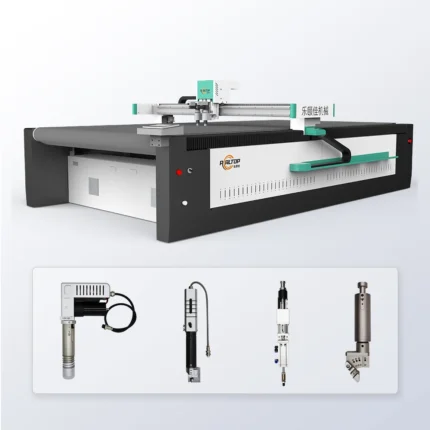

CNC Gasket Cutting Machine 2026 Digital Rubber Cutter High-Precision
Product Introduction
High-precision CNC gasket cutting machine with digital control, ideal for rubber materials. Features auto table operation for efficient, accurate cutting in industrial applications.
Key Specifications
| Type | CNC Gasket Cutting Machine |
| Function | Digital Rubber Cutter |
| Precision | High-Precision |
| Operation | Auto Table |
| Model Year | 2026 |
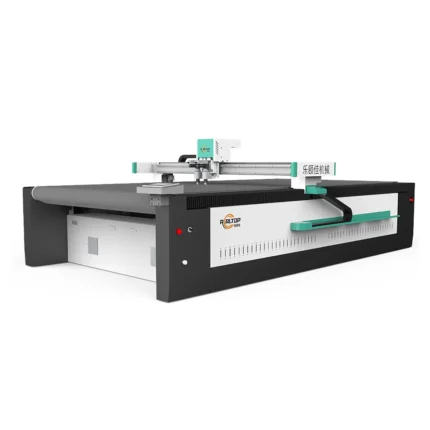
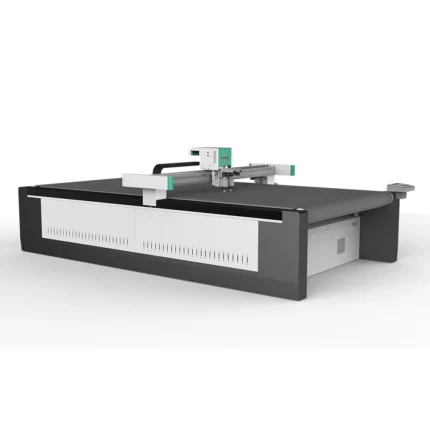
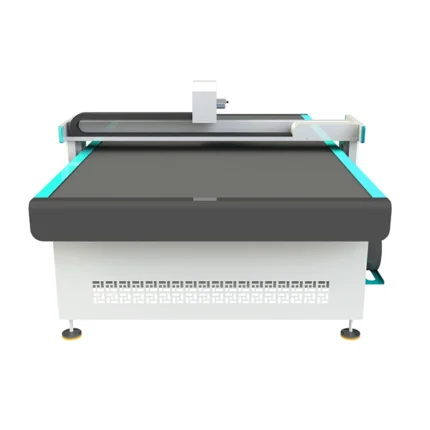
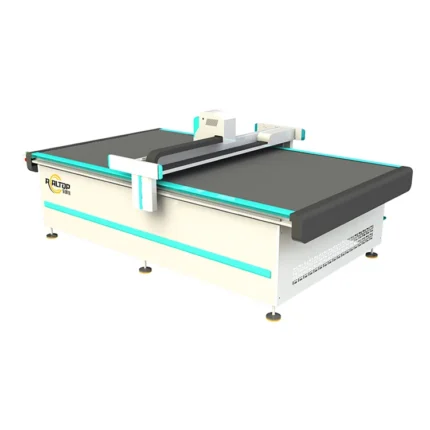
Oscillating Knife Cutter 2500x1600mm Composite Material Cutter
Product Introduction
Designed for composite materials processing, this oscillating knife cutter features a large 2500x1600mm working area, ensuring efficient handling of various composite material cutting tasks with precision and reliability.Product Parameters
| Working Area | 2500x1600mm |
| Cutting Type | Oscillating Knife |
| Application | Composite Materials |
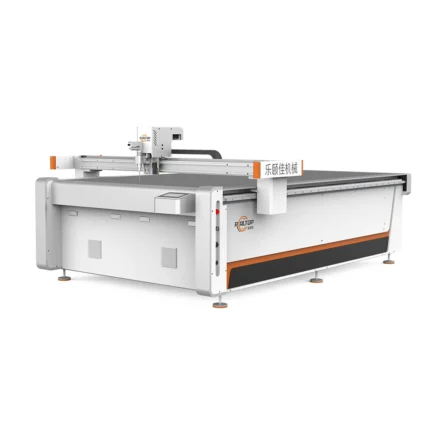
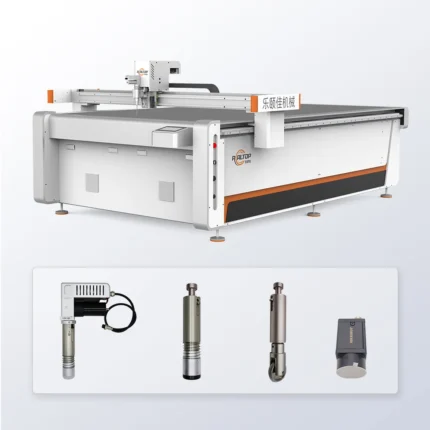
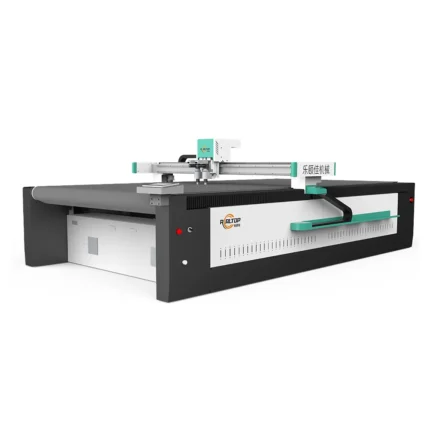
Realtop CNC Felt Panel Cutter 2026 Auto Digital Flatbed PET Cutter
Product Introduction
Realtop CNC Felt Panel Cutter 2026 is an auto digital flatbed designed for precise cutting of PET acoustic sheets, ideal for efficient and accurate fabrication in acoustic panel production.Key Specifications
| Model | Realtop CNC Felt Panel Cutter 2026 |
| Type | Auto Digital Flatbed Cutter |
| Application | PET Acoustic Sheets |
| Function | Precision Cutting |
商品评价
There are no reviews yet.