



Auto Flatbed Cutter for Fabric Leather – Specifications
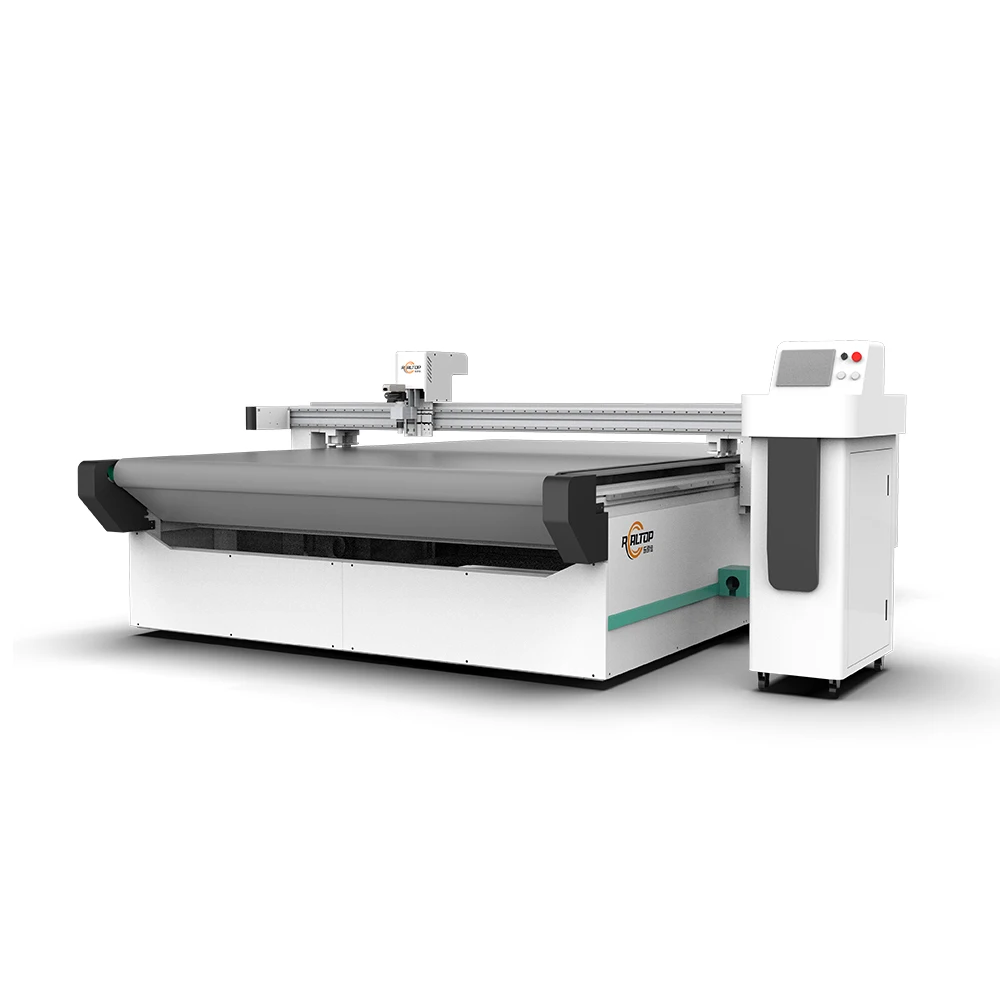
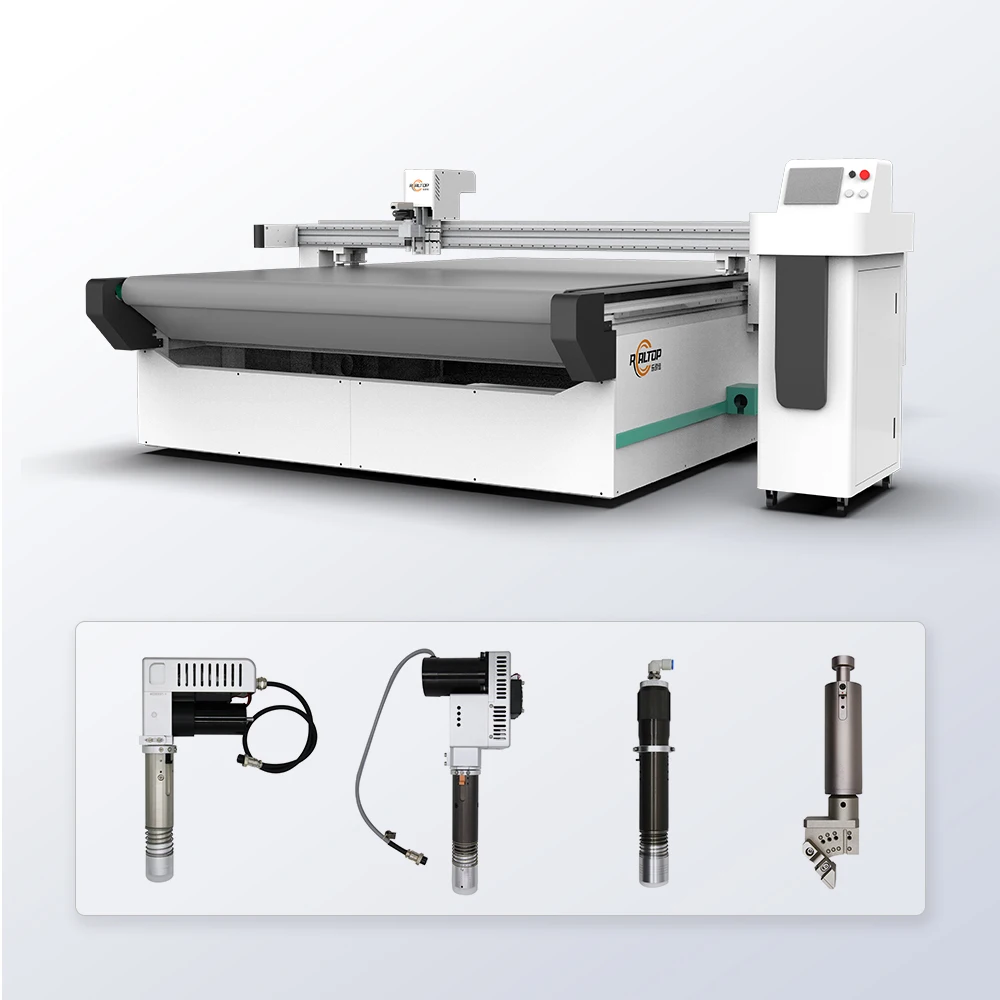
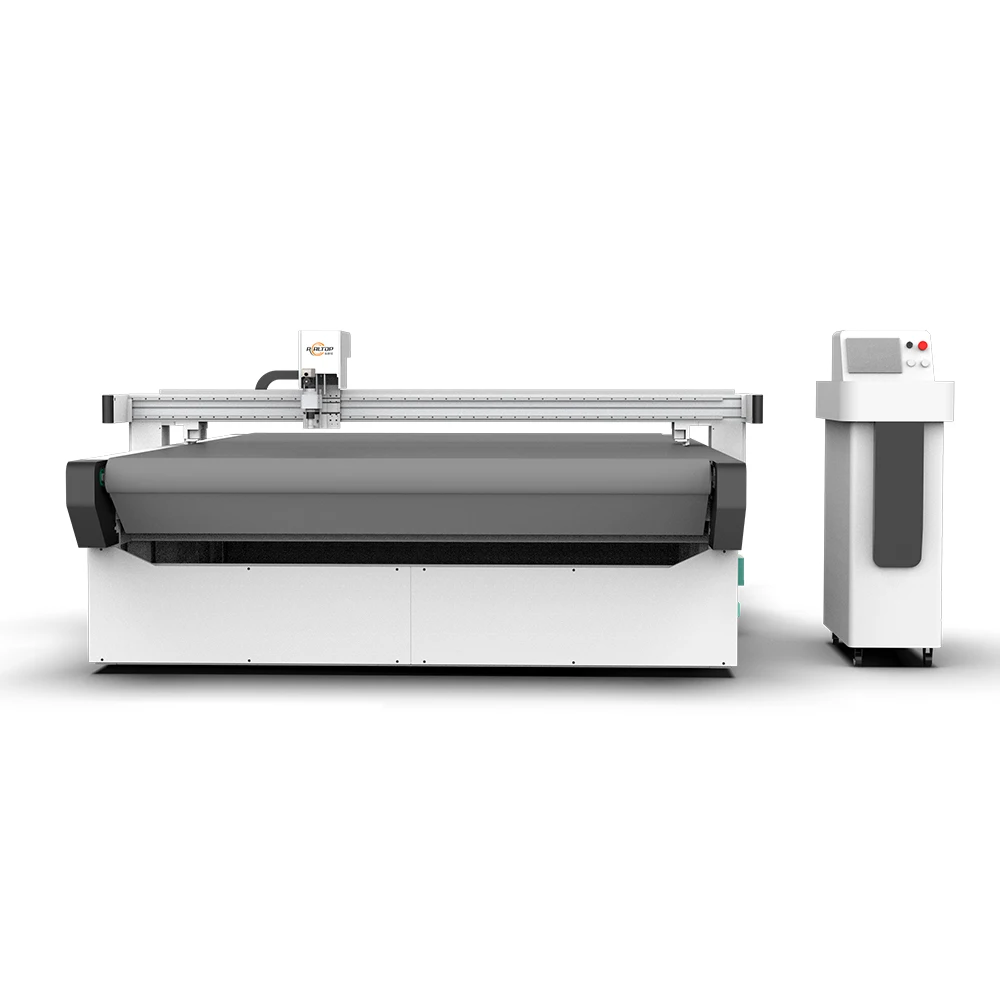
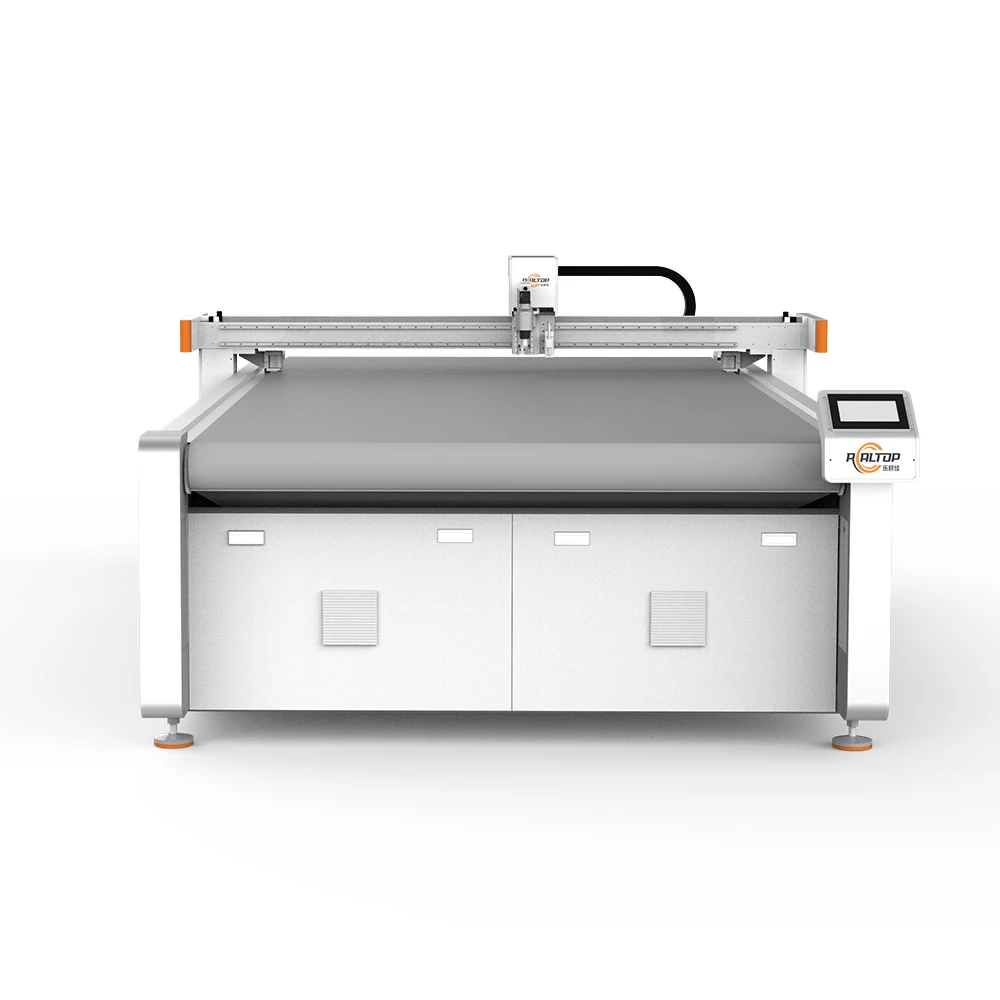
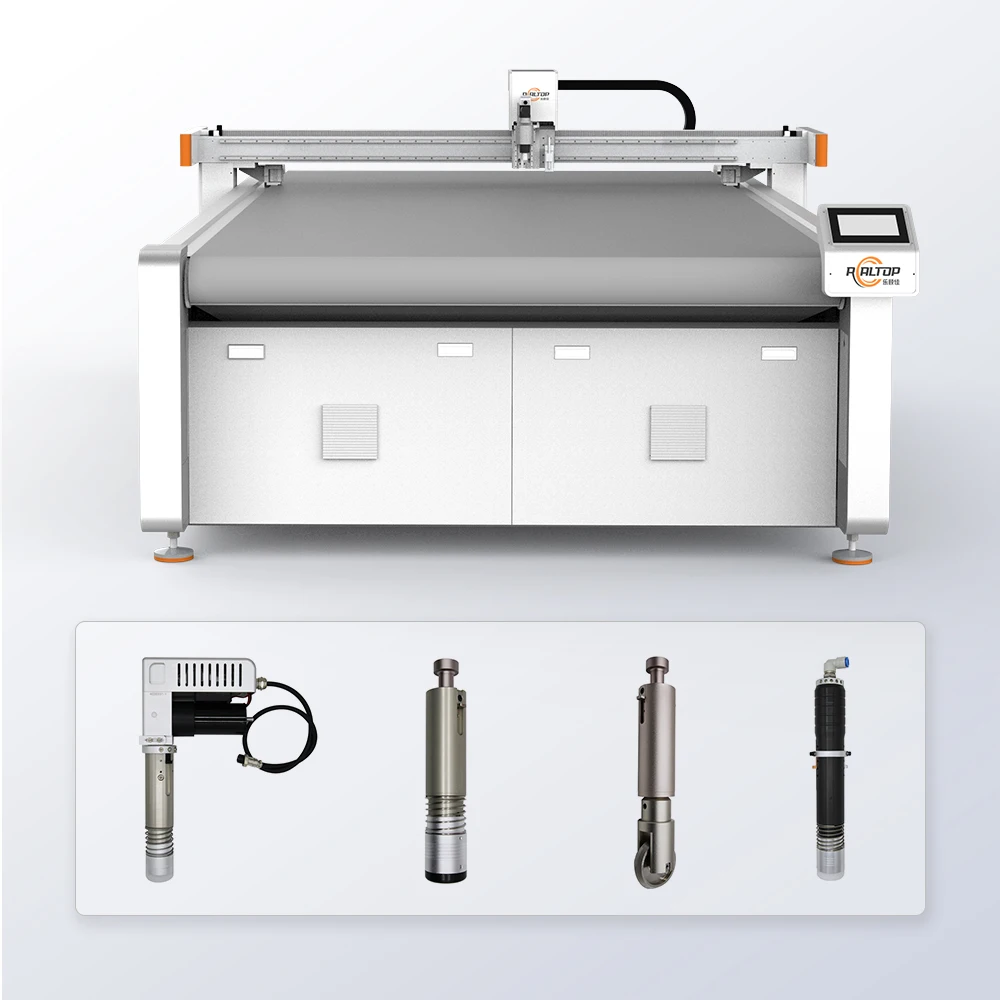
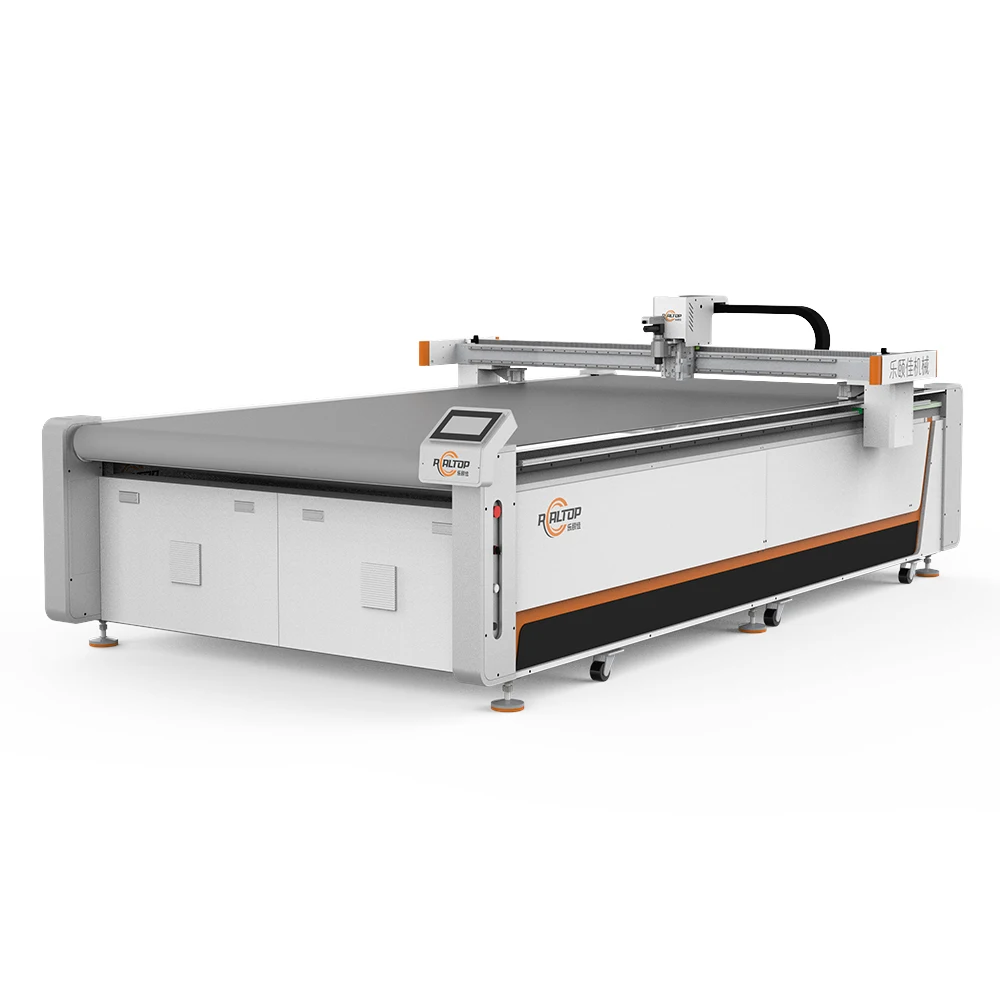
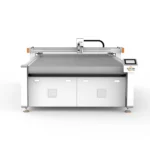
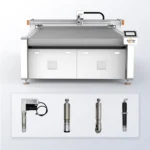
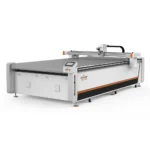
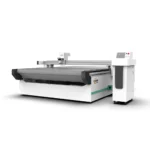
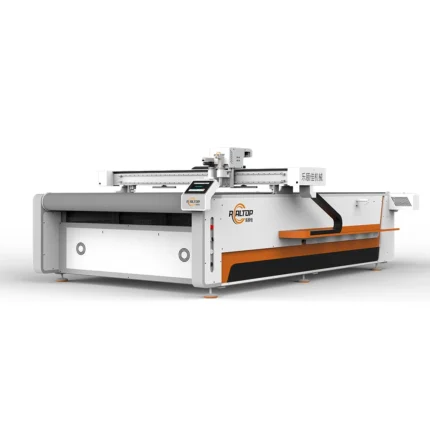
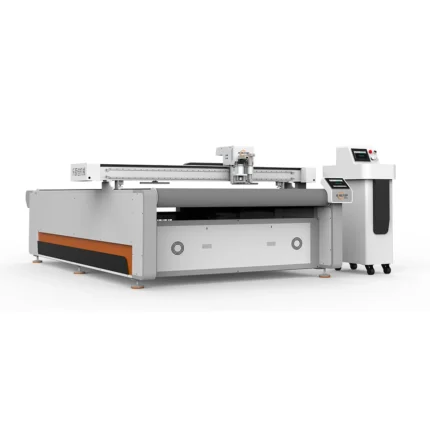
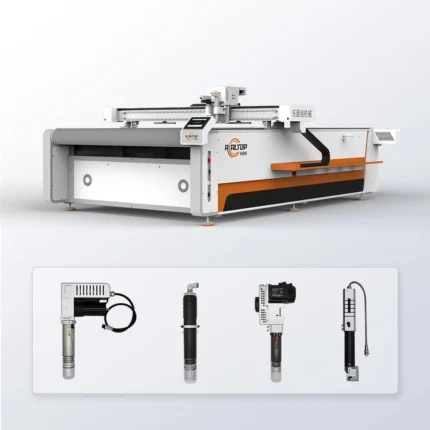
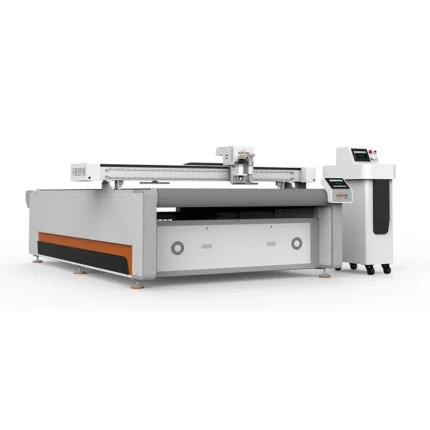
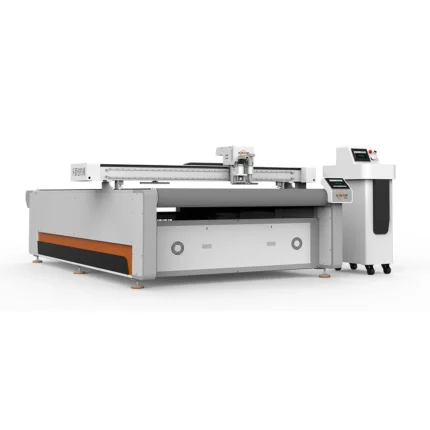
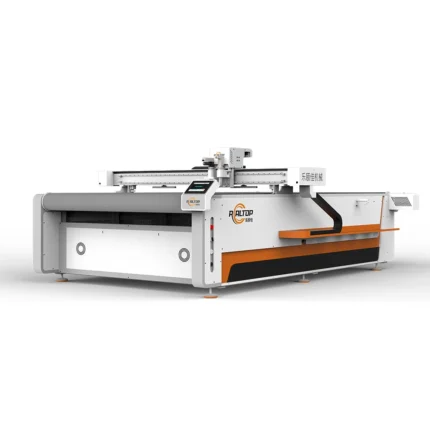
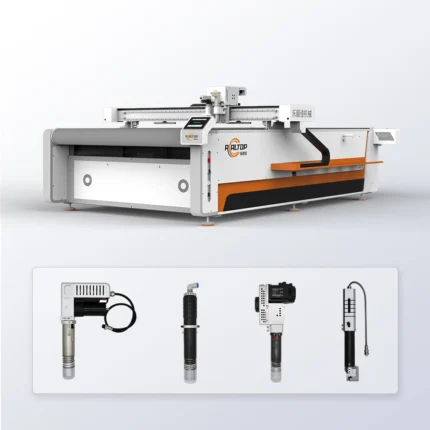
CNC Oscillating Knife Cutting Machine, 1600×2500 mm Working Area, ≤30 mm Cutting Thickness — configured with interchangeable tool heads including oscillating knife, driven rotary knife and creasing wheel, matched to fabric, leather or composite material requirements.
- Aluminum bellows vacuum table with full-surface adsorption prevents material lift on small part geometries
- ±0.1 mm cutting accuracy delivers smooth edges requiring no secondary trimming across multi-layer knits, wovens and technical textiles
- PLC control with DXF/PLT/AI/PDF import supports direct nesting workflow in English, Russian, Italian or custom languages
Sample cutting on your own material confirms edge quality, thickness handling and speed before commitment.
Material-Matched Cutting Configuration — Every Auto Flatbed Fabric Cutter leaving our Jinan workshop is tuned to the buyer’s actual fabric thickness, layer count and edge requirement, not just a generic working area.
Technical Specifications
| Parameter | Value |
|---|---|
| Product Type | CNC Oscillating Knife Cutting Machine |
| Working Area | 1600×2500 mm |
| Cutting Speed | 0–2000 mm/s |
| Cutting Thickness | ≤ 30 mm (basis to be confirmed by material type and layer count) |
| Cutting Accuracy | ±0.1 mm (basis to be confirmed by repeatability test standard) |
| Vacuum Pump Power | 9 kW |
| Voltage Options | 110V / 220V / 380V (50Hz/60Hz to be confirmed) |
| Available Tool Heads | Oscillating knife, Driven rotary knife, Creasing wheel, Kiss cutting tool, Pneumatic knife, Milling tool, V-groove knife |
| Vacuum Table Type | Aluminum bellows vacuum table |
| Control System | PLC with optional display languages |
| Servo Drive Options | Panasonic, Delta, Dorna (source value — verify against manufacturer catalog) |
| Compatible File Formats | PLT, DXF, AI, PDF |
| Safety Devices | Infrared sensor, Emergency stop |
| Machine Dimensions (L×W×H) | 3300×2100×1350 mm |
Application Suitability
| Application | Material or Output |
|---|---|
| Apparel manufacturing | Multi-layer knits, wovens, lace, complex patterned fabrics |
| Automotive interiors | Seat fabrics, carpets, PVC mats, composite sound-deadening layers |
| Home textiles | Sofa fabrics, curtains, rugs, plush materials |
| Composite processing | Carbon fiber prepreg, aramid, PTFE, specialty technical textiles |
| Footwear and leather goods | Leather, synthetic leather, EVA foam, rubber sheets |
Why Material Thickness Changes the Machine You Actually Need
A working area figure tells you nothing about how the blade engages your material at full depth.
I watched a buyer specify a flatbed cutter based purely on table size, only to discover during commissioning that the oscillating knife head could not penetrate his high-density acoustic insulation at the required edge quality. The edges compressed instead of cutting cleanly, and an entire production run of automotive interior panels had to be scrapped. The issue was never the machine frame or motion system — it was a tool head mismatch confirmed too late. This CNC oscillating knife fabric cutting machine manufacturer builds each unit with interchangeable heads precisely because a driven rotary knife behaves fundamentally differently on woven kevlar than a pneumatic knife does on closed-cell foam [NEED_CITE: tool head selection criteria for technical textiles].
The real question before any purchase is whether the cutting method suits the material, not whether the table is large enough. That verification happens during sample cutting on the buyer’s own stock, before a purchase order is signed.
Tool Head Selection Drives Edge Quality
Seven interchangeable tool heads are available, and choosing the wrong one produces visible defects that no amount of software correction fixes. An oscillating knife handles dense woven materials and mid-thickness foams with clean vertical cuts, while a driven rotary knife suits single-ply knits and stretch fabrics where blade drag would distort the pattern. Pneumatic knife heads cut through thicker stacks where blade stroke alone is insufficient. Each head mounts to the same carriage, so production facilities running mixed material orders can switch without re-fixturing the table.
Vacuum Table Zoning and Small-Part Stability
The aluminum bellows vacuum table delivers full-surface adsorption across the 1600×2500 mm working area, but flatness matters most when cutting small components. Insufficient hold-down on nested parts causes material lift mid-cut, producing dimensional drift that accumulates across a batch. The 9 kW vacuum pump generates the suction required to keep lightweight knits and thin PVC locked to the table surface even at the 2000 mm/s upper cutting speed range [NEED_CITE: vacuum hold-down requirements for flexible materials on flatbed cutters]. Proper zoning ensures that only the active cutting zone draws vacuum, maintaining pressure where the blade is working.
What the Specification Sheet Actually Means for Your Floor
The ±0.1 mm cutting accuracy figure relates to positional repeatability of the servo-driven carriage — meaningful when nesting software places dozens of pattern pieces with tight margins. On apparel fabrics, this tolerance prevents overlapping cuts that waste material or under-cuts that leave tabs requiring manual trimming. The 30 mm maximum cutting thickness is a structural limit of the knife stroke mechanism, but actual usable thickness depends entirely on material density and layer count. A stack of lightweight knit fabric may cut cleanly at 25 mm, while a single layer of dense composite gasket material may require reduced speed well before reaching that limit. The PLC control system processes DXF, PLT, AI and PDF files directly, so buyers already running nesting software in those formats can import layouts without conversion. Servo drive options from Panasonic, Delta or Dorna allow buyers to specify a brand their local maintenance team already supports.
The Hidden Cost of Skipping Material Verification
When voltage, plug type and control language are not confirmed in writing before shipment, the machine arrives and sits idle while transformers are sourced or panels are rewired. When software compatibility is assumed rather than tested, the buyer discovers on day one that their existing nesting files will not import, forcing a workflow rebuild under production pressure [NEED_CITE: common import compatibility issues between nesting software and CNC controllers]. These are not machine defects — they are specification gaps that a sample cutting report and written configuration checklist eliminate before the build begins.
Why Buyers Source This Cutter From Our Workshop
In-house design and production cover the full knife cutting system, meaning the tool head, vacuum configuration and motion parameters are matched to the buyer’s material rather than adapted from a standard catalog. Sample cutting on the buyer’s actual fabric, foam or composite is completed before commitment, generating a report that documents edge quality, achievable thickness and realistic cutting speed. Voltage, frequency, plug type and control panel language are confirmed in writing and verified during factory testing. The machine ships with a complete documentation package so commissioning does not depend on waiting for emailed manuals.
Documentation & Verification
- Sample cutting report documenting edge quality and speed on your specific fabric or composite material
- Electrical schematic with voltage, frequency and plug type confirmed for your facility
- Tool head and vacuum table configuration list matched to your material and daily volume
- Software licence documentation with verified DXF, PLT, AI and PDF file format compatibility
- Factory test record showing cutting accuracy and motion performance before crating
Installation, Commissioning & Support
- Floor space of at least 4000×3000 mm required to accommodate the 3300×2100 mm machine frame plus operator access
- Dedicated electrical circuit matching confirmed voltage (110V/220V/380V) and the 9 kW vacuum pump load
- Machine ships partially assembled; table frame and gantry require on-site alignment and leveling
- First-run parameter tuning includes vacuum pressure adjustment, blade depth setting and speed calibration on your material
- Operator training covers tool head changeover, PLC language selection and file import workflow
- Spare blade stock and wear-part list provided based on your material abrasiveness
Before You Request a Quote
Send us your material type, typical thickness range and the largest sheet dimension you process daily. Tell us your local voltage and frequency standard, preferred control panel language, and whether your existing nesting workflow uses DXF, PLT, AI or PDF files. If your material is a proprietary composite or coated textile, ship a sample roll so we can run cutting tests and return a configuration recommendation with documented results.
Frequently Asked Questions
Q: How is cutting thickness verified for my specific fabric or composite material?
A: We run sample cuts on your actual material before any order is confirmed. The test documents maximum clean-cut thickness, edge quality at various speeds, and whether the material compresses or delaminates under the blade. Results are compiled into a sample cutting report so you know the machine’s real capacity on your stock, not a generic rating.
Q: Which tool head is correct for my material — oscillating knife, rotary knife or pneumatic?
A: Oscillating knives suit dense wovens and mid-thickness foams. Driven rotary knives handle stretch knits and single-ply fabrics where blade drag causes distortion. Pneumatic knives penetrate thick stacks that exceed oscillating stroke limits. We determine the right head during sample testing on your material, and multiple heads can mount to the same carriage for mixed-order production.
Q: Can the vacuum table zoning handle my small part geometry without material lift?
A: The aluminum bellows table with its 9 kW pump generates full-surface hold-down, but small nested parts require proper zone management. During sample testing we verify that your smallest pattern pieces remain flat at cutting speed. If zoning adjustments are needed for your specific layout, the configuration is documented before shipment.
Q: What voltage, frequency and control language will be configured before shipment?
A: All three are confirmed in writing before production begins. The machine supports 110V, 220V and 380V configurations, and the PLC control panel can display in English, Russian, Italian, Chinese or other requested languages. We verify compatibility with your facility’s electrical standard and document the exact configuration in the shipping paperwork.
Q: How do I confirm software compatibility with my existing DXF/PLT/AI file workflow?
A: Send us a sample file from your current nesting software before ordering. We load it into the cutter’s control system and verify import, scaling and toolpath generation. The results are documented in a software compatibility note included with your machine documentation, so there are no surprises on the first production day.


Related products
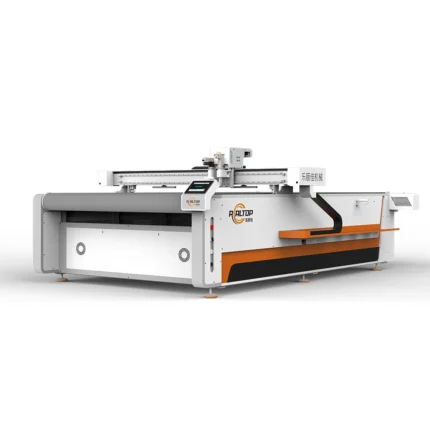
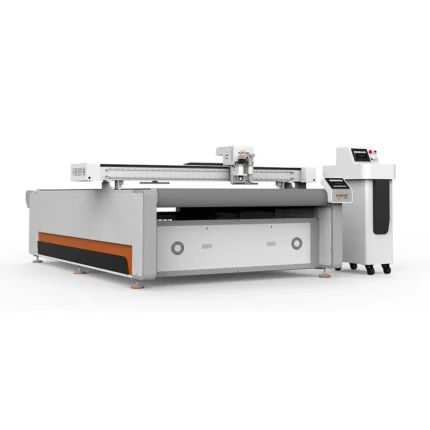
2026 Auto CNC Cloth Cutting Machine High-Precision Fabric Leather Plotter
Product Introduction
2026 Auto CNC Cloth Cutting Machine, a high-precision fabric & leather plotter designed for efficient cutting. Ideal for textile and leather industries with advanced CNC technology.
Key Specifications
| Model | Auto CNC Cloth Cutting Machine 2026 |
| Application | Fabric & Leather |
| Precision | High-Precision Cutting |
| Type | CNC Plotter |
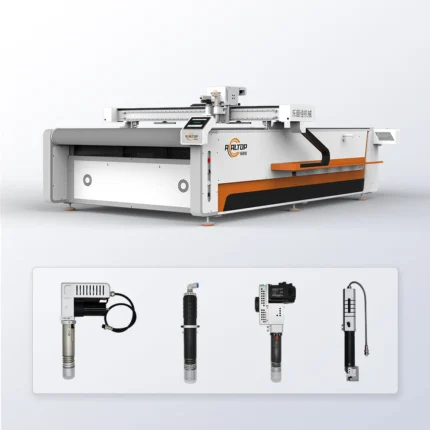
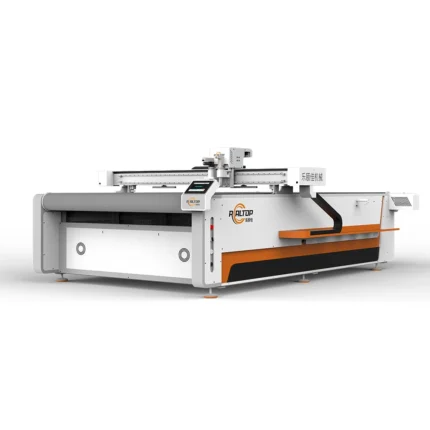
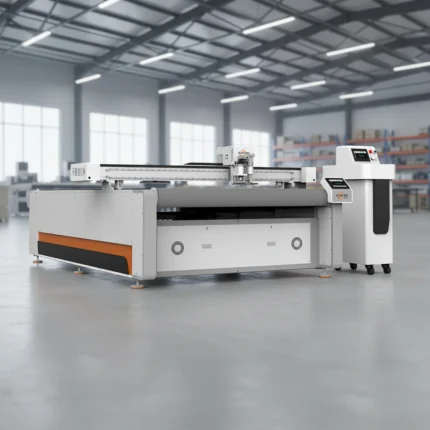
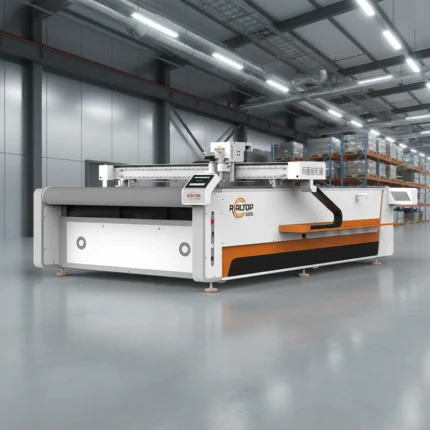
2026 CNC Knife Cutting Machine for Fabric Leather PVC Hot Sale
Product Introduction
2026 Hot Sale CNC Knife Cutting Machine for Fabric, Leather, PVC. Ideal for precise cutting of various materials with advanced CNC technology, perfect for manufacturing needs.
Product Parameters
| Application | Fabric, Leather, PVC |
| Type | CNC Knife Cutting Machine |
| Feature | Precision Cutting |
| Year | 2026 Model |
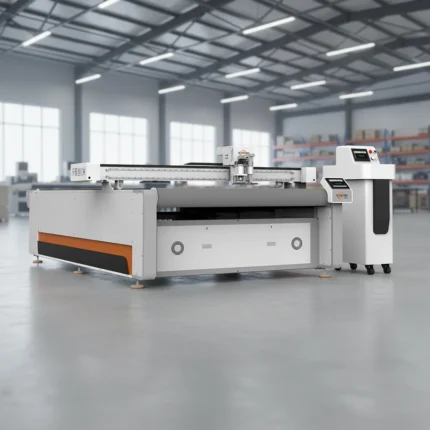
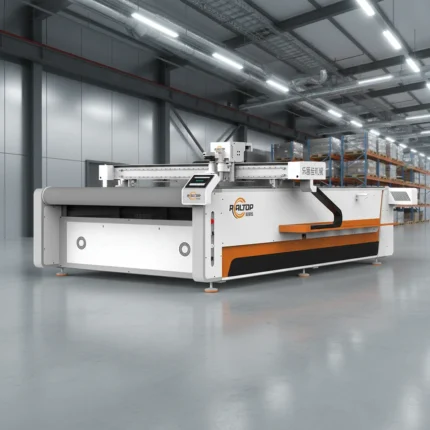
2026 Inflatable Surf SUP Board Cutting Machine
Product Introduction
Ideal for inflatable surf SUP board production, this 2026 cutting machine ensures precise and efficient cutting, tailored for manufacturers seeking reliable performance in water sports equipment manufacturing.
Specifications
| Application | Inflatable Surf SUP Board |
| Type | Cutting Machine |
| Model Year | 2026 |
CNC Vibration Knife System 2026 for Polyester Nylon Non-Woven Prepreg
Product Introduction
CNC Vibration Knife System 2026 is ideal for cutting polyester, nylon, non-woven fabrics, and prepreg materials with precision and efficiency, suitable for industrial manufacturing needs.Product Parameters
| Model | 2026 |
| Cutting Technology | CNC Vibration Knife |
| Materials | Polyester, Nylon, Non-Woven, Prepreg |

Jinan Realtop PVC Cutting Machine 2026 CE Certified
Product Introduction
Jinan Realtop PVC Cutting Machine 2026 is a CE-certified cutting solution, ideal for precise PVC material processing. Designed for efficiency and reliability in industrial applications.Product Parameters
| Model | 2026 |
| Certification | CE Certified |
| Application | PVC Cutting |
| Manufacturer | Jinan Realtop |
商品评价
There are no reviews yet.