



CNC Cardboard Box Cutting Machine 2026 Oscillating Knife V-Grooving – OEM Available
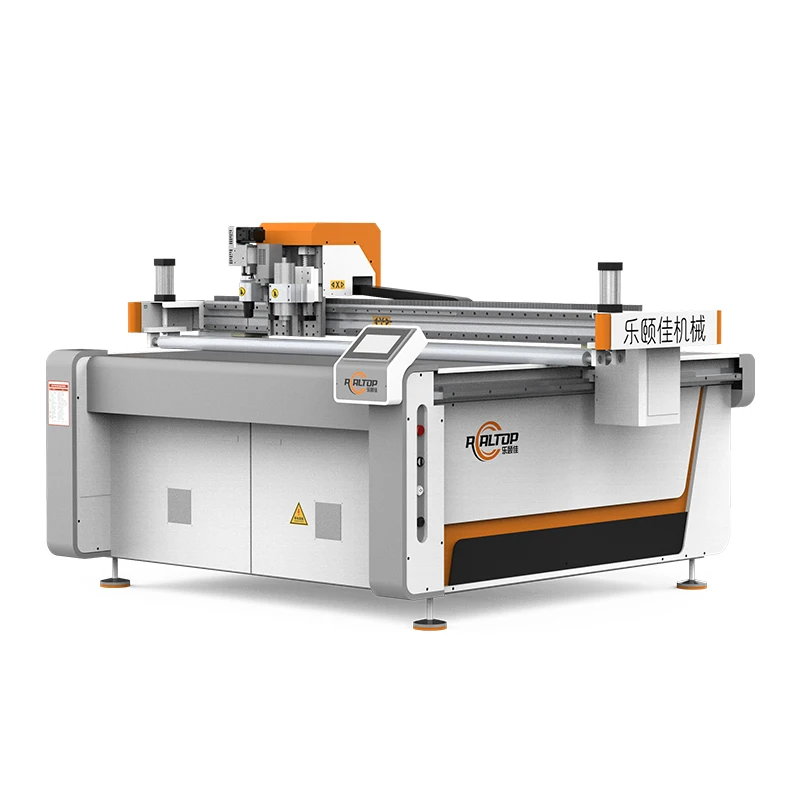
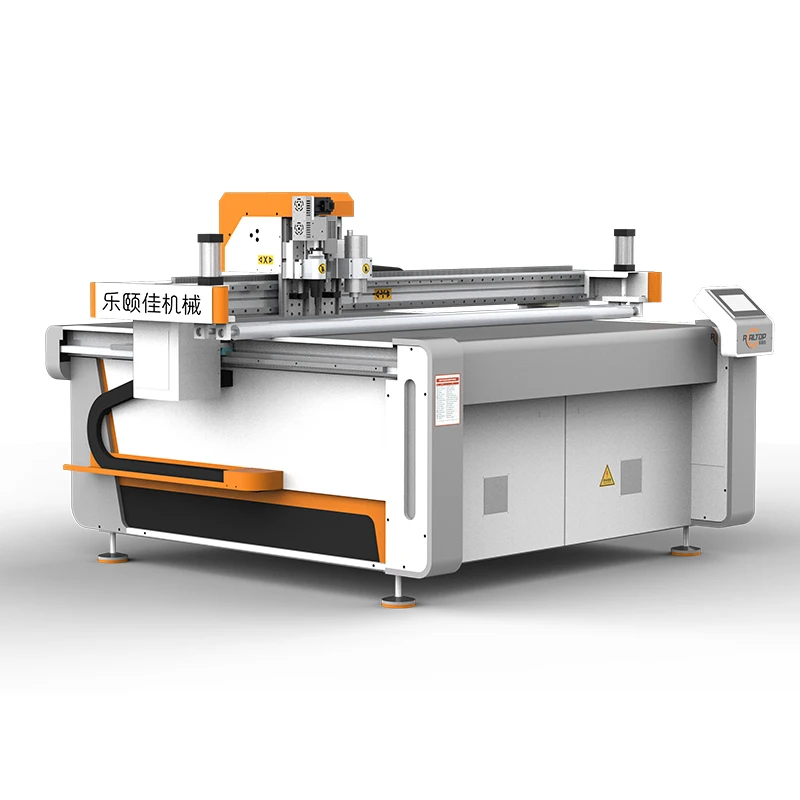
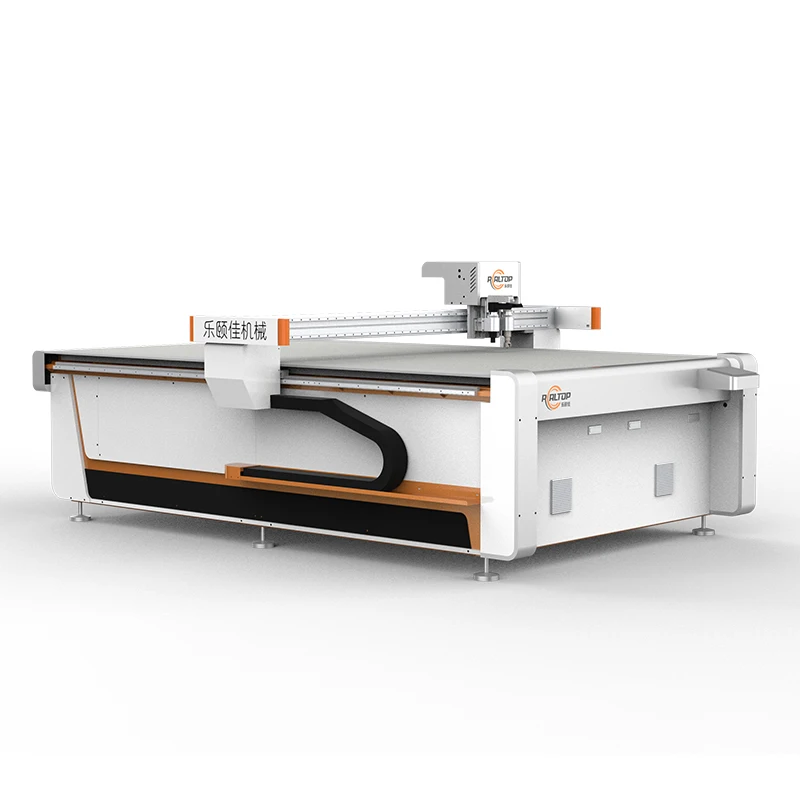
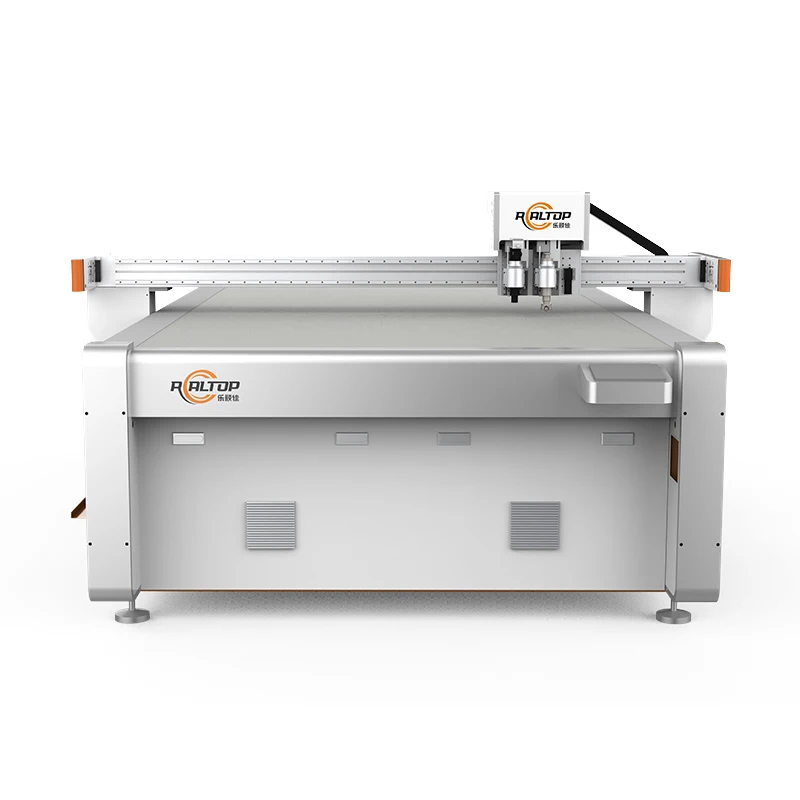
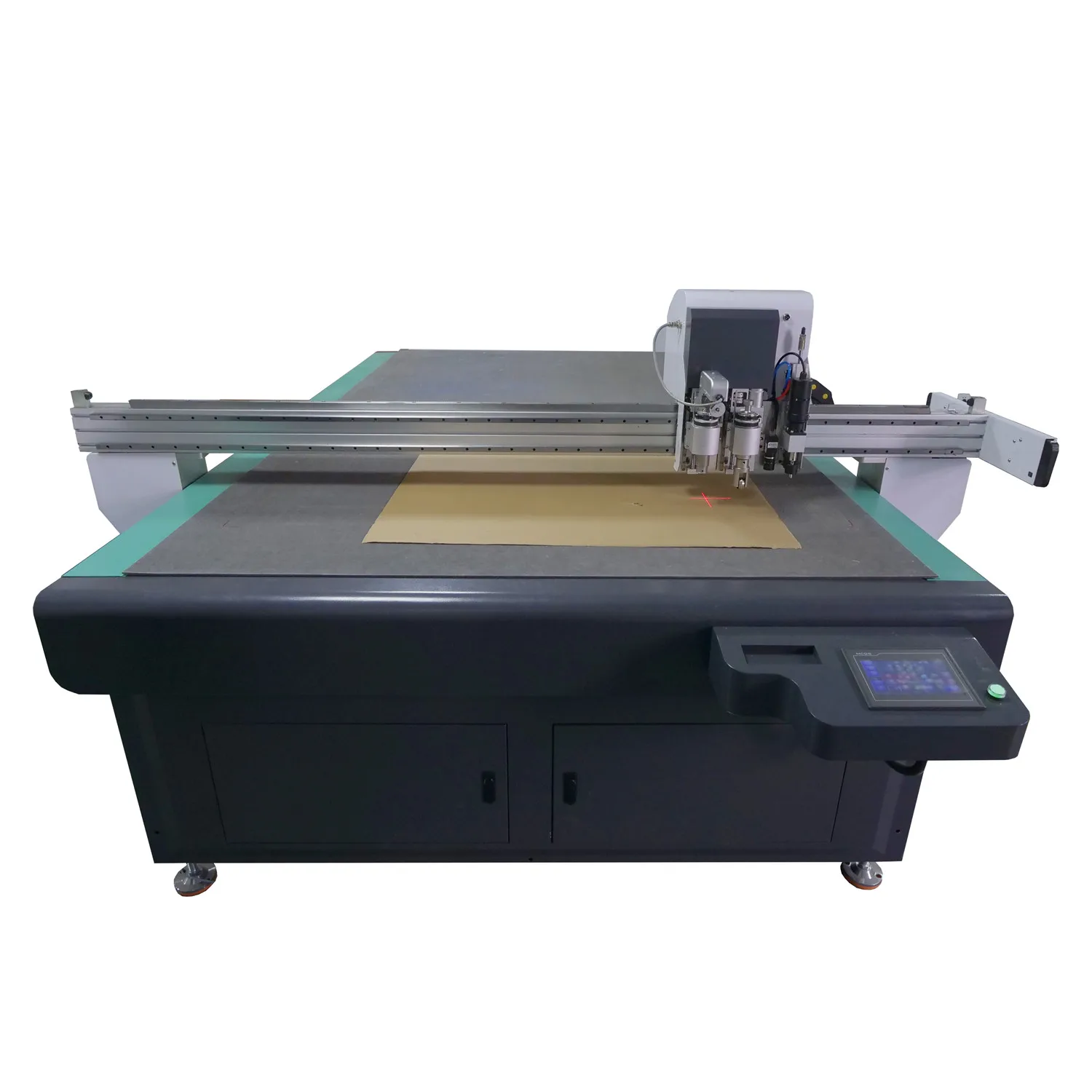
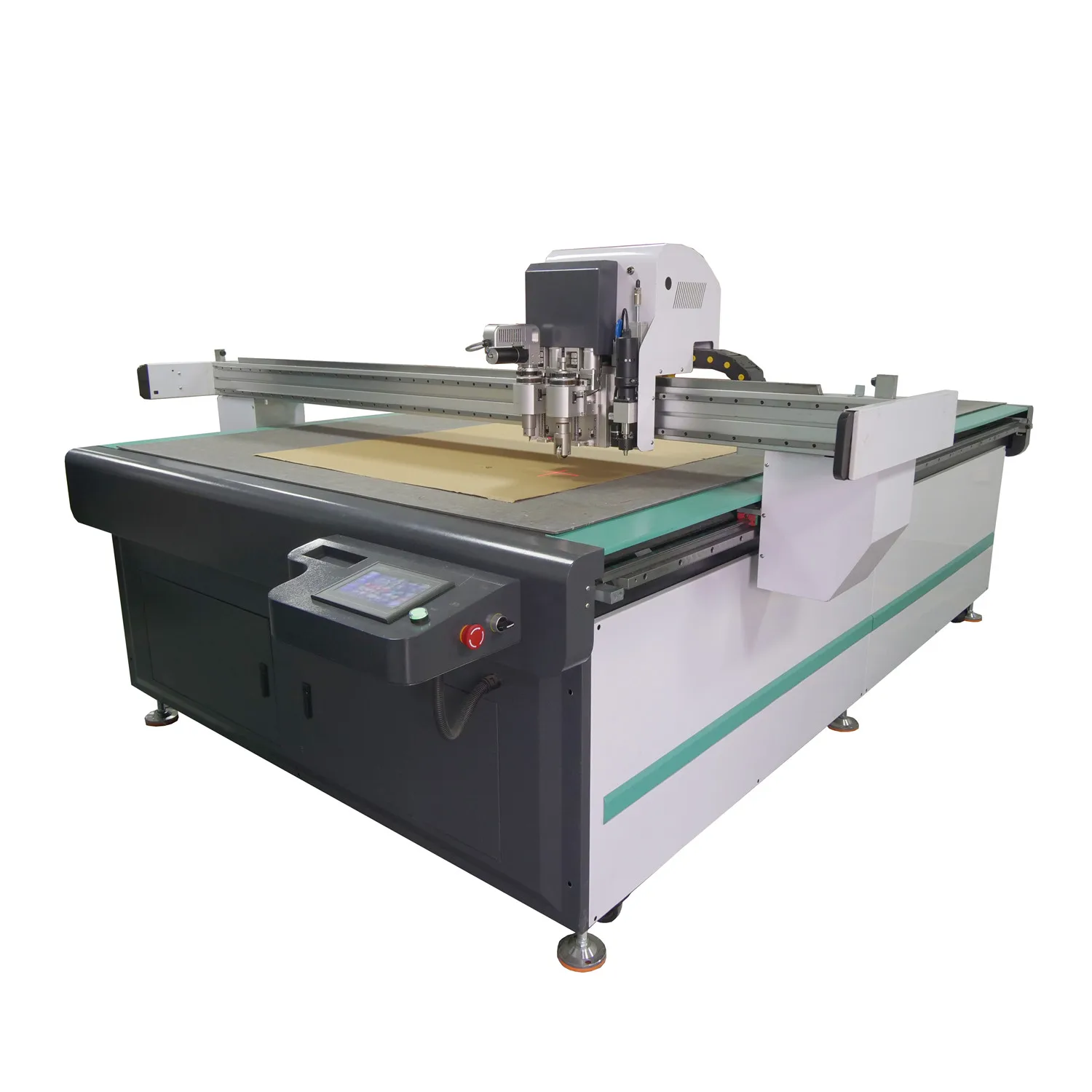
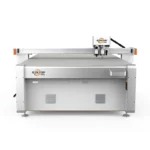
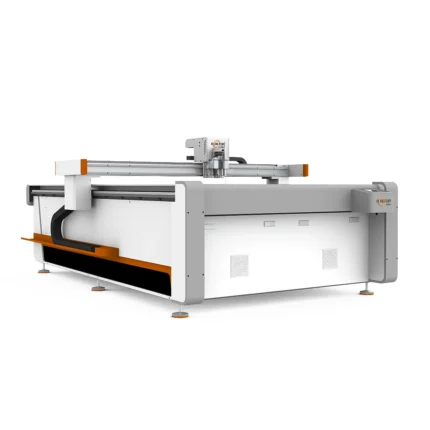
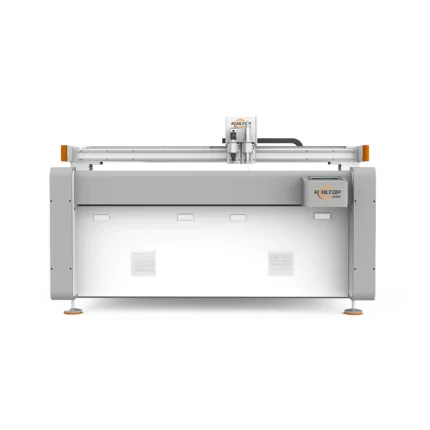
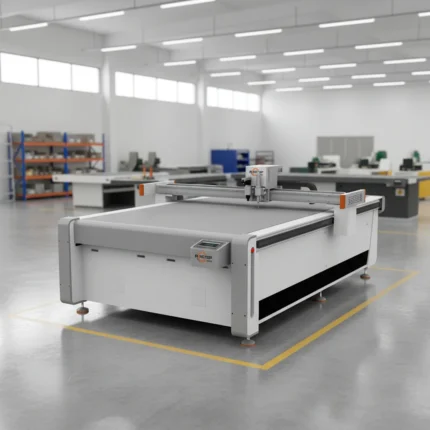
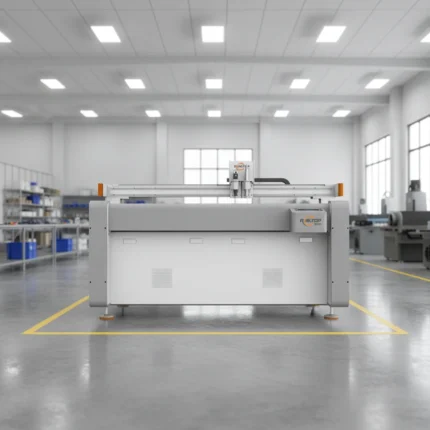
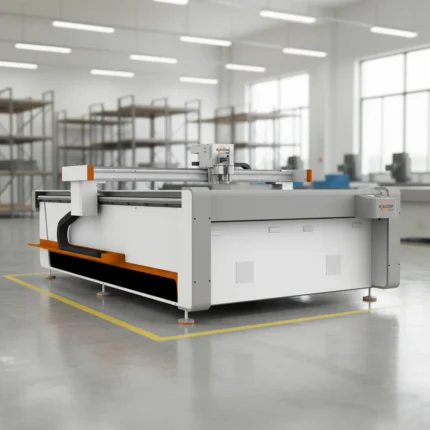
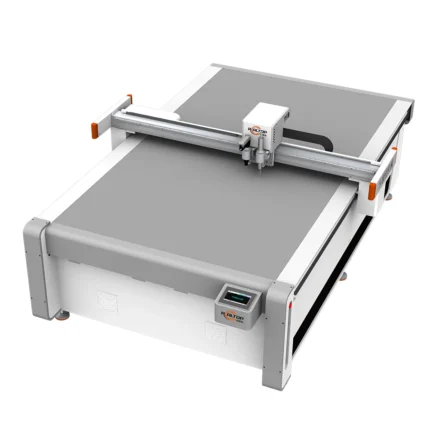
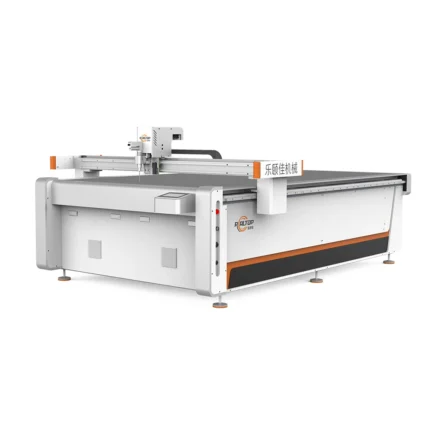
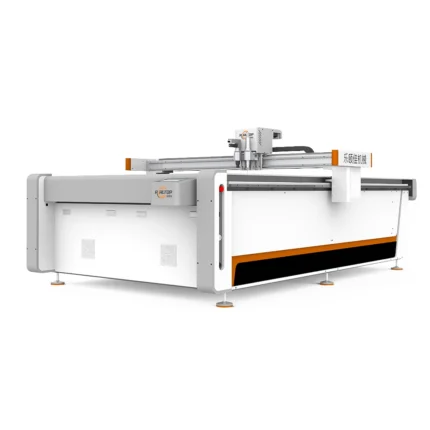
RT-D2516/RT-S2516 CNC Oscillating Knife Cutting Machine, 1600×2500mm Working Area, 9kW — engineered for cardboard packaging and carton sample production with physical blade cutting.
- Oscillating knife, V-cutting and creasing wheel heads produce clean, burr-free edges without thermal discoloration on corrugated board
- Magnesium-aluminum vacuum table with zoned suction holds small packaging parts flat during high-speed contour cutting
- CCD camera positioning aligns cuts to printed marks for accurate short-run box prototypes
Sample cutting on your own cardboard grade confirmed before order, with tool head configuration and software format compatibility validated to your workflow.
Precision tool-head matching — Our in-house design team configures each RT-D2516/RT-S2516 cutting head stack based on the buyer’s actual corrugated grade and flute profile, rather than shipping a generic setup that fails on V-grooving or crushes honeycomb cores.
Technical Specifications
| Parameter | Value |
|---|---|
| Product Type | CNC Oscillating Knife Cutting Machine for Packaging |
| Model | RT-D2516 / RT-S2516 |
| Working Area | 1600 × 2500 mm |
| Machine Dimensions | 3450 × 2300 × 1250 mm |
| Rated Power | 9 kW |
| Voltage | 380V ±10% |
| Transmission System | Digital servo motor, linear guide, synchronous belt, ball screw |
| Servo Motor Options | Delta or Panasonic |
| Vacuum Table | Magnesium-aluminum alloy, PVDF powder sprayed, anodic and hard oxidation treated |
| Vacuum Pump | 7.5 kW, aviation aluminum shell, built-in silencer sponge |
| Table Options | Flat working table or auto feeding table (Germany-imported conveyor belt) |
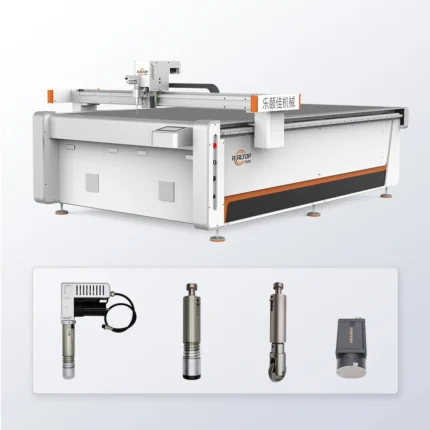
| Tool Head Options | Swiss imported knife, oscillating knife, pneumatic knife, high-power vibrating knife, circular knife, V-cutting knife, drag knife, creasing wheel, dotted line knife, punching, brush |
| Visual Positioning Options | Small CCD camera mark point positioning, panoramic camera recognition, projection positioning |
| Safety Devices | Infrared induction blocking, beam anti-collision sensors, emergency stop button |
| Translational Velocity | 800–2000 mm/s |
| Cutting Speed | 200–800 mm/s (basis to be confirmed by material type and thickness) |
| Repeated Accuracy | ≤0.1 mm |
| Maximum Cutting Thickness | ≤100 mm (varies with material) |
| Instruction System | HP-GL compatible format |
| Supported File Formats | PLT, DXF, AI |
| Control Interface | Touch screen, multi-language (English, Russian, Italian, Chinese; custom languages available) |
Application Suitability
| Application | Material or Output |
|---|---|
| Carton and packaging sample making | Single-wall, double-wall and triple-wall corrugated cardboard |
| Box folding and structural prototyping | Corrugated board V-grooving and creasing lines |
| Honeycomb display and POP production | Honeycomb cardboard and foam board up to 100 mm |
| Flexible packaging converter work | PVC, PE, PP, PU, EVA, XPE sheets |
| Gasket and sealing pad fabrication | PTFE, ETFE, fiberglass, composite materials |
| Sticker and film kiss cutting | Self-adhesive vinyl, film, and label stock |
| Textile and soft furnishing cutting | Leather, fabric, non-woven fabric, carpet |
Why Burnt Edges on Cardboard Samples Should Never Be an Acceptable Trade-Off
A blade-based CNC oscillating knife cutting machine for packaging eliminates thermal damage entirely, leaving fibre-clean edges that crease and fold without cracking.
I spent years on the service side before moving into export sales, and one failure mode I kept seeing was CO2 laser units shipped to carton sample shops that promised "versatility" but left brown scorch marks on white-top liner and honeycomb cores. The samples looked unprofessional, the crease lines fractured at the char zone, and the shop owner had no choice but to buy a second machine — a physical knife cutter — to redo the same jobs. That double-investment pattern is more common than most equipment brochures admit [NEED_CITE: thermal damage thresholds for coated corrugated grades].
With the RT-D2516/RT-S2516, the oscillating knife shears through flute walls mechanically. There is no heat-affected zone, no discolouration on printed surfaces, and no odour that requires extraction ductwork. For packaging sample makers running short batches of client-approved prototypes, this matters because the sample is the sales tool — if the edge looks burnt, the buyer questions the production run.
Blade Mechanics vs. Photon Energy: What Happens at the Cut Face
When an oscillating knife vibrates at high frequency through a B-flute or E-flute corrugated sheet, each stroke severs the fibres cleanly across the flute direction. The CNC oscillating knife cutting machine for packaging holds the blade perpendicular to the bed, so the cut face stays square — critical when a carton designer needs a 90-degree fold with no gap at the crease line. By contrast, a laser beam melts and vaporises material, leaving a glazed edge on coated boards that resists glue adhesion during later assembly.
Multi-Tool Configuration for One-Pass Box Prototyping
The RT-D2516/RT-S2516 accommodates several tool heads on a single gantry: an oscillating knife for through-cuts, a V-cutting knife for slotting fold lines, and a creasing wheel for scoring without breaking the liner. Running all three in one program cycle means a sample box goes from flat sheet to folded prototype without re-fixturing [NEED_CITE: multi-head tool change accuracy on flatbed digital cutting tables]. For a sample room producing dozens of structural variants per week, eliminating the manual swap between a dedicated creaser and a cutter reclaims significant bench time and reduces registration drift between operations.
Reading the Specs That Actually Decide Output Quality
The 1600 × 2500 mm working area fits standard full-size corrugated sheets, but the real production variable is the vacuum table zoning. The magnesium-aluminum alloy platform with PVDF coating provides uniform adsorption across its surface; however, small packaging sample parts — think insert dividers or corner braces — require concentrated suction in isolated zones, otherwise the vacuum lifts the part mid-cut and the oscillating knife drags the edge. Confirming zone layout against your typical smallest part dimension before shipment avoids this. The repeated accuracy of ≤0.1 mm matters for nested crease lines on micro-flute stock where a 0.3 mm drift can misalign a tuck flap. Servo selection between Delta and Panasonic affects long-term positioning stability under continuous high-cycle sample runs, and the 7.5 kW vacuum pump with aviation aluminum shell keeps thermal buildup lower during all-day operation [NEED_CITE: vacuum pump duty cycle standards for CNC flatbed tables]. The 380V ±10% supply requirement means buyers in regions with 400V or 415V three-phase grids need to confirm transformer compatibility before the machine leaves Jinan.
The Hidden Cost of Shipping the Wrong Tool Head for Your Flute Profile
I once supported a carton sample shop that received an oscillating knife cutting machine configured with a standard drag knife instead of a V-cutting knife for their double-wall jobs. The drag knife could cut through, but the crease lines tore the top liner on E/B combination flutes, and every sample needed hand-finishing with a bone folder. That shop lost four working days before replacement tooling arrived. The issue was not the machine — it was the configuration sheet that listed "corrugated cardboard" as a material without specifying flute type [NEED_CITE: tool head selection criteria for corrugated flute profiles]. Matching tool geometry to the specific board construction is the step that separates a machine that runs from one that produces sellable samples.
What REALTOP Builds In Before the Crate Closes
Every RT-D2516/RT-S2516 leaves the factory with a tool-head stack chosen against the buyer’s confirmed material list, not a default catalogue configuration. The in-house design team covers both knife cutting and vacuum hold-down engineering under one roof, so the table zoning and suction specification are validated together rather than sourced from separate suppliers. Software compatibility is checked before the order is locked — PLT, DXF, and AI file imports are tested against the buyer’s nesting workflow. Voltage, plug type, and control language are confirmed in writing before production starts. Sample cutting on the buyer’s own cardboard grade is offered before commitment, so the edge quality and crease definition are verified on actual stock rather than promised on a datasheet.
Documentation & Verification
- Machine specification sheet listing every confirmed tool head and table zone layout
- Electrical schematic with voltage and frequency matched to your facility supply
- Sample cutting report produced on your own corrugated grade and thickness
- Tool head and vacuum table configuration list signed off before production
- Software licence with file format compatibility note for PLT, DXF, and AI workflows
- Packing photographs showing secured gantry, vacuum pump, and tool head assemblies
Installation, Commissioning & Support
- Floor space planning based on the 3450 × 2300 mm footprint plus operator clearance zones
- Dedicated 380V three-phase circuit rated for the 9 kW machine load plus 7.5 kW vacuum pump
- Gantry and beam assembly on-site with linear guide alignment verification
- First-run parameter tuning for your specific corrugated flute and cutting speed range
- Touch screen control interface training in your selected language
- Consumable blade and creasing wheel kit supplied to cover the initial production period
Before You Send the Inquiry
To size the right configuration, we need your primary board grades (single-wall, double-wall, honeycomb), the flute profiles you run most often, the smallest part dimension in your typical nesting layout, and your facility voltage and frequency. If you have an existing design software workflow, share a sample file so we can verify import compatibility before quoting.
Frequently Asked Questions
Q: How does knife cutting compare to CO2 laser for cardboard packaging samples?
A: Knife cutting produces a mechanical shear with no thermal effect, so there is no burnt edge, no discolouration on printed liner, and no odour requiring extraction. CO2 laser leaves a glazed cut face on coated boards that can interfere with glue adhesion. For corrugated packaging prototypes where appearance and fold integrity matter, blade-based cutting is the standard choice.
Q: Which tool head combination covers cutting, creasing, and V-grooving in one setup?
A: The typical configuration pairs an oscillating knife for through-cuts, a V-cutting knife for slotting fold channels, and a creasing wheel for scoring without breaking the top liner. All three mount on the same gantry and run within one program cycle, eliminating manual tool changes between operations.
Q: Is the vacuum table zoning adequate for small packaging sample parts?
A: The magnesium-aluminum alloy table with PVDF coating delivers uniform adsorption, but zone configuration must be matched to your smallest part dimension. Confirming zone layout against your typical insert dividers or corner braces before shipment prevents part lift during cutting.
Q: What file formats does the system accept from my existing design software?
A: The control system imports PLT, DXF, and AI files directly. We verify compatibility with your specific nesting software and workflow before the order is confirmed, so there are no format conversion surprises at commissioning.
Q: Can I send my own corrugated board for a sample cutting test before ordering?
A: Yes. Send your actual board grade and thickness, and we run a cutting and creasing test on the RT-D2516/RT-S2516. You receive a sample report with edge quality photographs and cut-face inspection before any commitment is made.


Related products
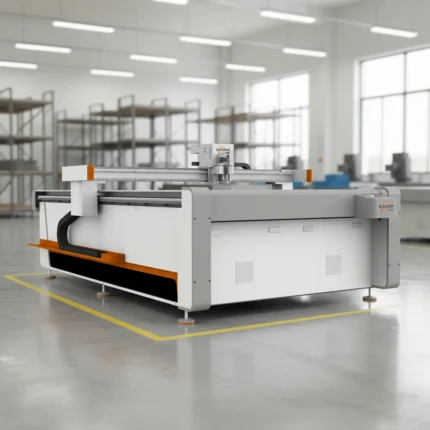
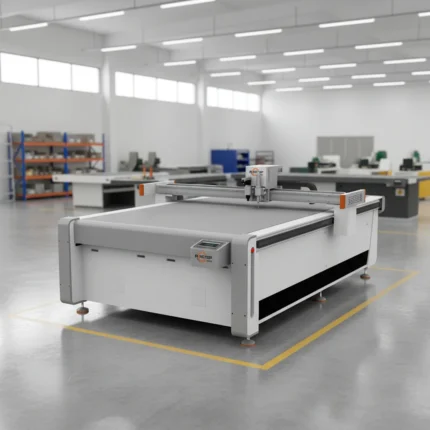
2026 Digital Flatbed Cutting Plotter Auto Corrugated Box Die Cutter
Product Introduction
Digital Flatbed Cutting Plotter 2026, ideal for auto corrugated box die cutting, offering precision and efficiency for professional packaging production.Specifications
| Type | Digital Flatbed Cutting Plotter |
| Model | 2026 |
| Application | Auto Corrugated Box Die Cutting |
| Function | Precision Cutting & Plotting |
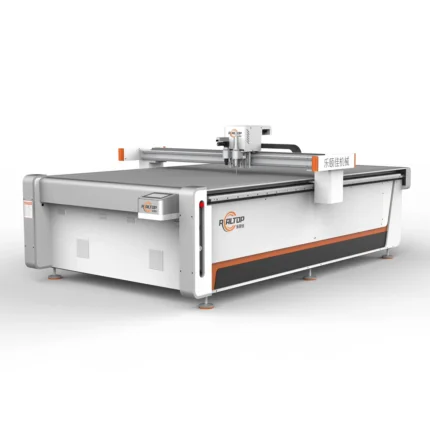
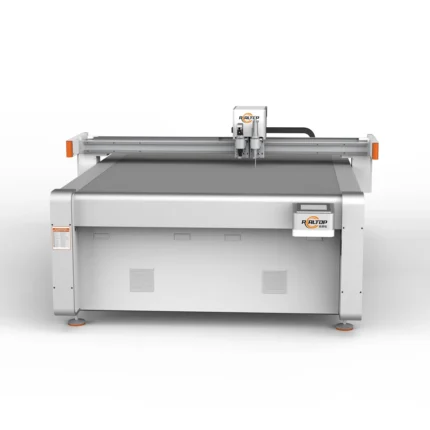
Automatic Digital Cardstock Cutter 2026 CNC Cutter
Product Introduction
Automatic Digital Cardstock Cutter 2026 is a CNC cutting machine ideal for white cardboard and kraft paper. It offers precise and efficient cutting performance, suitable for various paper processing needs in manufacturing and craft applications.Key Specifications
| Type | CNC Digital Cutting Machine |
| Material Compatibility | White Cardboard, Kraft Paper |
| Operation | Automatic |
| Application | Paper Cutting & Processing |
CNC Flatbed Cutter 2026 Digital Corrugated Box Making Machine
Product Introduction
High-precision CNC flatbed cutter designed for efficient cardboard box production. Ideal for 2026 digital corrugated box manufacturing, offering precise cutting and reliable performance for professional packaging solutions.
Key Specifications
| Type | CNC Flatbed Cutter |
| Application | Cardboard Box Production |
| Technology | 2026 Digital System |
| Material | Corrugated Board |



商品评价
There are no reviews yet.