

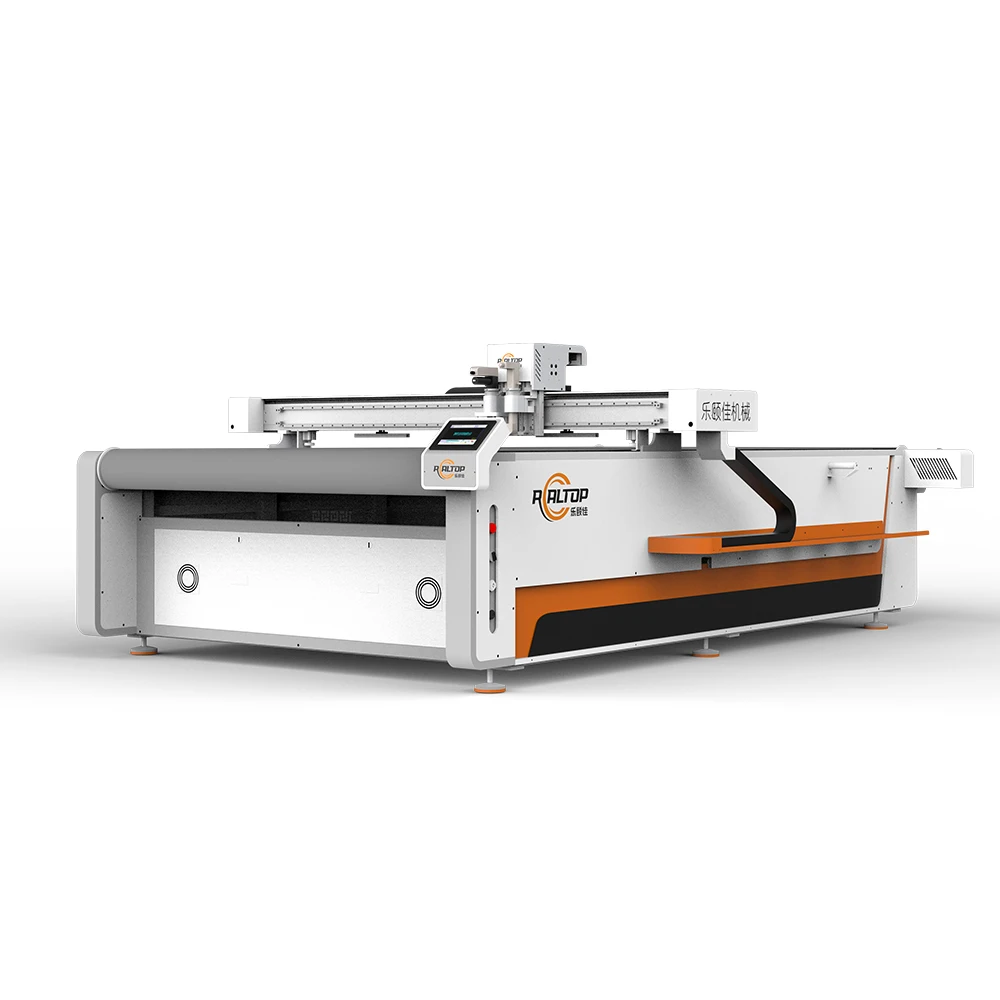
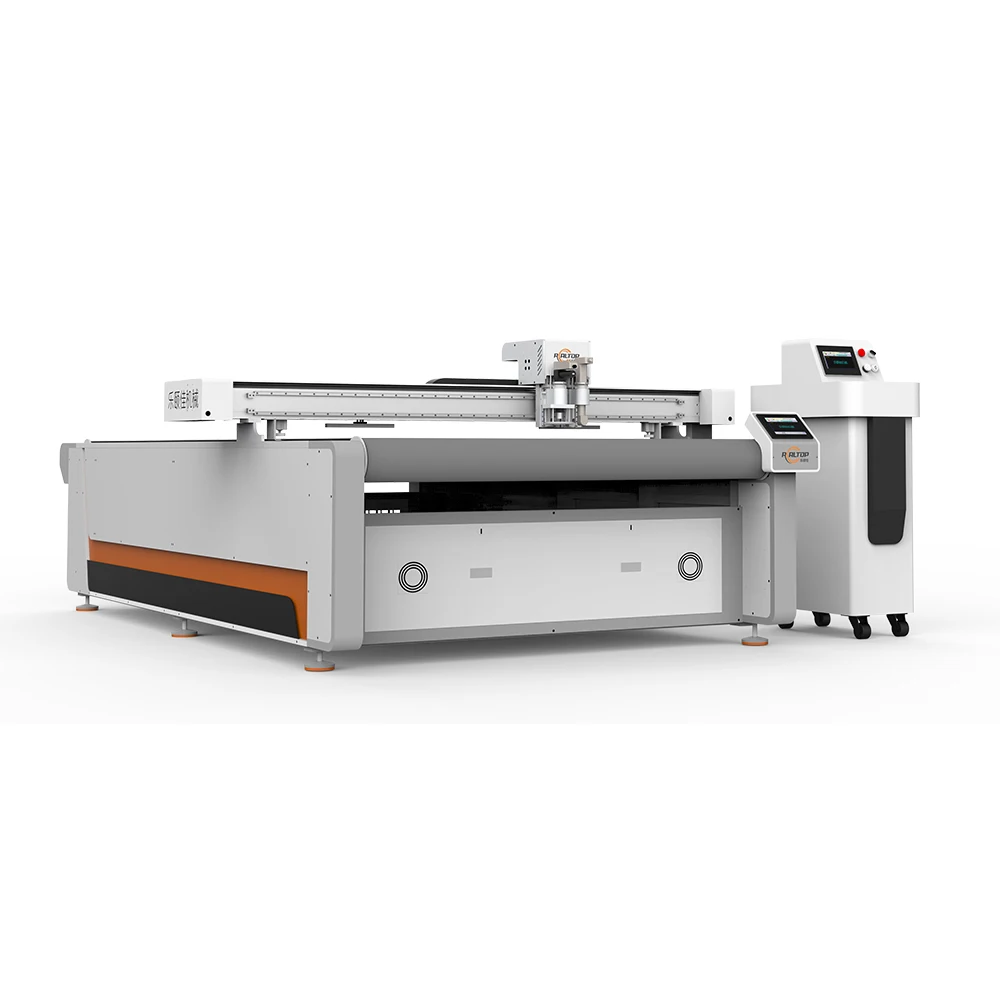
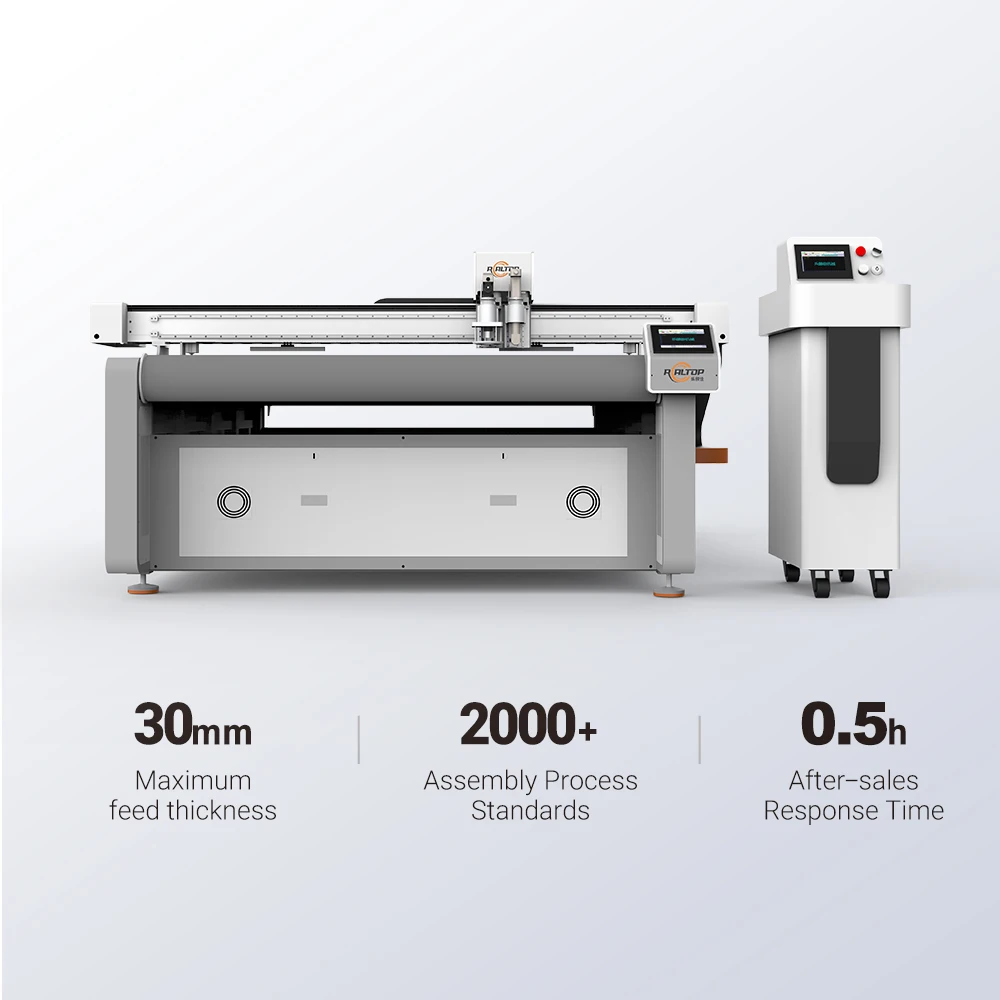
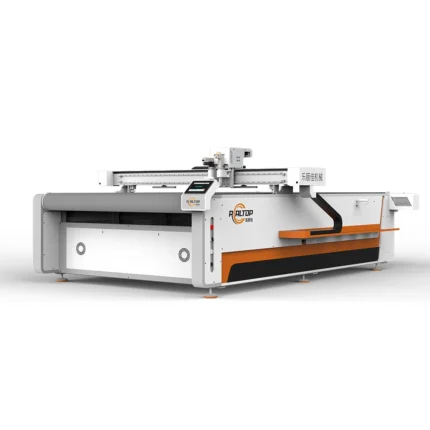
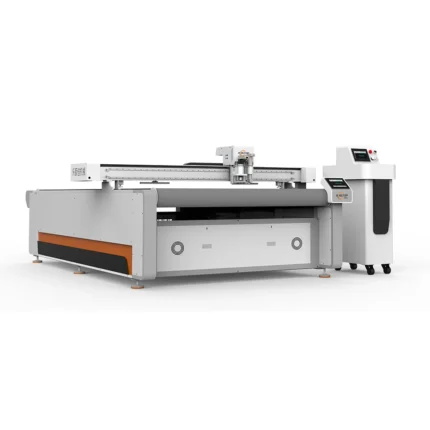
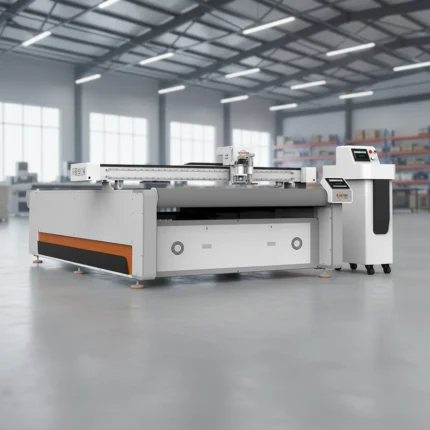
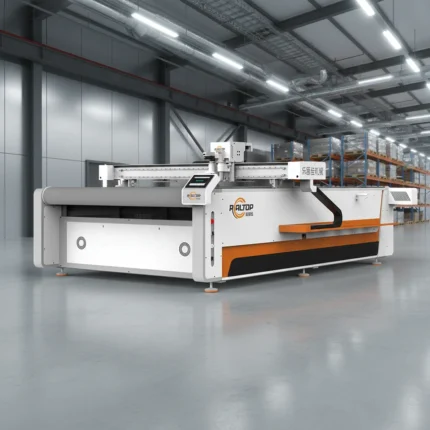
CNC Fabric Cutting Machine Auto Knife for Cloth – OEM Available
Record ID: 32871
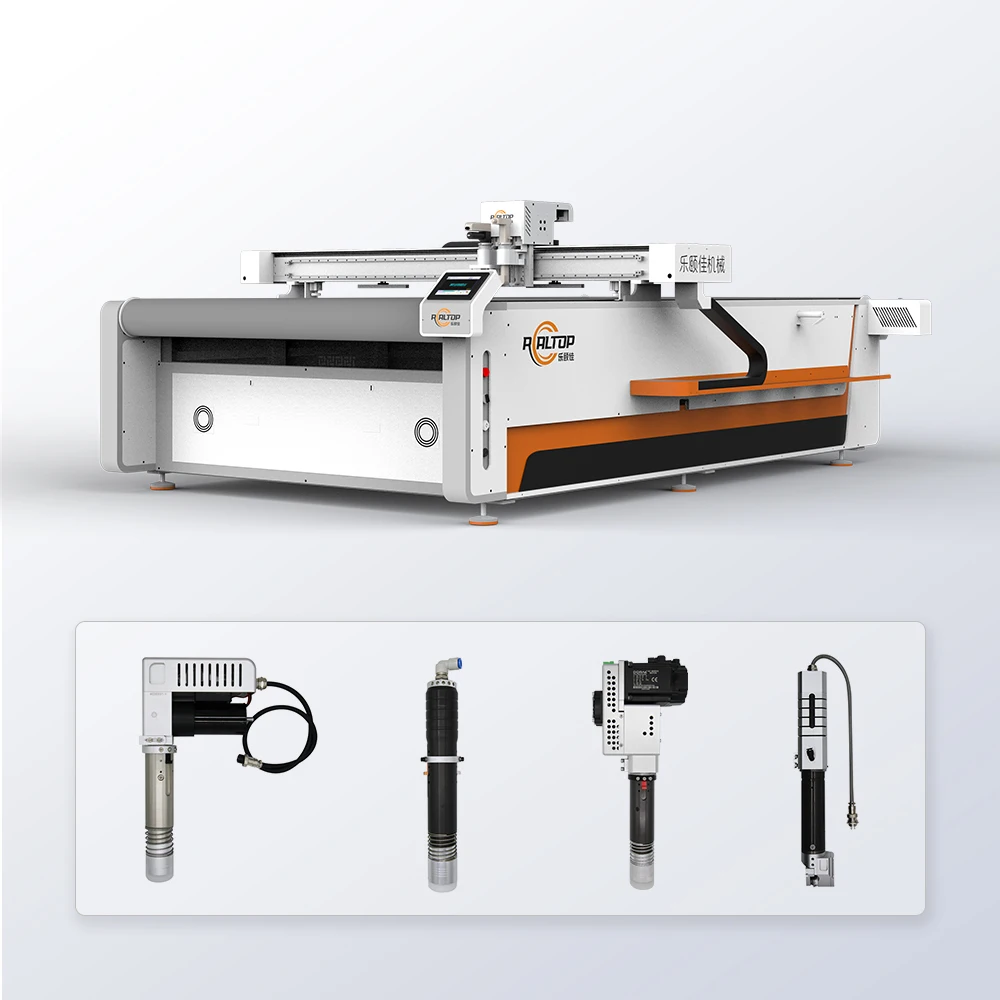
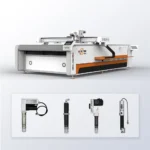
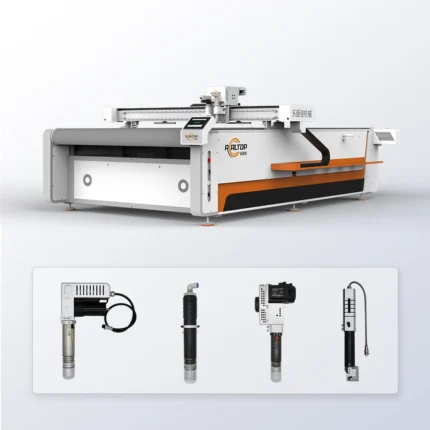
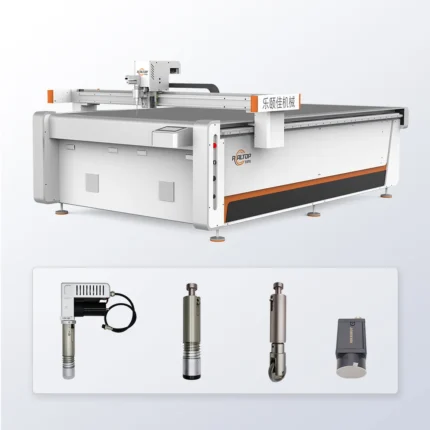
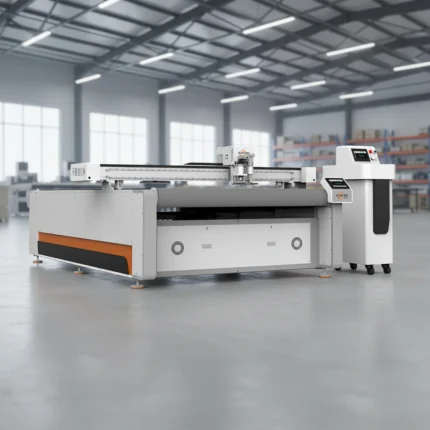
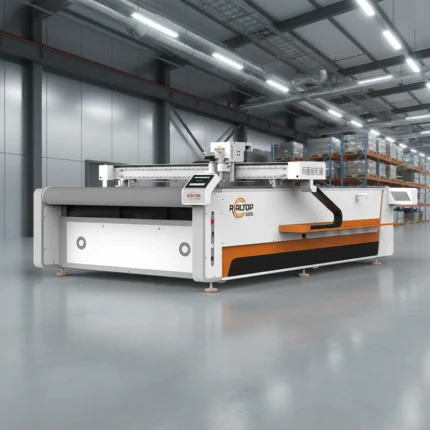
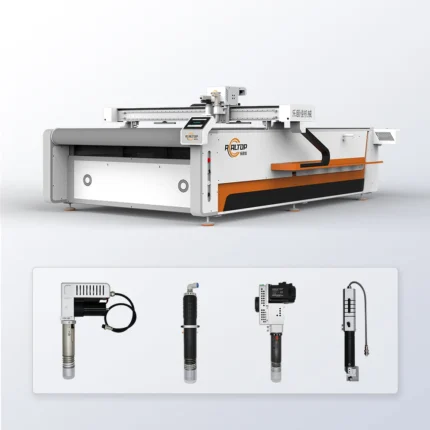
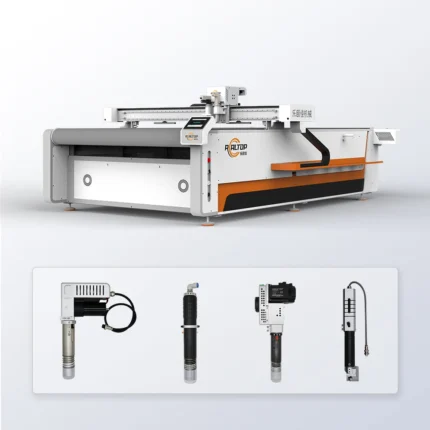
Tool Head Matched to Material — Oscillating knife, driven rotary, pneumatic and V-groove heads are specified per fabric type and ply height rather than forcing one blade through every job.
Technical Specifications
| Parameter | Value |
|---|---|
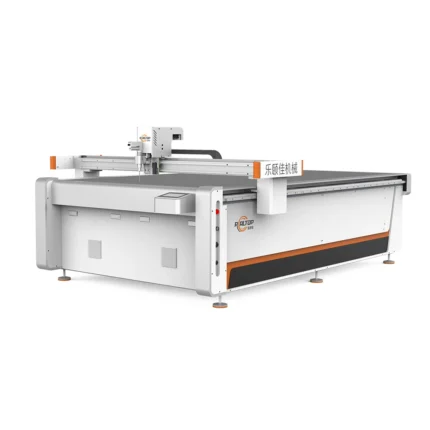
| Product Type | CNC Oscillating Knife Fabric Cutting Machine |
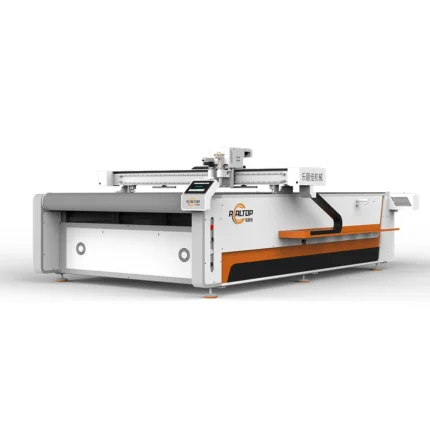
| Working Area | 1600×2500 mm |
| Tool Head Options | Oscillating knife, Driven rotary knife, Creasing wheel, Kiss cutting tool, Pneumatic knife, Milling tool, V groove knife |
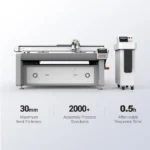
| Maximum Cutting Thickness | ≤ 30 mm |
| Cutting Speed | 0–2000 mm/s (basis not stated in source — confirm material and ply count) |
| Positioning Accuracy | ±0.1 mm |
| Vacuum Pump Power | 9 kW |
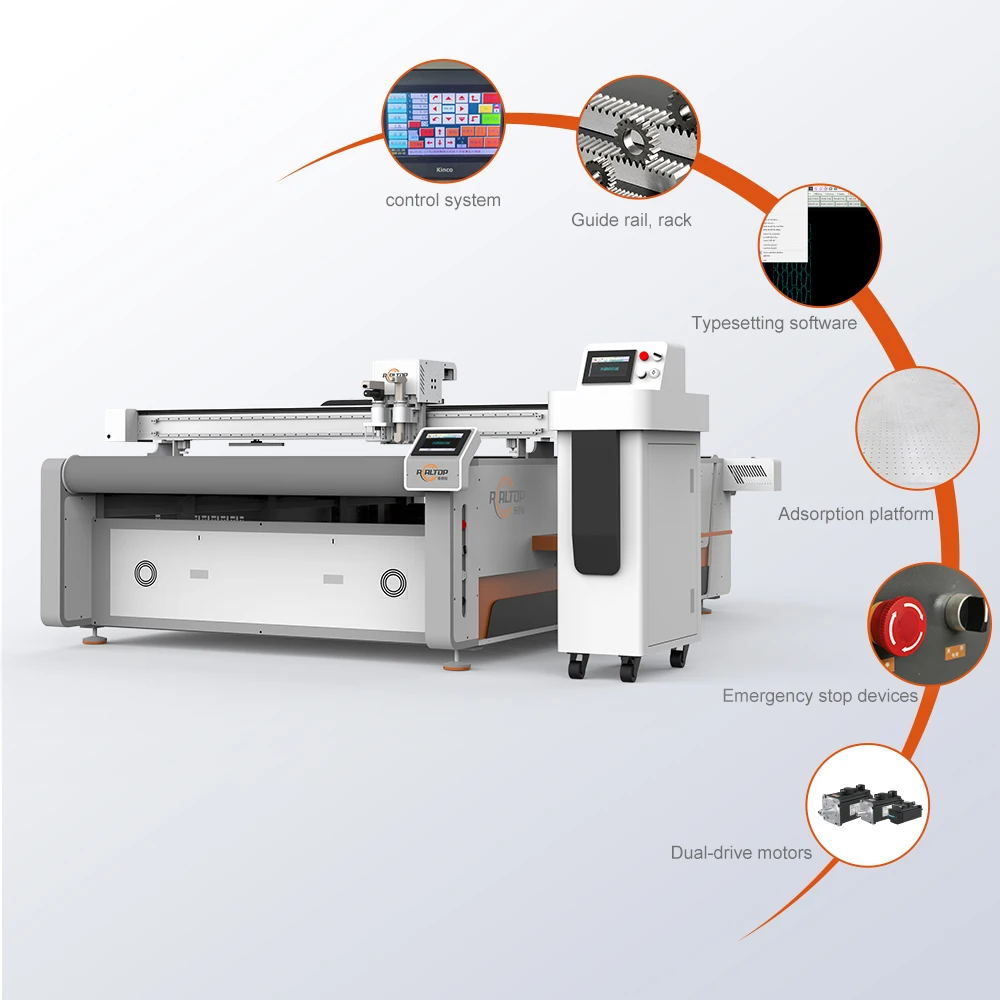
| Vacuum Table Surface | Aluminum bellows type, full-surface adsorption |
| Servo Motor Options | Panasonic, Delta, Dorna |
| Control Interface | PLC panel with configurable language (English, Russian, Italian, Chinese; special languages customizable) |
| Voltage Options | 110V / 220V / 380V (frequency to confirm per market) |
| Accepted File Formats | PLT, DXF, AI, PDF |
| Safety Features | Infrared sensor, emergency stop |
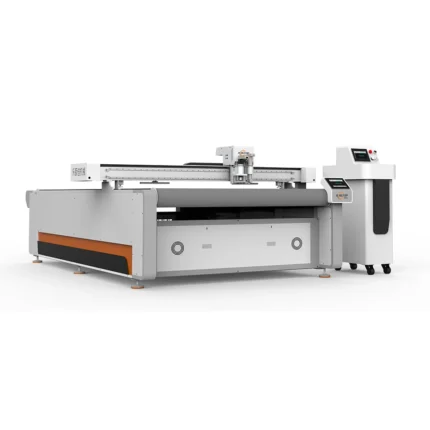
| Machine Dimensions | 3300×2100×1350 mm |
| Assembly State | Fully assembled prior to shipment |
| Certification | CE |
Application Suitability
| Application | Material or Output |
|---|---|
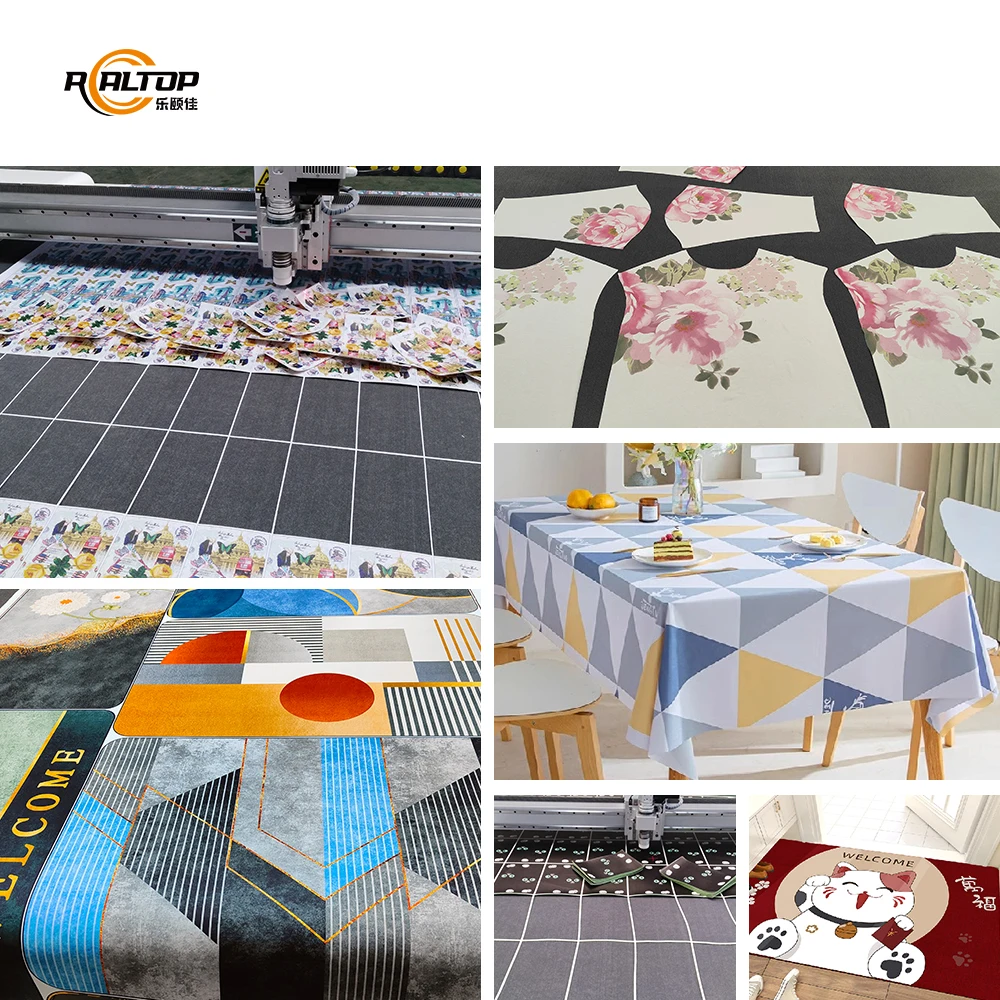
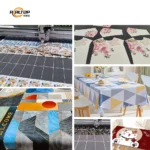
| Apparel Manufacturing | Suits, knitwear, lace, pattern-matching fabric layouts in single or multi-ply |
| Automotive Interiors | Seat fabrics, carpets, PVC mats requiring burr-free edges |
| Home Textiles | Sofa fabrics, curtains, rugs, multi-layer cutting for upholstery |
| Composite Material Processing | Carbon fiber prepreg, aramid, specialty materials without thermal damage |
| General Fabrication | Cardboard, carton, EVA, leather, acrylic, foam, PTFE, rubber sheets |
Why the Wrong Tool Head Costs You More Than the Machine Itself
Specifying a cutting table by working area alone leaves the most expensive variable unaddressed: what actually touches the material.
I spent three days in a factory outside Ho Chi Minh City watching a brand-new oscillating knife table chew through elastane-blend fabric because the seller had quoted a generic drag knife head. The cutting speed that worked perfectly on cotton sample swatches produced frayed edges and delaminated plies on the production material. Two rolls of fabric were scrapped before we swapped the tool head and recalibrated the vacuum zones [NEED_CITE: CNC knife cutting tool head selection by fabric composition]. A CO2 laser cutting and engraving machine manufacturer might tell you laser solves everything — but on synthetic blends, thermal sealing can melt elastane fibers and ruin the hand-feel of the garment.
Selecting the Right Knife Configuration for Fabric
Every CNC Fabric Cutting Machine Auto Knife head in the tool changer serves a distinct purpose. The oscillating knife handles woven and non-woven textiles up to 30 mm thick with a vertical vibration that prevents material drag. The driven rotary knife suits single-ply knits and stretch fabrics where a reciprocating blade would catch the weave. For pattern-matching layouts on striped or checked suiting, the combination of CCD-ready positioning and kiss cutting allows contour tracing without penetrating the conveyor belt beneath.
Vacuum Zoning and Small Part Retention
When cutting collar stays, pocket flaps, or small appliqué pieces, full-surface vacuum alone does not prevent part lift at high traverse speeds. The 9 kW vacuum pump paired with the aluminum bellows table generates sufficient hold-down force for most multi-ply fabric stacks, but zoning matters just as much as suction volume [NEED_CITE: vacuum table zoning for CNC flatbed cutting]. Small zones activated only under the cutting area concentrate suction where it counts, keeping lightweight single-ply silk or chiffon flat against the bed without drawing excessive power across the entire 1600×2500 mm surface.
Cutting Speed, Accuracy, and Servo Drive Selection
The ±0.1 mm positioning accuracy matters most when cutting pattern pieces that must align at the sewing stage — a discrepancy of even half a millimeter on a suit jacket front panel forces rework downstream. The 0–2000 mm/s cutting speed range is achievable, but the practical speed on a given day depends on fabric weight, ply count, and contour complexity. Panasonic servo drives offer tighter feedback loops for intricate contour work on lace or embroidered panels, while Delta or Dorna options may align with the maintenance ecosystem already established in the buyer’s factory, simplifying spare parts sourcing and technician familiarity.
The Hidden Cost of Skipping Material Validation
Buyers who commit to a configuration based on a brochure cutting speed often discover that their actual production material — a foam-backed automotive headliner, a carbon fiber prepreg with tacky resin, or a 25-ply stack of denim — behaves nothing like the sample in the seller’s video. Ragged edges force secondary trimming. Crushed foam layers require manual separation. A vacuum table with insufficient zoning lets small gasket pieces lift into the blade path, damaging both the part and the tool head [NEED_CITE: material validation before CNC cutting equipment purchase]. These problems surface on day one of production, not during the negotiation phase.
Why Source This CNC Fabric Cutting Machine Auto Knife Here
The in-house design team covers both knife and laser technologies, so the cutting method is matched to the material rather than forcing every job through one process. Tool head and table configurations are specified per material and production volume, not selected from a default package. Sample cutting on the buyer’s own fabric is completed before order commitment, producing a report that documents blade type, speed settings, and edge quality on the exact material that will run in production. Voltage, plug type, and control panel language are confirmed before the machine enters assembly, not discovered upon arrival. Software compatibility with the buyer’s existing DXF, PLT, AI, or PDF nesting workflow is verified during the specification stage.
Documentation & Verification
- Machine specification sheet listing confirmed tool head and vacuum table configuration
- Electrical schematic with voltage and frequency matched to destination market
- Sample cutting report on buyer’s own fabric with edge quality photographs
- Factory test record documenting positioning accuracy across the full working area
- Operation and maintenance manual in confirmed control language
- Software licence and file format compatibility note for DXF, PLT, AI, PDF
Installation, Commissioning & Support
- Fully assembled 3300×2100×1350 mm frame requires floor space confirmation and level concrete slab
- 9 kW vacuum pump plus servo drives need dedicated circuit matching confirmed voltage rating
- PLC control panel language loaded and tested before shipment to eliminate on-site reconfiguration
- First-run parameter setting covers vacuum zone mapping, blade oscillation frequency, and feed speed per material
- Operator training covers tool head changeover, nesting file import, and daily vacuum filter maintenance
- Spare parts list includes oscillating blades, rotary knife wheels, and vacuum table seals
Preparing Your Inquiry
To move from a general inquiry to a confirmed configuration, the useful starting points are the specific fabric types and ply heights you run, your existing nesting software and file formats, and the voltage and frequency standard at your facility. If you produce multiple product categories — for example, suiting and automotive carpet — list each material separately so the tool head package covers the full range.
Frequently Asked Questions
Q: How is the correct tool head selected for my fabric type and ply height?
A: The selection begins with your material composition and thickness. Oscillating knife suits woven textiles and multi-ply stacks up to 30 mm. Driven rotary knife handles stretch knits and single-ply fabrics where blade drag distorts the weave. Pneumatic knife and V-groove tools address thicker foam-backed or composite materials. A sample cutting test on your actual fabric confirms the choice before order.
Q: Can I send my production material for sample cutting before committing?
A: Yes. Send the fabric you actually run in production — not a reference swatch. The sample cutting report documents blade type, cutting speed, vacuum setting, and edge quality photographs. This report becomes part of the order documentation and establishes the baseline parameters for your machine configuration.
Q: What voltage and control language options are available before shipment?
A: The machine is configurable for 110V, 220V, or 380V systems, with frequency confirmed to your market standard. Control panel languages include English, Russian, Italian, and Chinese as standard options, with special language customization available. Both are locked in during the specification phase, not after assembly.
Q: Will the software accept my existing nesting files?
A: The control system imports PLT, DXF, AI, and PDF formats. During the specification stage, your existing nesting files are tested for import compatibility, including layer recognition, contour extraction, and tool path generation. Any file format gaps are identified and resolved before the machine is built.
Q: How does the vacuum table handle small fabric pieces that tend to lift?
A: The aluminum bellows table with a 9 kW pump provides full-surface adsorption, but zoning configuration determines actual hold-down on small parts. Zones are mapped to concentrate suction under the active cutting area, preventing lightweight or small contour pieces from lifting into the blade path at high traverse speeds.


Related products
2026 Auto Fabric Cutter Round Knife High Efficiency
Product Introduction
High Efficiency 2026 Auto Fabric Cutter with Round Knife is a professional cutting equipment designed for fabric processing. It features advanced automation and high cutting efficiency, suitable for various fabric materials in industrial production.Product Parameters
| Model | 2026 |
| Type | Auto Fabric Cutter |
| Blade Type | Round Knife |
| Feature | High Efficiency |
2026 Carbon Fiber Cloth Cutting Machine – China Manufacturer
Product Introduction
Fabric Sample Cutter Pillow Machine ¨C 2026 Carbon Fiber Cloth Cutting Machine, ideal for precise cutting of carbon fiber cloth and fabric samples, suitable for pillow production and related textile applications.Product Parameters
| Name | Fabric Sample Cutter Pillow Machine |
| Model | 2026 |
| Material | Carbon Fiber Cloth |
| Application | Pillow Fabric Cutting |
2026 CNC Knife Cutting Machine for Fabric Leather PVC Hot Sale
Product Introduction
2026 Hot Sale CNC Knife Cutting Machine for Fabric, Leather, PVC. Ideal for precise cutting of various materials with advanced CNC technology, perfect for manufacturing needs.
Product Parameters
| Application | Fabric, Leather, PVC |
| Type | CNC Knife Cutting Machine |
| Feature | Precision Cutting |
| Year | 2026 Model |
Custom CNC Shirt Fabric Cutting Machine 2026
Product Introduction
Custom CNC Shirt Fabric Cutting Machine 2026, ideal for precise fabric cutting in garment manufacturing, offering efficient and accurate cutting solutions.
Product Parameters
| Model | Custom CNC Shirt Fabric Cutting Machine 2026 |
| Type | CNC Fabric Cutting Machine |
| Application | Shirt Fabric Cutting |
| Year | 2026 |
商品评价
There are no reviews yet.