

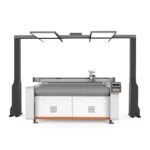
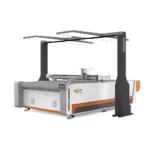
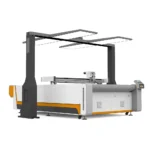

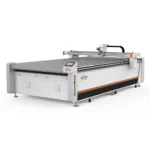

CNC Foam Cutter for Leather – Full Range Manufacturer
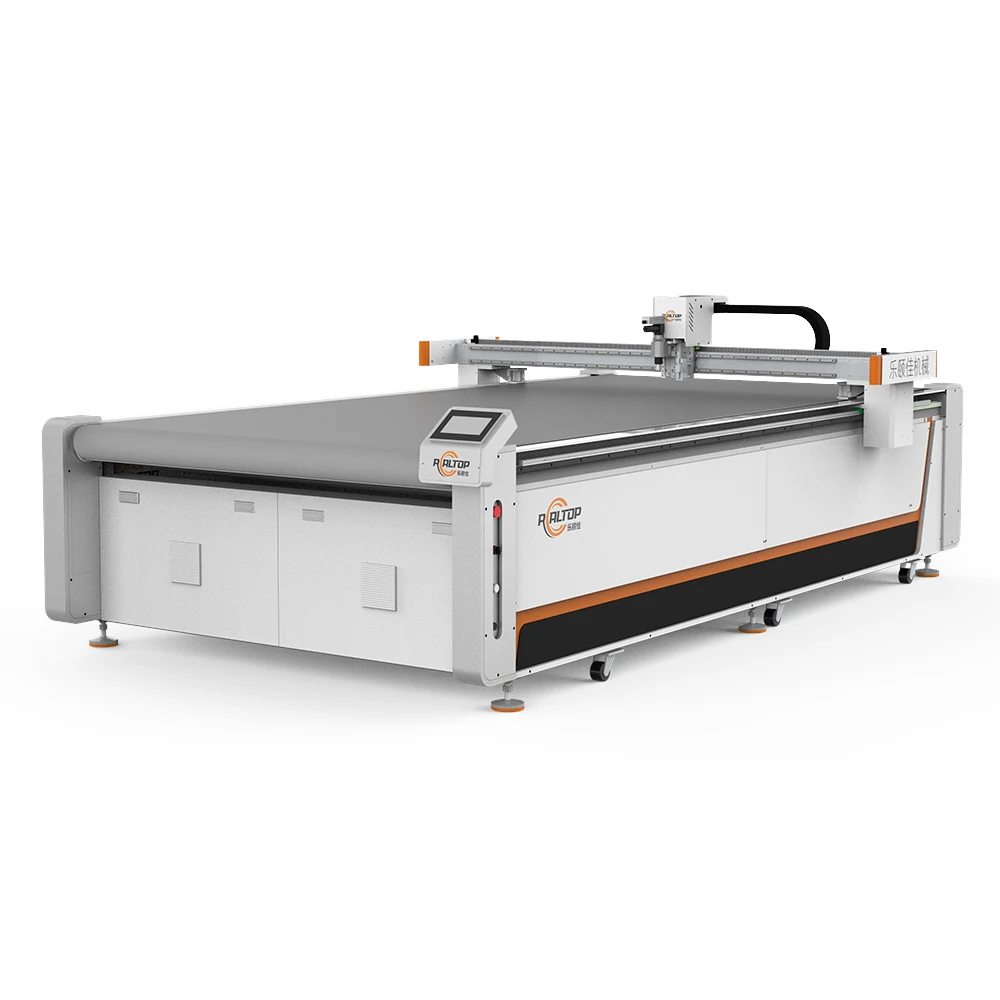
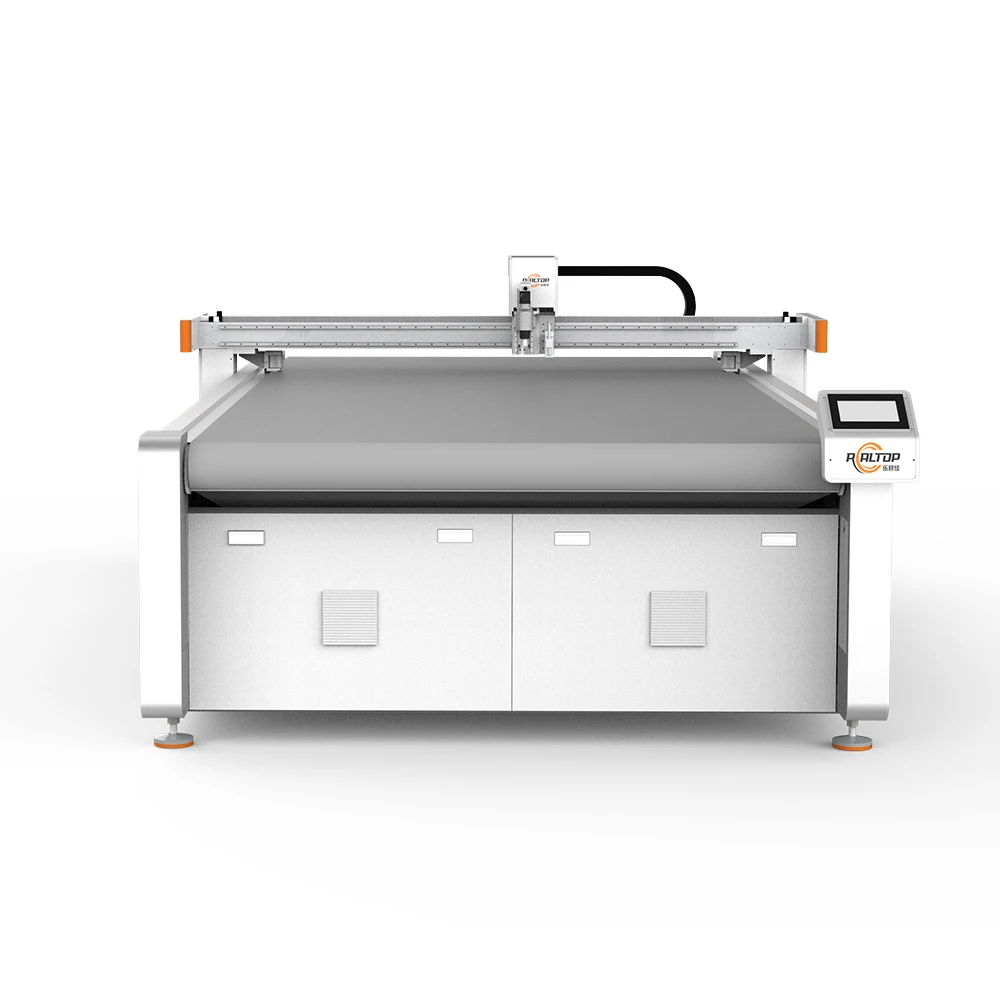
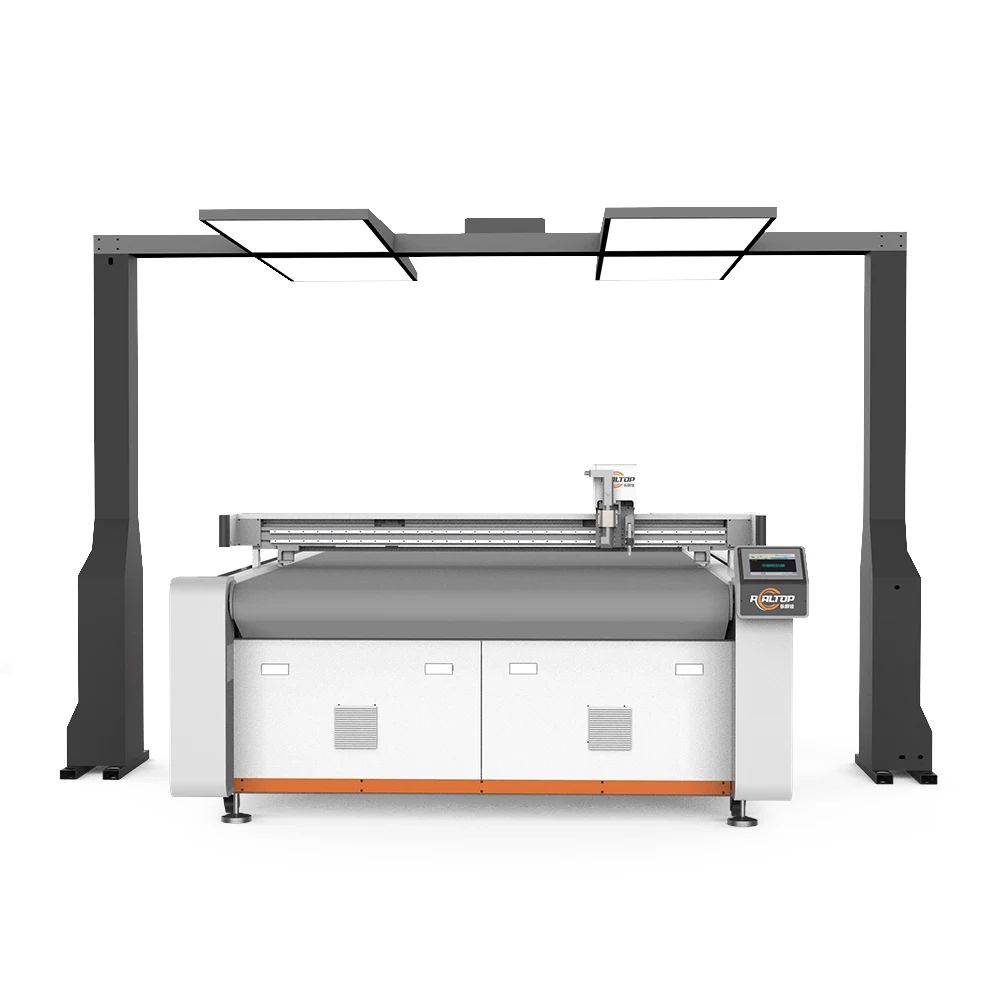
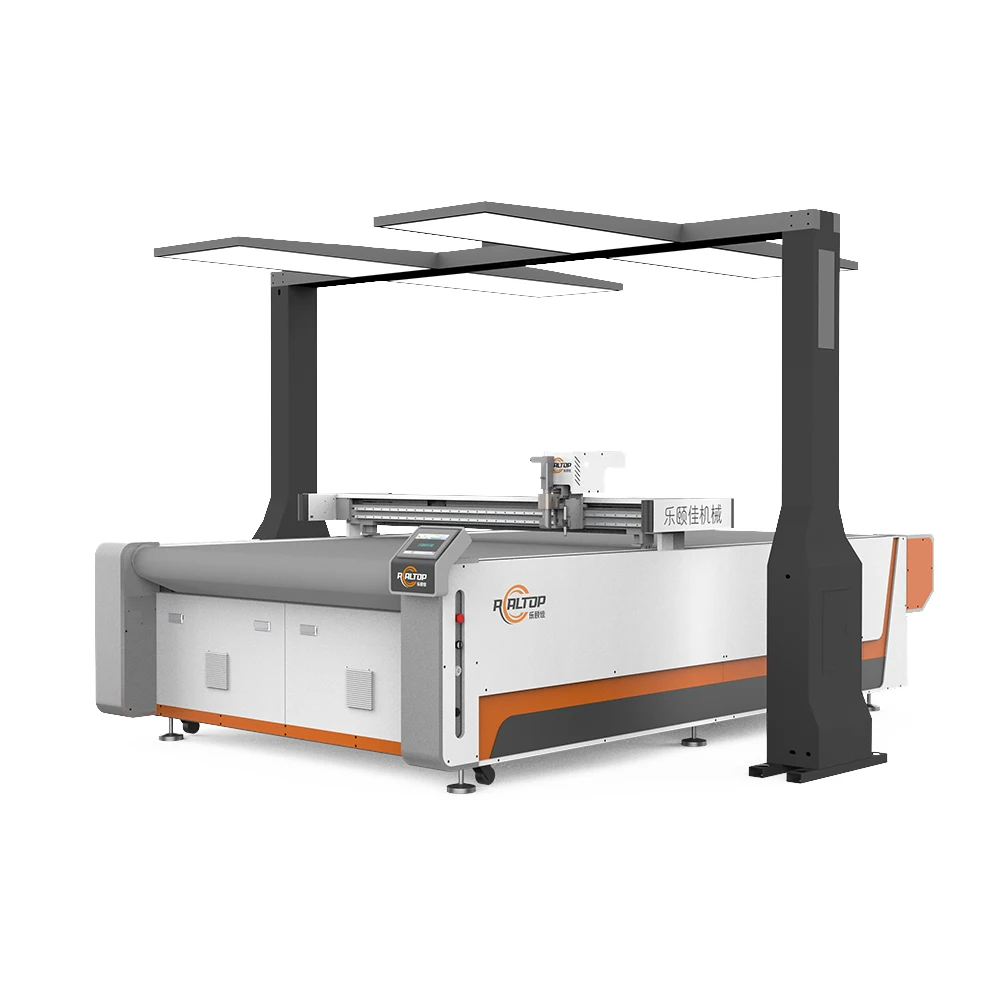
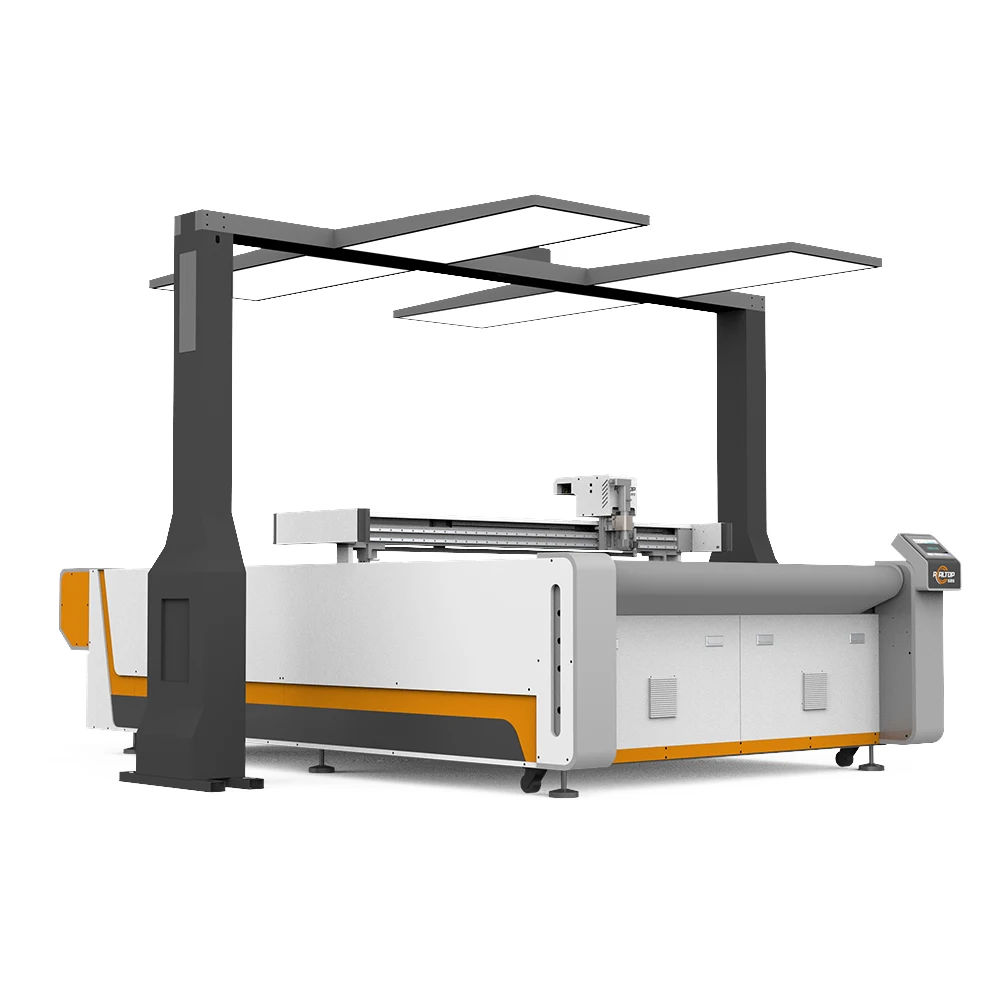
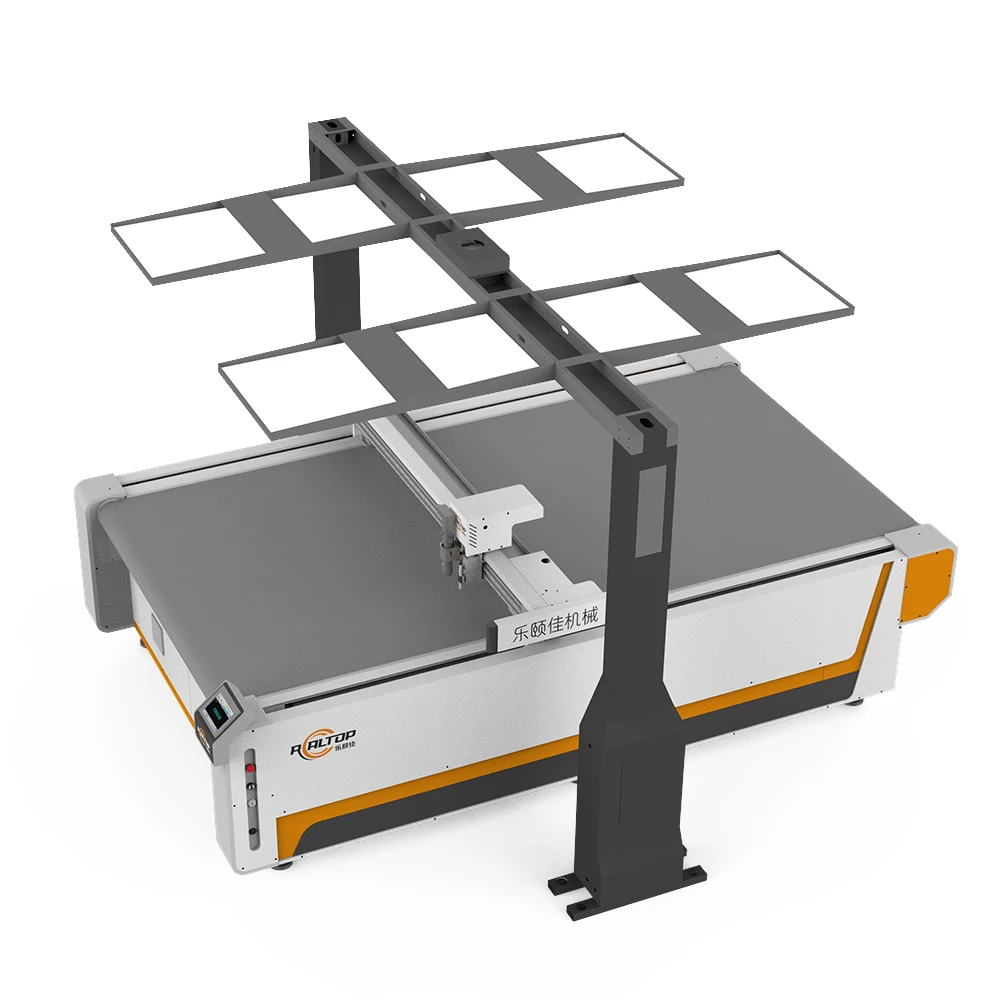
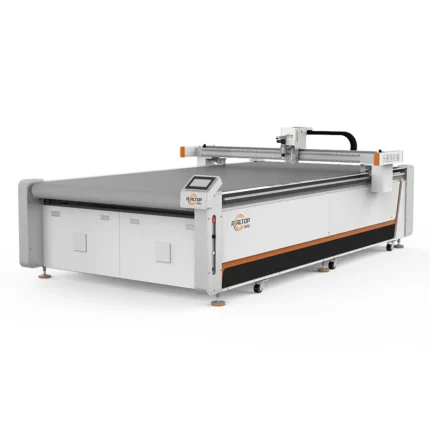
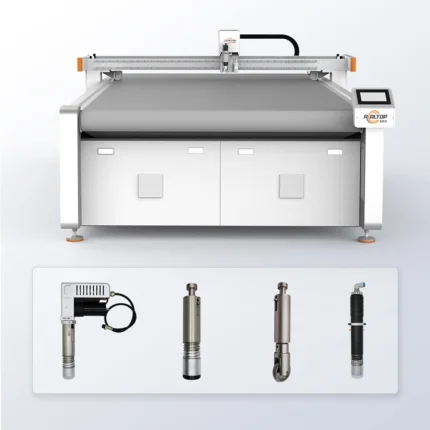
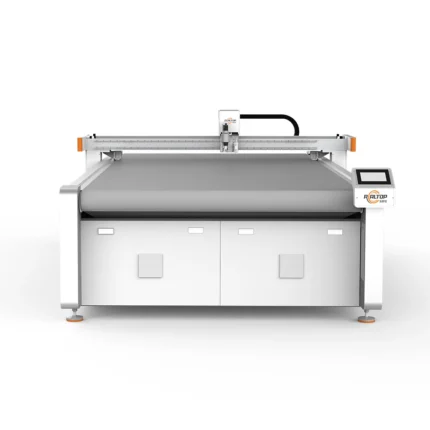
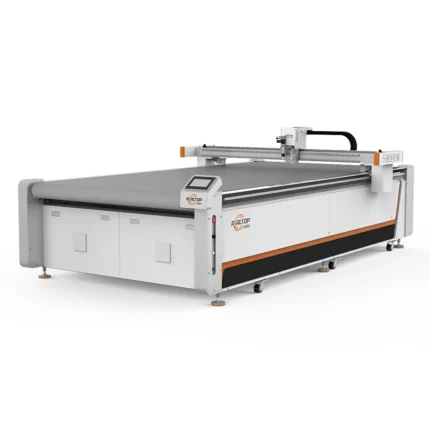
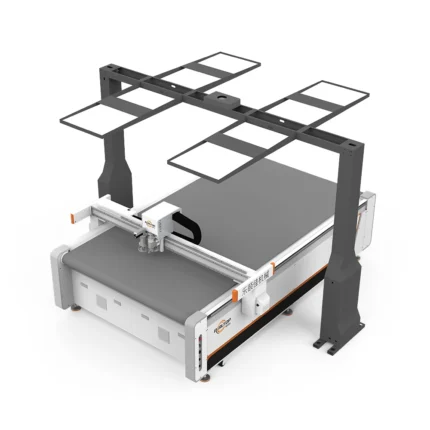
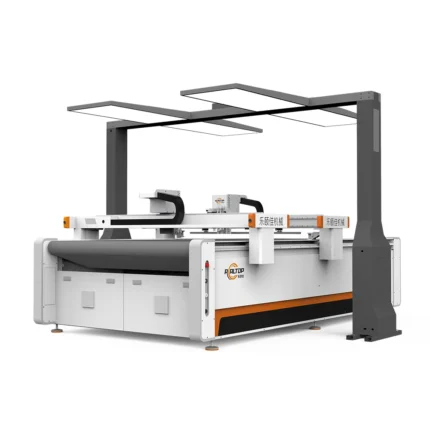
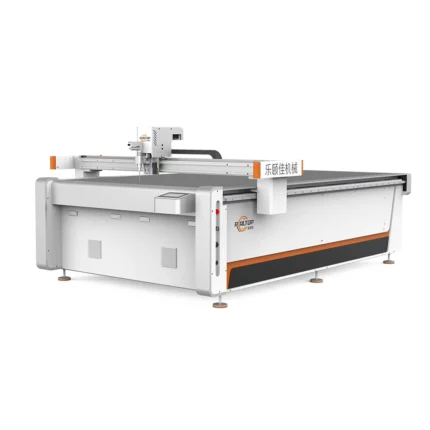
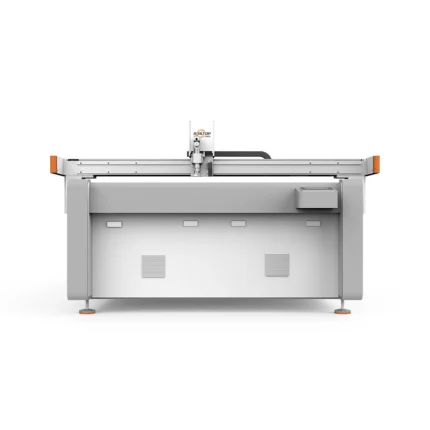
1625 CNC Oscillating Knife Cutting Machine, 1600×2500mm Working Area, ±0.1mm Accuracy — engineered for leather, fabric, foam and composite material processing with interchangeable tool heads including oscillating knife, driven rotary knife, pneumatic knife and kiss cutting options. CCD camera contour recognition positions printed patterns and genuine leather grain precisely, while aluminum bellows vacuum table with zoning holds sheets securely during cutting. Supported file formats include PLT, DXF, AI and PDF, with voltage options from 110V to 380V and multi-language control interface.
Sample cutting on your specific leather material available before commitment, with tool head and table configuration matched to your production requirements.
Multiple Cutting Methods — in-house design covering both oscillating knife and laser technologies lets buyers match the process to the leather grade rather than forcing one method across all hides.
Technical Specifications
| Parameter | Value |
|---|---|
| Model | 1625 |
| Product Type | CNC Oscillating Knife Cutting Machine |
| Working Area | 1600 × 2500 mm |
| Cutting Speed | 0–2000 mm/s |
| Cutting Thickness | ≤ 30 mm (basis not stated in source) |
| Cutting Accuracy | ±0.1 mm |
| Available Tool Heads | Oscillating knife, Driven rotary knife, Creasing wheel, Kiss cutting tool, Pneumatic knife, Milling tool, V-groove knife |
| Applicable Materials | Leather, Fabric, Cardboard, PVC, EVA, Acrylic, Foam, PTFE, Rubber |
| Vacuum Pump Power | 9 kW |
| Voltage Options | 110V, 220V, 380V |
| Supported File Formats | PLT, DXF, AI, PDF |
| Safety Devices | Infrared sensor, Emergency stop |
| Machine Dimensions | 3300 × 2100 × 1350 mm |
| Control System | PLC with configurable language interface |
| Servo Motor Options | Panasonic, Delta, Dorna |
| Language Options | English, Russian, Italian, Chinese (custom languages available) |
| Certification | CE |
Application Suitability
| Application | Material or Output |
|---|---|
| Footwear uppers | Genuine leather and synthetic PU hides, nested for yield |
| Leather goods and accessories | Wallet, belt and bag panels from full-grain and corrected-grain hides |
| Automotive seat covers | Thick upholstery leather and perforated synthetic leather rolls |
| Sofa and upholstery panels | Large-format hides and bonded leather sheets |
| Shoe lining and insoles | Thin split leather and textile-backed synthetic layers |
Why Ragged Edges on Leather Trace Back to the Wrong Tool Head
A Leather CNC Cutting Machine manufacturer that only offers one knife type forces a compromise — the same oscillating blade cannot cleanly slice a stiff 3 mm belt hide and a soft 0.8 mm garment leather. Buyers who skip the tool-head conversation before ordering often discover the edge problem only after the machine is running in their shop.
I watched a shoe-upper line in Lagos struggle with frayed edges on chrome-tanned cowhide because the oscillating knife was the only tool available; the factory had to add a manual skiving pass just to clean up what the cutter left behind. That extra handling step erased the throughput gain the machine was supposed to deliver. The fix was swapping to a driven rotary knife for that specific hide weight — but the option had never been discussed at quotation stage [NEED_CITE:].
Matching the Blade to the Hide
Leather varies enormously in density, fiber structure and surface finish. An oscillating knife handles most mid-weight hides cleanly, while a driven rotary knife suits thicker, stiffer belt and sole leather where continuous slicing prevents fiber pull-out. A pneumatic knife offers the down-force needed for dense, resin-impregnated leathers. Selecting the correct head at order stage removes the need for secondary edge finishing downstream, and a Leather CNC Cutting Machine manufacturer that stocks multiple heads lets buyers configure per their dominant material rather than buy a second machine later.
Holding the Hide Flat Without Marking It
Genuine leather hides arrive irregular in shape, with natural curvature and varying thickness across the surface. The aluminum bellows vacuum table with zoning capability applies suction only where the hide sits, preventing small pattern pieces from lifting during high-speed traversal. This zoning matters especially for nested shoe-upper patterns where narrow strap components sit close together and vacuum bleed between zones would leave thin sections unsecured [NEED_CITE:].
Reading Specifications Against Your Daily Output
The 1600 × 2500 mm working area accommodates most standard furniture and automotive hides in a single lay. The ±0.1 mm cutting accuracy ensures pattern pieces meet stitching tolerance without rework. Servo options from Panasonic, Delta or Dorna let buyers balance cost and precision based on production rhythm — higher-torque servos sustain accuracy at the upper end of the 0–2000 mm/s speed range when cutting dense sole leather. PLC control with multi-language support reduces operator training time in export markets where the local workforce does not read Chinese interface screens.
What Happens When Vacuum Zoning Is Skipped
A flat vacuum table without independent zones wastes suction on empty bed space and starves the area under small, intricate pattern pieces. Buyers cutting wallet gussets or narrow belt loops find these parts shifting mid-cut, producing scrap instead of finished components. On genuine leather where each hide represents significant material cost, this waste compounds across every production shift. I have seen factories blame the blade when the real issue was insufficient localized hold-down force [NEED_CITE:].
Why Buyers Choose This Leather CNC Cutting Machine Manufacturer
The in-house design team covers both knife and laser cutting, so the recommendation is based on the material rather than the only technology on the showroom floor. Tool head and table configuration are specified per the buyer’s leather type and daily volume before the order is confirmed. Sample cutting on the buyer’s own hide material validates edge quality and nesting yield before shipment. Software compatibility with existing PLT, DXF, AI or PDF nesting workflows is verified in advance. Voltage, plug type and control language are confirmed against the destination workshop’s electrical standard and operator capability.
Documentation & Verification
- Factory test record cutting the buyer’s leather sample before dispatch
- Tool head and vacuum zone configuration list matched to hide type
- Electrical schematic with confirmed voltage and frequency for the destination market
- Software licence and file format compatibility note for buyer’s nesting workflow
- Spare parts list including consumable blades specific to the configured tool heads
Installation, Commissioning & Support
- 9 kW vacuum pump requires a dedicated circuit separate from the PLC and servo drives
- 3300 × 2100 × 1350 mm machine footprint needs clear access on three sides for hide loading
- Multi-zone vacuum table calibrated on-site to match the buyer’s typical hide dimensions
- Operator training covers tool head changeover between oscillating and rotary knife configurations
- Language-specific PLC interface configured before power-on to reduce first-day errors
- Consumable blade stock included based on the configured tool heads and agreed production volume
Preparing Your Inquiry
Provide the leather type, thickness range and whether hides arrive flat or rolled. State the daily volume of pattern pieces and the nesting software currently in use. Confirm the workshop voltage, frequency and preferred control language so the Leather CNC Cutting Machine manufacturer can lock specifications before quotation.
Frequently Asked Questions
Q: Should I cut leather with a knife or a laser?
A: Knife cutting avoids the burnt edge and odor that CO2 lasers produce on genuine leather, making it preferred for shoe uppers and bag panels where edge appearance matters. Laser suits perforation and engraving on synthetic leather. A Leather CNC Cutting Machine manufacturer offering both technologies can recommend based on your specific hide type and end-use requirement.
Q: How do I choose between oscillating and rotary knife for my leather?
A: Oscillating knives handle most garment and upholstery leathers up to mid-weight cleanly. Driven rotary knives slice thicker, denser belt and sole leather without fiber pull-out. Send material samples so the tool head can be validated before the machine ships.
Q: Does the vacuum table hold small leather pieces securely?
A: The multi-zone vacuum table allows suction to concentrate under the active cutting area. Zoning prevents small nested components like wallet gussets from lifting during high-speed cuts, reducing scrap on expensive genuine hides.
Q: Can the CCD camera track printed patterns on leather?
A: CCD contour recognition locates printed registration marks on patterned or embossed leather, aligning the cut path to the print. This is essential for automotive seat covers and fashion leather where pattern placement affects final assembly.


Related products
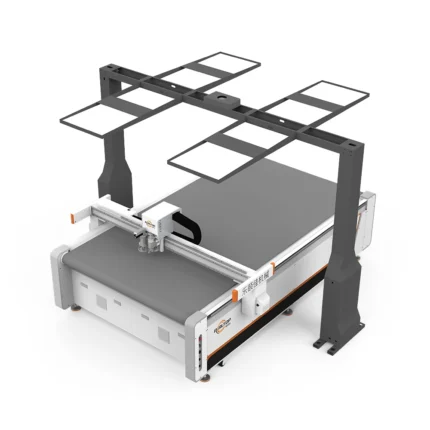
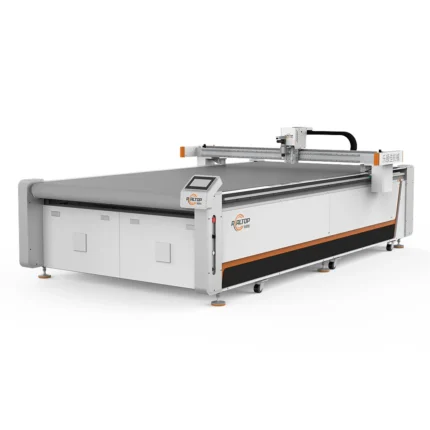
1625 CNC Oscillating Blade Cutter for Artificial Leather & Elastic Fabric
Product Introduction
1625 CNC Oscillating Blade Cutter, ideal for precise cutting of artificial leather and elastic fabric, offering efficient and accurate material processing for 2026 production needs.
Product Parameters
| Model | 1625 |
| Type | CNC Oscillating Blade Cutter |
| Applications | Artificial Leather, Elastic Fabric |
| Year | 2026 |


Auto Knife Leather Cutting Machine 2026 Contour & Auto Feed
Product Introduction
Auto Knife Leather Cutting Machine 2026 with contour cutting and auto feed functions, designed for precise leather processing. Ideal for efficient cutting tasks in manufacturing settings.Product Parameters
| Function | Contour Cutting & Auto Feed |
| Type | Auto Knife Cutting Machine |
| Application | Leather Processing |
| Year | 2026 |
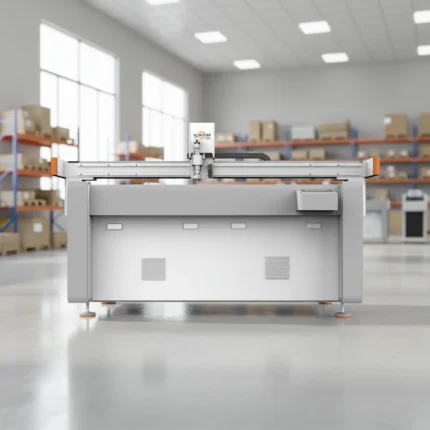
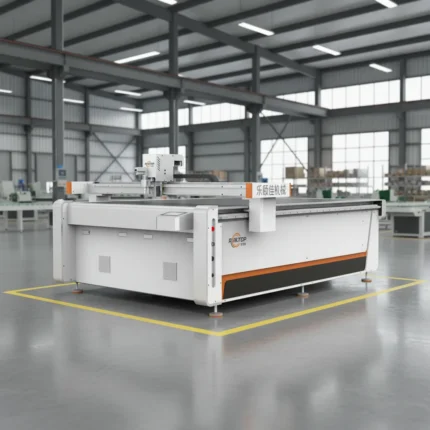
CNC Leather Cutter with Auto-Adjust Blade – Laser Cutting and Engraving
CNC Oscillating Knife Cutting Machine for Leather, 1600×2500 mm working area, ±0.1 mm cutting accuracy, up to 30 mm thickness — configured with seven interchangeable tool heads including oscillating knife, driven rotary knife and V groove knife for leather, fabric and composite processing.
- CCD camera contour recognition with auto-nesting handles printed grain patterns on genuine leather at production speed
- Aluminum bellows vacuum table paired with 9 kW pump ensures full-surface hold-down across small and large parts
- PLC control supports PLT, DXF, AI, PDF file import with multi-language interface options
Sample cutting on your own leather or composite material confirms tool head selection, edge quality and nesting workflow before commitment.
CNC Vibration Knife System 2026 Leather Cutting Machine
1625(Standard) CNC Oscillating Knife Cutting Machine, 1600×2500mm, CCD Camera, ≤30mm — configured for leather contour cutting with integrated camera positioning for printed graphics and genuine grain pattern recognition.
- Interchangeable tool heads (oscillating knife, driven rotary, pneumatic, V-groove, creasing wheel) matched to your specific material
- Aluminum bellows vacuum table with 9 kW pump and full-surface adsorption
- PLC control with multi-language support and PLT/DXF/AI/PDF file compatibility
Sample cutting on your own leather stock available before order commitment to verify edge quality and cutting depth.
CNC Vibration Knife System 2026 Leather Cutting Machine
Product Introduction
Designed for precision leather cutting, the CNC Vibration Knife System 2026 delivers efficient and accurate cutting performance, ideal for leather processing applications.Key Specifications
| Model | CNC Vibration Knife System 2026 |
| Application | Leather Cutting |
| Cutting Technology | Vibration Knife |
| Precision | High Accuracy |
| Efficiency | Enhanced Productivity |
商品评价
There are no reviews yet.