



CNC Knife Cutting Machine for Cardboard Box Roll – Manufacturer
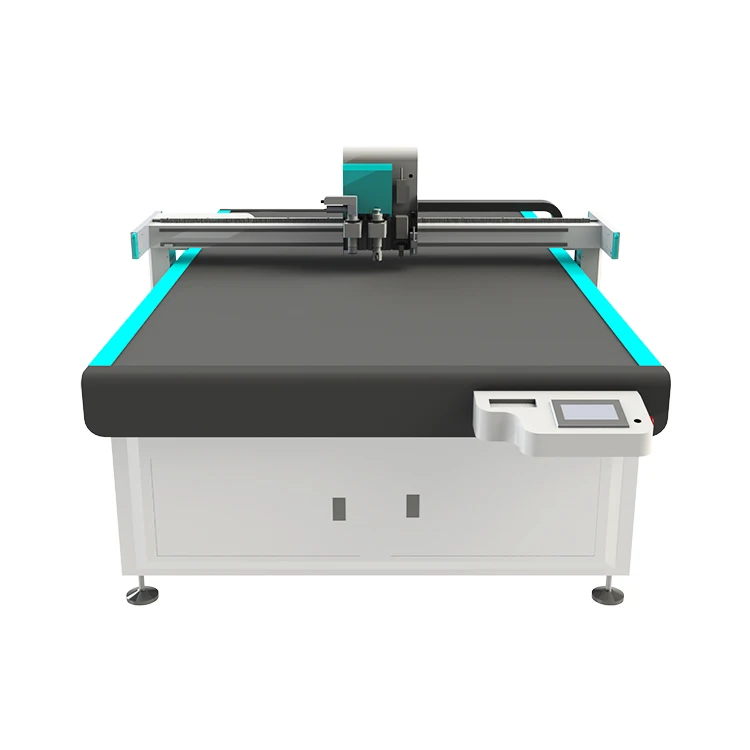
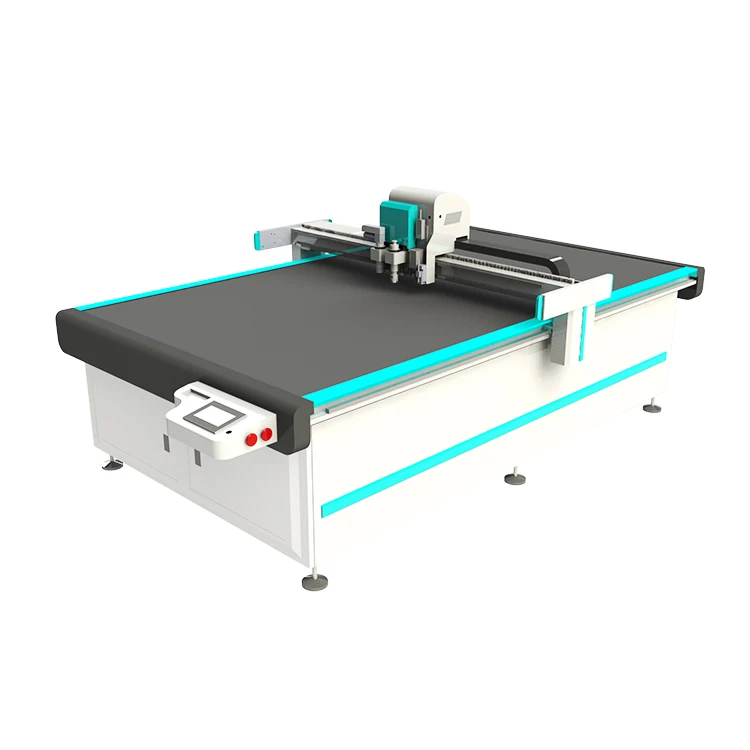
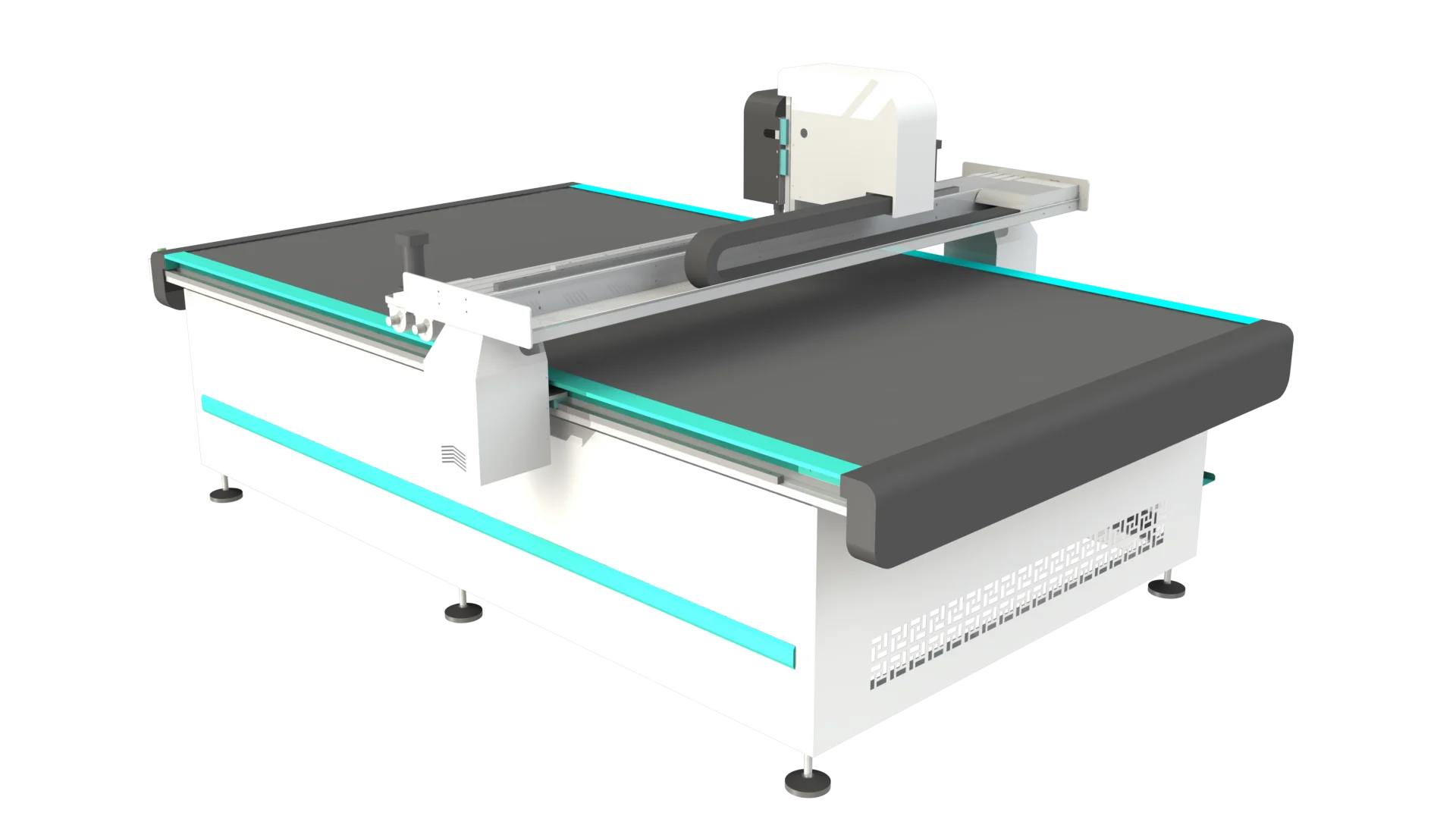
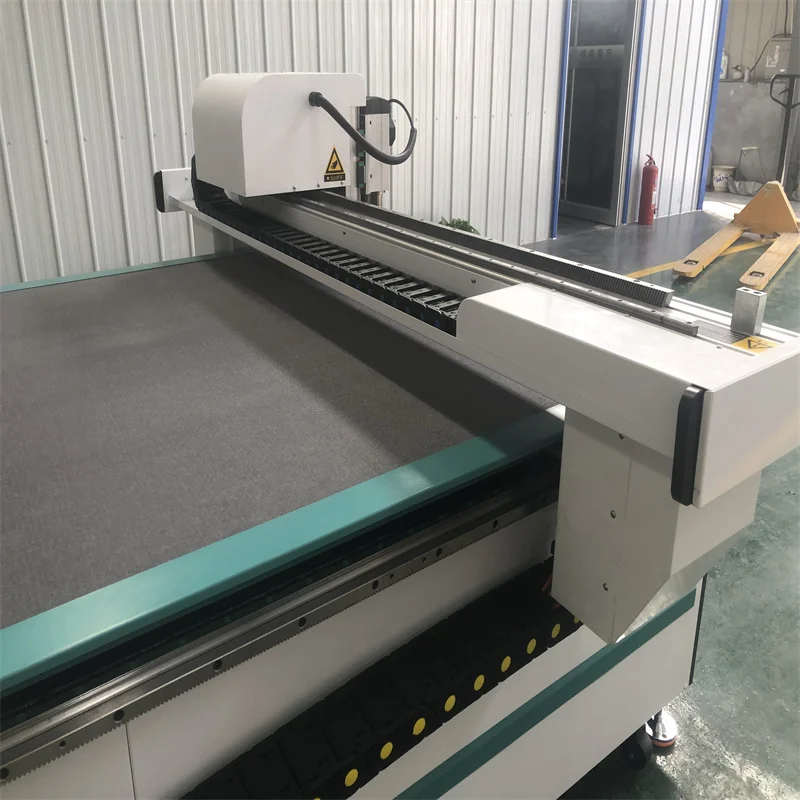
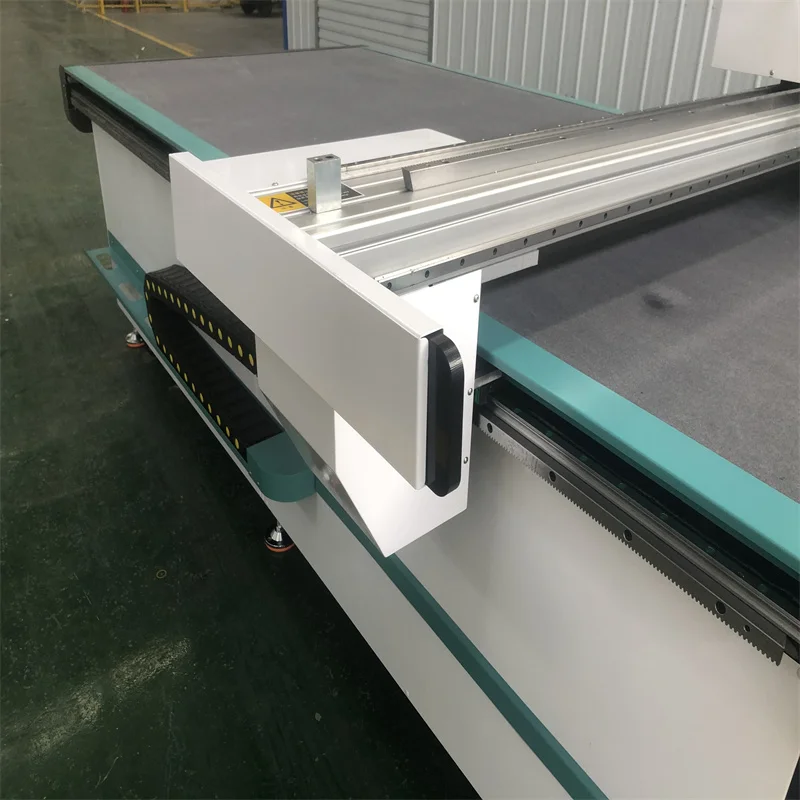
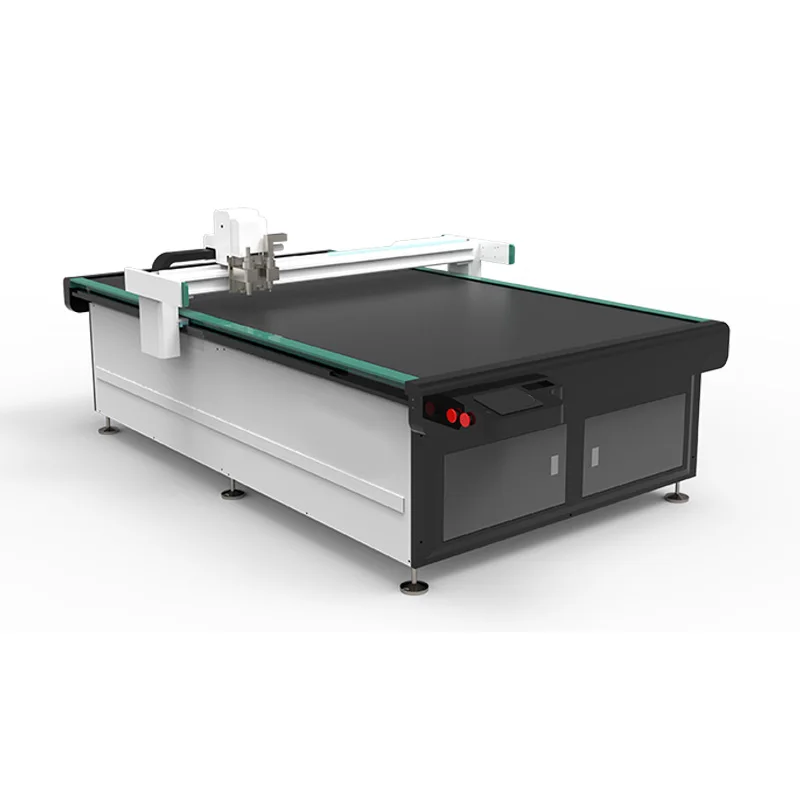
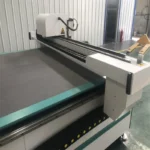
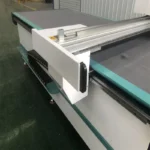
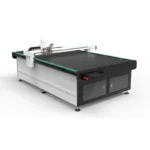
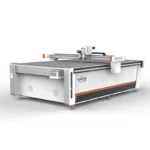
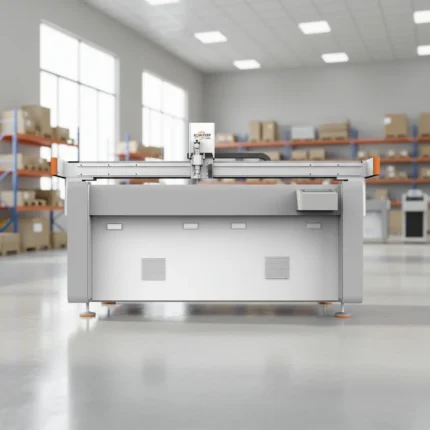
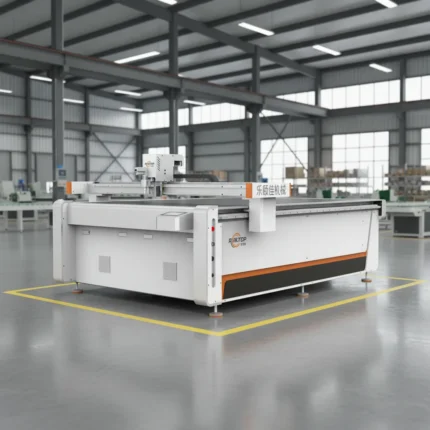
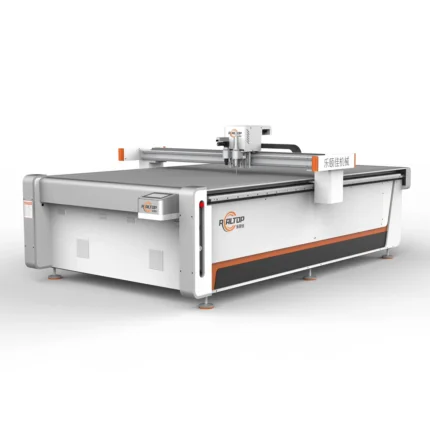
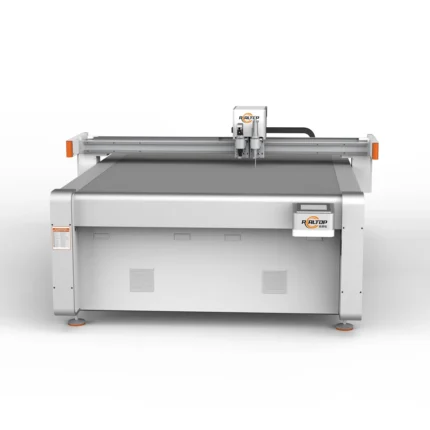
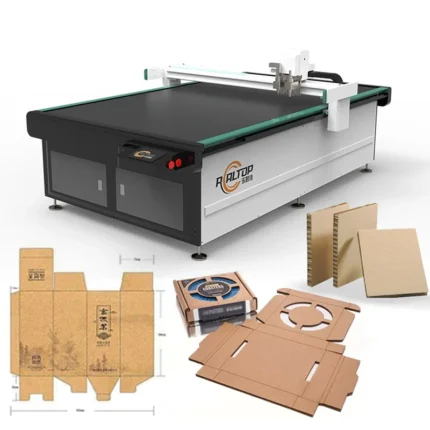
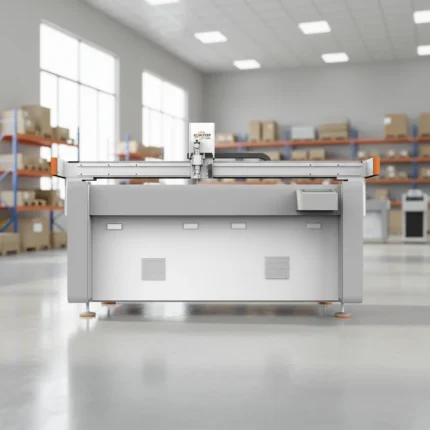
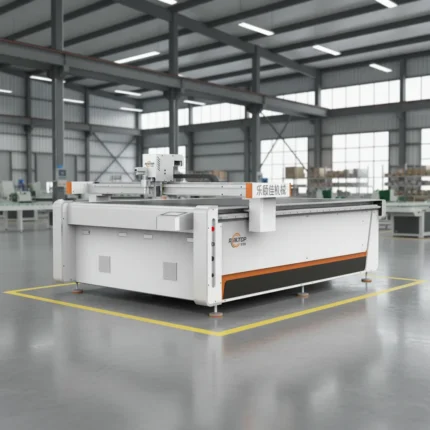
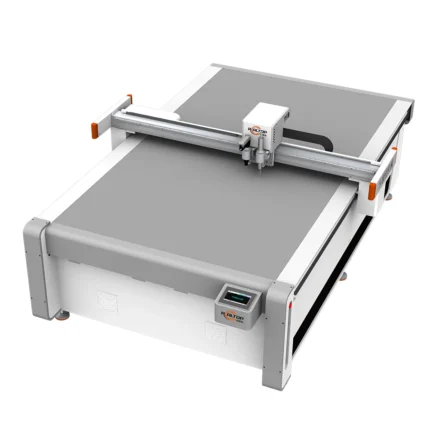
RT-D2516/RT-S2516 CNC Knife Cutting Machine for Packaging, 1600×2500mm, 11kW — flatbed digital cutting table configured for packaging sample making and carton prototyping.
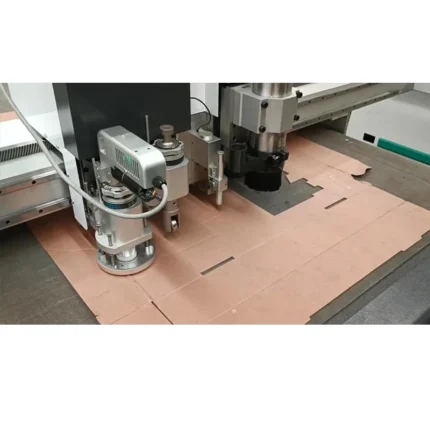
- Oscillating knife with Swiss blade for through-cut and half-cut on corrugated board and card stock
- 7.5 kW vacuum pump delivers hold-down across the full bed, reducing lift on narrow carton parts
- HP-GL instruction format integrates with common packaging CAD/CAM software
We cut your actual stock on this machine before you commit — edge quality, crease depth and cutting speed verified on your material.
Matching the Cutting Method to Your Packaging Stock — A flatbed CNC knife cutting machine configured for corrugated and card stock prototyping, where blade frequency, vacuum hold-down, and tool head selection are matched to your actual material before the machine ships.
Technical Specifications
| Parameter | Value |
|---|---|
| Model | RT-D2516 / RT-S2516 |
| Product Type | CNC Oscillating Knife Cutting Machine for Packaging |
| Working Area | 1600 × 2500 mm |
| Machine Size (L×W×H) | 3450 × 2300 × 1250 mm |
| Rated Power | 11 kW |
| Table Type | Flat vacuum table with 7.5 kW vacuum pump |
| Tool Head | Multifunctional head with Swiss imported knife — oscillating full cutting, oscillating half cutting, cursor location |
| Translational Speed | 800–1200 mm/s |
| Cutting Speed | 200–800 mm/s (basis not stated in source — confirm material type and thickness) |
| Repeatability | ≤ 0.1 mm |
| Transmission System | Digital servo motor (Japanese Yaskawa), linear guide (Taiwan Hiwin), synchronous belt, ball screw |
| Control / Instruction Format | HP-GL compatible |
| Voltage | 380 V ± 10% |
| Safety Device | Infrared sensors |
| Additional Configuration | Germany imported conveyor belt, auto feeding system |
Application Suitability
| Application | Material or Output |
|---|---|
| Packaging sample making and carton prototyping | Corrugated board, folding carton stock, high-glue laminated card |
| Short-run box dieline proofs | Single-face and double-face corrugated, greyboard, coated card |
| POS and exhibition display cutting | Foam board, PVC sheet, honeycomb board |
| Flexible material converting | Leather, sponge composite, soft glass, rubber, silicon |
| Gasket and seal prototyping | Non-metallic gasket stock, composite sheets |
Why Material Thickness Decides More Than Working Area
Most buyers start with bed size and assume everything else follows. A CNC Knife Cutting Machine for packaging sample making must be evaluated first against the thickest stock you run and the edge finish your clients reject — not just the sheet dimensions it accepts.
Tool head selection and vacuum zoning must be confirmed against your actual board grade before the order is placed.
I have seen carton sample shops order a machine that cut standard single-wall corrugated cleanly during the demo, only to discover their daily stock was high-glue laminated card. The oscillating blade could not penetrate the adhesive layer, the knife gummed up within sheets, and every sample came off the bed with torn fibres. That outcome is avoidable when the cutting method is chosen after a live trial on the buyer’s own material [NEED_CITE: oscillating knife behaviour on laminated and high-glue board stocks].
The Laser and Knife Question Every Packaging Shop Must Answer
Some packaging converters assume a CO₂ laser is the default for short-run box prototyping. The CNC Knife Cutting Machine for packaging sample making occupies a different role: it scores crease lines without burning through the flute structure, and it cuts laminated or coated stocks without the heat-affected edge that lasers leave on synthetics and wax-coated board. The choice between knife and laser is not a brand preference — it is a material decision.
When Oscillating Frequency Meets Flute Resistance
Corrugated board resists the blade differently depending on flute profile and liner adhesive. The multifunctional tool head on this machine uses a Swiss imported oscillating knife capable of both full-cut and half-cut passes. Full-cut runs pierce the entire board thickness for dieline outlines, while half-cut scoring leaves the bottom liner intact for folding. The 1600 × 2500 mm working area accommodates standard packaging sheet formats with margin for nesting multiple carton blanks in a single cycle. Getting the oscillation frequency right for E-flute versus B-flute is where sample cutting on your stock matters [NEED_CITE: flute profile influence on oscillating knife frequency and blade wear].
Reading the Specification Sheet Against Your Production Reality
The 7.5 kW vacuum pump paired with the flat table provides hold-down force across the entire bed. For thin card stock and narrow corrugated offcuts, vacuum zoning becomes the real question — a single undivided vacuum zone can lose grip on small carton parts, allowing them to lift mid-cut and produce registration drift. The Yaskawa digital servo motors and Hiwin linear guides maintain repeatability within 0.1 mm, but that tolerance only translates to clean registration marks if the stock stays flat under the head. The HP-GL instruction format integrates with standard packaging CAD/CAM software, yet file format and nesting workflow compatibility should be confirmed against your existing system before the machine enters production.
The Cost of Skipping the Material Trial
When a packaging sample shop specifies a machine without testing their heaviest coated stock, the consequences arrive in the first week of production. Ragged edges on laminated card force operators to slow the cutting speed down manually, turning a quoting advantage into a bottleneck. Blades dull faster against high-glue layers, pushing consumable costs higher than the original estimate. Small carton inserts lift off an unzoned vacuum bed, ruining entire nests and wasting sheet [NEED_CITE: vacuum hold-down requirements for small-format corrugated parts]. These are not machine defects — they are specification gaps that a material trial would have surfaced before shipment.
Why Source This Machine From a Builder That Runs Both Knife and Laser Lines
In-house design across both knife and laser platforms means the cutting method is recommended based on your stock, not forced toward whichever technology the factory only produces. The tool head and table configuration is specified per your material and daily volume, with a sample cutting report on your board grade provided before commitment. Voltage, plug type and control language are confirmed against your local supply before the machine enters final assembly. The CCD camera positioning option is available for printed contour work on pre-printed carton, and software compatibility is validated against your existing CAD workflow — not assumed after the fact [NEED_CITE: CE machinery directive requirements for industrial cutting equipment].
Documentation & Verification
- Machine specification sheet listing every tool head and table option confirmed for your order
- Electrical schematic with 380 V ± 10% wiring and voltage confirmation for your local supply
- Sample cutting report on your actual corrugated or laminated card stock with edge and crease photos
- Factory test record documenting repeatability measurement before dispatch
- Software licence and HP-GL file format compatibility note matching your CAD system
- Spare parts list covering Swiss knife blades, conveyor belt segments and vacuum seals
Installation, Commissioning & Support
- Floor space of approximately 3450 × 2300 mm required with clearance for the auto-feed conveyor infeed
- Dedicated 380 V ± 10% circuit with stable supply confirmed before the 11 kW rated load is connected
- Machine shipped with table and gantry assembled; vacuum pump and conveyor belt connected on site
- First-run parameter setting includes oscillation frequency adjustment matched to your confirmed board grade
- Operator training covers tool head changeover between full-cut, half-cut and cursor location modes
- Daily maintenance schedule for vacuum table filter cleaning and Hiwin linear guide lubrication intervals
What to Prepare Before Requesting a Quotation
Send the specific board grades you cut most often — including flute type, liner weight, and whether any stock carries lamination or high-glue coating. Note your local voltage and frequency supply, the control language your operators need, and the CAD or nesting software currently in your workflow. If printed contour cutting is part of your output, confirm whether your artwork includes registration marks and at what production speed you expect the system to track them.
Frequently Asked Questions
Q: How do you decide between oscillating knife and laser for our packaging material?
A: The cutting method depends on your stock composition. Corrugated board and laminated card are typically suited to oscillating knife because scoring crease lines without burning the flute structure is essential. Laser cutting may suit uncoated thin card where sealed edges are acceptable. We run a sample on your material to confirm before recommending a method.
Q: What corrugated flute types and board thickness can this machine cut?
A: The oscillating knife handles single-face and double-face corrugated across common flute profiles, with full-cut and half-cut passes available. The verified cutting depth depends on flute type and liner adhesive content, which is why we test your specific board before confirming the configuration.
Q: Does the vacuum table hold small carton parts without lift during cutting?
A: The 7.5 kW vacuum pump provides hold-down across the flat table, but vacuum zoning must be reviewed against your smallest part dimensions. Narrow offcuts and small inserts can lift on an undivided zone, so we confirm zoning requirements during the material trial stage.
Q: Which software file formats and nesting systems work with this machine?
A: The HP-GL compatible instruction format integrates with standard packaging CAD and sample-making software. File format and nesting workflow compatibility are confirmed against your existing system before the order is finalized, not assumed after delivery.
Q: Can we test our own material on the machine before committing?
A: Yes. We run a sample cutting on your actual board stock — including any high-glue or laminated variants — and provide a cutting report with edge quality, crease definition, and blade behaviour before you place the order.


Related products
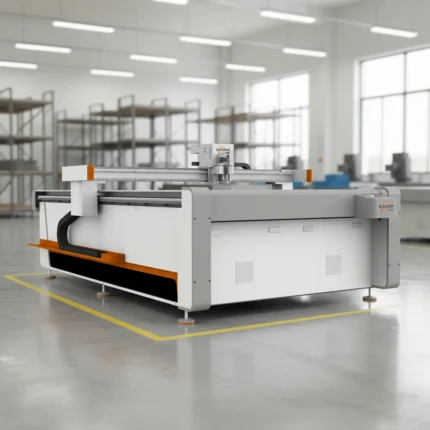
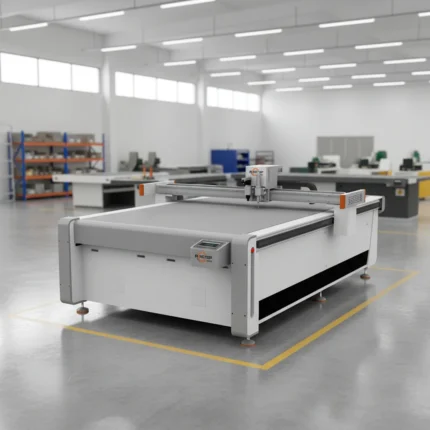
2026 Digital Flatbed Cutting Plotter Auto Corrugated Box Die Cutter
Product Introduction
Digital Flatbed Cutting Plotter 2026, ideal for auto corrugated box die cutting, offering precision and efficiency for professional packaging production.Specifications
| Type | Digital Flatbed Cutting Plotter |
| Model | 2026 |
| Application | Auto Corrugated Box Die Cutting |
| Function | Precision Cutting & Plotting |
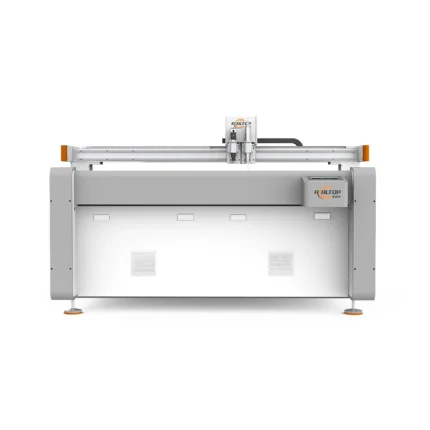
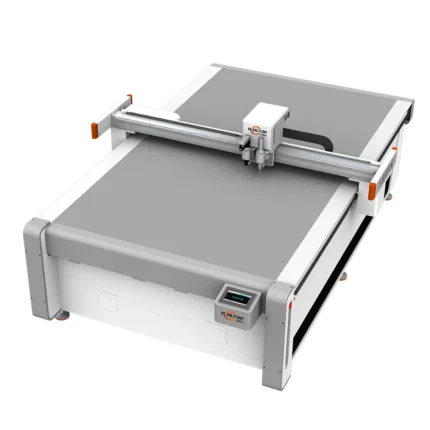
Automatic Die-less Cardboard Vibrating Knife Cutter 2026
Product Introduction
Automatic Die-less Cardboard Vibrating Knife Cutter 2026, a precision cutting solution for cardboard materials, featuring advanced die-less technology for efficient and flexible cutting operations. Ideal for various cardboard processing needs in manufacturing and packaging industries.Key Specifications
| Model | 2026 |
| Type | Automatic Die-less Cutter |
| Cutting Tool | Vibrating Knife |
| Material | Cardboard |
Automatic Digital Cardstock Cutter 2026 CNC Cutter
Product Introduction
Automatic Digital Cardstock Cutter 2026 is a CNC cutting machine ideal for white cardboard and kraft paper. It offers precise and efficient cutting performance, suitable for various paper processing needs in manufacturing and craft applications.Key Specifications
| Type | CNC Digital Cutting Machine |
| Material Compatibility | White Cardboard, Kraft Paper |
| Operation | Automatic |
| Application | Paper Cutting & Processing |
Automation CNC Pizza Box Machine 2026 Rotary Die Cutting
Product Parameters
| Type | Automation CNC Pizza Box Machine |
| Model Year | 2026 |
| Cutting Technology | Rotary Die Cutting |
| Operation | Automated CNC Control |
Introduction
This 2026 Automation CNC Pizza Box Machine features advanced rotary die cutting technology, ensuring precise and efficient pizza box production. With automated CNC control, it offers high productivity and accuracy for professional manufacturing needs.

Digital CNC Cardboard Cutting Machine 2026
Product Introduction
High-precision Digital CNC Cardboard Cutting Machine 2026, ideal for efficient cardboard processing with advanced CNC technology, ensuring precise and fast cutting performance for various packaging and craft applications.
Key Specifications
| Model | 2026 |
| Type | Digital CNC Cutting Machine |
| Material | Cardboard |
| Feature | High Precision, Efficient Cutting |

商品评价
There are no reviews yet.