

CNC Oscillating Knife Cutting Machine for Cloth – Factory Direct
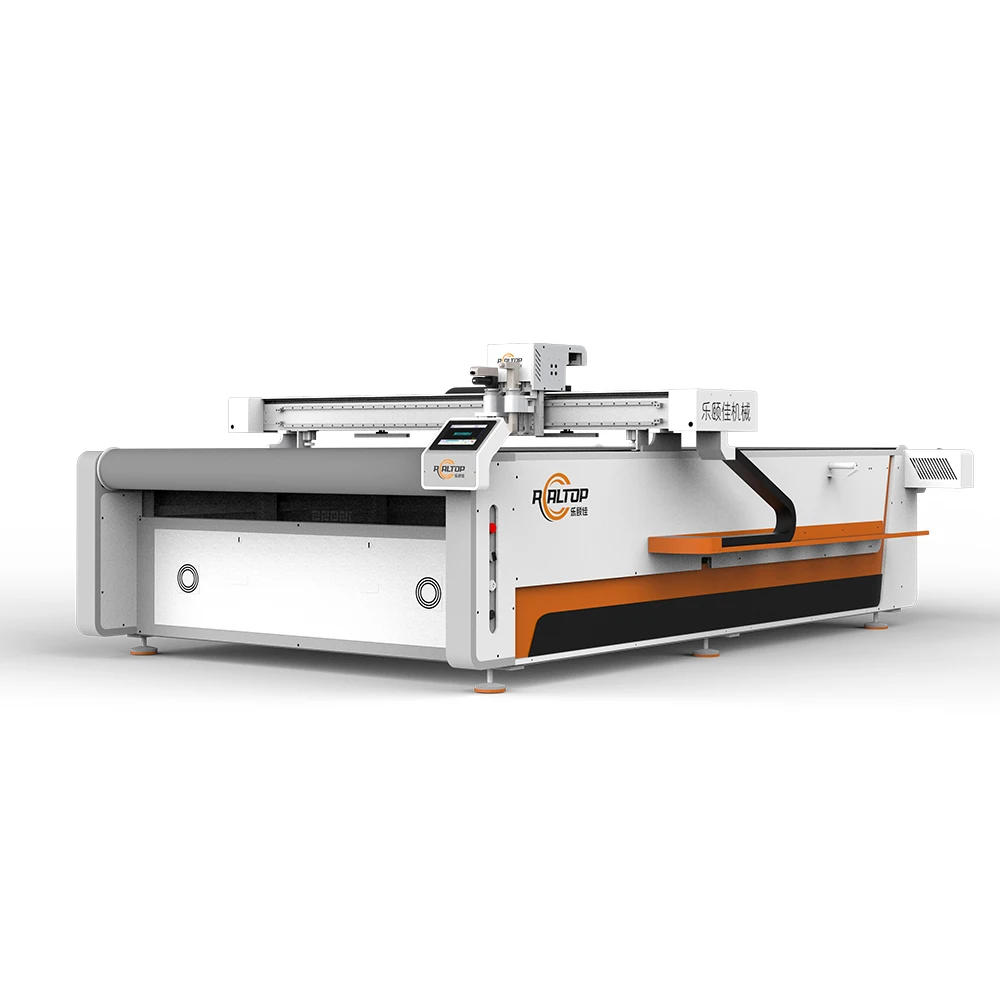
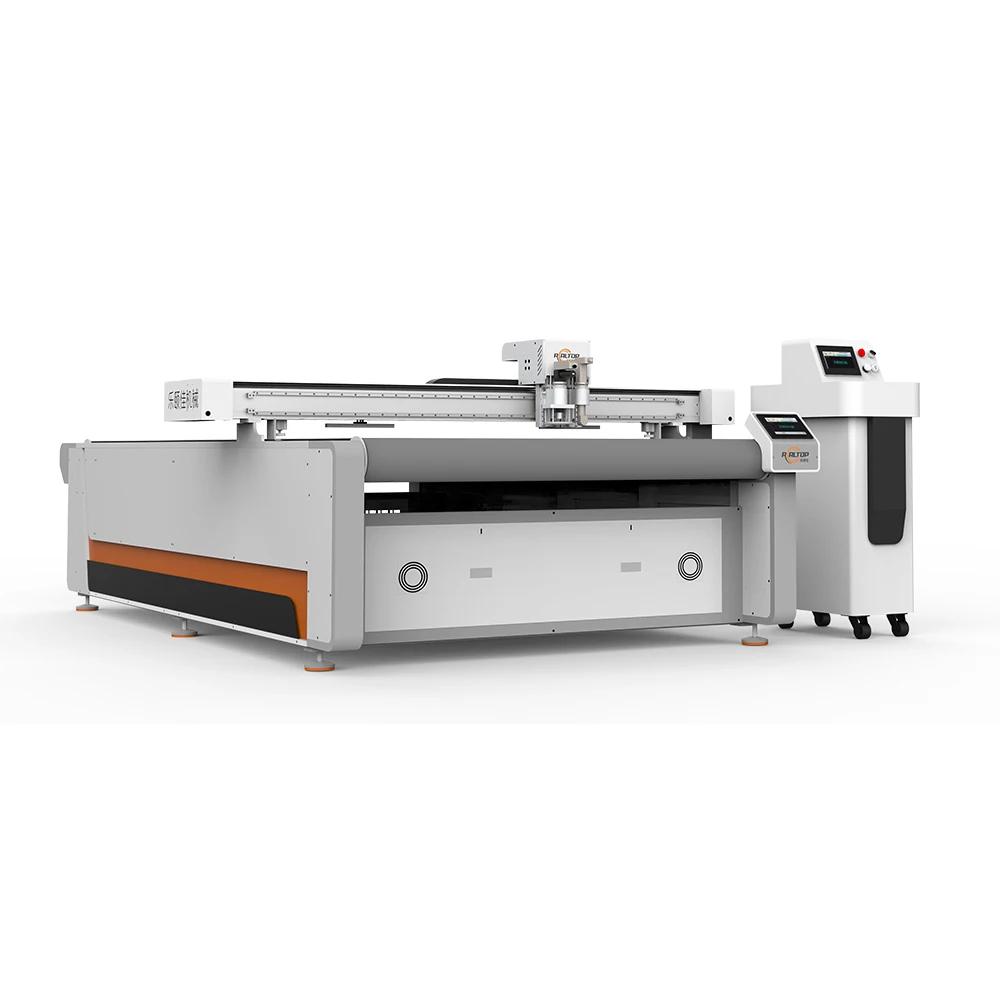
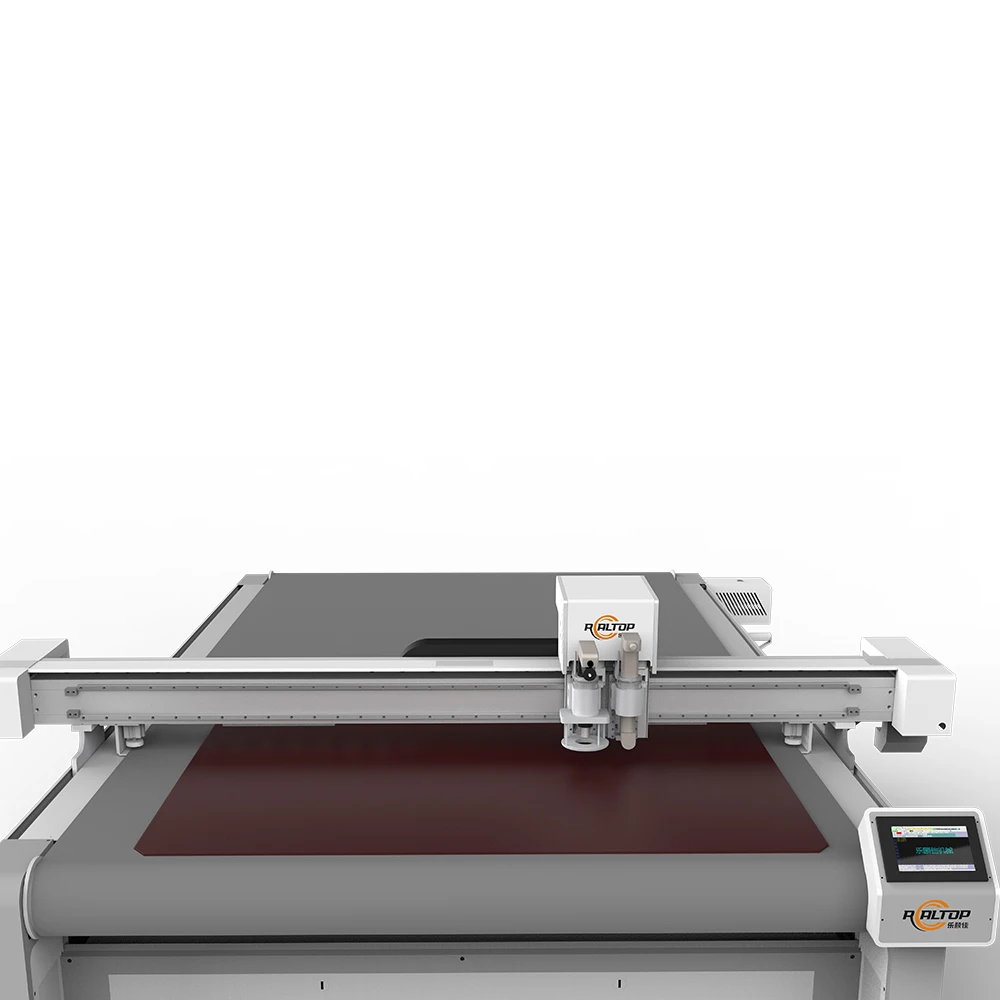
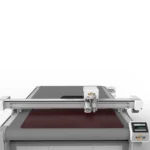
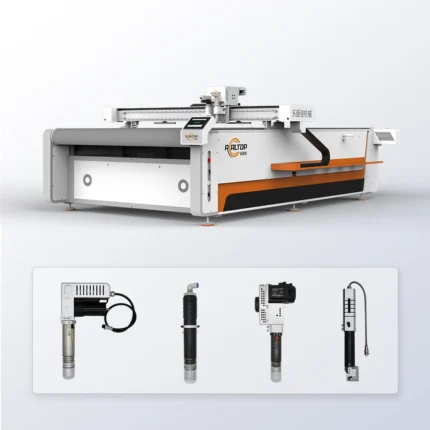
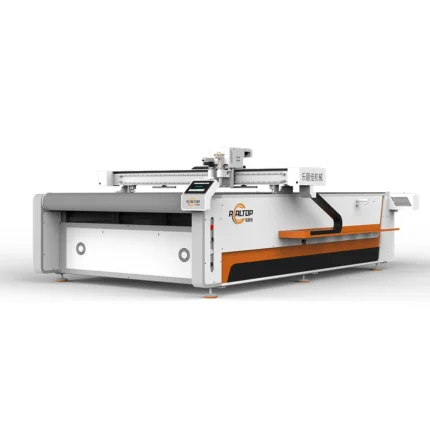
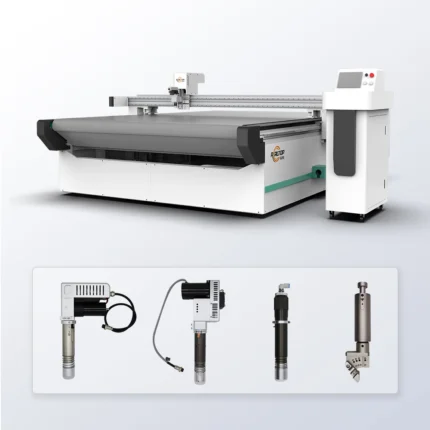
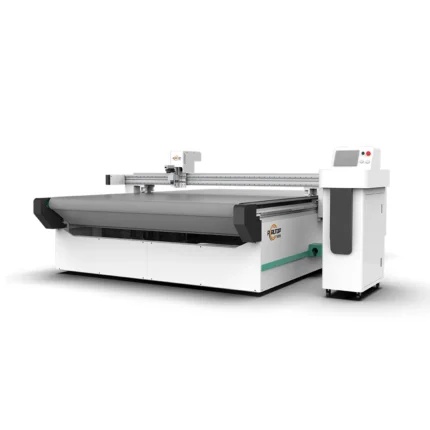
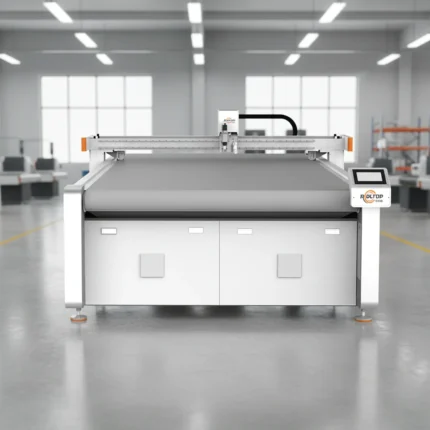
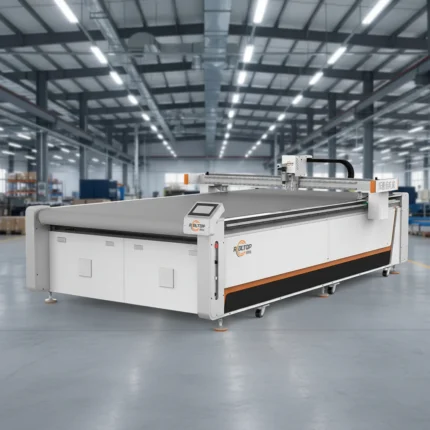
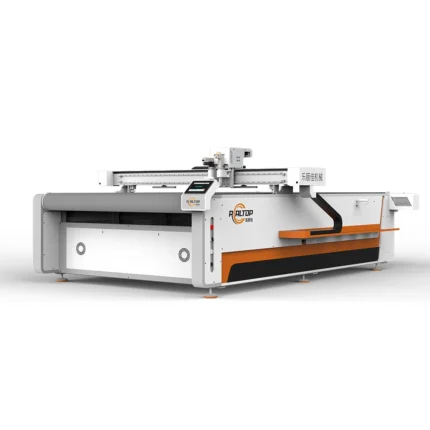
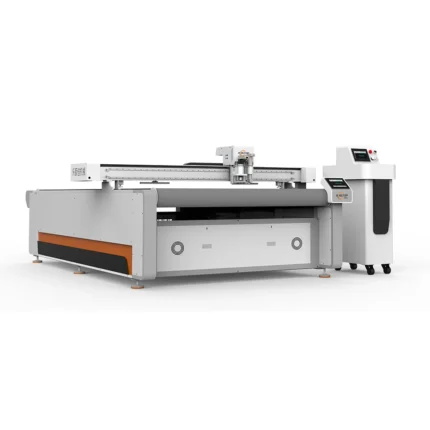
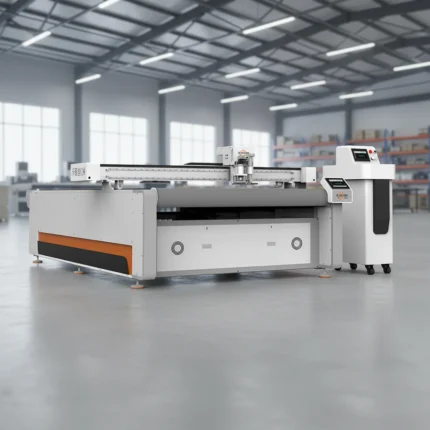
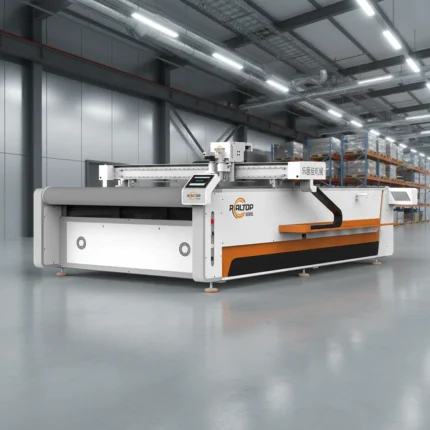
1625 CNC Oscillating Knife Cutting Machine for Cloth, 1600×2500mm working area, ±0.1mm accuracy, 9KW vacuum pump — configured per material thickness and lay-up method.
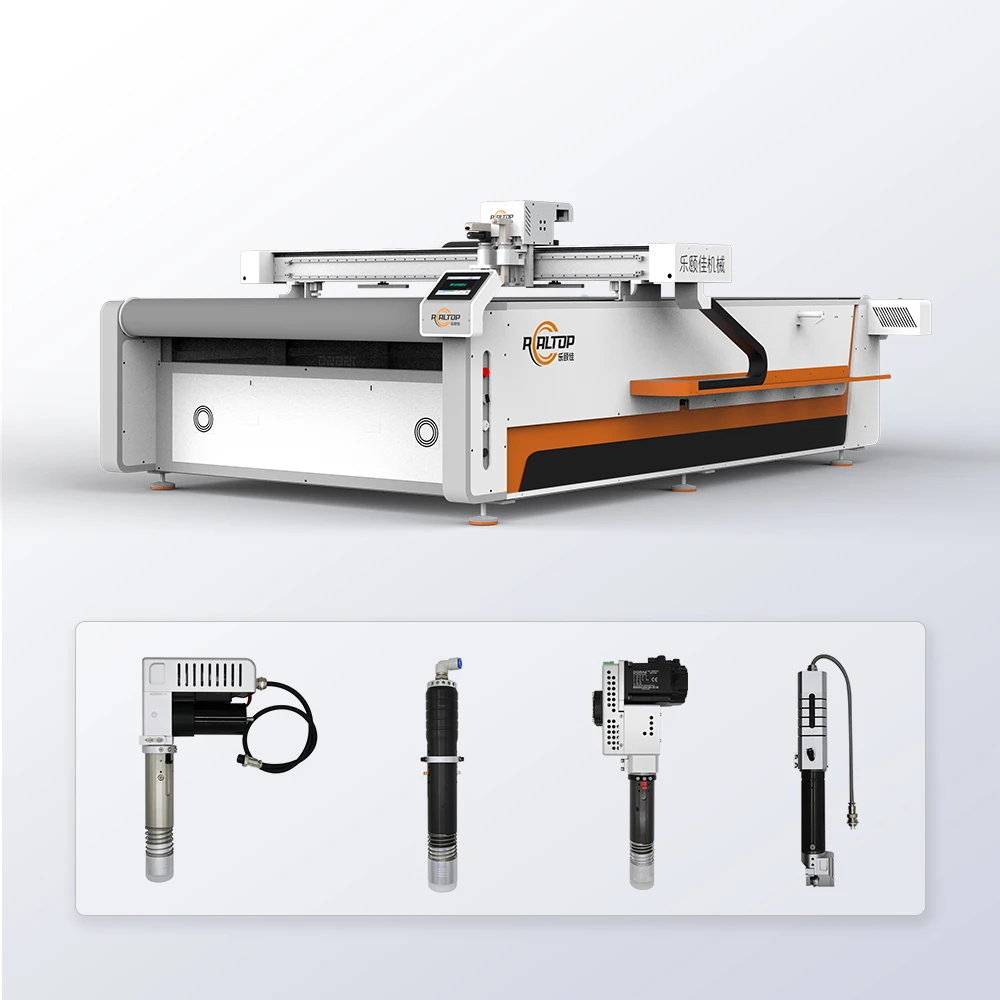
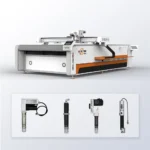
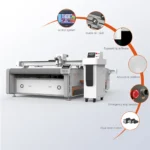
- Tool head options include oscillating knife, driven rotary knife, creasing wheel and V groove knife, selected based on fabric type and cutting depth
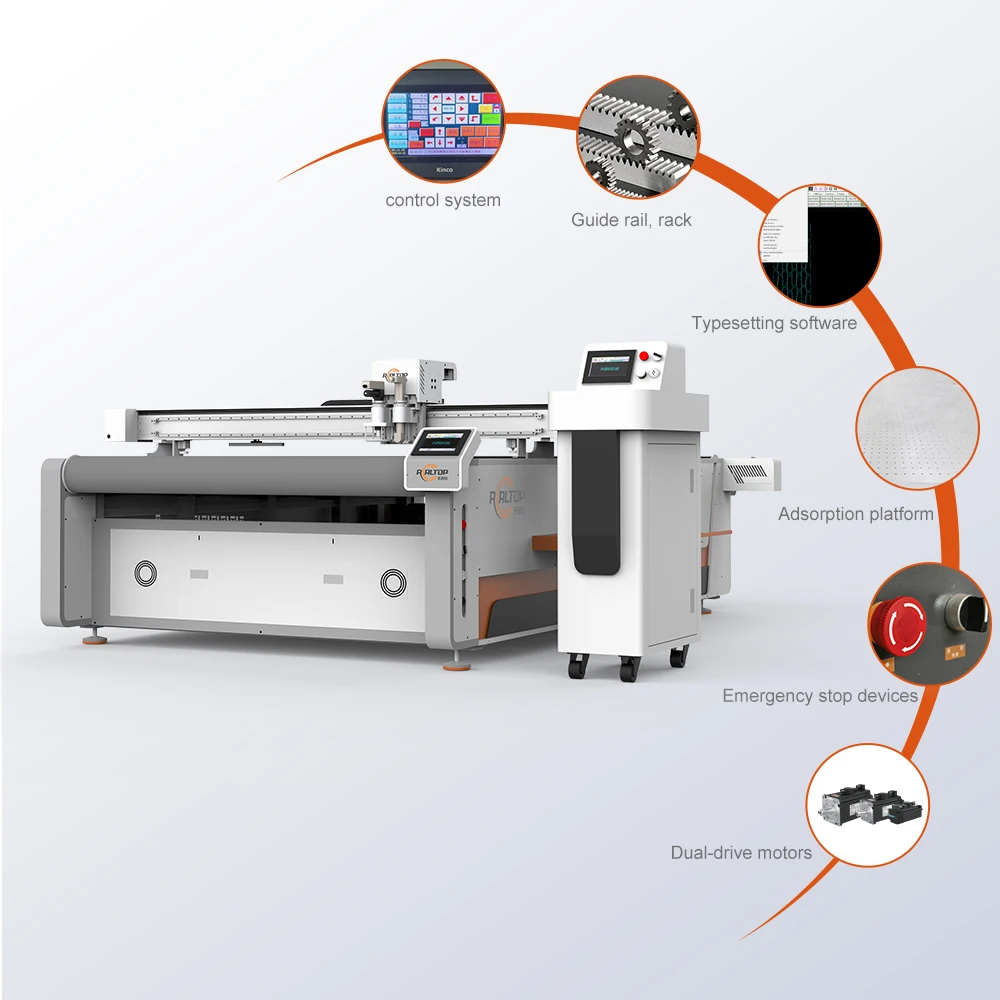
- Aluminum bellows vacuum table with zoning control holds small and large pattern pieces securely during high-speed cutting
- PLC control panel with customizable language and DXF/PLT/AI/PDF file compatibility
Sample cutting on your own material is completed before order confirmation, with tool head configuration, electrical schematic and voltage documentation provided prior to shipment.
Material-matched configuration — The 1625 oscillating knife platform is specified per fabric type, ply count and daily volume rather than sold as a generic flatbed, with tool head, vacuum zoning and software confirmed against your actual lay-up before order.
Technical Specifications
| Parameter | Value |
|---|---|
| Product Type | CNC Oscillating Knife Cutting Machine |
| Model | 1625 |
| Working Area | 1600 × 2500 mm |
| Cutting Speed | 0–2000 mm/s |
| Cutting Thickness | ≤ 30 mm (basis not stated in source — confirm block format / material / thickness) |
| Cutting Accuracy | ±0.1 mm |
| Tools Available | Oscillating knife, Driven rotary knife, Creasing wheel, Kiss cutting tool, Pneumatic knife, Milling tool, V groove knife |
| Vacuum Pump | 9 kW |
| Servo Motors | Panasonic, Delta, Dorna options |
| Control System | PLC control panel |
| Voltage Options | 110V, 220V, 380V |
| Profile Formats | PLT, DXF, AI, PDF |
| Language Options | English, Russian, Italian, Chinese (customizable) |
| Machine Size | 3300 × 2100 × 1350 mm |
| Safety Devices | Infrared sensor, Emergency stop |
| Certification | CE |
Application Suitability
| Application | Material or Output |
|---|---|
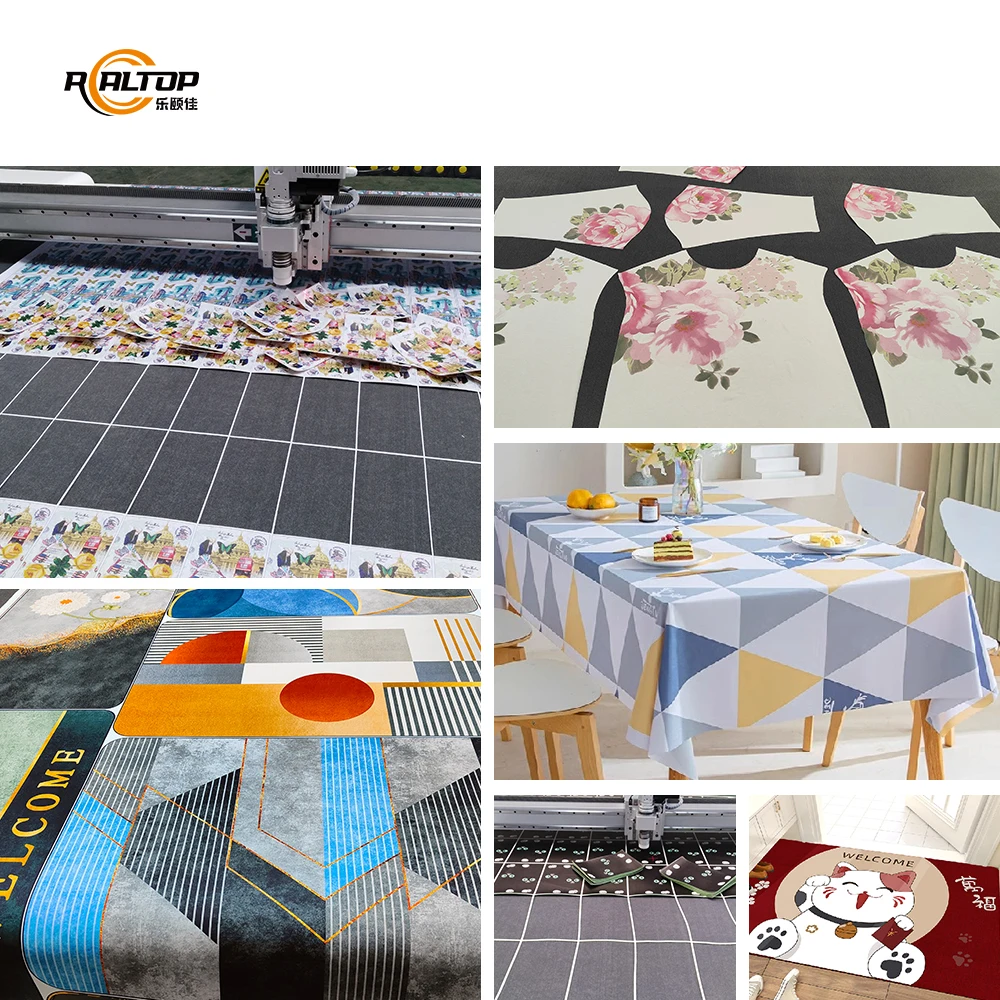
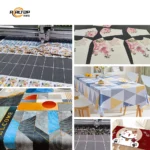
| Apparel manufacturing | Suits, knitwear, lace, complex multi-layer fabrics |
| Automotive interiors | Seat fabrics, carpets, PVC mats |
| Home textiles | Sofa fabrics, curtains, rugs |
| Composite processing | Carbon fiber prepreg, aramid, specialty laminates |
Why "Working Area" Alone Is a Trap for Fabric Cutters
A 1600 × 2500 mm bed means nothing if the vacuum zoning cannot hold your smallest pattern piece flat during the cut.
I have walked into workshops where a machine was chosen purely on table size, only to discover that thin coated nylon or slippery technical textiles lift off the bed mid-pass. The knife drags the material, the edge frays, and the operator spends the rest of the shift re-cutting. The real specification conversation should start with your heaviest lay-up, your thinnest single ply, and the smallest piece in your nest — then match vacuum zone count, tool head oscillation frequency, and hold-down strategy to those extremes [NEED_CITE: vacuum zoning requirements for multi-ply technical textiles].
Matching the Knife Head to Your Fabric Stack
A driven rotary knife slices through dense woven stacks cleanly, while an oscillating knife handles knits and stretch fabrics without pulling the yarn. The 1625 platform accepts both, along with a kiss cutting tool for single-ply vinyl and a creasing wheel for fold lines on packaging inserts. Selecting the correct head before shipment avoids the on-site rework that costs you production days.
Vacuum Zoning and the Small-Piece Problem
The aluminum bellows vacuum table is divided into independently controlled zones. When you nest a run of collar pieces beside full bodice panels, the zones under the small pieces stay active even though surrounding areas are open to atmosphere. This prevents the edge lift that produces ragged cuts on lightweight linings and interlinings — a failure mode that no amount of post-cut trimming can fix [NEED_CITE: vacuum table zoning principles for flatbed digital cutters].
Reading the Specs That Actually Matter
Cutting speed of 0–2000 mm/s is a travel ceiling, not a production rate; real throughput depends on corner frequency, acceleration, and the number of tool changes per nest. The ±0.1 mm repeat positioning accuracy, however, is the figure that determines whether your plaid match-points align across fifty layers without manual sorting afterward. Servo options from Panasonic, Delta, or Dorna let you align the motion system with the service network available in your region, which matters more than brand prestige when a drive needs replacement.
The 9 kW vacuum pump must be matched to material porosity: open-weave meshes leak air and need higher flow, while coated fabrics seal well and require less. Voltage configurability across 110V, 220V and 380V ensures the machine arrives ready for your local supply without a step-down transformer adding a failure point.
The Hidden Cost of a Wrong Configuration Choice
When a buyer accepts a standard oscillating knife on a PTFE-coated glass fiber lay-up, the blade chatters against the coating and produces micro-fractures along the cut line. The parts pass visual inspection but fail tensile testing at the seam. Similarly, specifying a single-zone vacuum table for automotive carpet cutting means the heavy material shifts during directional changes, pushing the cut path outside tolerance and scrapping the entire hide [NEED_CITE: material-specific tooling selection for technical textiles].
Why Source This CNC Oscillating Knife Cutting Machine Manufacturer
REALTOP builds both knife and laser platforms under one roof, so the 1625 is recommended only when knife cutting genuinely suits your material — not because the factory needs to move inventory. Every order includes a sample cutting report run on your own fabric, photographed and measured, before the build is released. Tool head and vacuum configuration are documented in a dedicated list, not buried in a generic brochure. The PLC interface ships in your chosen language, and file format compatibility with DXF, PLT, AI and PDF is verified against your nesting software at order stage. Electrical schematics and voltage confirmation documents leave the factory with the crate, so your electrician is not guessing at the terminal block.
Documentation & Verification
- Sample cutting report on your specific fabric weight and ply count before order release
- Tool head and vacuum zone configuration list matched to your material and daily volume
- Electrical schematic with confirmed voltage, plug type and circuit protection for your market
- Software licence file and DXF/PLT/AI/PDF compatibility note tied to your nesting package
- CE declaration and factory test record signed against your material sample
- Spare parts list with oscillating knife blade grades and vacuum pump consumables
Installation, Commissioning & Support
- 3300 × 2100 mm footprint requires level concrete slab with anchor bolt provisions
- Dedicated circuit for 9 kW vacuum pump plus servo drive draw, confirmed at voltage order
- Machine ships on skid with table and gantry separated; overhead clearance for reassembly noted
- First-run parameter setting includes knife oscillation frequency tuned to your fabric sample
- Operator training covers PLC language selection and tool change procedure on the 1625 platform
- Blade and vacuum belt spares shipped in separate crate with part numbers cross-referenced to manual
What We Need to Quote Correctly
Send a roll sample of your heaviest and lightest fabric, your typical lay-up height, and the smallest piece in your production nest. Confirm local voltage, frequency, and plug standard, plus the preferred control language for your operators. Tell us which nesting software you run today so we verify file import before the machine is built.
Frequently Asked Questions
Q: How is cutting thickness verified against my specific material and lay-up method?
A: You ship us a sample roll. We run your exact ply height on the 1625, document blade type, oscillation frequency and edge quality in a cutting report, and send it back with the physical sample. Thickness is confirmed per material, not quoted as a generic maximum.
Q: What voltage and plug options are confirmed before shipment to my country?
A: We confirm 110V, 220V or 380V at order, along with plug type and frequency. An electrical schematic showing terminal connections and circuit protection ships inside the documentation pack so your electrician wires the machine without guesswork on arrival.
Q: How is the control language and software interface customized for my operators?
A: The PLC panel supports English, Russian, Italian, Chinese and additional languages on request. We lock your choice at order and verify that your existing DXF, PLT, AI or PDF nesting files open correctly on the installed software before the machine leaves the factory.
Q: What tool head is recommended for my material — and can I see a sample cut first?
A: Oscillating knife for knits and stretch fabrics, driven rotary for dense wovens and stacks, kiss cutting for single-ply vinyl. We run your material on the chosen head, measure edge quality and send the sample back with the report before you commit to the build.
Q: What documentation is included with shipment for the 1625?
A: You receive the machine specification sheet, electrical schematic, tool head and vacuum configuration list, sample cutting report on your material, CE declaration, operation and maintenance manual, software licence note, and a spare parts list with blade grades and pump consumables.


Related products
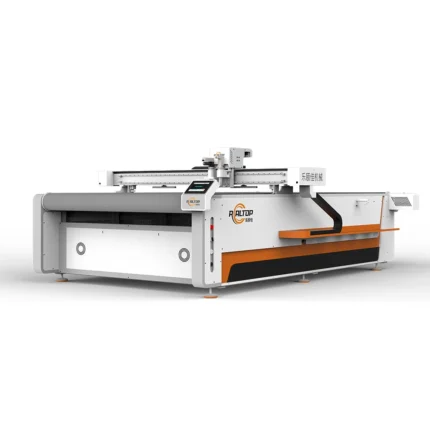
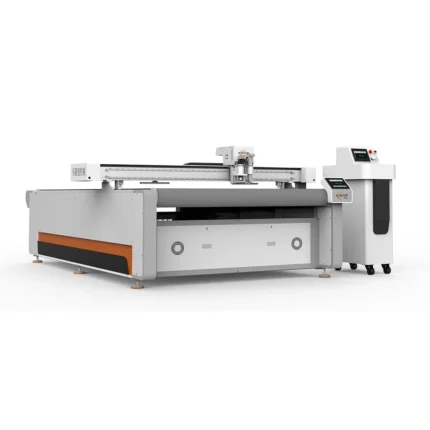
2026 Automatic PVC Tarpaulin Cutter Machine
Product Introduction
High-performance Automatic PVC Tarpaulin Cutter Machine 2026, ideal for precise and efficient cutting of PVC tarpaulin materials, designed for industrial manufacturing needs with reliable operation and user-friendly control.Product Parameters
| Model | 2026 |
| Type | Automatic PVC Tarpaulin Cutter |
| Application | PVC Tarpaulin Cutting |
| Feature | Precise & Efficient Cutting |
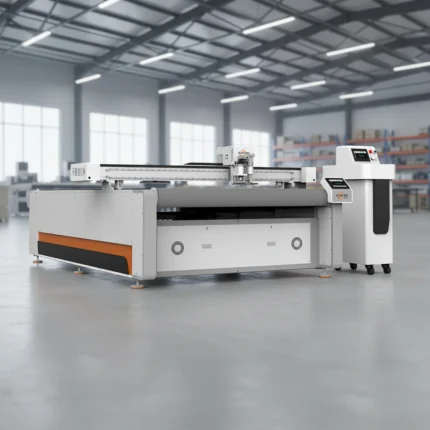
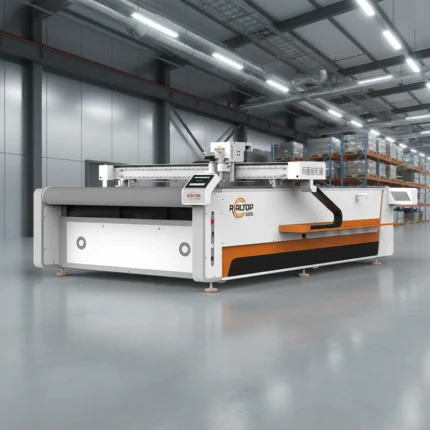
2026 CNC Knife Cutting Machine for Fabric Leather PVC Hot Sale
Product Introduction
2026 Hot Sale CNC Knife Cutting Machine for Fabric, Leather, PVC. Ideal for precise cutting of various materials with advanced CNC technology, perfect for manufacturing needs.
Product Parameters
| Application | Fabric, Leather, PVC |
| Type | CNC Knife Cutting Machine |
| Feature | Precision Cutting |
| Year | 2026 Model |
2026 Flatbed Oscillating Knife Cutter 1600x3500mm Auto-Feeding Textile
Product Overview
Flatbed Oscillating Knife Cutting Machine 2026 is a high-precision textile fabric cutter with auto-feeding function, ideal for efficient and accurate cutting tasks in textile manufacturing. It combines advanced oscillating knife technology with a large working area to meet industrial production needs.Key Specifications
| Model | 2026 |
| Working Area | 1600x3500mm |
| Feeding System | Auto-Feeding |
| Cutting Type | Oscillating Knife |
| Application | Textile Fabric |
Automatic Multi-Layer Vibrating Knife Cutter 2026
Product Introduction
Automatic Multi-Layer Vibrating Knife Cutter 2026, ideal for precise cutting of various materials with multi-layer processing capability, enhancing production efficiency.
Key Specifications
| Type | Automatic Vibrating Knife Cutter |
| Layer Capacity | Multi-Layer |
| Model | 2026 |
| Function | Precision Cutting |
商品评价
There are no reviews yet.