

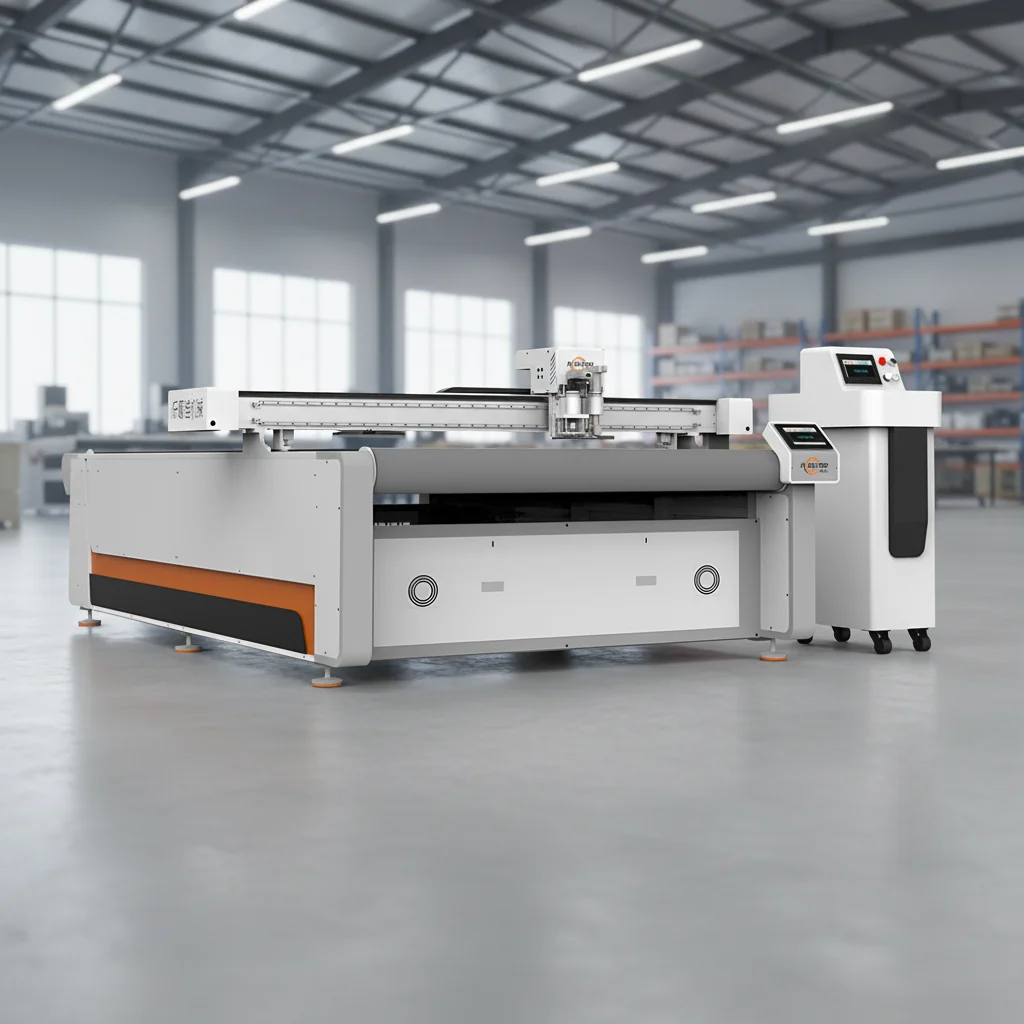
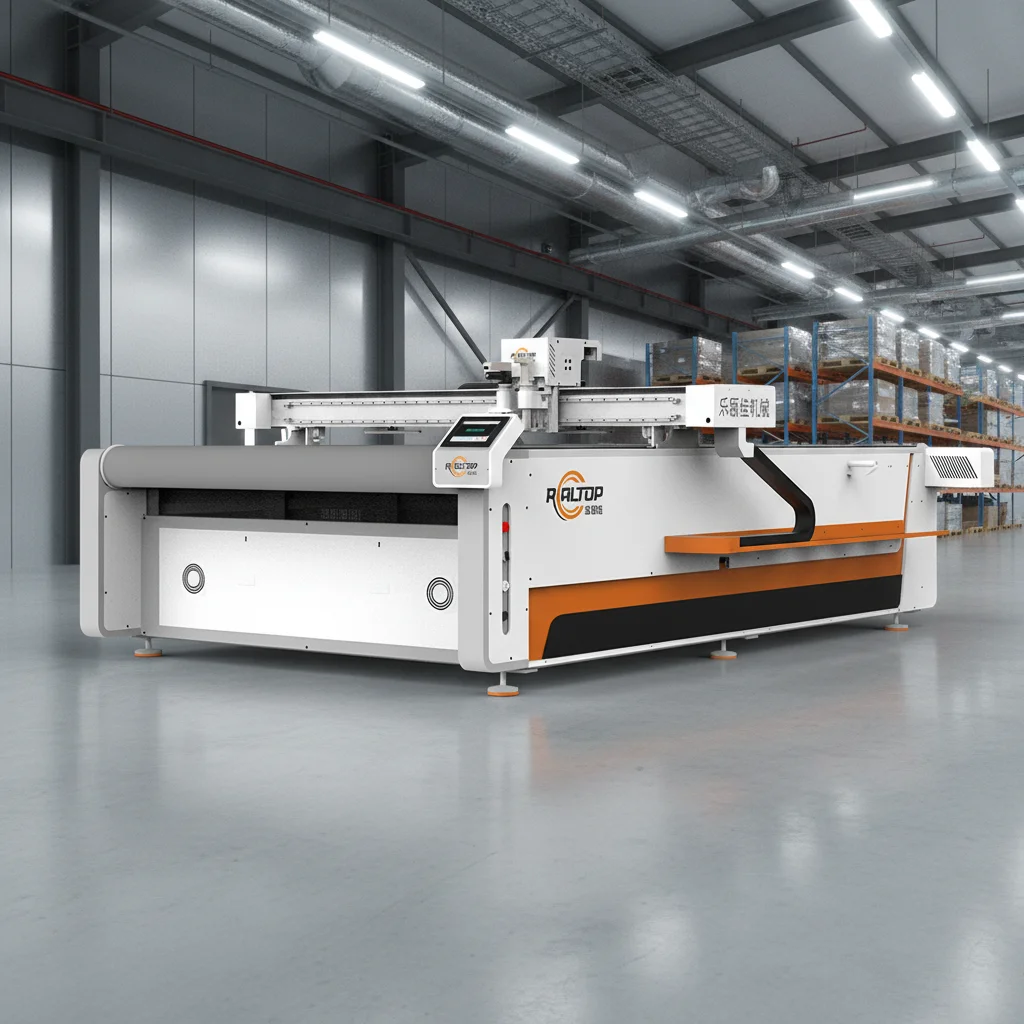
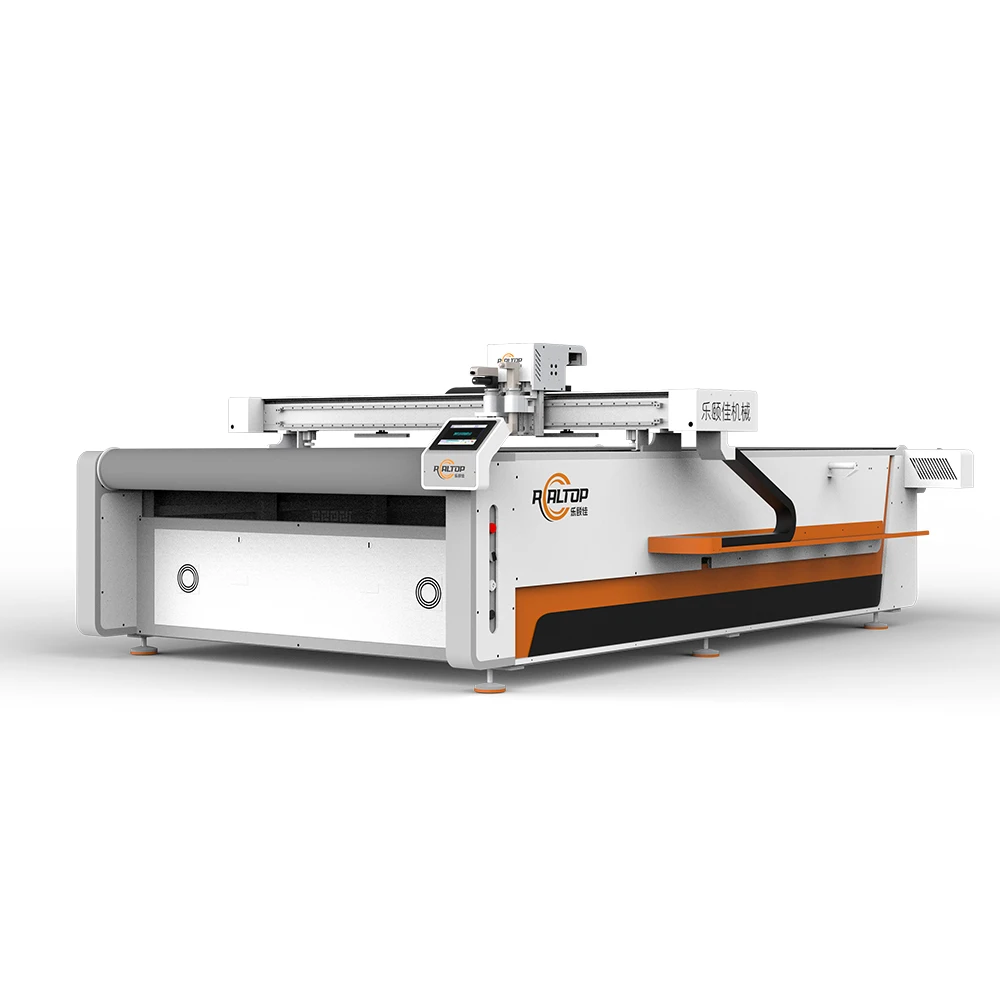
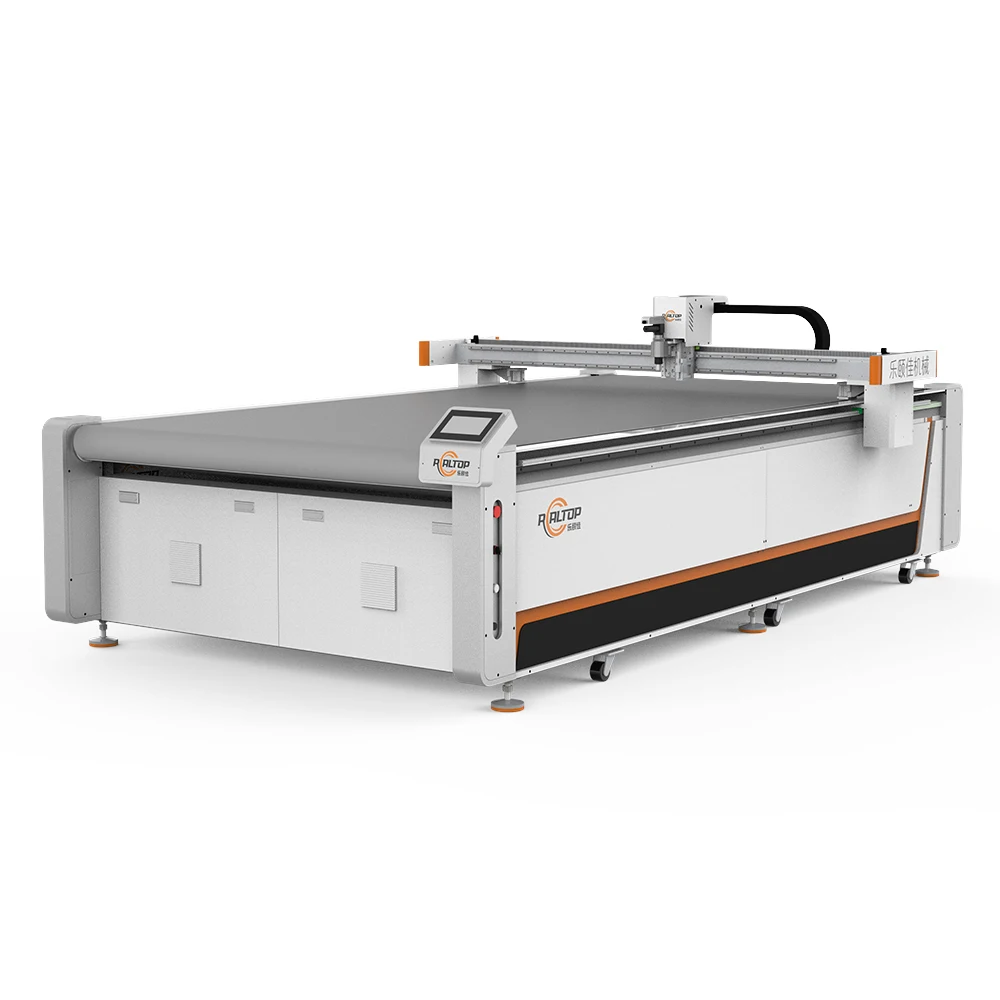
CNC Oscillating Knife Cutting Machine for Garment Fabric – Factory Supply
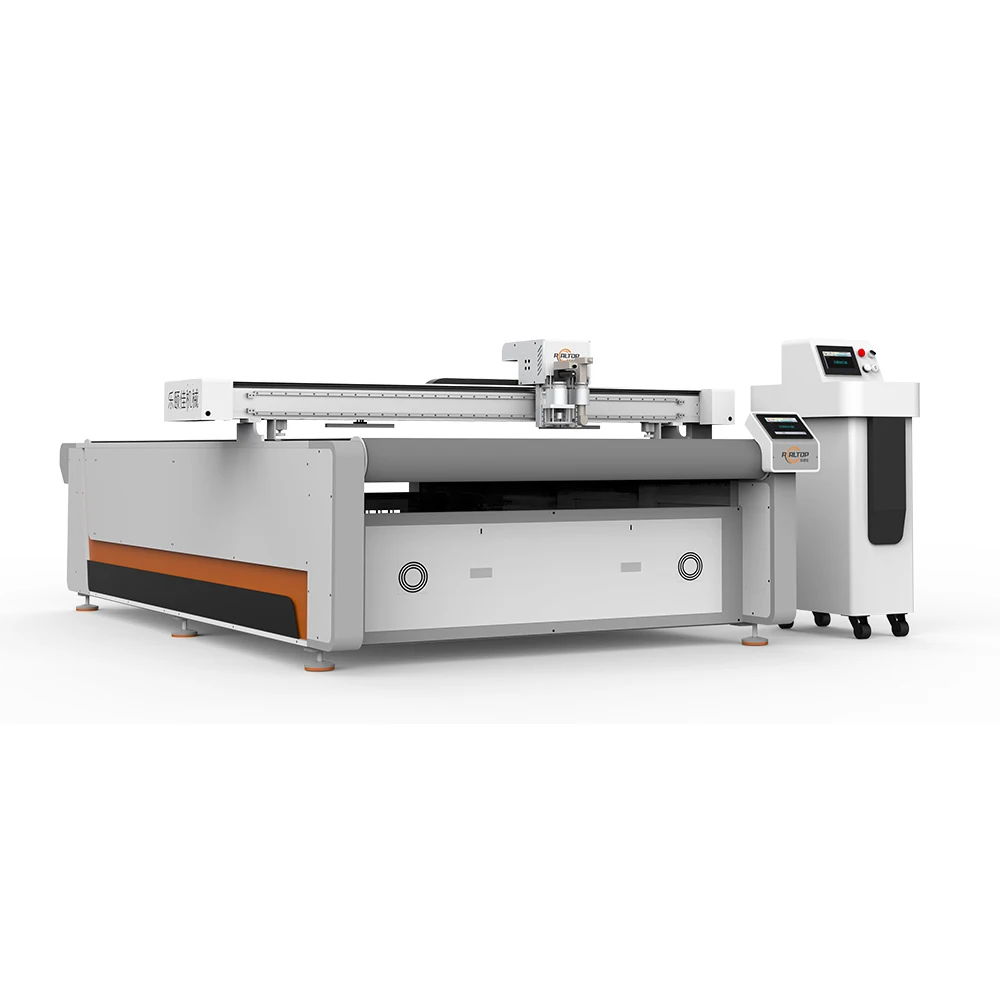
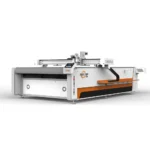
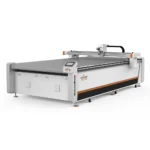
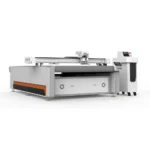
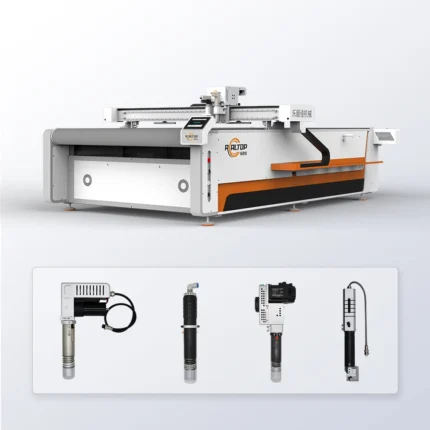
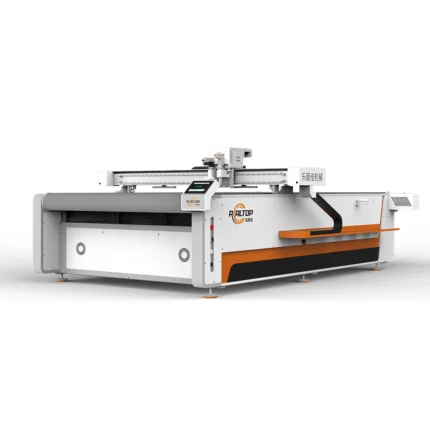
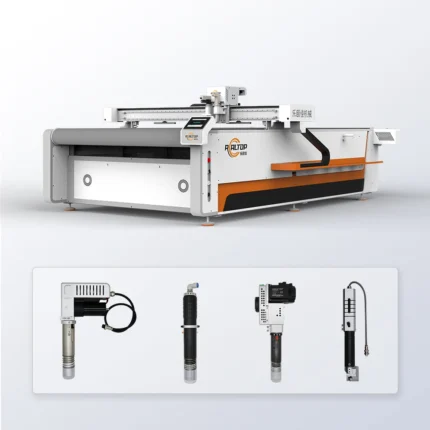
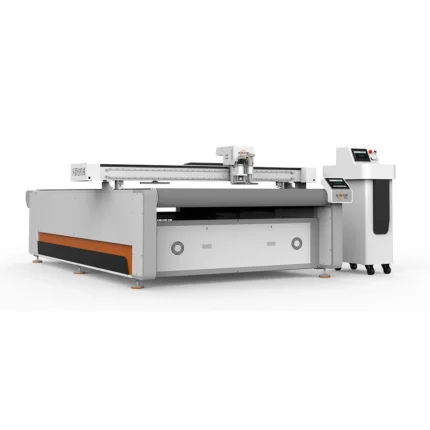
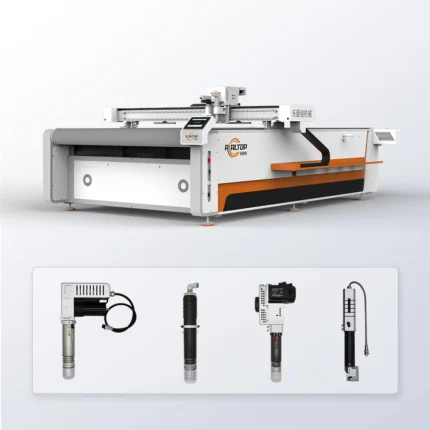
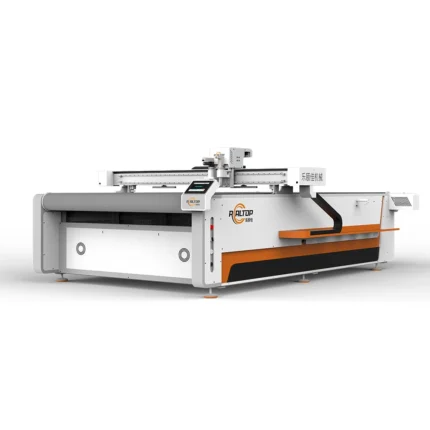
RT-D2516/RT-S2516 CNC Oscillating Knife Cutting Machine, 1600×2500mm working area, ≤0.1mm repeatability — configured with multi-tool head options including oscillating knife, drag knife and creasing wheel to match fabric, leather or composite material thickness and edge quality requirements.
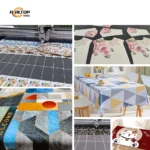
- CCD camera mark point positioning and panoramic recognition ensure accurate contour tracking on printed textile materials
- Magnesium-aluminum alloy vacuum table with PVDF coating provides uniform suction across zoned sections, preventing material lift during high-speed cutting
- Delta or Panasonic servo motors with IP67 protection, Taiwan Hiwin linear guides and synchronous belt transmission deliver consistent cutting precision
Sample cutting on your own fabric with full tool head and configuration report provided before order commitment.
CNC Oscillating Knife Cutting Machine for Garment Fabric – Factory Supply
Precision-matched tooling — every oscillating knife and vacuum zone specified against your actual fabric sample before the order is signed.
Technical Specifications
| Parameter | Value |
|---|---|
| Model | RT-D2516/RT-S2516 |
| Product Type | CNC Oscillating Knife Cutting Machine |
| Working Area | 1600×2500mm |
| Overall Dimensions (L×W×H) | 3450×2300×1250mm |
| Rated Power | 9kW |
| Voltage | 380V±10% |
| Control System | CNC with touch screen control panel |
| Transmission System | Digital servo motor, linear guide, synchronous belt, ball screw (imported) |
| Servo Motor Options | Delta or Panasonic (optional); IP67 waterproof protection level |
| Repeatability | ≤0.1mm |
| Translational Velocity | 800-2000mm/s |
| Maximum Cutting Thickness | ≤100mm (varies with material) |
| Tool Head Options | Oscillating knife, pneumatic knife, high-power vibrating knife, circular knife, V cutting knife, drag knife, creasing wheel, dotted line knife, punching, brush |
| Visual Positioning | Small CCD camera mark point positioning, panoramic camera recognition, projection positioning |
| Vacuum Table | Magnesium-aluminum alloy with PVDF powder spraying, anodic oxidation, hard oxidation |
| Vacuum Pump | 7.5kW |
| Work Table Options | Flat working table, auto feeding table |
| Conveyor Belt | Germany imported |
| Linear Guide | Taiwan Hiwin rail |
| Safety Device | Infrared sensors, anti-collision on both sides of beam, emergency stop button |
| Instruction System | HP-GL compatible format |
| Software File Formats | PLT, DXF, AI and other formats; auto typesetting/nesting |
| Language Options | English, Russian, Italian, Chinese; special languages can be customized |
Application Suitability
| Application | Material or Output |
|---|---|
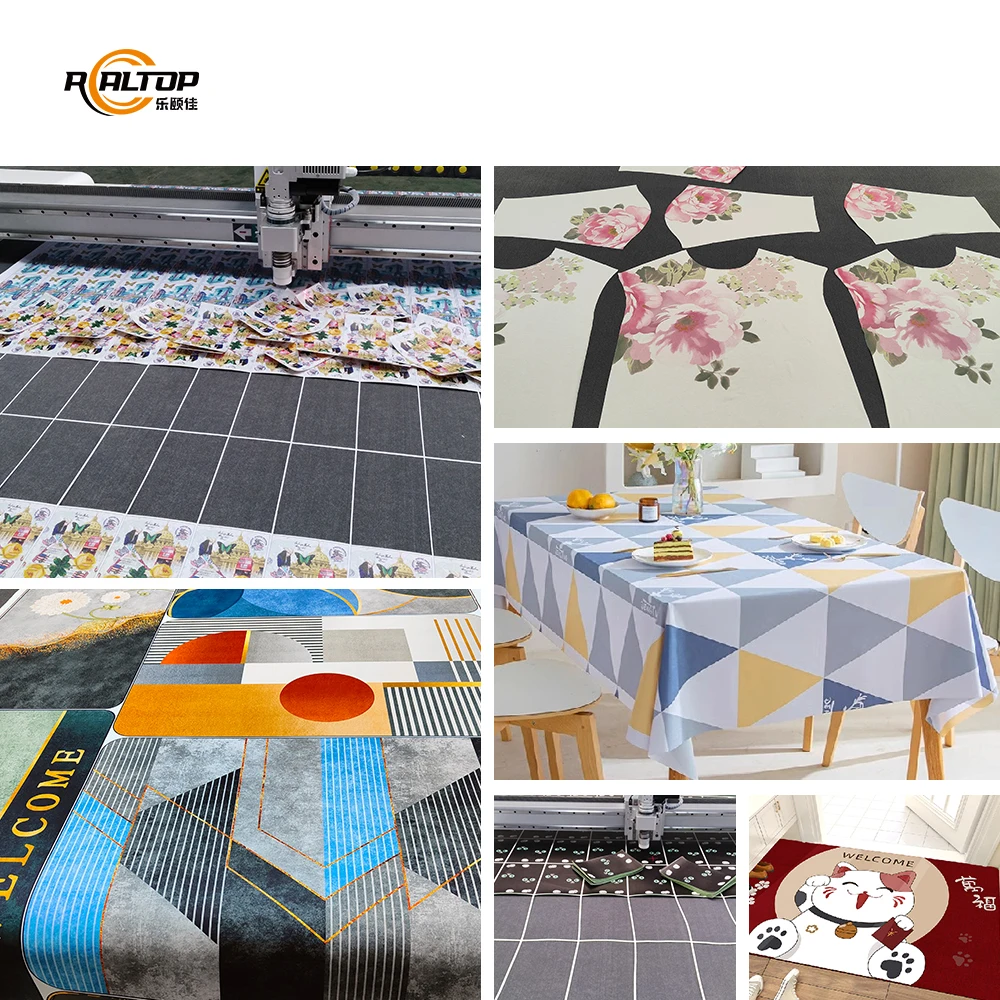
| Garment and footwear production | Single-layer and multi-layer fabric, leather, PU, shoe materials |
| Automotive interior and gasket fabrication | Composite materials, sponge, leather, foam board |
| Soft home furnishings and upholstery | Carpet, non-woven fabric, sofa textiles, EVA, XPE |
| Packaging and graphic advertising | Corrugated cardboard, carton, sticker, film, vinyl |
Why Fabric Thickness Matters More Than the Working Area
Buyers often select a CNC oscillating knife cutting machine for fabric based purely on table size, only to discover the tool head cannot handle their actual material density. The cutting method must be matched to the material, not forced into a single configuration. A 1600×2500mm bed is useless if the oscillating knife stalls on 80mm foam or leaves ragged edges on high-elastic four-way stretch fabric [NEED_CITE: material density and tool head matching principles]. I once saw a garment factory accept delivery of a digital cutting table specified only by working area, then spend weeks troubleshooting crushed edges on layered technical textiles because the wrong knife amplitude had been selected.
Matching the Knife Head to the Textile
Fabric behavior under an oscillating blade depends on weave, elasticity, and coating. A standard oscillating knife handles woven cotton and polyester cleanly, but high-elastic knits require a different amplitude and feed rate to prevent distortion during the cut. The RT-D2516/RT-S2516 offers a range of tool heads — oscillating knife, pneumatic knife, circular knife, drag knife, and high-power vibrating knife — so the cutting action can be adjusted to the specific textile rather than forcing one blade type across every job.
Vacuum Zoning and Small Part Stability
When cutting small garment pattern pieces, a single-zone vacuum table often fails to hold material flat near the edges of the nest. The magnesium-aluminum alloy table on this digital fabric cutting table uses integrated zoning to maintain suction across the active cutting area, preventing fabric lift that causes miscuts [NEED_CITE: vacuum table zoning effects on small part cutting accuracy]. The PVDF fluorocarbon coating and hard oxidation treatment keep the surface flat over years of use, which matters when repeatability is held to ≤0.1mm.
Reading the Specs That Actually Affect Your Floor
The 9kW rated power and 7.5kW vacuum pump together define what the machine can sustain during continuous multi-layer cutting runs. Translational velocity of 800-2000mm/s governs how fast the head moves between cuts, but actual cutting speed through fabric depends on layer count and material density — a figure that must be verified on your own sample. The Taiwan Hiwin linear rails and imported ball screws maintain the ≤0.1mm repeatability across the full 1600×2500mm travel, which is critical when nesting dozens of pattern pieces that must align during sewing assembly. Servo motor selection between Delta and Panasonic allows buyers to match the control brand already supported by their local service technicians.
The Hidden Cost of Skipping the Sample Cut
Specifying a machine from a catalog without running your actual fabric through it invites problems that surface only after installation. Wrong knife amplitude on layered stretch material produces fused edges that require manual trimming. Insufficient vacuum zoning causes small pieces to shift mid-cut, generating scrap that erodes material yield [NEED_CITE: fabric cutting scrap rates caused by tool and vacuum mismatch]. A Turkish garment plant I worked with nearly rejected an entire shipment because the cutting parameters had been set for standard woven cloth while their production floor ran high-elastic four-way stretch — daily output fell to half of what they planned. That single sample cut before contract signing would have caught the mismatch.
Why Source This Machine From Our Jinan Facility
In-house design covers both knife and laser cutting technologies, so we recommend the correct method for your material instead of pushing one platform. Every tool head and vacuum zone is specified per your fabric type and daily volume, not picked from a default list. CCD camera positioning — small mark point, panoramic, or projection — is confirmed against your printed contour files before the machine ships. Software compatibility with your existing PLT, DXF, or AI nesting workflow is verified during the sample stage. Voltage, plug type, and control panel language are locked in writing before production begins, eliminating arrival-day surprises.
Documentation & Verification
- Machine specification sheet with confirmed tool head and table configuration for your fabric
- Electrical schematic and voltage confirmation matching your facility supply
- Sample cutting report on your actual material with edge quality photographs
- Factory test record documenting repeatability and cutting speed on your fabric
- Software licence and file format compatibility note for PLT, DXF, AI workflows
- Spare parts list covering knives, blades, and vacuum table consumables
Installation, Commissioning & Support
- Requires a level concrete floor accommodating the 3450×2300×1250mm footprint plus operator clearance
- Dedicated 380V±10% circuit with appropriate breaker rating for the 9kW rated load
- Machine ships fully assembled; split-box packing available for container transport constraints
- First-run parameter tuning on your fabric type, including servo feed rate and vacuum zone mapping
- Operator training covering tool head changes, CCD mark registration, and nesting software workflow
- Spare knife blades and vacuum table seal strips included for initial production period
Before You Send an Inquiry
To recommend the right configuration, we need your fabric type, typical layer count, maximum sheet size, and daily cutting volume. Share your local voltage and frequency, preferred control panel language, and the file formats your design team currently uses. If your production involves printed contour cutting, send a sample print so we can verify CCD tracking at your target speed.
Frequently Asked Questions
Q: How do I choose the correct tool head for my fabric type?
A: Woven fabrics typically cut well with a standard oscillating knife, while high-elastic knits and coated textiles may require a pneumatic or high-power vibrating knife at adjusted amplitude. We run your actual material sample to confirm the tool head, blade type, and cutting parameters before finalizing the configuration.
Q: Can the CCD camera track printed marks at full production speed?
A: The system offers small CCD mark point positioning, panoramic camera recognition, and projection positioning. Tracking stability depends on print contrast, mark size, and fabric feed speed. We test your specific printed material during the sample stage to confirm reliable contour recognition before shipment.
Q: Does the vacuum table hold small pattern pieces securely?
A: The magnesium-aluminum alloy table supports zoned vacuum to concentrate suction on the active cutting area. This prevents small pieces from lifting during the final cuts in a nest. Zone configuration is matched to your typical pattern layout during the specification phase.
Q: Will the software import my existing nesting files?
A: The system accepts PLT, DXF, AI, and HP-GL compatible formats with auto typesetting and nesting. We verify compatibility with your specific design software output during the sample stage and document any required file conversion steps before delivery.
Q: What is the difference between single-layer and multi-layer cutting setups?
A: Single-layer cutting uses the flat working table with auto-feeding for roll goods, while multi-layer cutting requires higher vacuum suction and specific knife amplitude settings for the total stack height. We confirm your typical layer count and compress the material to verify cutting depth and edge quality.


Related products
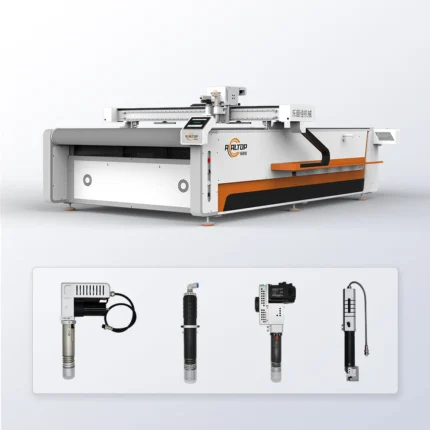
2026 Automatic PVC Tarpaulin Cutter Machine
Product Introduction
High-performance Automatic PVC Tarpaulin Cutter Machine 2026, ideal for precise and efficient cutting of PVC tarpaulin materials, designed for industrial manufacturing needs with reliable operation and user-friendly control.Product Parameters
| Model | 2026 |
| Type | Automatic PVC Tarpaulin Cutter |
| Application | PVC Tarpaulin Cutting |
| Feature | Precise & Efficient Cutting |
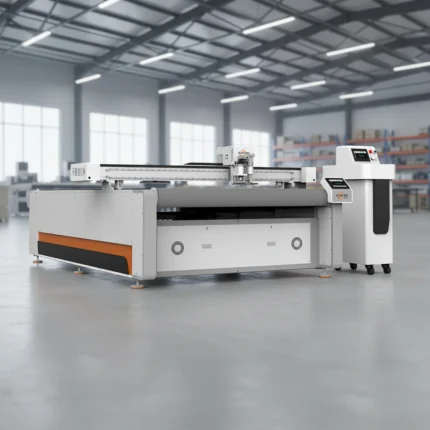
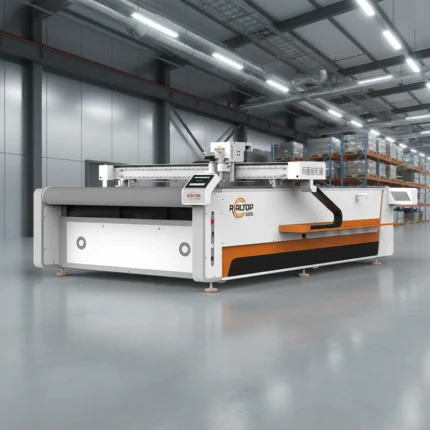
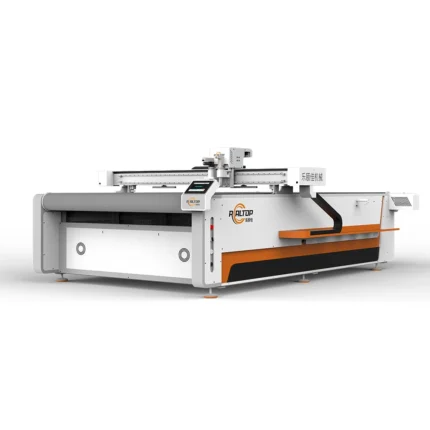
2026 CNC Knife Cutting Machine for Fabric Leather PVC Hot Sale
Product Introduction
2026 Hot Sale CNC Knife Cutting Machine for Fabric, Leather, PVC. Ideal for precise cutting of various materials with advanced CNC technology, perfect for manufacturing needs.
Product Parameters
| Application | Fabric, Leather, PVC |
| Type | CNC Knife Cutting Machine |
| Feature | Precision Cutting |
| Year | 2026 Model |
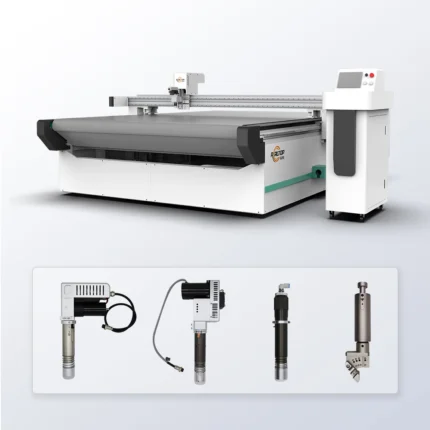
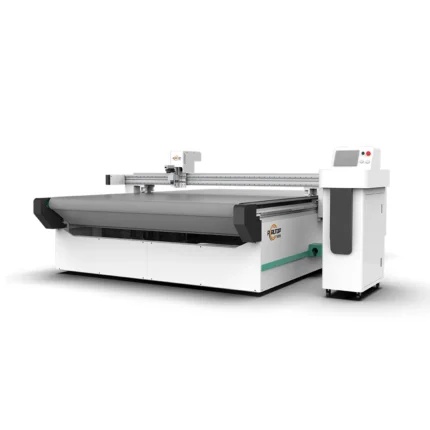
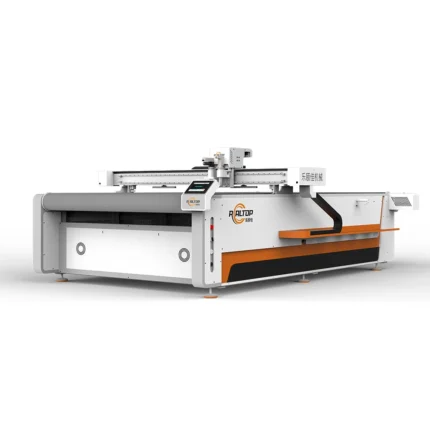
2026 Flatbed Oscillating Knife Cutter 1600x3500mm Auto-Feeding Textile
Product Overview
Flatbed Oscillating Knife Cutting Machine 2026 is a high-precision textile fabric cutter with auto-feeding function, ideal for efficient and accurate cutting tasks in textile manufacturing. It combines advanced oscillating knife technology with a large working area to meet industrial production needs.Key Specifications
| Model | 2026 |
| Working Area | 1600x3500mm |
| Feeding System | Auto-Feeding |
| Cutting Type | Oscillating Knife |
| Application | Textile Fabric |
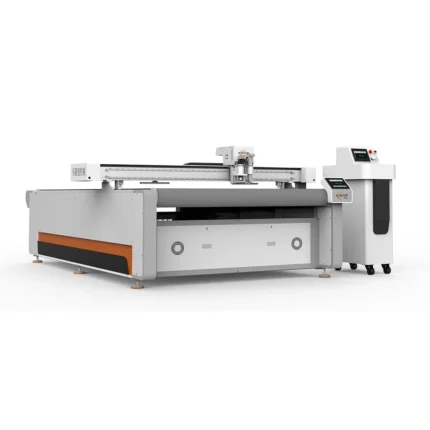
Custom CNC Shirt Fabric Cutting Machine 2026
Product Introduction
Custom CNC Shirt Fabric Cutting Machine 2026, ideal for precise fabric cutting in garment manufacturing, offering efficient and accurate cutting solutions.
Product Parameters
| Model | Custom CNC Shirt Fabric Cutting Machine 2026 |
| Type | CNC Fabric Cutting Machine |
| Application | Shirt Fabric Cutting |
| Year | 2026 |
Realtop CNC Fabric Cutting Machine 2026 CE Certified
Product Introduction
Realtop CNC Fabric Cutting Machine 2026, CE Certified, ideal for precision fabric cutting with advanced CNC technology. Engineered for efficiency and reliability in textile manufacturing processes.Key Specifications
| Model | Realtop CNC Fabric Cutting Machine 2026 |
| Certification | CE Certified |
商品评价
There are no reviews yet.