



CNC Oscillating Knife Cutting Machine for Non-Woven Cloth – Manufacturer
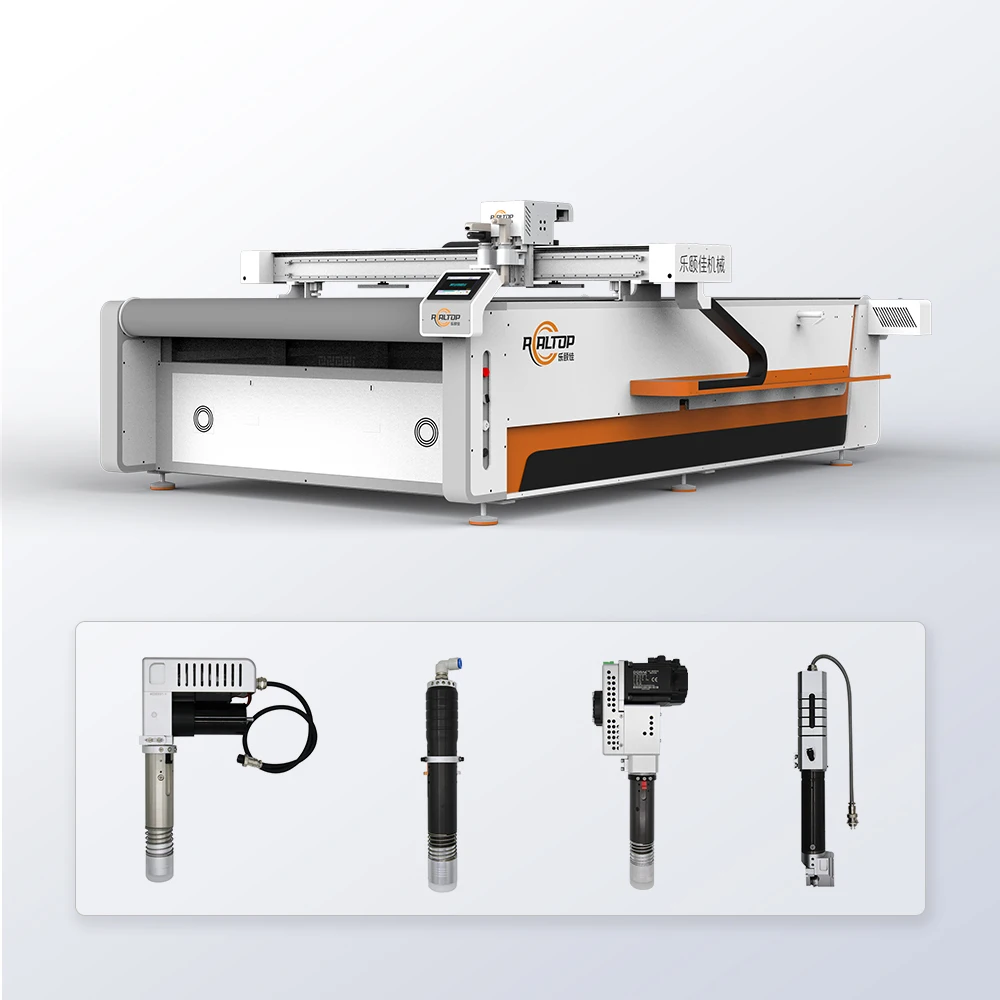
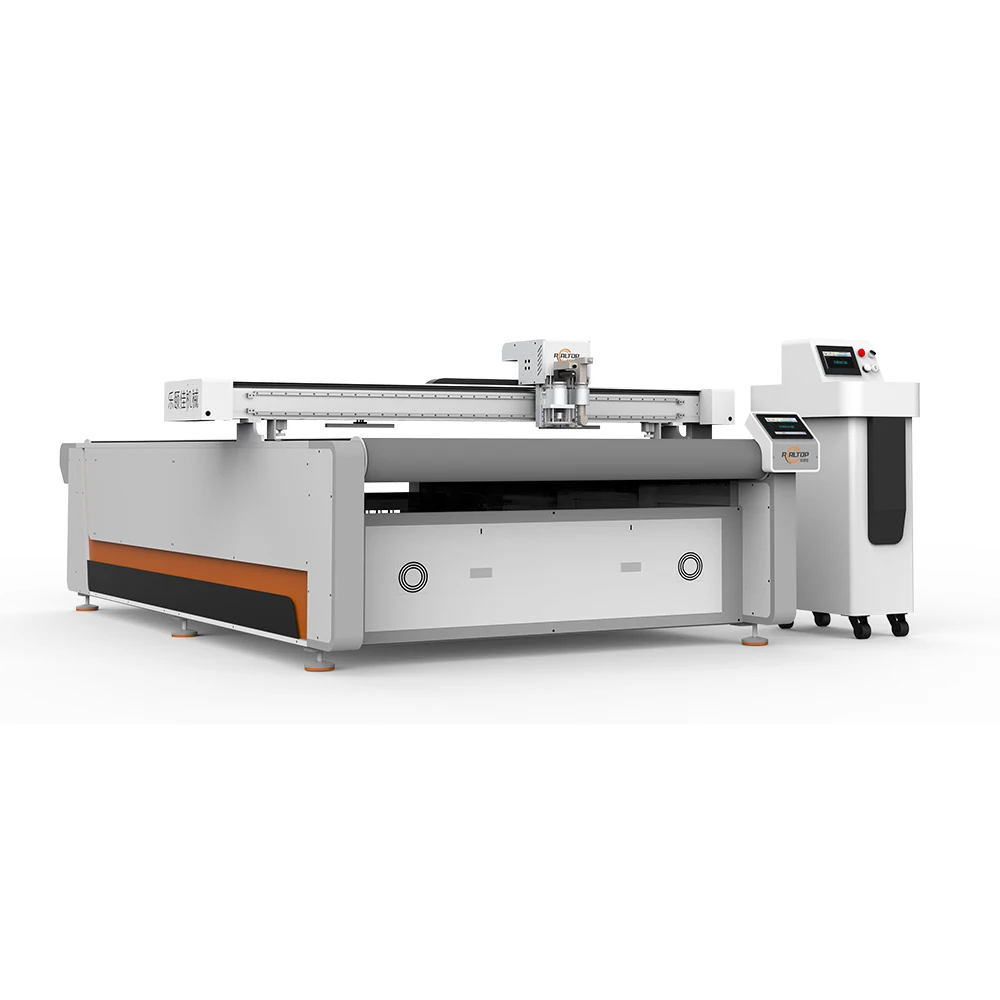
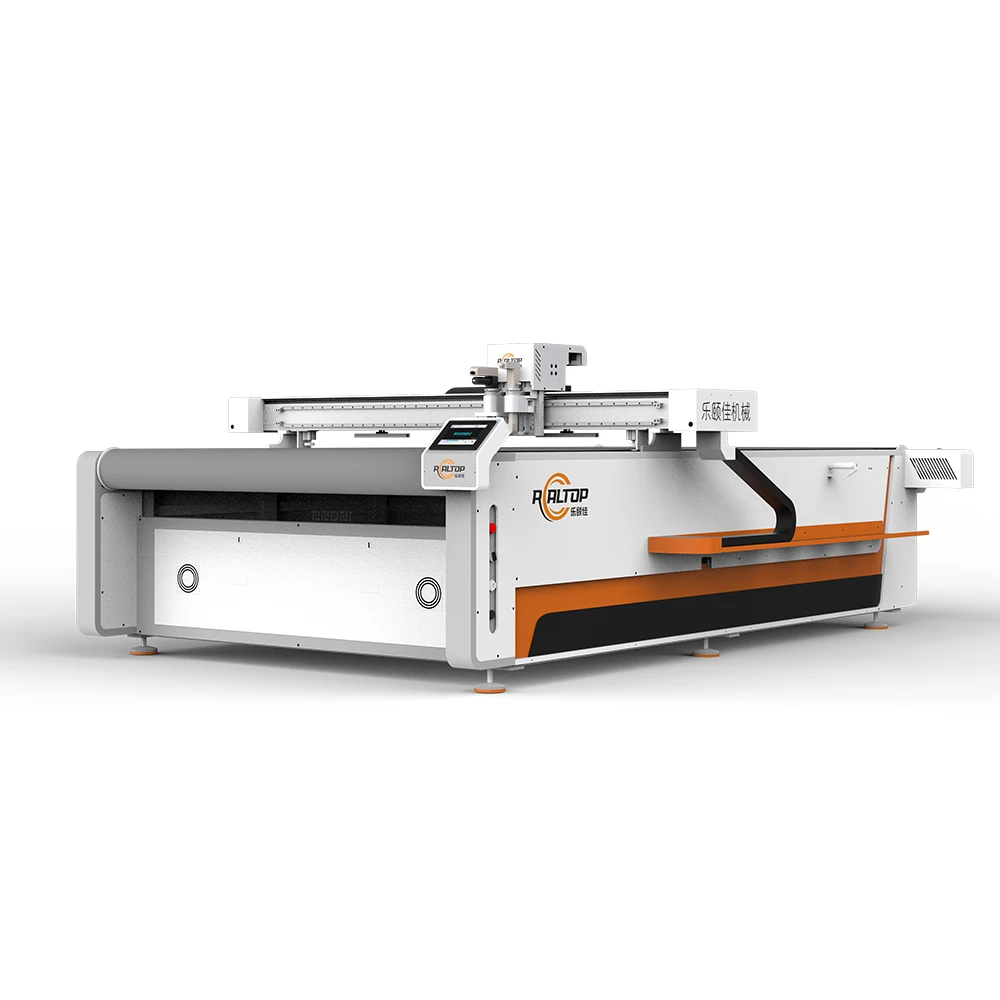
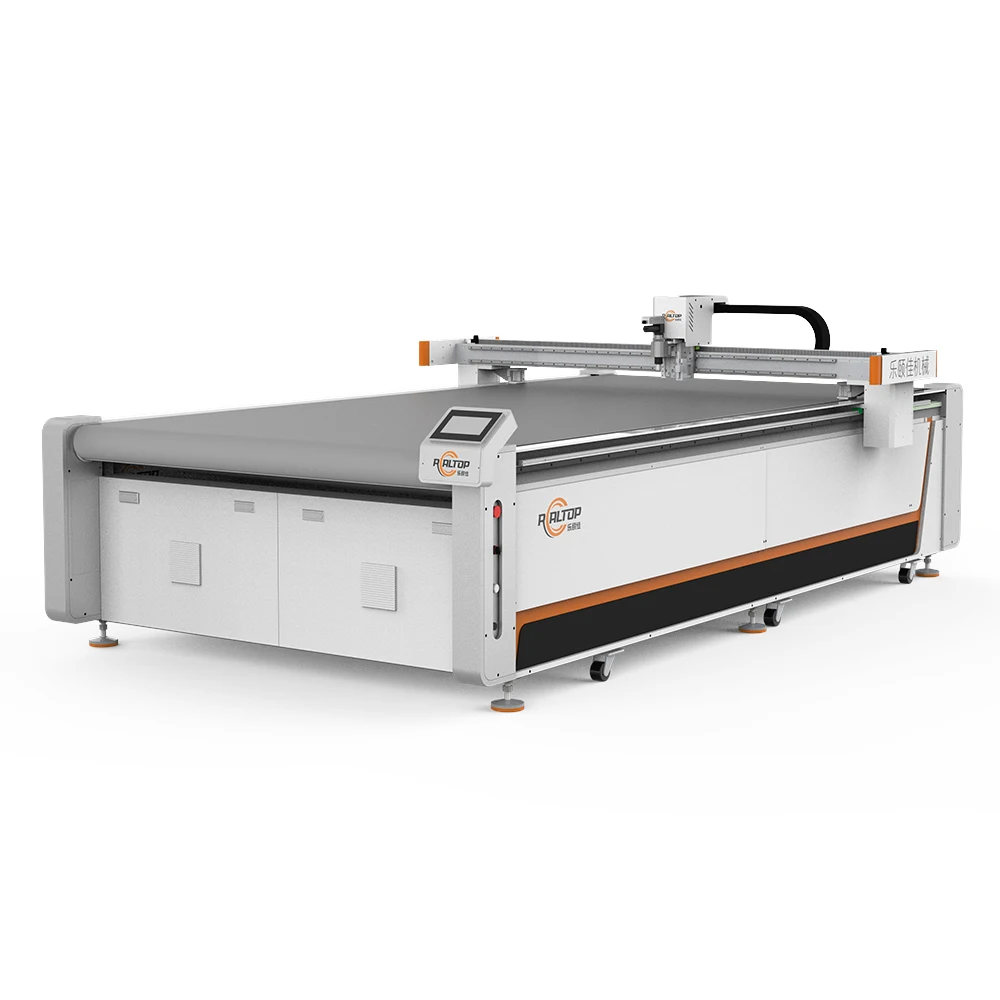
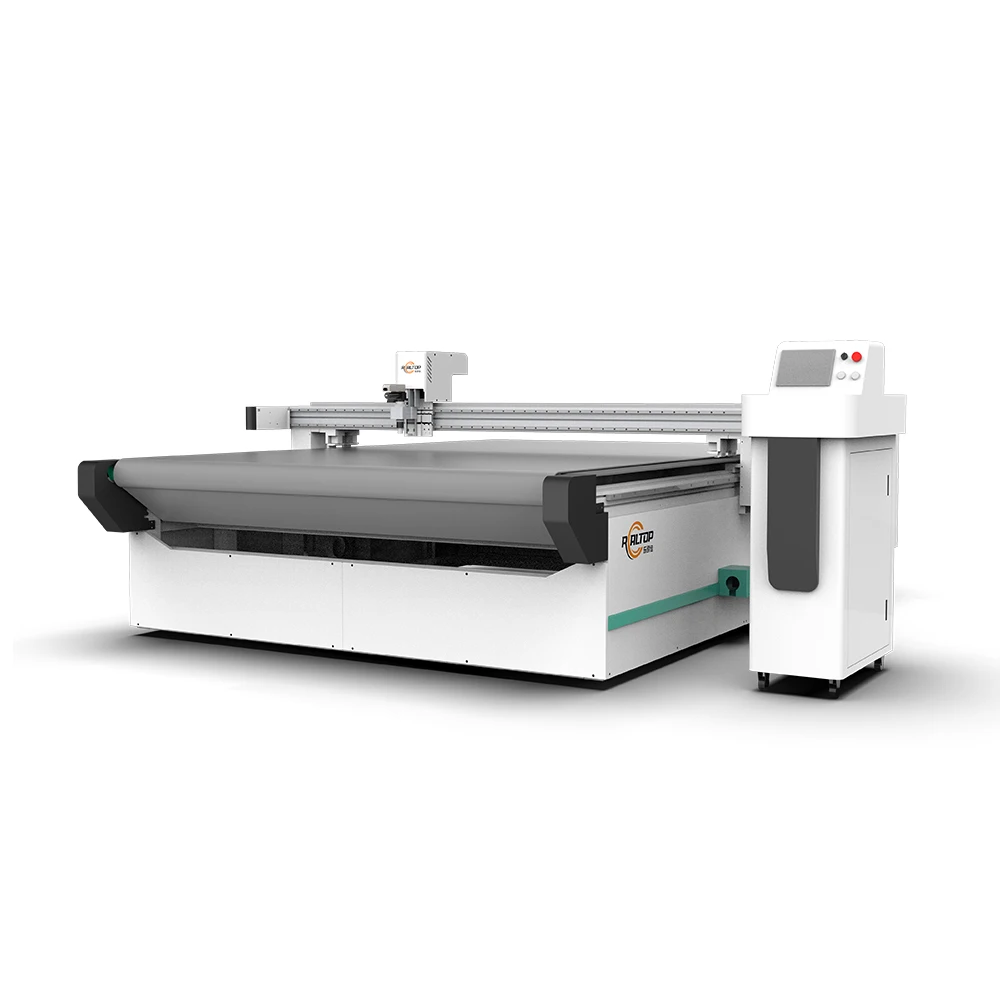
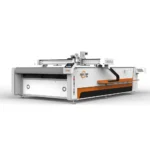
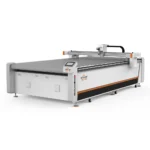
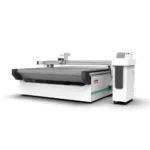
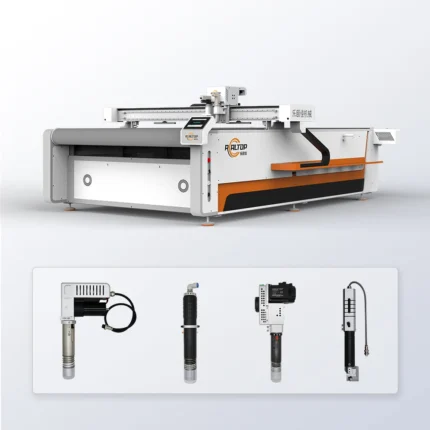
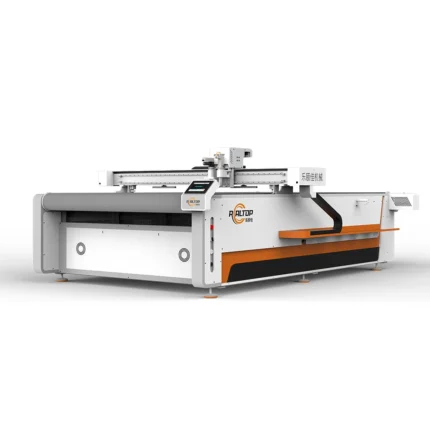
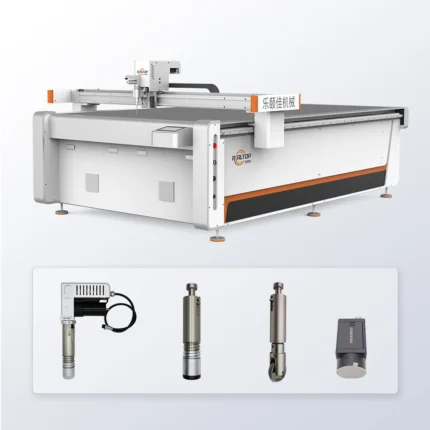
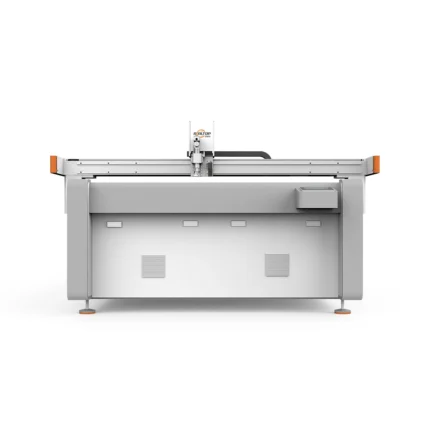
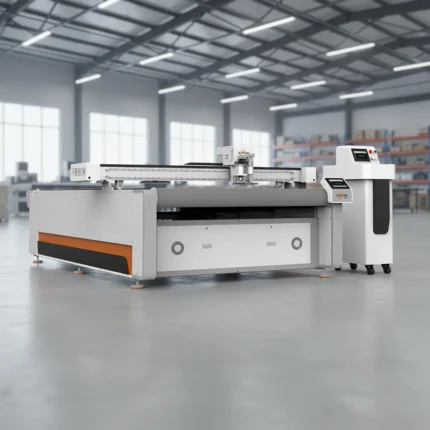
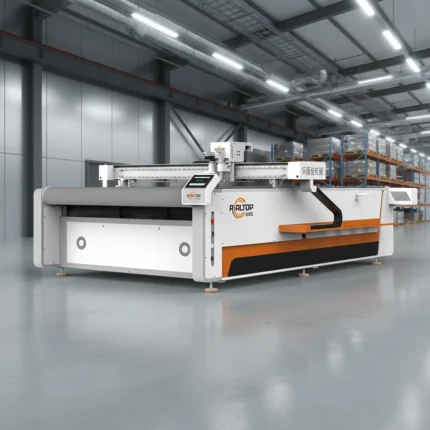
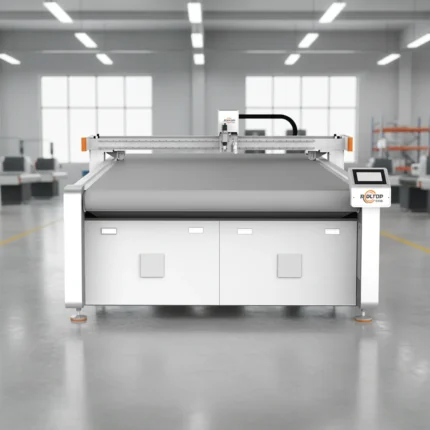
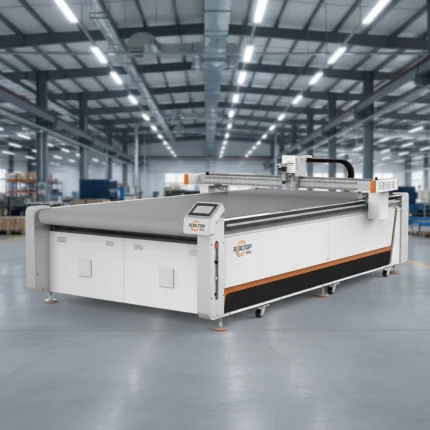
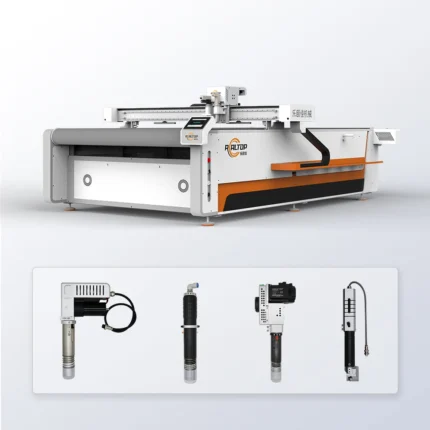
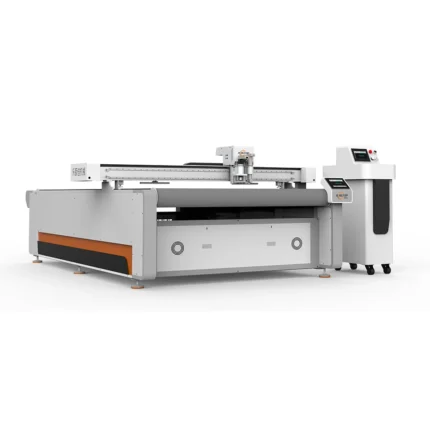
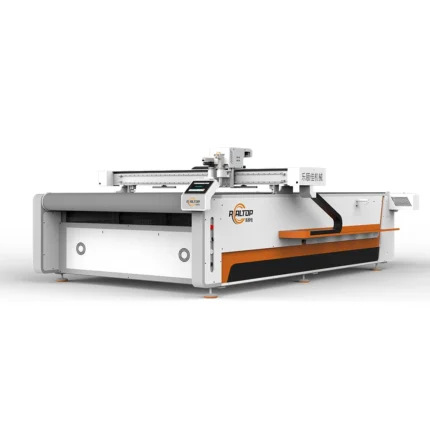
RT-D2516/RT-S2516 CNC Oscillating Knife Cutting Machine, 1600×2500mm Working Area, 9kW Rated Power, Multi-Tool Head — engineered for non-woven cloth, leather and composite fabric cutting with oscillating, drag and creasing knife options on a single platform. Magnesium-aluminum alloy vacuum table with PVDF coating ensures uniform suction across varied part sizes, while CCD camera positioning tracks printed contour marks at production speed. Delta servo motors and Taiwan Hiwin linear guides deliver ≤0.1mm repeatability for nested fabric and gasket layouts.
Sample cutting on your own material is completed before commitment, with tool head configuration and voltage specifications confirmed per production requirement.
Multi-Tool Flexibility — a single cutting table configured with oscillating, drag, creasing and punching heads lets fabric and textile processors match the tool to the material rather than force one method across diverse production runs.
Technical Specifications
| Parameter | Value |
|---|---|
| Product Type | CNC Oscillating Knife Cutting Machine |
| Model | RT-D2516 / RT-S2516 |
| Working Area | 1600 × 2500 mm |
| Machine Dimensions | 3450 × 2300 × 1250 mm |
| Rated Power | 9 kW |
| Table Type | Flat working table / auto-feeding table |
| Cutting Thickness | Up to 100 mm (varies with material) |
| Cutting Speed | 200–800 mm/s (material dependent) |
| Translational Velocity | 800–2000 mm/s |
| Repeated Accuracy | ≤ 0.1 mm |
| Servo Motor | Delta (optional Panasonic or Japanese-made) |
| Linear Guide | Taiwan Hiwin rail |
| Vacuum Pump | 7.5 kW |
| Conveyor Belt | Germany-imported |
| Vacuum Table Surface | Magnesium-aluminum alloy, PVDF powder sprayed, hard anodized |
| Voltage | 380 V ± 10 % |
| Tool Head Options | Oscillating knife, pneumatic knife, high-power vibrating knife, circular knife, V-cutting knife, drag knife, creasing wheel, dotted-line knife, punching, brush |
| Vision Positioning | Small CCD mark-point, panoramic camera recognition, projection positioning |
| Control Panel | Touch screen, multi-language |
| Software File Formats | PLT, DXF, AI |
| Instruction System | HP-GL compatible |
| Safety Device | Infrared sensor |
| Frame Construction | Thick-walled seamless steel, high-temperature tempering, CNC-machined |
Application Suitability
| Application | Material or Output |
|---|---|
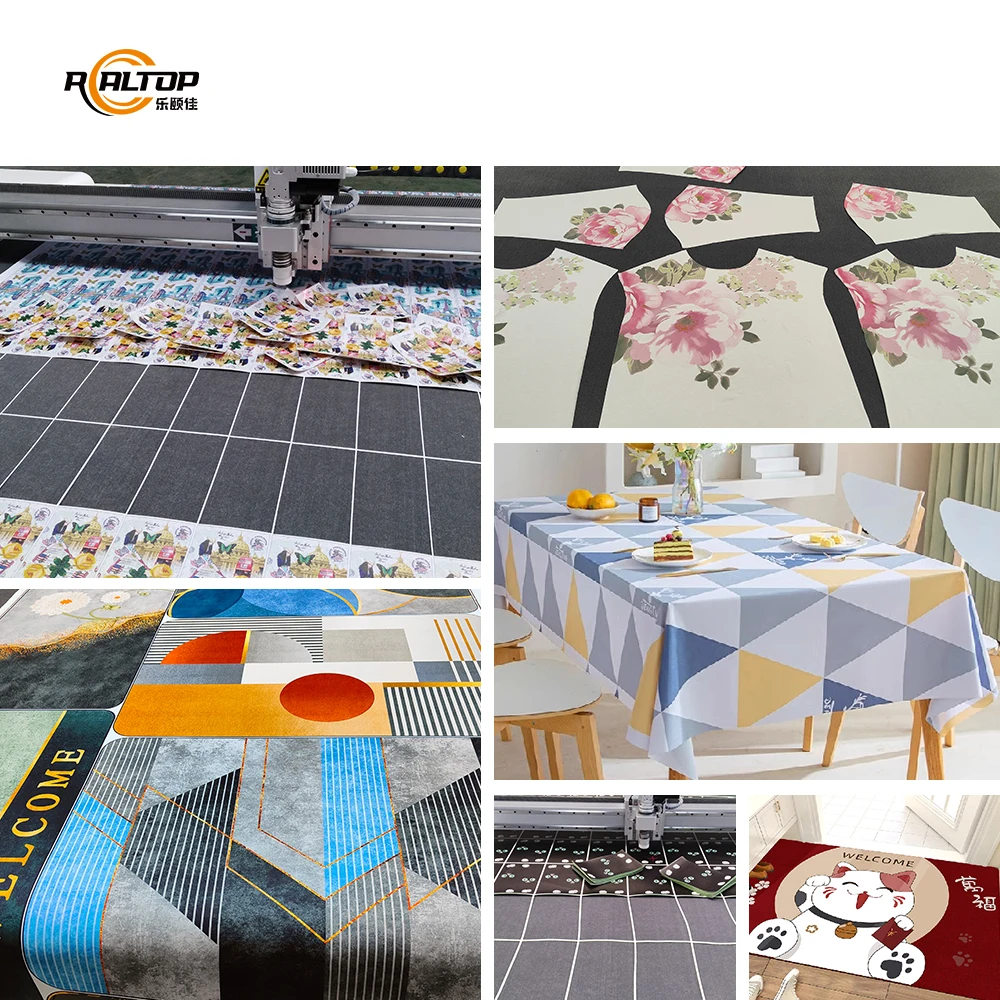
| Garment and footwear production | Single and multi-layer woven fabric, non-woven, leather, shoe material |
| Automotive interior components | Carpet, floor mats, sponge composite leather, gasket material |
| Soft home furnishings | Upholstery fabric, curtain textiles, composite padding |
| Luggage and bag manufacturing | PU, EVA, synthetic leather, lining cloth |
| Graphic advertising and signage | Vinyl, sticker film, flexible PVC sheet |
| Sealing and industrial gaskets | Rubber, PTFE, ETFE, silicone, fiberglass composite |
What a Ragged Edge Really Costs on the Production Floor
A dull or incorrect tool head on a CNC oscillating knife cutting machine for fabric does not just produce an ugly cut — it triggers rework, wastes nested material and forces operators to slow the feed rate well below rated speed.
Buyers who choose a cutting table based solely on working area often discover that their material thickness or coating type was never factored into the tool head specification. The result is frayed edges on coated non-woven, crushed foam cores and delaminated composite layers. Each defect type demands a different remedy — oscillation frequency adjustment, blade geometry change, vacuum zone reassignment — and none of them are solved after the machine is already bolted to the floor [NEED_CITE: material-specific cutting parameters for coated and layered textiles].
Matching the Tool Head to the Textile Stack
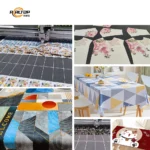
The RT-D2516 / RT-S2516 platform supports oscillating knife, drag knife, circular knife, V-cutting knife, creasing wheel and punching on one gantry. Fabric processors working with layered non-woven, coated table cloth or multi-ply garment material can assign a dedicated tool to each job without maintaining a separate machine for every cut type. Switching from a straight oscillating blade to a high-frequency vibrating knife, for instance, changes the edge finish on PE-coated non-woven from a clean shear to a sealed cut that resists fraying through downstream handling.
Vision Positioning for Printed Contour Work
When the material carries pre-printed registration marks — common in advertising banners, shoe uppers and appliqué panels — the optional CCD camera or panoramic recognition system tracks those marks and adjusts the cut path in real time. The laser cutting and engraving machine manufacturer side of the business often handles rigid substrates where contour tolerance is measured differently; on flexible textile, the vision system must compensate for material stretch and skew introduced by the auto-feeding conveyor. Confirming mark contrast and spacing before order prevents the camera from losing track at full translational velocity.
How Frame Rigidity Holds Repeatability at 0.1 mm
The thick-walled seamless steel frame undergoes high-temperature tempering before CNC-machined finishing, which relieves internal stress that would otherwise drift accuracy over months of vibration. Taiwan Hiwin linear guides and digital servo motors — Delta as standard, with Panasonic or Japanese-made options — close the loop on positioning. In practice, repeatability of ≤ 0.1 mm means that nested garment patterns cut at the beginning of a shift and those cut at the end remain interchangeable in the sewing line, avoiding panel mismatch that shows up only during assembly [NEED_CITE: thermal stress relief standards for CNC machine frames].
When the Wrong Configuration Becomes a Hidden Tax
A vacuum table zoned only for full-sheet hold-down will let small nested pieces lift during the final pass, producing a tab that the operator must trim by hand — a cost that never appears on the quotation. Similarly, specifying a 7.5 kW vacuum pump without confirming the zone count and aperture layout may leave peripheral areas under-suctioned on a 1600 × 2500 mm table. Buyers who skip the sample-cutting step often discover these gaps only after production starts, when the hourly output falls below the planned rate [NEED_CITE: vacuum hold-down requirements for small nested parts on CNC cutting tables].
Why Buyers Source This Platform from Jinan
In-house design covers both knife and laser cutting technologies, so a textile processor can evaluate which method suits a given material before committing to a single machine. Tool head and vacuum table configuration are specified per material sample, not pulled from a generic catalogue. CCD positioning, voltage and control language are confirmed before the build starts, and a factory test record on the buyer’s own roll stock is available before dispatch. The magnesium-aluminum alloy table with PVDF coating and hard anodizing is produced in the same facility, keeping flatness tolerance under direct quality control.
Documentation & Verification
- Machine specification sheet listing every tool head and vacuum zone assigned to your order
- Electrical schematic with confirmed voltage, frequency and plug type for your destination market
- Sample cutting report on your actual material roll, including edge photographs and speed data
- Factory test record signed against the agreed tool head and table configuration list
- Operation and maintenance manual in your selected control language
- Software licence and file format compatibility note for PLT, DXF and AI workflows
Installation, Commissioning & Support
- Verify 380 V ± 10 % three-phase supply with a dedicated breaker rated for the 9 kW load
- Confirm floor levelness within 2 mm across the 3450 × 2300 mm footprint before rigging
- Assembly and alignment of the auto-feeding conveyor and vacuum table on site
- First-run parameter tuning using your material roll, adjusting oscillation frequency and vacuum zones
- Operator training on tool head changeover, nesting software and CCD camera calibration
- Spare blade and belt kit supplied for initial production period
Preparing Your Inquiry
To receive a configuration that matches your production reality, share the material type, coating or lamination details, maximum sheet size and daily cutting volume. Specify the local voltage and frequency, preferred control language, and any existing nesting software or file format in use. If your material has not been tested before, request a sample cut on your own roll stock before the order is finalized — this is the single most reliable way to confirm edge quality, cutting speed and vacuum hold-down adequacy.
Frequently Asked Questions
Q: How is the correct tool head selected for my specific fabric or composite?
A: We review your material sample — including coating, lamination and thickness — and recommend an oscillating, drag, circular or V-cutting knife accordingly. A sample cut on your actual roll confirms edge quality and speed before the tool head list is finalized.
Q: Can the CCD camera track printed marks on stretchy textile at full speed?
A: The panoramic or small CCD option compensates for material skew introduced by the auto-feeding conveyor. Mark contrast and spacing must be confirmed during the sample-cutting stage so the system maintains tracking at production translational velocity.
Q: What voltage, language and software details are locked in before shipment?
A: The electrical schematic, control panel language and file format compatibility (PLT, DXF, AI) are documented and signed off before the build starts. The 380 V ± 10 % supply requirement and any custom voltage option are recorded on the specification sheet.
Q: How does the vacuum table handle small nested pieces that tend to lift?
A: The magnesium-aluminum alloy table is divided into selectable zones. During the sample cut we confirm which zones hold your smallest parts and adjust aperture layout or pump allocation if suction is insufficient at the table periphery.
Q: Is sample cutting on my own material available before I commit?
A: Yes. Send a roll or sheet sample and we return a cutting report with edge photographs, speed data and recommended tool head, so you can evaluate real results before placing the purchase order.


Related products
2026 Carbon Fiber Cloth Cutting Machine – China Manufacturer
Product Introduction
Fabric Sample Cutter Pillow Machine ¨C 2026 Carbon Fiber Cloth Cutting Machine, ideal for precise cutting of carbon fiber cloth and fabric samples, suitable for pillow production and related textile applications.Product Parameters
| Name | Fabric Sample Cutter Pillow Machine |
| Model | 2026 |
| Material | Carbon Fiber Cloth |
| Application | Pillow Fabric Cutting |
2026 Flatbed Oscillating Knife Cutter 1600x3500mm Auto-Feeding Textile
Product Overview
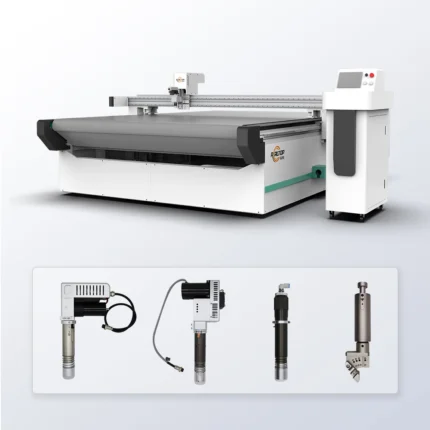
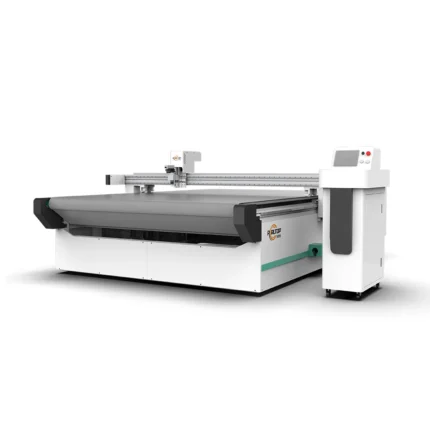
Flatbed Oscillating Knife Cutting Machine 2026 is a high-precision textile fabric cutter with auto-feeding function, ideal for efficient and accurate cutting tasks in textile manufacturing. It combines advanced oscillating knife technology with a large working area to meet industrial production needs.Key Specifications
| Model | 2026 |
| Working Area | 1600x3500mm |
| Feeding System | Auto-Feeding |
| Cutting Type | Oscillating Knife |
| Application | Textile Fabric |
Automatic Multi-Layer Vibrating Knife Cutter 2026
Product Introduction
Automatic Multi-Layer Vibrating Knife Cutter 2026, ideal for precise cutting of various materials with multi-layer processing capability, enhancing production efficiency.
Key Specifications
| Type | Automatic Vibrating Knife Cutter |
| Layer Capacity | Multi-Layer |
| Model | 2026 |
| Function | Precision Cutting |
CNC Vibration Knife System 2026 for Polyester Nylon Non-Woven Prepreg
Product Introduction
CNC Vibration Knife System 2026 is ideal for cutting polyester, nylon, non-woven fabrics, and prepreg materials with precision and efficiency, suitable for industrial manufacturing needs.Product Parameters
| Model | 2026 |
| Cutting Technology | CNC Vibration Knife |
| Materials | Polyester, Nylon, Non-Woven, Prepreg |

Electric Fabric Rotary Cutter 2026 12V Auto-Cut Industrial
Product Introduction
Industrial-grade Electric Fabric Rotary Cutter designed for precise cutting of scan-printed cloth. Features 12V auto-cut functionality for efficient, automated operation, ideal for professional textile processing.Product Parameters
| Power Supply | 12V |
| Function | Auto-Cut |
| Application | Scan-Printed Cloth |
| Type | Industrial Electric Rotary Cutter |
商品评价
There are no reviews yet.