


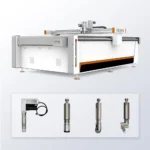
CNC Rubber Cutter with Punching Vibrating Knife – Laser and Engraving
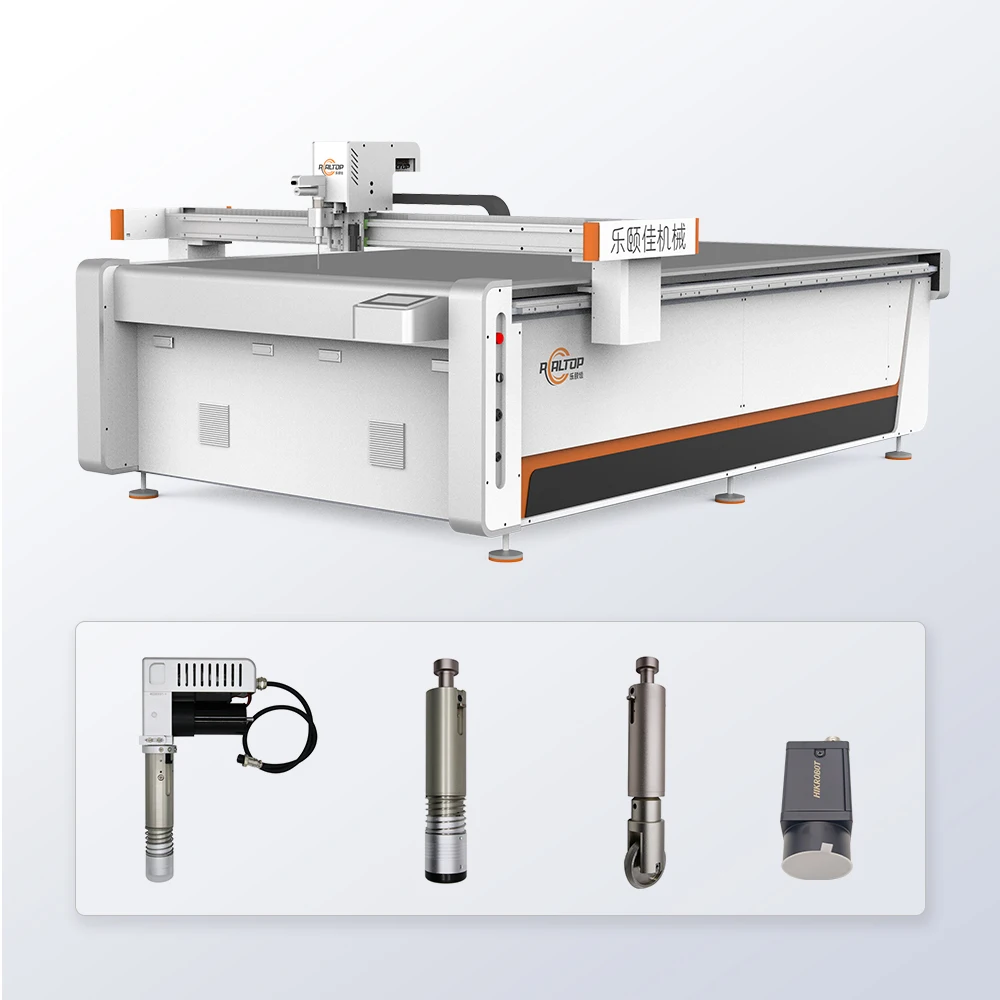
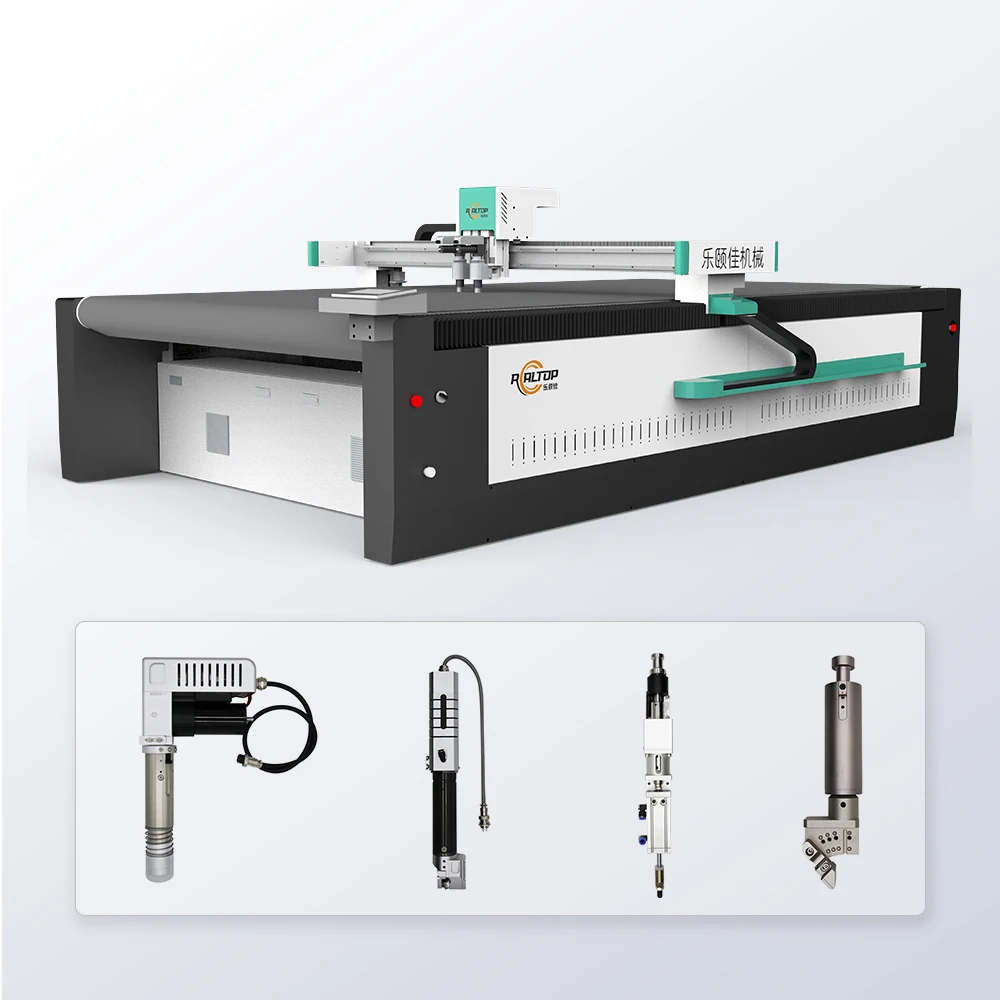
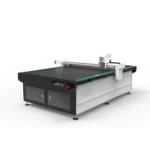
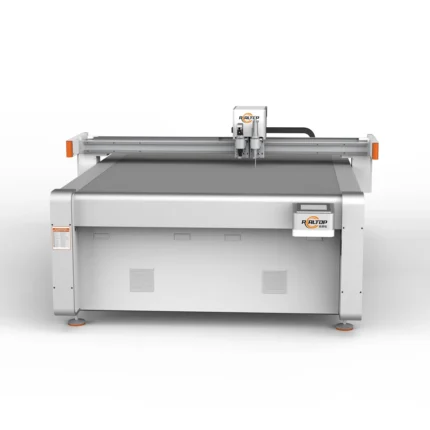
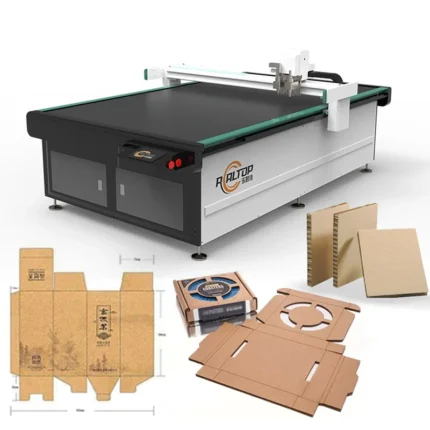
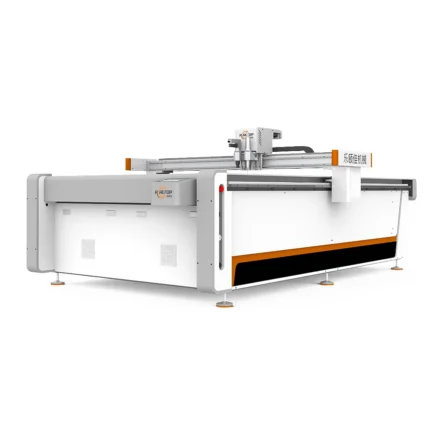
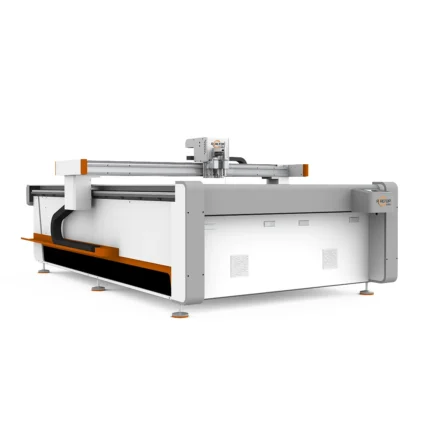
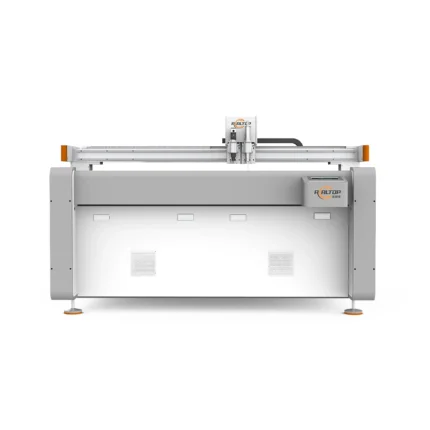
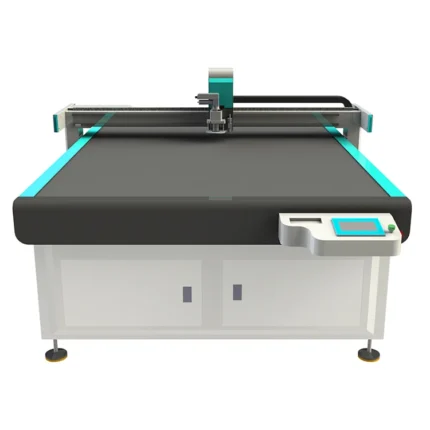
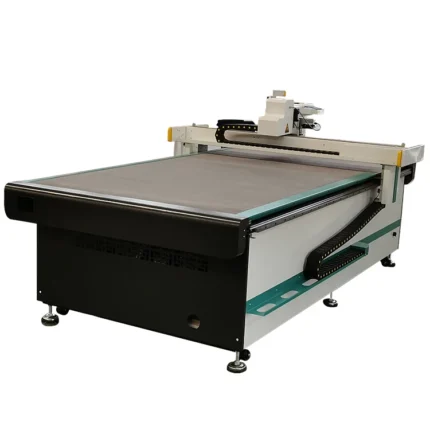
RT-D2516/RT-S2516 CNC Oscillating Knife Cutting Machine, 1600×2500mm, 9kW, Multi-Tool Head — engineered for CO2 and fiber laser integration alongside precision knife cutting.
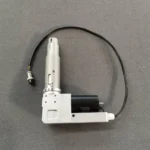
- Swiss imported knife with vibration full/half cutting and cursor location
- Magnesium-aluminum alloy vacuum table with enhanced suction for secure material hold
- Panoramic camera recognition and CCD mark point positioning verified at full translational velocity
Supported by in-house design covering both knife and laser processes, sample cutting on your material before commitment, and voltage/language customization confirmed before shipment.
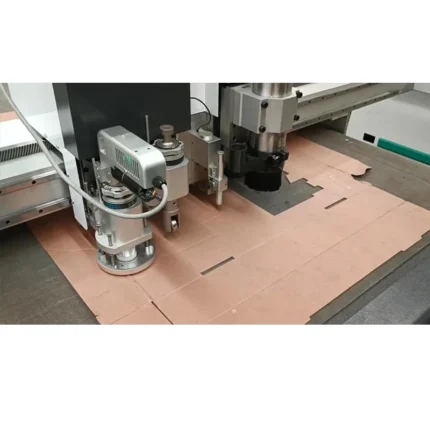
Integrated Tool Head Platform — Swiss-imported vibrating knife paired with punching and creasing options lets packaging sample makers run cardboard, foam and PVC gaskets without switching machines.
Technical Specifications
| Parameter | Value |
|---|---|
| Model | RT-D2516/RT-S2516 |
| Working Area | 1600×2500 mm |
| Machine Size | 3450×2300×1250 mm |
| Rated Power | 9 kW |
| Fixed Model | Flat working table |
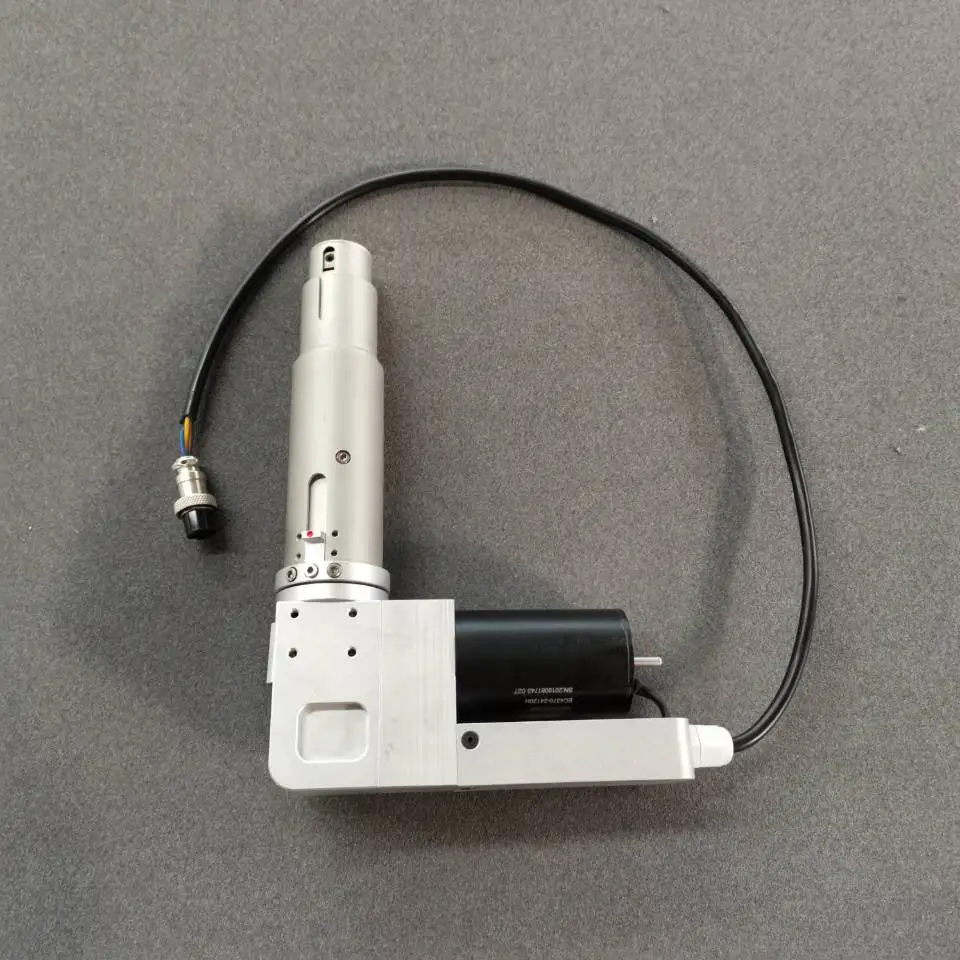
| Multifunctional Head | Swiss imported knife: vibration full cutting, vibration half cutting, cursor location |
| Safety Device | Infrared sensors, responsive, safe and reliable |
| Translational Velocity | 800-1200 mm/s |
| Cutting Thickness | ≤100 mm (varies with material) |
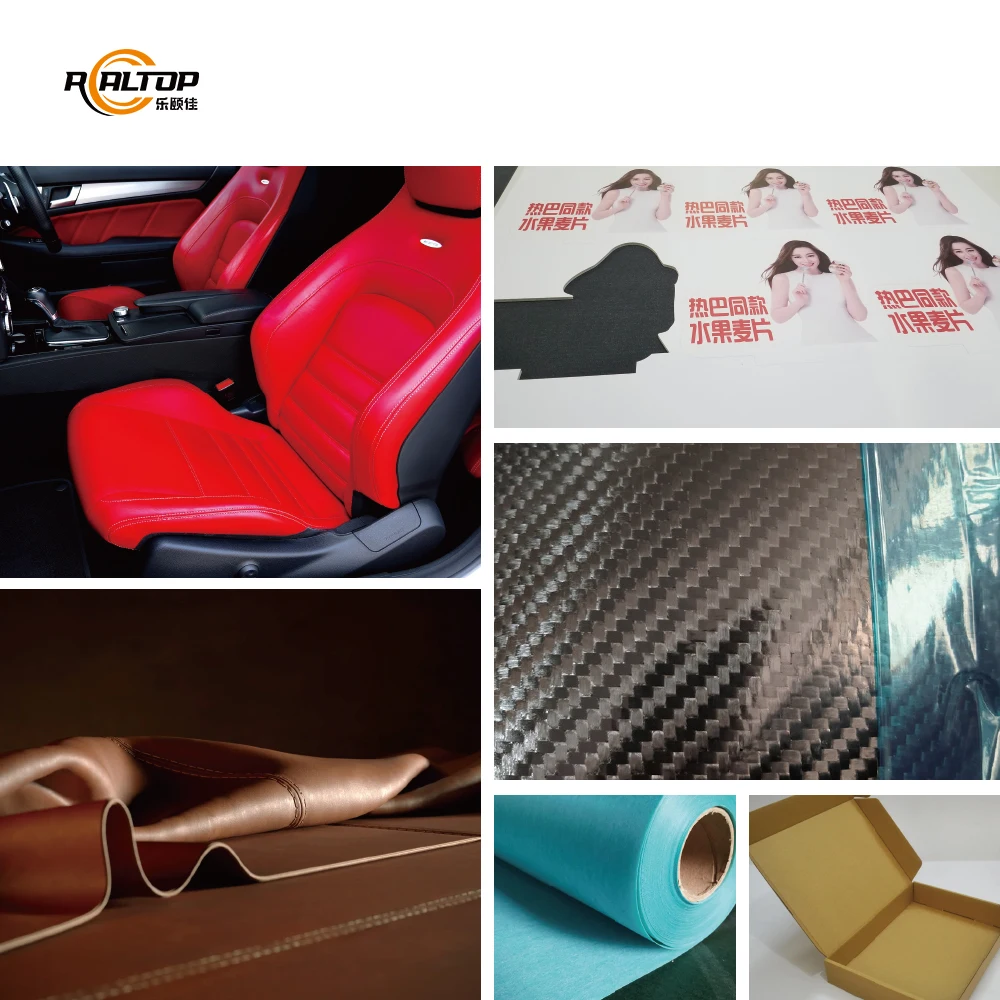
| Cutting Materials | Leather, clothing flexible material, sponge composite leather, PVC, soft glass, silicon, rubber |
| Repeated Accuracy | ≤0.1 mm |
| Transmission System | Digital servo motor, linear guide, synchronous belt, ball screw (imported components) |
| Instruction System | HP-GL compatible format |
| Voltage | 380V±10% |
| Other Configuration | Delta servo motor, Germany imported conveyor belt, vacuum table, auto feeding, Taiwan Hiwin rail, 7.5 kW vacuum pump |
| Tool Head Options | Oscillating knife, pneumatic knife, high-power vibrating knife, circular knife, V cutting knife, drag knife, creasing wheel, dotted line knife, punching, brush |
| Visual Positioning | Small CCD camera mark point positioning, panoramic camera recognition positioning, projection positioning |
| Vacuum Table | Magnesium-aluminum alloy, fluorocarbon PVDF powder spraying, anodic oxidation, hard oxidation |
| Vacuum Pump | Integrated aviation aluminum shell, fire-proof, corrosion-resistant, rust-free, built-in silencer sponge |
| Safety Features | Infrared induction blocking, anti-collision, emergency stop devices, intelligent infrared sensor stop |
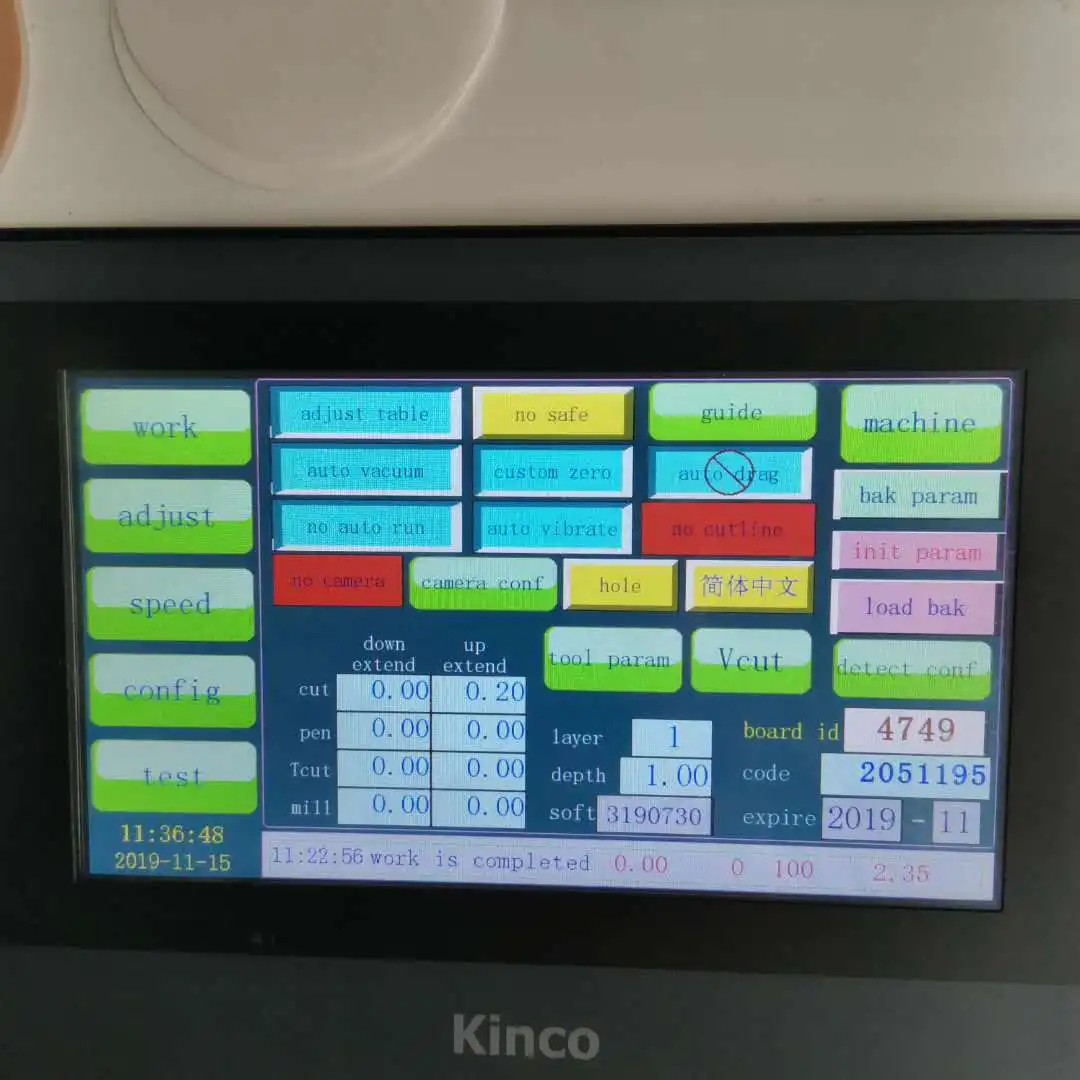
| Software Language Options | English, Russian, Italian, Chinese, special languages customizable |
| Standards | CE |
Application Suitability
| Application | Material or Output |
|---|---|
| Packaging and carton sample making | Corrugated cardboard, plastic box, film, sticker, cardboard |
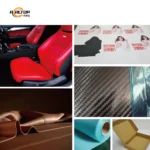
| Automotive interiors cutting | Leather, fabric, composite materials, sponge, PU |
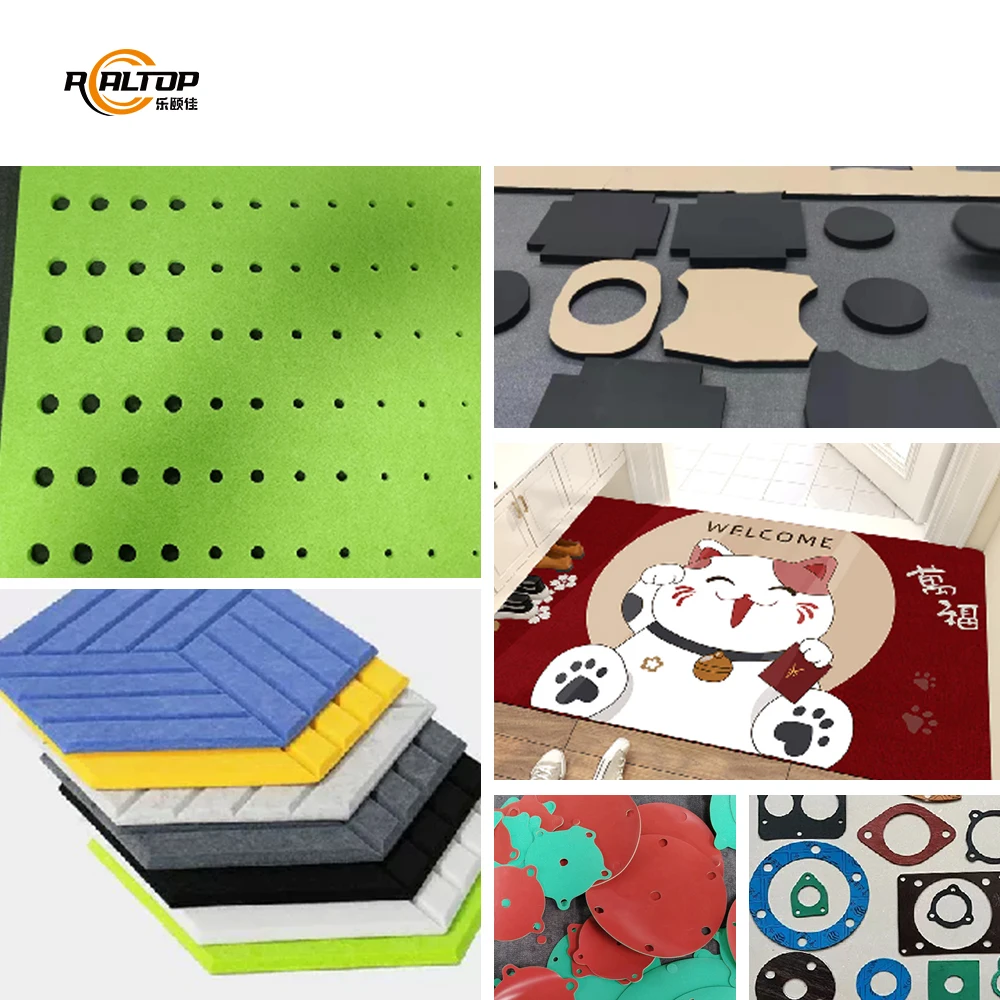
| Sealing pads and gasket materials | Rubber, PTFE, ETFE, silicone, gasket material |
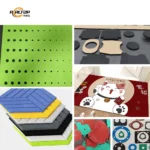
| Soft home furnishings production | Non-woven fabric, carpet, textile, cloth, PU, EVA |
| Bags and shoe materials processing | Leather, shoe material, luggage material, fabric |
| Composite materials fabrication | Fiberglass, XPE, sponge composite leather, PVC |
Why Voltage Confirmation Matters More Than Quoted Speed for CNC Oscillating Knife Cutting Machine Users
A cutting speed of 1200 mm/s means nothing if your plant’s incoming supply cannot match the 380V±10% requirement.
Over the years installing equipment across Africa and South Asia, I have watched production floors sit idle for weeks because a transformer was needed and nobody checked before shipment. One packaging sample shop received a punching and vibrating knife unit rated at 9 kW, but the local grid could not deliver stable 380V three-phase power. The team waited for a step-up transformer while orders piled up [NEED_CITE: voltage and frequency standards by export market]. When purchasing a CNC oscillating knife cutting machine for laser and engraving workflows, confirming voltage, plug type and frequency before the build stage is non-negotiable.
Laser Process Integration and Edge Sealing on Synthetics
Acrylic, textile and sheet metal processors often run both laser and knife operations under one roof. CO2 lasers deliver clean, sealed edges on synthetic fabrics and acrylic signage panels, while the oscillating knife handles thicker gaskets and foam that would char under a laser beam. The panoramic camera recognition positioning bridges both processes: it locates printed registration marks on pre-printed corrugated or vinyl stock at full translational velocity, feeding contour data to whichever tool head is active. This matters for signage producers cutting board and vinyl where the print-to-cut registration must hold across hundreds of sheets.
Material-Specific Tool Head Selection and Vacuum Zoning
Choosing the wrong tool head for a given material is one of the most common mistakes I see on the floor. A drag knife produces ragged edges on 5 mm foam board that an oscillating knife cuts cleanly, while a creasing wheel is the only correct choice for fold lines on corrugated carton samples. The magnesium-aluminum alloy vacuum table with anodic oxidation provides flat, corrosion-resistant suction across the 1600×2500 mm working area, and the 7.5 kW vacuum pump with built-in silencer sponge maintains hold-down even on smaller parts that tend to lift during high-speed cuts [NEED_CITE: vacuum hold-down requirements for small die-cut parts]. Specifying the vacuum zone layout and tool head combination against your actual material stack before order is how you avoid crushed foam and wandering cuts.
Reading the Specs That Actually Affect Your Cut Quality
The repeated accuracy of ≤0.1 mm depends on the full transmission chain: Delta digital servo motors driving Taiwan Hiwin linear guides via synchronous belts and ball screws. If any link in that chain is undersized, cumulative backlash shows up as mismatched crease lines on a packaging prototype. The 9 kW rated power covers the servo drives, vacuum pump and knife actuation together, so a dedicated circuit with correct amperage prevents voltage sag that degrades servo response during long cutting runs. Cutting thickness up to 100 mm is achievable on softer foams and sponge composites, but dense rubber gaskets require the high-power vibrating knife or pneumatic knife head rather than the standard oscillating blade. The HP-GL compatible instruction system means nesting software from most common platforms can feed cutting paths directly, reducing file conversion errors that distort small-radius corners.
The Hidden Cost of Skipping Configuration Verification
When a buyer specifies a machine on working area alone and skips material thickness validation, the result is a knife that cannot penetrate the stock in a single pass. I have visited workshops running double passes on 8 mm EVA foam, doubling cycle time and wearing blades prematurely, because the tool stroke was not matched to their thickest material at the quoting stage [NEED_CITE: tool stroke and material penetration depth requirements]. Similarly, a vacuum table with insufficient zoning lets small die-cut shapes lift mid-cut, producing scrap that the operator only discovers after the full sheet is processed.
Why Sourcing This Configuration Here Makes Sense
In-house design covering both knife and laser cutting technologies means the buyer can match the cutting method to each material in their product mix, rather than forcing one process across everything. Tool head and table configuration are specified per material type and daily volume, so a packaging sample shop running corrugated board gets a different setup than a gasket fabricator cutting PTFE. CCD camera positioning is verified against the buyer’s own printed stock before order. Software compatibility is confirmed so HP-GL files from existing nesting workflows import without rework. Sample cutting on the buyer’s actual material is completed before commitment, providing a physical benchmark for edge quality and dimensional accuracy.
Documentation & Verification
- Factory test record run on your specific material thickness and tool head combination
- Electrical schematic confirming 380V±10% wiring, plug type and phase for your market
- Tool head and vacuum table zone configuration list matched to your material stack
- Software licence and HP-GL file format compatibility note with selected control language
- Sample cutting report with edge photographs and dimensional measurements on your stock
- CE declaration covering the machine configuration as shipped
Installation, Commissioning & Support
- Dedicated 380V±10% three-phase circuit with sufficient amperage for the 9 kW rated power draw
- Machine size of 3450×2300×1250 mm requires floor space plus operator clearance on three sides
- Vacuum pump with 7.5 kW motor needs its own dedicated breaker separate from the control circuit
- Taiwan Hiwin rails and ball screws require initial lubrication and alignment check after transit
- Delta servo motors and control system language configured to operator preference before power-on
- Spare oscillating knife blades, punching dies and creasing wheels included based on tool head selection
What to Include With Your Inquiry
To configure the correct tool head and vacuum zoning, provide the material type, thickness range and sheet dimensions you will cut most frequently. Specify your local voltage, frequency and plug standard so the electrical system is built to match. Note the control language your operators prefer and whether your existing nesting software outputs HP-GL or another format.
Frequently Asked Questions
Q: How do I confirm the cutting depth matches my material thickness?
A: Cutting thickness capacity varies with material density. For soft foams and sponge composites, up to 100 mm is achievable with the high-power vibrating knife. Dense rubber and gasket materials require the pneumatic knife or a specific oscillating knife stroke. Request a sample cutting report on your actual stock with measured edge quality before placing the order.
Q: What happens if my local voltage does not match 380V±10%?
A: The electrical system must match your incoming supply before shipment. Confirm your plant voltage, phase and frequency during inquiry so the transformer, contactors and motor wiring are configured correctly. I have seen machines sit idle for weeks waiting for a transformer because this step was skipped.
Q: Can the panoramic camera track printed marks at full cutting speed?
A: The panoramic camera recognition positioning is designed to locate registration marks on printed stock while the head moves at translational velocity. Accuracy depends on mark contrast, size and print quality. Provide sample printed sheets for camera calibration testing before the machine ships.
Q: Which tool head should I use for corrugated carton sample making?
A: Corrugated board typically requires a combination of oscillating knife for through-cuts and creasing wheel for fold lines. If your samples include window cutouts or perforations, a punching tool and dotted line knife are added to the multi-functional head. The configuration is specified based on your board grade and flute type.
Q: Will my existing nesting software work with this machine?
A: The instruction system accepts HP-GL compatible format, which covers most mainstream nesting and CAD platforms. Confirm your software output format and file structure during inquiry. A file format compatibility note is provided with the machine documentation before dispatch.


Related products
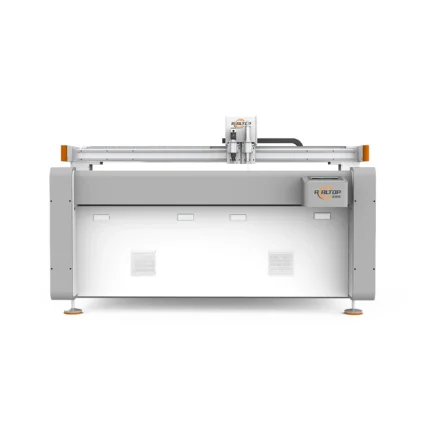
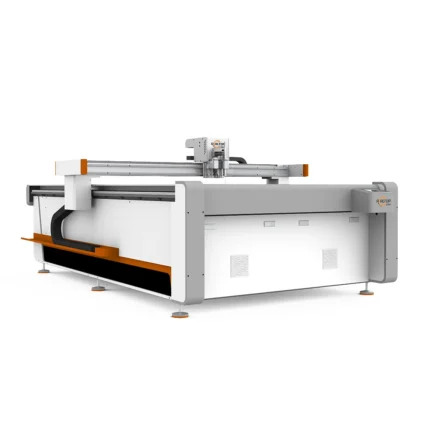
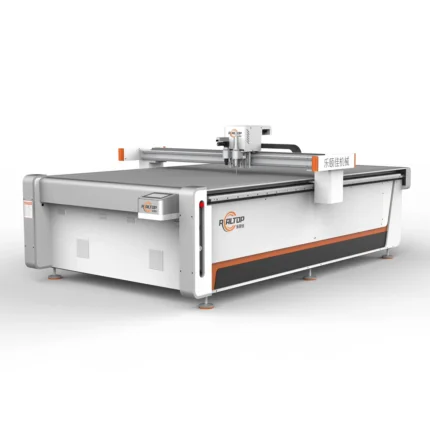
Automatic Digital Cardstock Cutter 2026 CNC Cutter
Product Introduction
Automatic Digital Cardstock Cutter 2026 is a CNC cutting machine ideal for white cardboard and kraft paper. It offers precise and efficient cutting performance, suitable for various paper processing needs in manufacturing and craft applications.Key Specifications
| Type | CNC Digital Cutting Machine |
| Material Compatibility | White Cardboard, Kraft Paper |
| Operation | Automatic |
| Application | Paper Cutting & Processing |
Automation CNC Pizza Box Machine 2026 Rotary Die Cutting
Product Parameters
| Type | Automation CNC Pizza Box Machine |
| Model Year | 2026 |
| Cutting Technology | Rotary Die Cutting |
| Operation | Automated CNC Control |
Introduction
This 2026 Automation CNC Pizza Box Machine features advanced rotary die cutting technology, ensuring precise and efficient pizza box production. With automated CNC control, it offers high productivity and accuracy for professional manufacturing needs.
CNC Flatbed Oscillating Knife Cutting Machine 2026
Product Introduction
High-performance CNC Flatbed Oscillating Knife Cutting Machine 2026, ideal for precision cutting of various materials with advanced oscillating knife technology, ensuring efficient and accurate operations for industrial manufacturing needs.Specifications
| Model | 2026 |
| Type | CNC Flatbed Oscillating Knife Cutting Machine |
CNC Oscillating Knife Cutting Machine 2026 for Corrugated Cardboard & Honeycomb
Product Introduction
2026 CNC Oscillating Knife Cutting Machine, ideal for corrugated cardboard and honeycomb materials, offering precise and efficient cutting solutions for your production needs.Specifications
| Model | 2026 |
| Type | CNC Oscillating Knife Cutting Machine |
| Applicable Materials | Corrugated Cardboard, Honeycomb |
| Cutting Method | Oscillating Knife |

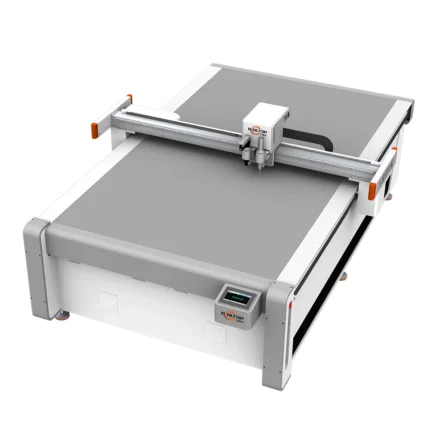
REALTOP 2026 Digital Industrial Cardboard Box Cutter
Product Introduction
REALTOP Digital Industrial Cardboard Box Cutter Machine 2026 is a professional industrial-grade cutting equipment designed for efficient cardboard box processing, ideal for manufacturing and packaging applications.
Product Parameters
| Model | 2026 |
| Type | Digital Industrial Cardboard Box Cutter |
| Application | Cardboard Box Processing |
| Feature | Industrial-grade, Efficient Cutting |

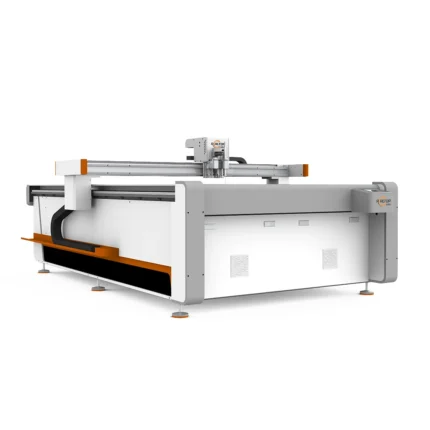
Realtop CNC Carton Box Cutter 2026 CCD Camera Honeycomb Cutting
Product Introduction
Realtop CNC Carton Box Cutter 2026 is a professional cutting solution featuring CCD Camera and Honeycomb Cutting technology, ideal for precise carton box processing with efficient performance.Product Parameters
| Model | Realtop CNC Carton Box Cutter 2026 |
| Vision System | CCD Camera |
| Cutting Technology | Honeycomb Cutting |
商品评价
There are no reviews yet.