







Composite CNC Digital Knife Cutting Machine – Manufacturer
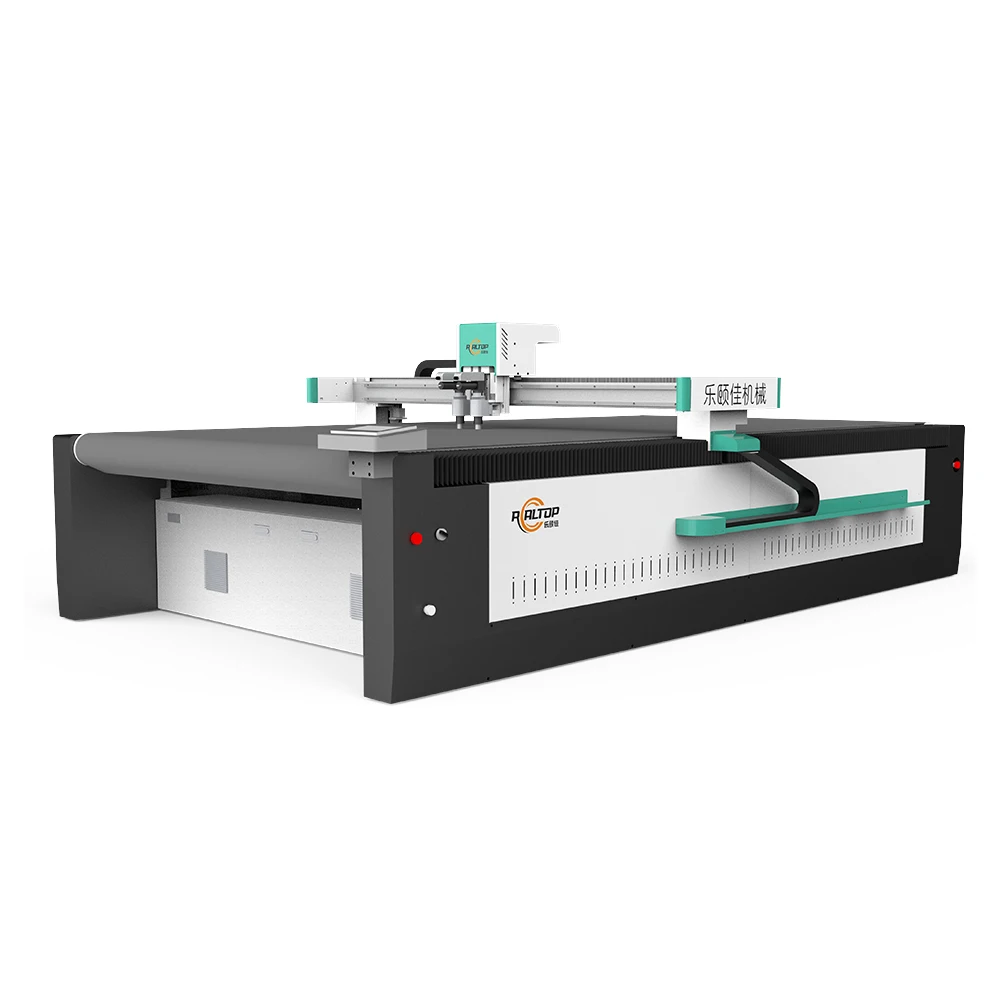
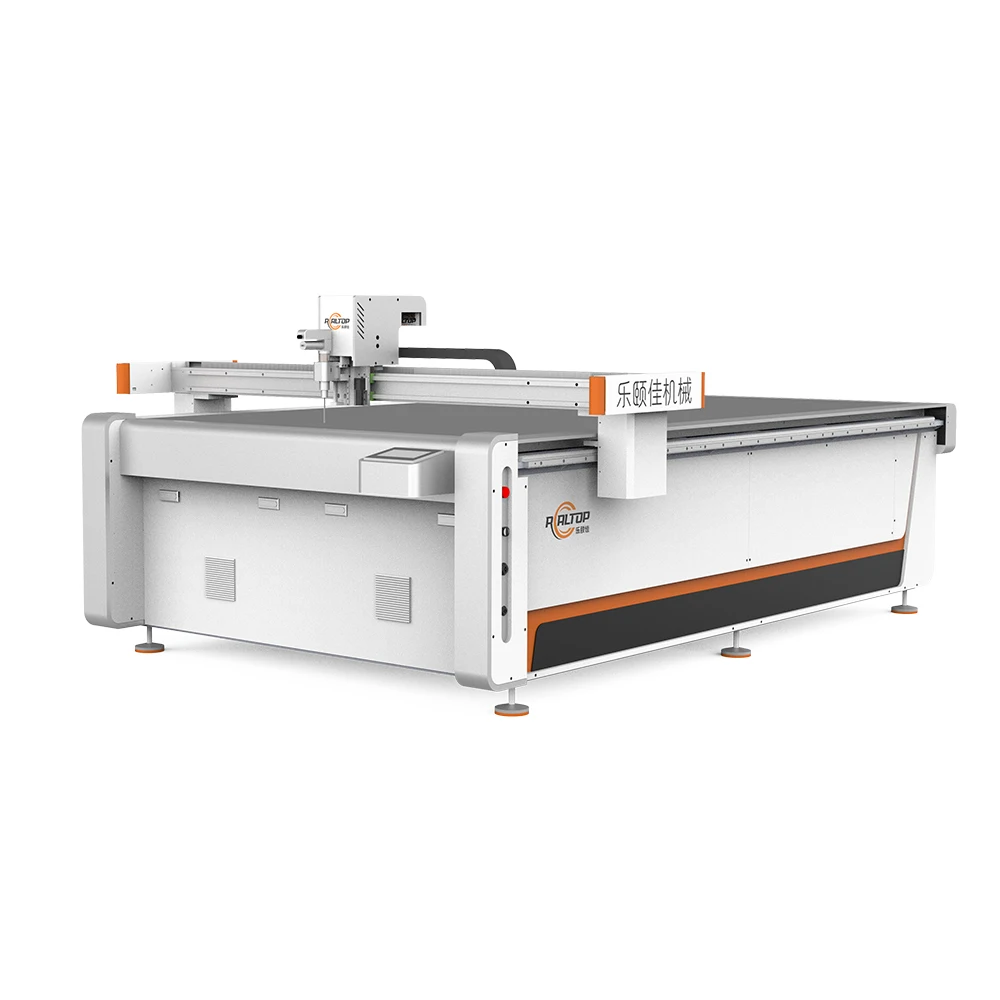
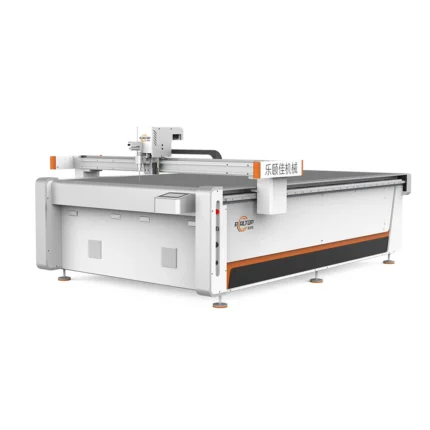
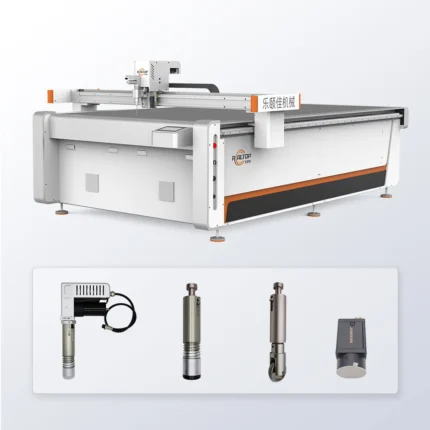
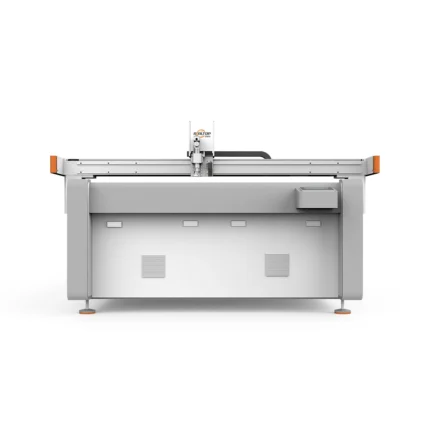
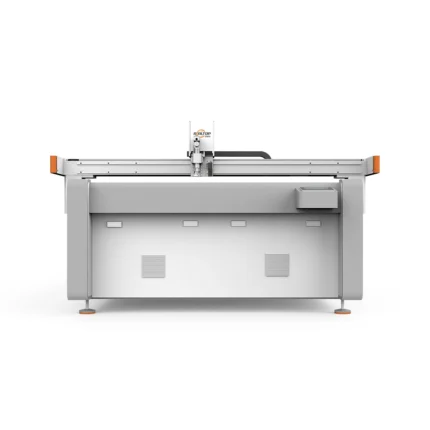
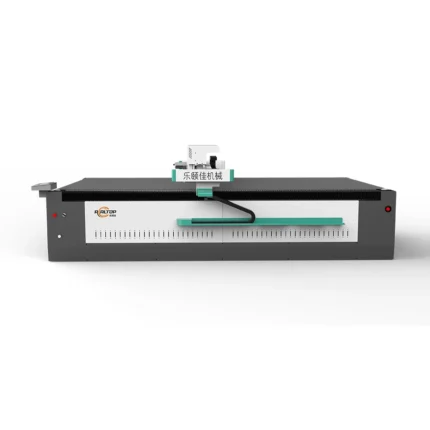
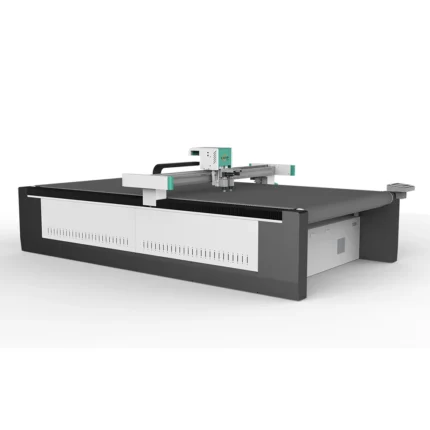
RT-D2516/RT-S2516 CNC Digital Knife Cutting Machine, 1600×2500mm, 9kw — configured for composite materials with Swiss imported vibration knife, multi-tool head options and CCD camera positioning. Magnesium-aluminum alloy vacuum table with PVDF coating ensures uniform adsorption across varied part sizes, while HP-GL compatible software supports existing nesting workflows. Sample cutting on your composite material provided before order, with tool head and voltage configuration matched to your production requirements.
Precision-Configured Knife Cutting — every tool head, vacuum zone, and CCD parameter is matched to your composite layup and ply count before the machine leaves our Jinan workshop.
Technical Specifications
| Parameter | Value |
|---|---|
| Model | RT-D2516 / RT-S2516 |
| Product Type | CNC Digital Knife Cutting Machine |
| Working Area | 1600 × 2500 mm |
| Machine Dimensions | 3450 × 2300 × 1250 mm |
| Rated Power | 9 kW |
| Table Type | Flat magnesium-aluminum alloy vacuum table with PVDF coating |
| Servo System | Delta digital servo motor |
| Linear Motion | Taiwan Hiwin rail, synchronous belt, ball screw |
| Translational Velocity | 800–2000 mm/s |
| Repeated Positioning Accuracy | ≤ 0.1 mm |
| Voltage | 380 V ± 10 % |
| Vacuum Pump | 7.5 kW integrated aviation aluminum housing with built-in silencer |
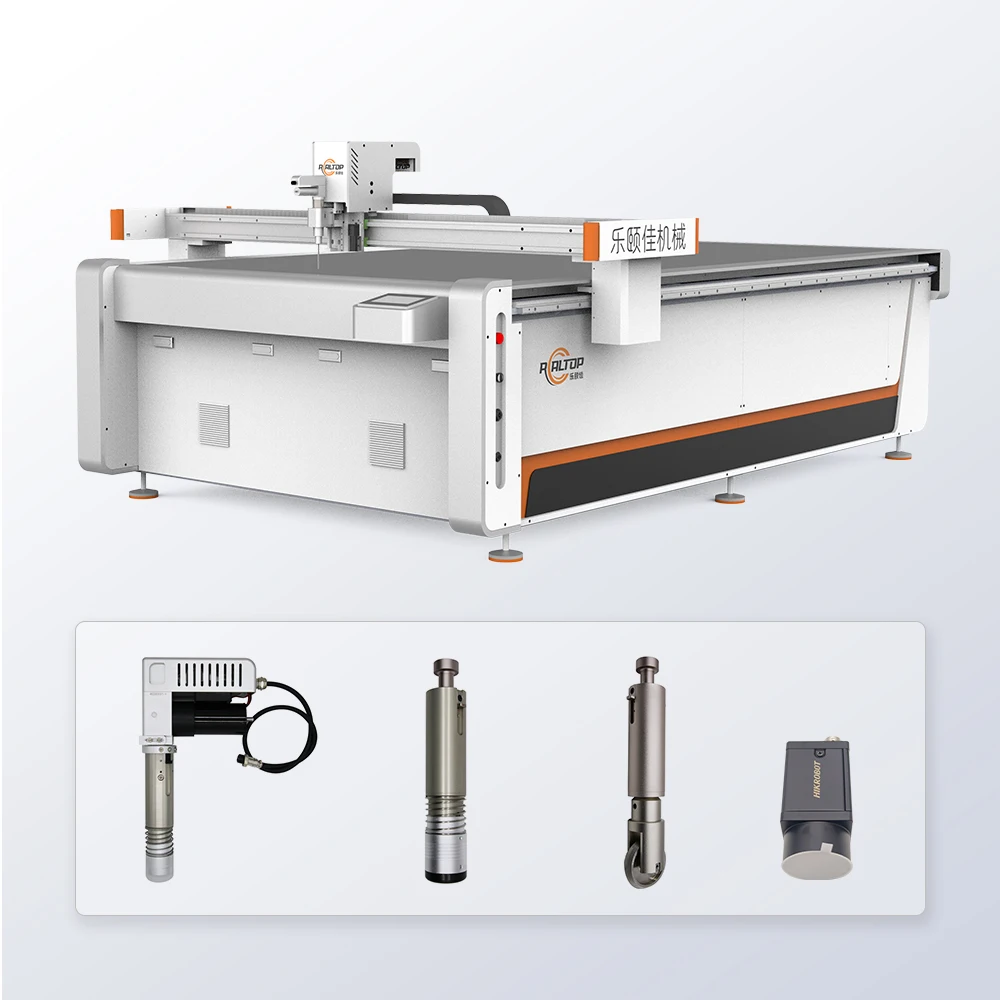
| Tool Head Options | Oscillating knife, pneumatic knife, high-power vibrating knife, circular knife, V-cutting knife, drag knife, creasing wheel, dotted-line knife, punching, brush |
| Visual Positioning | Small CCD mark-point, panoramic camera recognition, projection positioning |
| Instruction Format | HP-GL compatible |
| Certification | CE |
Application Suitability
| Application | Material or Output |
|---|---|
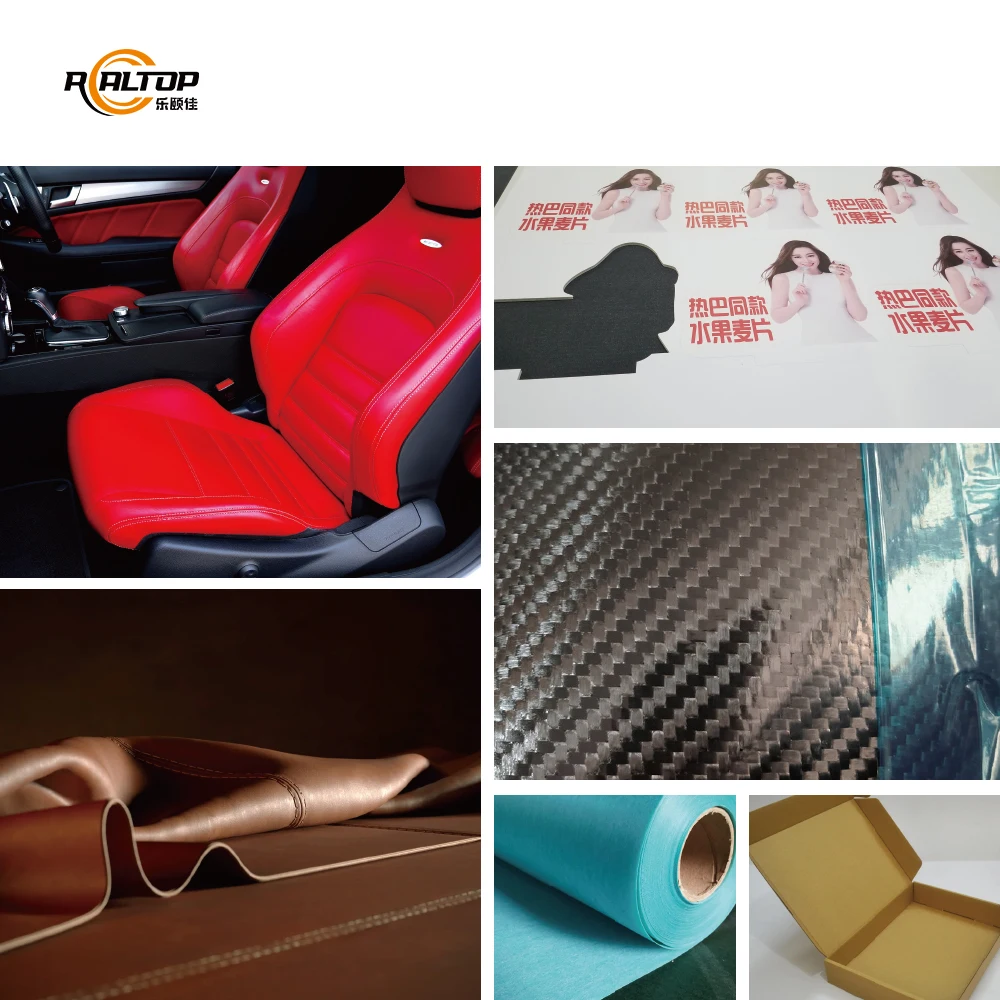
| Automotive interior panel trimming | Multi-layer fiberglass cloth, non-woven acoustic felt, PU foam laminates |
| Gasket fabrication | Aramid fiber sheets, compressed non-asbestos, rubber-bonded cork |
| Composite prototype cutting | Carbon fiber pre-preg, woven roving, honeycomb core sandwich panels |
| Marine hull liner production | E-glass biaxial fabric, closed-cell PVC foam core, vinyl ester wet layup |
| Sporting goods layup | Unidirectional carbon tape, Kevlar woven fabric, structural foam core |
Why "Cutting Speed" Numbers Mislead Composite Buyers
Actual throughput depends on ply count, fiber orientation, and vacuum hold-down, not just head travel speed.
When a composite fabricator quotes a daily panel count based on the machine’s maximum translational velocity, the real-world output often falls short once high-weight fiberglass or multi-axis carbon fabric enters the picture. I have watched workshops specify a CNC knife cutting machine manufacturer by speed chart alone, only to find that the vacuum table could not grip small nested gasket pieces through a full oscillating stroke. The cutter head finishes its path, but the part has shifted, and the entire nest is scrapped. [NEED_CITE: vacuum hold-down requirements for composite cutting]
Tool Head Selection for Fiber-Reinforced Laminates
A Swiss-imported oscillating knife handles full-depth and half-depth cuts through woven roving and pre-preg stacks without delaminating the ply interface. For aramid or ultra-high-molecular-weight polyethylene fabrics, a high-power vibrating knife maintains edge integrity where a standard drag knife would fray the fibers. Matching the knife profile to the resin system and fiber architecture is the first step any experienced CNC knife cutting machine manufacturer will take before locking in a quotation.
Vacuum Zoning and Small-Part Retention
The magnesium-aluminum alloy table is divided into independently controlled zones, allowing the operator to activate suction only under the active cutting area. This keeps small composite gaskets and reinforcement patches from lifting during high-frequency oscillation. The PVDF powder-sprayed surface resists resin transfer and styrene attack, so the table flatness stays within tolerance across years of wet-layup and pre-preg work. [NEED_CITE: magnesium-aluminum table flatness standards]
Reading the Specs That Matter on the Shop Floor
Repeated positioning accuracy of ≤ 0.1 mm ensures that a CCD camera can relocate printed fiducial marks on pre-printed composite plies, even after the material is repositioned for a second pass. The 7.5 kW vacuum pump, housed in an aviation-aluminum shell with a built-in silencer, delivers enough suction for dense carbon fiber stacks while keeping workshop noise at acceptable levels. A 9 kW total rated power means the RT-D2516 can run on a standard three-phase industrial circuit without a dedicated transformer, simplifying installation in job shops that already host autoclaves and ovens. Translational velocity between 800 and 2000 mm/s is available, but effective cutting speed through a 10 mm foam-core sandwich will be dictated more by knife stroke frequency than by gantry travel rate.
The Cost of Skipping a Material Trial
Buyers who skip sample cutting on their actual production roll often discover that the recommended knife angle cannot penetrate the resin-rich surface layer, leaving ragged edges that require manual trimming downstream. In other cases, the vacuum zoning proves insufficient for thin slitting strips, and parts drift mid-cut, wasting expensive aerospace-grade prepreg. [NEED_CITE: composite prepreg scrap cost analysis] These issues surface only when the machine runs the buyer’s own material at the intended ply height and feed rate.
Why Fabricators Source This Line from Jinan
In-house design covers both knife and laser platforms, so a buyer cutting mixed-material nests—carbon fiber plus PET release film—can consolidate two processes under one supplier. Tool head and table configurations are documented per material type before the order is confirmed, preventing the common mismatch between quoted capability and delivered hardware. CCD camera positioning is calibrated against the buyer’s own printed contour file, not a generic test pattern. Software compatibility with the buyer’s existing nesting workflow is verified during the trial phase, eliminating post-delivery file-format disputes. Every machine ships with a factory test record run on the customer’s sample material, providing a baseline for future tooling replacement intervals.
Documentation & Verification
- Machine specification sheet listing every selected tool head and vacuum zone configuration
- Electrical schematic confirming 380 V ± 10 % wiring and breaker sizing for your facility
- Sample cutting report generated on your composite layup before order confirmation
- Software license and HP-GL file format compatibility note matched to your nesting system
- Spare parts list identifying knife blades, vacuum cups, and CCD calibration targets
- CE declaration covering the complete machine assembly and safety interlock circuit
Installation, Commissioning & Support
- Foundation requires a level concrete slab to support 3450 × 2300 mm footprint and dynamic cutting loads
- Dedicated 380 V three-phase circuit with isolation switch rated above 9 kW continuous draw
- Machine arrives partially assembled; gantry and vacuum pump are bolted on-site to the main frame
- First-run commissioning includes knife depth calibration on your composite sample stack
- Operator training covers CCD mark-point teaching, zone vacuum toggling, and tool head changeover
- Consumable knife blades and vacuum seals stocked for dispatch within standard lead times
What We Need to Quote the Right Configuration
Send us the exact composite material data sheet, including fiber type, areal weight, resin system, and the number of plies you intend to cut in a single pass. Confirm your local voltage and frequency, the control panel language your operators require, and whether your existing nesting software exports HP-GL or requires a post-processor. If your production involves printed alignment marks, provide a sample file so we can validate CCD recognition speed before the machine is built.
Frequently Asked Questions
Q: How do I choose between an oscillating knife and a vibrating knife for my composite?
A: Oscillating knives suit thicker, softer stacks like foam-core sandwiches and non-woven felt, where a vertical stroke slices cleanly. High-power vibrating knives excel on tightly woven aramid or carbon fabric, where lateral vibration prevents fiber pull-out. We run both heads on your sample roll during the trial to confirm edge quality before recommending one.
Q: Can the CCD camera track printed marks on dark carbon fiber prepreg?
A: Yes, provided the fiducial marks are printed in a contrasting color visible to the camera spectrum. During sample cutting we test recognition at full production speed and record the hit rate, so you know before purchase whether your existing print layout works or needs adjustment.
Q: Will small gasket parts stay flat under the vacuum table during cutting?
A: The table is divided into zones that can be activated independently. For thin slitting strips and small reinforcement patches, we close off surrounding zones to concentrate suction directly under the part. The PVDF-coated surface also reduces resin build-up that could otherwise create localized air leaks.
Q: My nesting software does not output HP-GL. Is the machine still compatible?
A: The control system accepts HP-GL natively. If your nesting platform uses a different format, we verify conversion through a post-processor during the pre-order sample trial. This step ensures file compatibility and prevents downtime after installation.
Q: What documentation proves the machine can handle my specific material?
A: Before shipment you receive a factory test record run on your exact composite layup, showing cut quality, cycle time, and edge finish at the agreed ply count. This report serves as the acceptance benchmark and a reference for future tooling replacement scheduling.


Related products
2026 EVA CNC Cutting Machine for PVC/EVA Foam Board
Product Introduction
Professional EVA CNC Cutting Machine designed for precise cutting of PVC and EVA foam boards, ideal for industrial manufacturing needs in 2026. Ensures high efficiency and accuracy for foam processing applications.Product Parameters
| Material Compatibility | PVC/EVA Foam Board |
| Type | CNC Cutting Machine |
| Application | Foam Processing |
| Year | 2026 |
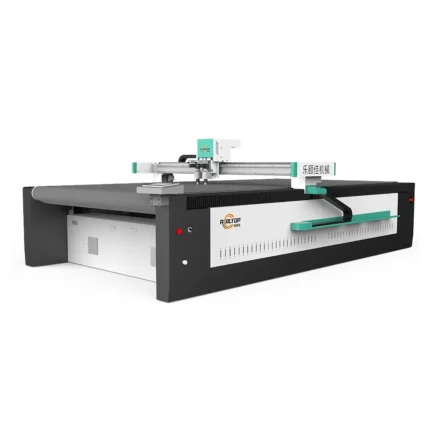
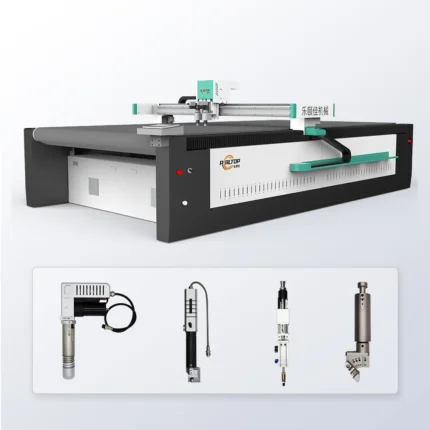
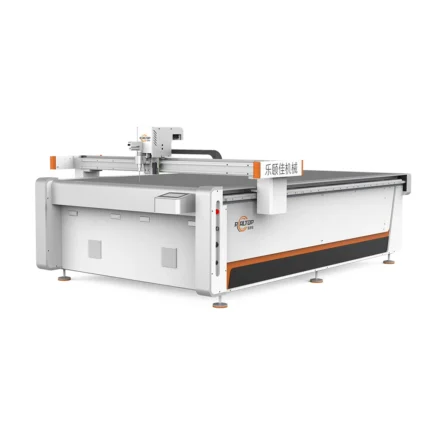
Acoustic Panels CNC Knife Cutting Machine 2026
Product Introduction
Designed for precision cutting of acoustic panels, this 2026 CNC knife cutting machine offers efficient and accurate processing, ideal for acoustic panel manufacturers seeking high-quality results.Product Parameters
| Model | Acoustic Panels CNC Knife Cutting Machine 2026 |
| Application | Acoustic Panels Cutting |
| Type | CNC Knife Cutting Machine |
| Year | 2026 |
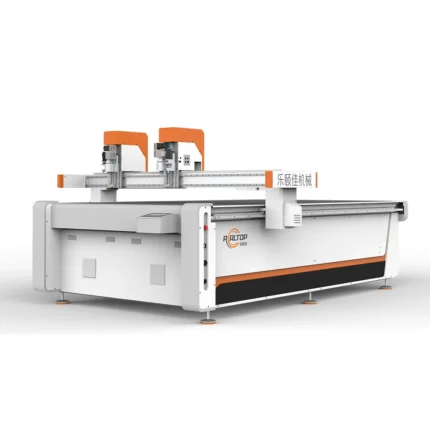
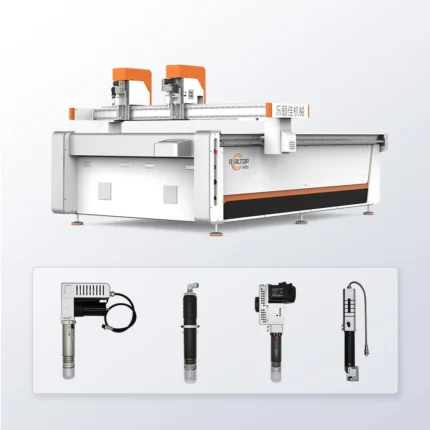
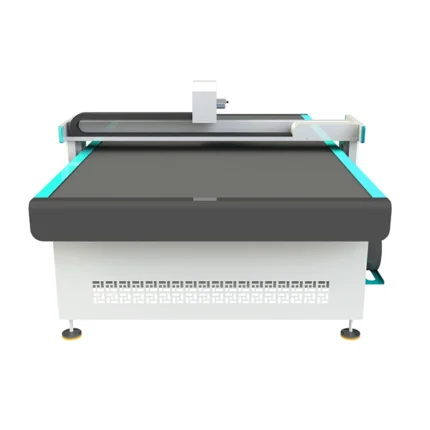
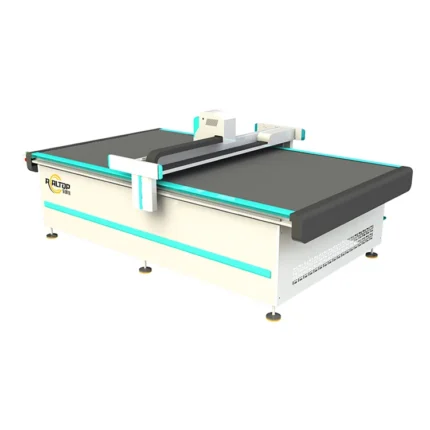
Oscillating Knife Cutter 2500x1600mm Composite Material Cutter
Product Introduction
Designed for composite materials processing, this oscillating knife cutter features a large 2500x1600mm working area, ensuring efficient handling of various composite material cutting tasks with precision and reliability.Product Parameters
| Working Area | 2500x1600mm |
| Cutting Type | Oscillating Knife |
| Application | Composite Materials |
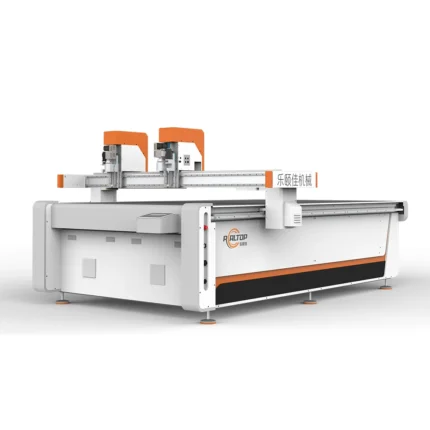
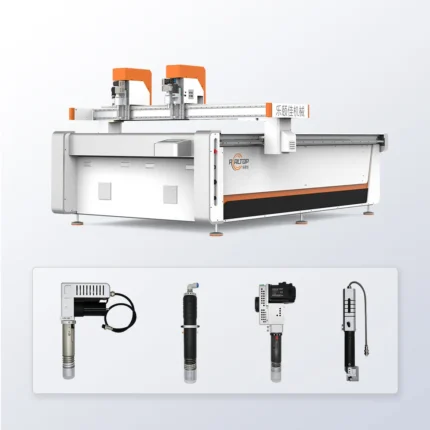
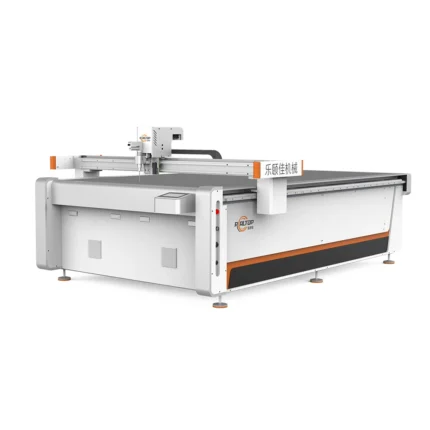
Realtop 2026 XPE Foam Cutter High-Precision Roller
Product Introduction
High-precision Realtop XPE Foam Cutting Machine 2026 with roller cutting system, ideal for efficient foam processing with accuracy. Perfect for manufacturing and industrial foam cutting applications.Key Specifications
| Model | Realtop XPE 2026 |
| Type | Roller Foam Cutter |
| Precision | High-Precision |
| Application | Foam Cutting |
商品评价
There are no reviews yet.