



Corrugated Cardboard CNC Oscillating Knife Cutting Machine – Laser Process
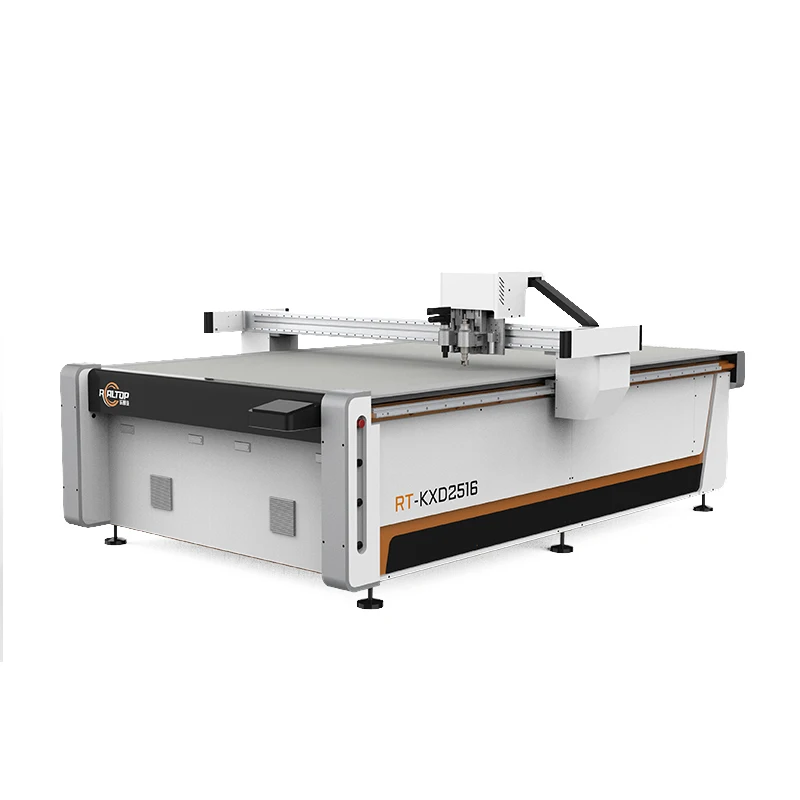
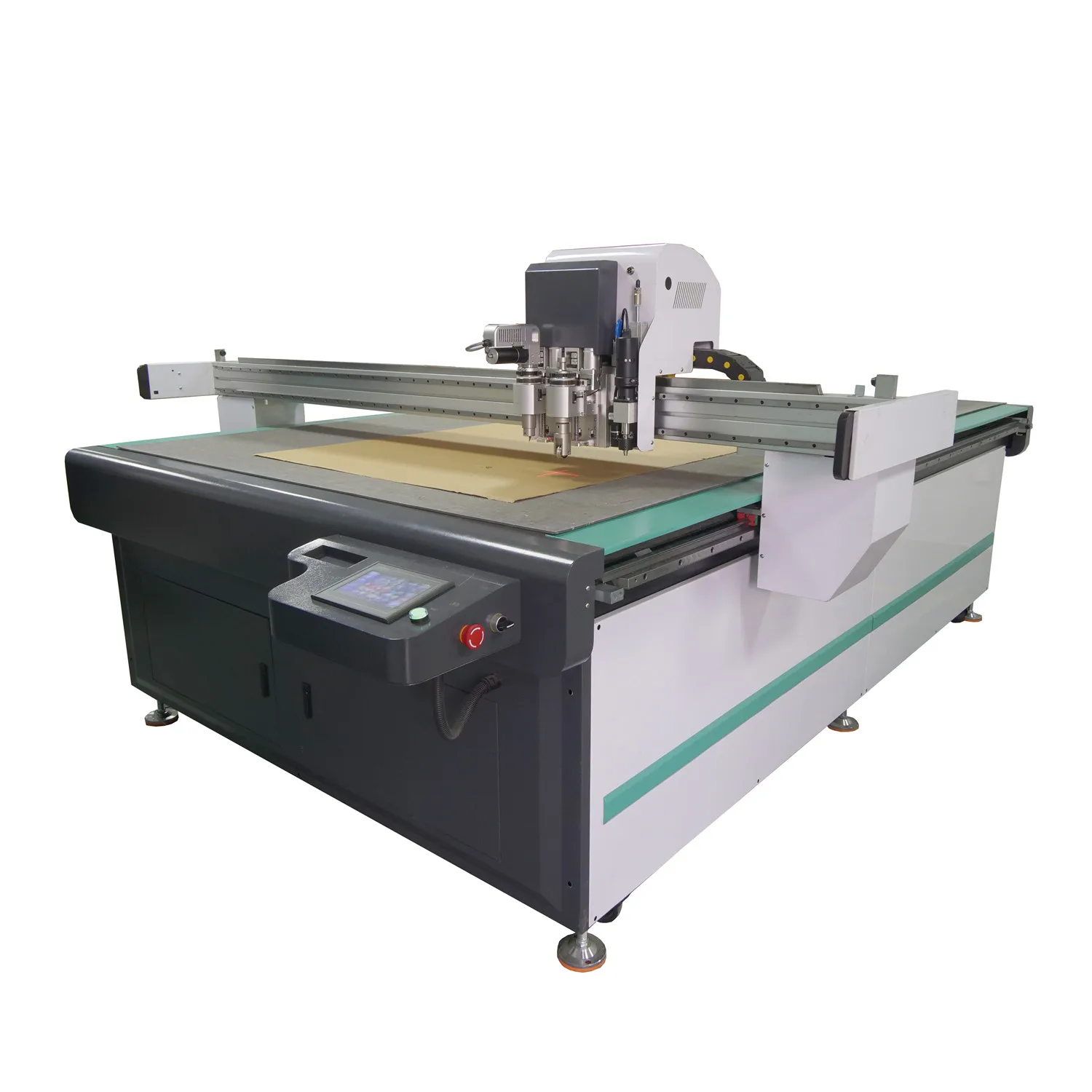
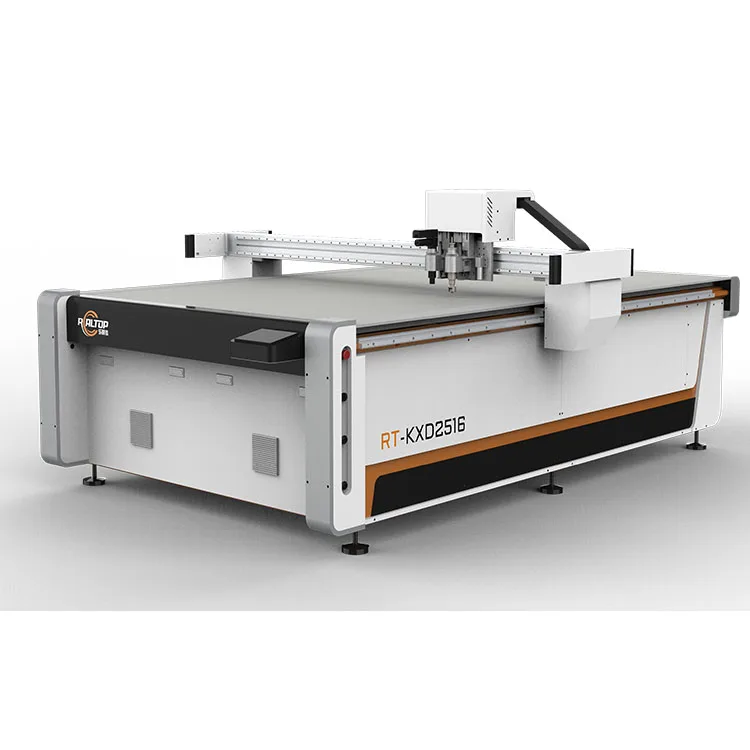
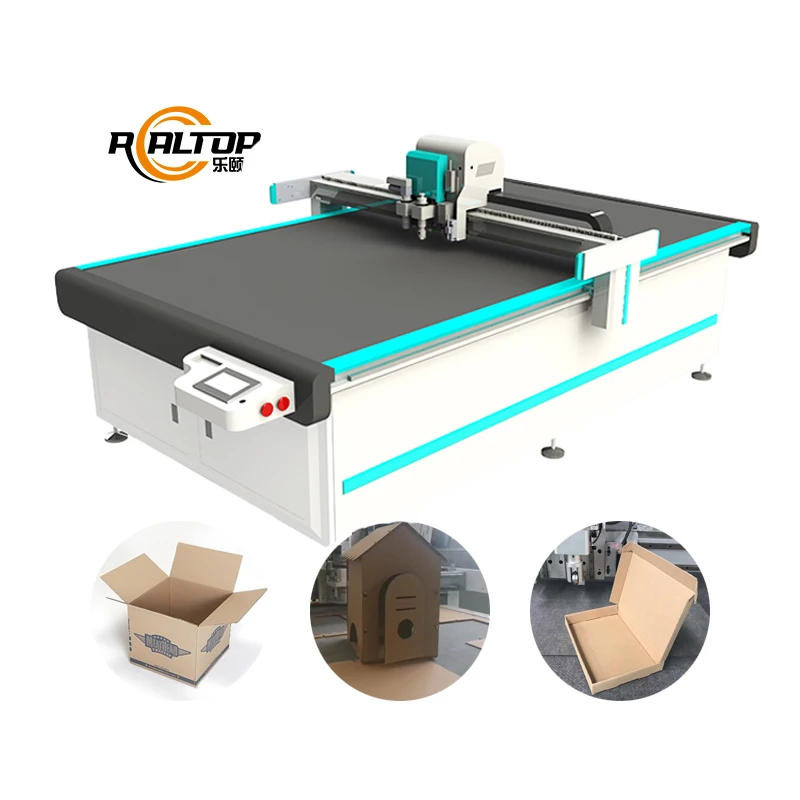
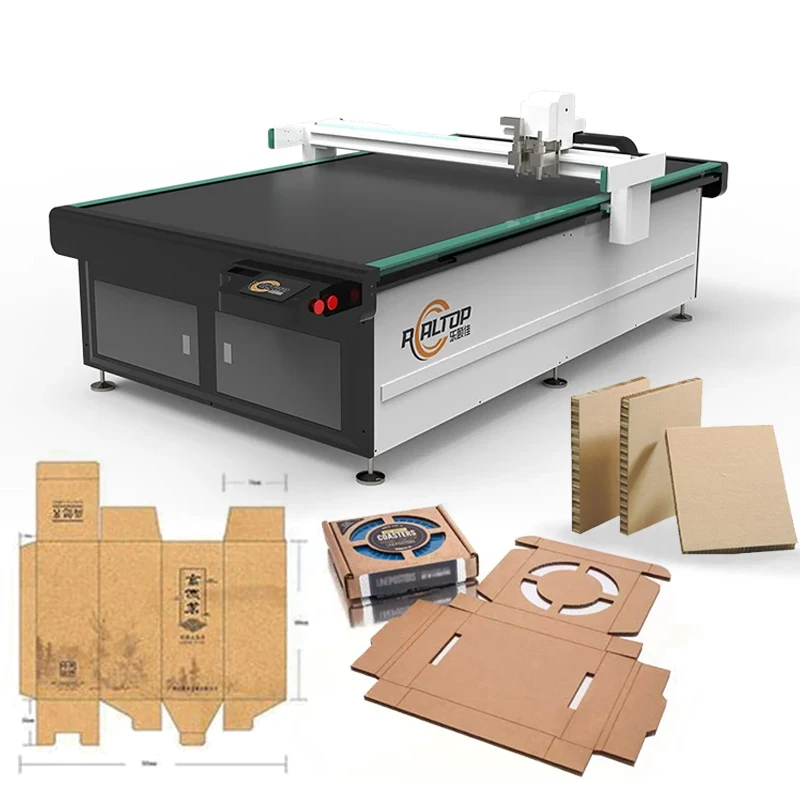
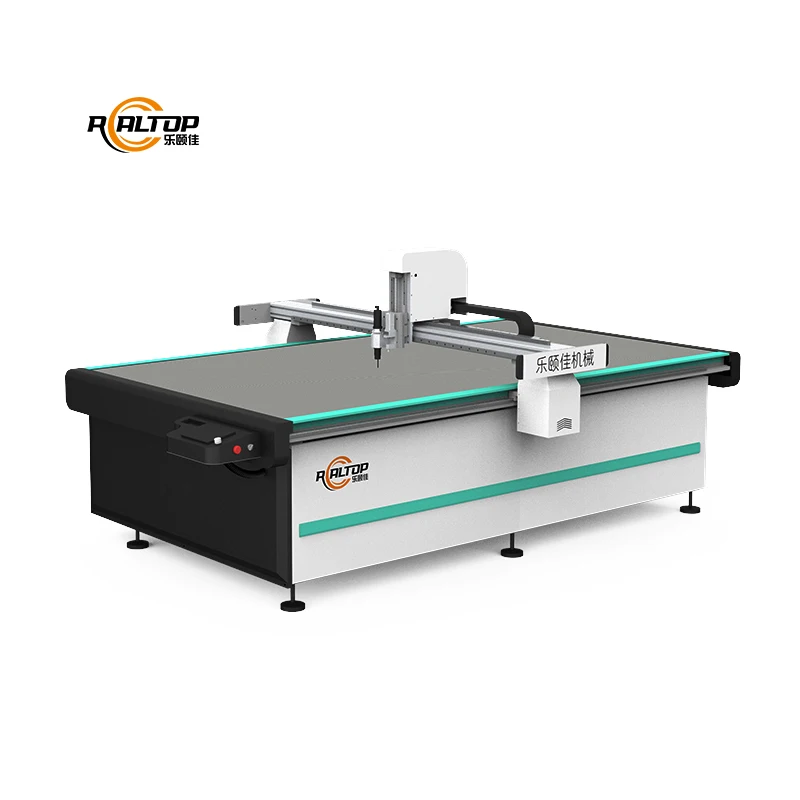
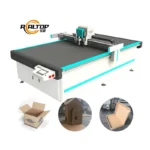
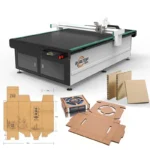
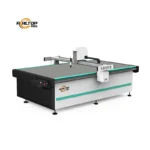
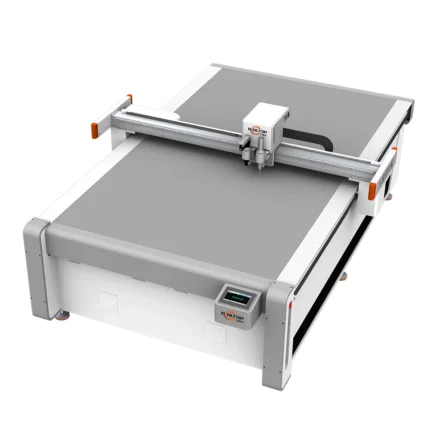
RT-D2516/RT-S2516 CNC Oscillating Knife Cutting Machine, 1600×2500mm Working Area, 9kW Rated Power, Delta Servo — configured for corrugated cardboard, sticker and carton packaging production.
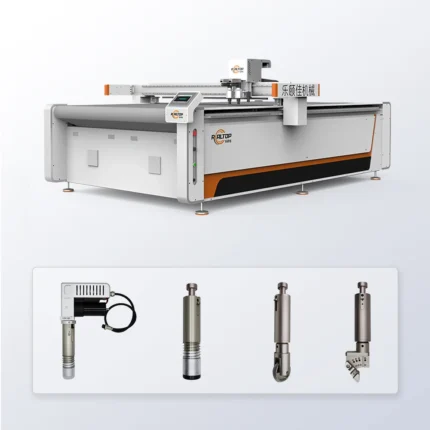
- Swiss imported oscillating knife delivers full and half cutting across flute profiles
- Delta servo motors with Taiwan Hiwin linear guides maintain ≤0.1mm repeated accuracy
- Vacuum adsorption platform with automatic zone following prevents material lift on small parts
Sample cutting on your own corrugated material confirms tool head and configuration before commitment.
Swiss Knife Precision — A full-cut and half-cut oscillating head configured to match flute profile and board thickness before the machine ships, eliminating ragged edges on corrugated packaging samples.
Technical Specifications
| Parameter | Value |
|---|---|
| Model | RT-D2516/RT-S2516 |
| Product Type | CNC Oscillating Knife Cutting Machine |
| Working Area | 1600 × 2500 mm |
| Machine Size | 3450 × 2300 × 1250 mm |
| Rated Power | 9 kW |
| Table Type | Aluminum honeycomb flatbed with vacuum adsorption |
| Tool Head | Swiss imported oscillating knife (full cutting, half cutting, cursor location) |
| Translational Velocity | 800–2000 mm/s |
| Cutting Speed | 200–800 mm/s (basis to be confirmed) |
| Repeated Accuracy | ≤0.1 mm |
| Transmission System | Delta digital servo motor, Hiwin linear guide, synchronous belt, ball screw |
| Vacuum Pump | 7.5 kW |
| Instruction System | HP-GL compatible format |
| Voltage | 380V ±10% |
| Conveyor Belt | Germany imported |
| Safety Device | Infrared sensors |
| Software | Professional carton nesting software (multi-format import, language configurable) |
Application Suitability
| Application | Material or Output |
|---|---|
| Carton sample making and short-run packaging | Corrugated cardboard across E, B, and C flute profiles |
| Corrugated box production | Single, double, and triple-wall corrugated board up to working area limits |
| Sticker and label contour cutting | Adhesive-backed vinyl, coated paper, and synthetic label stock |
| Express and e-commerce box prototyping | Kraft paper, greyboard, and micro-flute corrugated sheets |
| Gift box and display packaging | High-density greyboard and laminated cardstock |
When Ragged Edges Appear on Corrugated Board
The tool head and oscillation frequency must be matched to the specific flute profile and board thickness before the machine leaves the factory.
Many buyers specify a CNC oscillating knife cutting machine for packaging based solely on working area, then discover the standard knife cannot cleanly shear through five-layer double-wall corrugated. The result is crushed fluting and delaminated edges that force operators to hand-trim every sample. This issue traces directly to a configuration gap: the oscillation amplitude and blade angle were set for thin cardstock rather than the buyer’s actual board grade. [NEED_CITE: oscillating knife selection criteria for corrugated flute profiles]
Blade Geometry and Flute Profile Matching
The Swiss imported oscillating knife on this system handles full cutting through the board, half cutting for crease-score lines, and cursor location for registration marks. A CNC oscillating knife cutting machine for packaging must adjust its oscillation frequency depending on whether the operator is processing micro-flute E-board for cosmetic boxes or heavy C-flute for shipping containers. Incorrect frequency causes the blade to drag through the corrugation medium rather than shearing it cleanly.
Vacuum Zoning Across the Honeycomb Bed
The 1600 × 2500 mm aluminum honeycomb table connects to a 7.5 kW vacuum pump with automatic zone following. This means the system activates suction only beneath the area where the knife head is currently working, maintaining consistent hold-down pressure across nested layouts. Without zone-following logic, small carton blanks near the table edges can lift during high-speed traversal, producing dimensional drift that accumulates across a production run. [NEED_CITE: vacuum hold-down requirements for corrugated digital cutting]
What the Drive Train Actually Delivers
Delta servo motors paired with Taiwan Hiwin linear guides and ball screws produce a repeated positioning accuracy of ≤0.1 mm across the full working envelope. In carton sample making, this tolerance determines whether a scored crease line aligns precisely with the corresponding cut edge — a mismatch of even a few tenths of a millimeter causes the folded box to twist out of square. The synchronous belt transmission handles rapid traverse moves between cut paths, keeping non-cutting travel time low during nested sheet processing.
The Hidden Cost of Underspecified Configuration
When a machine arrives without the correct blade holder or vacuum zone map for the buyer’s typical board range, the operator compensates by reducing cutting speed and increasing blade pressure. This wears oscillating knife blades prematurely and stresses the servo drive beyond its intended duty cycle. Over time, the linear guides develop play that degrades the stated ≤0.1 mm accuracy. [NEED_CITE: premature wear causes in CNC knife cutting systems] These problems are avoidable when the tool head and table configuration are specified against the buyer’s actual material list before production begins.
What Happens When Configuration Gets Skipped
Selecting a drag knife head instead of an oscillating knife for thick corrugated board produces torn edges and exposes the fluted interior, rendering the sample unsuitable for client presentation. Insufficient vacuum zoning causes small die-cut shapes — such as locking tabs and ventilation slots — to shift mid-cut, requiring the operator to re-run the entire nested sheet. Software that cannot import the buyer’s existing DXF or PLT files forces a manual redraw of every carton dieline, adding hours to what should be a same-day sample turnaround. [NEED_CITE: file format compatibility in packaging CAD workflows]
Why Procure This System Here
In-house design capability covers both knife and laser cutting, so the buyer selects the method that fits the material rather than forcing one technology across every substrate. Tool head and table configuration are specified against the buyer’s corrugated board range and daily volume before the quotation is issued. CCD camera positioning is available for printed contour work where registration marks must be tracked at production speed. Voltage, plug type, and control language are confirmed and documented before the machine enters assembly. Every unit ships with a sample cutting report produced on the buyer’s own corrugated material, providing a verifiable baseline for edge quality and dimensional accuracy.
Documentation & Verification
- Machine specification sheet listing confirmed tool head and vacuum zone configuration
- Electrical schematic with voltage and frequency matched to destination market
- Sample cutting report on buyer’s own corrugated board grade and flute profile
- Professional carton nesting software license with file format compatibility note
- Factory test record documenting accuracy and edge quality across the full working area
- Spare parts list covering oscillating knife blades, vacuum seals, and drive belts
Installation, Commissioning & Support
- Dedicated 380V ±10% circuit with sufficient capacity for the 9 kW rated load and 7.5 kW vacuum pump
- Level foundation required across the 3450 × 2300 mm machine footprint to preserve guide rail alignment
- Assembly includes mounting the gantry, connecting the Germany imported conveyor belt, and calibrating vacuum zones
- First-run commissioning includes oscillation frequency tuning and blade depth setting for buyer’s board range
- Operator training covers HP-GL file import, nesting layout creation, and zone-following vacuum adjustment
- Scheduled maintenance intervals for Hiwin linear guides, synchronous belts, and oscillating knife consumables
Preparing Your Material Brief for Quotation
To configure a CNC oscillating knife cutting machine for packaging that performs on day one, specify the corrugated flute profiles and board thicknesses you process most frequently. Confirm your target market voltage and frequency, preferred control language, and the CAD file formats your design team currently uses. If your workflow includes printed contour cutting, indicate whether registration marks are present on your standard layouts so the appropriate positioning system can be included.
Frequently Asked Questions
Q: How do I determine which oscillating knife setup fits my corrugated board range?
A: Provide samples of your thinnest micro-flute and thickest double-wall board for a factory cutting test. The tool head, blade angle, and oscillation frequency are then configured against those specific materials. A sample cutting report documents edge quality and dimensional accuracy before the order is finalized, ensuring the machine matches your production requirements rather than a generic specification.
Q: Will the vacuum table hold small carton parts in place during nested cutting?
A: The 7.5 kW vacuum pump with automatic zone following activates suction only in the active cutting area, maintaining consistent hold-down across the 1600 × 2500 mm honeycomb surface. This prevents small tabs, locking slots, and narrow offcuts from lifting during high-speed traversal. The zone map is configured based on your typical nesting layout to ensure adequate coverage for your smallest part dimensions.
Q: Can the software import my existing carton dieline files?
A: The professional carton nesting software accepts HP-GL compatible formats and supports multi-format file import. Before order confirmation, your existing DXF, PLT, or native CAD files are tested for import compatibility, including layer recognition for separate cut and crease paths. Language customization is available for the control interface to match your operator’s requirements.
Q: What voltage and plug configurations are available for export markets?
A: The standard configuration is 380V ±10%, but voltage and plug type are confirmed and adapted to your destination market before the machine enters assembly. The electrical schematic documents all wiring to support local commissioning and future service. Control language is set to your preference, and the operation manual is provided in the matching language for operator training.
Q: How does the sample cutting process work before I commit to an order?
A: Send representative samples of your corrugated board, including the specific flute profiles and thicknesses you run most often. The factory performs cutting tests across the full material range and documents edge quality, crease depth, and dimensional accuracy in a sample cutting report. This report accompanies the quotation, giving you a verified performance baseline before production begins.


Related products
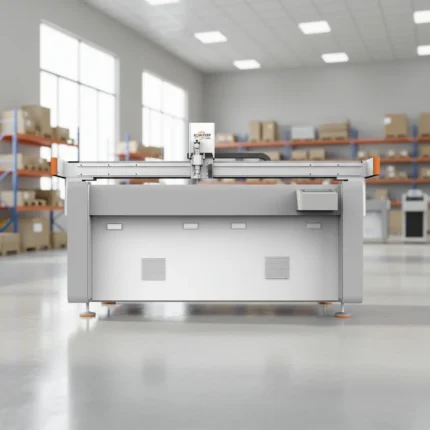
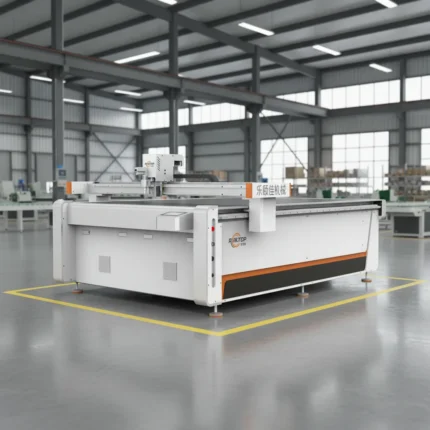
Automatic CNC Cutter Plotter 2026 Flat Bed Cardboard Cutter
Product Introduction
Automatic CNC Cutter Plotter 2026 is a flat bed cardboard cutting machine designed for precise and efficient cutting tasks. Ideal for various cardboard processing needs, it combines advanced CNC technology to deliver accurate results, suitable for manufacturing and packaging applications.Product Parameters
| Type | Automatic CNC Cutter Plotter |
| Model | 2026 |
| Design | Flat Bed |
| Application | Cardboard Cutting |
Automatic Die-less Cardboard Vibrating Knife Cutter 2026
Product Introduction
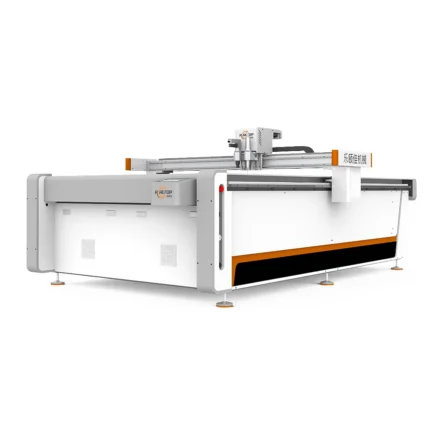
Automatic Die-less Cardboard Vibrating Knife Cutter 2026, a precision cutting solution for cardboard materials, featuring advanced die-less technology for efficient and flexible cutting operations. Ideal for various cardboard processing needs in manufacturing and packaging industries.Key Specifications
| Model | 2026 |
| Type | Automatic Die-less Cutter |
| Cutting Tool | Vibrating Knife |
| Material | Cardboard |

CNC Flatbed Oscillating Knife Cutting Machine 2026
Product Introduction
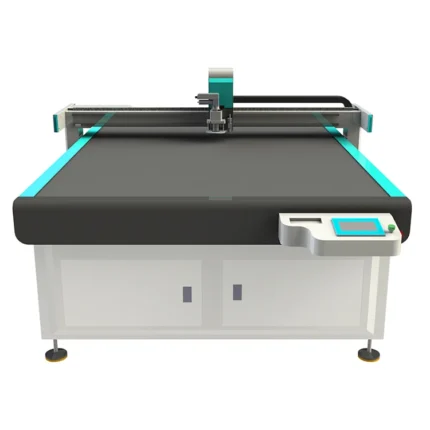
High-performance CNC Flatbed Oscillating Knife Cutting Machine 2026, ideal for precision cutting of various materials with advanced oscillating knife technology, ensuring efficient and accurate operations for industrial manufacturing needs.Specifications
| Model | 2026 |
| Type | CNC Flatbed Oscillating Knife Cutting Machine |
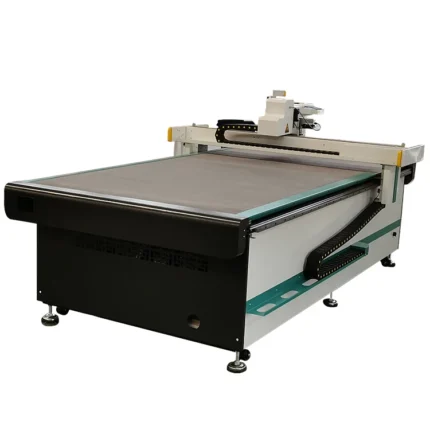
CNC Oscillating Knife Cutting Machine 2026 for Corrugated Cardboard & Honeycomb
Product Introduction
2026 CNC Oscillating Knife Cutting Machine, ideal for corrugated cardboard and honeycomb materials, offering precise and efficient cutting solutions for your production needs.Specifications
| Model | 2026 |
| Type | CNC Oscillating Knife Cutting Machine |
| Applicable Materials | Corrugated Cardboard, Honeycomb |
| Cutting Method | Oscillating Knife |


REALTOP 2026 Digital Industrial Cardboard Box Cutter
Product Introduction
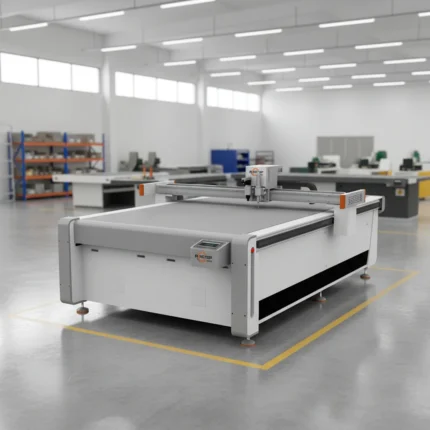
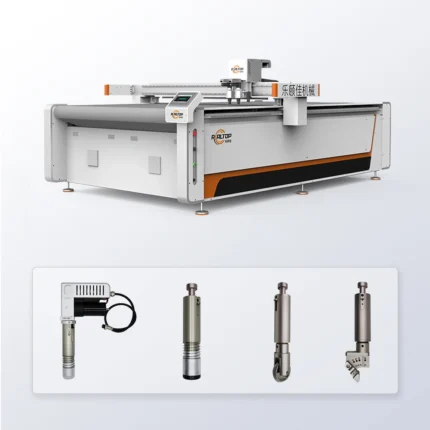
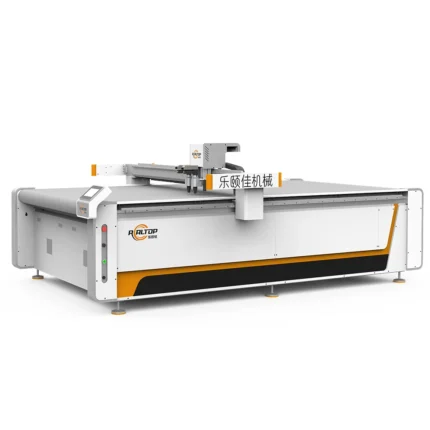
REALTOP Digital Industrial Cardboard Box Cutter Machine 2026 is a professional industrial-grade cutting equipment designed for efficient cardboard box processing, ideal for manufacturing and packaging applications.
Product Parameters
| Model | 2026 |
| Type | Digital Industrial Cardboard Box Cutter |
| Application | Cardboard Box Processing |
| Feature | Industrial-grade, Efficient Cutting |
商品评价
There are no reviews yet.