

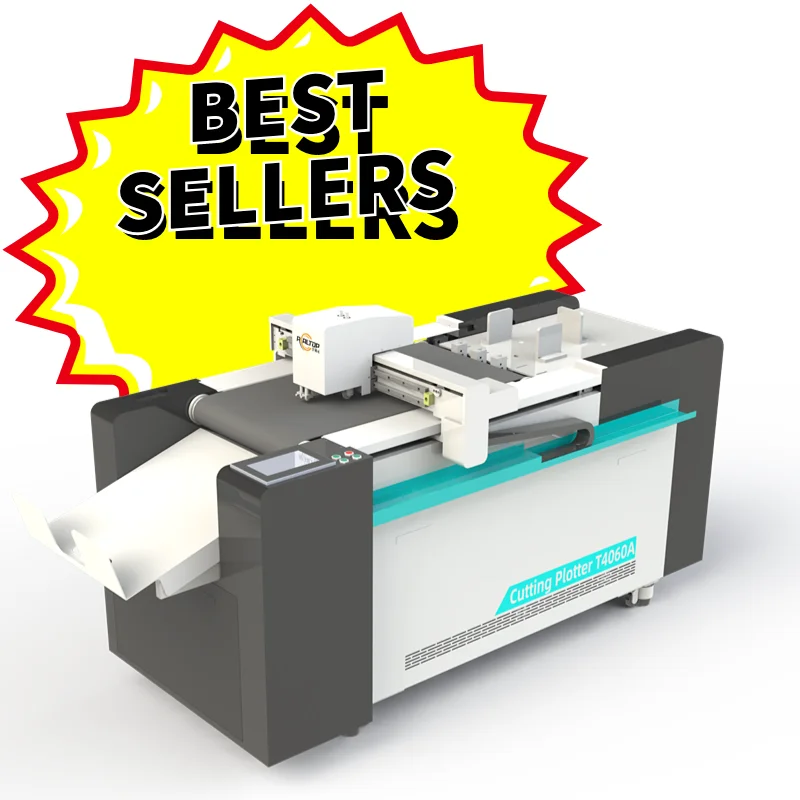
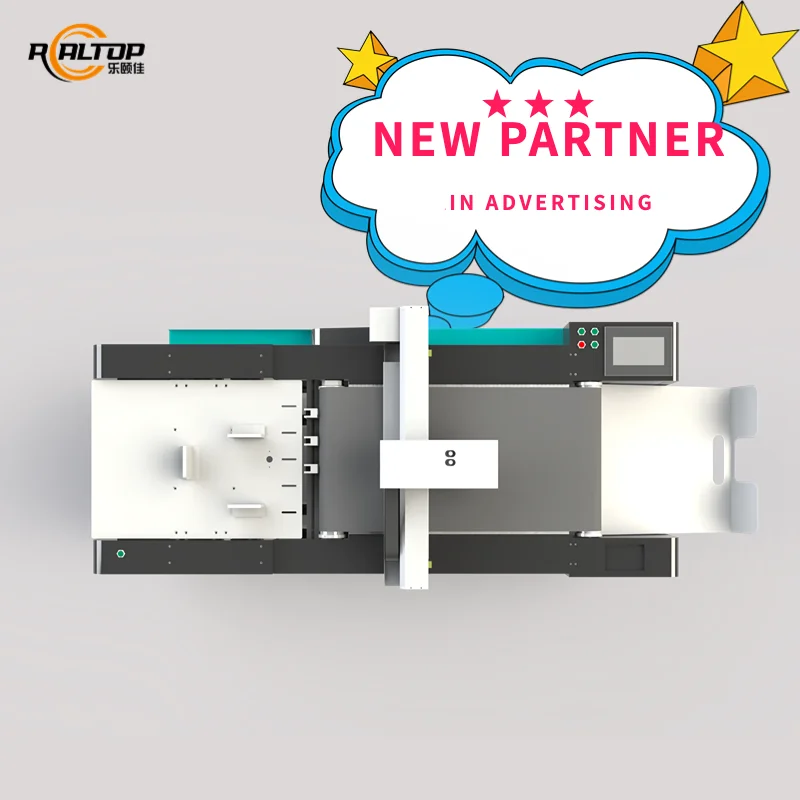
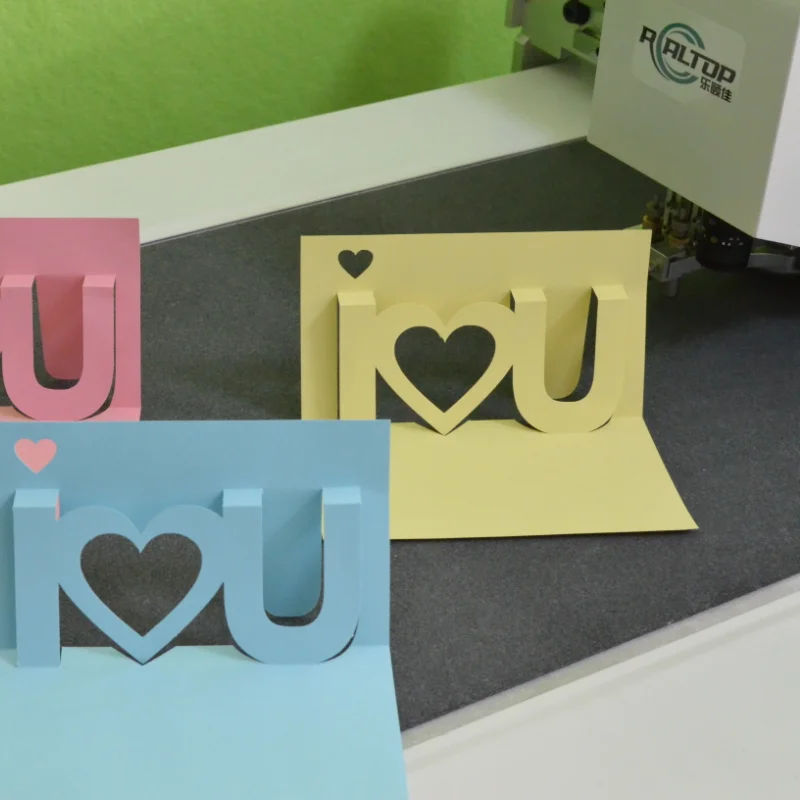
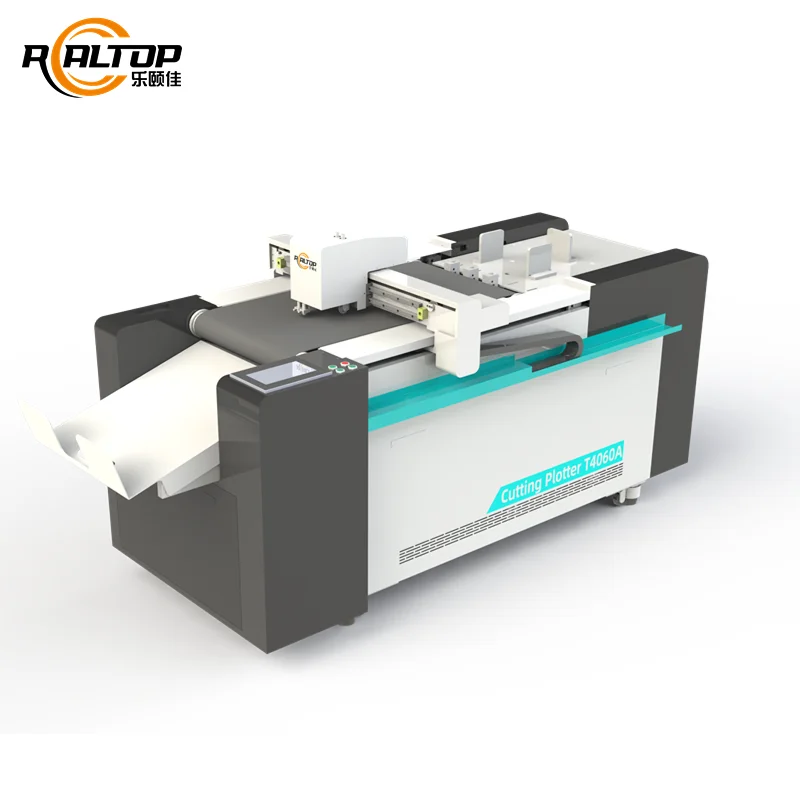



Mini Digital Cutter for Packaging and Label – Laser Cutting and Engraving Machine manufacturer
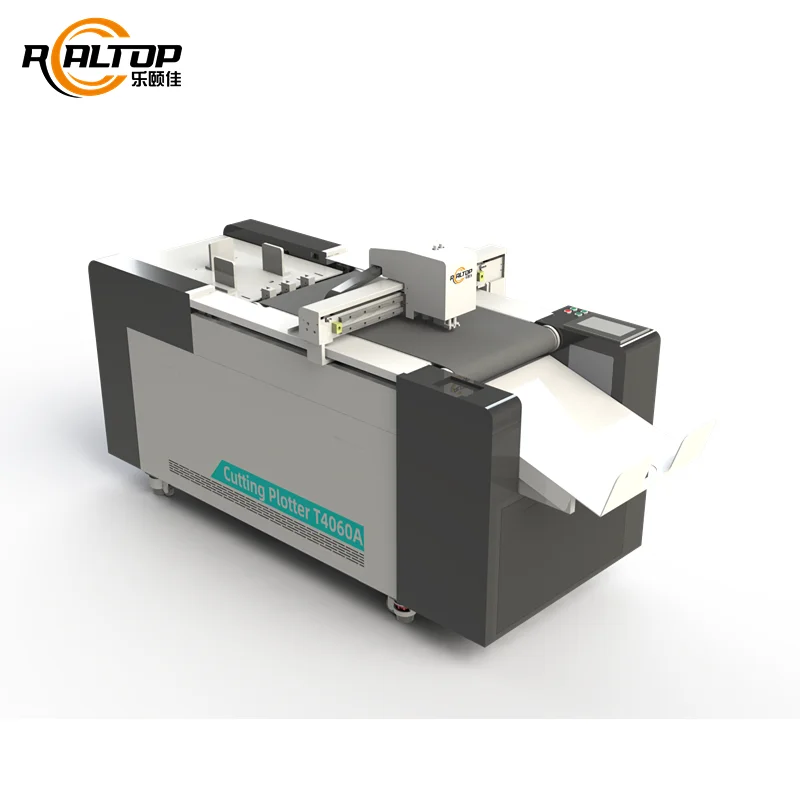
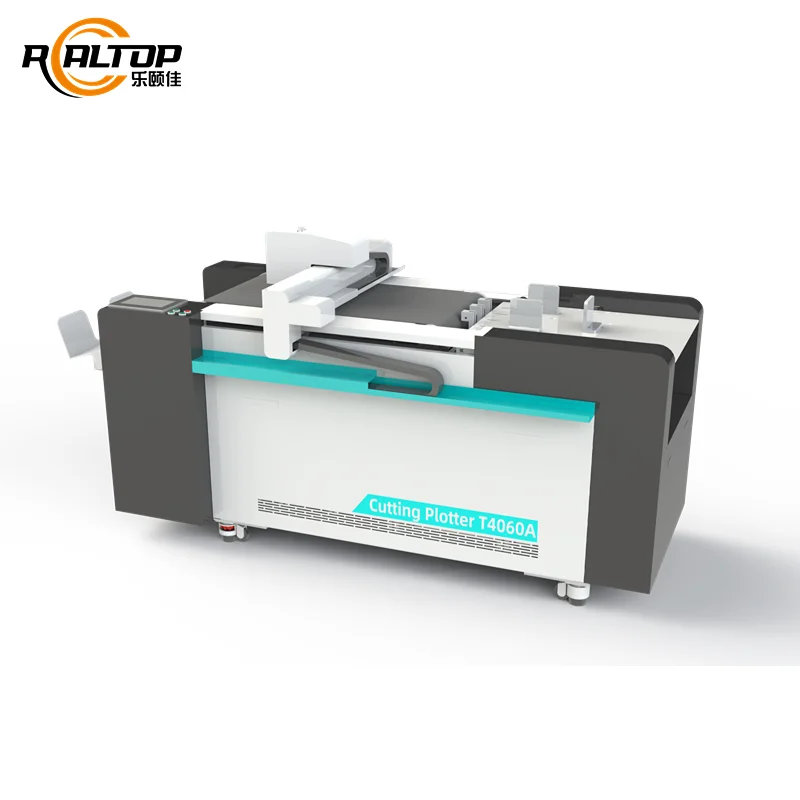
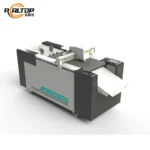
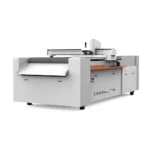
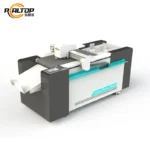
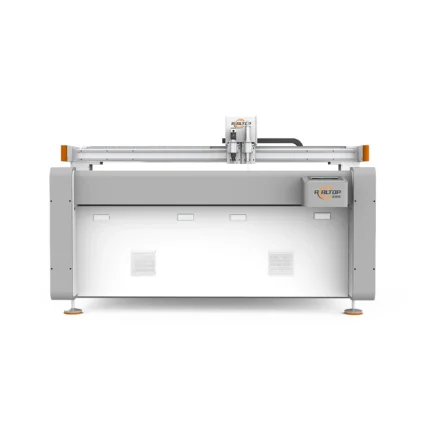
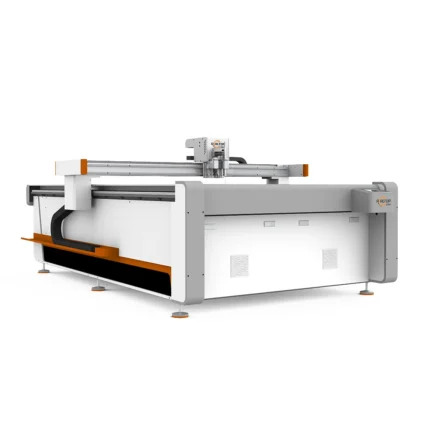
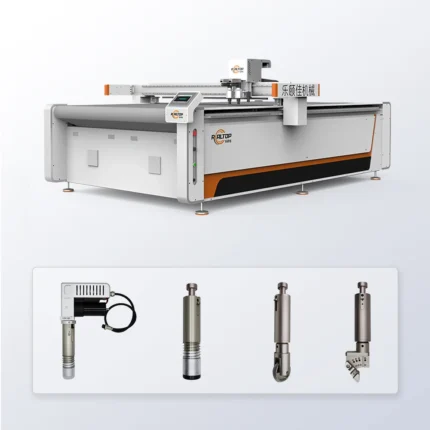
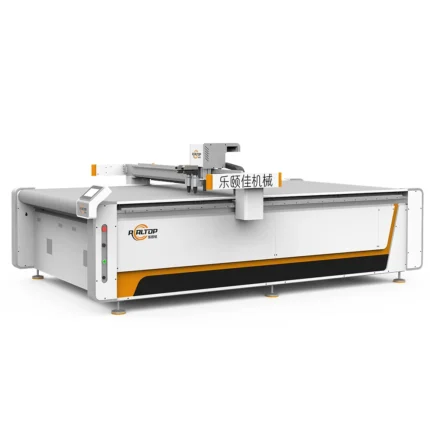
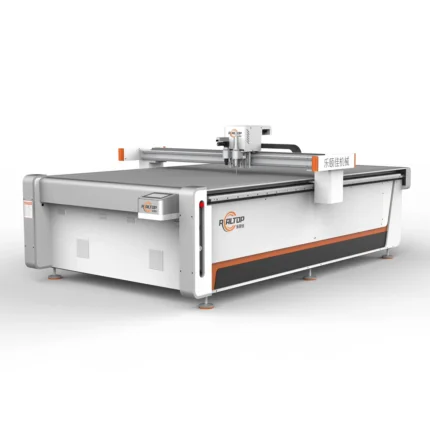
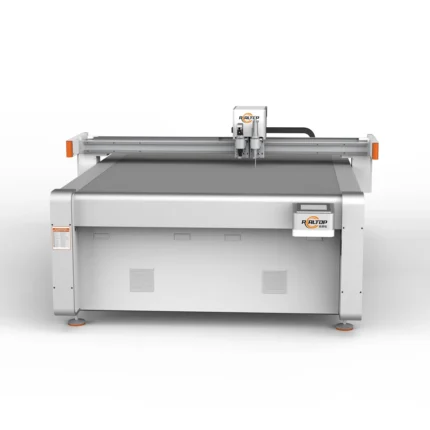
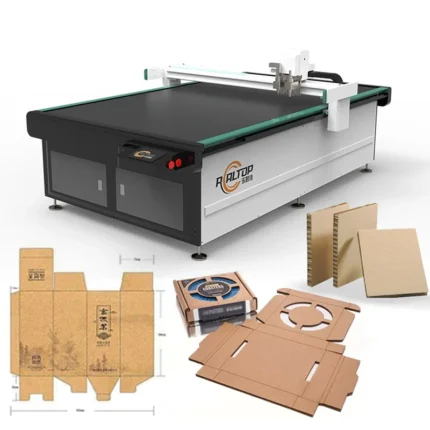
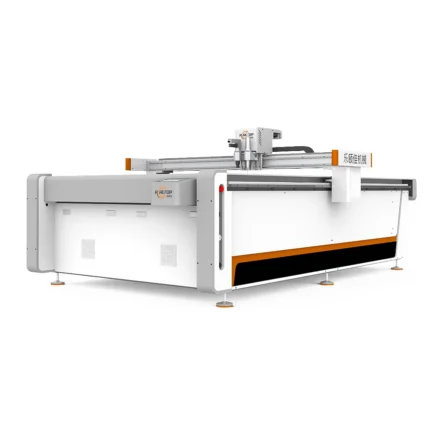
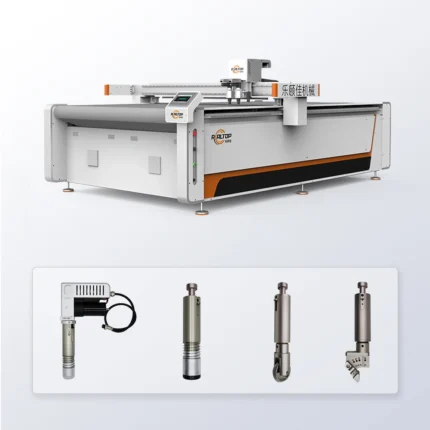
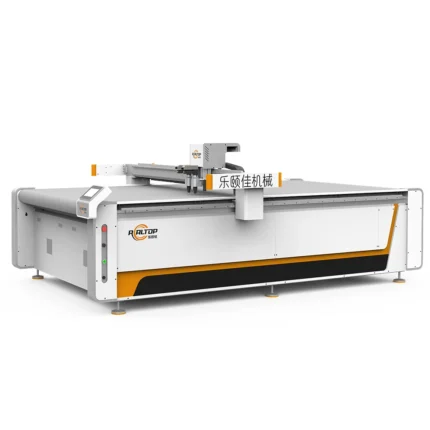
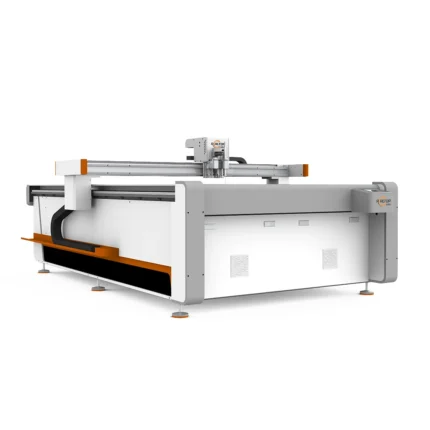
Digital Flatbed Cutter for Packaging and Label, CCD auto positioning, multifunctional tool head — engineered for post-printing contour cutting on cardboard, self-adhesive, PP and PVC sheets. Automatic feeding, cutting and picking workflow enables unattended small-batch production, while the HD touch control panel simplifies operation across diverse packaging and label applications. – Sample cutting on your material confirms edge quality and CCD tracking accuracy at production speed before order commitment. – Software compatibility, voltage and control language verified to match your existing workflow. – Tool head and table configuration specified per your material type and daily volume requirements.
Laser process expertise — CO2 and fiber laser configurations matched to packaging material behavior, ensuring edge sealing on synthetics and clean cuts on coated boards without forcing knife methods where heat processing delivers better results.
Technical Specifications
| Parameter | Value |
|---|---|
| Product Type | Digital Flatbed Cutter for Packaging and Label |
| Control System | Automatic Control System with HD Touch Control Panel |
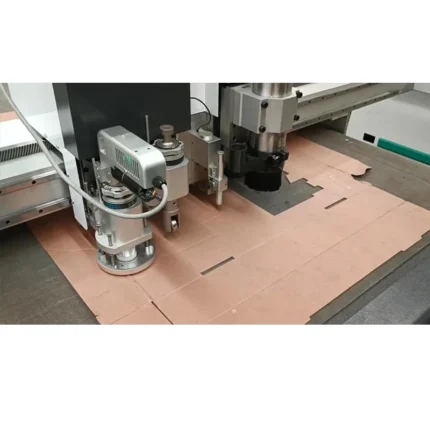
| Tool Head Type | Multifunctional (cutting, creasing, kiss-cutting, dotted-line cutting) |
| Positioning System | CCD auto positioning |
| Automation Level | Fully automated (automatic feeding, cutting, and picking) |
| Network Connectivity | Convenient network port |
| Assembly State | Fully assembled |
| Warranty | 12 months for whole machine |
| Lead Time | 7-10 working days for production |
Application Suitability
| Application | Material or Output |
|---|---|
| Post-printing contour cutting | Printed cardboard, coated paper, graphic boards |
| Self-adhesive label die cutting | Vinyl, self-adhesive films, label stocks |
| Packaging sample making | Corrugated cardboard, folding carton board, PP sheet |
| Small batch individualized processing | PVC sheet, specialty substrates, short-run materials |
| Advertising label production | Printed media, reflective sheeting, display boards |
Why the Voltage Question Should Come Before the Price on a Laser Cutting and Engraving Machine manufacturer
Electrical mismatch on arrival means weeks of downtime, not days.
I was based in Southeast Asia handling equipment procurement before moving to the technical support side, stationed in Kuala Lumpur long term. Once, a Mini Digital Cutter shipped to an Indonesian client without a thorough voltage cross-check. The workshop ran three-phase 220V. The machine faulted immediately on connection, and the client sat idle for nearly two weeks while a transformer was sourced and installed. Since that incident, I match electrical schematics against actual workshop photos before clearing any shipment. A Laser Cutting and Engraving Machine manufacturer should confirm voltage, plug type, and phase configuration against the buyer’s facility standard before production begins [NEED_CITE: voltage and frequency standards by export market]. When this step gets skipped, the cost is never just the transformer — it is the stopped production line, the rescheduled orders, and the trust lost with downstream customers.
CO2 Laser Versus Knife: Choosing the Right Process for Printed Packaging Materials
Not every packaging substrate responds the same way to a cutting tool. CO2 laser processing seals edges on synthetic materials like PVC and self-adhesive vinyl, which prevents fraying and delamination during subsequent handling. A Laser Cutting and Engraving Machine manufacturer that builds both laser and knife systems can direct the buyer toward the process that actually fits the material, rather than defaulting to one method. For coated paper and thin cardboard where a blade leaves a clean mechanical edge, knife cutting remains the better path. The decision point is always the material composition and the edge quality requirement of the finished piece.
CCD Auto Positioning at Production Speed
Printed contour recognition sounds straightforward on a brochure. In practice, registration marks shift slightly from sheet to sheet due to feed tolerances, and the camera must track these variations without slowing the cutting cycle. The T series CCD system is designed to read marks on the actual printed stock the buyer will run, which is why we test with the client’s own material before confirming the order. If the camera cannot lock onto the mark at the working feed rate, the system flags it during sample testing rather than after the machine lands on the factory floor [NEED_CITE: CCD contour recognition accuracy standards for digital cutting].
What the Specification Sheet Actually Means for Your Packaging Line
The multifunctional tool head combines cutting, creasing, kiss-cutting, and dotted-line operations in a single unit. For packaging sample makers, this means one setup handles the fold lines, the through-cuts, and the perforations without manual head changes between operations. The HD Touch Control Panel reduces the training burden — operators navigate jobs through a visual interface rather than memorizing code strings. Automatic feeding, cutting, and picking closes the loop on unattended operation, so short-run batch processing does not require an operator standing at the table for every sheet. The convenient network port allows the machine to sit on the shop network, pulling job files directly from the design station rather than relying on USB transfers.
The Hidden Cost of Choosing the Wrong Tool Head for Your Material
Selecting a drag knife for corrugated cardboard that actually needs a creasing wheel results in crushed flutes and weakened fold lines, and the packaging fails drop tests. Running kiss-cut settings too deep on self-adhesive label stock cuts through the liner, turning the entire sheet into waste. These errors rarely show up during a brief demonstration — they surface during the third shift when the material batch changes slightly and the operator has no reference for adjustment [NEED_CITE: tool head selection errors in digital flatbed cutting operations]. I have seen production lines restart an entire label run because the kiss-cut depth was set for a different liner thickness, and nobody had recorded the baseline setting from the sample test.
Why Buyers Source This Equipment from Realtop
The in-house design team covers both laser and knife cutting, so the buyer gets a process recommendation based on material science rather than a catalog push. Tool head and table configuration are specified against the buyer’s actual material and daily volume, not pulled from a default list. CCD camera positioning is validated on the buyer’s printed stock at production speed before the order is locked. Software compatibility with the buyer’s existing file format and nesting workflow is confirmed in advance, eliminating the discovery that the machine cannot read the native output from the design department. Voltage, control language, and plug type are customized and documented before shipment, so the machine connects and runs on arrival without an adapter hunt.
Documentation & Verification
- Factory test record on your specific packaging board thickness before dispatch
- Electrical schematic confirming your local voltage and phase configuration
- Sample cutting report on your own printed material with CCD tracking results
- Software licence and file format compatibility note for your design workflow
- CE declaration for applicable markets with machinery directive compliance
- Spare parts list covering tool heads, blades, and consumables for first-year operation
Installation, Commissioning & Support
- Verify workshop floor levelness to support the fully assembled flatbed table without frame stress
- Confirm dedicated circuit matching the machine voltage and frequency before delivery day
- Arrive fully assembled — place on prepared floor, connect power and network port, and initialize
- First-run calibration includes CCD registration tuning on your actual printed packaging stock
- Operator training covers the HD Touch Control Panel navigation and tool head changeover sequence
- Scheduled maintenance covers vacuum table cleaning and tool head inspection intervals during the 12-month warranty
Before You Send the Inquiry
Share the exact packaging materials you run — cardboard grade and thickness, self-adhesive label construction, PP or PVC sheet specifications — along with your typical sheet dimensions and daily volume. Confirm your workshop voltage, phase, and frequency so the electrical package matches from day one. If you have an existing nesting or design software workflow, tell us the file formats it outputs so we verify compatibility before quoting.
Frequently Asked Questions
Q: How do we verify CCD positioning accuracy before committing to the machine?
A: We run your actual printed packaging material through the T series at production speed and document registration mark tracking accuracy in a sample cutting report. If your print tolerances are wider than standard, we adjust camera sensitivity settings during this test and record the baseline parameters so your operators have a reference point for future batch changes.
Q: Which tool head do we need for cardboard versus self-adhesive labels?
A: Cardboard folding carton work typically requires a combination of through-cutting and creasing wheel operations, while self-adhesive label production relies on kiss-cutting to preserve the liner. The multifunctional tool head integrates both capabilities, and we specify the exact blade type and creasing wheel profile based on your material samples during the pre-order test.
Q: Will the machine accept files from our existing design software?
A: We confirm file format compatibility during the inquiry stage. Share the output format from your nesting or CAD software — DXF, PLT, AI, or other — and we verify that the control system reads it correctly and that the nesting workflow transfers without manual re-drawing or geometry cleanup before the order proceeds to production.
Q: How do you handle voltage differences for export markets?
A: Before production begins, we request your workshop electrical specifications — voltage, phase, and frequency — and configure the motor drives and control system accordingly. The electrical schematic is cross-checked against your facility standard and your workshop panel photo before shipment clearance to prevent on-site transformer delays.
Q: What is involved in the sample cutting process before we order?
A: Send us your actual packaging materials — printed sheets, label stock, cardboard samples — and we run them on the T series with your specified tool head configuration. You receive a sample cutting report documenting edge quality, cutting depth, CCD tracking performance, and cycle timing so you can evaluate results against your production standards before committing.


Related products
Automatic Digital Cardstock Cutter 2026 CNC Cutter
Product Introduction
Automatic Digital Cardstock Cutter 2026 is a CNC cutting machine ideal for white cardboard and kraft paper. It offers precise and efficient cutting performance, suitable for various paper processing needs in manufacturing and craft applications.Key Specifications
| Type | CNC Digital Cutting Machine |
| Material Compatibility | White Cardboard, Kraft Paper |
| Operation | Automatic |
| Application | Paper Cutting & Processing |
Automation CNC Pizza Box Machine 2026 Rotary Die Cutting
Product Parameters
| Type | Automation CNC Pizza Box Machine |
| Model Year | 2026 |
| Cutting Technology | Rotary Die Cutting |
| Operation | Automated CNC Control |
Introduction
This 2026 Automation CNC Pizza Box Machine features advanced rotary die cutting technology, ensuring precise and efficient pizza box production. With automated CNC control, it offers high productivity and accuracy for professional manufacturing needs.
CNC Flatbed Oscillating Knife Cutting Machine 2026
Product Introduction
High-performance CNC Flatbed Oscillating Knife Cutting Machine 2026, ideal for precision cutting of various materials with advanced oscillating knife technology, ensuring efficient and accurate operations for industrial manufacturing needs.Specifications
| Model | 2026 |
| Type | CNC Flatbed Oscillating Knife Cutting Machine |


Digital CNC Cardboard Cutting Machine 2026
Product Introduction
High-precision Digital CNC Cardboard Cutting Machine 2026, ideal for efficient cardboard processing with advanced CNC technology, ensuring precise and fast cutting performance for various packaging and craft applications.
Key Specifications
| Model | 2026 |
| Type | Digital CNC Cutting Machine |
| Material | Cardboard |
| Feature | High Precision, Efficient Cutting |

Realtop CNC Carton Box Cutter 2026 CCD Camera Honeycomb Cutting
Product Introduction
Realtop CNC Carton Box Cutter 2026 is a professional cutting solution featuring CCD Camera and Honeycomb Cutting technology, ideal for precise carton box processing with efficient performance.Product Parameters
| Model | Realtop CNC Carton Box Cutter 2026 |
| Vision System | CCD Camera |
| Cutting Technology | Honeycomb Cutting |
商品评价
There are no reviews yet.